
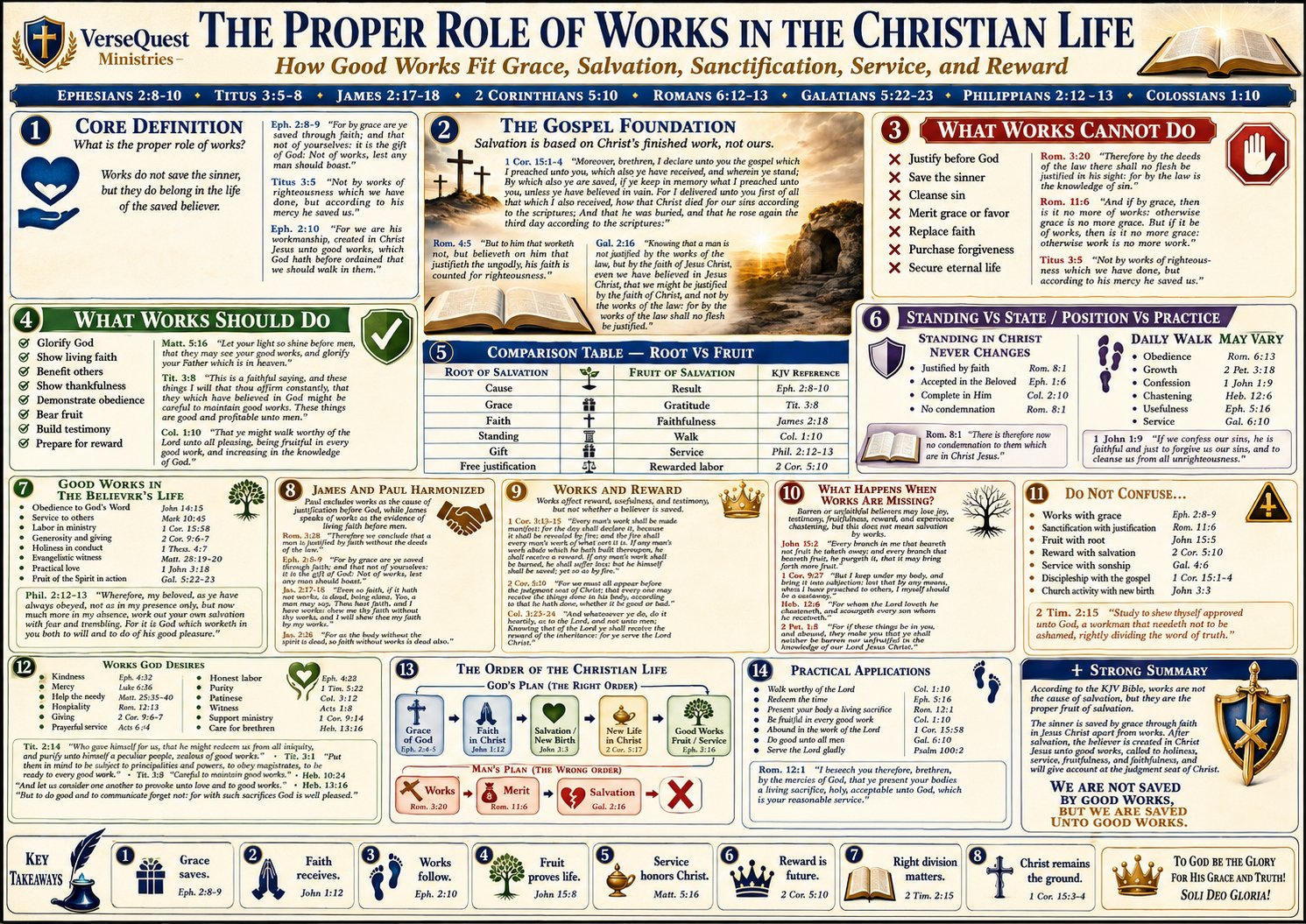
The Proper Role of Works in the Christian Life – Grace, Salvation, Sanctification, Service, Fruit, and Reward (KJV Bible Study Chart)
Understand the proper role of good works with this detailed KJV chart covering salvation by grace, sanctification, service, living faith, spiritual fruit, standing versus practice, the judgment seat of Christ, and eternal reward.
$3.99
Description
The Proper Role of Works in the Christian Life is a detailed KJV Bible study chart explaining where good works belong in God’s plan and where they do not belong. It preserves the gospel of salvation by grace through faith while showing that every saved believer has been created in Jesus Christ to live faithfully, serve others, bear fruit, glorify God, and prepare for future reward.
Built around Ephesians 2:8–10, Titus 3:5–8, James 2:17–18, 2 Corinthians 5:10, Romans 6:12–13, Galatians 5:22–23, Philippians 2:12–13, and Colossians 1:10, this chart presents the essential doctrinal order: works do not save the sinner, but they belong in the life of the saved believer.
The chart begins by establishing the gospel foundation. Salvation rests entirely upon the finished death, burial, and resurrection of the Lord Jesus Christ. First Corinthians 15:1–4 identifies the gospel, while Romans 4:5 explains that God justifies the ungodly person who believes rather than the person attempting to earn righteousness through works.
Ephesians 2:8–9 states that salvation is by grace through faith, the gift of God, and “not of works, lest any man should boast.” Titus 3:5 likewise excludes works of righteousness performed by the sinner as the cause of salvation. Jesus Christ alone accomplished redemption, and faith receives what grace provides.
Good works cannot justify a sinner before God. Romans 3:20 declares that no flesh will be justified in God’s sight by the deeds of the law. Works may improve conduct, help a neighbour, support a ministry, or demonstrate discipline, but they cannot erase guilt, produce the new birth, or supply the righteousness required by a holy God.
Works cannot save, cleanse the soul, merit grace, replace faith, purchase forgiveness, or secure eternal life. Once works are placed into the foundation of justification, grace is turned into debt and the sinner is left trusting his own performance rather than Jesus Christ.
Romans 11:6 makes the distinction absolute: if salvation is by grace, it is no longer of works; otherwise grace is no more grace. Human merit and divine grace cannot share the saving foundation.
The chart does not dismiss good works. It places them in their proper biblical order. Ephesians 2:10 follows immediately after the declaration that salvation is not of works. The saved believer is God’s workmanship, “created in Christ Jesus unto good works.”
Works are therefore the fruit of salvation rather than its root. The sinner is not saved because he performed good works; he performs good works because God has saved him, given him new life, and called him to walk in obedience.
The chart presents a clear root-versus-fruit comparison. Grace is the cause; gratitude is the result. Faith receives salvation; faithfulness follows. Standing in Christ produces a changed walk. God’s gift leads to Christian service, and free justification prepares the believer for rewarded labour.
This order protects both grace and holiness. It refuses to make good works the price of eternal life while also refusing to treat the Christian life as passive, fruitless, careless, or self-centred.
A major section explains what works should accomplish in the believer’s life. Good works glorify God, display living faith, benefit others, express thanksgiving, demonstrate obedience, bear spiritual fruit, build Christian testimony, and prepare the believer for reward at the judgment seat of Christ.
Jesus taught that believers should let their light shine before men so that others may see their good works and glorify the Father in heaven. Works should therefore point beyond the Christian to the God who saved, changed, equipped, and strengthened him.
Good works also demonstrate living faith. James 2 confronts the person who claims to possess faith but displays no practical evidence. James does not teach that works purchase eternal life; he teaches that a lifeless profession is unprofitable and that genuine faith should become visible through conduct.
James says, “I will shew thee my faith by my works.” God sees the heart directly, but other people ordinarily observe faith through obedience, charity, sacrifice, patience, truthfulness, service, and endurance.
Paul and James harmonize when their questions are understood. Paul explains how a sinner is justified before God—by faith without works. James explains how professed faith is demonstrated before men—through works that reveal life.
Paul protects the root of salvation from human merit. James examines the fruit of professed faith. Paul excludes works from justification; James expects works as evidence, usefulness, and practical testimony.
The chart distinguishes the believer’s standing from his state, and his position from his practice. Standing in Christ never changes. The saved believer is justified, accepted in the Beloved, complete in Christ, and free from eternal condemnation.
The believer’s daily walk may vary. His obedience, growth, confession, chastening, service, usefulness, testimony, and fellowship may improve or decline according to his response to God’s Word.
This distinction does not excuse sin. It explains why Christian failure can damage fellowship, joy, testimony, usefulness, health, relationships, and reward without undoing justification or eternal life.
A saved person may live inconsistently, resist spiritual growth, neglect service, or produce little lasting fruit. Such failure may invite chastening and loss at the judgment seat of Christ, but it does not mean the believer must be justified again.
The chart presents good works in the believer’s daily life. These include obedience to Scripture, service to others, labour in ministry, generosity and giving, holiness in conduct, evangelistic witness, practical love, prayerful service, honest employment, hospitality, mercy, patience, forgiveness, and support for fellow believers.
Philippians 2:12–13 teaches believers to work out what God is working within them. This does not command Christians to work for salvation. It calls them to express outwardly the life, truth, and power God has already placed within them.
The believer works because God works in him “both to will and to do of his good pleasure.” Christian obedience therefore combines real personal responsibility with continual dependence upon divine grace.
Galatians 5 presents the fruit of the Spirit. Love, joy, peace, longsuffering, gentleness, goodness, faith, meekness, and temperance are not products of religious self-salvation. They are the fruit of the Holy Spirit working through a yielded believer.
Colossians 1:10 calls Christians to walk worthy of the Lord, please Him in all things, remain fruitful in every good work, and increase in the knowledge of God. Good works and spiritual growth belong together.
The chart also explains works and reward. Every believer will appear before the judgment seat of Christ. Salvation itself is a gift, but Christian service will be examined and rewarded according to faithfulness, motive, doctrine, quality, and obedience.
First Corinthians 3 teaches that a believer’s works may be tested by fire. Some works will endure and receive reward, while others will be burned. The person may suffer loss while remaining saved.
Second Corinthians 5:10 teaches that believers will receive according to the things done in the body. Colossians instructs Christians to serve heartily as unto the Lord because the reward of the inheritance comes from Him.
This distinction prevents reward from being confused with salvation. Eternal life is received freely through faith in Christ. Reward is connected with faithful labour after salvation.
The crown is not the gift of eternal life, and the gift of eternal life is not the wage of Christian service. God saves the believer by grace and later rewards what His grace produced through faithful obedience.
The chart addresses what happens when works are missing. A barren or spiritually unproductive Christian life may result in lost joy, diminished testimony, weak fellowship, divine chastening, missed opportunities, damaged usefulness, and loss of reward.
John 15 warns about fruitlessness and the need to abide in Christ. First Corinthians 3 warns of burned works. Hebrews 12 teaches that God chastens His children, while 2 Peter urges believers to add spiritual virtues so they will not remain barren or unfruitful.
Missing works do not prove automatically that every struggling believer is unsaved. Christians may be immature, poorly taught, discouraged, backslidden, wounded, or resistant to growth. Yet a profession that remains permanently indifferent to Christ deserves serious biblical examination.
The chart carefully warns against several doctrinal confusions. Works must not be confused with grace, sanctification with justification, fruit with the root, reward with salvation, service with sonship, discipleship with the gospel, or church activity with the new birth.
A person may be extremely active in religion without being born again. Ministry activity cannot substitute for faith in Christ. At the same time, genuine salvation should produce a growing desire to honour the Lord.
The proper order of the Christian life is clearly displayed: the grace of God, faith in Christ, salvation and the new birth, new life in Christ, and then good works and spiritual fruit.
Man’s false order places works first, attempts to gain merit, and treats salvation as a reward. That system fails because sinners cannot earn grace, justify themselves, or complete the finished work of Jesus Christ.
God’s order gives all glory to the Saviour. Grace provides salvation, faith receives Christ, the Holy Spirit gives new life, and good works follow as the reasonable service of the redeemed believer.
The chart lists works God desires, including kindness, mercy, helping the needy, hospitality, honest labour, purity, patience, witness, generosity, support for ministry, prayerful service, care for brethren, and obedience to God’s revealed Word.
These works should arise from love rather than pride, gratitude rather than fear, and faith rather than an attempt to purchase divine favour. The Christian does not serve in order to become God’s child but because he has already been received into God’s family through Christ.
Practical applications include walking worthy of the Lord, redeeming the time, presenting the body as a living sacrifice, remaining fruitful, abounding in the work of the Lord, doing good to all men, and serving the Lord gladly.
Romans 12 calls believers to present their bodies as living sacrifices. First Corinthians 15:58 urges them to remain steadfast, unmovable, and always abounding in the Lord’s work because their labour is not in vain.
The chart’s strong summary is clear: good works are not the cause of salvation, but they are the proper fruit of salvation. The sinner is saved by grace through faith in Jesus Christ apart from works. After salvation, the believer is created in Christ unto good works and called to holiness, service, fruitfulness, faithfulness, and future reward.
We are not saved by good works, but we are saved unto good works. Christ remains the foundation, grace remains the source, faith remains the receiving hand, and works remain the grateful service of those who belong to Him.
This resource is ideal for personal Bible study, Christian discipleship, grace-versus-works teaching, sanctification studies, James-and-Paul comparisons, judgment-seat instruction, reward studies, new-believer training, pastoral counseling, Sunday school, homeschool Bible curriculum, Christian schools, Bible institutes, sermon preparation, and church leadership classes.
Proper role of good works, salvation by grace, faith in Jesus Christ, works after salvation, created unto good works, root versus fruit, grace versus works, sanctification, Christian service, living faith, Paul and James, standing versus state, position versus practice, fruit of the Spirit, Christian testimony, judgment seat of Christ, eternal reward, loss of reward, practical obedience, rightly dividing Scripture
Good works have an important biblical role, but they must remain in the order God established.
The sinner is saved by grace through faith in Jesus Christ, not by moral conduct, religious activity, law-keeping, generosity, baptism, or service.
Christ’s death, burial, and resurrection form the gospel foundation. Human works cannot add saving value to His finished work.
Romans 3:20 excludes the deeds of the law from justification before God.
Romans 4:5 teaches that God justifies the ungodly person who believes rather than the person attempting to earn righteousness.
Romans 11:6 establishes that grace and works cannot be mixed as the basis of salvation.
Titus 3:5 excludes works of righteousness from the cause of salvation while Titus 3:8 encourages saved believers to maintain good works.
Ephesians 2:8–9 removes works from salvation. Ephesians 2:10 places works immediately after salvation as the believer’s appointed walk.
The proper order is grace, faith, salvation, new life, good works, spiritual fruit, service, and reward.
Works are fruit rather than root. Fruit reveals life but does not create it.
Good works should glorify God rather than glorify the person performing them.
James confronts a claimed faith that produces no evidence. His concern is visible usefulness and practical demonstration.
Paul explains justification before God. James explains the outward evidence of professed faith before men.
James does not replace faith with works. He teaches that living faith should act.
Paul does not teach lawlessness. His epistles contain extensive commands concerning holiness, service, love, witness, and obedience.
The Holy Spirit produces spiritual fruit through believers who walk in submission to God’s Word.
Sanctification is not the same as justification. Justification settles standing; sanctification develops the Christian walk.
Standing in Christ does not fluctuate with performance. Daily fellowship, joy, usefulness, and testimony may vary.
Good works cannot secure eternal life because eternal life is God’s gift in Jesus Christ.
Christian service will be evaluated at the judgment seat of Christ. Reward may be gained or lost.
First Corinthians 3 distinguishes burned works from the salvation of the believer.
Loss of reward is serious, but it is not the same as loss of eternal life.
Missing works may produce chastening, lost testimony, spiritual barrenness, diminished usefulness, and lost opportunities.
A fruitless profession should be examined, but immature believers should not be taught that slow growth automatically means they were never saved.
Church activity is not identical to spiritual life. An unsaved person may be religiously active.
Good works should arise from gratitude, love, faith, and the indwelling Holy Spirit rather than fear of losing salvation.
The believer should serve God faithfully because he belongs to Christ and will give an account of his stewardship.
Christian obedience does not repay God for salvation. It honours the God who freely saved the sinner.
The final doctrinal order must remain clear: Christ saves, grace provides, faith receives, the Spirit produces life, and works follow.
Grace-versus-works studies, Christian discipleship, new-believer instruction, sanctification teaching, explaining James 2, Paul-and-James comparisons, Christian-service training, judgment-seat lessons, eternal-reward studies, teaching spiritual fruit, standing-versus-walk instruction, encouraging ministry faithfulness, church leadership classes, pastoral counseling, Sunday school lessons, homeschool Bible curriculum, Christian school teaching, Bible institute classes, sermon preparation
King James Bible, Strong’s Concordance, Thompson Chain-Reference Bible, Treasury of Scripture Knowledge, Nave’s Topical Bible, Romans 3–6 study notes, Ephesians 2 worksheets, Titus 2–3 commentary materials, James 2 comparison studies, judgment-seat and reward charts, fruit-of-the-Spirit studies, Christian-service workbooks, standing-versus-state resources, grace-versus-works comparison charts, Pauline epistle outlines, VerseQuest salvation and Christian Living charts
Related products
-
Romans and James
-
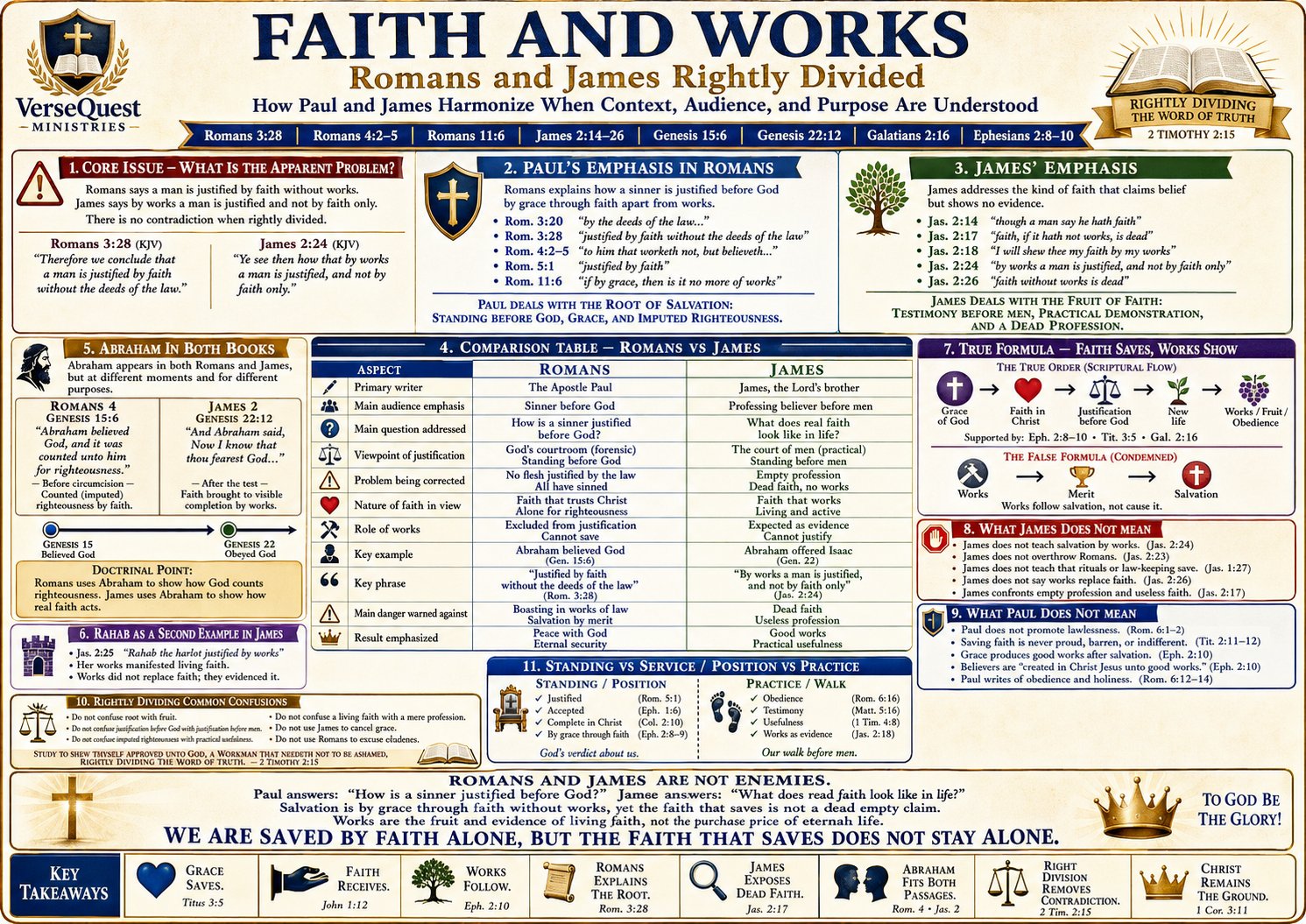
- Faith and Works – Romans and James Rightly Divided: Justification Before God and the Evidence of Living Faith (KJV Bible Study Chart)
- Understand how Romans and James harmonize with this detailed KJV chart covering justification by faith, dead profession, Abraham, Rahab, grace versus works, and the difference between salvation’s root and its…
- $3.99
- Add to cart
-
-
Christian Growth After Salvation
-
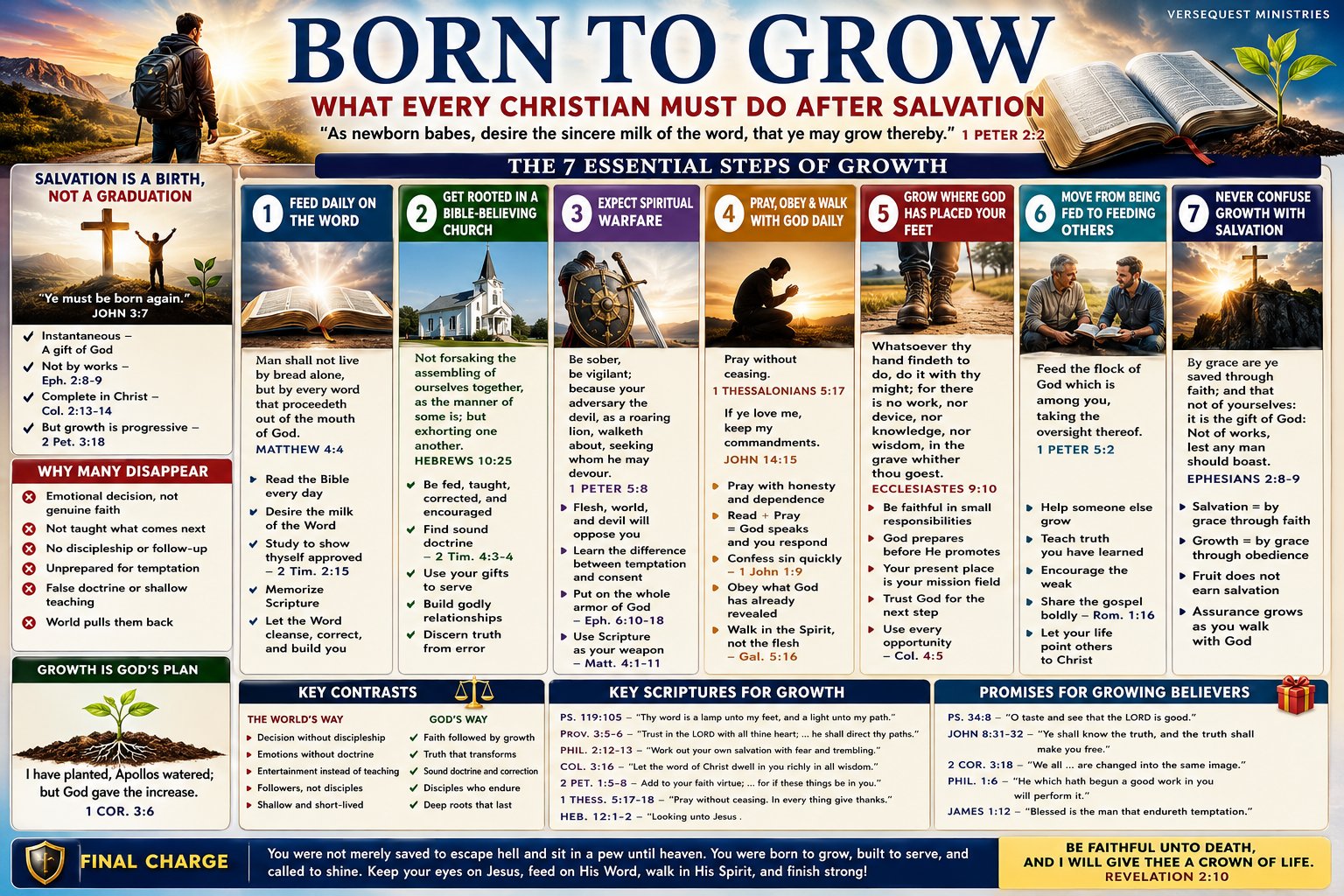
- Born to Grow – Seven Essential Steps Every Christian Must Take After Salvation (KJV Bible Study Chart)
- Help new and growing believers follow seven essential steps after salvation with this detailed KJV chart on Scripture, church, spiritual warfare, prayer, obedience, service, grace, and assurance.
- $3.99
- Add to cart
-
-
How to Know You Are Saved
-
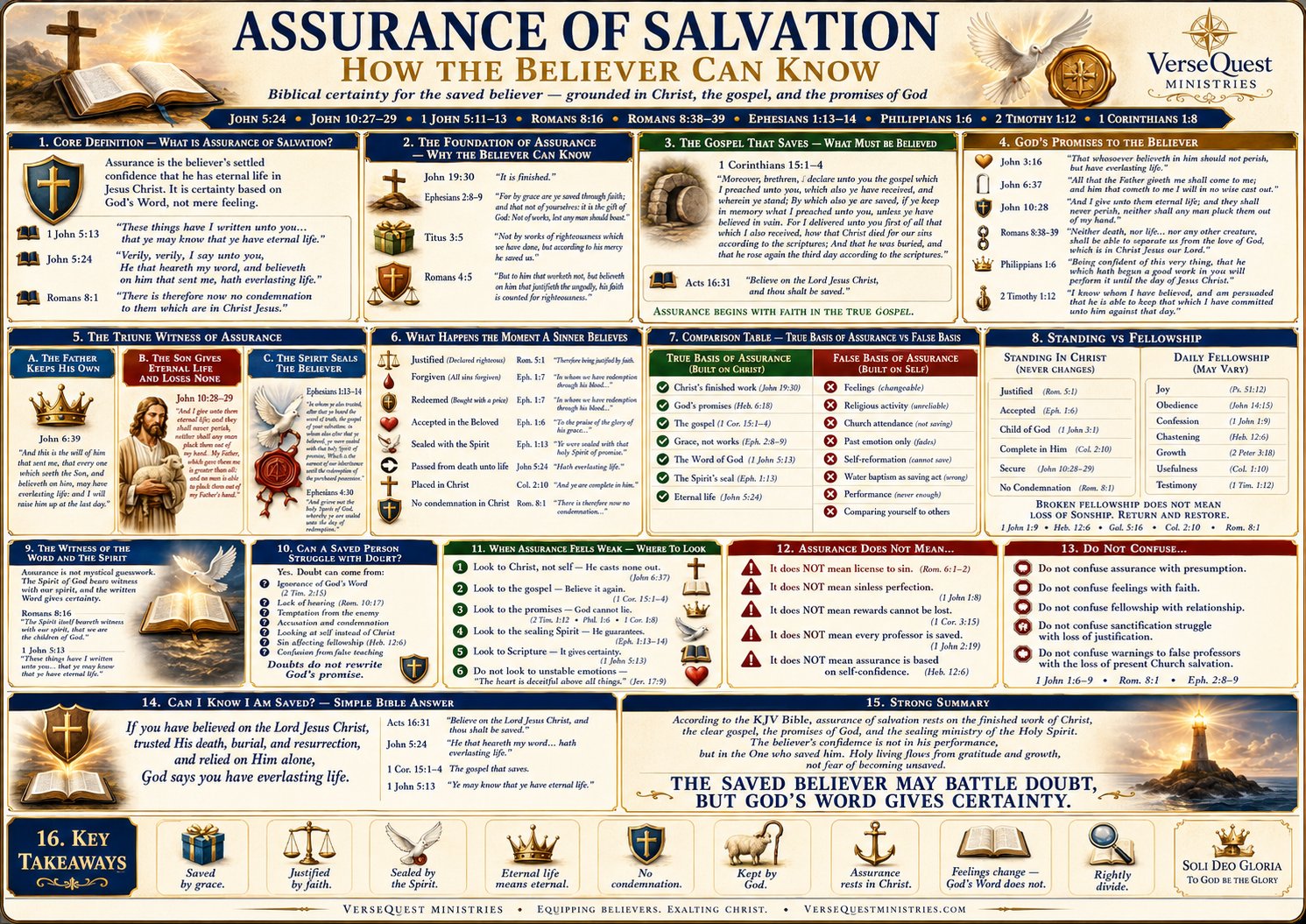
- Assurance of Salvation – How the Believer Can Know He Has Eternal Life in Jesus Christ (KJV Bible Study Chart)
- Learn how the believer can know he is saved with this detailed KJV chart covering Christ’s finished work, the gospel, God’s promises, the Holy Spirit’s seal, standing versus fellowship, doubt,…
- $3.99
- Add to cart
-
-
Precious Blood of Christ
-
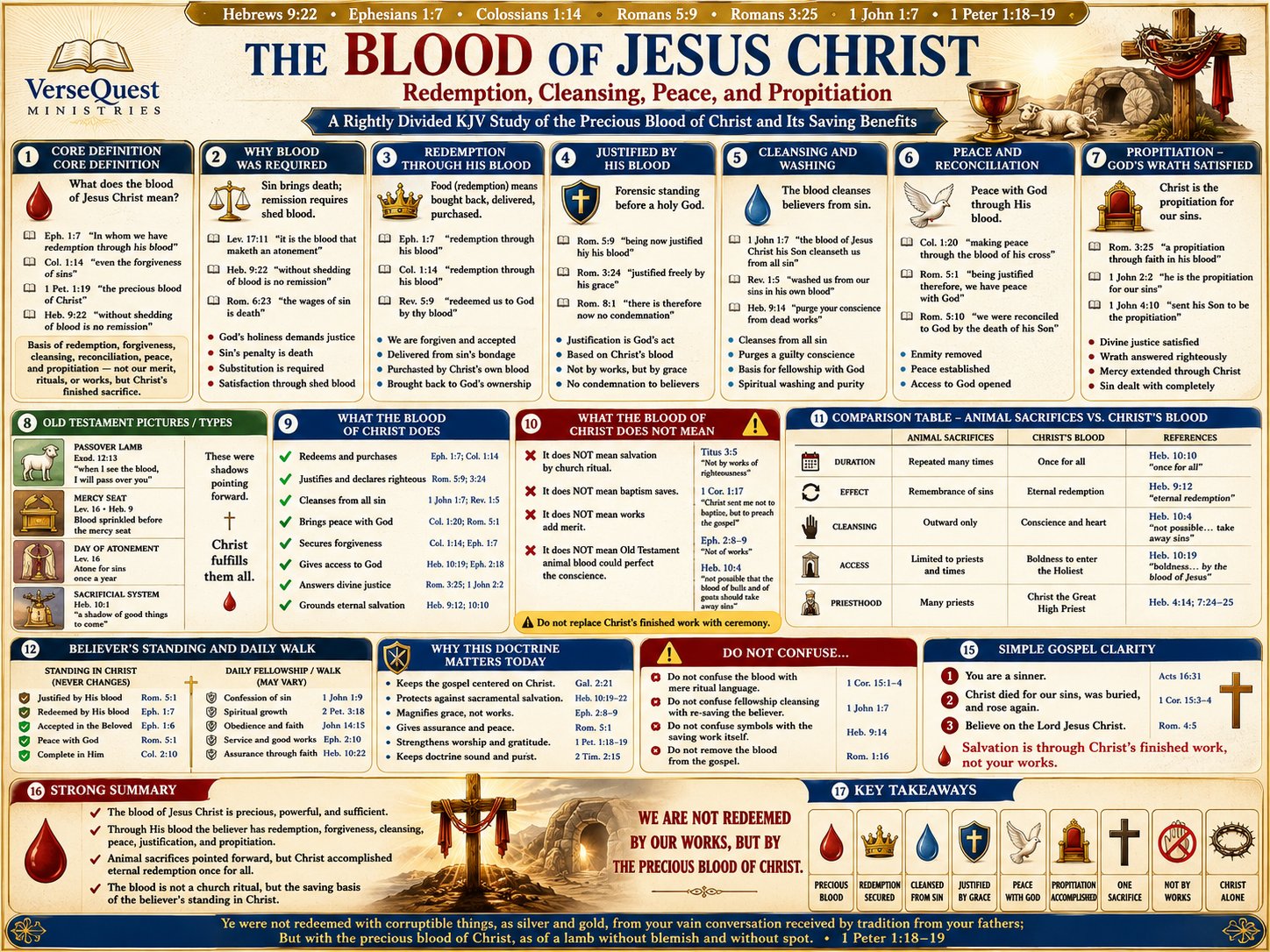
- The Blood of Jesus Christ – Redemption, Cleansing, Justification, Peace, and Propitiation (KJV Bible Study Chart)
- Study the saving power of the blood of Jesus Christ with this detailed KJV chart covering redemption, forgiveness, justification, cleansing, peace, reconciliation, propitiation, Old Testament sacrifices, and Christ’s one sufficient…
- $3.99
- Add to cart
-
-
Assurance of Salvation
-
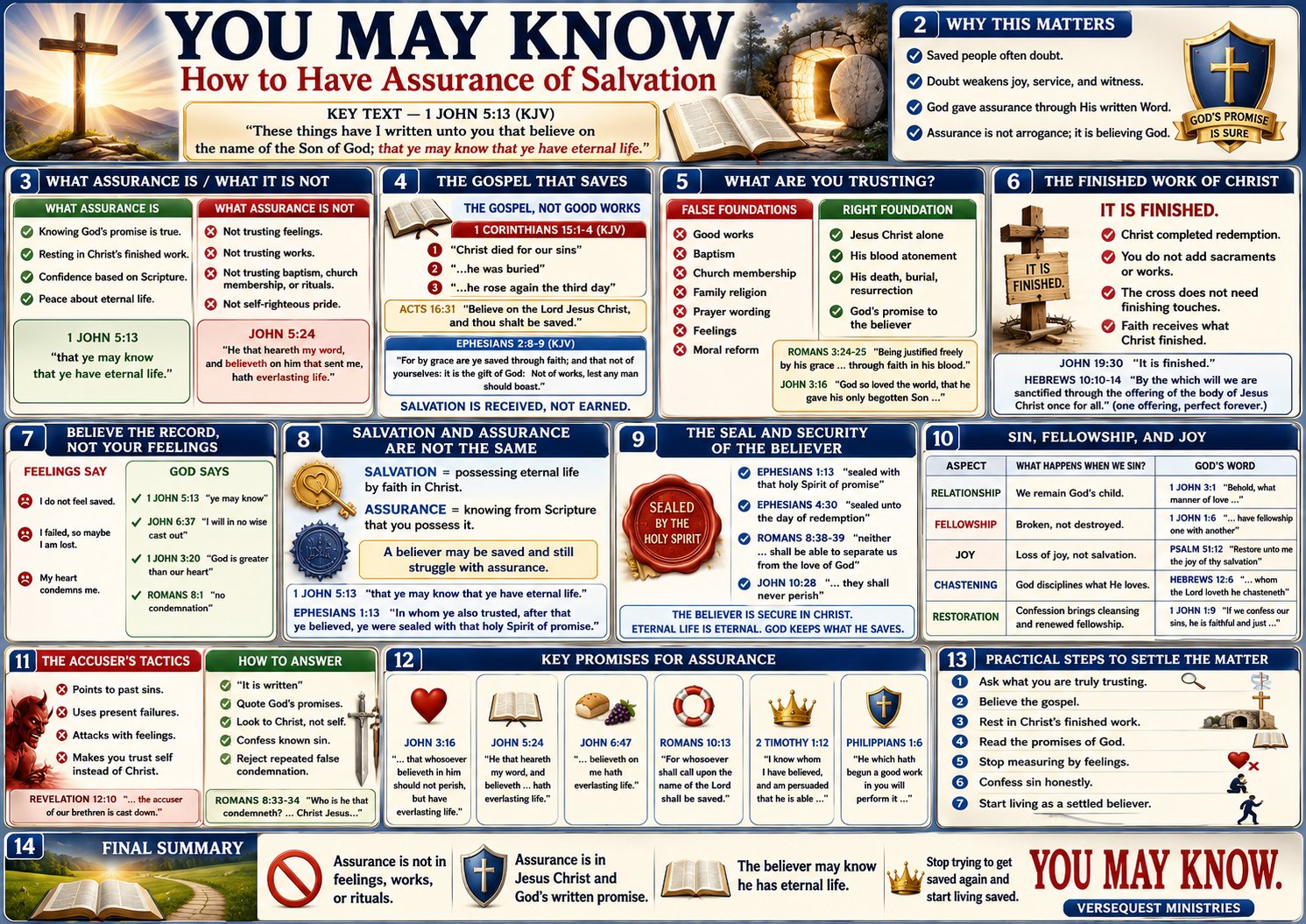
- You May Know – Assurance of Salvation, Eternal Security, and the Finished Work of Christ (KJV Bible Study Chart)
- Gain biblical assurance of salvation with this detailed KJV chart covering Christ’s finished work, eternal life, grace through faith, the Holy Spirit’s seal, sin and fellowship, confession, and God’s promises.
- $3.99
- Add to cart
-