
You May Know – Assurance of Salvation, Eternal Security, and the Finished Work of Christ (KJV Bible Study Chart)
Gain biblical assurance of salvation with this detailed KJV chart covering Christ’s finished work, eternal life, grace through faith, the Holy Spirit’s seal, sin and fellowship, confession, and God’s promises.
$3.99
Description
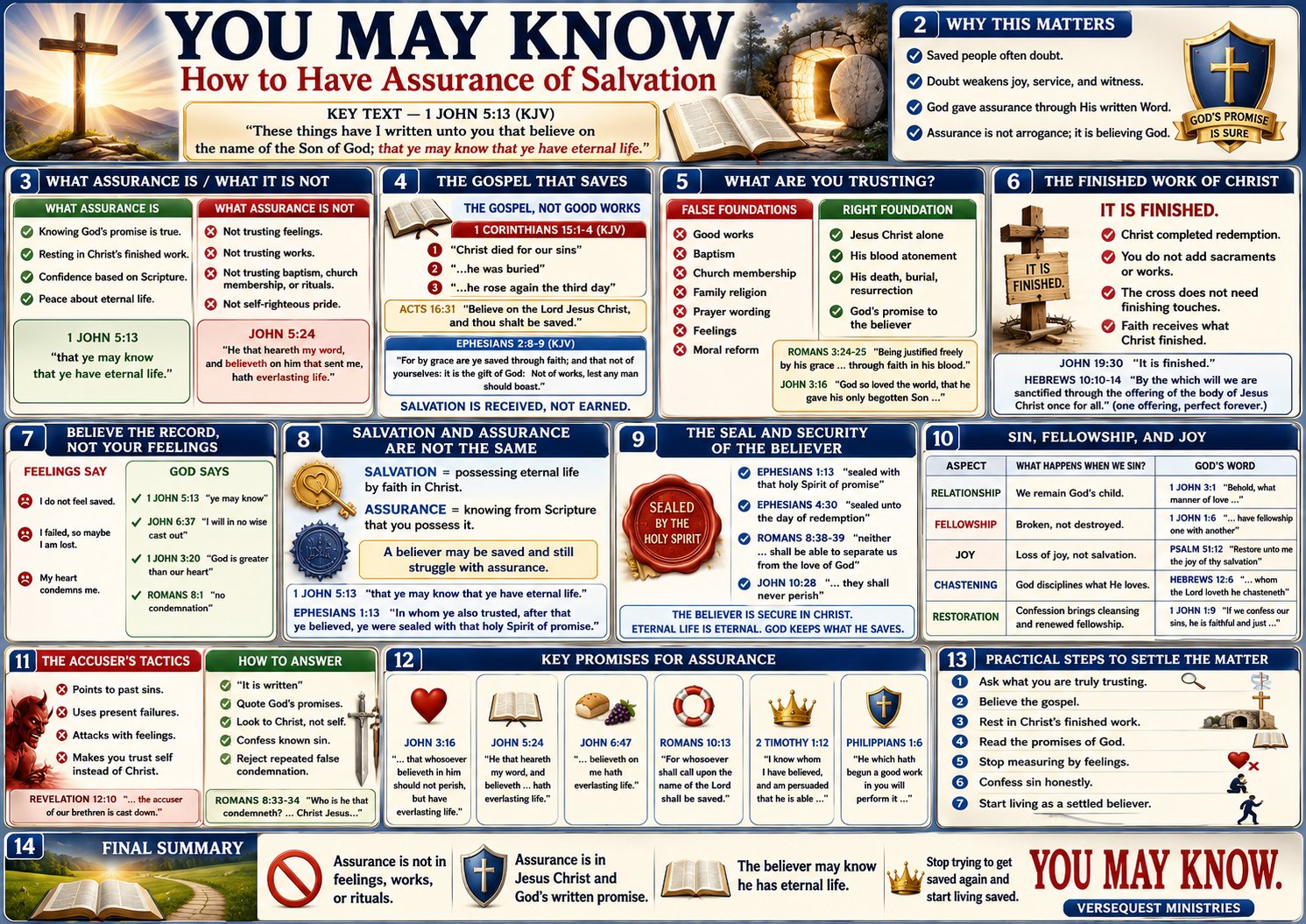
You May Know: How to Have Assurance of Salvation is a detailed KJV Bible study chart explaining how a believer can know—on the authority of God’s written Word—that he possesses eternal life through faith in the Lord Jesus Christ.
Built around 1 John 5:13, this chart answers one of the most important questions faced by saved believers: “Can I truly know that I am saved?” Scripture does not leave Christians trapped between temporary emotion, religious performance, past failure, and constant fear. God gave clear promises so that those who believe on the name of His Son may know that they have eternal life.
Assurance of salvation is not arrogance, presumption, or confidence in personal goodness. It is believing what God has written concerning His Son, His gospel, His promises, and the eternal standing of everyone who trusts Jesus Christ.
The chart begins by explaining why assurance matters. Many genuinely saved people struggle with doubt because they look inward at their feelings, weaknesses, temptations, or failures rather than outward toward Christ’s finished work. Doubt weakens joy, prayer, service, testimony, and spiritual confidence.
God did not design the Christian life to be lived beneath continual uncertainty about whether Christ has successfully saved the believer. Assurance allows the Christian to rest in the Saviour, grow in grace, confess sin honestly, serve without fear, and stand confidently upon Scripture.
A major section distinguishes what assurance is from what it is not. Assurance is knowing that God’s promise is true, resting in Christ’s completed work, trusting Scripture, and possessing peace concerning eternal life.
Assurance is not trusting feelings, works, baptism, church membership, rituals, morality, religious heritage, or self-righteousness. These things cannot become the foundation of eternal confidence because none of them accomplished redemption.
The gospel that saves is plainly presented from 1 Corinthians 15:1–4. Jesus Christ died for our sins according to the Scriptures, was buried, and rose again the third day. Salvation rests upon what Christ accomplished, not upon what the sinner promises to accomplish.
Acts 16:31 gives the required response: “Believe on the Lord Jesus Christ, and thou shalt be saved.” Ephesians 2:8–9 declares that salvation is by grace through faith, the gift of God, and not of works.
The believer’s assurance is therefore inseparable from the gospel. A person cannot possess biblical assurance while trusting a false foundation. Good works, water baptism, family religion, prayer wording, moral reform, emotional experience, and church membership cannot provide eternal security.
The right foundation is Jesus Christ alone: His sinless life, substitutionary death, shed blood, burial, resurrection, finished redemption, and promise to save everyone who believes.
Romans 3:24–25 teaches that justification is freely given by grace through the redemption found in Christ Jesus. John 3:16 promises everlasting life to the believer. Assurance begins when confidence is transferred from self to Christ.
The chart gives special attention to the finished work of Jesus Christ. When the Lord declared, “It is finished,” He announced that redemption had been completed. The cross does not require finishing touches from sacraments, religious works, personal suffering, or repeated attempts to earn acceptance.
Hebrews 10 teaches that Christ offered His body once and that His single offering is sufficient. Faith does not help Jesus finish redemption; faith receives the redemption He already finished.
A central section commands the believer to believe the record rather than his feelings. Feelings may say, “I do not feel saved,” “I failed, so perhaps I am lost,” or “My heart condemns me.” God’s Word gives a stronger answer.
First John 5:13 says believers may know they have eternal life. John 6:37 promises that the one who comes to Christ will never be cast out. First John 3:20 declares that God is greater than the believer’s condemning heart, and Romans 8:1 announces that there is no condemnation to those in Christ.
Feelings are real, but they are not final authority. Emotions rise and fall according to health, circumstances, memory, temptation, fatigue, fear, and spiritual attack. God’s promises do not change with the believer’s emotional condition.
The chart also distinguishes salvation from assurance. Salvation means possessing eternal life through faith in Christ. Assurance means knowing from Scripture that this eternal life is yours.
A person may be genuinely saved while struggling with doubt because of poor teaching, reliance upon feelings, confusion about sin, or ignorance of God’s promises. The answer is not to be saved repeatedly but to become grounded in the gospel and the written Word.
The Holy Spirit’s seal provides another foundation for security. Ephesians 1:13 teaches that after believing the gospel, the Christian is sealed with the Holy Spirit of promise. Ephesians 4:30 says that believers are sealed unto the day of redemption.
The seal belongs to God. The believer does not keep himself saved through flawless performance; God keeps those whom He has redeemed. Eternal life is eternal because its source, promise, and preservation rest in God.
Romans 8:38–39 declares that nothing can separate believers from the love of God in Christ Jesus. John 10:28 promises that Christ’s sheep have eternal life and shall never perish.
The chart carefully explains sin, fellowship, and joy. When a Christian sins, he does not cease being God’s child. His relationship remains, but his fellowship, joy, peace, testimony, usefulness, and daily communion with God may be damaged.
First John 1:9 teaches believers to confess their sins and receive cleansing. Confession does not persuade God to save the believer again. It restores fellowship and brings the Christian back into honest agreement with God.
David prayed, “Restore unto me the joy of thy salvation.” He did not ask God to recreate salvation, but to restore the joy damaged by sin. Sin may remove enjoyment without removing eternal life.
Hebrews 12 teaches that God chastens His children. Fatherly discipline is evidence of relationship rather than proof that salvation has been lost. God corrects those who belong to Him because He intends to produce holiness and spiritual fruit.
The chart also exposes the accuser’s tactics. Satan points to past sins, uses present failures, attacks through feelings, and encourages believers to trust themselves instead of Christ.
The biblical answer is, “It is written.” The believer quotes God’s promises, looks to Christ rather than self, confesses known sin, rejects repeated false condemnation, and remembers that Jesus Christ died, rose again, and now intercedes for His people.
Romans 8:33–34 asks who can successfully condemn those whom God has justified. Christ died, rose again, sits at God’s right hand, and makes intercession for believers.
A large section presents promises that strengthen assurance. John 3:16 promises everlasting life. John 5:24 states that the believer has everlasting life, will not come into condemnation, and has passed from death unto life.
John 6:47 declares, “He that believeth on me hath everlasting life.” Romans 10:13 promises salvation to those who call upon the Lord from a believing heart. Second Timothy 1:12 expresses confidence in the One who is able to keep what has been committed to Him.
Philippians 1:6 promises that God will perform the good work He began until the day of Jesus Christ. The believer’s future rests upon the faithfulness of God, not the perfection of human resolve.
The chart offers practical steps for settling the matter. The reader should first ask what he is truly trusting. If confidence rests in baptism, morality, church membership, a prayer formula, or religious works, he must turn from that false foundation and trust Jesus Christ alone.
The sinner must believe the gospel, rest in Christ’s finished work, read God’s promises, stop measuring salvation through feelings, confess sin honestly, and begin living as a settled believer.
Assurance does not produce carelessness. Knowing that salvation is secure should lead to gratitude, obedience, worship, holiness, service, and love for the One who saved us completely.
The Christian does not obey in order to remain accepted. He obeys because he has already been accepted in the Beloved. Good works are the fruit of salvation, not the root of eternal life.
The final message is direct: assurance is not found in feelings, works, ceremonies, or personal performance. Assurance is found in Jesus Christ, His finished work, and God’s written promise.
The believer may know that he possesses eternal life. He should stop attempting to get saved again every time emotion changes and begin living, growing, worshipping, and serving as someone who has been saved by grace and sealed by the Holy Spirit.
This resource is ideal for personal Bible study, assurance counseling, new-believer discipleship, eternal-security teaching, gospel follow-up, pastoral counseling, Sunday school, youth ministry, homeschool Bible curriculum, church membership classes, Bible institutes, evangelism, sermon preparation, and anyone struggling with doubts concerning salvation.
Assurance of salvation, you may know, eternal security, eternal life, finished work of Christ, salvation by grace, faith in Jesus Christ, gospel of Christ, sealed by the Holy Spirit, no condemnation, believing God’s promises, feelings versus Scripture, salvation versus assurance, sin and fellowship, loss of joy, fatherly chastening, confession and restoration, the accuser’s tactics, security in Christ, certainty through God’s Word
Assurance is confidence that God’s promise concerning eternal life is true. It rests upon Scripture rather than the believer’s emotional condition.
First John 5:13 states that believers may know they possess eternal life. God did not intend every Christian to remain uncertain until death.
Assurance is not arrogance. It does not say, “I am good enough to save myself.” It says, “Jesus Christ is sufficient, and God cannot lie.”
The gospel is Christ’s death for sins, burial, and resurrection. Assurance cannot be separated from confidence in this finished work.
Salvation is by grace through faith and not by works. Any assurance built upon personal merit will rise and fall with personal performance.
Jesus Christ alone is the proper foundation. Baptism, church membership, morality, religious heritage, and prayer wording cannot provide eternal security.
The declaration “It is finished” means redemption was completed at Calvary. The believer does not add the final payment through religious activity.
Faith receives what Christ finished. It does not assist Him in accomplishing redemption.
Feelings may change without changing the believer’s standing. A Christian may feel condemned while Scripture declares that he is justified and accepted in Christ.
A troubled conscience should lead to biblical examination and confession, not automatic denial of salvation.
Salvation and assurance are related but distinct. Salvation is possessing eternal life; assurance is knowing from Scripture that eternal life is yours.
The Holy Spirit seals every believer after he trusts the gospel. The seal continues unto the day of redemption.
The believer’s security rests in God’s keeping power. Eternal life would not be secure if it depended finally upon fallen human strength.
John 10 promises that Christ’s sheep shall never perish. The Shepherd’s ability to preserve them is greater than their weakness.
Romans 8 declares that nothing can separate the believer from God’s love in Christ. The chapter grounds assurance in God’s purpose, justification, intercession, and power.
Sin damages fellowship, peace, joy, testimony, service, and reward. It does not make the justified believer spiritually unborn.
First John 1:9 concerns confession and cleansing within the believer’s walk. It is not a command to be regenerated repeatedly.
David asked for the joy of salvation to be restored. His words distinguish damaged joy from lost salvation.
Chastening proves that God still treats the believer as His child. Divine correction should produce repentance rather than fear that Christ has abandoned him.
The accuser points repeatedly toward the believer’s record. The gospel points toward Christ’s record and His righteousness.
Romans 8:33–34 teaches that no accusation can overturn God’s justification because Christ died, rose again, and intercedes for His people.
Assurance should produce holiness rather than carelessness. Gratitude for secure salvation gives the believer a strong reason to obey and serve Christ.
Good works follow salvation as fruit. They demonstrate growth and usefulness but do not become the foundation of eternal life.
When doubt returns, the believer should ask what God has written rather than what his feelings currently report.
The practical path to assurance is to believe the gospel, trust Christ alone, rest in His finished work, read the promises of God, confess known sin, and reject false condemnation.
The final authority is God’s written Word: “that ye may know that ye have eternal life.”
Assurance-of-salvation studies, eternal-security teaching, new-believer discipleship, gospel follow-up, helping Christians overcome doubt, distinguishing salvation from feelings, explaining the Holy Spirit’s seal, confession and fellowship lessons, pastoral counseling, altar-worker training, youth discipleship, church membership classes, personal evangelism, Sunday school lessons, homeschool Bible curriculum, Christian school instruction, Bible institute classes, sermon preparation
King James Bible, Strong’s Concordance, Thompson Chain-Reference Bible, Treasury of Scripture Knowledge, Nave’s Topical Bible, Gospel of John study notes, Romans 5–8 commentary materials, Ephesians 1 assurance study, 1 John chapter outlines, eternal-security Scripture cards, salvation-assurance workbook, gospel presentation materials, new-believer discipleship resources, confession and fellowship studies, VerseQuest salvation and doctrine charts
Related products
-
Ages To Come
-
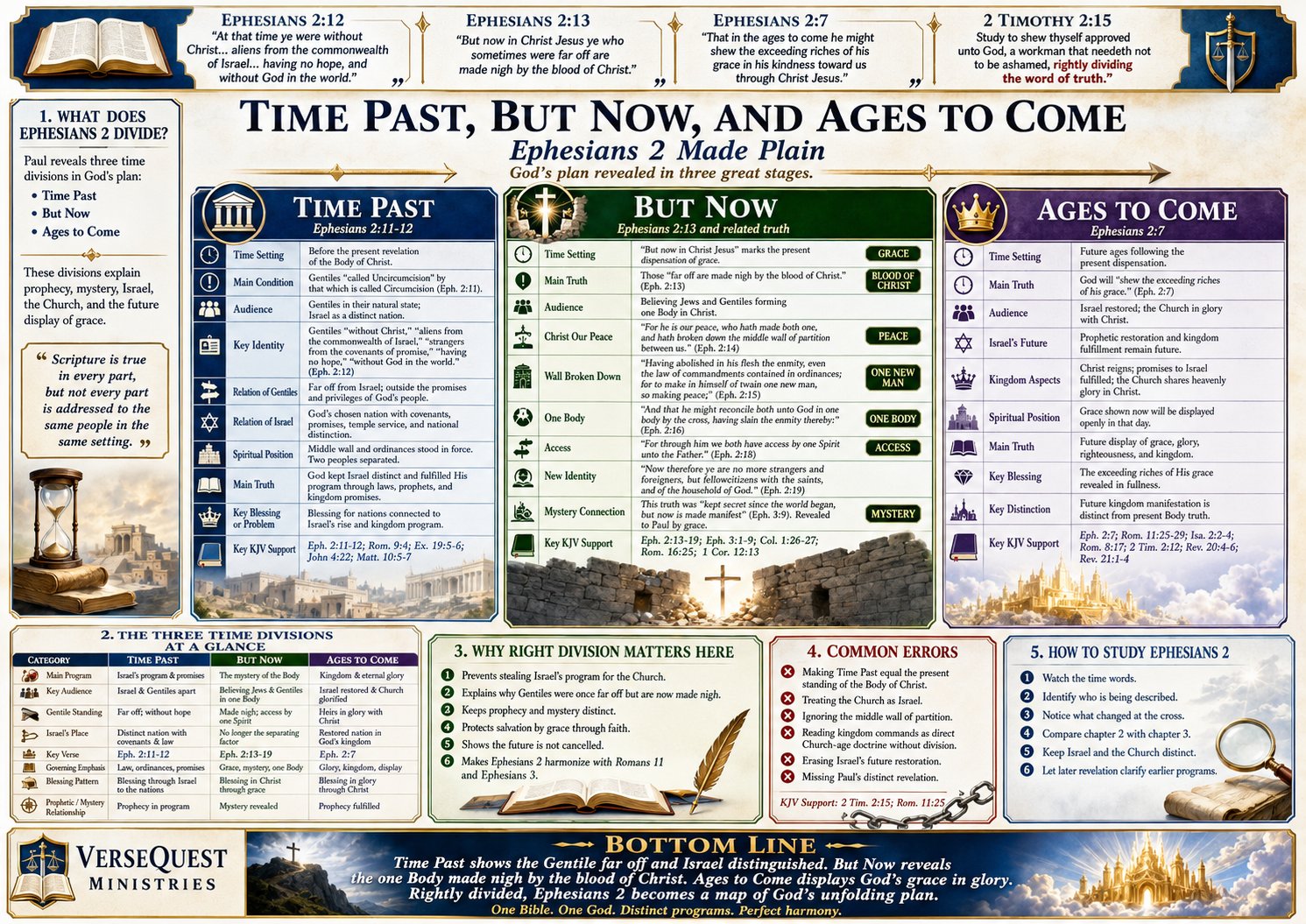
- Time Past, But Now, and Ages to Come – Ephesians 2 Rightly Divided KJV Bible Study Chart
- Understand Ephesians 2 with this detailed KJV chart explaining Time Past, But Now, Ages to Come, Gentile distance, the one Body, Israel’s future, and the importance of right division.
- $3.99
- Add to cart
-
-
The Gospel of the Kingdom
-
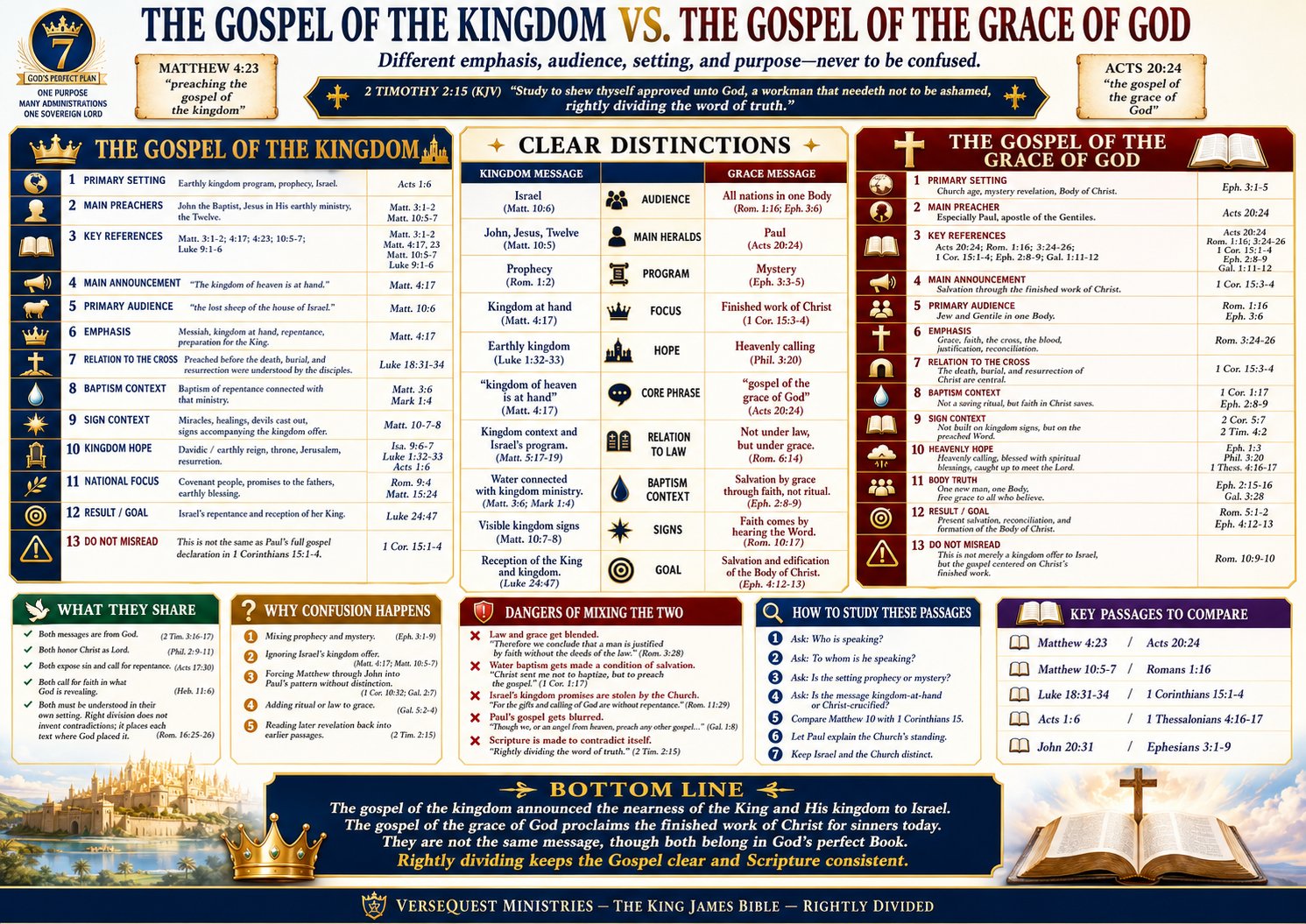
- The Gospel of the Kingdom vs. the Gospel of the Grace of God – KJV Right Division Bible Study Chart
- Compare the gospel of the kingdom and the gospel of the grace of God with this detailed KJV chart covering audience, message, prophecy, mystery, baptism, signs, salvation, and right division.
- $3.99
- Add to cart
-
-
How To Be Saved
-
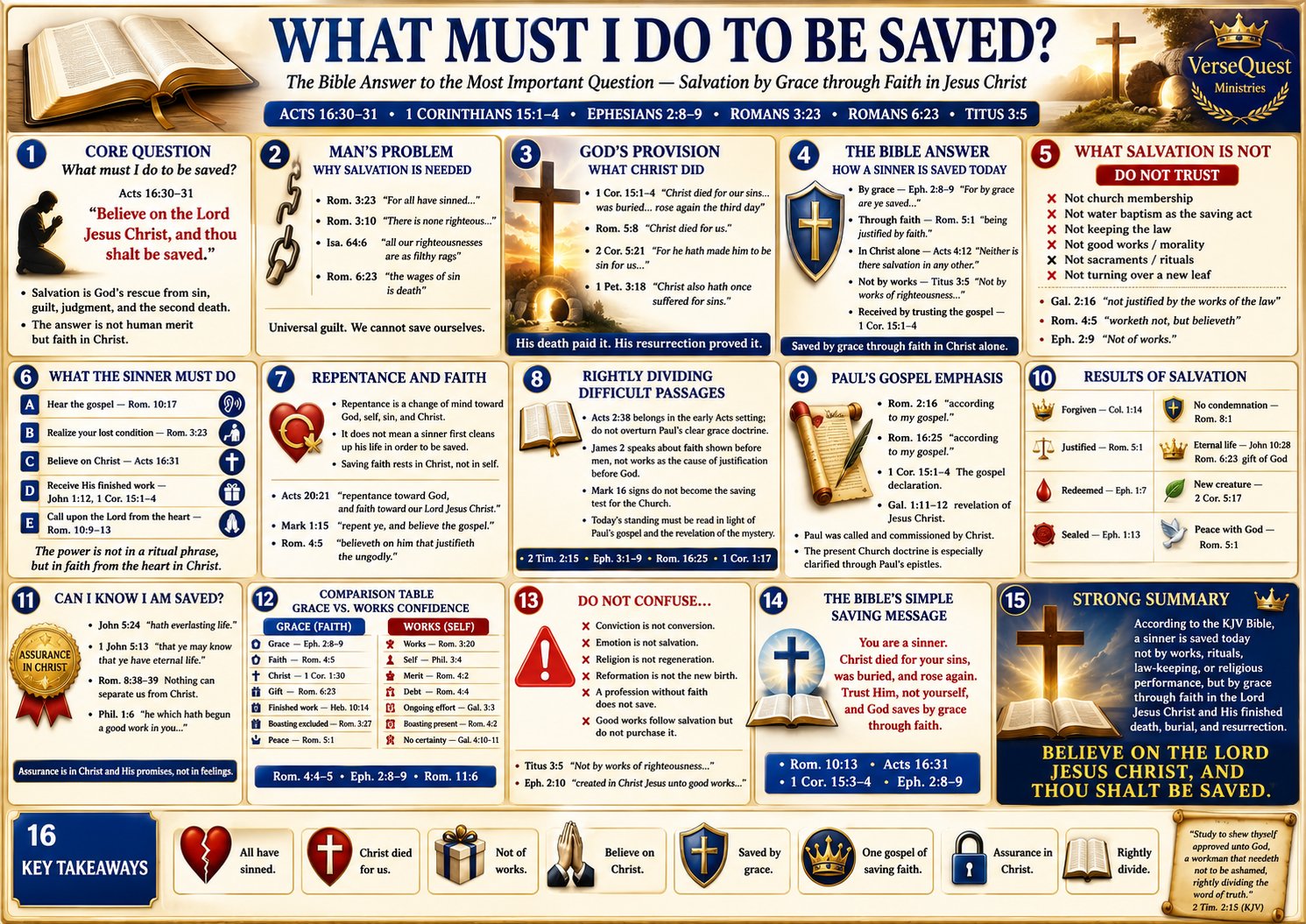
- What Must I Do to Be Saved? – Salvation by Grace Through Faith in Jesus Christ (KJV Bible Study Chart)
- Discover the Bible’s answer to “What must I do to be saved?” with this detailed KJV chart covering sin, Christ’s gospel, grace, faith, repentance, assurance, eternal life, and salvation apart…
- $3.99
- Add to cart
-
-
Jesus Christ / Christology
-
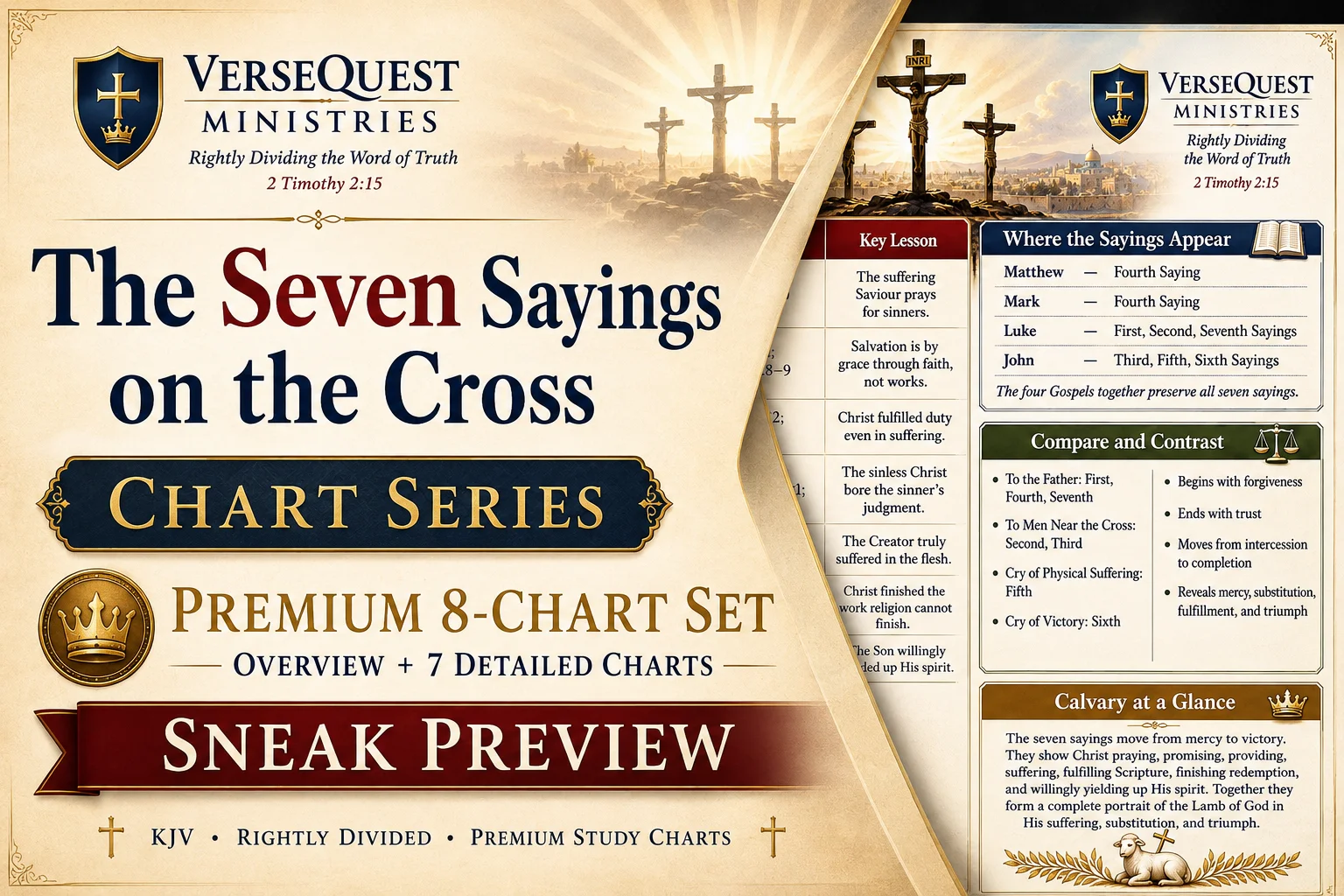
- The Seven Sayings on the Cross – Premium 8-Chart KJV Study Set
- A premium VerseQuest Ministries digital PDF study set on The Seven Sayings on the Cross, featuring an overview chart plus seven detailed KJV Bible study charts. This resource examines Calvary,…
- $12.99
- Add to cart
-
-
Proper Role of Works
-
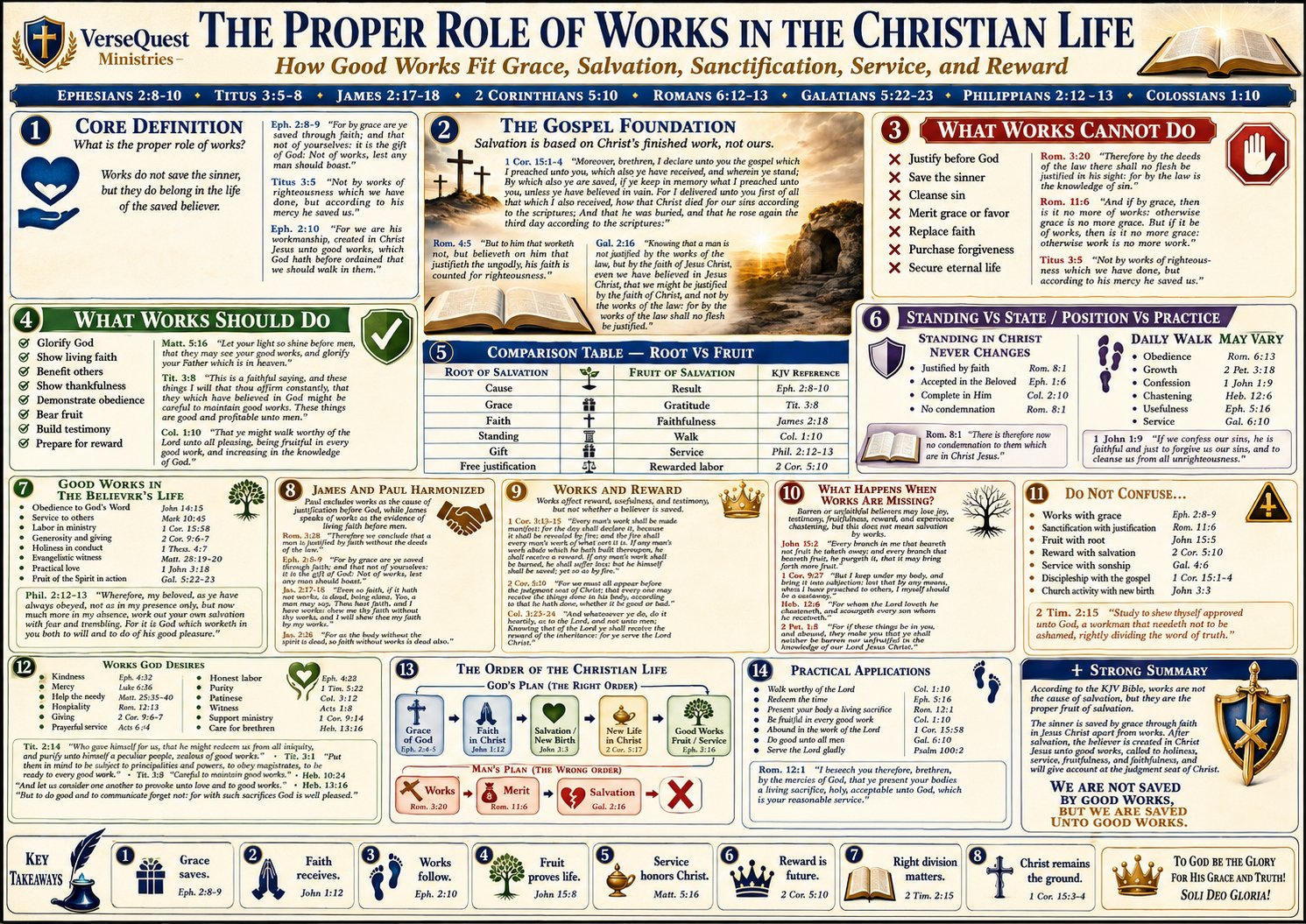
- The Proper Role of Works in the Christian Life – Grace, Salvation, Sanctification, Service, Fruit, and Reward (KJV Bible Study Chart)
- Understand the proper role of good works with this detailed KJV chart covering salvation by grace, sanctification, service, living faith, spiritual fruit, standing versus practice, the judgment seat of Christ,…
- $3.99
- Add to cart
-