
Faith and Works – Romans and James Rightly Divided: Justification Before God and the Evidence of Living Faith (KJV Bible Study Chart)
Understand how Romans and James harmonize with this detailed KJV chart covering justification by faith, dead profession, Abraham, Rahab, grace versus works, and the difference between salvation’s root and its fruit.
$3.99
Description
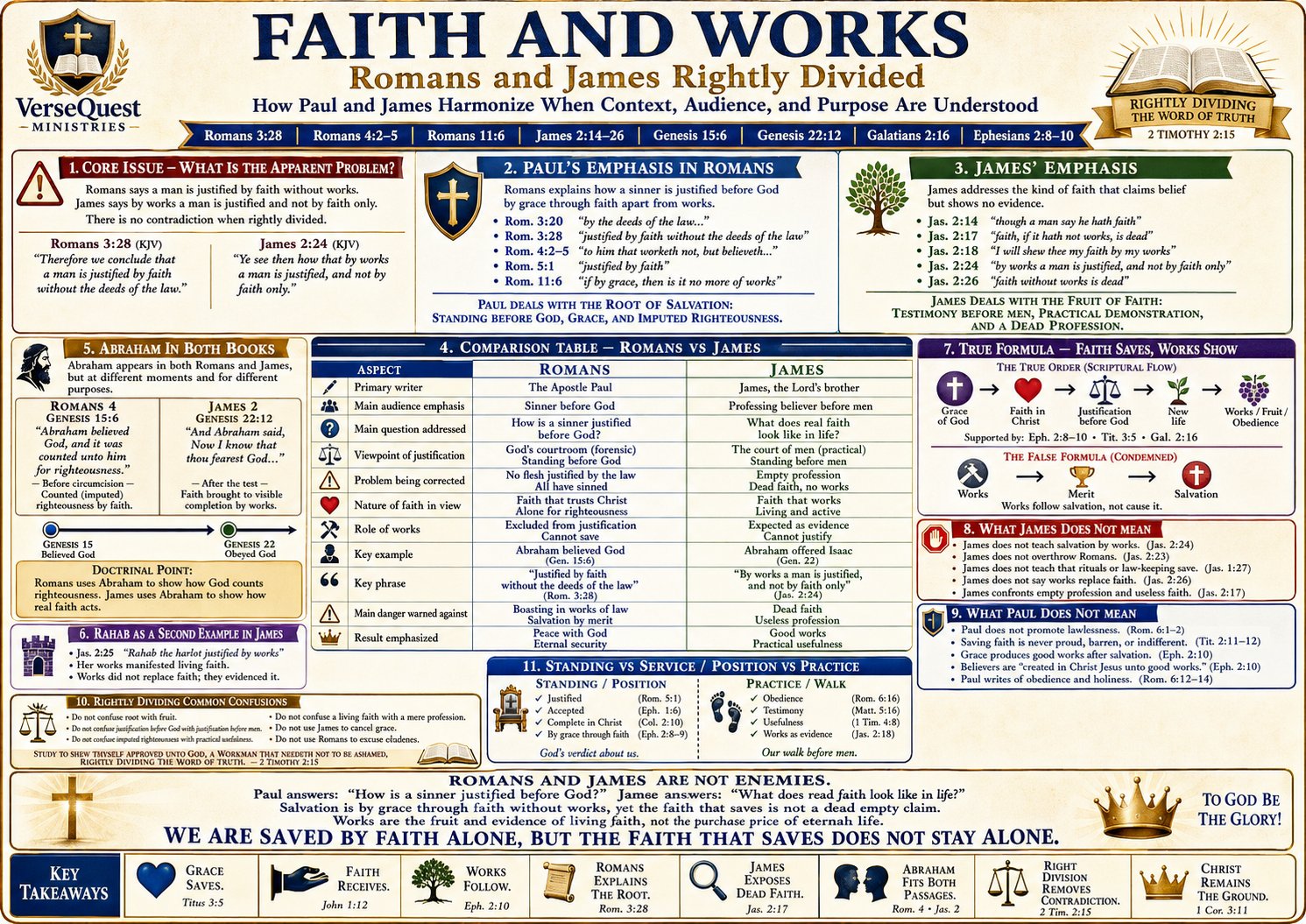
Faith and Works: Romans and James Rightly Divided is a detailed KJV Bible study chart explaining how Paul’s doctrine of justification by faith without works harmonizes perfectly with James’s teaching that faith without works is dead.
Built around Romans 3:28, Romans 4:2–5, Romans 11:6, James 2:14–26, Genesis 15:6, Genesis 22:12, Galatians 2:16, and Ephesians 2:8–10, this chart addresses one of the most frequently misunderstood comparisons in the New Testament.
Romans states, “Therefore we conclude that a man is justified by faith without the deeds of the law.” James states, “Ye see then how that by works a man is justified, and not by faith only.” Read carelessly, the statements may appear contradictory. Read in context, with the audience, question, purpose, and examples rightly divided, they fit together without damaging either grace or Christian obedience.
Paul explains how a guilty sinner receives a righteous standing before God. James confronts the empty profession of a person who claims to possess faith but offers no practical evidence that his faith is alive.
Paul deals with the root of salvation: grace, faith, Christ’s finished work, imputed righteousness, and the sinner’s standing before God. James deals with the fruit of faith: obedience, usefulness, visible testimony, and the practical demonstration of belief before others.
The chart begins by identifying the apparent difficulty. Paul excludes works from justification before God. James insists that works reveal whether a professed faith possesses life. The contradiction disappears when the two writers are allowed to answer the different questions each passage raises.
Paul asks, in effect, “How is an ungodly sinner declared righteous before God?” His answer is faith in Jesus Christ apart from law-keeping and human merit.
James asks, “What does genuine faith look like when someone claims to possess it?” His answer is that living faith acts, obeys, serves, and becomes visible through works.
Romans 3:20 declares that no flesh will be justified in God’s sight by the deeds of the law. The law reveals sin but cannot remove it. Romans 3:28 therefore concludes that justification before God is by faith without the deeds of the law.
Romans 4 strengthens the argument through Abraham. Scripture says, “Abraham believed God, and it was counted unto him for righteousness.” God counted righteousness to Abraham through faith before Abraham performed the later work discussed by James.
Paul carefully separates faith from wages. If justification were earned through works, righteousness would be a debt owed to the worker. Grace would cease to be grace, and human boasting would return.
Romans 4:5 states, “But to him that worketh not, but believeth on him that justifieth the ungodly, his faith is counted for righteousness.” God does not justify people because they have first transformed themselves into worthy candidates. He justifies the ungodly who believe.
Romans 11:6 establishes that grace and works cannot share the foundation of salvation. If salvation is by grace, it cannot be based upon works; otherwise, grace loses its meaning.
Galatians 2:16 repeats the same doctrine three times in one verse: a person is not justified by the works of the law but by the faith of Jesus Christ. Paul leaves no opening through which baptism, law-keeping, rituals, morality, religious effort, or personal merit can be smuggled into the saving foundation.
Ephesians 2:8–9 declares that salvation is by grace through faith, the gift of God, and not of works. Verse 10 then explains the proper place of works: believers are created in Christ Jesus unto good works.
Good works are therefore not rejected. They are placed after salvation rather than before it. Works are the result of new life, not the purchase price of eternal life.
The chart then examines James’s emphasis. James addresses the person who “says” he has faith. The central issue is not whether faith saves but whether the claimed faith possesses any observable life.
James 2:14 asks, “What doth it profit, my brethren, though a man say he hath faith, and have not works?” The problem begins with a verbal profession unsupported by conduct.
James illustrates the point through a brother or sister lacking food and clothing. Merely saying, “Depart in peace, be warmed and filled,” provides no practical help. Words without action are useless to the suffering person.
In the same way, a claimed faith that never acts, obeys, serves, gives, or changes anything is dead in its practical usefulness. James does not teach that compassionate works purchase justification before God. He teaches that a profession containing no evidence has no profitable testimony.
James 2:18 provides the controlling statement: “Shew me thy faith without thy works, and I will shew thee my faith by my works.” Faith itself is invisible to men. Works make its presence visible.
God can see the heart directly. Human observers cannot. Men see conduct, choices, sacrifice, obedience, charity, endurance, and testimony. Works demonstrate outwardly what faith has received inwardly.
James also warns that mere intellectual agreement is not saving faith. Devils believe that one God exists and tremble, but they do not trust, love, obey, or receive Jesus Christ as Saviour.
Saving faith is more than possessing correct facts. It rests personally in Christ and His finished work. Living faith then produces appropriate fruit as the believer grows.
The chart compares Romans and James across several categories. Paul is the apostle of the Gentiles and explains grace doctrine for the present Body of Christ. James writes to the twelve tribes scattered abroad and addresses practical faith, conduct, endurance, speech, partiality, and works.
Paul’s principal question is how a sinner is justified before God. James’s concern is what a real profession of faith looks like in life.
Paul’s viewpoint is God’s courtroom. James emphasizes the practical court of human observation and testimony. God declares the believer righteous by faith; works demonstrate the reality and usefulness of that faith before men.
Paul corrects self-righteousness, law-keeping, boasting, and the attempt to earn acceptance. James corrects empty profession, dead faith, verbal religion, and conduct that refuses to support its claims.
Paul excludes works from the basis of justification. James expects works as the evidence and practical expression of faith.
Paul emphasizes standing, imputed righteousness, peace with God, and eternal security. James emphasizes testimony, obedience, practical usefulness, and mature Christian conduct.
The chart uses Abraham to show how both passages fit. Genesis 15:6 records Abraham believing God and having righteousness counted to him. Genesis 22 records Abraham offering Isaac many years later.
Paul appeals to Genesis 15, when Abraham believed God and was counted righteous. This establishes the root: justification by faith.
James appeals to Genesis 22, when Abraham’s faith was tested and brought to visible maturity through obedience. This establishes the fruit: faith demonstrated through works.
Abraham was not first saved in Genesis 22. He had already been counted righteous in Genesis 15. The offering of Isaac revealed, fulfilled, and demonstrated the faith he already possessed.
James says Abraham’s faith “wrought with his works” and was made perfect or brought to its intended maturity through them. His obedience did not replace faith; it expressed faith.
This distinction preserves both passages. Romans explains how God counted Abraham righteous. James explains how Abraham’s later obedience showed the reality of his confidence in God.
The chart also examines Rahab. James states that Rahab was justified by works when she received the messengers and sent them out another way.
Rahab’s actions demonstrated that she truly believed the God of Israel. She risked her life because she accepted God’s judgment upon Jericho and trusted His power to deliver.
Her works did not replace faith. Hebrews 11:31 explicitly identifies Rahab’s response as an act of faith. The outward conduct revealed the inward conviction.
A major panel presents the proper biblical order: the grace of God, faith in Christ, justification before God, new life, and then works, fruit, and obedience.
The false formula reverses that order by placing human works first and treating salvation as the reward for merit. Scripture condemns that arrangement because it makes man his own partial saviour and reduces grace to wages.
Works follow salvation; they do not cause it. The sinner is saved by Christ’s work, not by his own. After salvation, the believer should walk in the good works God has prepared for him.
The chart explains what James does not mean. James does not teach salvation by works, overthrow Romans, make law-keeping the means of eternal life, replace faith with religious effort, or support empty ceremonialism.
James himself states that whoever keeps the whole law but offends in one point is guilty of all. That truth destroys confidence in law-keeping as the road to justification.
James also identifies true religion through practical care and personal holiness, not ritual achievement. His rebuke concerns unprofitable profession rather than a failure to earn redemption.
Neither does James teach that one work automatically proves salvation beyond all question. Works can be counterfeited, motives can be hidden, and religious activity can be performed by the unsaved.
The broader biblical test includes the gospel believed, the Christ trusted, the doctrine confessed, and the life produced. Works alone are not the Saviour, but a lifelong profession entirely barren of spiritual evidence deserves serious examination.
The chart also explains what Paul does not mean. Paul does not promote lawlessness, indifference, spiritual laziness, or a fruitless Christian life.
Romans 6 rejects the claim that grace gives permission to continue in sin. The justified believer has been identified with Christ’s death and resurrection and is commanded to yield himself unto God.
Titus teaches that grace trains believers to deny ungodliness and worldly lusts. Grace does not merely pardon; it teaches.
Ephesians 2:10 says believers are God’s workmanship, created in Christ unto good works. Paul excludes works from salvation and then commands works as the believer’s reasonable service.
Paul’s letters contain extensive instruction concerning holiness, charity, church service, honesty, marriage, work, giving, prayer, separation, doctrine, and Christian responsibility. A grace gospel never becomes an excuse for graceless conduct.
Another major distinction is between standing and service, or position and practice. The believer’s standing includes justification, acceptance, completeness in Christ, and salvation by grace.
His practice includes obedience, testimony, usefulness, service, fruit, and works visible before men. Standing is God’s verdict about the believer in Christ. Practice is the believer’s daily walk before the world.
Poor practice can damage fellowship, testimony, usefulness, joy, and reward. It does not improve or overturn the finished work upon which justification rests.
This distinction prevents despair without encouraging carelessness. The believer does not earn acceptance through works, but because he is accepted in Christ, he should desire to honour the Saviour through obedience.
The chart warns against several common confusions. The root must not be confused with the fruit. Judicial justification before God must not be confused with visible demonstration before men.
Imputed righteousness must not be confused with practical righteousness. A living faith must not be confused with mere verbal profession.
Romans should not be used to excuse disobedience, and James should not be used to cancel grace. Neither passage should be forced to answer the other writer’s precise question without regard for context.
The two books are not enemies. Paul answers, “How is a sinner justified before God?” James answers, “What does real faith look like when it enters daily life?”
Paul protects the gospel from human merit. James protects Christian profession from empty words. Paul removes works from the root. James expects works in the fruit.
The result is a complete biblical picture: salvation is entirely by grace through faith in Jesus Christ, yet the faith that saves should not remain barren, inactive, indifferent, and useless.
A believer may experience seasons of weakness, immaturity, failure, chastening, and slow growth. James is not teaching instant perfection. He is confronting a profession that continually uses the language of faith while refusing the life and responsibility faith should produce.
The final conclusion is memorable: we are saved by faith alone, but the faith that saves does not stay alone. It produces obedience, charity, endurance, service, and testimony—not as the price of salvation, but as the fruit of new life.
Christ remains the ground of justification. Faith receives Him. Grace saves. Works follow. Right division allows Romans and James to speak with one voice without converting salvation into human merit or Christian liberty into dead profession.
This resource is ideal for personal Bible study, Romans and James comparisons, justification-by-faith teaching, grace-versus-works studies, pastoral counseling, discipleship, Sunday school, homeschool Bible curriculum, Bible institutes, sermon preparation, Catholic and works-salvation apologetics, and anyone seeking to understand how faith and works fit together biblically.
Faith and works, Romans and James, justification by faith, justification without works, faith without works is dead, living faith, dead profession, grace versus works, imputed righteousness, Abraham believed God, Abraham offered Isaac, Rahab’s faith, root and fruit of salvation, standing versus service, position versus practice, salvation by grace, evidence of faith, good works after salvation, Pauline doctrine, rightly dividing Scripture
Romans and James address different questions and should not be forced into an artificial contradiction.
Paul explains how an ungodly sinner receives justification before God. James explains what a claimed faith should look like in practical life.
Romans presents God’s judicial declaration. James presents the visible demonstration of faith through works.
Romans excludes works from the saving foundation. James expects works as evidence and fruit.
Romans attacks self-righteousness, law-keeping, boasting, and the attempt to earn salvation.
James attacks empty profession, dead faith, verbal religion, partiality, and conduct that contradicts a claim of belief.
Romans 3:28 states that a man is justified by faith without the deeds of the law.
James 2:24 says a man is justified by works and not by faith only. Context determines the different senses and viewpoints involved.
James 2:18 supplies the practical key: “I will shew thee my faith by my works.”
God sees faith directly. Men ordinarily see its outward evidence through conduct.
Romans 4 uses Abraham in Genesis 15, when he believed God and righteousness was counted to him.
James 2 uses Abraham in Genesis 22, when he offered Isaac and demonstrated the faith he already possessed.
Genesis 15 occurred years before Genesis 22. Abraham was counted righteous before the later work of offering Isaac.
Isaac’s offering did not create Abraham’s faith. It tested, revealed, and brought that faith to visible maturity.
Paul uses Abraham to show how righteousness is imputed. James uses Abraham to show how living faith acts.
Rahab’s works demonstrated her belief in Israel’s God. Hebrews 11 also identifies her action as faith.
Rahab was not saved because deceit, danger, or political action possessed saving merit. Her actions revealed that she believed God’s warning.
The demons’ belief demonstrates that intellectual acknowledgment alone is not personal trust in Christ.
Saving faith receives Jesus Christ and His finished work. It is not mere agreement with isolated religious facts.
Grace is the source of salvation. Faith receives the gift. Justification is God’s verdict. Good works follow as fruit.
Works cannot precede grace as the cause of salvation. That arrangement turns the gift into wages.
Ephesians 2:8–9 excludes works from salvation. Ephesians 2:10 places good works after salvation.
Paul does not teach lawlessness. Romans 6 rejects the idea that grace excuses continued sin.
James does not teach salvation by law-keeping. James 2:10 states that one offense makes the lawbreaker guilty of all.
The works in James provide profit, testimony, usefulness, and visible evidence. They do not replace Christ’s finished work.
A believer’s standing is settled in Christ. His service and walk remain matters of obedience, growth, usefulness, and reward.
Poor works may bring chastening and loss of reward without reversing justification by faith.
A false profession should not receive automatic assurance merely because someone says the correct words.
At the same time, spiritual fruit should not be turned into a second saviour or used to place sincere believers under constant uncertainty.
Spiritual growth may be slow and imperfect. James confronts dead profession, not every immature Christian struggling to grow.
Right division preserves the gospel while still demanding practical Christian living.
Paul and James agree that real salvation comes from God and that genuine faith should affect the believer’s life.
The final order must remain fixed: grace saves, faith receives, Christ justifies, new life follows, and works display the result.
Romans and James comparison studies, justification-by-faith teaching, grace-versus-works lessons, answering apparent Bible contradictions, Abraham Bible studies, Rahab character studies, Catholic apologetics, refuting works-based salvation, explaining dead faith, new-believer discipleship, Christian service instruction, standing-versus-walk teaching, eternal-reward studies, pastoral counseling, Sunday school lessons, homeschool Bible curriculum, Christian school teaching, Bible institute classes, sermon preparation
King James Bible, Strong’s Concordance, Thompson Chain-Reference Bible, Treasury of Scripture Knowledge, Nave’s Topical Bible, Romans 3–5 study notes, James 2 commentary materials, Genesis 15 and Genesis 22 comparison studies, Abraham timeline charts, Rahab Bible-character resources, grace-versus-works worksheets, justification-by-faith studies, standing-and-service charts, Pauline epistle outlines, Catholic doctrine comparison materials, VerseQuest salvation and right-division charts
Related products
-
Lordship Salvation Exposed
-
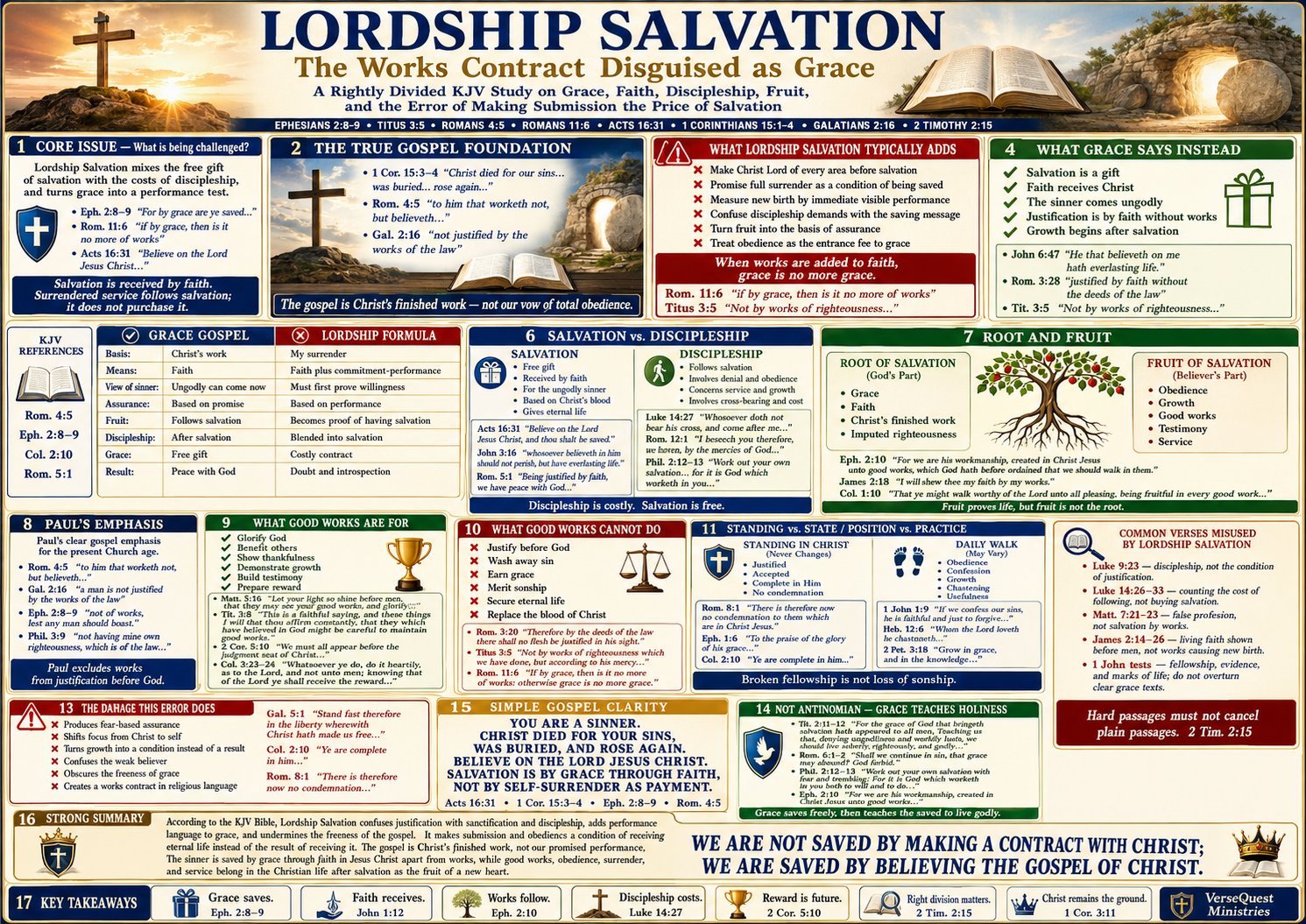
- Lordship Salvation Exposed – The Works Contract Disguised as Grace and the Difference Between Salvation and Discipleship (KJV Bible Study Chart)
- Examine Lordship Salvation with this detailed KJV chart distinguishing the free gift of salvation from costly discipleship, justification from sanctification, and the root of grace from the fruit of Christian…
- $3.99
- Add to cart
-
-
What Was Completed at Calvary
-
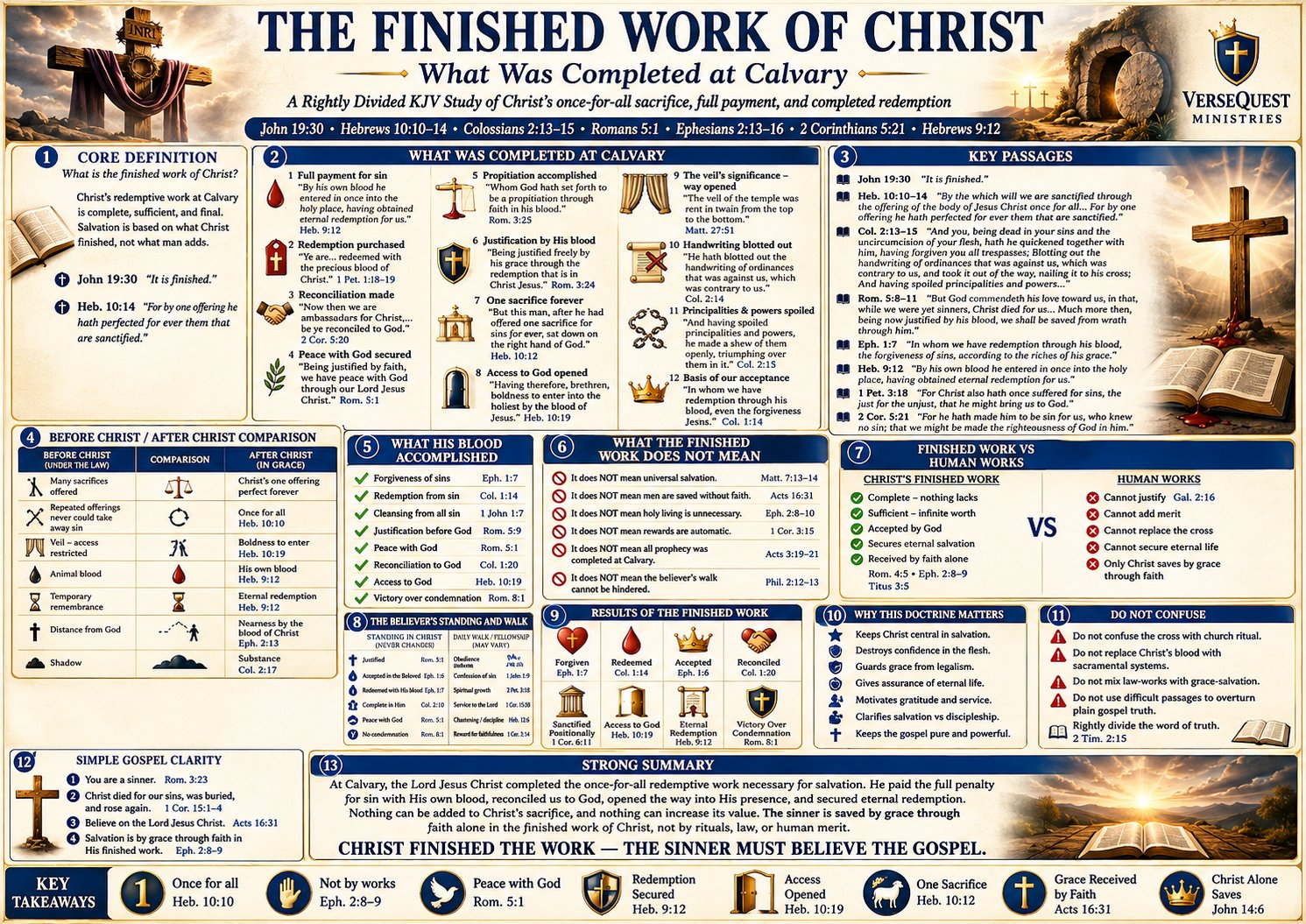
- The Finished Work of Christ – What Was Completed at Calvary Through His Once-for-All Sacrifice (KJV Bible Study Chart)
- Understand the finished work of Christ with this detailed KJV chart covering Calvary’s full payment, redemption, justification, reconciliation, propitiation, access to God, one sacrifice forever, and salvation apart from human…
- $3.99
- Add to cart
-
-
Repentance Rightly Divided
-
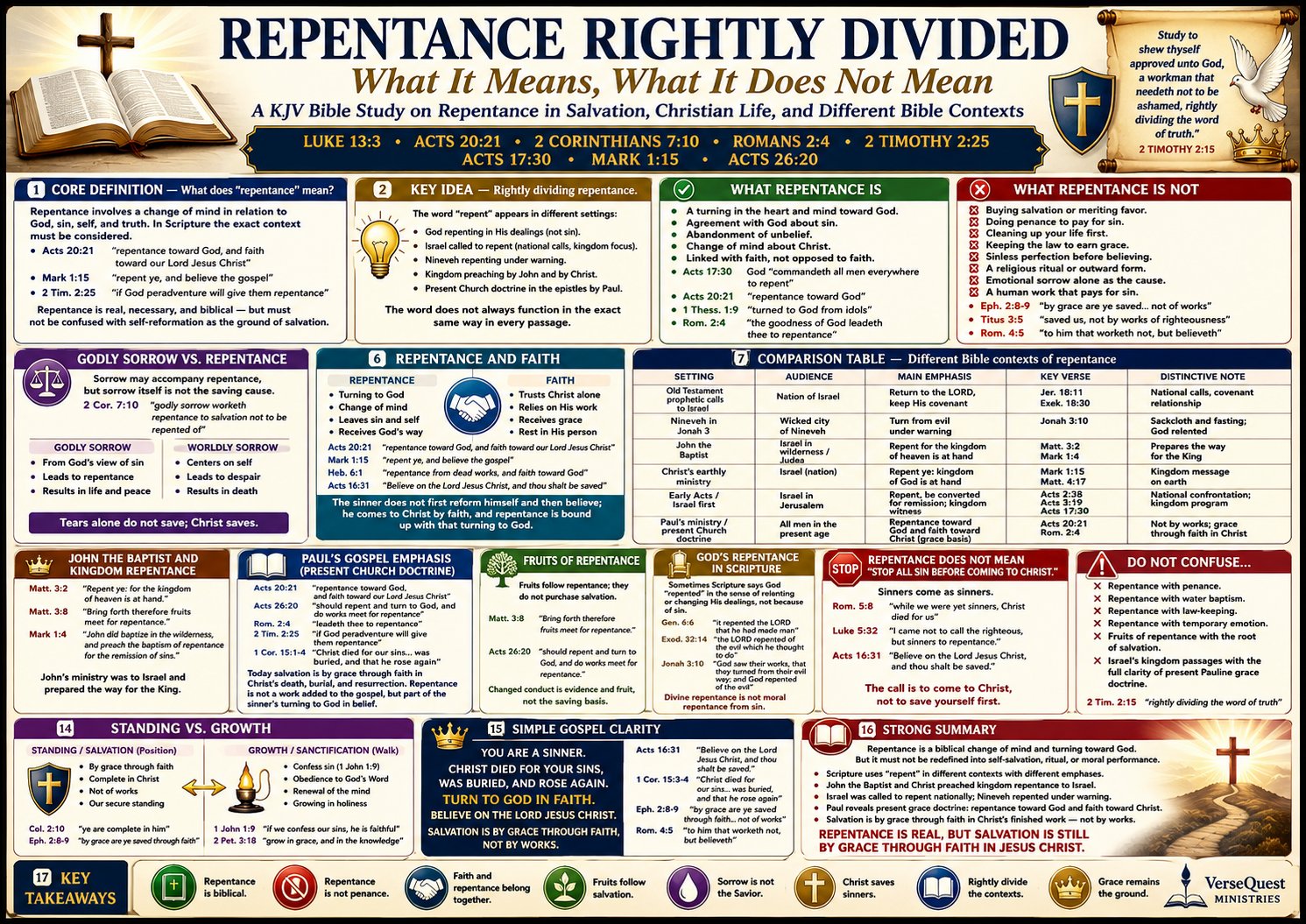
- Repentance Rightly Divided – What It Means, What It Does Not Mean, and Its Place in Salvation and Christian Life (KJV Bible Study Chart)
- Understand repentance rightly divided with this detailed KJV chart covering change of mind, repentance and faith, godly sorrow, fruits of repentance, Kingdom contexts, Christian growth, and salvation by grace through…
- $3.99
- Add to cart
-
-
Precious Blood of Christ
-
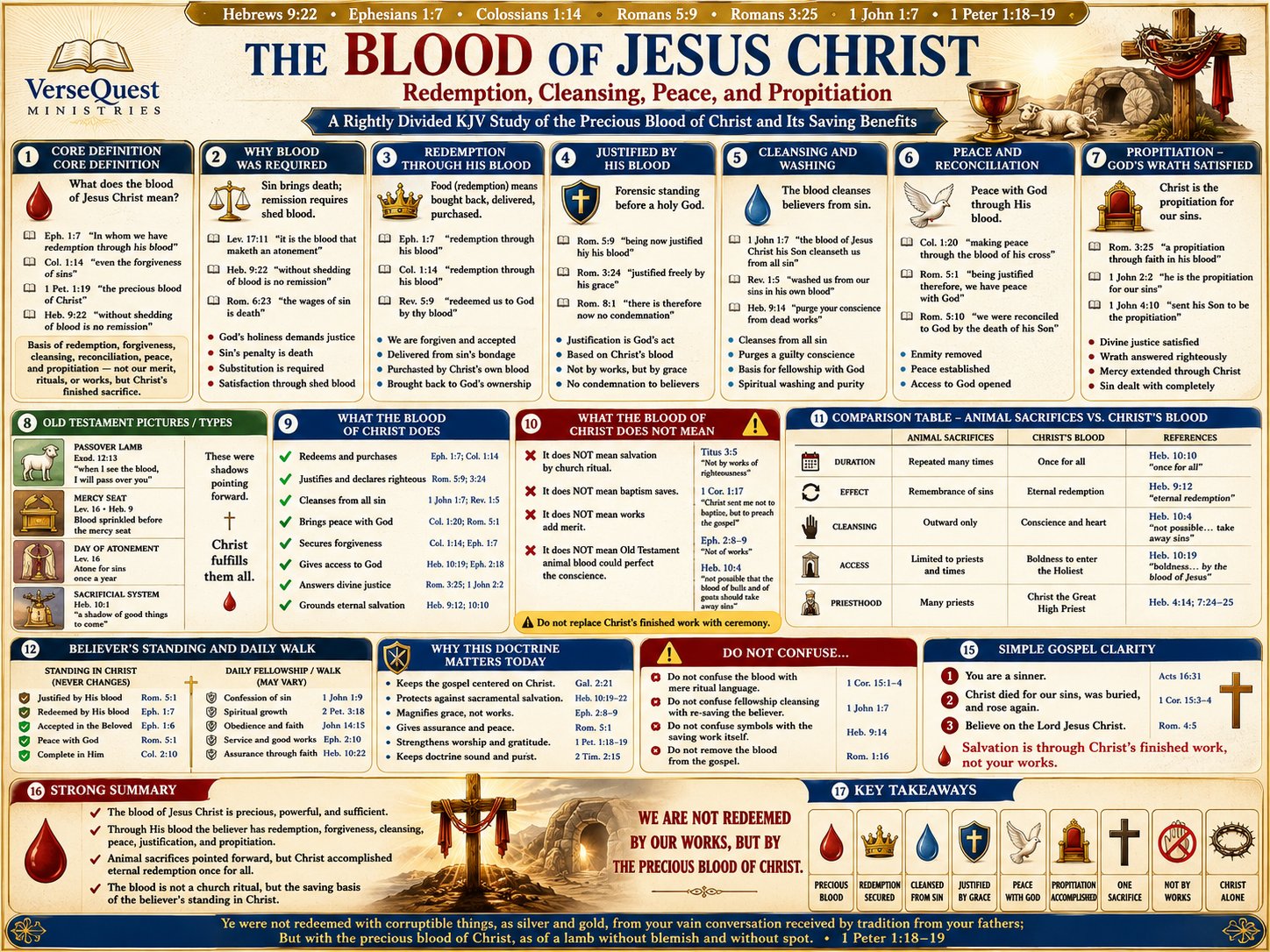
- The Blood of Jesus Christ – Redemption, Cleansing, Justification, Peace, and Propitiation (KJV Bible Study Chart)
- Study the saving power of the blood of Jesus Christ with this detailed KJV chart covering redemption, forgiveness, justification, cleansing, peace, reconciliation, propitiation, Old Testament sacrifices, and Christ’s one sufficient…
- $3.99
- Add to cart
-
-
Doctrine
-
-50%
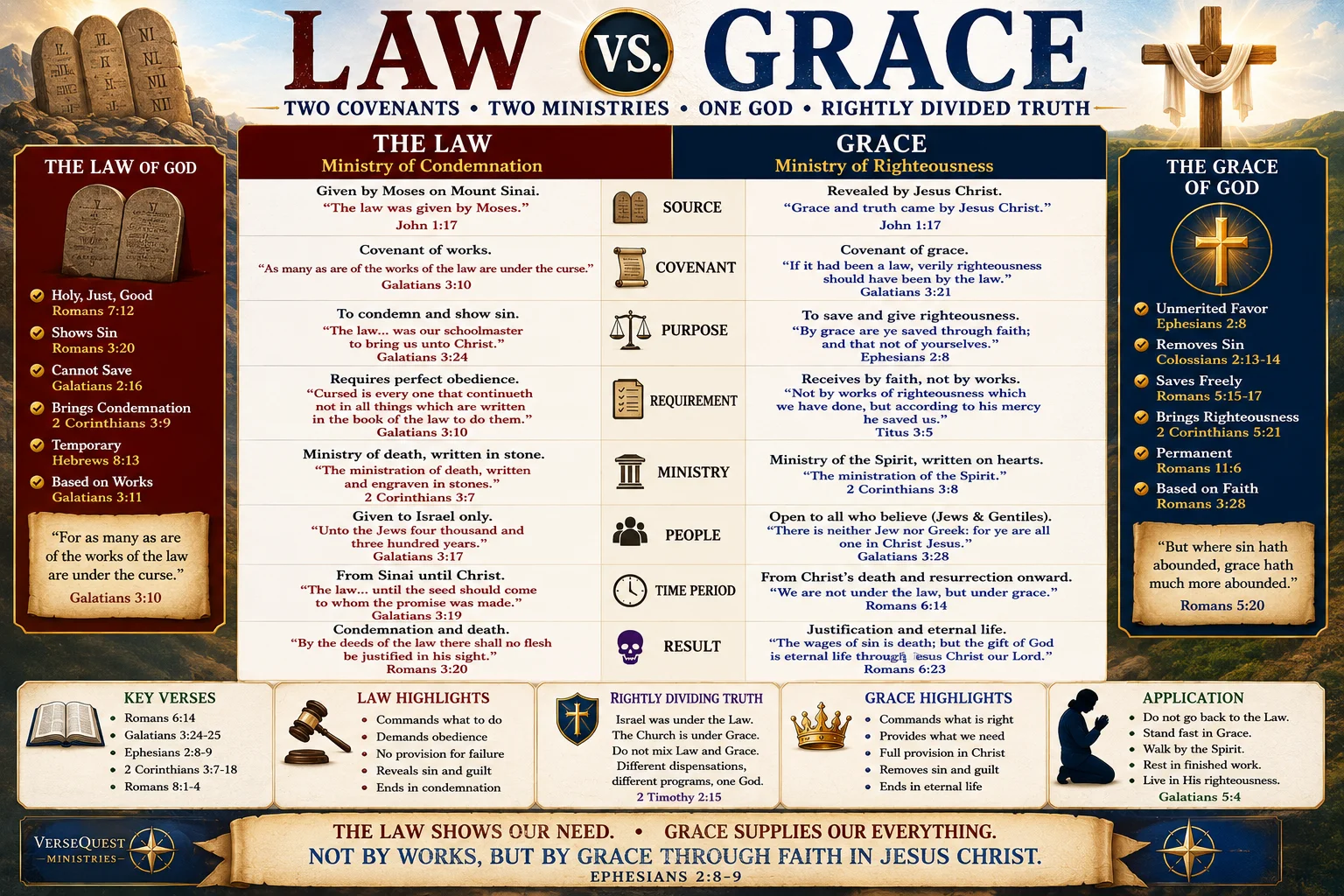
- Law vs. Grace Chart — KJV Rightly Divided
- Premium printable KJV Bible study chart comparing Law and Grace from a rightly divided perspective, showing works versus faith, condemnation versus righteousness, and Moses versus Christ.
- Original price was: $10.00.$4.99Current price is: $4.99.
- Add to cart
-
-50%