
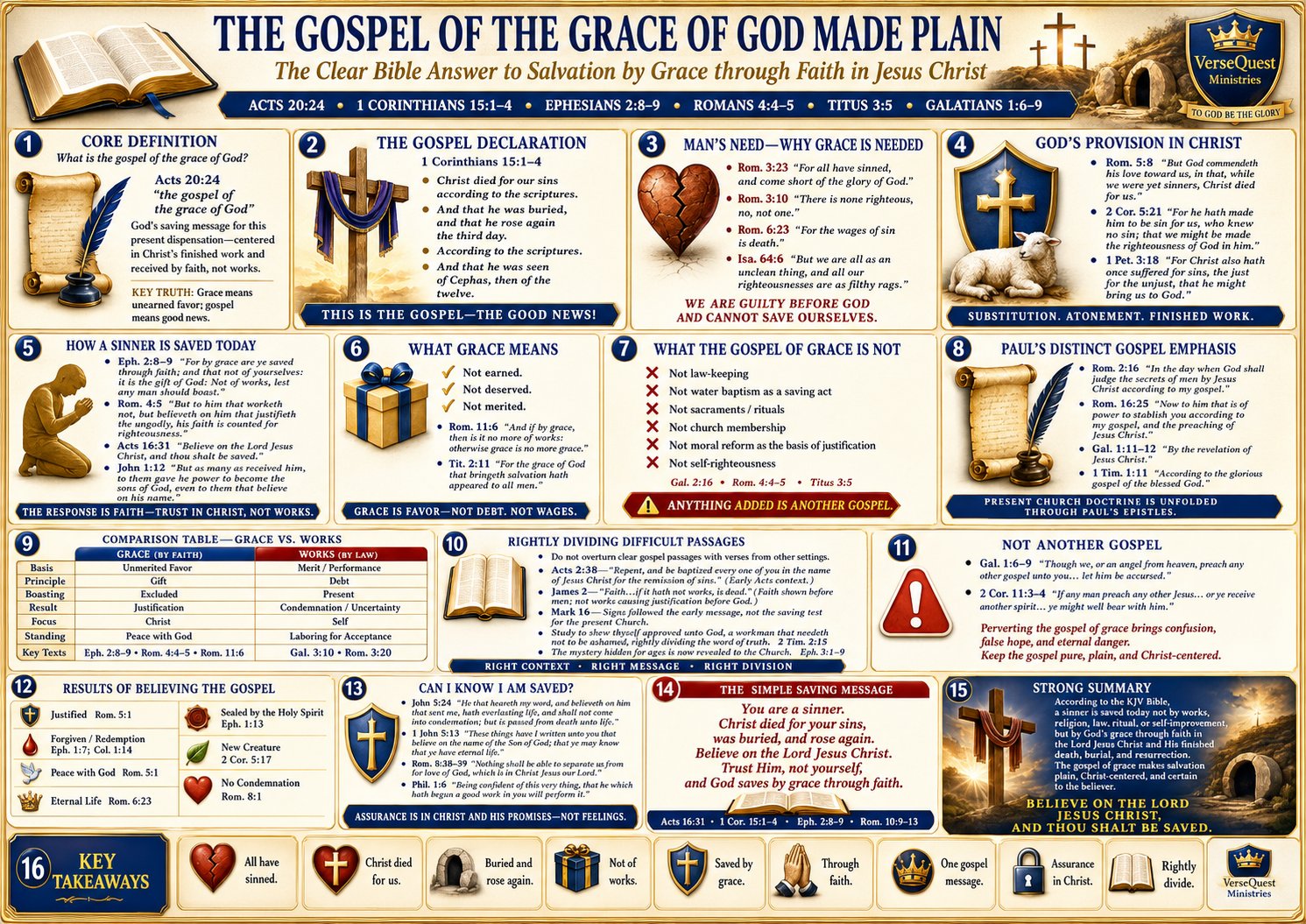
The Gospel of the Grace of God Made Plain – Salvation by Grace Through Faith in Jesus Christ (KJV Bible Study Chart)
Understand the gospel of the grace of God with this detailed KJV chart covering Christ’s death, burial, resurrection, salvation by faith, grace versus works, assurance, and eternal life.
$3.99
Description
The Gospel of the Grace of God Made Plain is a detailed KJV Bible study chart presenting the clear biblical message of salvation through the finished work of the Lord Jesus Christ. Built around Acts 20:24, 1 Corinthians 15:1–4, Ephesians 2:8–9, Romans 4:4–5, Titus 3:5, and Galatians 1:6–9, this chart explains what the gospel of grace is, why every sinner needs it, what Jesus Christ accomplished, how salvation is received, what grace means, and why religious works cannot be added to the gospel.
Acts 20:24 identifies Paul’s ministry with “the gospel of the grace of God.” This is God’s saving message for the present dispensation, centred upon the death, burial, and resurrection of Jesus Christ and received through faith rather than law-keeping, religious ritual, church membership, personal merit, or human performance.
The word gospel means good news. The gospel is not advice telling sinners how to improve themselves until they become acceptable to God. It is the announcement that Jesus Christ has already accomplished the redemptive work guilty sinners could never accomplish for themselves.
First Corinthians 15:1–4 provides the gospel declaration plainly: Christ died for our sins according to the Scriptures, He was buried, and He rose again the third day according to the Scriptures. These events form the historical and doctrinal foundation of salvation.
Christ’s death was not merely an example of courage, love, or martyrdom. He died “for our sins.” He took the sinner’s place, bore divine judgment, shed His blood, and paid the debt demanded by God’s righteousness.
His burial confirmed that He truly died. His resurrection demonstrated that death had been defeated, His sacrifice had been accepted, and the living Saviour possesses the power to give eternal life to everyone who believes.
The gospel is therefore good news about what Christ has done, not a religious contract describing what sinners must accomplish. The saving work belongs to Jesus Christ from beginning to end.
The chart explains why grace is necessary by confronting mankind’s universal guilt. Romans 3:23 declares that all have sinned and come short of the glory of God. Romans 3:10 says there is none righteous, and Romans 6:23 identifies death as the wages earned by sin.
Isaiah compares human righteousness to filthy rags. Fallen people cannot produce the perfect righteousness required by a holy God. Even respectable conduct cannot erase previous guilt, reverse spiritual death, conquer the grave, or satisfy divine justice.
The sinner does not merely need encouragement, education, religious improvement, or another opportunity to prove himself. He needs a Substitute, Redeemer, and Saviour.
God provided that Saviour in Jesus Christ. Romans 5:8 declares that Christ died for sinners while they were still lost and guilty. God did not wait for humanity to become worthy before displaying His love.
Second Corinthians 5:21 explains that the sinless Christ was made sin for us so that believers might be made the righteousness of God in Him. The sinner’s guilt was placed upon the Substitute, and Christ’s righteousness is credited to the believer.
First Peter 3:18 teaches that Christ, the Just, suffered for the unjust to bring sinners to God. This is substitution, atonement, reconciliation, and completed redemption.
The gospel rests upon the finished work of Jesus Christ. Salvation is not Christ doing most of the work while the sinner completes the remainder through ceremonies, morality, sacraments, endurance, or institutional loyalty. Jesus paid the entire debt.
The chart answers how a sinner is saved today. Ephesians 2:8–9 teaches that salvation is by grace through faith and is the gift of God, not the result of works. Romans 4 describes the person who does not attempt to work for justification but believes on the God who justifies the ungodly.
Acts 16:31 gives the direct response: “Believe on the Lord Jesus Christ, and thou shalt be saved.” The sinner must place his confidence in Jesus Christ rather than in himself, his church, his baptism, his goodness, or his religious history.
John 1:12 describes receiving Christ by believing on His name. Saving faith personally relies upon the Lord Jesus Christ as the crucified and risen Saviour.
Faith is not payment offered to God. It is the empty hand receiving the gift grace provides. The power is not in the strength of the sinner’s feelings but in the sufficiency of the Saviour upon whom faith rests.
The chart carefully defines grace. Grace is not earned, deserved, or merited. It is God’s unmerited favour extended to guilty sinners because Jesus Christ satisfied divine justice.
Romans 11:6 establishes that grace and works cannot be blended as the basis of salvation. If salvation is by grace, it is no longer of works. If human performance contributes to the saving foundation, grace has ceased to function as grace.
Grace is favour, not wages. It is gift, not debt. It excludes boasting because the saved sinner contributed nothing to the purchase price of redemption.
Titus 2 teaches that the same grace bringing salvation also teaches believers to deny ungodliness and live soberly, righteously, and godly. Grace does not excuse sin; it saves the sinner freely and then instructs the believer to live for the Lord who redeemed him.
A major section explains what the gospel of grace is not. It is not law-keeping, water baptism as a saving act, sacramental participation, church membership, moral reform as the basis of justification, or self-righteousness.
The law reveals sin but cannot cure it. No sinner has kept God’s law perfectly, and the law cannot erase the guilt of those who have broken it. Its righteous standard exposes the need for Christ.
Water baptism cannot save because physical water cannot wash guilt from the soul, impart the righteousness of Jesus Christ, or complete the cross. Baptism may serve as an outward testimony in its proper setting, but it cannot become the redemptive work itself.
Sacraments and rituals cannot add saving power to Calvary. A religious ceremony performed by man cannot improve the one sacrifice offered by the Son of God.
Church membership cannot regenerate a sinner. A person may belong to a respected congregation, know Christian vocabulary, participate in ministry, and remain spiritually lost.
Moral reform may improve earthly conduct, but it cannot create the new birth. Turning over a new leaf is not the same as receiving a new life in Christ.
Self-righteousness is especially dangerous because it hides human guilt beneath respectable behaviour. The self-righteous person may compare favourably with others while still falling infinitely short of God’s glory.
The chart’s warning is clear: anything added to the saving work of Christ becomes another gospel. Galatians 1 condemns those who pervert the gospel of Christ by mixing it with another religious system.
The chart compares grace and works directly. Grace rests upon God’s unmerited favour, operates as a gift, excludes boasting, produces justification, centres upon Jesus Christ, and gives peace with God.
Works depend upon merit and performance, create debt, preserve human boasting, produce uncertainty, focus attention upon self, and leave the sinner labouring for acceptance he can never securely obtain.
The gospel does not teach that Christ assists good people in saving themselves. It announces that Christ completely saves ungodly people who trust Him.
A central section explains Paul’s distinct gospel emphasis. Romans 2:16 and Romans 16:25 refer to “my gospel,” not because Paul invented another Saviour, but because the risen Christ entrusted him with a particular revelation, commission, and stewardship for the Gentiles and the present dispensation.
Galatians 1 records that Paul received his message through the revelation of Jesus Christ rather than from human tradition. First Timothy 1:11 connects his ministry with the glorious gospel committed to his trust.
Paul’s epistles provide the clearest doctrinal explanation of salvation, justification, reconciliation, grace, the Body of Christ, the believer’s standing, eternal security, Christian growth, and heavenly hope during the present dispensation.
The chart also explains the necessity of rightly dividing difficult passages. Clear gospel doctrine should not be overturned by verses removed from other audiences, settings, and programs.
Acts 2:38 belongs within the early Acts setting involving Israel, Pentecost, the rejected Messiah, national responsibility, and the continued Kingdom context. It should not be isolated and used to contradict salvation by grace through faith.
James 2 discusses faith demonstrated through works before men. Romans 4 addresses the ungodly sinner’s justification before God apart from works. These passages harmonize when their questions and contexts are distinguished.
Mark 16 belongs within an apostolic and Kingdom sign setting. Its signs should not be transformed into the present test of whether a sinner has truly received eternal life.
Second Timothy 2:15 commands believers to rightly divide the Word of Truth. Correct interpretation identifies the audience, purpose, revelation, and doctrinal setting before applying a passage.
The gospel of grace must remain pure. Second Corinthians 11 warns of another Jesus, another spirit, and another gospel. False religion may use Christian language while changing the identity of Christ or adding human requirements to His finished work.
Perverting the gospel produces confusion, false hope, bondage, and eternal danger. A message that points people toward Christ while also requiring religious works leaves them uncertain about whether the Saviour is sufficient.
The true gospel is pure, plain, Christ-centred, and complete. Jesus Christ died for sins, was buried, rose again, and saves every sinner who places faith in Him.
The results of believing the gospel are immediate and glorious. The believer is justified, forgiven, redeemed, reconciled, given peace with God, made a new creature, sealed by the Holy Spirit, delivered from condemnation, and given eternal life.
Justification means God declares the believer righteous because of Jesus Christ. The sinner is not gradually justified through religious progress. He receives a new legal standing the moment he believes.
Forgiveness and redemption come through Christ’s blood. The believer’s sins are not held in reserve until he completes a lifetime of ceremonies. The price has been paid.
Peace with God means the former hostility produced by sin has been answered through Christ. The believer is reconciled to God rather than remaining beneath divine wrath.
The new creature possesses a new spiritual identity in Christ. Salvation is not merely an improved version of the old man but the beginning of a new life produced by God.
The Holy Spirit seals the believer unto the day of redemption. This seal rests upon God’s promise and power rather than the believer’s ability to maintain perfect performance.
Romans 8:1 declares that there is no condemnation to those who are in Christ Jesus. Christ did not make condemnation less likely; He answered it completely for the justified believer.
The chart also addresses assurance. John 5:24 states that the believer has everlasting life, will not come into condemnation, and has passed from death unto life. Eternal life is a present possession, not merely a future possibility.
First John 5:13 teaches that believers may know they have eternal life. Assurance rests in Christ and His promises rather than in emotional intensity, memory of a particular experience, or confidence in personal goodness.
Romans 8 declares that nothing can separate the believer from the love of God in Christ Jesus. Philippians 1:6 promises that God will complete the work He began.
The believer’s security does not make Christian conduct unimportant. Grace establishes salvation freely and then produces gratitude, obedience, spiritual growth, worship, service, and holiness.
Good works follow salvation rather than cause it. Ephesians 2:10 comes after Ephesians 2:8–9. The believer is created in Christ unto good works because he has been saved, not saved because his works completed Christ’s redemption.
The chart’s simple saving message is unmistakable: You are a sinner. Jesus Christ died for your sins, was buried, and rose again. Believe on the Lord Jesus Christ. Trust Him rather than yourself, and God saves by grace through faith.
The strong summary is that a sinner is saved today not by works, religion, law, ritual, baptism, sacraments, morality, or self-improvement, but by God’s grace through faith in Jesus Christ and His finished death, burial, and resurrection.
This resource is ideal for gospel presentation, personal evangelism, salvation counseling, altar-worker training, new-believer discipleship, church outreach, prison ministry, street ministry, Sunday school, homeschool Bible curriculum, Christian schools, Bible institutes, pastoral instruction, sermon preparation, and anyone seeking to understand the gospel of the grace of God.
Gospel of the grace of God, salvation by grace through faith, Paul’s gospel, death burial and resurrection, Christ died for our sins, finished work of Jesus Christ, mankind’s sin and guilt, substitutionary atonement, justification by faith, salvation apart from works, unmerited favour, another gospel, rightly dividing salvation passages, redemption through Christ’s blood, reconciliation with God, new creature in Christ, sealing of the Holy Spirit, eternal life, assurance of salvation, no condemnation in Christ
The gospel of the grace of God is God’s saving message for the present dispensation. It centres upon Jesus Christ’s finished death, burial, and resurrection and is received through faith rather than religious works.
The word gospel means good news. The gospel is news about something Christ accomplished, not advice describing how sinners may accomplish their own redemption.
First Corinthians 15:1–4 provides the gospel declaration: Christ died for our sins, was buried, and rose again the third day according to the Scriptures.
Christ died for our sins. His death was substitutionary. He stood in the sinner’s place and bore the judgment demanded by divine righteousness.
The burial confirms the reality of His death. The resurrection confirms His victory, authority, and power to save.
Every person needs grace because all have sinned. The sinner’s problem is not merely lack of education, discipline, opportunity, or religious involvement but legal guilt before God.
Human righteousness cannot satisfy God’s perfect standard. Isaiah’s description of filthy rags removes confidence in self-righteousness.
Grace is unearned, undeserved, and unmerited favour. It is gift rather than debt and excludes human boasting.
Romans 11:6 teaches that grace and works cannot be combined as the saving basis. Adding works changes the nature of grace.
Faith is not a meritorious work. It receives the Saviour and the gift He purchased.
Saving faith rests upon Jesus Christ rather than merely agreeing that He existed. It personally relies upon His finished work.
The sinner is not saved by the strength of his emotions. Weak faith resting upon the sufficient Christ receives the same complete Saviour.
Law-keeping cannot justify because the law exposes sin and condemns every transgressor.
Water baptism cannot regenerate the soul or complete the cross. Salvation rests in Christ, not in water administered by man.
Sacraments and religious rituals cannot add saving value to the one sacrifice Jesus offered.
Church membership may identify a person with a congregation but cannot place the sinner spiritually into Christ.
Moral reform may alter behaviour but cannot produce the new birth. Salvation requires divine regeneration.
Self-righteousness is especially deceptive because it encourages sinners to compare themselves with other people rather than with God’s holiness.
Paul’s use of “my gospel” reflects a distinct revelation and stewardship committed to him by Jesus Christ.
Paul did not invent another Saviour. He proclaimed the same crucified and risen Lord while explaining the grace doctrine of the present dispensation.
The clear doctrinal passages in Paul’s epistles should govern the interpretation of difficult salvation texts from transitional or differently addressed settings.
Acts 2:38 should be interpreted within its early Acts, Jewish, Pentecostal, and Kingdom context.
James 2 addresses faith demonstrated through works, while Romans 4 addresses justification before God apart from works.
Mark 16 belongs within an apostolic sign context and should not become the present Church’s test of saving faith.
Another gospel may use Christian language while adding human merit, rituals, law, institutional authority, or a redefined Christ.
Anything added as a saving requirement implies that Christ’s finished work was insufficient.
The gospel produces justification, forgiveness, redemption, reconciliation, peace with God, eternal life, a new spiritual identity, and the sealing of the Holy Spirit.
Justification is God’s declaration that the believer is righteous in Christ. It is not a slow process of becoming worthy.
No condemnation means the believer’s eternal sentence has been answered by Jesus Christ.
Eternal life is a present possession received through faith. It is not temporary life maintained by flawless performance.
Assurance rests upon God’s promises rather than feelings. Scripture says believers may know they possess eternal life.
Good works follow salvation as fruit, service, gratitude, and testimony. They never become the foundation of acceptance with God.
The gospel remains simple because the Saviour is sufficient: Christ died for sinners, was buried, rose again, and saves everyone who believes.
Gospel presentation, personal evangelism, salvation counseling, teaching grace versus works, explaining Paul’s gospel, new-believer discipleship, assurance-of-salvation studies, refuting works-based salvation, baptismal-regeneration discussions, law-and-grace teaching, altar-worker training, church outreach, prison ministry, street evangelism, Sunday school lessons, homeschool Bible curriculum, Christian school instruction, Bible institute classes, pastoral training, sermon preparation
King James Bible, Strong’s Concordance, Thompson Chain-Reference Bible, Treasury of Scripture Knowledge, Nave’s Topical Bible, Romans Road salvation outline, 1 Corinthians 15 gospel study, Acts 20 study notes, Ephesians 2 grace worksheet, Galatians 1 commentary notes, assurance-of-salvation resources, justification-by-faith studies, law-and-grace comparison charts, gospel presentation cards, Pauline epistle outlines, VerseQuest salvation and doctrine charts
Related products
-
Another Jesus
-
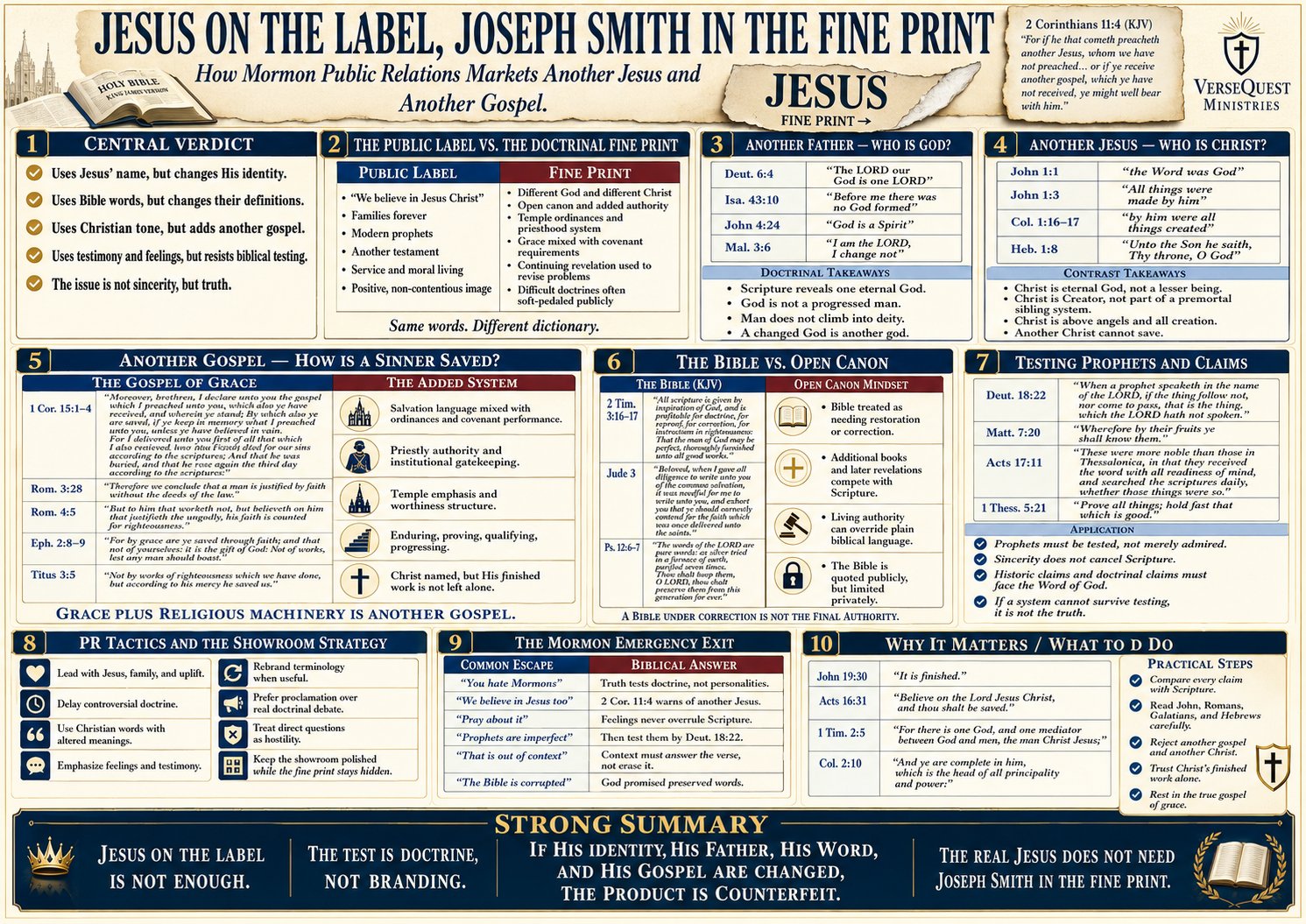
- Jesus on the Label, Joseph Smith in the Fine Print – Mormonism, Another Jesus, and Another Gospel KJV Bible Study Chart
- Compare Mormonism with the King James Bible through this detailed chart covering another Jesus, another gospel, Joseph Smith, modern prophets, open canon, temple ordinances, and salvation by grace.
- $3.99
- Add to cart
-
-
Christian Growth After Salvation
-
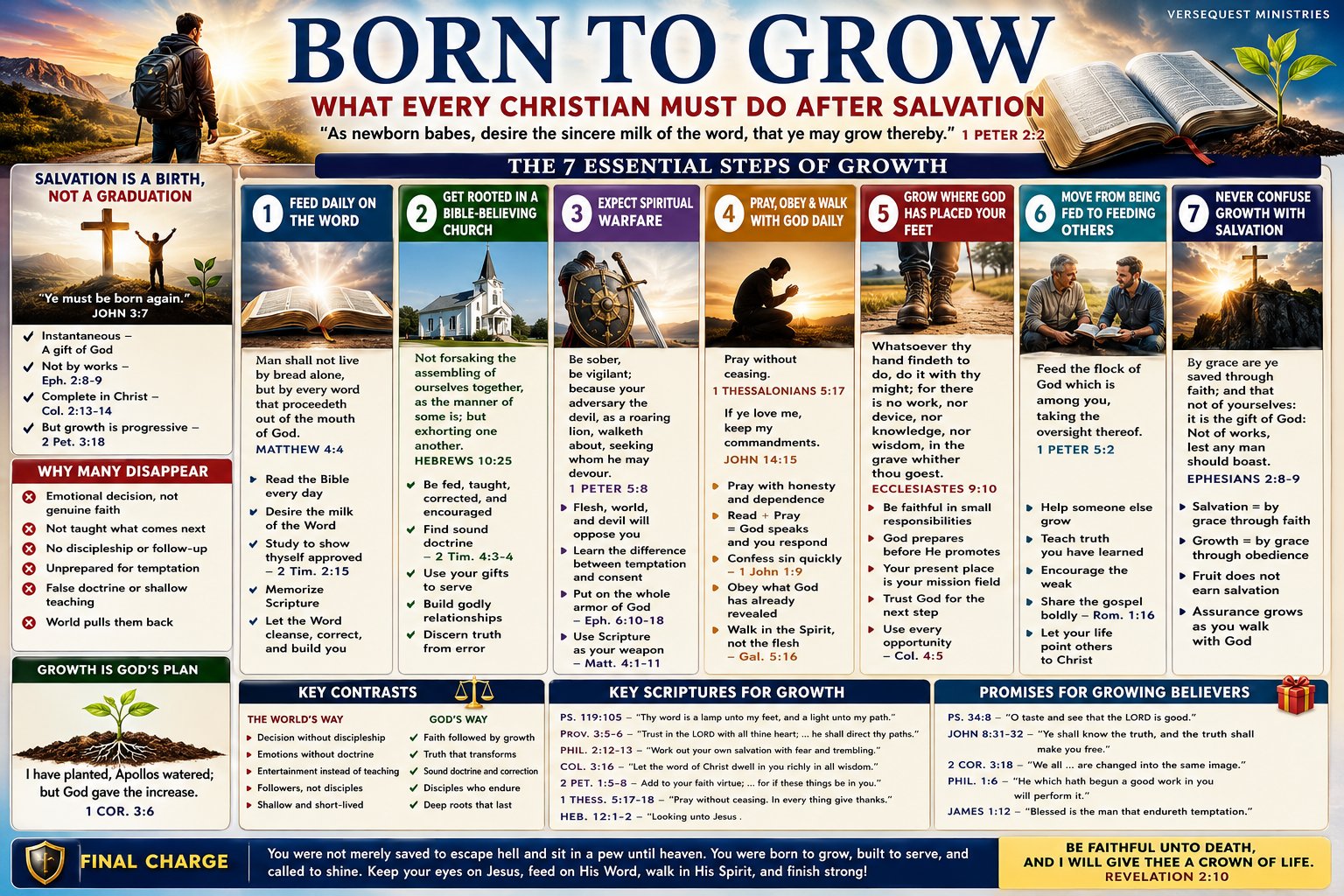
- Born to Grow – Seven Essential Steps Every Christian Must Take After Salvation (KJV Bible Study Chart)
- Help new and growing believers follow seven essential steps after salvation with this detailed KJV chart on Scripture, church, spiritual warfare, prayer, obedience, service, grace, and assurance.
- $3.99
- Add to cart
-
-
Baptismal Regeneration
-
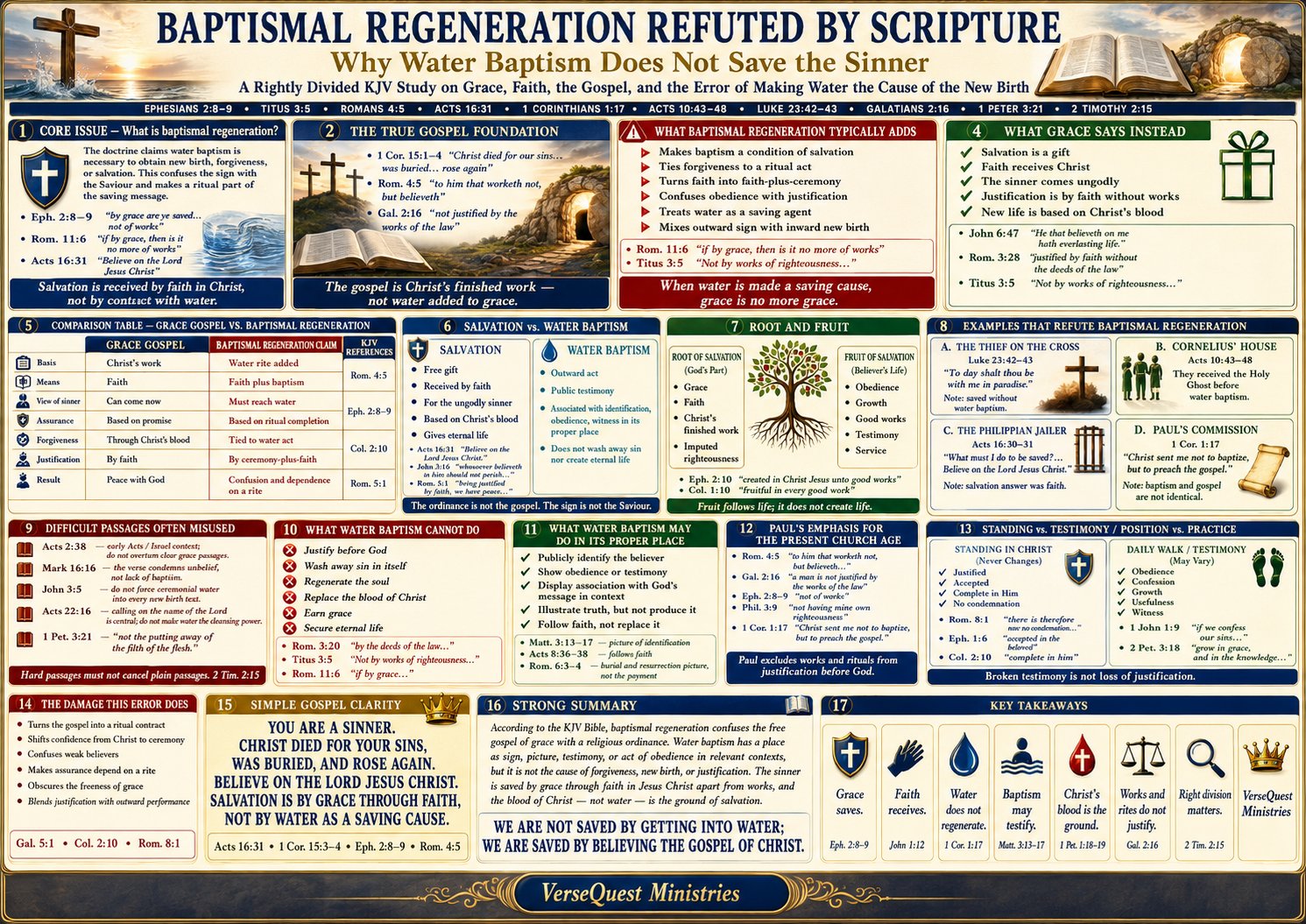
- Baptismal Regeneration Refuted by Scripture – Why Water Baptism Does Not Save the Sinner (KJV Bible Study Chart)
- See why water baptism does not save with this detailed KJV chart covering the gospel of grace, faith versus ritual, the thief on the cross, Cornelius, Paul’s commission, difficult baptism…
- $3.99
- Add to cart
-
-
Repentance Rightly Divided
-
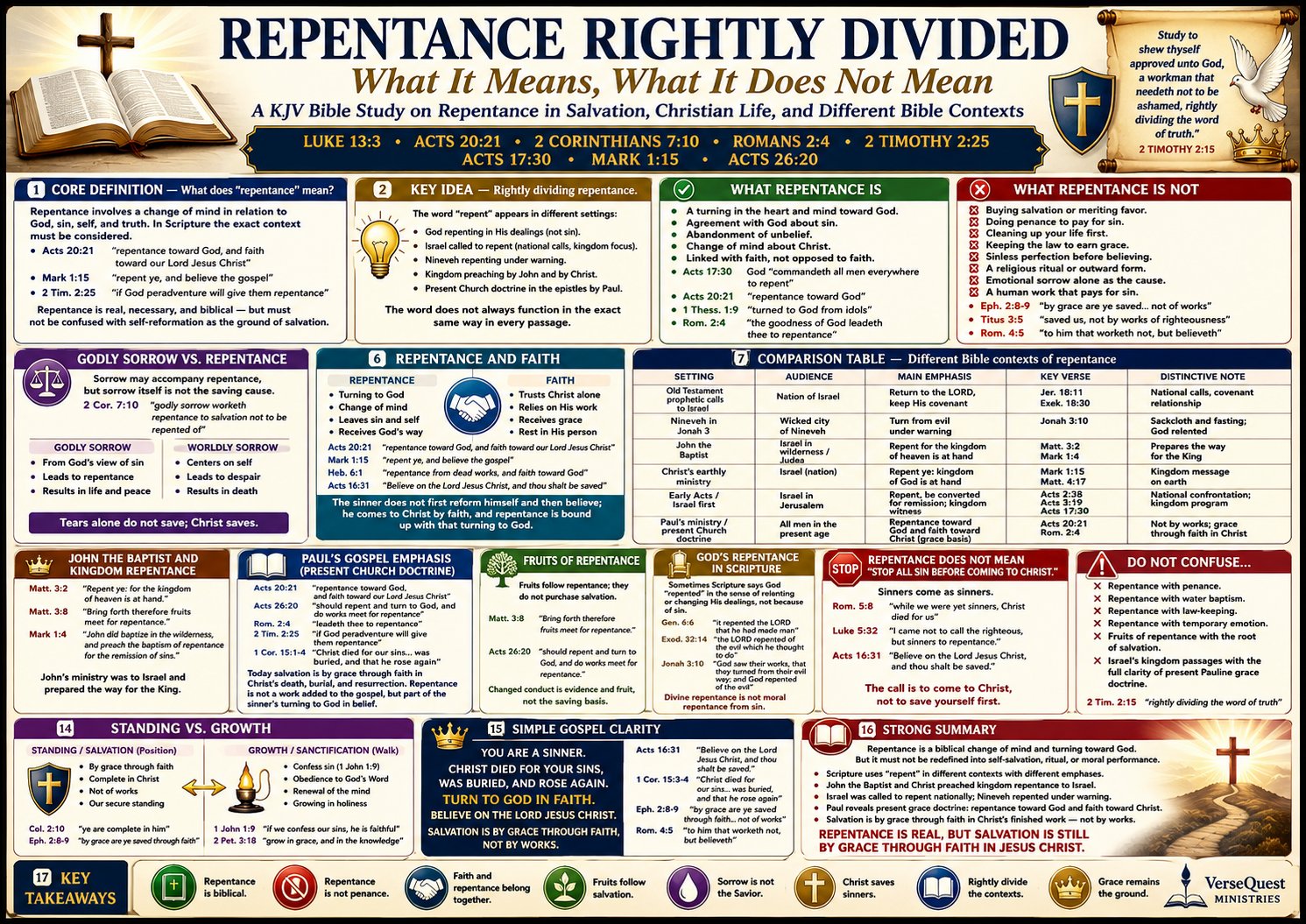
- Repentance Rightly Divided – What It Means, What It Does Not Mean, and Its Place in Salvation and Christian Life (KJV Bible Study Chart)
- Understand repentance rightly divided with this detailed KJV chart covering change of mind, repentance and faith, godly sorrow, fruits of repentance, Kingdom contexts, Christian growth, and salvation by grace through…
- $3.99
- Add to cart
-
-
Biblical Repentance
-
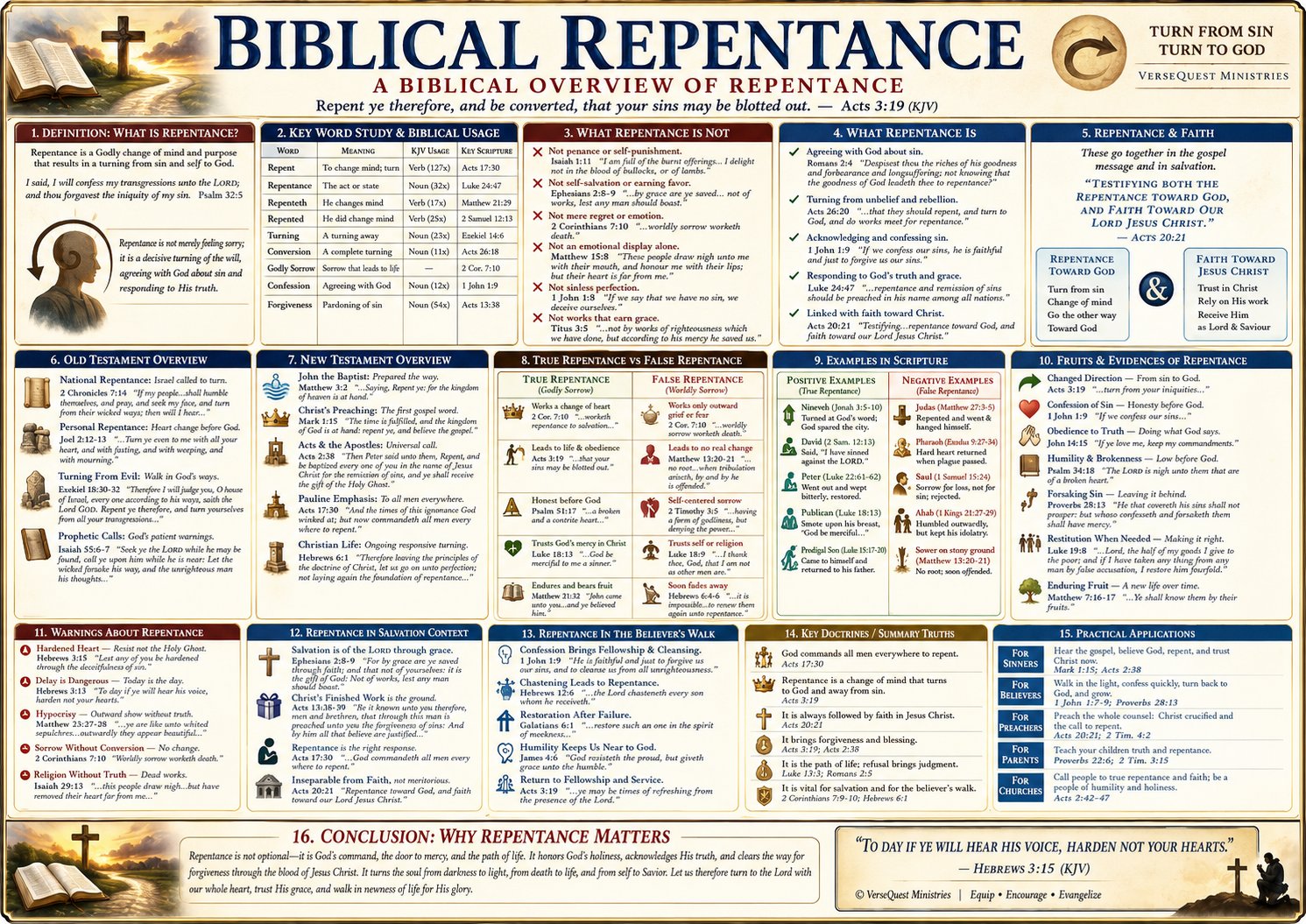
- Biblical Repentance Bible Study Chart – Turning from Sin to God with Faith Toward Jesus Christ (KJV)
- Understand biblical repentance with this detailed KJV chart covering godly sorrow, confession, turning from sin to God, faith in Jesus Christ, false repentance, spiritual restoration, and enduring fruit.
- $3.99
- Add to cart
-