
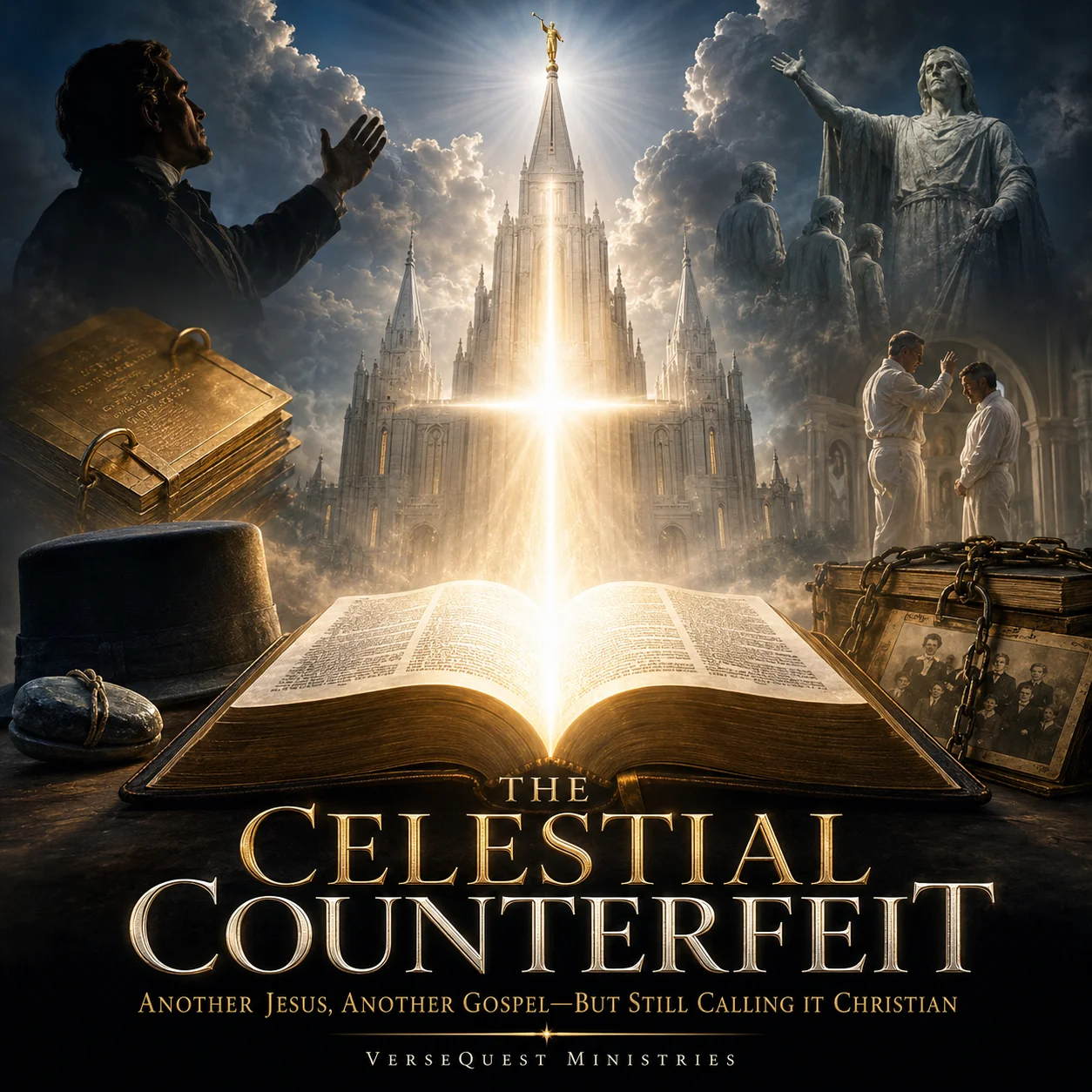
Jesus on the Label, Joseph Smith in the Fine Print – Mormonism, Another Jesus, and Another Gospel KJV Bible Study Chart
Compare Mormonism with the King James Bible through this detailed chart covering another Jesus, another gospel, Joseph Smith, modern prophets, open canon, temple ordinances, and salvation by grace.
$3.99
Description
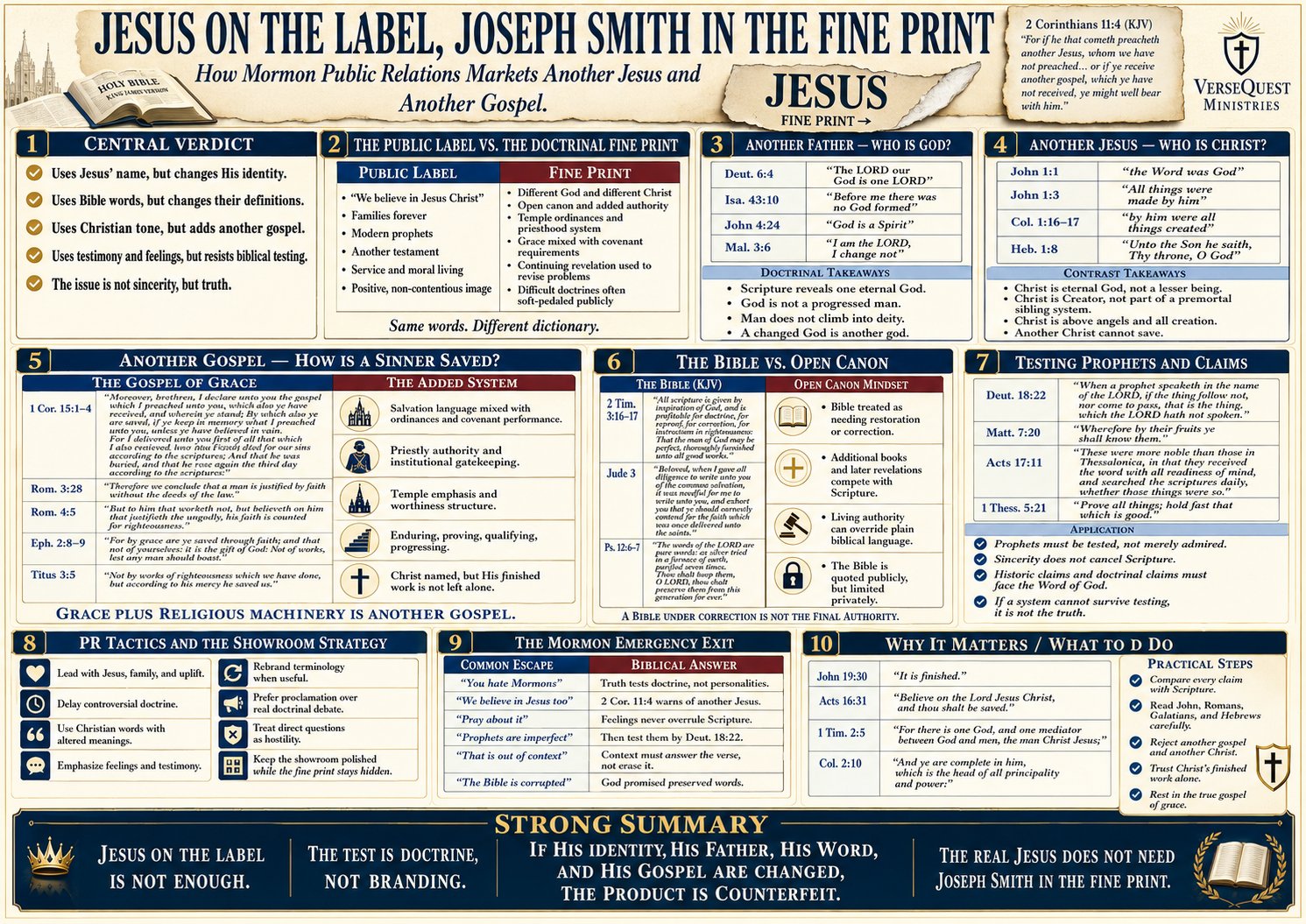
Jesus on the Label, Joseph Smith in the Fine Print is a detailed KJV Bible study and Christian apologetics chart examining the difference between the familiar Christian language used in public presentations of Mormonism and the distinctive doctrines found within the Latter-day Saint religious system.
Built around 2 Corinthians 11:4, this chart warns that merely using the name of Jesus does not guarantee that the biblical Jesus is being preached. Paul warned about “another Jesus,” “another spirit,” and “another gospel.” The proper test is therefore not branding, sincerity, emotional testimony, family values, religious activity, or wholesome public imagery. The test is whether the identity of God, the Person of Christ, the authority of Scripture, and the message of salvation agree with the written Word of God.
The chart’s central verdict is that Mormonism uses many familiar Christian words while assigning them different doctrinal meanings. Terms such as Jesus, God, salvation, grace, gospel, priesthood, temple, revelation, and eternal life may sound biblical while functioning within a theological system shaped by Joseph Smith, additional scriptures, continuing revelation, temple ordinances, and institutional authority.
A major section contrasts the public label with the doctrinal fine print. The public message may emphasize belief in Jesus Christ, eternal families, moral living, missionary service, modern prophets, and positive personal experiences. The underlying doctrinal structure includes an open canon, additional authoritative books, temple requirements, continuing prophets, priesthood claims, covenant performance, and teachings that redefine foundational Christian terms.
The chart calls this problem “same words, different dictionary.” Two religious systems may use the same vocabulary while teaching different doctrines about the nature of God, the identity of Christ, the condition of man, the authority of revelation, and the means of salvation. Agreement in terminology does not establish agreement in truth.
The section titled Another Father—Who Is God? compares the biblical testimony about the LORD with teachings that present deity as progressing or mankind as potentially advancing toward godhood. Deuteronomy declares that the LORD is one Lord. Isaiah records God saying that no God was formed before Him and that there will be none after Him. John 4 states that God is a Spirit, while Malachi declares that the LORD does not change.
From the chart’s KJV Christian perspective, Scripture reveals one eternal, uncreated, unchanging God. He is not one member of an expanding order of exalted beings, and mankind does not climb into equality with Him. Any system that changes the biblical identity of the Father necessarily affects its teaching about Jesus Christ and salvation.
The section titled Another Jesus—Who Is Christ? presents the New Testament testimony concerning the eternal deity, creative authority, supremacy, and saving sufficiency of the Lord Jesus Christ. John declares that the Word was God and that all things were made by Him. Colossians teaches that all things were created by Christ and for Christ, while Hebrews addresses the Son as God.
Jesus Christ is not merely an advanced being, the spiritual product of a previous divine order, or one saviour among many potential exalted beings. He is the eternal Word, Creator, Lord, and only Saviour. A changed Christ produces a changed gospel.
The chart’s salvation comparison places the biblical gospel of grace beside an added religious system. First Corinthians 15:1–4 identifies the gospel through Christ’s death for sins, burial, and resurrection. Romans teaches justification by faith apart from the deeds of the law. Ephesians declares that salvation is God’s gift and not the result of works, while Titus grounds salvation in divine mercy rather than human righteousness.
The contrasting system mixes salvation language with religious ordinances, covenant performance, priesthood authority, temple participation, continuing qualification, and institutional gatekeeping. The chart’s warning is direct: grace plus religious machinery is another gospel.
Biblical salvation does not leave Christ’s work unfinished until a church, temple, priesthood, ceremony, or human performance completes it. Jesus declared, “It is finished.” The sinner is commanded to believe on the Lord Jesus Christ, not to enter a lifelong system of ordinances in order to make Christ’s redemption effective.
The chart also compares the closed authority of inspired Scripture with an open-canon mindset. Second Timothy 3:16–17 teaches that Scripture is inspired and able to furnish the man of God thoroughly unto every good work. Jude commands believers to contend for the faith once delivered to the saints, while Psalm 12 testifies to the purity and preservation of God’s words.
An open canon allows additional books, later revelations, living authorities, and institutional pronouncements to compete with or reinterpret biblical language. Once an authority outside Scripture is permitted to overrule the plain words of Scripture, the Bible no longer functions as the final court of appeal.
The chart therefore presents a serious biblical question: Is the Bible complete and authoritative, or must it remain subject to correction, supplementation, and reinterpretation through later prophets? A Bible continually placed beneath new revelation cannot function as the final authority.
A section on Testing Prophets and Claims gathers the biblical standards of Deuteronomy 18, Matthew 7, Acts 17, and First Thessalonians 5. Prophetic claims must be tested rather than admired. Sincerity, confidence, personal charisma, family appeal, missionary zeal, institutional growth, and powerful testimony do not cancel the necessity of doctrinal examination.
Deuteronomy requires prophetic predictions to withstand testing. Jesus taught that false prophets are known by their fruit. The Bereans examined even apostolic preaching by the Scriptures, and Paul commanded believers to prove all things and hold fast that which is good.
The chart insists that historical claims and doctrinal teachings must face the Word of God. A system that survives only by discouraging close examination, redefining objections, or appealing primarily to feelings has not answered the biblical test.
A major section examines modern public-relations tactics and what the chart calls the showroom strategy. These tactics may include leading with Jesus, family, service, and uplifting themes while delaying controversial doctrines; using Christian terminology with altered meanings; elevating feelings and testimony; rebranding language when useful; and treating direct doctrinal questions as hostile.
The problem is not presenting a faith positively. Every group naturally explains itself in favourable language. The danger arises when the public presentation hides the doctrines necessary to understand what the institution actually teaches about God, Christ, revelation, and salvation.
The chart also examines several common conversational escape routes. Statements such as “You hate Mormons,” “We believe in Jesus too,” “Pray about it,” “Prophets are imperfect,” “That is out of context,” or “The Bible is corrupted” may be used to shift attention away from the doctrinal question.
The biblical response is to distinguish people from doctrine, identify which Jesus is being preached, test prophetic claims by Scripture, allow context to answer the verse, and trust God’s promise to preserve His words. Loving a Mormon neighbour does not require pretending that contradictory doctrines are identical.
The chart’s final section explains why the issue matters. Jesus said, “It is finished.” Acts 16:31 commands the sinner to believe on the Lord Jesus Christ. First Timothy 2:5 identifies one Mediator between God and men, and Colossians declares that believers are complete in Christ.
The real Jesus does not need Joseph Smith in the fine print. He does not need an additional canon to complete His revelation, a temple system to complete His redemption, or a later prophet to redefine His identity. The biblical Christ is sufficient.
The chart’s strong summary is simple: Jesus on the label is not enough. The test is doctrine, not branding. If the identity of Christ, the nature of His Father, the authority of His Word, and the content of His gospel are changed, the resulting religious product is counterfeit.
This resource is ideal for personal Bible study, Mormon apologetics, evangelism with Latter-day Saints, cult and comparative-religion studies, pastoral training, Sunday school, homeschool Bible curriculum, Bible institutes, sermon preparation, and believers seeking a visual KJV comparison of biblical Christianity and Mormon doctrine.
Mormonism and Christianity, another Jesus, another gospel, Joseph Smith, Latter-day Saint doctrine, Mormon public relations, identity of God, deity of Jesus Christ, biblical Trinity, open canon, additional scripture, modern prophets, testing prophets, temple ordinances, priesthood authority, salvation by grace, religious works, final authority of Scripture, Christian apologetics, evangelism with Mormons
Using the name of Jesus does not prove doctrinal agreement. Second Corinthians 11 warns that another Jesus may be preached while familiar Christian language remains in use.
Religious vocabulary must be defined. Two groups may speak about God, Christ, grace, salvation, prophets, temples, and eternal life while assigning those words radically different meanings.
The biblical God is eternal, uncreated, unique, and unchanging. Isaiah rejects the idea of gods being formed before or after the LORD.
Jesus Christ is the eternal Creator rather than a created or progressively exalted being. John, Colossians, and Hebrews identify Him as God and place all creation beneath His authority.
A different doctrine of the Father produces a different doctrine of the Son. A different Christ necessarily produces a different gospel.
The gospel is Christ’s death for sins, burial, and resurrection. Salvation is received through faith in His finished work rather than completed through temple ordinances, priesthood structures, or lifelong religious qualification.
Grace cannot remain grace when religious performance becomes necessary to complete redemption. Good works should follow salvation but cannot become its purchasing price.
The words “It is finished” exclude every system claiming that Christ’s work must be completed through ceremonies administered by an institution.
The Bible presents itself as sufficient to furnish the man of God thoroughly. Additional books and continuing revelations must therefore be tested by Scripture rather than allowed to judge Scripture.
A living prophet cannot possess authority to contradict the written Word. Biblical prophets spoke consistently with God’s revelation and remained subject to divine testing.
Deuteronomy 18 does not instruct believers to overlook failed prophecy because a prophet is sincere or imperfect. Prophetic claims carry objective accountability.
Feelings are not the final test of truth. People in many contradictory religions report peace, conviction, spiritual experiences, and powerful testimonies.
The Bereans were called noble because they tested preaching by Scripture. Careful examination is not rebellion; it is biblical obedience.
Christian love distinguishes between the person and the doctrine. A believer can treat Latter-day Saints respectfully while plainly rejecting teachings that contradict the gospel.
Public relations may emphasize shared moral and family values while leaving essential doctrinal differences unexplained. The kind presentation should not replace the necessary doctrinal investigation.
The phrase “we believe in Jesus too” must be followed by the question: Which Jesus? What is His nature, origin, work, authority, and relationship to the Father?
Accusations of hatred should not be used to prevent doctrinal examination. Disagreement with a religious system is not automatically hatred toward its members.
The Bible’s final answer is Christ alone. He is the one Mediator, the complete Saviour, the eternal God, and the Head of all principality and power.
Mormon apologetics, evangelism with Latter-day Saints, comparing Mormonism with the Bible, teaching the deity of Christ, defending the biblical doctrine of God, salvation by grace instruction, testing modern prophets, Scripture-authority studies, cult awareness classes, comparative religion, pastoral training, Sunday school lessons, homeschool Bible curriculum, Christian school instruction, Bible institute classes, sermon preparation, new-believer discipleship, personal evangelism
King James Bible, Strong’s Concordance, Thompson Chain-Reference Bible, Treasury of Scripture Knowledge, Nave’s Topical Bible, gospel presentation notes, Scripture comparison worksheets, studies on the deity of Christ, biblical Trinity resources, Galatians 1 study notes, 2 Corinthians 11 cross-references, testing-prophets study materials, Mormon doctrine source comparisons, Christian apologetics resources, VerseQuest doctrine and cult-comparison charts
Related products
-
No Condemnation
-
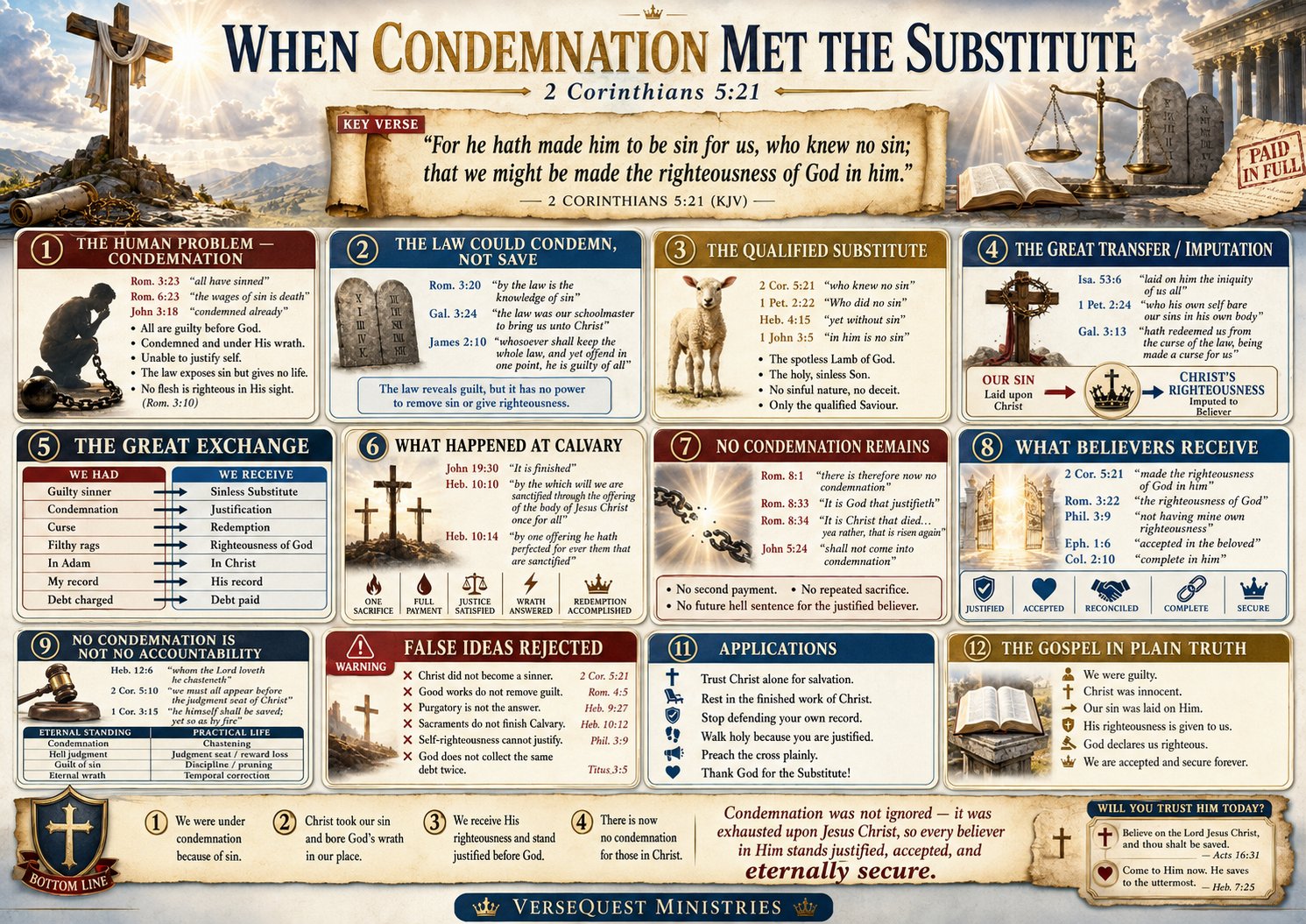
- When Condemnation Met the Substitute – 2 Corinthians 5:21, Imputed Righteousness, and No Condemnation in Christ (KJV Bible Study Chart)
- Understand 2 Corinthians 5:21 with this detailed KJV Bible study chart covering condemnation, Christ the sinless Substitute, imputed righteousness, justification, the great exchange, and eternal security.
- $3.99
- Add to cart
-
-
Precious Blood of Christ
-
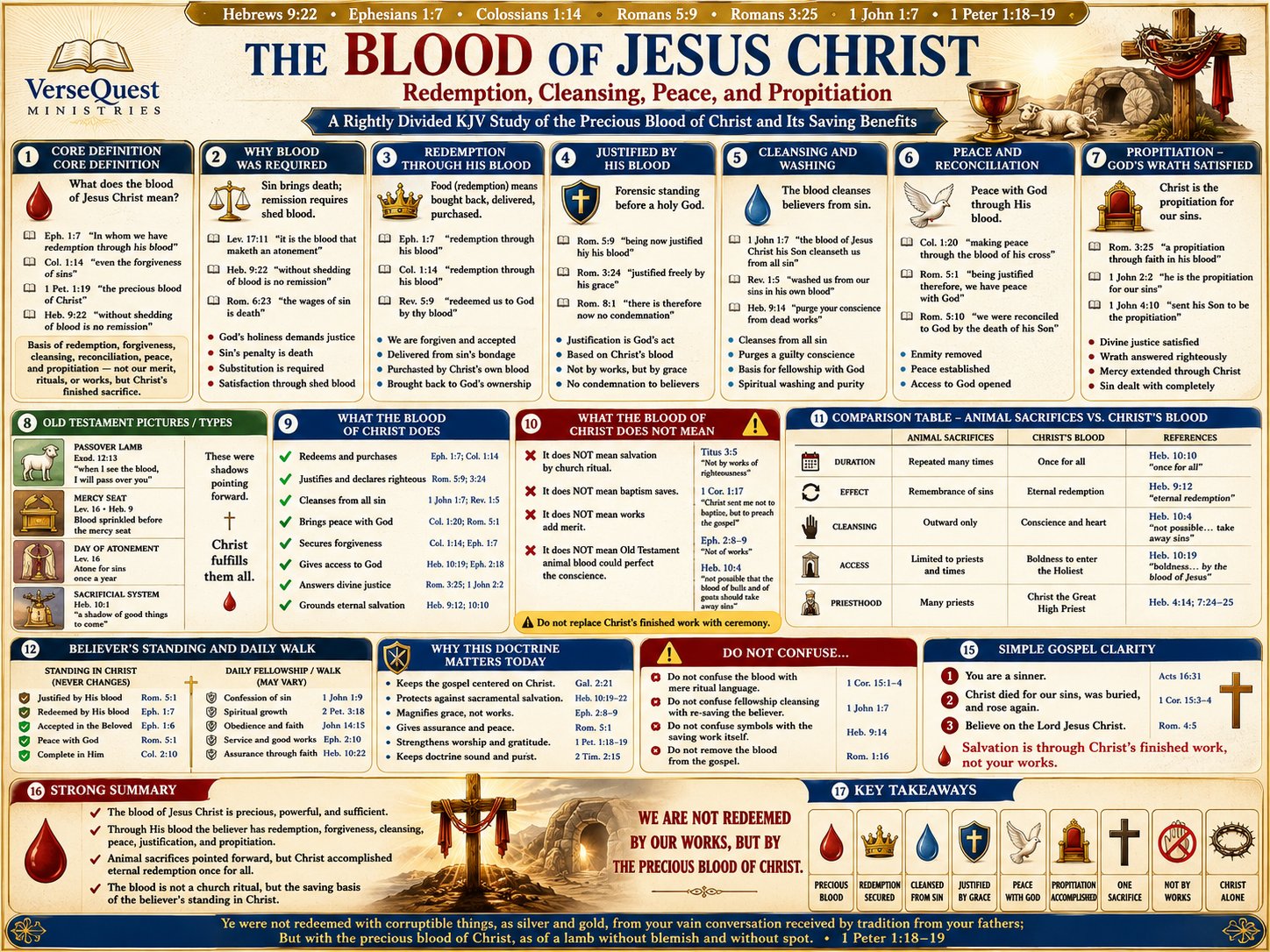
- The Blood of Jesus Christ – Redemption, Cleansing, Justification, Peace, and Propitiation (KJV Bible Study Chart)
- Study the saving power of the blood of Jesus Christ with this detailed KJV chart covering redemption, forgiveness, justification, cleansing, peace, reconciliation, propitiation, Old Testament sacrifices, and Christ’s one sufficient…
- $3.99
- Add to cart
-
-
Jesus Christ / Christology
-
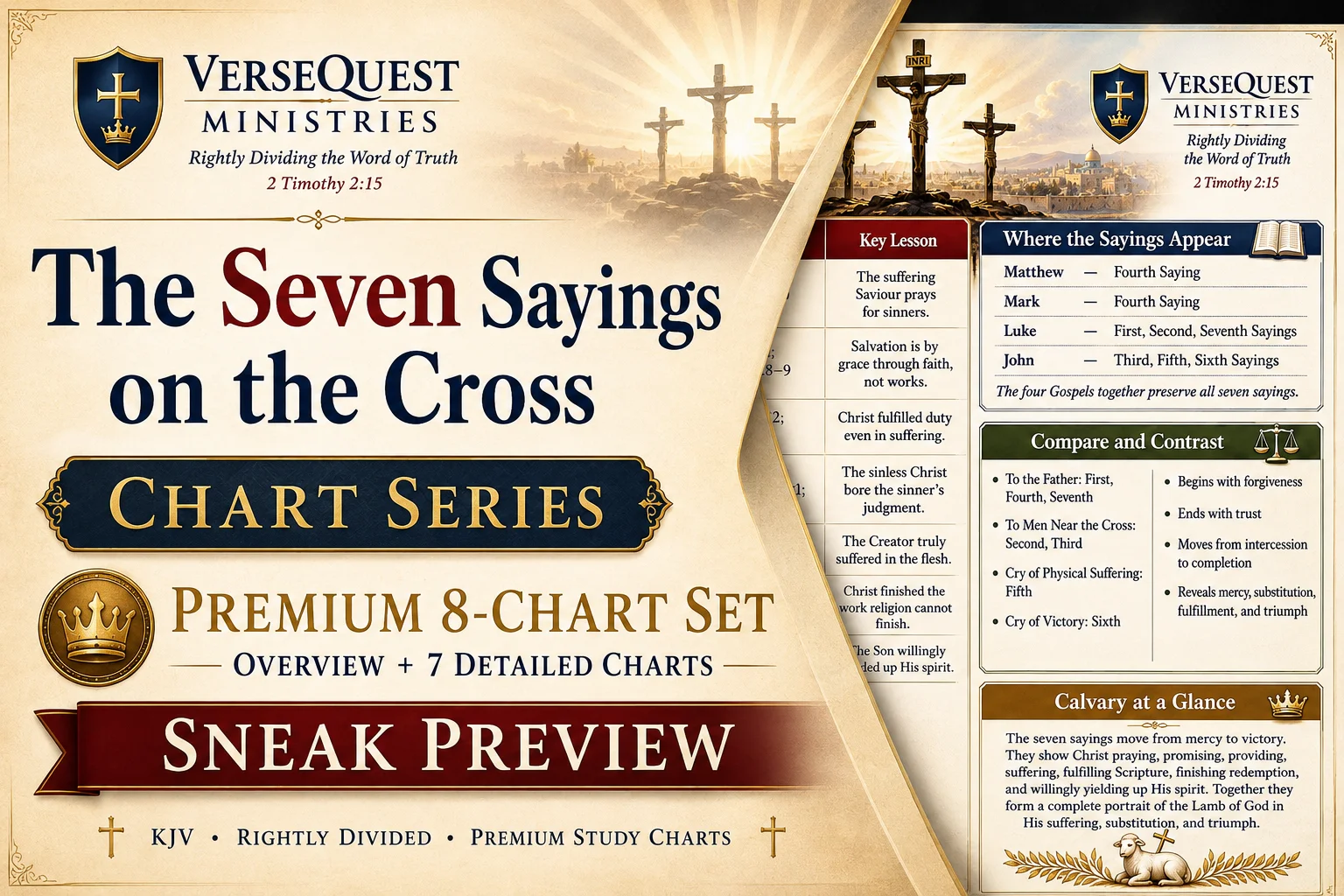
- The Seven Sayings on the Cross – Premium 8-Chart KJV Study Set
- A premium VerseQuest Ministries digital PDF study set on The Seven Sayings on the Cross, featuring an overview chart plus seven detailed KJV Bible study charts. This resource examines Calvary,…
- $12.99
- Add to cart
-
-
Wealth of Rome
-
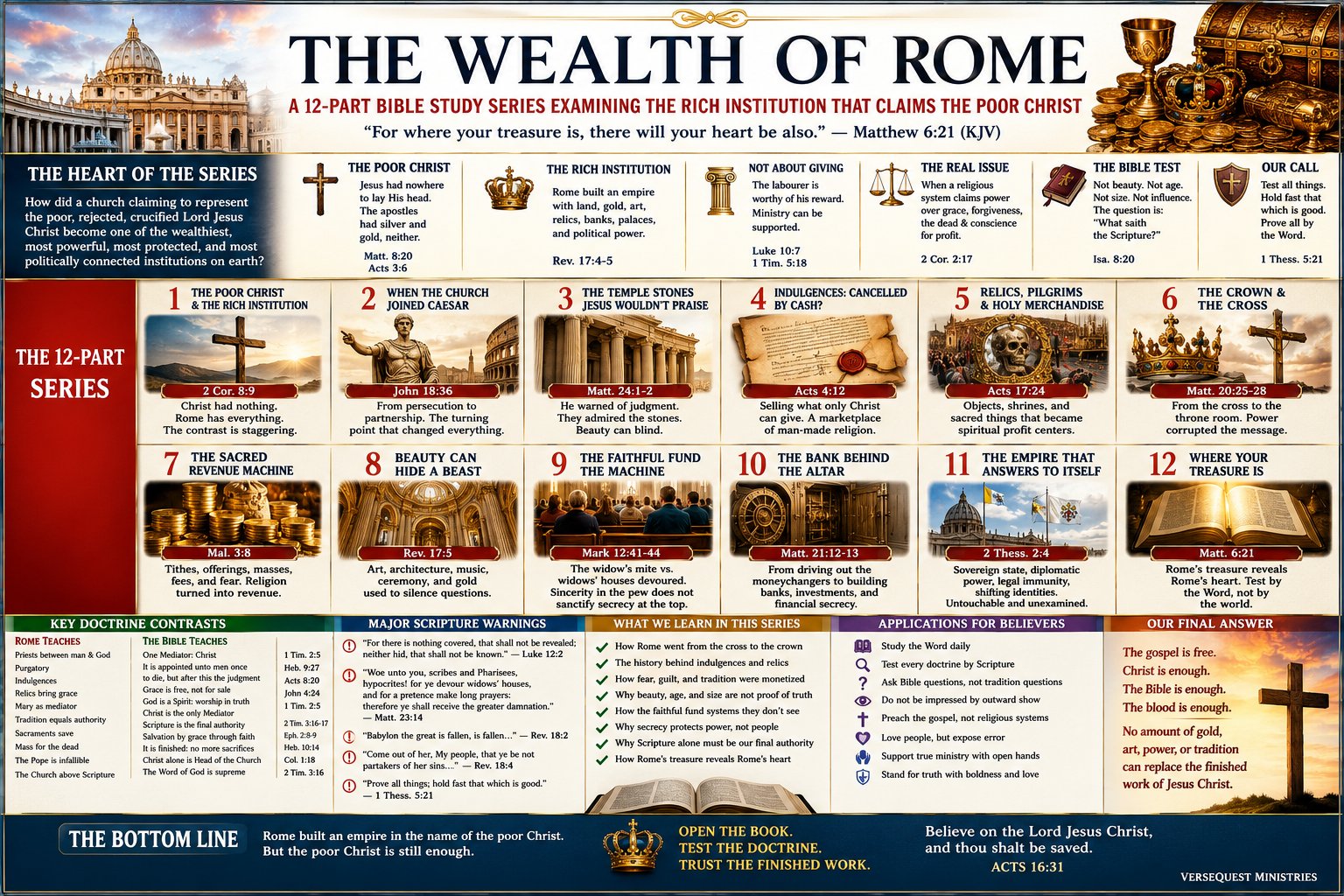
- The Wealth of Rome Bible Study Chart – A 12-Part KJV Examination of Wealth, Power, Doctrine, and Religious Commerce
- Examine the wealth, power, doctrines, indulgences, relics, revenue systems, and political influence of Rome with this detailed twelve-part KJV Bible study chart.
- $3.99
- Add to cart
-
-
Romans and James
-
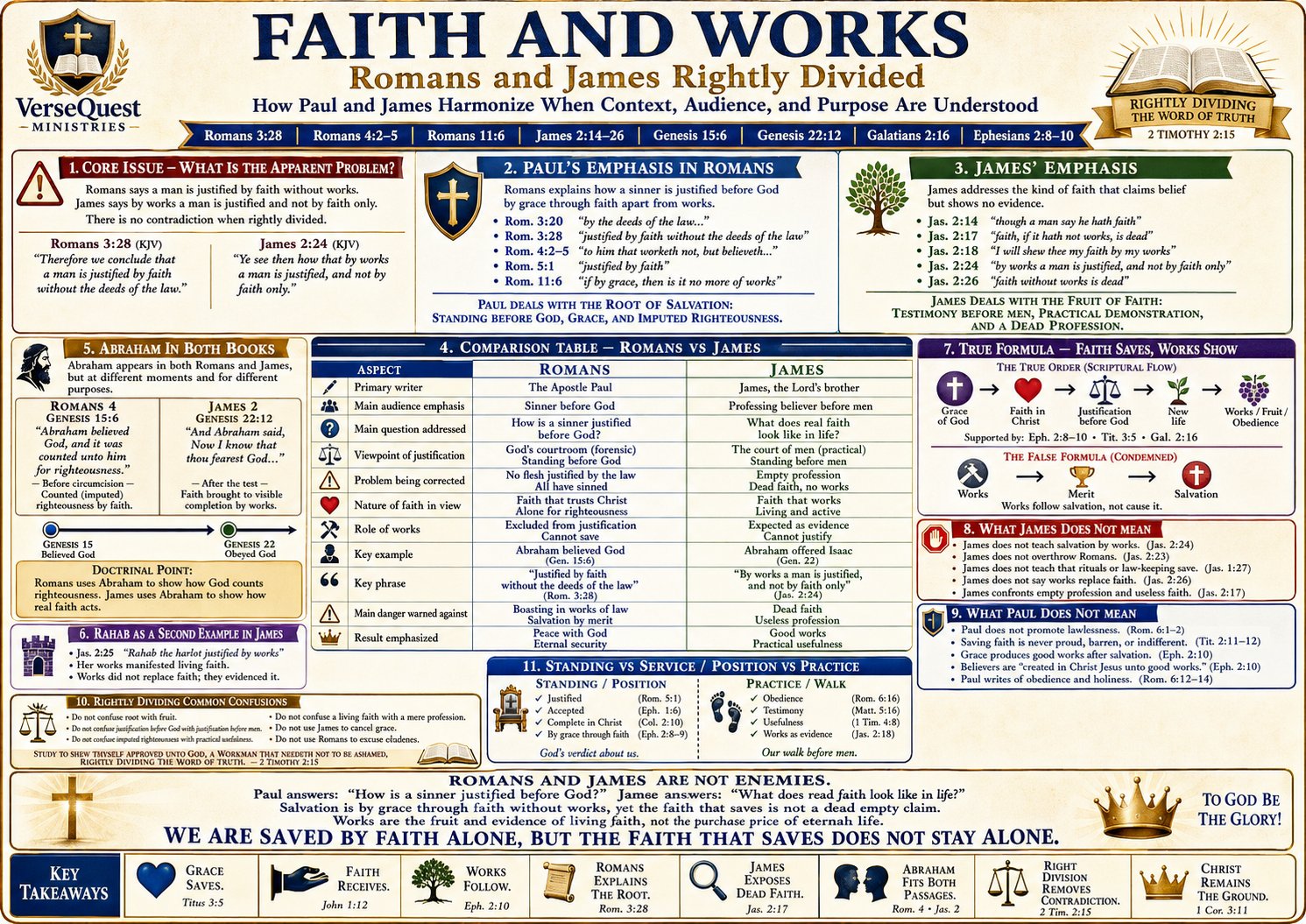
- Faith and Works – Romans and James Rightly Divided: Justification Before God and the Evidence of Living Faith (KJV Bible Study Chart)
- Understand how Romans and James harmonize with this detailed KJV chart covering justification by faith, dead profession, Abraham, Rahab, grace versus works, and the difference between salvation’s root and its…
- $3.99
- Add to cart
-