
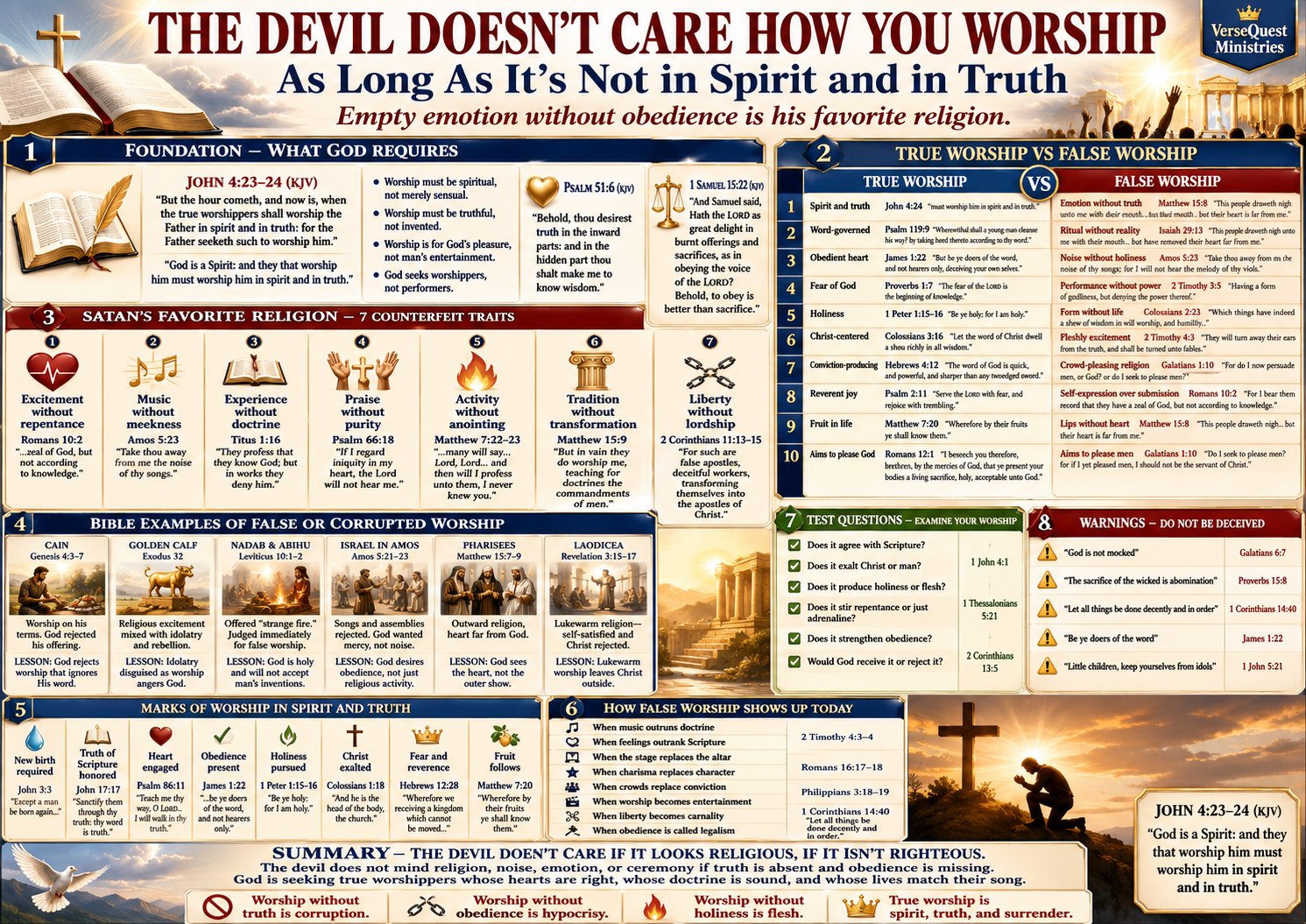
The Devil Doesn’t Care How You Worship – True Worship in Spirit and in Truth Versus False Religion (KJV Bible Study Chart)
Examine true and false worship with this detailed KJV Bible study chart covering spirit and truth, counterfeit religion, biblical music, obedience, holiness, discernment, and Christ-centred praise.
$3.99
Description
The Devil Doesn’t Care How You Worship—as Long as It Is Not in Spirit and in Truth is a detailed KJV Bible study chart exposing the difference between worship that God accepts and religious activity that may look spiritual, sound emotional, attract crowds, and still contradict the written Word of God.
Built around John 4:23–24, this chart establishes the foundation of biblical worship: “God is a Spirit: and they that worship him must worship him in spirit and in truth.” Worship is not defined by excitement, volume, musical style, visual presentation, religious tradition, or human sincerity. God determines how He is to be worshipped, and He seeks worshippers whose hearts, doctrine, conduct, and praise agree with His truth.
The chart begins by explaining what God requires. True worship must be spiritual without becoming sensual, truthful without human invention, obedient rather than merely emotional, Christ-centred rather than performer-centred, and directed toward God’s pleasure rather than man’s entertainment. Psalm 51:6 teaches that God desires truth in the inward parts, while 1 Samuel 15:22 declares that obedience is better than sacrifice.
A major comparison contrasts true worship with false worship. True worship is governed by the Word, produced by an obedient heart, marked by the fear of God, separated unto holiness, centred upon Jesus Christ, capable of producing conviction, filled with reverent joy, and proven by spiritual fruit. False worship substitutes emotion for truth, ritual for reality, noise for worship, performance for power, excitement for conviction, popularity for holiness, and human approval for God’s acceptance.
The chart identifies seven counterfeit traits frequently found in Satan’s preferred form of religion. These include excitement without repentance, music without meekness, experience without doctrine, praise without purity, activity without anointing, tradition without transformation, and liberty without lordship. Each counterfeit retains enough religious appearance to deceive while removing the truth and obedience that would make worship acceptable to God.
Excitement without repentance may create a powerful atmosphere while leaving sin untouched. Music without meekness may move the emotions while pride remains enthroned. Experience without doctrine allows feelings, impressions, and personal encounters to overrule Scripture. Praise without purity produces raised hands without surrendered hearts.
Activity without spiritual power can fill calendars, buildings, and platforms while accomplishing little of eternal value. Tradition without transformation preserves religious customs while hearts remain far from God. Liberty without lordship turns grace into carnality and uses Christian freedom as an excuse for fleshly conduct.
Biblical examples expose the seriousness of corrupted worship. Cain brought an offering on his own terms, but God had no respect unto it. Israel’s golden calf mixed religious celebration with idolatry. Nadab and Abihu offered strange fire that God had not commanded. Israel in Amos maintained songs and assemblies while justice and obedience were absent.
The Pharisees honoured God with their lips while their hearts remained far from Him. The Laodicean church possessed religious confidence without recognizing its spiritual poverty. These examples demonstrate that religious language, ceremonies, crowds, music, offerings, and outward devotion do not guarantee God’s approval.
The chart presents the marks of worship in spirit and truth. These include the new birth, Scripture-governed truth, genuine heart engagement, obedient conduct, holiness, the exaltation of Christ, godly fear, reverence, and fruit that continues beyond the service. True worship changes the worshipper because it brings him under the authority of God.
A practical section shows how false worship appears today. It emerges whenever music outruns doctrine, feelings outrank Scripture, the stage replaces the altar, charisma replaces character, crowds replace conviction, worship becomes entertainment, liberty becomes carnality, and obedience is dismissed as legalism.
The chart provides direct questions for examining worship. Does it agree with Scripture? Does it exalt Christ or man? Does it produce holiness or feed the flesh? Does it stir repentance or merely produce adrenaline? Does it strengthen obedience? Would God receive it according to His written Word?
Warnings from Scripture remind the reader that God is not mocked, the sacrifice of the wicked is an abomination, worship must be conducted decently and in order, believers must be doers of the Word, and Christians must keep themselves from idols.
The chart does not teach that genuine worship must be emotionless or joyless. Scripture contains praise, music, thanksgiving, shouting, singing, rejoicing, and deep feeling. The issue is whether emotion flows from truth and obedience or replaces them. Biblical emotion is governed by Scripture rather than used as a substitute for Scripture.
The devil does not oppose every religious gathering. He is content with worship that remains outward, fleshly, confused, disobedient, doctrinally empty, or centred upon human personalities. False religion can use Christian vocabulary while drawing attention away from Jesus Christ and the authority of His Word.
The central warning is that empty emotion without obedience is a counterfeit religion. Worship without truth becomes corruption, worship without obedience becomes hypocrisy, and worship without holiness becomes flesh. True worship joins spirit, truth, reverence, surrender, doctrine, and obedience before God.
This chart is ideal for personal Bible study, worship leadership training, church music ministry, pastoral instruction, discipleship, Sunday school, Bible institutes, Christian schools, sermon preparation, studies on false worship, and churches seeking to evaluate worship by the King James Bible rather than modern religious culture.
True worship, false worship, worship in spirit and truth, John 4:23–24, biblical worship, counterfeit religion, emotion without truth, obedience over sacrifice, Scripture-governed worship, holiness, reverence, Christ-centred worship, religious entertainment, false doctrine, fleshly excitement, worship music, repentance, spiritual fruit, idolatry, discernment
John 4:23–24 defines acceptable worship according to God’s nature and God’s truth. Worship must be offered in spirit and in truth because God—not culture, preference, emotion, or religious tradition—determines how He will be approached.
Sincerity alone does not make worship acceptable. Cain was religious, Israel celebrated around the golden calf, Nadab and Abihu offered sacrifice, and the Pharisees spoke honourable words. God rejected these acts because they contradicted His revealed will.
True worship is governed by Scripture. Feelings, experiences, dreams, musical preferences, traditions, and popular movements must be tested by the written Word rather than treated as independent spiritual authorities.
Emotion is not the enemy of worship. Scripture includes joy, praise, singing, tears, thanksgiving, and rejoicing. The danger appears when emotion replaces doctrine, repentance, holiness, and obedience.
Music can support biblical truth, but music cannot sanctify false doctrine. A powerful melody, skilled performance, or emotional atmosphere does not transform error into acceptable worship.
Obedience is better than sacrifice. God is not impressed by outward activity when the worshipper knowingly resists His commands. Religious performance cannot compensate for disobedience.
True worship exalts Jesus Christ rather than the performer. When personalities, stages, talent, branding, or applause become central, worship has been redirected toward man.
The fear of God produces reverence without destroying joy. Biblical worship can be joyful and deeply expressive while remaining orderly, holy, thoughtful, and submitted to Scripture.
False worship often removes conviction. It may create excitement while leaving pride, carnality, unbelief, and rebellion undisturbed. True worship brings the heart beneath the searching authority of God’s Word.
The fruit of worship appears after the gathering ends. If worship produces no greater obedience, purity, charity, humility, discernment, or devotion to Christ, the believer should examine what has actually taken place.
Tradition must be tested rather than automatically preserved or rejected. A tradition that agrees with Scripture may be useful, but no custom has authority to overrule the Bible.
The safest worship is worship filled with truth, centred upon Christ, offered from a regenerated heart, governed by Scripture, expressed with reverence, and followed by obedient Christian living.
Worship leadership training, church music ministry, pastoral teaching, Christian discernment, evaluating worship services, discipleship classes, false religion studies, Sunday school lessons, homeschool Bible curriculum, Christian school instruction, Bible institute classes, sermon preparation, church leadership development, spiritual growth, holiness teaching, doctrinal instruction, youth ministry, Christian music studies
King James Bible, Strong’s Concordance, Thompson Chain-Reference Bible, Treasury of Scripture Knowledge, Nave’s Topical Bible, personal worship study notebook, Scripture memory cards, John 4 study notes, studies on 1 Samuel 15, biblical music resources, church worship evaluation worksheet, Christian discernment materials, studies on idolatry and false worship, VerseQuest Doctrine and Christian Living charts
Related products
-
Law vs Grace
-
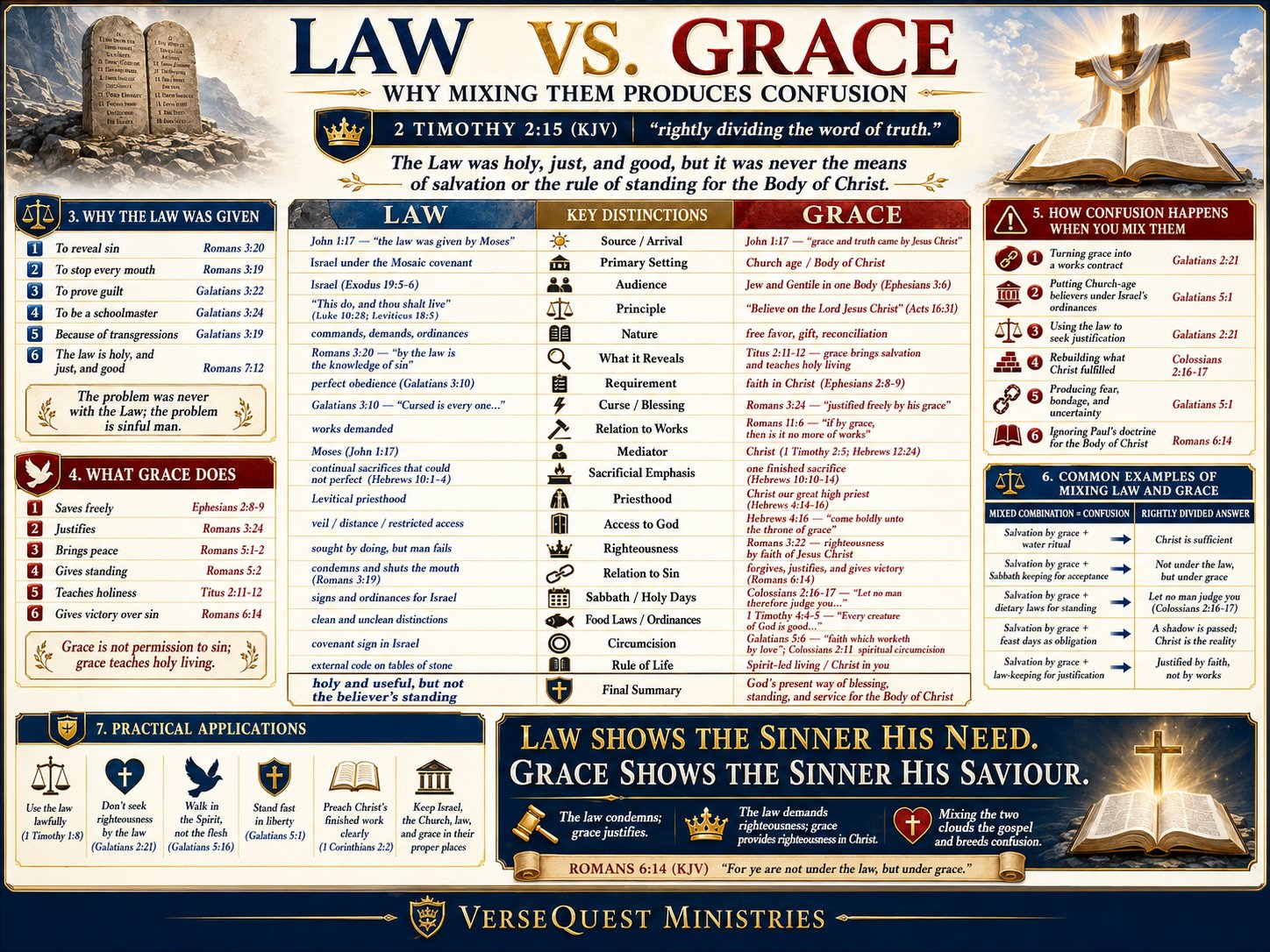
- Law vs. Grace Bible Study Chart – Why Mixing Them Produces Confusion (KJV)
- Compare law and grace with this detailed KJV Bible study chart explaining salvation, justification, holiness, Israel’s Mosaic covenant, Christian liberty, and the danger of mixing law with the gospel.
- $3.99
- Add to cart
-
-
Bitterness
-
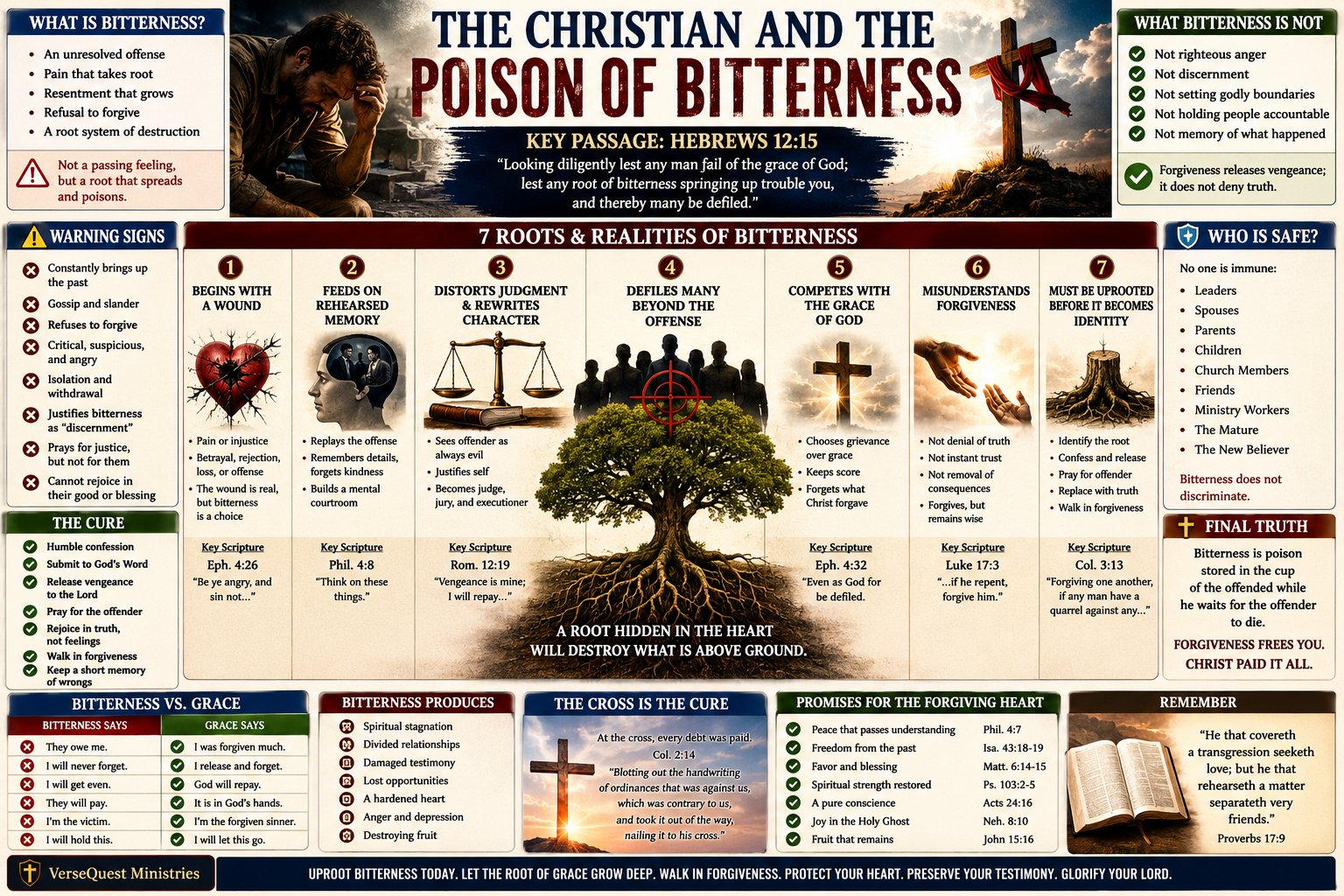
- The Christian and the Poison of Bitterness Bible Study Chart – Forgiveness, Grace, and Healing the Heart (KJV)
- Expose and uproot bitterness with this detailed KJV Bible study chart covering unresolved offenses, warning signs, forgiveness, grace, wise boundaries, the cross, and healing for the Christian heart.
- $3.99
- Add to cart
-
-
Ages To Come
-
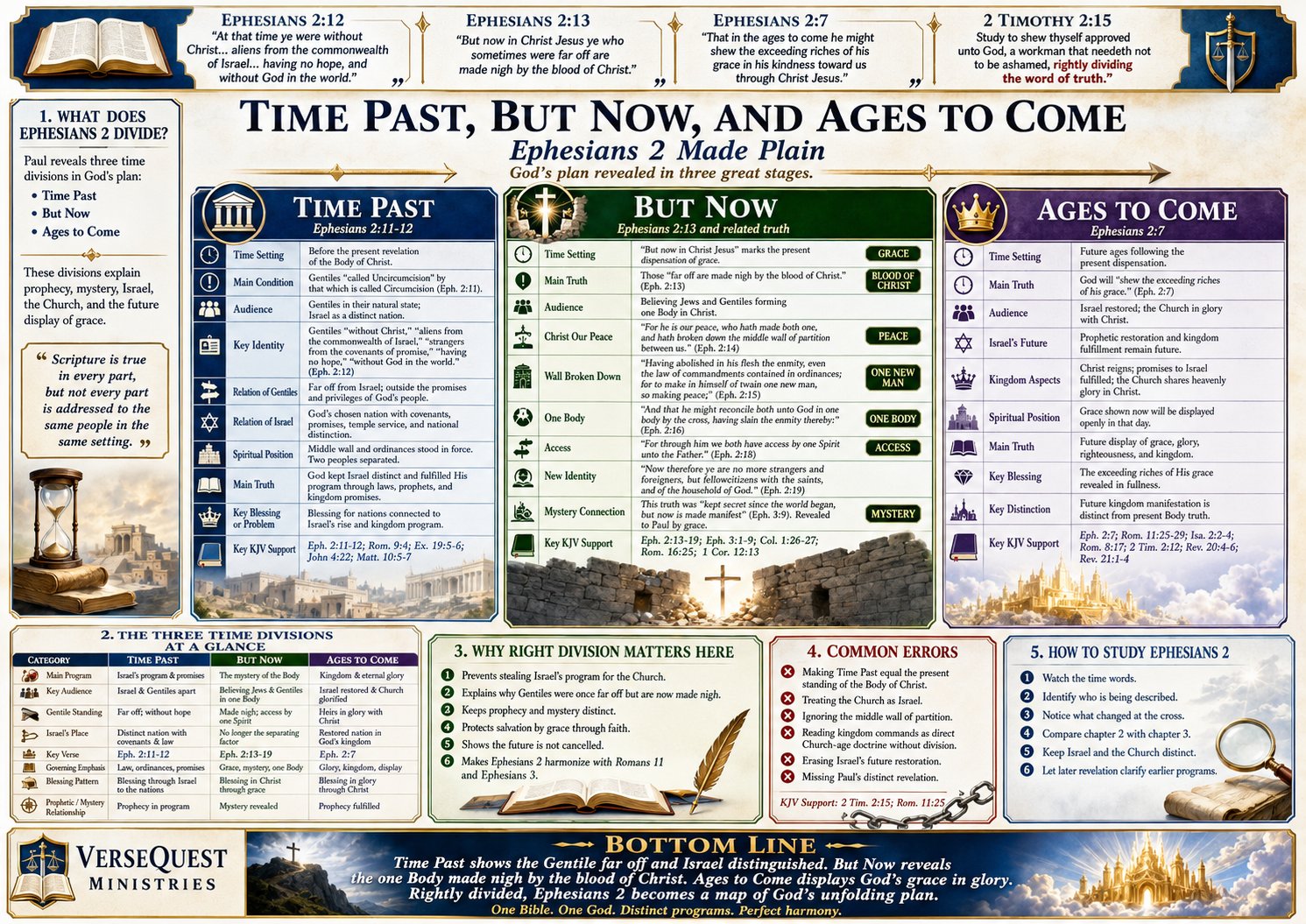
- Time Past, But Now, and Ages to Come – Ephesians 2 Rightly Divided KJV Bible Study Chart
- Understand Ephesians 2 with this detailed KJV chart explaining Time Past, But Now, Ages to Come, Gentile distance, the one Body, Israel’s future, and the importance of right division.
- $3.99
- Add to cart
-
-
Biblical Humility
-
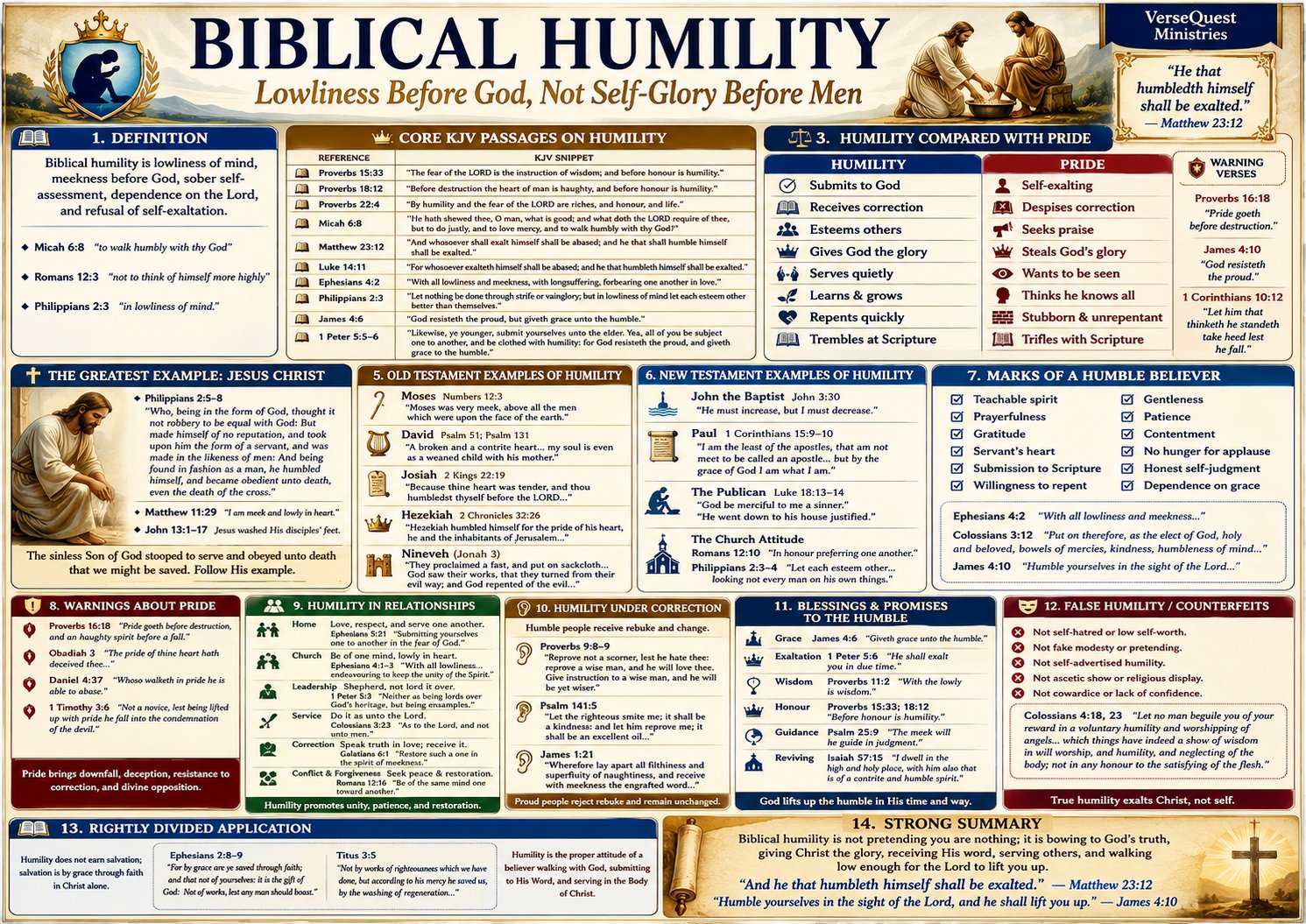
- Biblical Humility Bible Study Chart – Lowliness Before God, Not Self-Glory Before Men (KJV)
- Study biblical humility with this detailed KJV chart comparing humility and pride, Christ’s example, receiving correction, servant leadership, grace, and practical Christian living.
- $3.99
- Add to cart
-
-
Bible Study Chart
-
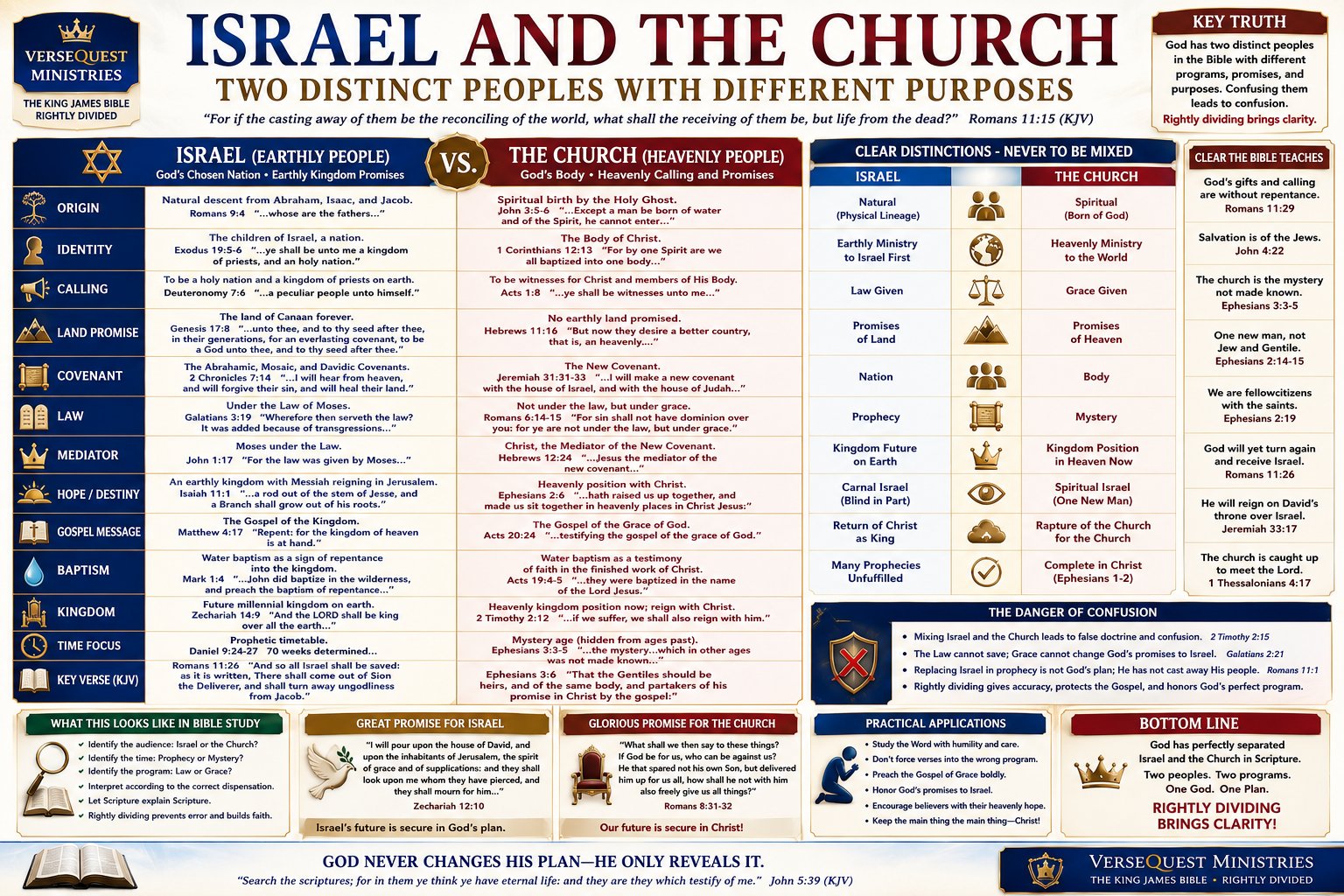
- Israel and the Church Bible Study Chart – Two Distinct Peoples with Different Purposes (KJV)
- Compare Israel and the Church with this detailed KJV Bible study chart covering their distinct origins, identities, covenants, callings, promises, gospel programs, and future destinies.
- $3.99
- Add to cart
-