
When a Christian Runs from God – The Biblical Road Back from Backsliding, Chastening, and Broken Fellowship (KJV Bible Study Chart)
Understand Christian backsliding with this detailed KJV chart covering position versus fellowship, spiritual decline, root causes, chastening, confession, consequences, restoration, and the biblical road back to God.
$3.99
Description
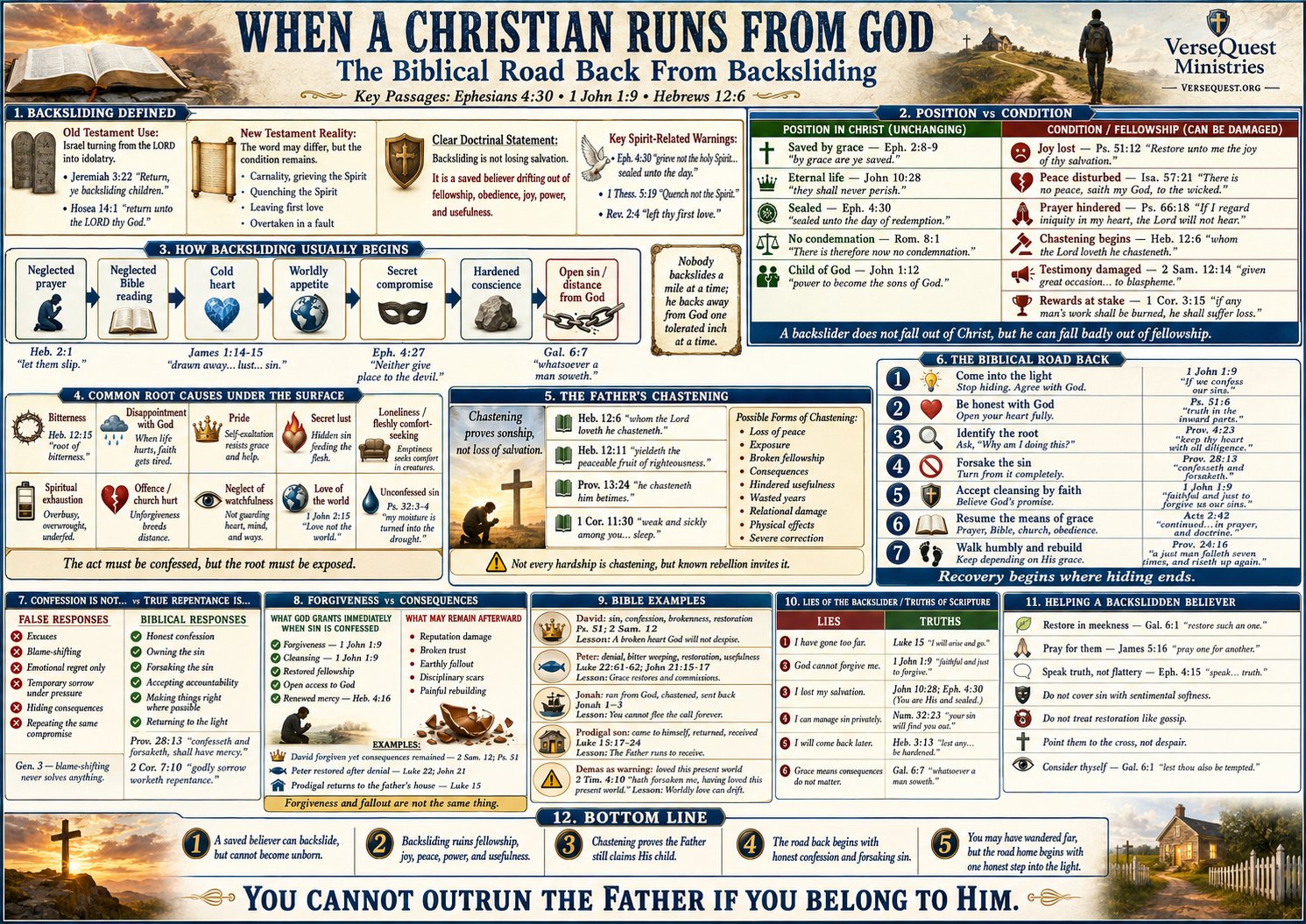
When a Christian Runs from God: The Biblical Road Back from Backsliding is a detailed KJV Bible study chart explaining how a genuinely saved believer can drift out of fellowship with God, lose spiritual joy, damage his testimony, invite fatherly chastening, and become unfruitful—without losing his eternal position in Jesus Christ.
Built around Ephesians 4:30, 1 John 1:9, and Hebrews 12:6, this chart carefully distinguishes the believer’s unchanging position in Christ from his changeable spiritual condition and fellowship. Salvation rests upon the finished work of Jesus Christ, but Christian fellowship, joy, prayer, usefulness, peace, testimony, and reward can all be damaged by tolerated sin and prolonged disobedience.
The Old Testament frequently uses the language of backsliding to describe Israel turning away from the LORD toward idolatry and rebellion. Jeremiah records God calling His backsliding children to return, while Hosea urges Israel to return unto the LORD. Although the New Testament may describe the condition with different language, the spiritual reality remains: believers can become carnal, grieve the Holy Spirit, quench His working, leave their first love, and remain overtaken in a fault.
The chart makes a clear doctrinal statement: backsliding is not the loss of salvation. It is a saved believer drifting from fellowship, obedience, joy, power, service, and usefulness. The believer does not fall out of Christ, become unborn, or break the Holy Spirit’s seal, but he can fall badly out of fellowship and experience serious earthly and spiritual consequences.
A major comparison contrasts the believer’s position in Christ with his present condition or fellowship. His position includes salvation by grace, eternal life, the sealing of the Holy Spirit, freedom from eternal condemnation, and membership in God’s family. These blessings rest upon Christ and do not fluctuate with daily emotion or performance.
The believer’s condition can nevertheless deteriorate. Joy may be lost, peace disturbed, prayer hindered, chastening initiated, testimony damaged, and future reward forfeited. These losses are serious even though they do not reverse justification or cancel eternal life.
The chart traces how backsliding usually begins. It often starts quietly through neglected prayer, neglected Bible reading, a cooling heart, increased appetite for the world, secret compromise, and a gradually hardened conscience. If these warnings are ignored, private compromise may develop into open sin and visible distance from God.
Nobody backslides an entire mile in one moment. The drift normally occurs one tolerated step at a time. A small act of disobedience is excused, conviction is resisted, spiritual habits weaken, and what once troubled the conscience begins to feel ordinary.
Several underlying roots are examined, including bitterness, disappointment with God, pride, secret lust, loneliness, the desire for fleshly comfort, spiritual exhaustion, offense or church hurt, neglect of watchfulness, love of the world, and unconfessed sin. The outward act must be confessed, but lasting restoration also requires identifying and confronting the root that fed it.
The chart explains the Father’s chastening from Hebrews 12. Chastening does not prove the loss of salvation; it demonstrates sonship. God disciplines those who belong to Him because He refuses to leave His children undisturbed in rebellion.
Possible forms of chastening may include loss of peace, exposure, broken fellowship, painful consequences, hindered usefulness, wasted years, relational damage, physical effects, or severe correction. Not every hardship is chastening, but known rebellion should never presume upon God’s patience.
A central section presents the biblical road back. The believer must come into the light, stop hiding, and agree with God. He must speak honestly, identify the root, forsake the sin, accept God’s correction by faith, resume the means of grace, and rebuild his walk through humble obedience.
First John 1:9 promises cleansing when believers confess their sins. Confession is not vague admission, blame-shifting, or emotional regret. It means agreeing with God’s judgment, naming the offense honestly, and refusing to continue defending it.
True repentance includes owning the sin, forsaking it, accepting accountability, making matters right where possible, and returning to the light. Excuses, temporary sorrow, concealment, repeated promises without action, and concern only about consequences are false responses.
Forgiveness and consequences must also be distinguished. God grants forgiveness, cleansing, restored fellowship, open access, and renewed mercy when sin is confessed. Some earthly consequences may nevertheless remain, including damaged reputation, broken trust, family pain, disciplinary scars, or a long rebuilding process.
David was forgiven, yet some consequences continued within his household. Peter was restored after denying Christ, but he had to face his failure honestly. Forgiveness removes guilt before God; it does not always erase every temporal result of disobedience.
The chart presents several biblical examples. David sinned, confessed, experienced brokenness, and was restored. Peter denied Christ, wept bitterly, and returned to useful service. Jonah ran from God, received chastening, and was sent back to his assignment. The prodigal son came to himself, returned to his father, and was received with mercy.
Demas provides a sober warning through his love for the present world. His example demonstrates that affection for worldly things can draw a servant away from faithfulness even after he has participated in Christian ministry.
The chart also exposes common lies believed by the backslider: “I have gone too far,” “God cannot forgive me,” “I lost my salvation,” “I can manage sin privately,” “I will return later,” and “Grace means consequences do not matter.” Scripture answers each lie with truth concerning mercy, sealing, chastening, accountability, and immediate restoration.
The believer who has wandered has not outrun the Father. God’s grace remains sufficient, His chastening remains purposeful, and His call to return remains open. Recovery begins where hiding ends and truth is welcomed.
A section on helping a backslidden believer calls Christians to restore in meekness, pray earnestly, speak truth rather than flatter, avoid covering sin with sentimental softness, refuse to treat restoration lightly, point the fallen believer toward the cross rather than despair, and consider their own vulnerability to temptation.
The chart’s bottom line is clear: a saved believer can backslide but cannot become unborn. Backsliding damages fellowship, joy, peace, power, testimony, service, and reward. Chastening proves the Father still claims His child, and the road home begins with honest confession and forsaking sin.
This resource is ideal for personal Bible study, pastoral counseling, discipleship, church restoration ministry, Christian living classes, addiction recovery support, family counseling, Sunday school, homeschool Bible curriculum, Bible institutes, sermon preparation, and anyone seeking a clear KJV explanation of backsliding and spiritual restoration.
Christian backsliding, running from God, broken fellowship, position versus condition, eternal security, grieving the Holy Spirit, quenching the Spirit, neglected prayer, neglected Bible reading, worldly compromise, hardened conscience, fatherly chastening, confession of sin, true repentance, forgiveness and consequences, spiritual restoration, returning to God, damaged testimony, loss of reward, helping a backslidden believer
Backsliding is best understood as a fellowship problem rather than a loss-of-salvation problem. A saved believer remains in Christ but may become distant in practical communion, obedience, joy, usefulness, and testimony.
The believer’s position is established by Jesus Christ. He is saved by grace, possesses eternal life, is sealed by the Holy Spirit, and stands free from eternal condemnation.
The believer’s condition can change from day to day. Sin may disturb peace, hinder prayer, grieve the Spirit, damage testimony, and bring chastening without reversing the believer’s sonship.
Backsliding commonly begins through neglect rather than open rebellion. Prayer becomes irregular, Scripture is ignored, affection cools, worldly appetite increases, and secret compromises become easier to tolerate.
Sin hardens the conscience by repetition. The first act may bring strong conviction, while the tenth may feel almost ordinary. A weakened conscience is not proof that God has approved the conduct.
The outward act often grows from a deeper root. Bitterness, disappointment, pride, loneliness, lust, exhaustion, church hurt, or love of the world may feed conduct that cannot be corrected permanently through surface-level promises alone.
Chastening proves relationship. Hebrews 12 teaches that the Father disciplines His sons. God’s correction is painful but purposeful, intended to produce holiness and the peaceable fruit of righteousness.
Not every hardship is chastening. Believers should avoid interpreting every sickness, loss, or trial as punishment. Known and continued rebellion, however, should never be treated casually.
Confession means agreeing with God. It is not explaining why the sin was understandable, shifting blame, or minimizing its seriousness. Honest confession stops hiding.
Repentance turns from the sin rather than merely grieving its consequences. It accepts responsibility, obeys the truth, and makes appropriate changes to prevent continued compromise.
God’s forgiveness is complete, but earthly consequences may continue. Restored fellowship does not automatically rebuild lost trust, repair reputation, or erase every disciplinary effect.
David’s restoration demonstrates both mercy and consequence. Peter’s restoration demonstrates that serious failure need not end usefulness. Jonah demonstrates that God may send a chastened servant back to his assignment.
The prodigal son did not remain in the far country waiting to feel worthy. He arose and returned to his father. Restoration begins with movement toward truth rather than endless self-condemnation.
The lie “I have gone too far” contradicts the mercy of God. The lie “I can return later” ignores the hardening effect of delayed obedience.
Grace does not make consequences meaningless. The principle of sowing and reaping still operates within the believer’s earthly life.
A backslidden Christian should resume the means God ordained: Scripture, prayer, church fellowship, confession, obedience, accountability, and service. Recovery is rarely sustained by emotion alone.
Those helping a fallen believer must combine truth with meekness. Sentimental softness may hide the seriousness of sin, while harsh condemnation may drive the person toward despair.
The road home begins where hiding ends. No child of God can outrun the Father’s knowledge, correction, mercy, or call to return.
Pastoral counseling, restoring fallen believers, Christian discipleship, eternal-security teaching, position versus fellowship studies, confession and repentance, church restoration ministry, helping believers overcome secret sin, family counseling, addiction recovery support, warning against worldly compromise, fatherly chastening studies, Sunday school lessons, homeschool Bible curriculum, Christian school instruction, Bible institute classes, sermon preparation, personal spiritual examination
King James Bible, Strong’s Concordance, Thompson Chain-Reference Bible, Treasury of Scripture Knowledge, Nave’s Topical Bible, personal prayer and confession journal, spiritual self-examination worksheet, Scripture memory cards, Psalm 51 study notes, Hebrews 12 commentary notes, 1 John study materials, biblical counseling resources, Christian accountability materials, restoration and discipleship studies, VerseQuest Christian Living charts
Related products
-
Christian Family Counseling
-

- When Families Become Strangers – Biblical Family Estrangement PDF Book
- When Families Become Strangers is a comprehensive 249-page downloadable PDF book examining family estrangement through the King James Bible. Its 35 substantial essays address parent–adult child cutoffs, grandparent alienation, sibling…
- $12.99
- Add to cart
-
-
Christian Growth
-
- The Bible Will Not Read Itself – How to Read the Bible Every Day Bible Study Chart (KJV)
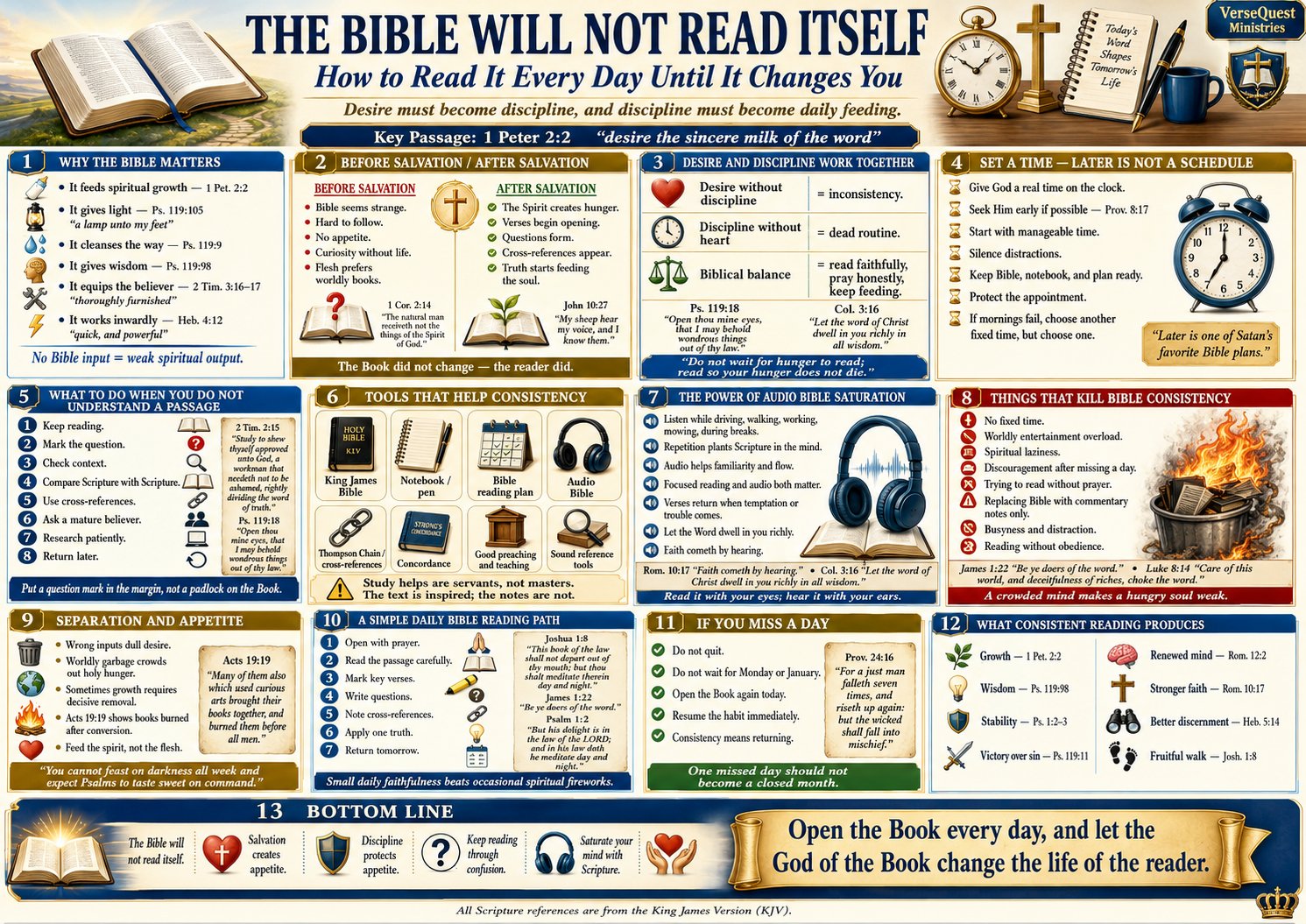
- Build a consistent daily Bible reading habit with this detailed KJV Bible study chart. Learn practical steps for reading Scripture faithfully, overcoming inconsistency, understanding difficult passages, and growing spiritually through…
- $3.99
- Add to cart
-
-
Questioning God
-
- Is It Okay to Ask God “Why”? – Honest Questions, Suffering, Faith, and Trusting God’s Heart (KJV Bible Study Chart)
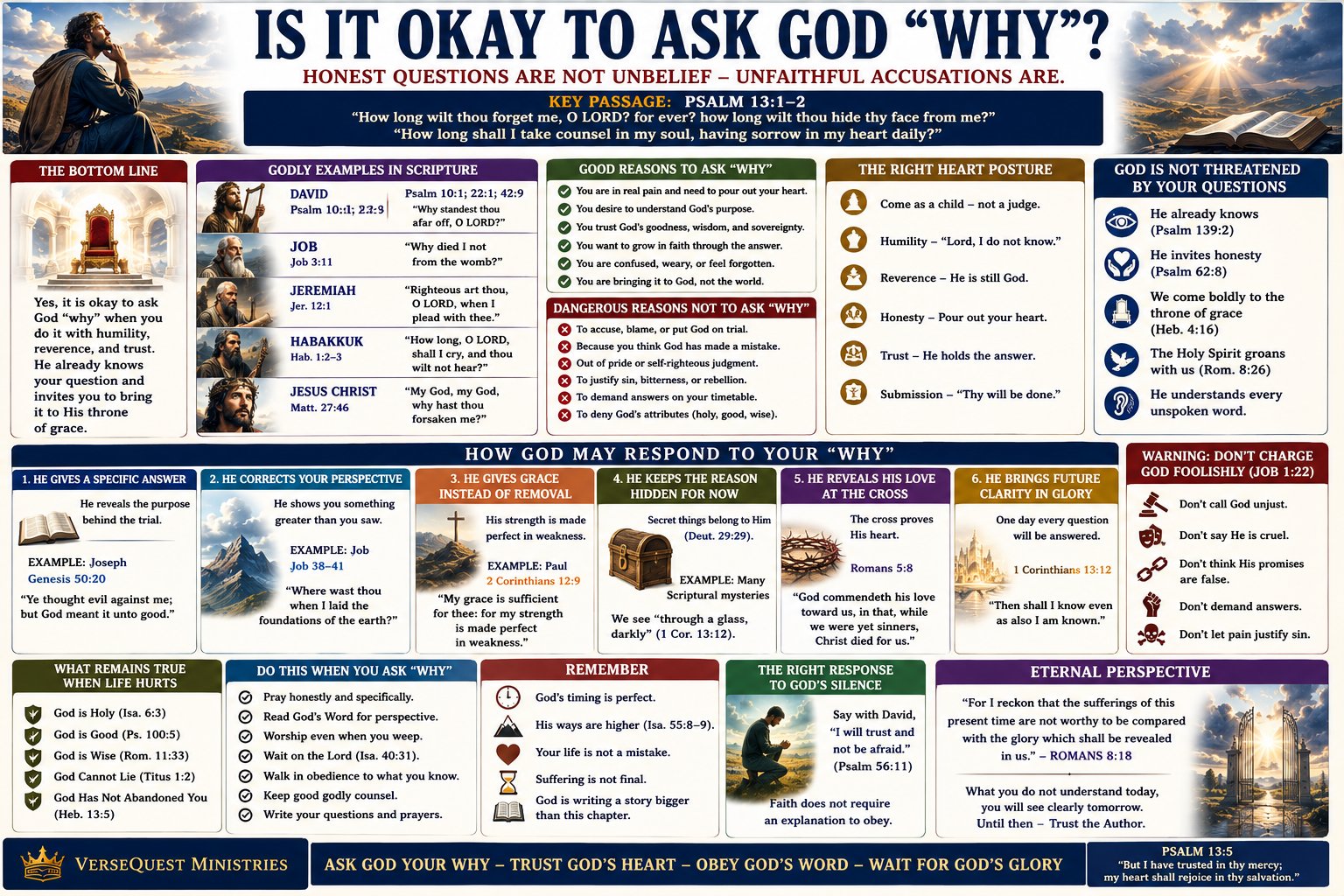
- Learn how to bring honest questions to God with this detailed KJV Bible study chart covering suffering, unanswered prayer, biblical lament, humility, trust, divine silence, and eternal hope.
- $3.99
- Add to cart
-
-
Unity of the Spirit
-
- Biblical Unity – Keeping the Unity of the Spirit Without Sacrificing Truth (KJV Bible Study Chart)
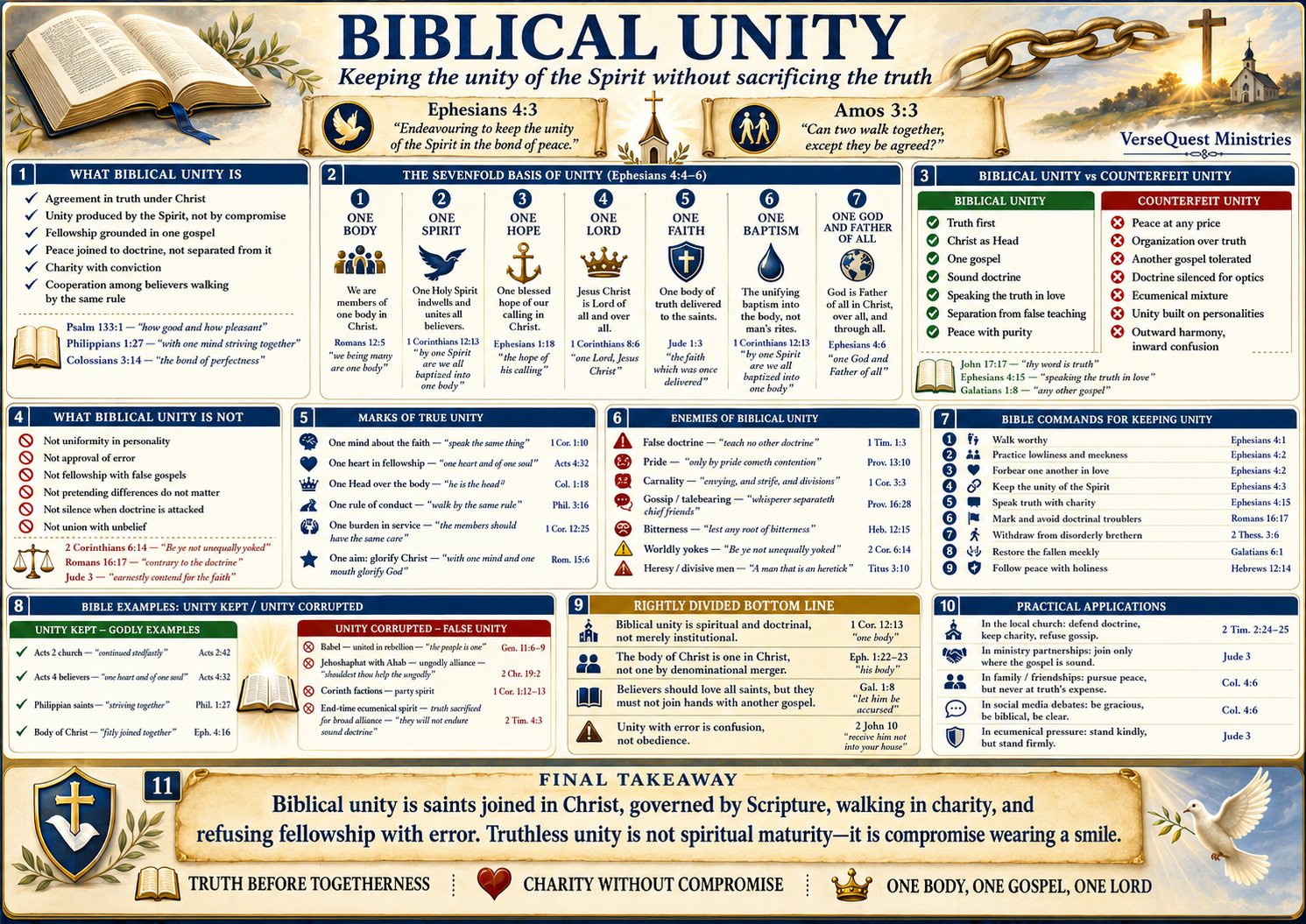
- Understand biblical unity with this detailed KJV chart covering the sevenfold unity of Ephesians 4, one Body, one gospel, sound doctrine, charity, separation from error, and peace without compromise.
- $3.99
- Add to cart
-
-
Christian Living
-
-50%
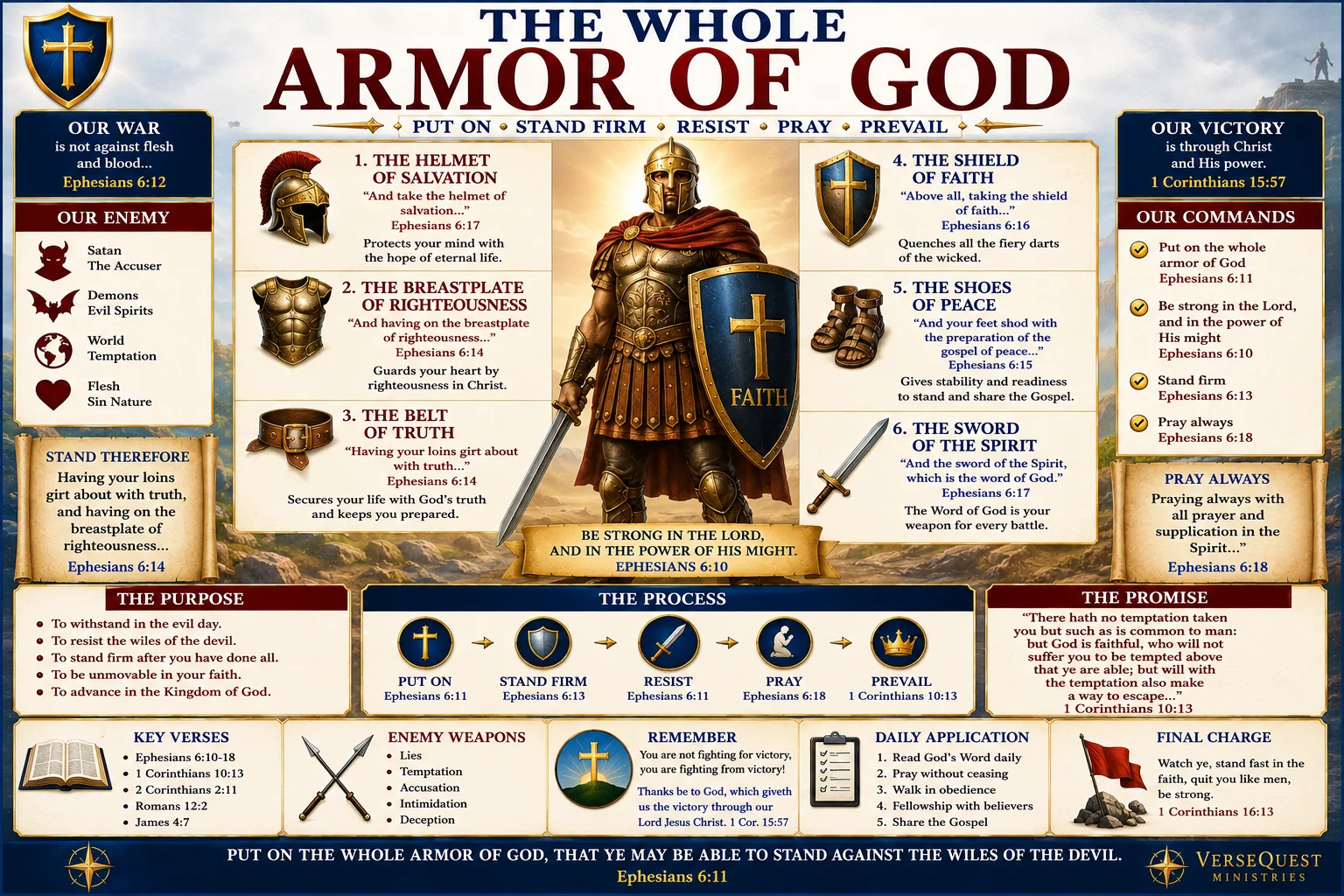
- The Whole Armor of God Chart — KJV Bible Study
- Premium printable KJV Bible study chart explaining the whole armor of God from Ephesians 6, including the helmet, breastplate, belt, shield, shoes, sword, prayer, and spiritual victory in Christ.
- Original price was: $10.00.$4.99Current price is: $4.99.
- Add to cart
-
-50%