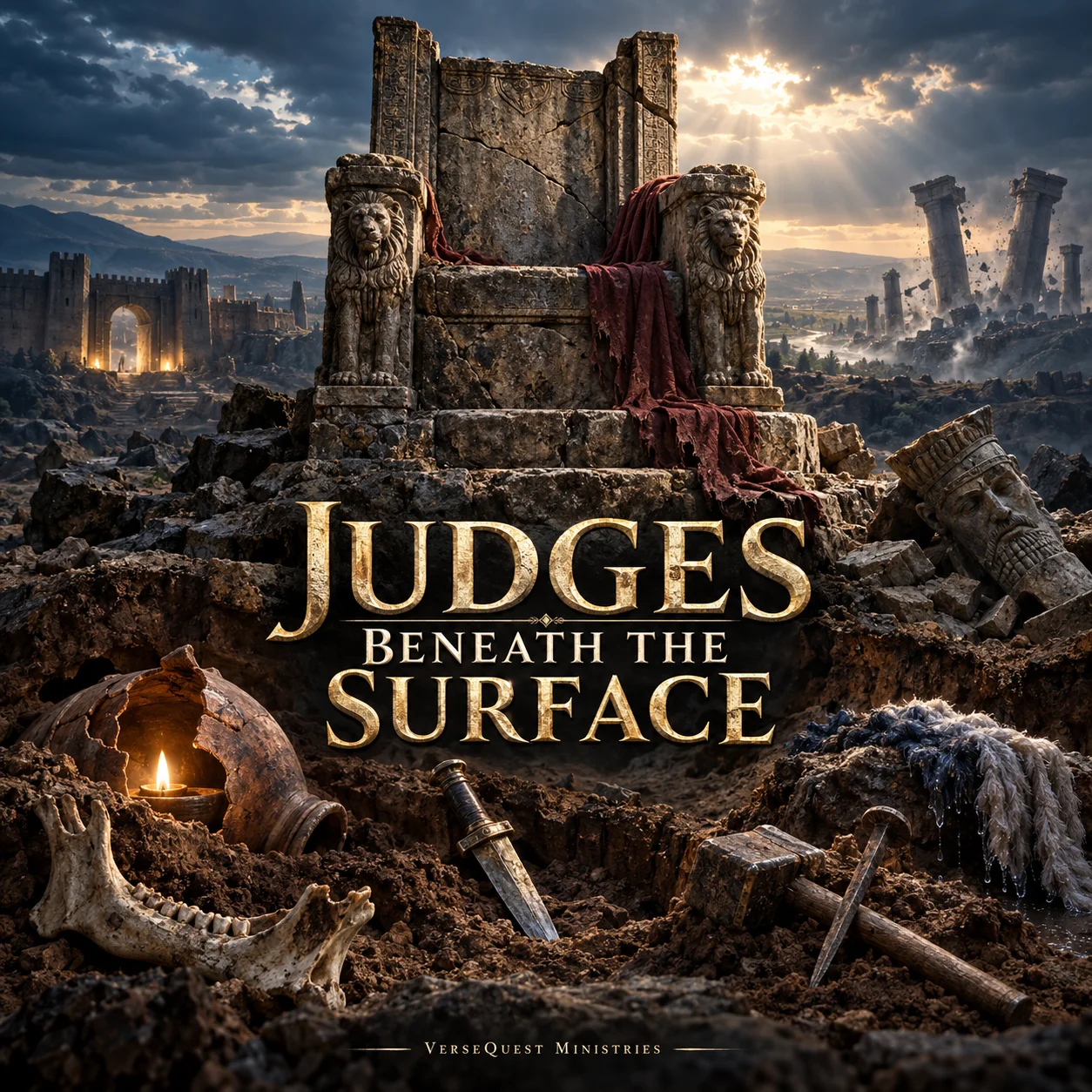
Judges Beneath the Surface: Hidden Meanings, Symbols, Objects, and Warnings in the Book of Judges
Judges Beneath the Surface is a 307-page downloadable KJV Bible study PDF containing an introduction, 40 detailed studies, a full conclusion, and a final illustrated study chart. This book digs into the unusual objects, symbols, reversals, people, and warnings scattered throughout the Book of Judges—from iron chariots, tent nails, ox goads, fleeces, barley cakes, pitchers, and millstones to Samson’s jawbone, seven locks, Gaza’s gates, and the final corpse at the threshold.
Rather than simply retelling familiar Bible stories, this study asks why the Holy Ghost preserved these strange details and how they fit the larger spiritual collapse of Israel. It is designed for serious Bible students, pastors, teachers, preachers, families, and anyone who wants to understand Judges more deeply from a KJV-centered, rightly divided perspective.
307 pages | Downloadable PDF | $19.99
$19.99
Description
Judges Beneath the Surface is a 307-page downloadable PDF Bible study book containing an introduction, 40 detailed studies through the Book of Judges, a full series conclusion, and a final illustrated study chart. Priced at $19.99, this resource was developed for readers who want to move beyond the familiar surface stories of Judges and examine the unusual details the Holy Ghost deliberately preserved in the text.
The Book of Judges is filled with some of the strangest objects, people, events, reversals, and judgments in Scripture. A king loses his thumbs and great toes. A daughter asks for upper and nether springs. Iron chariots intimidate Israel in the valley. A left-handed Benjamite hides a two-edged dagger where the enemy does not expect it. Shamgar kills six hundred Philistines with an ox goad. Jael drives a tent nail through Sisera’s head. The stars fight from heaven. Gideon hides wheat in a winepress, lays out a fleece, watches God reduce thirty-two thousand soldiers to three hundred, and hears an enemy dream about a barley cake knocking down a tent. Samson finds honey in a lion, burns Philistine fields with foxes, kills a thousand men with a jawbone, carries away the gates of Gaza, loses seven locks of hair, grinds blind in prison, and finally dies between two pillars.
These details are not treated as random curiosities. Each study begins with the actual King James Bible text and examines the historical setting first. From there, the book traces biblical patterns, symbolic associations, recurring objects, geographical movements, numbers, reversals, warnings, and connections to other passages of Scripture. The purpose is not to manufacture hidden codes but to take seriously the fact that God does not waste words. When Scripture mentions the hand, the weapon, the spring, the gate, the pillar, the fleece, the jawbone, the idol, or the threshold, this study asks why that detail was worth preserving.
The 40 studies also follow the larger spiritual descent of Judges. The book begins with unfinished conquest and tolerated enemies and ends with idolatry, sexual corruption, tribal warfare, a divided nation, and the repeated declaration that “there was no king in Israel.” Along the way, the judges themselves become increasingly complicated. Othniel provides an early stable pattern of deliverance. Gideon begins as a fearful man whom God uses mightily but later creates an ephod that becomes a snare. Jephthah rises from rejection to leadership but speaks a costly vow. Samson carries extraordinary divine empowerment while repeatedly failing to govern his own appetites. The failures of Israel and the flaws of its deliverers eventually point the reader toward the need for the righteous King no human judge could provide.
The study remains KJV-centered and rightly divided throughout. Israel’s national covenant setting is preserved, and the Church is not substituted for Israel. Historical interpretation comes before practical application. Where a typological or symbolic pattern is explored, it is distinguished from an explicit doctrinal statement of the passage. This allows serious Bible students to dig deeply without turning legitimate Bible study into unfounded speculation.
Among the major subjects examined are unfinished conquest, divine recompense, spiritual memory, the cycle of apostasy and deliverance, unusual instruments in God’s hands, the danger of human boasting, the corruption of religious success, false worship, bought priesthood, compromised leadership, rejected deliverers, the Nazarite calling of Samson, divine chastening and restoration, civil war, and the collapse produced when “every man did that which was right in his own eyes.”
This downloadable PDF is designed for personal Bible study, sermon preparation, Sunday school teaching, Bible classes, family study, small groups, ministry training, and topical teaching. Each study is substantial enough to stand alone while also contributing to the larger argument of the series. Readers can work through all 40 studies consecutively or use individual chapters as teaching resources on particular people, symbols, objects, or doctrinal themes.
At 307 pages, Judges Beneath the Surface provides a substantial examination of one of the most unusual and spiritually revealing books in the Old Testament. The final study chart brings the major patterns, symbols, warnings, and lessons together in a visual reference designed to help readers review and teach the material after completing the book.
Format: Downloadable PDF digital book
Length: 307 pages
Price: $19.99
Contents: Introduction, 40 Bible studies, conclusion, and final study chart
Unfinished obedience — Israel's refusal to complete the conquest becomes the seedbed for later oppression and apostasy. Compromise becoming bondage — Enemies tolerated in one generation become masters in another. Divine recompense — Adoni-bezek and Abimelech demonstrate that judgment often returns in the shape of earlier sin. Spiritual memory and generational failure — The generation that forgot the LORD becomes one of the structural explanations for Israel's collapse. God using unlikely instruments — Left hands, daggers, ox goads, tent nails, pitchers, barley bread, millstones, foxes, and jawbones repeatedly expose the foolishness of human boasting. The cycle of Judges — Apostasy, bondage, crying, deliverance, rest, and relapse. The danger of self-glory — Gideon's reduced army demonstrates God's determination to prevent Israel from saying, “Mine own hand hath saved me.” Broken vessels and revealed light — Gideon's pitchers illustrate the principle that the light becomes visible when the vessel breaks. Religious corruption after genuine victory — Gideon's ephod shows how a testimony can become a snare when men begin venerating the instrument rather than God. Political ambition without fruit — Jotham's bramble parable exposes corrupt leadership and societies willing to crown it. Rejected deliverers — Jephthah participates in a larger biblical pattern seen in Joseph, Moses, David, and ultimately Christ. Words and identity — Shibboleth demonstrates how a small verbal distinction can expose a much larger allegiance. Consecration and compromise — Samson's Nazarite calling provides one of Scripture's strongest warnings about outward separation without consistent inward obedience. Divine power versus human appetite — Samson's physical strength stands in painful contrast with his moral weakness. Chastening and restoration — Samson's blindness and growing hair demonstrate that consequences can remain while God still has further purpose. False religion and purchased ministry — Micah's shrine and hired Levite expose religion built around convenience, money, and human preference. Private apostasy becoming institutional religion — Dan transforms one man's idol into a tribal religious system. Tribal loyalty versus righteousness — Benjamin's defense of Gibeah shows how group identity can become an idol. Self-rule — “Every man did that which was right in his own eyes” summarizes the moral disorder of the period. The need for the righteous King — Judges ultimately creates a hunger for the King who can rule perfectly where human judges failed.
Central Argument: The Book of Judges records far more than a sequence of dramatic deliverers. Its unusual objects, locations, repeated phrases, reversals, and symbolic details work together to expose Israel’s gradual decline from incomplete obedience to national chaos.
Governing Pattern: What Israel refuses to remove in the beginning eventually gains influence over Israel later. Compromise does not remain static.
Key Structural Cycle: Israel sins, falls into bondage, cries to the LORD, receives a deliverer, experiences rest, and eventually returns to sin.
Major Observation: The judges themselves become increasingly complicated as the book progresses. The deterioration of the deliverers parallels the deterioration of the nation.
Important Distinction: The historical setting concerns covenant Israel under the law. Legitimate practical and typological applications should never erase the Israel/Church distinction.
Teaching Principle: Unusual biblical objects often carry interpretive weight because Scripture repeatedly gives similar objects established meanings elsewhere.
Recompense Principle: Adoni-bezek and Abimelech illustrate the biblical truth that judgment can return in a manner resembling the original wickedness.
Leadership Principle: Spiritual success does not make a servant immune to later failure. Gideon’s ephod and Samson’s compromise demonstrate the danger of living on past victories.
Faith Principle: God repeatedly chooses instruments incapable of explaining the victory naturally so that human boasting is removed.
Religious Warning: Micah and Dan show that false religion can use the LORD’s name, religious objects, clergy, money, and tradition while remaining contrary to God’s word.
Samson Principle: Great gifting does not compensate for weak character. External strength cannot substitute for internal restraint.
Restoration Principle: Samson’s growing hair demonstrates that God may still work after severe failure, even though consequences remain.
National Warning: Gibeah demonstrates that a covenant people can retain religious identity while becoming morally indistinguishable from the wicked cultures they once opposed.
Final Diagnosis: “Every man did that which was right in his own eyes” explains the disorder of Judges better than any political slogan.
Final Doctrinal Direction: Judges creates a growing expectation for righteous kingship. Human judges and human kings remain imperfect, ultimately directing the Bible reader toward the Lord Jesus Christ, the righteous King.
Questions for Further Study: Why do particular objects recur elsewhere in Scripture? How does geography reinforce spiritual movements in Judges? Which failures begin privately before becoming national? How often does God reverse human expectations? Why does the book end with an empty throne rather than another judge?
For personal Bible study, the book can be read consecutively as a 40-study journey through Judges or used topically when examining a particular character, object, battle, symbol, or doctrinal theme. The detailed chapter structure makes it useful for readers who enjoy tracing Scripture with Scripture rather than merely reading condensed summaries.
For sermon preparation, individual studies provide substantial material for sermons on compromise, spiritual memory, faith, leadership, idolatry, temptation, divine chastening, religious corruption, or God's use of unlikely instruments. The unusual titles and objects in Judges also provide memorable sermon hooks without requiring artificial illustrations.
For Sunday school and Bible classes, the 40-study format provides a ready-made extended teaching series. Teachers can assign one study per session or group related chapters into larger units covering early conquest, Deborah, Gideon, Jephthah, Samson, and Israel's final moral collapse.
For small groups and discipleship, the practical warnings in Judges provide strong discussion material concerning incomplete obedience, tolerance of sin, misplaced confidence, spiritual compromise, religious tradition, personal accountability, and the danger of doing what is right in one's own eyes.
For family Bible study, selected chapters can help older children and adults see why the strange objects and unusual episodes in Judges matter. Parents can use the studies to connect memorable stories such as Gideon's fleece, Samson's hair, Jael's tent nail, or Shamgar's ox goad with larger biblical principles.
For ministry training, the book offers repeated studies in leadership failure, spiritual authority, compromised ministry, religious ambition, bought priesthood, and the distinction between being genuinely used by God and being personally infallible.
The final illustrated study chart provides a condensed review tool for classroom instruction, sermon preparation, personal review, or visual teaching after the reader completes the book.
The King James Bible should remain the primary study resource, especially Judges 1–21 together with Genesis, Deuteronomy, Joshua, 1 Samuel, Psalms, Isaiah, Hosea, Micah, the Gospels, Romans, and Hebrews where related patterns and doctrines appear.
A KJV concordance can help trace recurring terms such as judge, deliver, hand, altar, idol, king, Spirit, rest, inheritance, gate, rock, water, and the repeated geographical names appearing throughout Judges.
The Treasury of Scripture Knowledge is especially useful for following biblical cross-references connected with the unusual imagery and repeated patterns examined in this book.
A reliable Bible dictionary can assist with historical background on Philistia, Midian, Benjamin, Ephraim, Dan, Gilead, Shiloh, Shechem, Gaza, Hebron, the Nazarite vow, ancient gates, chariots, agricultural practices, and Israel's tribal structure.
Bible maps of the tribal allotments and the period of the Judges are valuable for following Gilgal, Bochim, Mount Tabor, Kishon, Ophrah, Shechem, Gilead, Timnath, Gaza, Hebron, Shiloh, Gibeah, Mizpeh, and the movement of the tribe of Dan.
A chronological or historical Bible timeline can help place Judges between Joshua's conquest and the rise of the monarchy in 1 Samuel.
Useful topical study areas include Israel's covenant under the law, the doctrine of idolatry, biblical leadership, the Nazarite vow, the Angel of the LORD, rejected deliverers, divine judgment, Israel and the Church, and the Davidic kingdom.
Readers may also benefit from other VerseQuest material already in their collection dealing with Bible prophecy, Israel and the Church, biblical symbolism, spiritual warfare, law and grace, angels and demons, and rightly dividing the Scriptures, wherever those studies overlap with themes found in Judges.
Related products
-
The Rapture
-
-67%
- Caught Up Before the Wrath – 66-Essay KJV Rapture Study
- Caught Up Before the Wrath is a 430-page premium KJV Bible study defending the pre-tribulation Rapture of the Church from a rightly divided, dispensational perspective. This 66-essay VerseQuest Ministries book…
- Original price was: $29.99.$9.99Current price is: $9.99.
- Add to cart
-
-67%
-
Doctrine Series
-
Chart Collections
-
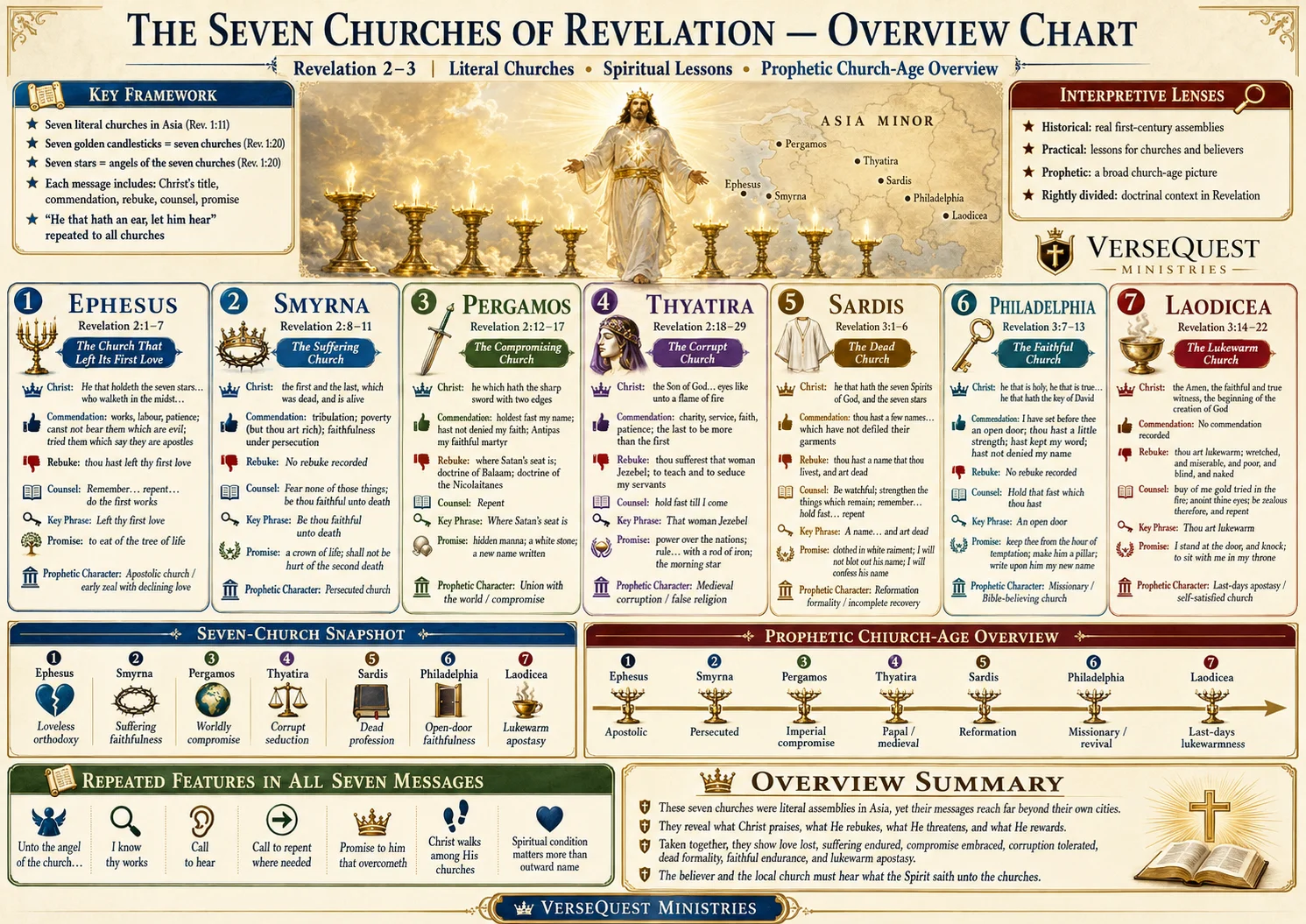
- The Seven Churches of Revelation Chart Collection – Christ Walking Among the Candlesticks
- A premium VerseQuest Ministries™ PDF chart collection covering the Seven Churches of Revelation in Revelation 2–3. Includes one overview chart plus individual KJV Bible study charts for Ephesus, Smyrna, Pergamos,…
- $12.99
- Add to cart
-
-
Study Books (PDF)
-
-25%
- The Mysteries of God Revealed for the Church Age – Premium Essay Series PDF
- A premium 404-page VerseQuest Ministries digital PDF study book featuring 54 detailed KJV-only essays on the mysteries of God revealed for the Church Age. This rightly divided study covers the…
- Original price was: $39.99.$29.99Current price is: $29.99.
- Add to cart
-
-25%
-
Doctrine Series
-

- The Lost Tribes Myth Exposed (213-Page Premium Study)
- A 213-page premium KJV study exposing the Lost Tribes myth, tribal identity errors, prophecy abuse, race theories, and false Israel claims through 35 detailed essays.
- $24.99
- Add to cart
-