
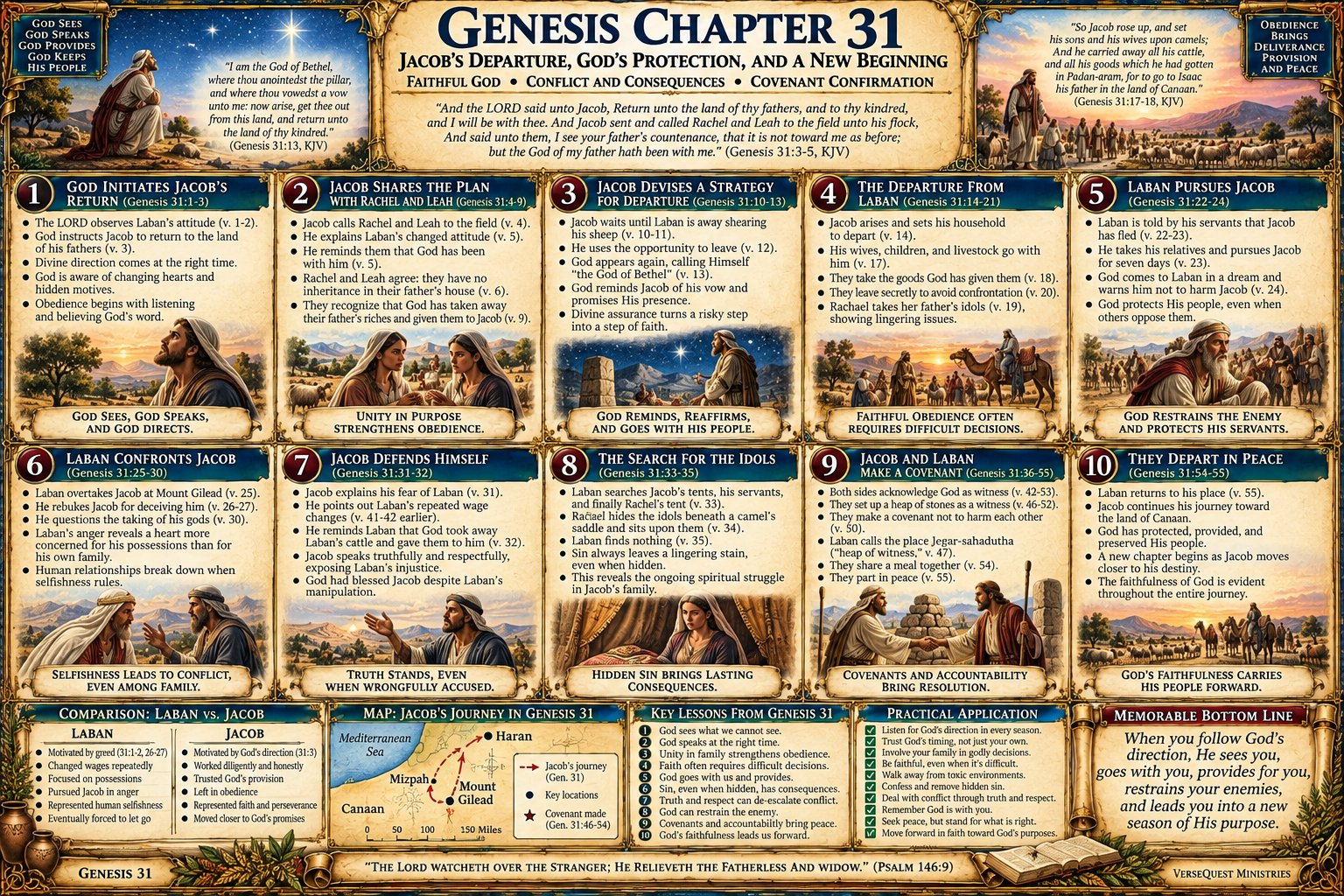
Genesis 31 – Jacob Leaves Laban: God’s Direction, Rachel’s Idols, Laban’s Pursuit, and the Covenant at Gilead (KJV Bible Study Chart)
Explore Genesis 31 with this detailed KJV Bible study chart tracing God’s command for Jacob to leave Laban and return to the land of his fathers. Follow Jacob as he consults Rachel and Leah, recounts God’s protection through years of changing wages, remembers the God of Bethel, and secretly departs with his household. The chart also examines Rachel’s theft of Laban’s household idols, Laban’s seven-day pursuit, God’s warning dream, the confrontation at Mount Gilead, Jacob’s defense of his twenty years of service, and the covenant marked by the heap of witness. Genesis 31 provides a powerful study of divine guidance, providence, conflict, hidden sin, accountability, protection, and peaceful separation. Ideal for Bible study, homeschool, Sunday school, sermon preparation, leadership studies, and patriarchal teaching.
$4.99
Description
Genesis 31: Jacob’s Departure, God’s Protection, and a New Beginning is a detailed KJV Bible study chart tracing Jacob’s departure from Laban after years of service, God’s command to return to Canaan, Rachel and Leah’s agreement to leave their father’s household, Laban’s angry pursuit, the hidden household idols, and the covenant that finally brings separation and peace.
The chapter begins when Jacob notices that Laban’s attitude and the words of Laban’s sons have changed. At that moment the LORD gives clear direction: “Return unto the land of thy fathers, and to thy kindred; and I will be with thee.” Jacob’s return is therefore not merely an escape from an unpleasant employer. It is obedience to God’s command and a movement back toward the land of promise.
Jacob calls Rachel and Leah into the field and explains how Laban’s treatment has changed. He reminds them that Laban repeatedly altered his wages while God continued to protect and prosper him. The wives agree that they have no remaining inheritance in their father’s house and acknowledge that the wealth God has transferred to Jacob rightfully belongs to their household.
Jacob also recounts the dream in which God showed him the livestock and identified Himself as “the God of Bethel, where thou anointedst the pillar, and where thou vowedst a vow unto me.” The God who met Jacob in Genesis 28 now directs him to leave Padan-aram and return home.
Jacob gathers his wives, children, livestock, and possessions and secretly departs while Laban is away. Rachel, however, steals her father’s household images. Three days later Laban learns of Jacob’s flight and pursues him for seven days. Before he can confront Jacob, God appears to Laban in a dream and warns him not to speak to Jacob “either good or bad.” Divine protection restrains the angry pursuer.
At Mount Gilead, years of tension erupt. Laban accuses Jacob of fleeing secretly and taking his gods. Jacob explains his fear and defends his long record of service, reminding Laban of his labor, hardship, losses, and repeatedly altered wages. Rachel secretly hides the images and Laban fails to find them.
The dispute concludes with a covenant. A heap of stones becomes a witness between the two men, boundaries are recognized, and both appeal to God as witness. After a shared meal, Laban returns home while Jacob continues toward Canaan.
Genesis 31 therefore presents obedience, providence, family tension, hidden sin, righteous restraint, confrontation, and peaceful separation. God sees what Jacob cannot see, remembers Bethel, protects him from Laban, and moves His servant closer to the place of promise.
Genesis 31, Jacob, Laban, Rachel, Leah, Jacob leaves Laban, return to Canaan, God of Bethel, divine guidance, divine protection, changed wages, Rachel’s idols, household gods, teraphim, Laban pursues Jacob, Mount Gilead, covenant at Gilead, heap of witness, Jegar-sahadutha, Galeed, Mizpah, family conflict, peaceful separation, providence, covenant faithfulness
Genesis 31 marks the end of Jacob’s long season under Laban. Jacob notices that Laban’s countenance has changed and hears resentment from Laban’s sons. At precisely that time the LORD commands, “Return unto the land of thy fathers, and to thy kindred; and I will be with thee.” Jacob’s departure is therefore ultimately initiated by God. Circumstances confirm that the season has changed, but revelation provides the direction.
Jacob calls Rachel and Leah to the field and recounts Laban’s repeated mistreatment. He explains that although Laban changed his wages repeatedly, “the God of my father hath been with me.” God’s providence, rather than Jacob’s ability alone, accounts for his survival and increase. Rachel and Leah agree to leave, recognizing that their father has treated them as strangers and consumed what should have benefited them.
Genesis 31:10–13 records an important revelation rather than Jacob’s departure strategy. Jacob recounts the dream concerning the livestock, and the Angel of God says, “I am the God of Bethel.” This deliberately connects the present command with Jacob’s earlier encounter in Genesis 28. The God who promised to keep Jacob during his journey now tells him to arise and return.
Jacob departs with his family and possessions while Laban is away. Rachel secretly steals her father’s images. Scripture records the act without approving it. The presence of the teraphim shows that spiritual problems remained within Jacob’s household even while God was guiding the family back toward Canaan.
Laban pursues Jacob for seven days, but God intervenes before the confrontation. In a dream He warns Laban not to speak “either good or bad” to Jacob. The warning demonstrates divine restraint. God can protect His servant by limiting what an adversary is permitted to do.
When Laban overtakes Jacob at Gilead, years of frustration surface. Jacob explains his fear and later recounts twenty years of service, losses he personally absorbed, harsh weather, sleepless nights, and repeated wage changes. His defense shows that peacefulness does not require silence concerning genuine injustice.
Laban searches for his household gods, but Rachel has hidden them beneath the camel’s furniture. Jacob, unaware that Rachel possesses them, rashly declares that whoever has them should not live. The scene demonstrates the danger of speaking beyond one’s knowledge and the continuing presence of concealed problems within the family.
The chapter concludes with covenant rather than violence. A heap and pillar become witnesses, boundaries are recognized, and the two men eat together before separating. Laban returns home; Jacob continues toward Canaan. Genesis 31 therefore shows God directing, protecting, restraining, and preserving His servant while bringing a difficult chapter of Jacob’s life to a peaceful conclusion.
Genesis 31 is useful for teaching obedience when God calls for change, trusting divine protection during conflict, recognizing unhealthy relationships, confronting injustice truthfully, and seeking peaceful separation when reconciliation has reached its limit. It also warns about concealed sin through Rachel’s idols and shows that God can restrain hostile people without His servant needing to control every circumstance. The chapter is valuable for personal Bible study, Sunday school, homeschool instruction, Bible institutes, sermon preparation, leadership studies, family-conflict teaching, workplace integrity lessons, covenant studies, and instruction on guidance, providence, accountability, peace, and moving forward in faith.
King James Bible, Strong’s Concordance, Thompson Chain-Reference Bible, Treasury of Scripture Knowledge, Nave’s Topical Bible, Genesis 28–33 study notes, Jacob life timeline, Jacob and Laban comparison charts, patriarchal maps of Haran Padan-aram Mount Gilead and Canaan, Bethel studies, Rachel and Leah studies, household-idol studies, biblical covenant and oath studies, divine providence Scripture chains, biblical conflict-resolution studies, VerseQuest Genesis charts
Related products
-
Biblical Submission
-
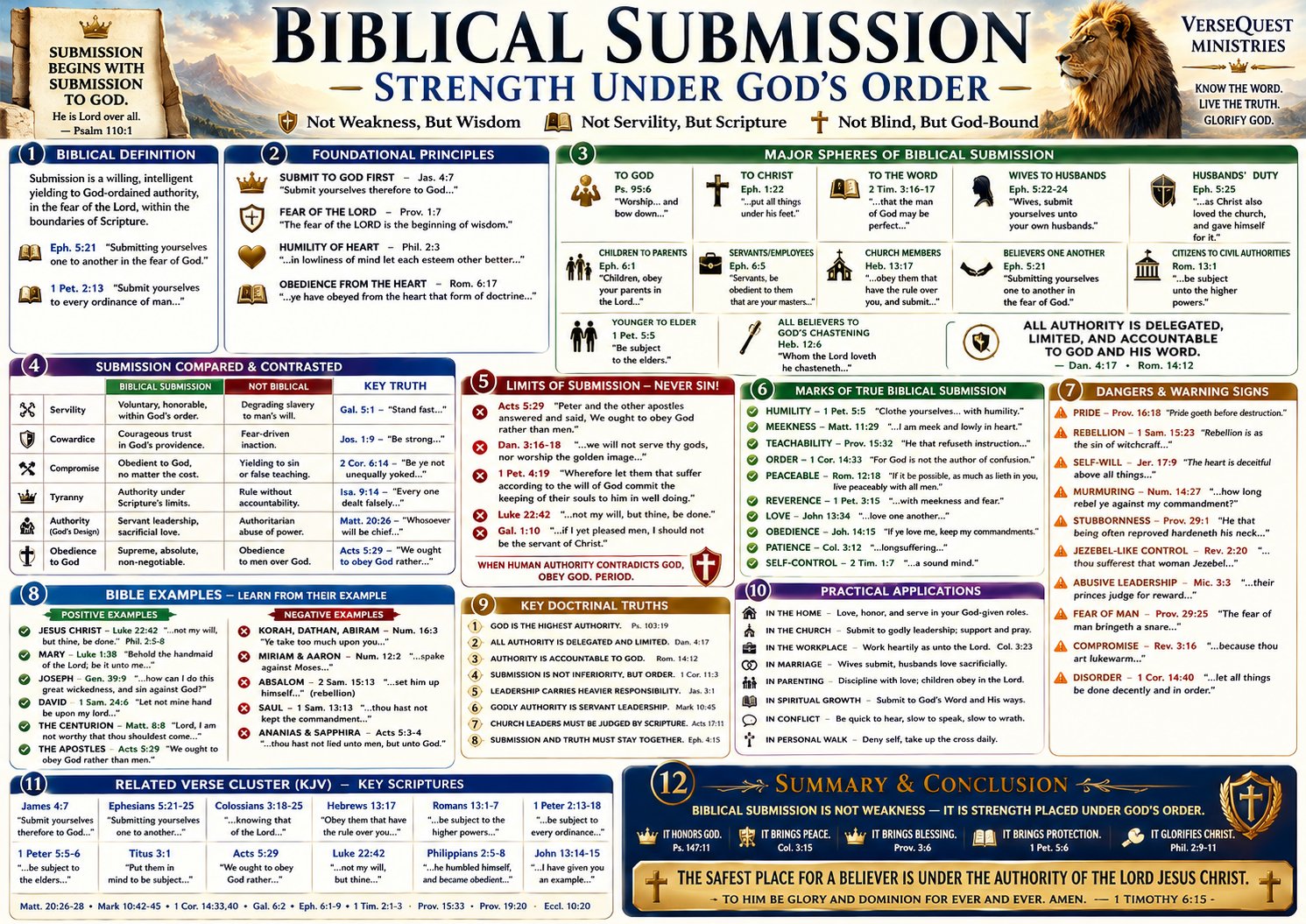
- Biblical Submission Bible Study Chart – Strength Under God’s Order, Authority, and Scriptural Limits (KJV) Product Description
- Study biblical submission with this detailed KJV chart covering God-ordained authority, servant leadership, obedience, marriage, church, government, and the Scriptural limits of submission.
- $3.99
- Add to cart
-
-
True Worship vs False Worship
-
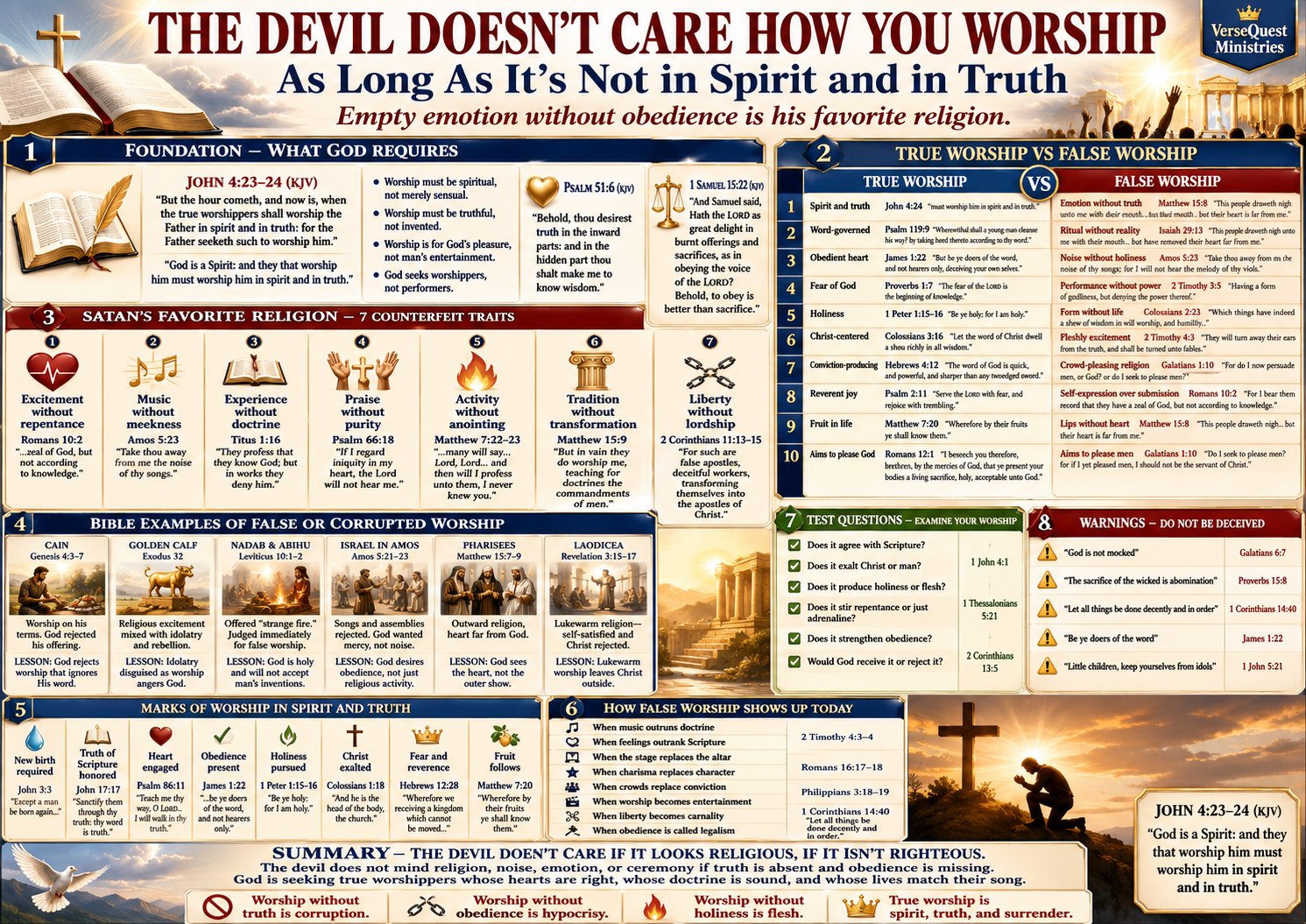
- The Devil Doesn’t Care How You Worship – True Worship in Spirit and in Truth Versus False Religion (KJV Bible Study Chart)
- Examine true and false worship with this detailed KJV Bible study chart covering spirit and truth, counterfeit religion, biblical music, obedience, holiness, discernment, and Christ-centred praise.
- $3.99
- Add to cart
-
-
The Gospel of the Kingdom
-
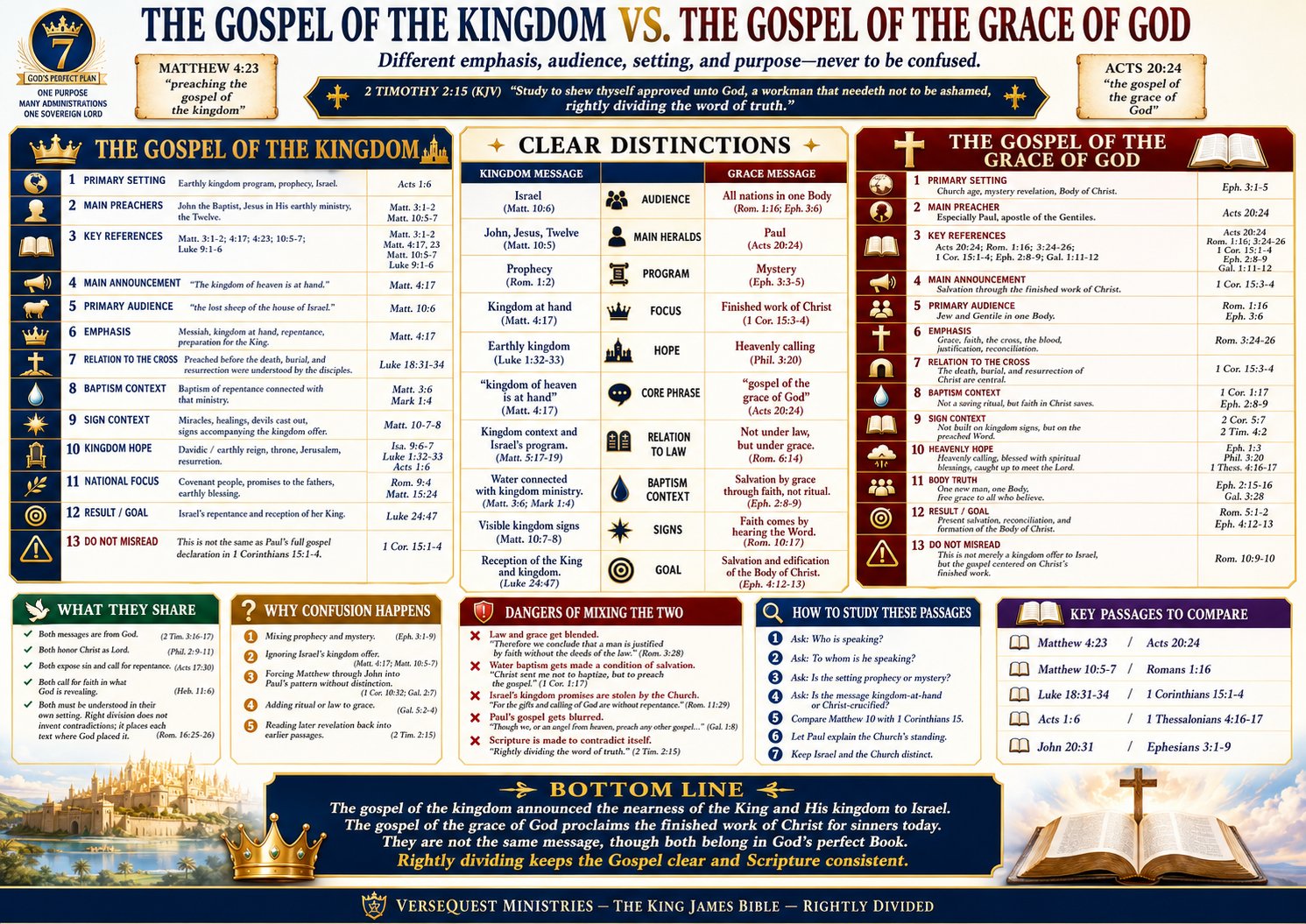
- The Gospel of the Kingdom vs. the Gospel of the Grace of God – KJV Right Division Bible Study Chart
- Compare the gospel of the kingdom and the gospel of the grace of God with this detailed KJV chart covering audience, message, prophecy, mystery, baptism, signs, salvation, and right division.
- $3.99
- Add to cart
-
-
Spritual Dryness
-
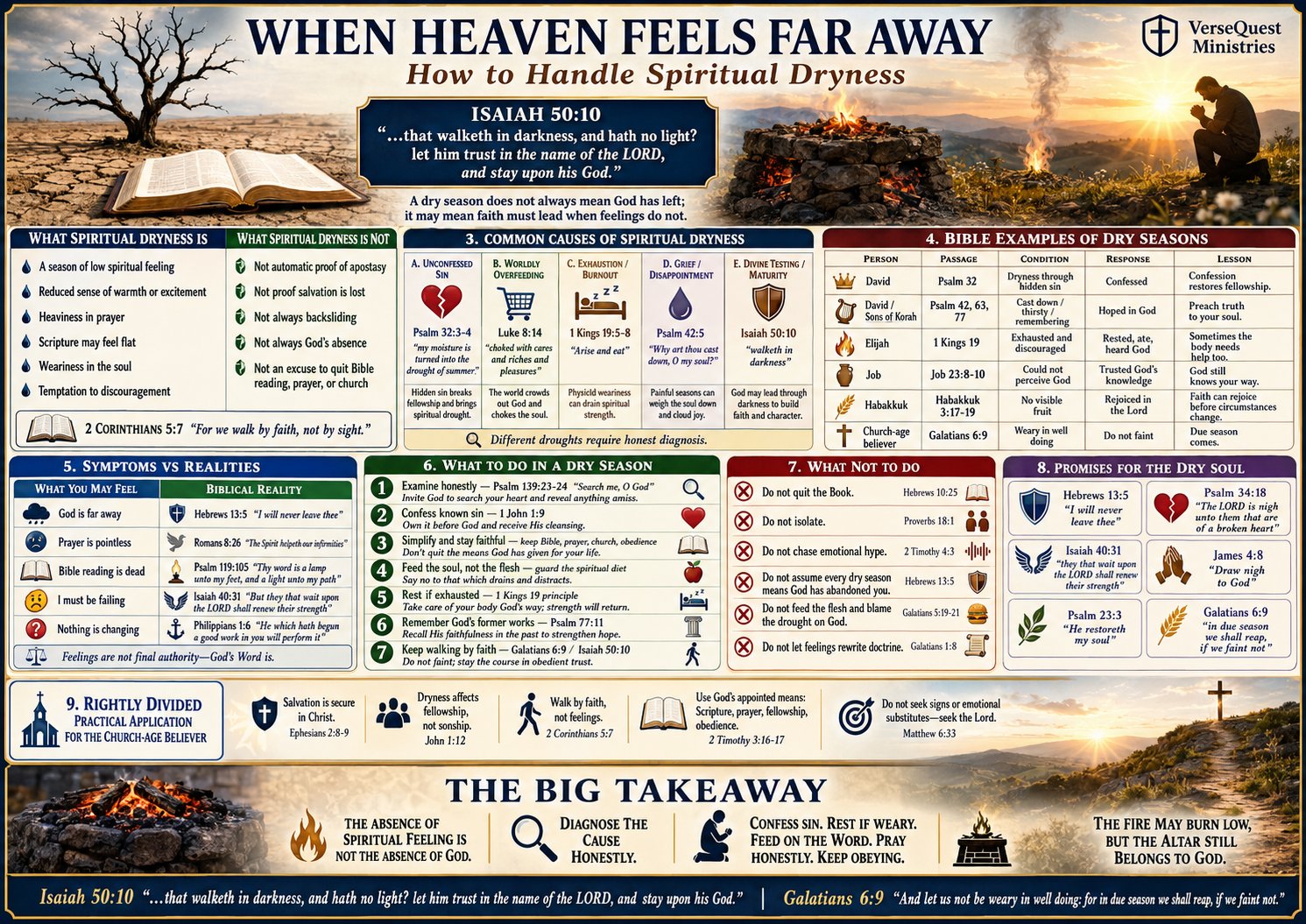
- When Heaven Feels Far Away – How to Handle Spiritual Dryness and Walk by Faith (KJV Bible Study Chart)
- Walk through spiritual dryness with this detailed KJV Bible study chart covering its causes, biblical examples, warning signs, promises, faithful habits, and the difference between feelings and truth.
- $3.99
- Add to cart
-
-
Heavenly Program
-
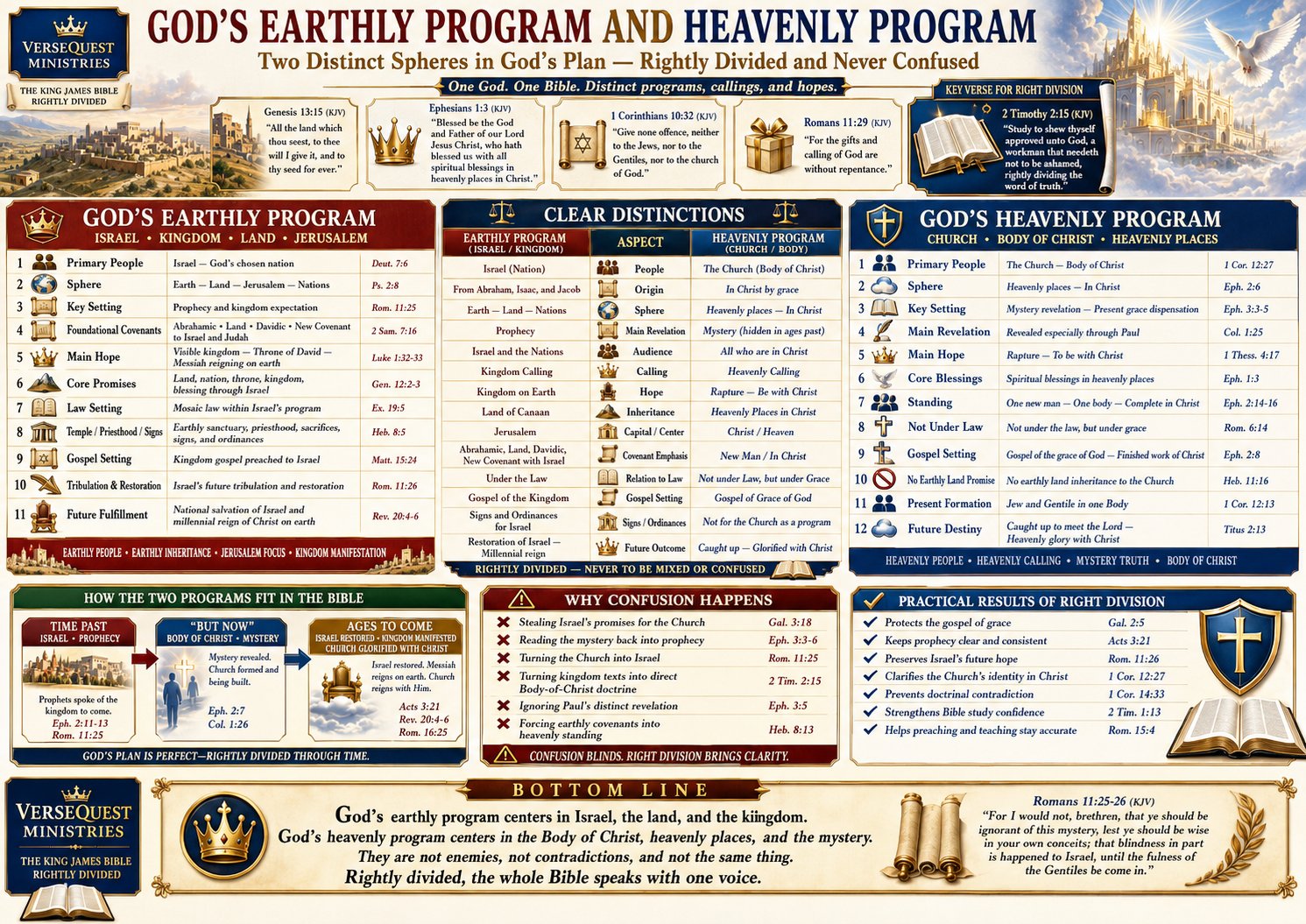
- Israel and the Church: Earthly and Heavenly Callings – KJV Bible Study Chart
- Printable digital KJV Bible study chart comparing Israel’s earthly promises and kingdom hope with the Church’s heavenly calling in Christ. Covers prophecy and mystery, biblical covenants, law and grace, the…
- $3.99
- Add to cart
-