

When Families Become Strangers – Biblical Family Estrangement PDF Book
When Families Become Strangers is a comprehensive 249-page downloadable PDF book examining family estrangement through the King James Bible. Its 35 substantial essays address parent–adult child cutoffs, grandparent alienation, sibling conflict, marital withdrawal, neglected elderly parents, divorce, boundaries, false accusations, forgiveness, trust, reconciliation, and the difficult question of continuing faithfully when reunion does not come.
The book includes a personal introduction drawn from more than thirty years of ministry experience, a concluding message, a final prayer for hurting readers, and a premium illustrated Bible-study chart. This $12.99 digital resource is designed for personal study, pastoral ministry, counseling, teaching, and anyone seeking biblical truth and comfort amid a broken family relationship.
$12.99
Description
When Families Become Strangers is a 249-page downloadable PDF book offering a thorough King James Bible examination of family estrangement, rejection, boundaries, forgiveness, trust, and reconciliation. Written for people on every side of a broken relationship, this substantial VerseQuest study brings one of the most painful and widespread family struggles beneath the honest light of Scripture.
Across 35 carefully developed essays, the book examines parent–adult child estrangement, denied grandparent access, sibling division, marital withdrawal, elderly parents who are seldom visited, divorce, in-law conflict, financial disputes, family gossip, false accusations, destructive labels, necessary separation, and relationships fractured by religious or moral disagreement. It recognizes that some people have been rejected without a truthful hearing while others contributed to the estrangement through control, neglect, provocation, manipulation, partiality, abuse, dishonor, or repeated refusal to change.
Major biblical families provide the doctrinal framework. Cain and Abel reveal how envy entered the first family outside Eden. Jacob and Esau demonstrate the consequences of favoritism, deception, prolonged separation, and eventual reunion. Joseph shows that forgiveness does not require immediate trust or unrestricted access. David and Absalom reveal parental failure, unresolved family evil, manipulation, rebellion, and a father’s continuing grief. Luke 15 presents two lost sons, a waiting father, genuine repentance, compassionate reception, and the danger of self-righteous resentment.
The book establishes essential distinctions that are frequently confused during family conflict. A biblical boundary protects against demonstrated harm, while a punitive barricade uses silence or access to punish. Forgiveness releases personal vengeance, but trust must be rebuilt through dependable conduct. Access is governed by wisdom and safety, while reconciliation requires truth and willing participation from both sides. Readers are also guided through honest self-examination, specific confession, restitution, changed conduct, respectful communication, gradual restoration, and the point at which repeated pursuit becomes pressure.
This resource neither automatically declares every rejected parent innocent nor assumes every departing child is justified. It comforts the wounded while confronting sin on every side. It also addresses circumstances involving violence, abuse, addiction, threats, exploitation, and criminal instability, making clear that biblical forgiveness must never be misused to force vulnerable people or children into unsafe conditions.
The volume includes a personal ministry introduction, all 35 full-length studies, a personal conclusion, a final prayer for hurting readers, and a premium illustrated Bible-study chart summarizing the entire subject. The downloadable PDF may be saved and printed for personal study. At $12.99, it provides 249 pages of KJV-centered instruction for individuals, families, pastors, teachers, counselors, and ministry leaders seeking something deeper than slogans or one-sided explanations.
Living bereavement — The peculiar grief of mourning a relationship while the estranged person remains alive. Parent–adult child estrangement — The responsibilities, failures, accusations, and competing expectations that frequently surround modern family cutoffs. Grandparent alienation — Denied access, rejected gifts, lost childhood years, parental authority, and children used as leverage. Sibling estrangement — Rivalry, favoritism, inheritance, betrayal, unequal caregiving, family factions, and wounds retained from childhood. Marital and emotional estrangement — Husbands and wives sharing an address while trust, affection, communication, and fellowship have disappeared. Neglected elderly parents — The biblical distinction between legitimate limitations and habitual abandonment of aging family members. Biblical family case studies — Cain and Abel, Jacob and Esau, Joseph and his brethren, David and Absalom, and the two lost sons of Luke 15. Necessary protection versus punitive rejection — Separating distance established for safety from silence imposed for leverage, punishment, or control. Boundaries versus barricades — Identifying whether a relational limit is specific, proportionate, truthful, and protective. Competing family narratives — Selective memory, misunderstood intentions, exaggerated grievances, hidden wrongdoing, evidence, witnesses, and truthful hearings. Modern therapeutic language — The proper and improper uses of terms such as boundaries, toxic, unsafe, narcissistic, self-care, and protecting one’s peace. Last-days loss of natural affection — The connection between self-love, ingratitude, trucebreaking, false accusation, and family abandonment. Self-examination — Bringing pride, control, neglect, provocation, dishonor, manipulation, partiality, and bitterness beneath God’s searchlight. True and counterfeit apologies — Confessing specific wrongdoing without vague regret, hidden excuses, countercharges, or false self-condemnation. Forgiveness, trust, access, and reconciliation — Preserving the biblical distinctions among four related but separate realities. Gradual restoration — Looking for fruits worthy of repentance and allowing trust to return through demonstrated change. Respectful communication — Knowing when to call, write, acknowledge important dates, invite conversation, or stop contacting temporarily. Triangulation and family recruitment — Refusing gossip, loyalty tests, third-party messages, social-media campaigns, and the use of children as couriers. Grief without bitterness — Pouring sorrow before God without allowing the wound to govern every remaining relationship. Continuing when reconciliation does not come — Carrying the scar, serving the living, trusting God, and arising to sit in the gate.
Central Argument
Family estrangement must be examined beneath Scripture rather than modern slogans, emotional assumptions, or automatic loyalty to one side. The Bible comforts people who have been rejected unjustly while requiring every reader to examine personal sin, family duty, truthful protection, forgiveness, and the limits of individual responsibility.
Major Observations
Estrangement is frequently experienced as a living bereavement because the person remains alive while the relationship is treated as dead. Holidays, birthdays, photographs, unanswered messages, and lost years can repeatedly reopen the wound. Biblical faith does not demand the denial of sorrow; it directs sorrow toward God and refuses to let grief ferment into bitterness.
Family separation seldom remains confined to two people. It can divide siblings, spouses, grandparents, grandchildren, churches, and mutual friendships. Gossip, loyalty tests, social-media campaigns, and messages passed through children multiply the original conflict.
Scripture records deeply troubled families without hiding their failures. Cain’s envy, Jacob and Esau’s rivalry, Joseph’s betrayal, David’s household, Absalom’s rebellion, and the two lost sons of Luke 15 provide distinct patterns rather than one universal explanation.
Essential Distinctions
A boundary identifies harmful conduct, responds proportionately, protects those entrusted to one’s care, and leaves a truthful path toward repentance where possible. A barricade uses vague accusations, silence, children, access, or constantly changing demands to punish and control.
Forgiveness releases personal vengeance. Trust concerns demonstrated dependability. Access concerns what involvement is wise and safe. Reconciliation requires truth, repentance, mercy, and willing participation from both sides. Forgiveness may begin within one heart, but reconciliation cannot be manufactured by one person.
Conviction identifies specific sin according to truth and Scripture. False guilt demands confession to vague, moving, exaggerated, or invented charges. Humility does not require a person to lie against himself merely to purchase contact.
Doctrinal Conclusions
Romans 12:18 assigns real responsibility while recognizing human limitation. Believers must do what truthfully lies within them—search their hearts, confess actual wrong, make restitution, correct falsehood, forgive, communicate peaceably, and change sinful conduct. They cannot create repentance or reconciliation inside another adult’s will.
Forgiveness does not abolish wisdom. Joseph forgave his brethren while testing their conduct. David refused vengeance against Saul while maintaining distance. Necessary protection from violence, abuse, exploitation, addiction, threats, and criminal instability is compatible with biblical mercy.
Human rejection cannot cancel divine acceptance. Psalm 27:10 assures the forsaken that the Lord still takes them up, while the believer’s acceptance in Christ remains beyond the authority of a family gatekeeper.
Memorable Teaching Points
- Estrangement is grief without a grave and hope repeatedly wounded.
- A boundary protects; a barricade punishes.
- The flesh keeps a large-print Bible for their sins and a pocket edition for its own.
- Conviction names actual sin; false guilt demands confession to fog.
- An apology with an excuse hidden inside is a smuggler’s suitcase.
- Forgiveness may be one-sided; reconciliation never is.
- Love can leave the porch light burning without spending every night breaking down the door.
- Carry the scar, but do not build your house inside the wound.
- A failed reunion is not necessarily failed obedience.
- Grief may occupy a chamber, but it must not occupy the throne.
Subjects for Further Study
Readers should compare David’s response to Absalom with his conduct toward Saul, examine Judah’s changed behavior before Joseph, study the father and both sons in Luke 15, trace the biblical treatment of tale-bearing throughout Proverbs, and compare Romans 12:18 with passages concerning rebuke, forgiveness, separation, and restored fellowship.
This book can be used for extended personal Bible study on family estrangement. Readers may work through the essays sequentially as a complete biblical progression or select individual chapters addressing their immediate circumstances, such as denied grandparent access, sibling conflict, marital withdrawal, necessary boundaries, forgiveness, or attempted reconciliation.
Pastors, preachers, and Bible teachers can use the volume to prepare topical sermons, counseling lessons, family conferences, adult Sunday school studies, and pastoral-care discussions. The biblical case studies provide substantial material for teaching about Cain and Abel, Jacob and Esau, Joseph and his brethren, David’s household, Absalom’s rebellion, and the prodigal son.
The resource can support careful one-to-one ministry with rejected parents, adult children, estranged siblings, neglected elderly people, prisoners attempting to repair family damage, and spouses experiencing emotional separation. Because the book examines sin and responsibility on every side, it can help a counselor avoid immediately declaring either the departing or rejected person entirely innocent.
Small groups and ministry-training classes can use the major distinctions as discussion units: boundary versus barricade, forgiveness versus trust, protection versus punishment, conviction versus false guilt, and one-sided forgiveness versus two-sided reconciliation. The included illustrated chart provides a concise visual summary suitable for review and classroom instruction.
Families considering renewed communication can use the later chapters to evaluate apologies, restitution, changed conduct, reasonable boundaries, gradual trust, and expectations for an initial conversation. Those facing continued rejection can use the concluding studies and final prayer to pursue peace without allowing an unresolved relationship to consume every remaining duty and mercy.
The primary companion resource is the King James Bible, with special attention to Genesis 4, Genesis 25–33, Genesis 37–50, 2 Samuel 12–19, Psalm 27, Psalm 34, Psalm 55, Psalm 62, Psalm 139, Proverbs 18, Luke 15, Romans 12, Ephesians 4 and 6, 1 Timothy 5, and 2 Timothy 3.
A Strong’s Exhaustive Concordance can help readers trace biblical terms such as anger, bitterness, forgiveness, honor, wrath, envy, strife, compassion, reconciliation, confession, and repentance.
The Treasury of Scripture Knowledge is useful for following cross-references among biblical family conflicts, reconciliation accounts, warnings concerning tale-bearing, and commands governing Christian conduct.
A trustworthy King James Bible dictionary can assist with terms such as talebearer, trucebreaker, natural affection, provoke, reconcile, confess, forsake, malice, and partiality.
A wide-margin or cross-reference King James Bible and a dedicated study notebook will help readers compare the family histories examined throughout the book and record personal applications without confusing doctrinal interpretation with private assumptions.
The included When Families Become Strangers illustrated Bible-study chart should be used as a review sheet, teaching aid, and visual map of the entire 35-essay progression.
Related products
-
When Fear of God Vanishes
-
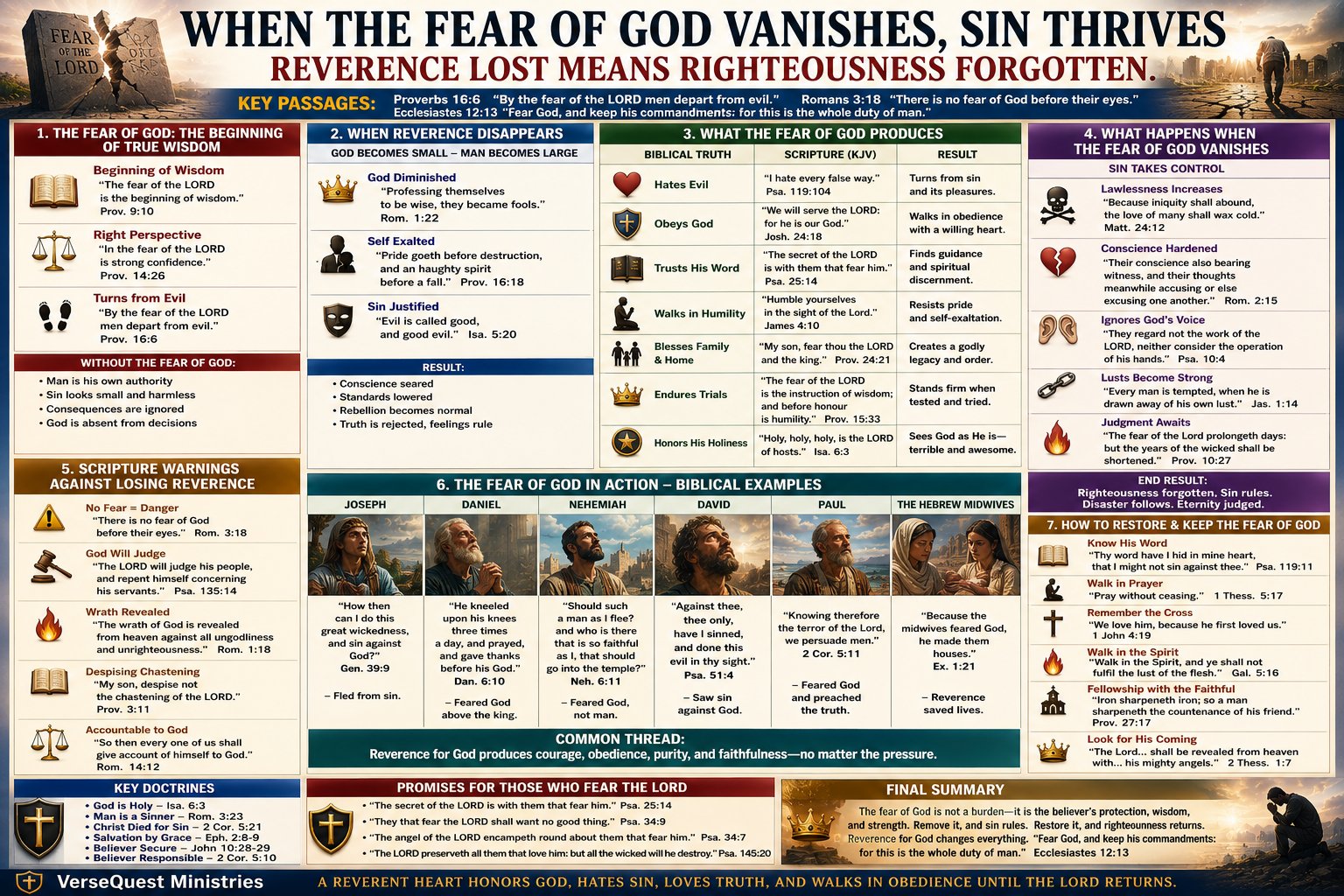
- When the Fear of God Vanishes, Sin Thrives – Reverence, Wisdom, Holiness, and Obedience (KJV Bible Study Chart)
- Understand the fear of God with this detailed KJV Bible study chart covering reverence, wisdom, holiness, obedience, hardened conscience, divine judgment, biblical examples, and restoring godly fear.
- $3.99
- Add to cart
-
-
How To Live By Faith
-
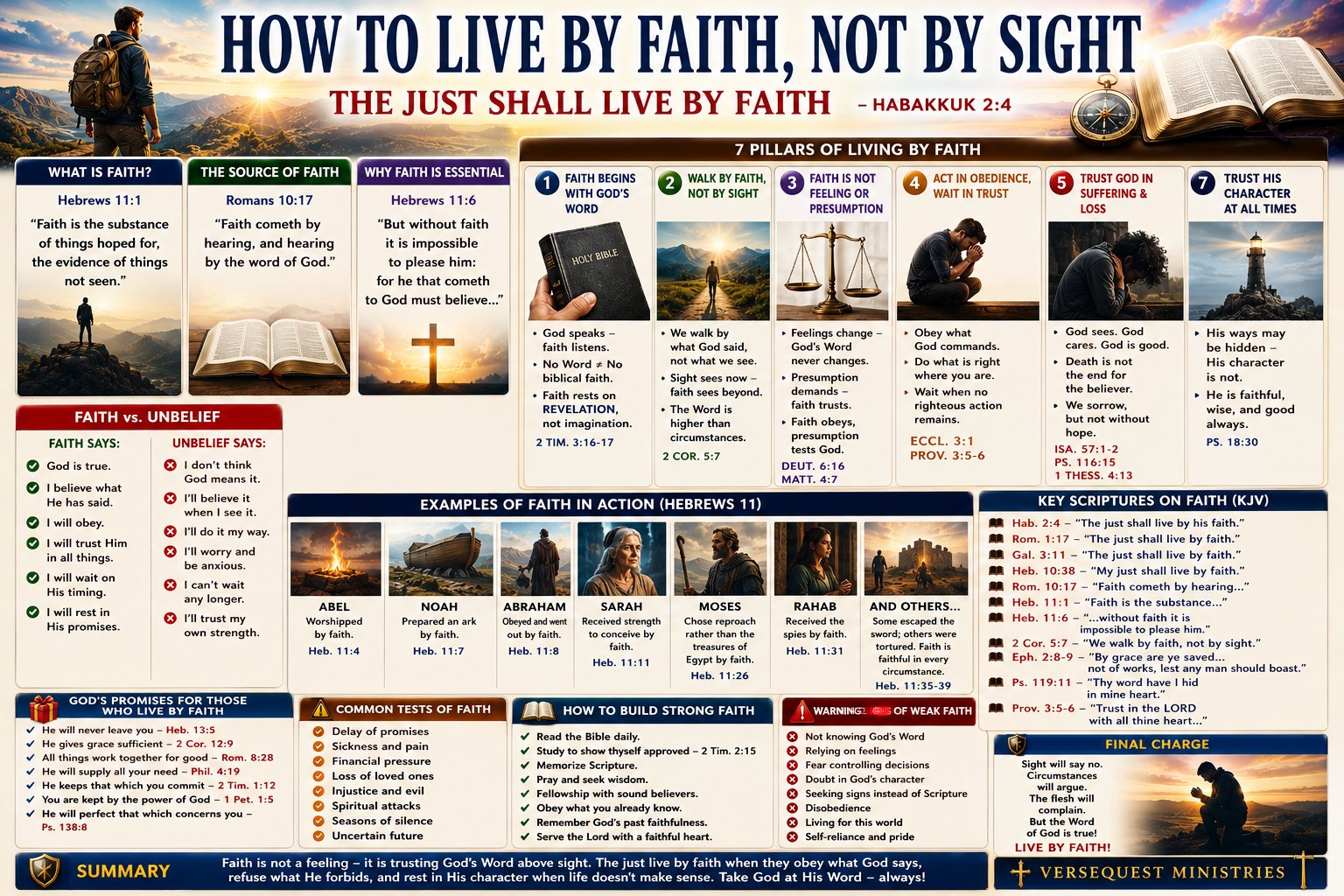
- How to Live by Faith, Not by Sight – Seven Pillars of Trusting God’s Word Through Every Circumstance (KJV Bible Study Chart)
- Learn how to live by faith rather than sight with this detailed KJV chart covering God’s Word, obedience, waiting, suffering, Hebrews 11 examples, trials of faith, and trust in God’s…
- $3.99
- Add to cart
-
-
October 2026 Devotional
-

- VerseQuest Daily — October 2026: Identity in Christ and the Daily Walk
- VerseQuest Daily — October 2026 is a 67-page downloadable PDF containing thirty-one KJV devotionals on identity in Christ and the daily Christian walk. Each reading includes an assigned Scripture passage,…
- $6.99
- Add to cart
-
-
Spiritual Growth
-
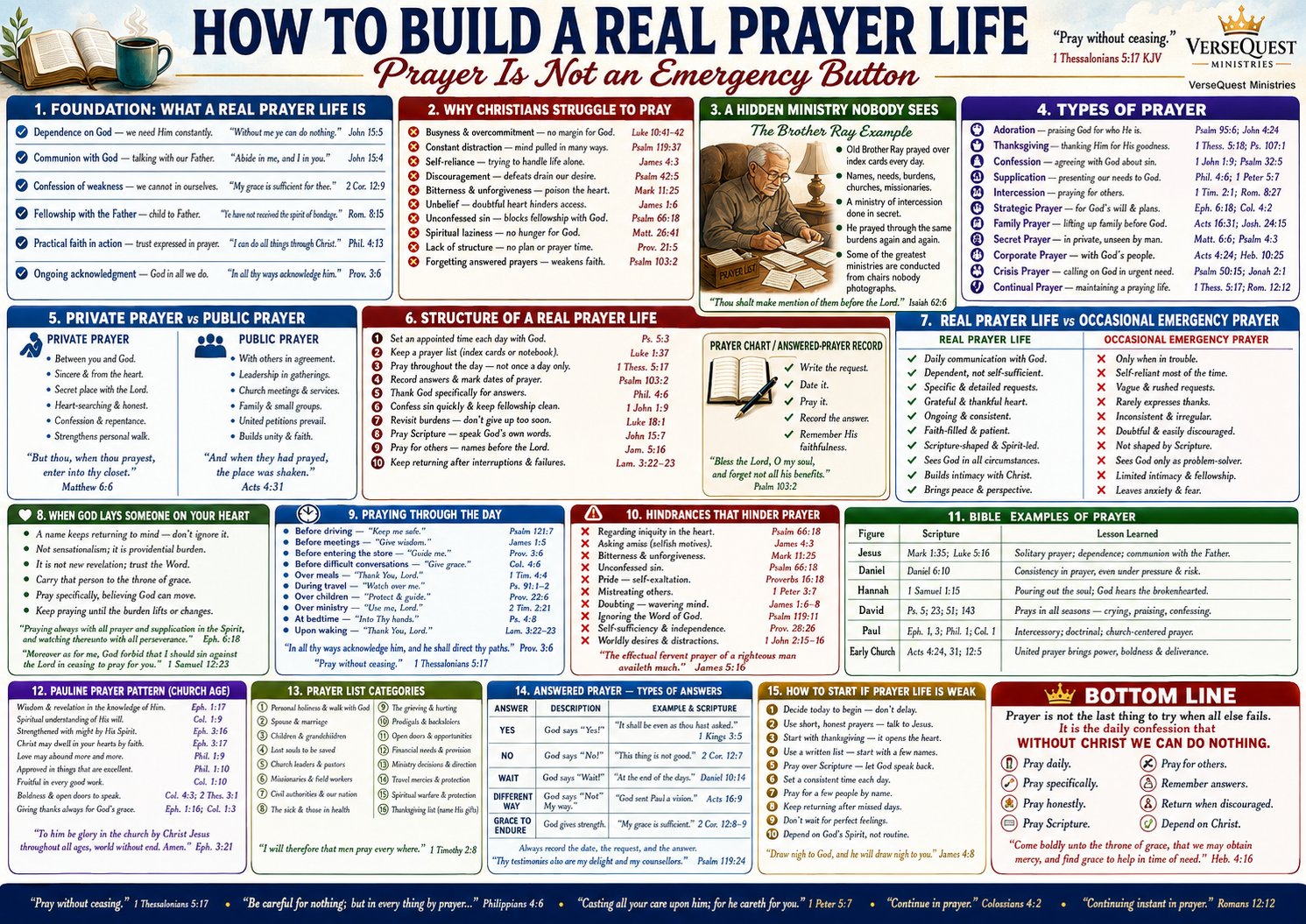
- How to Build a Real Prayer Life – Biblical Prayer Guide and KJV Bible Study Chart
- Build a consistent, biblical prayer life with this detailed KJV Bible study chart. Explore the foundations of prayer, types of prayer, common hindrances, answered prayer, Bible examples, and practical ways…
- $3.99
- Add to cart
-
-
Uncategorized
-
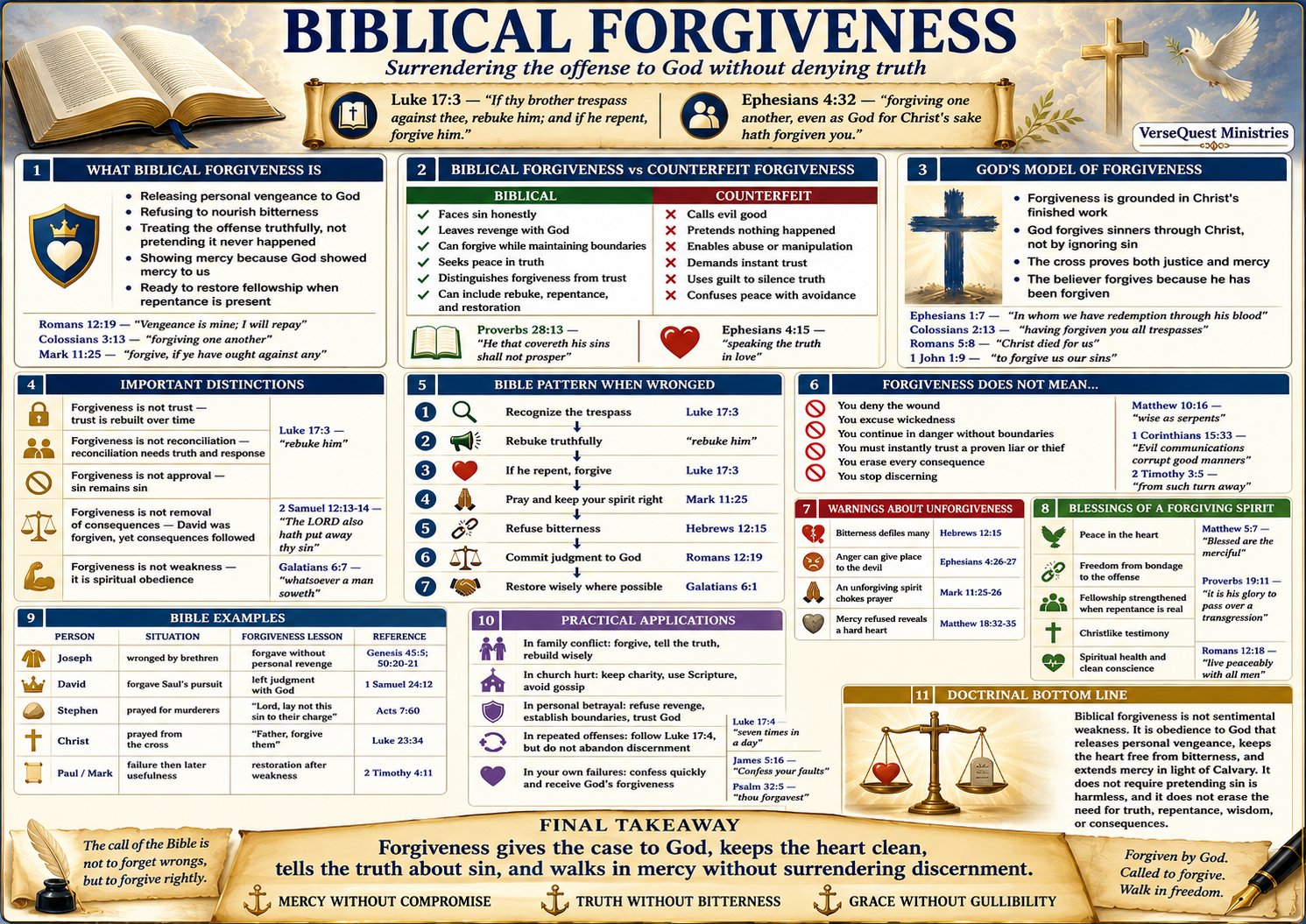
- Biblical Forgiveness Bible Study Chart – Mercy, Truth, Repentance, Boundaries, and Wise Restoration (KJV)
- Understand biblical forgiveness with this detailed KJV chart covering mercy, truth, repentance, trust, reconciliation, wise boundaries, accountability, consequences, bitterness, and restoration.
- $3.99
- Add to cart
-