
The Rapture and the Voice That Lifts the Bride from the Dust – Resurrection, Translation, and the Blessed Hope (KJV Bible Study Chart)
Study the Rapture with this detailed KJV Bible chart covering the resurrection of dead believers, transformation of living saints, the heavenly summons, glorified bodies, and meeting Jesus Christ in the air.
$3.99
Description
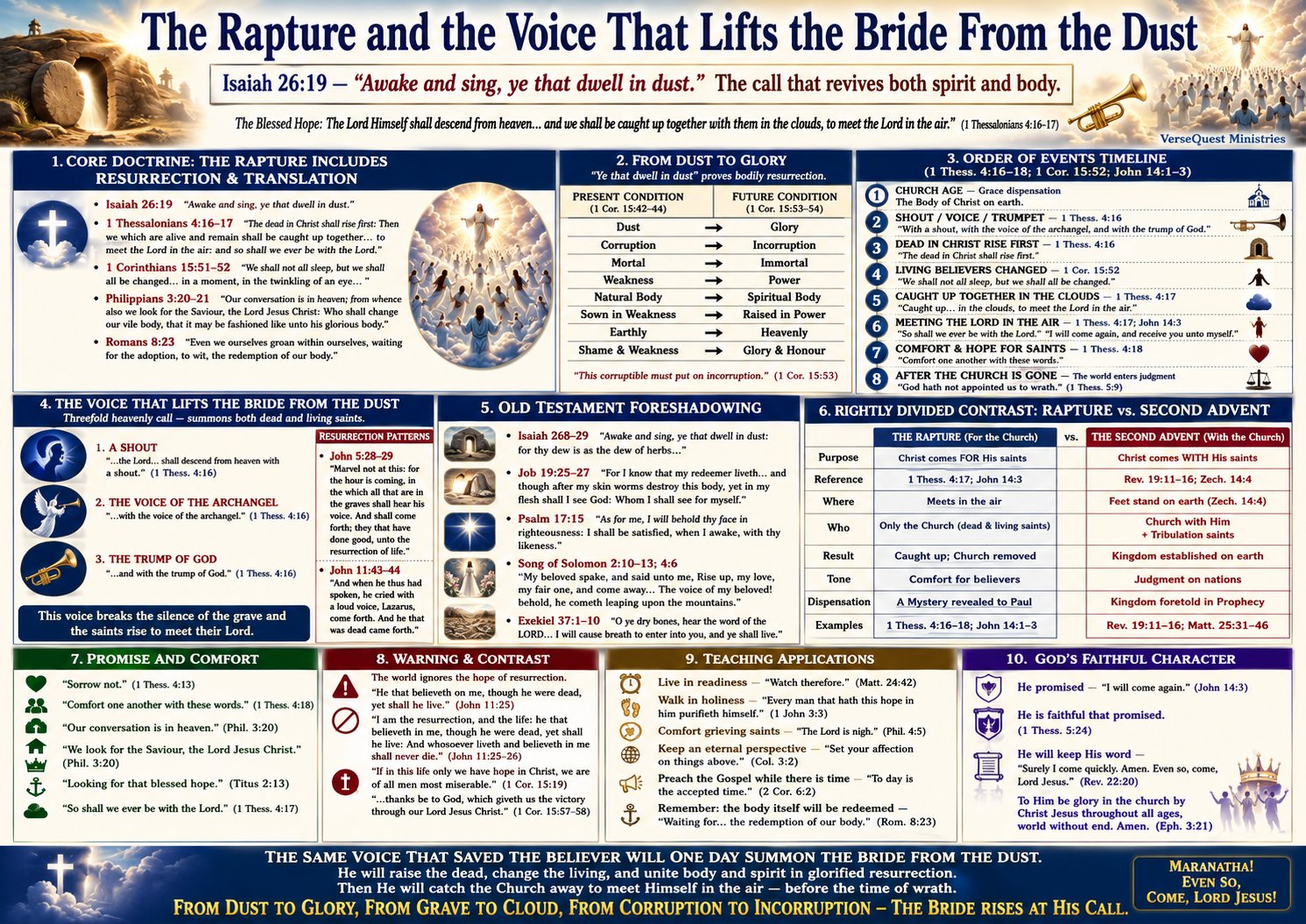
The Rapture and the Voice That Lifts the Bride from the Dust is a detailed KJV Bible study chart explaining the bodily resurrection of dead believers, the instantaneous transformation of living saints, and the catching away of the Church to meet the Lord Jesus Christ in the air.
Built around Isaiah 26:19, 1 Thessalonians 4:13–18, and 1 Corinthians 15:51–54, this chart presents the Rapture as far more than a symbolic spiritual awakening or escape from earthly difficulty. It is a literal, physical, supernatural event in which Christ raises the dead in Him, changes the bodies of living believers, and gathers the entire Body of Christ into His presence.
Isaiah declares, “Awake and sing, ye that dwell in dust.” The language points toward bodily resurrection. The believer who has died is not permanently claimed by the grave. At the appointed voice of the Lord, the body that returned to dust will rise in incorruption, power, glory, and immortality.
First Thessalonians 4 establishes the order of events. The Lord Himself descends from heaven with a shout, with the voice of the archangel, and with the trump of God. The dead in Christ rise first. Living believers are then caught up together with them in the clouds to meet the Lord in the air. From that moment forward, the Church will ever be with the Lord.
The chart emphasizes that the Rapture includes both resurrection and translation. Dead believers are raised, while living believers are changed without passing through death. First Corinthians 15 calls this truth a mystery: not every believer will sleep, but every member of Christ’s Body will be transformed.
A central comparison traces the believer’s movement from dust to glory. Corruption becomes incorruption. Mortality puts on immortality. Weakness becomes power. The natural body is raised a spiritual body. Earthly shame and frailty give way to glory and honour.
This transformation does not mean believers become disembodied spirits. Christ redeems the body itself. Philippians 3:20–21 teaches that the Lord Jesus Christ will change the believer’s vile body and fashion it like His glorious body. Romans 8 describes this hope as the redemption of the body.
The heavenly summons is presented as a threefold call: a shout, the voice of the archangel, and the trump of God. This voice breaks the silence of the grave, reaches the dead in Christ, and summons living saints into the presence of their Lord. The same Saviour who called Lazarus from the tomb possesses authority over every grave containing one of His redeemed people.
The chart provides a clear prophetic timeline. The present Church Age continues under grace. Christ then descends from heaven with the heavenly summons. The dead in Christ rise first, living believers are changed, and both groups are caught up together in the clouds. The Church meets the Lord in the air and is removed before the world enters the coming period of prophetic wrath.
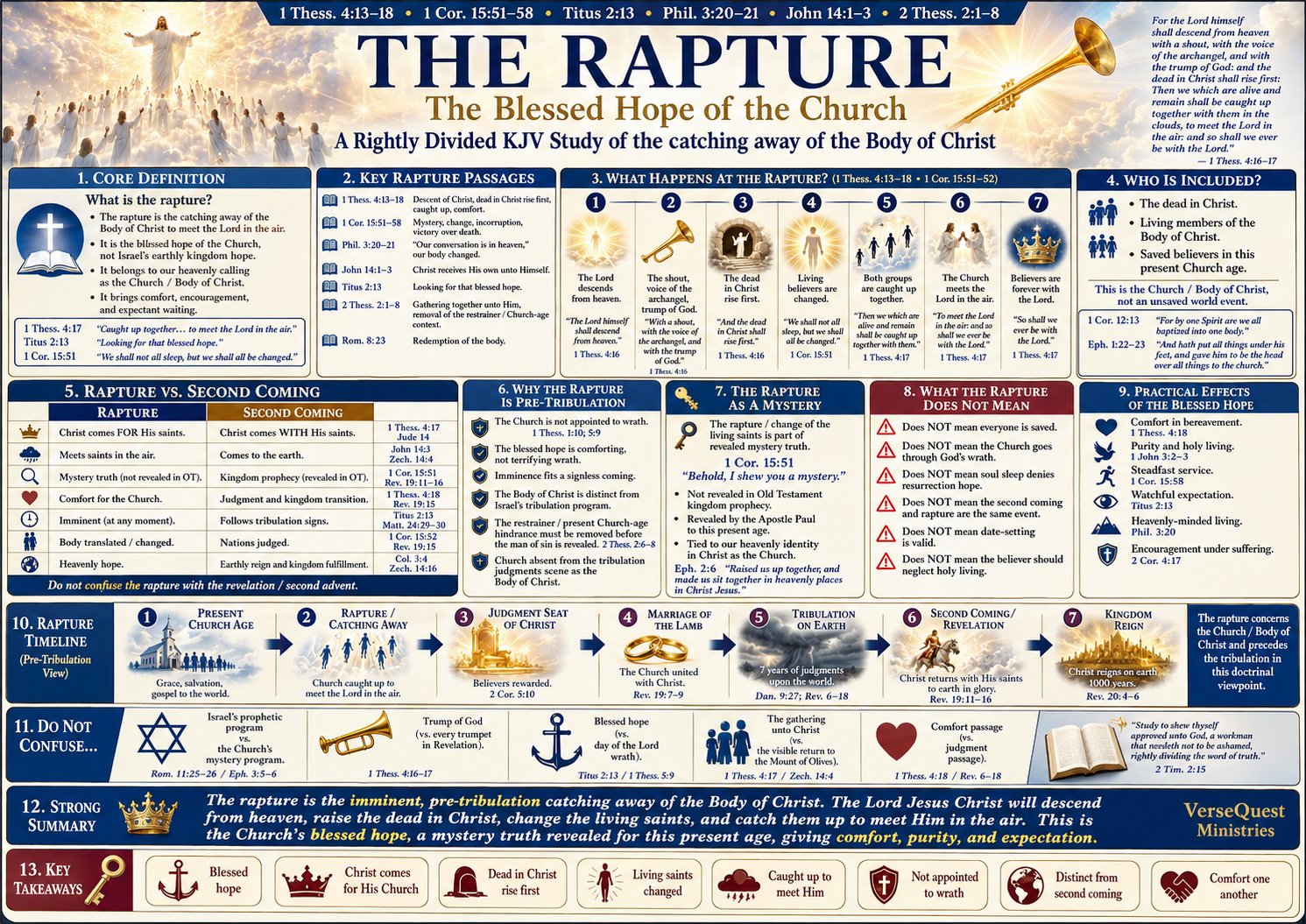
Special attention is given to the distinction between the Rapture and the Second Advent. At the Rapture, Christ comes for His saints and meets them in the air. At the Second Coming, Christ returns with His saints and His feet stand upon the earth. The Rapture removes the Church; the Second Advent brings judgment upon the nations and establishes Christ’s earthly Kingdom.
The Rapture is connected with mystery truth revealed especially through Paul. The Second Advent belongs to the prophetic Kingdom program foretold throughout Scripture. One event is the blessed hope and comfort of the Body of Christ; the other is the glorious return of the King to judge rebellion and fulfill Israel’s prophetic promises.
Old Testament passages provide resurrection language and patterns that harmonize with the New Testament revelation. Isaiah calls those dwelling in dust to awake. Job expresses confidence that he will see his Redeemer in his flesh. The Psalms speak of awakening in God’s likeness. Ezekiel’s valley of dry bones demonstrates God’s power to restore life, while the Song of Solomon contains language of arising at the voice of the beloved.
These passages should be handled with proper right division. They do not all reveal the Church’s Rapture in its complete Pauline form, but they establish resurrection themes, divine calling, restoration, and God’s authority over death that prepare the reader for the fuller mystery later revealed.
The chart also presents the Rapture as a doctrine of promise and comfort. Believers are told not to sorrow as those who have no hope. The dead in Christ are not lost, forgotten, or permanently separated from the living saints. Christ will reunite His Church in glorified bodies, and believers are commanded to comfort one another with these words.
This hope should produce practical holiness. First John teaches that everyone possessing this hope purifies himself. The expectation of Christ’s return should lead believers to live in readiness, maintain an eternal perspective, comfort grieving saints, preach the gospel urgently, and set their affection upon things above.
The doctrine also answers the fear of death. For the believer, the grave is temporary. Corruption cannot defeat Christ, dust cannot prevent resurrection, and death cannot permanently separate the redeemed from their Saviour. The trumpet will sound, the dead will rise, and mortality will be swallowed up in victory.
The chart warns against interpretations that remove bodily resurrection, merge the Rapture with the Second Coming, or place the Church inside the appointed period of divine wrath. God has not appointed the Body of Christ to wrath. The Church awaits the Saviour from heaven rather than Antichrist, the mark of the beast, or the judgments of Daniel’s seventieth week.
God’s faithful character guarantees the promise. Christ said, “I will come again.” The One who promised is faithful. He will raise the dead, transform the living, gather the Church, and fulfill every word exactly as written.
The central message is memorable: the same voice that saved the believer will one day summon the Bride from the dust. From grave to cloud, from corruption to incorruption, and from weakness to glory, the Church will rise at the call of Jesus Christ.
This chart is ideal for personal Bible study, Rapture teaching, prophecy classes, funeral and grief ministry, resurrection studies, Sunday school, homeschool Bible curriculum, Bible institutes, pastoral instruction, sermon preparation, and believers seeking a clear KJV overview of the blessed hope.
Rapture of the Church, resurrection of dead believers, translation of living saints, dead in Christ rise first, voice of the archangel, trump of God, shout of the Lord, caught up together, meeting Christ in the air, glorified body, redemption of the body, corruption to incorruption, mortality to immortality, blessed hope, Bride of Christ, Rapture versus Second Coming, pretribulation Rapture, comfort for grieving believers, eternal security, return of Jesus Christ
The Rapture includes a bodily resurrection. The dead in Christ do not remain permanently in the dust. Christ will raise their bodies and transform them into incorruptible, immortal, and glorified bodies.
Living believers will also be changed. First Corinthians 15 reveals that not every Church-age believer will die, but every believer will undergo the transformation necessary to enter Christ’s presence in glory.
The phrase “the dead in Christ” identifies those who died possessing saving union with Jesus Christ. Their hope rests not upon the manner of burial, condition of the body, or length of time in the grave, but upon their position in Him.
The Lord Himself will descend from heaven. The Rapture is not delegated to an angel or produced through a gradual spiritual awakening. Jesus Christ personally comes to receive His Church.
The heavenly summons includes a shout, the voice of the archangel, and the trump of God. Scripture presents a decisive divine call that raises the dead and gathers the saints.
The dead in Christ rise before living believers are caught up. This order assures grieving Christians that departed saints will not be disadvantaged or left behind when Christ returns.
The Church meets Christ in the air. This differs from the Second Advent, when Christ visibly returns to earth, judges His enemies, and establishes His Kingdom.
At the Rapture, Christ comes for His saints. At the Second Coming, He returns with His saints. These differences in direction, location, purpose, participants, and result establish two distinct events.
The Rapture belongs to mystery truth revealed through Paul. The visible Second Coming and earthly Kingdom were repeatedly foretold in prophecy.
The believer’s body is part of Christ’s redemptive purpose. Salvation does not end with the soul escaping the body; it includes the future redemption and glorification of the body.
Corruption will put on incorruption. The resurrected body will no longer decay, weaken, suffer, age, or die. Mortality will be swallowed up in Christ’s victory.
The doctrine of the Rapture is meant to comfort. Paul concludes his teaching by commanding believers to comfort one another with these words.
The blessed hope also promotes holiness. A believer expecting Christ should not live carelessly, bury himself in the world, or treat earthly life as permanent.
The Church awaits Jesus Christ, not the wrath of the Tribulation. God has not appointed believers to wrath but to obtain salvation through the Lord Jesus Christ.
Old Testament resurrection passages provide genuine biblical foundations, but the complete revelation of the Rapture and the one Body should be understood through Paul’s Church-age doctrine.
Christ’s promise guarantees the event. The Rapture rests upon His faithfulness, authority over death, finished redemption, and declared purpose to receive His people unto Himself.
Rapture teaching, resurrection studies, pretribulation prophecy classes, funeral ministry, comforting grieving believers, teaching glorified bodies, Church Age doctrine, Rapture and Second Coming comparisons, eternal-security instruction, Christian hope, holy living in expectation of Christ, gospel urgency, Sunday school lessons, homeschool Bible curriculum, Christian school teaching, Bible institute classes, pastoral training, sermon preparation
King James Bible, Strong’s Concordance, Thompson Chain-Reference Bible, Treasury of Scripture Knowledge, Nave’s Topical Bible, 1 Thessalonians commentary notes, 1 Corinthians 15 study materials, resurrection cross-reference worksheets, pretribulation Rapture resources, Church Age versus Tribulation charts, Rapture and Second Coming comparisons, funeral and grief ministry notes, prophecy timelines, VerseQuest Rapture and prophecy charts
Related products
-
Chart Collections
-
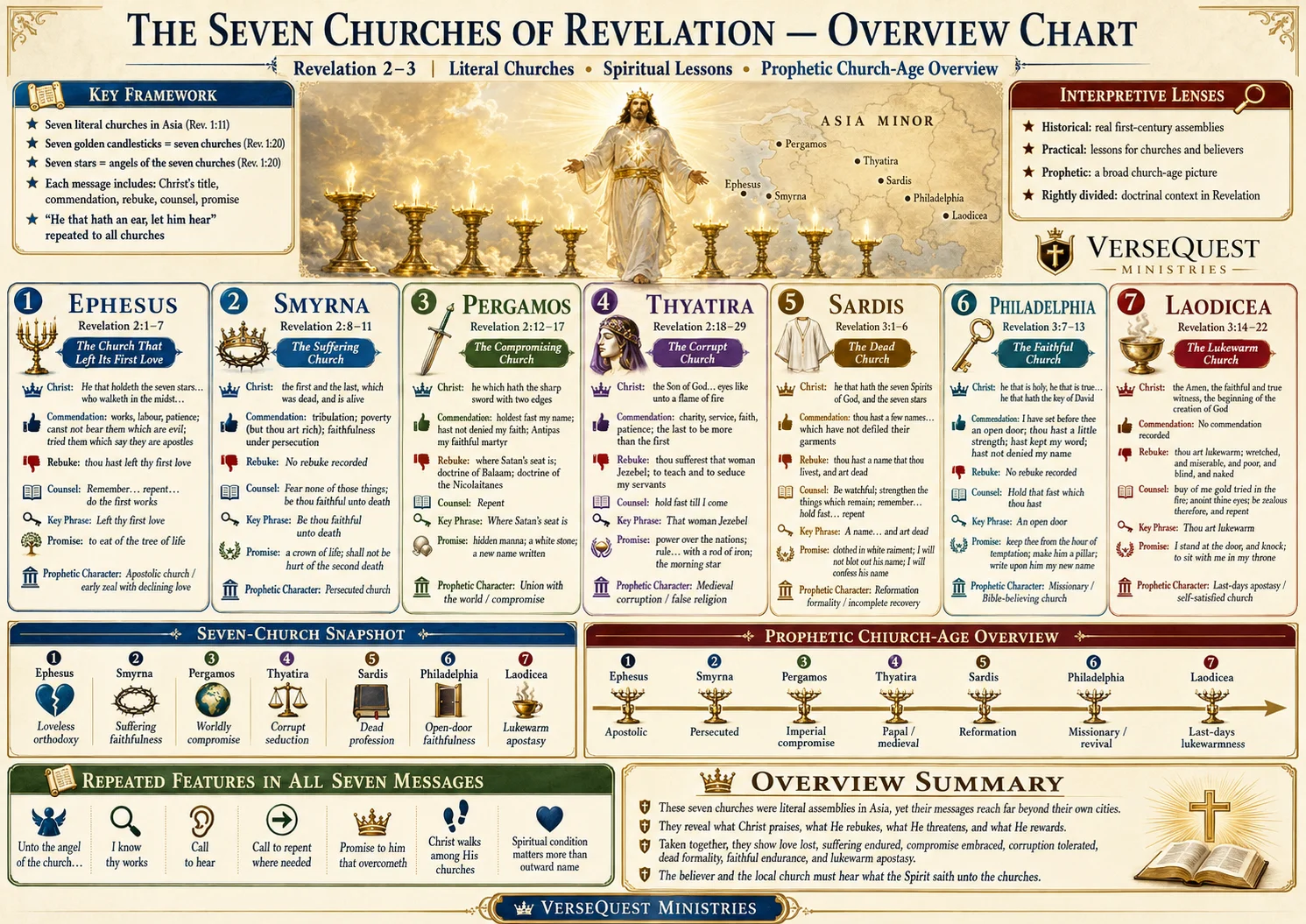
- The Seven Churches of Revelation Chart Collection – Christ Walking Among the Candlesticks
- A premium VerseQuest Ministries™ PDF chart collection covering the Seven Churches of Revelation in Revelation 2–3. Includes one overview chart plus individual KJV Bible study charts for Ephesus, Smyrna, Pergamos,…
- $12.99
- Add to cart
-
-
True Worship vs False Worship
-
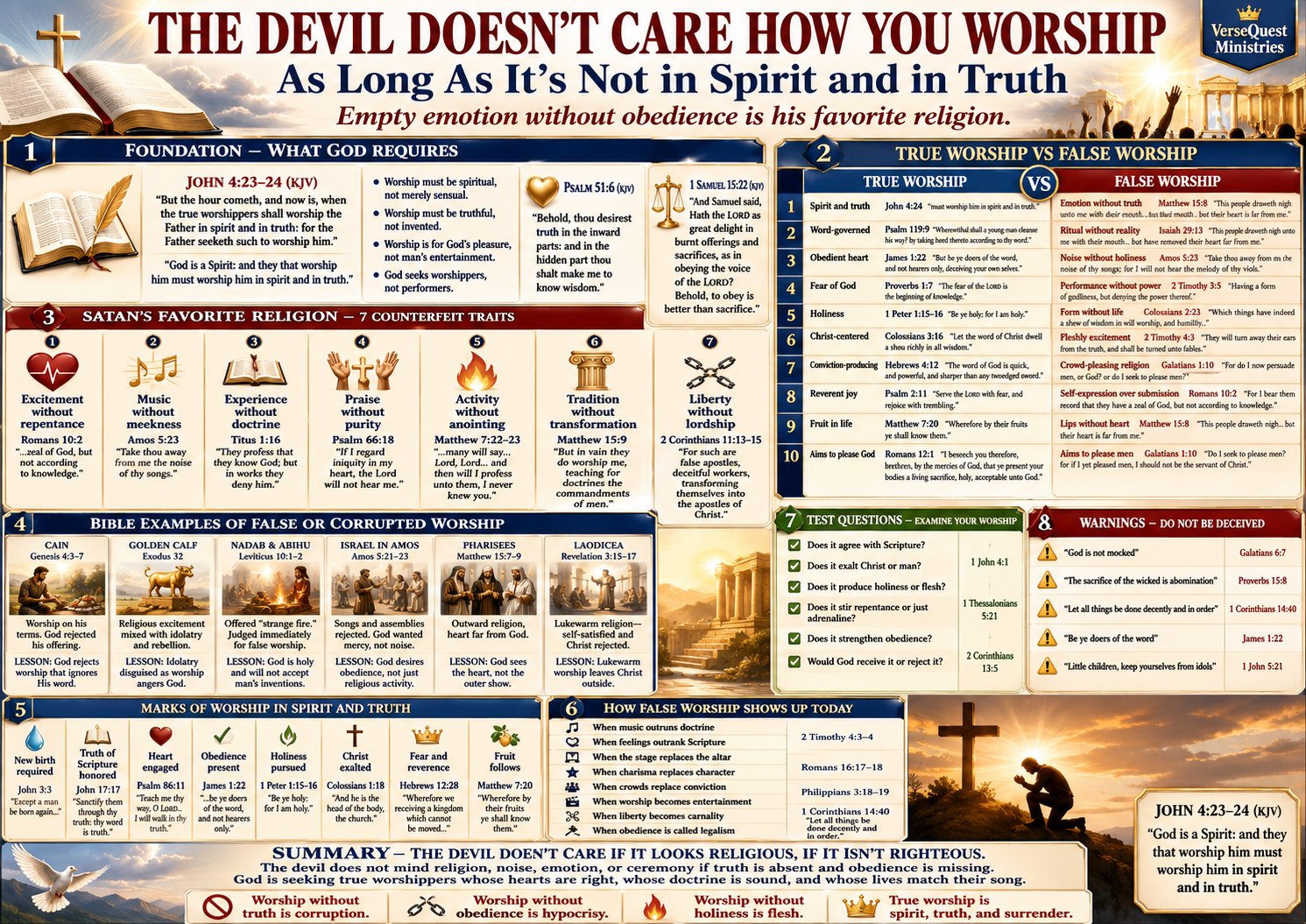
- The Devil Doesn’t Care How You Worship – True Worship in Spirit and in Truth Versus False Religion (KJV Bible Study Chart)
- Examine true and false worship with this detailed KJV Bible study chart covering spirit and truth, counterfeit religion, biblical music, obedience, holiness, discernment, and Christ-centred praise.
- $3.99
- Add to cart
-
-
Spiritual Growth
-
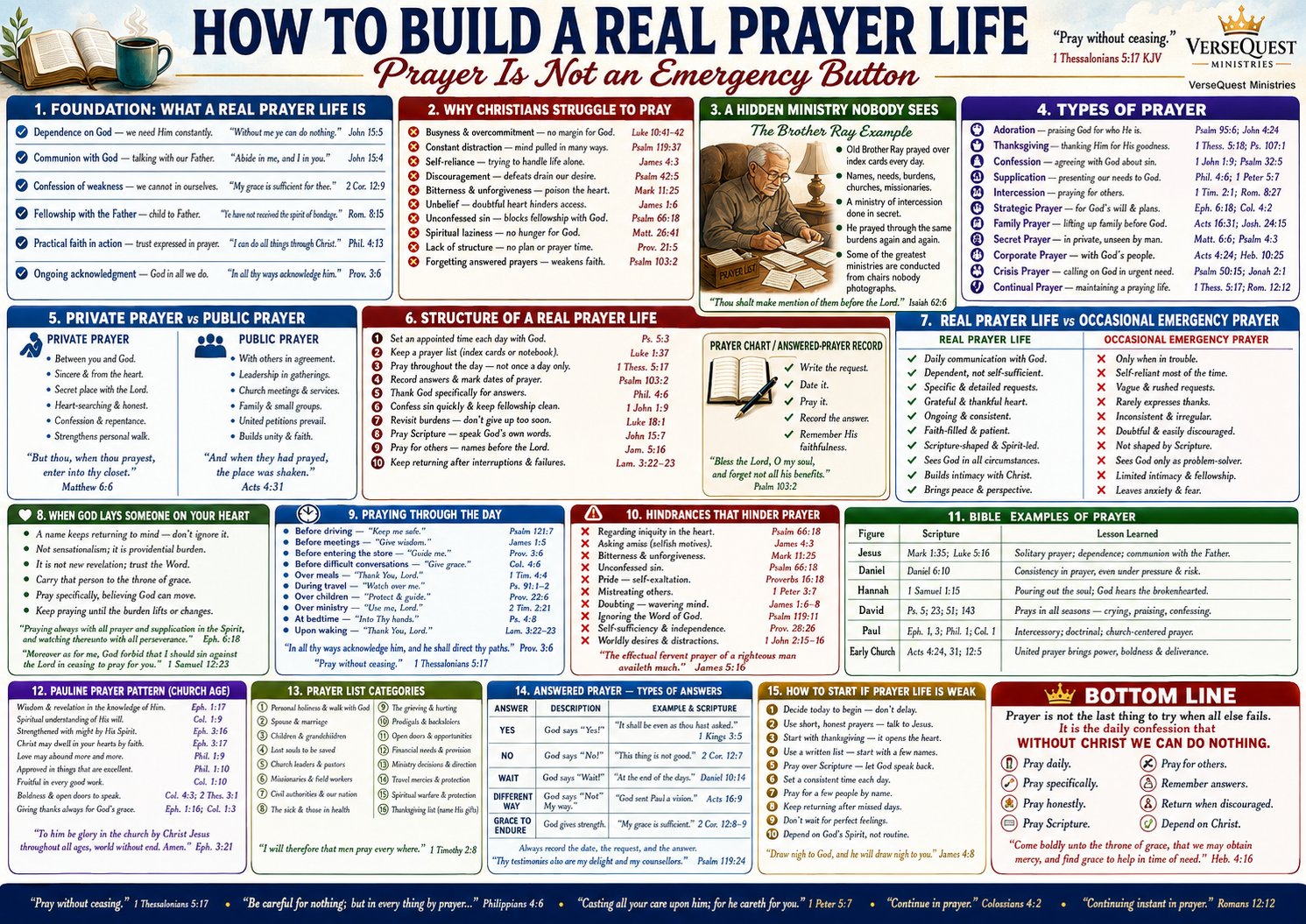
- How to Build a Real Prayer Life – Biblical Prayer Guide and KJV Bible Study Chart
- Build a consistent, biblical prayer life with this detailed KJV Bible study chart. Explore the foundations of prayer, types of prayer, common hindrances, answered prayer, Bible examples, and practical ways…
- $3.99
- Add to cart
-
-
Prayer
-
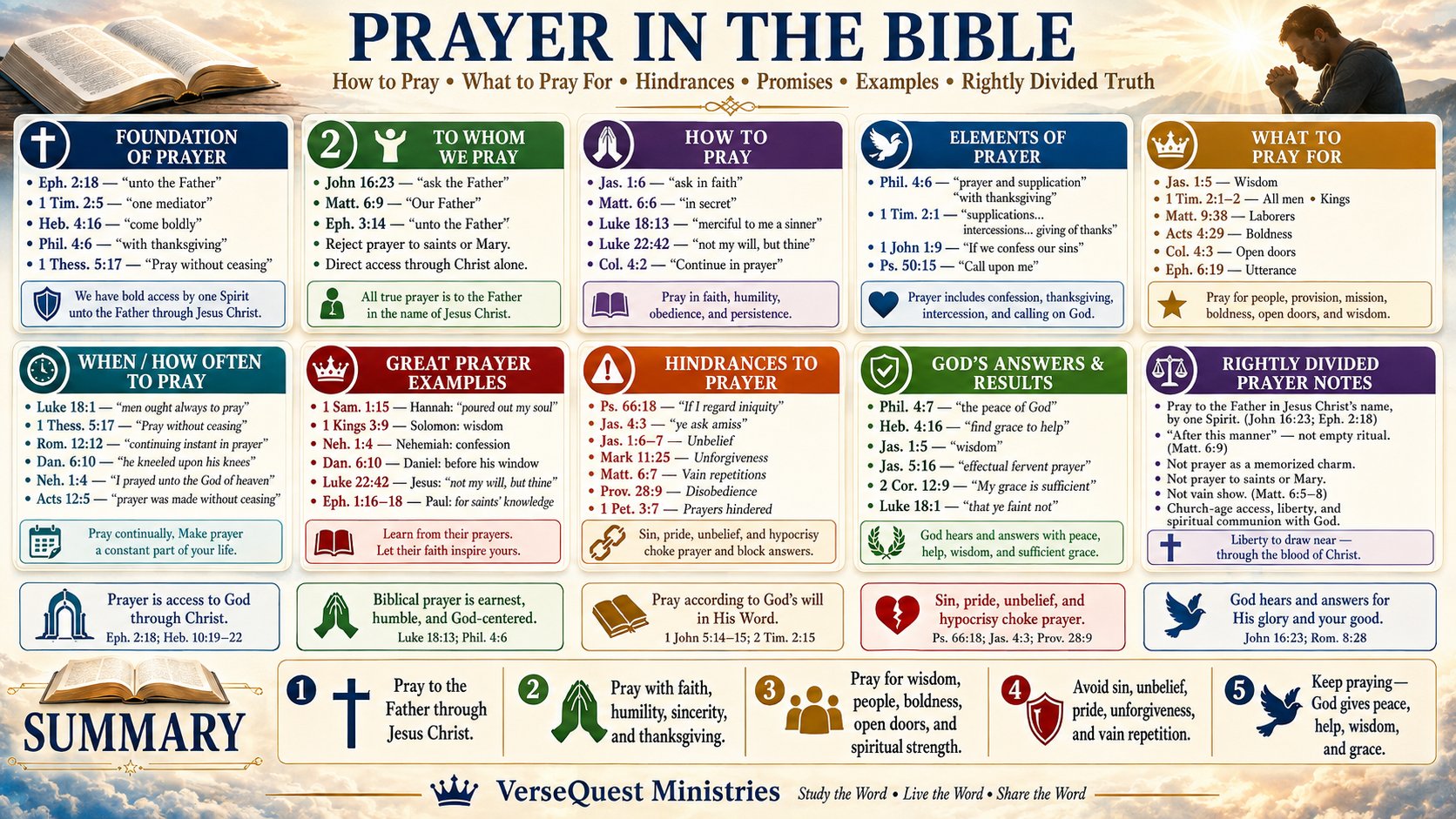
- Prayer in the Bible Chart – How to Pray According to Scripture
- Discover what the Bible teaches about prayer through this easy-to-follow VerseQuest study chart. Learn who to pray to, how to pray, what hinders prayer, what to pray for, and key…
- $4.99
- Add to cart
-
-
Biblical Humility
-
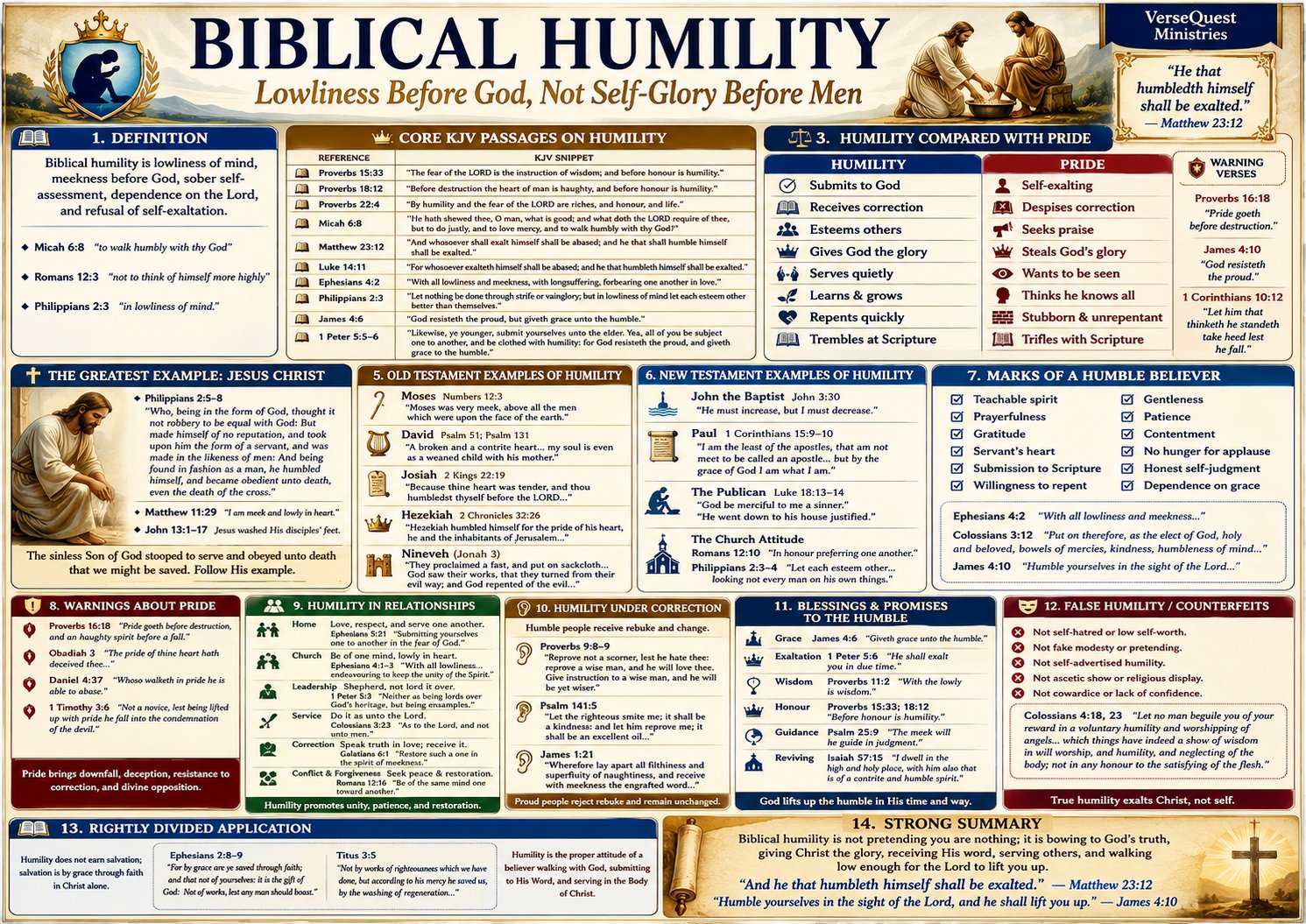
- Biblical Humility Bible Study Chart – Lowliness Before God, Not Self-Glory Before Men (KJV)
- Study biblical humility with this detailed KJV chart comparing humility and pride, Christ’s example, receiving correction, servant leadership, grace, and practical Christian living.
- $3.99
- Add to cart
-