
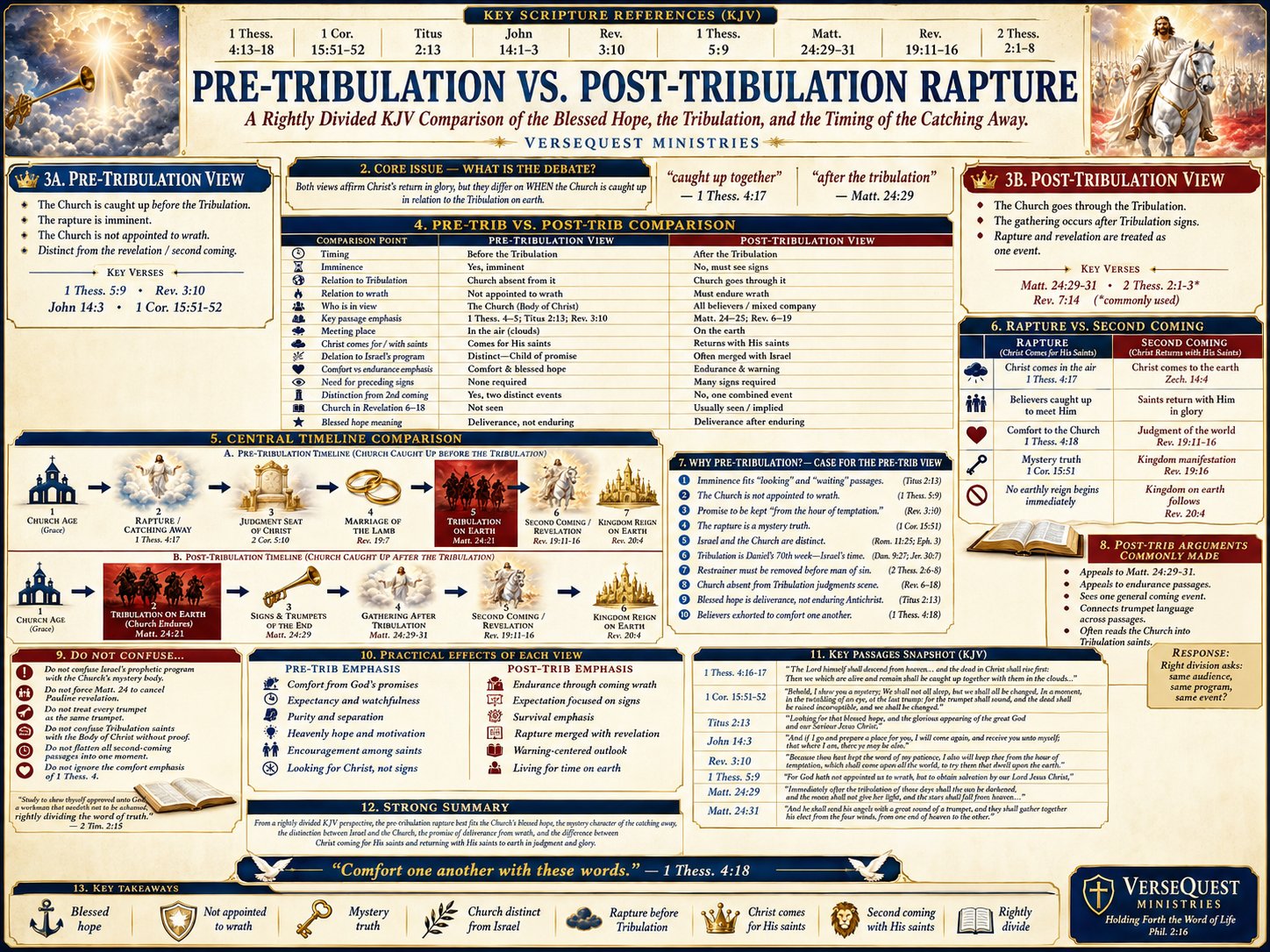
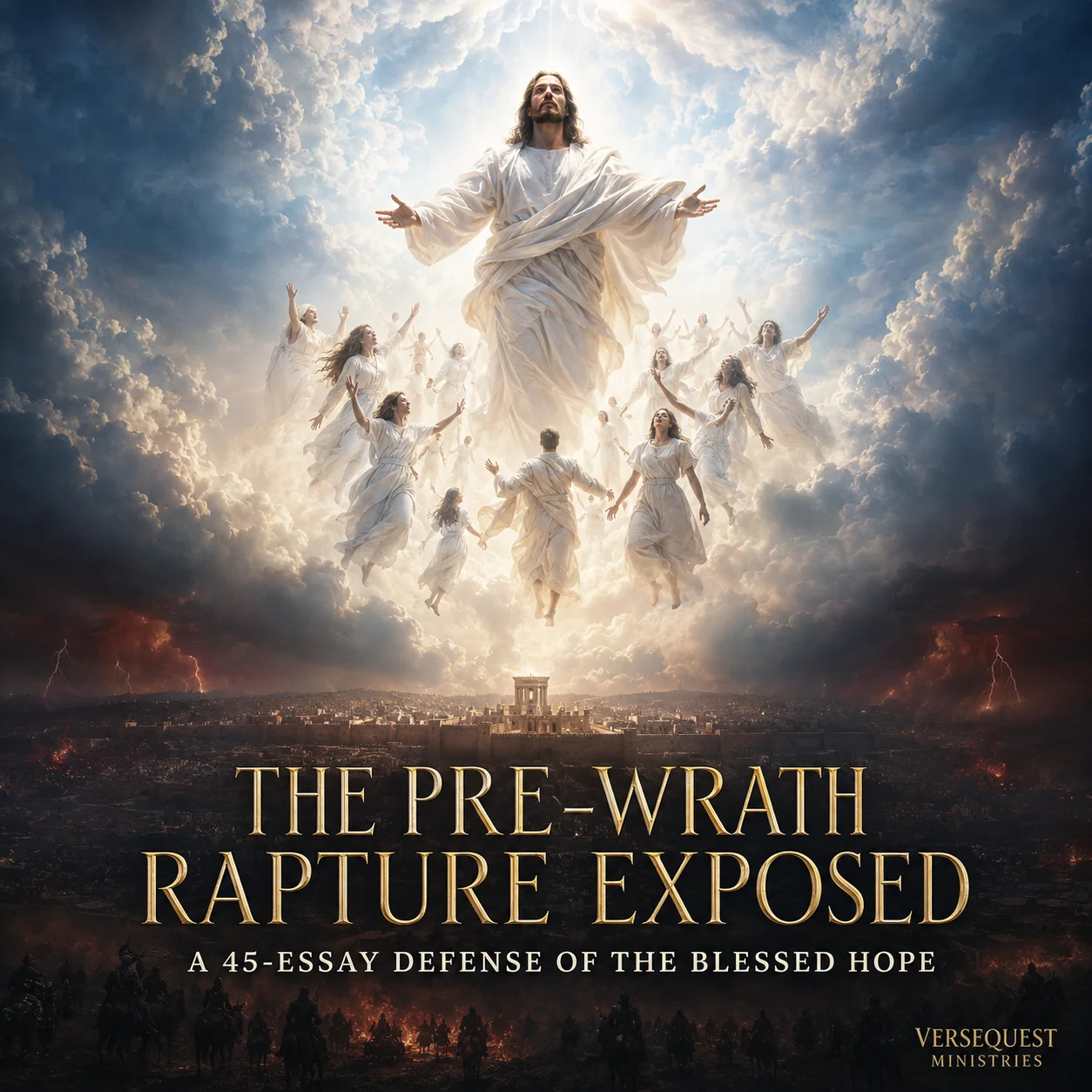
The Pre-Wrath Rapture Exposed: A 45-Essay Defense of the Blessed Hope — 356-Page PDF Book
The Pre-Wrath Rapture Exposed is a comprehensive 356-page downloadable PDF book presenting a KJV-centered, rightly divided defense of the pretribulation Rapture. Through an introduction, 45 detailed essays, a substantial conclusion, and a full-color Bible-study chart, the book examines the strongest modern pre-wrath arguments rather than answering only simplified versions of the doctrine.
The study covers Daniel’s seventieth week, Israel and the Church, Matthew 24, the seal judgments, the Day of the Lord, the Restrainer, Antichrist, the trump of God, Revelation 7, the Beast’s mark, eternal security, the Judgment Seat, the marriage of the Lamb, and the Blessed Hope. Buyers receive the complete printable digital book for $19.99, designed for serious personal study, preaching, teaching, church classes, and long-term biblical reference.
$19.99
Description
The Pre-Wrath Rapture Exposed: A 45-Essay Defense of the Blessed Hope is a comprehensive 356-page downloadable PDF book examining one of the most influential modern challenges to the pretribulation Rapture. Rather than dismissing pre-wrath teaching with a few familiar proof texts, this study allows the position to present its strongest arguments and then examines those arguments in the light of the King James Bible. The central question is straightforward: Does the Body of Christ belong anywhere inside Daniel’s seventieth week, or will the Church be gathered to Christ before that prophetic period begins?
The book explains what pre-wrath actually teaches and why the label can confuse Christians who assume it means the same thing as pretribulation. Formal pre-wrath teaching places the Church inside Daniel’s final week, beyond the midpoint and into the Great Tribulation, before locating the Rapture between the sixth and seventh seals. This study compares pretribulation, midtribulation, pre-wrath, and posttribulation while preserving their real differences. It also traces the development of the modern pre-wrath system and distinguishes its recognized arguments from the contradictory versions frequently encountered online.
Across 45 detailed essays, the book examines Daniel’s seventy weeks, Jacob’s trouble, the mystery Body of Christ, Israel’s prophetic calendar, the Lamb’s authority over the seals, the four horsemen, the fifth-seal martyrs, Revelation 6:17, the silence accompanying the seventh seal, and the relationship between the seals, trumpets, and vials. It answers the claim that the first six seals merely establish conditions that justify later wrath and demonstrates why wicked human or satanic agents may still function beneath God’s sovereign judicial authority.
Special attention is given to the celebrated pre-wrath “three-witness” argument connecting Joel 2, Matthew 24, and Revelation 6. The book examines Matthew 24’s temple setting, Daniel’s abomination, Judean flight, the Sabbath, Israel’s elect, the gathering from the four winds, Noah and Lot, and the visible sign of the Son of man. These passages are compared carefully with the Pauline Rapture passages so that similar words—clouds, trumpets, saints, elect, gatherings, and comings—are not automatically forced to describe the same event or prophetic company.
The study also investigates 1 and 2 Thessalonians, the Day of the Lord, the apostasy, the Restrainer, the revelation of the man of sin, the trump of God, and the difference between the Bridegroom’s call and the King’s public descent. Revelation’s 144,000, great multitude, crowned elders, Tribulation martyrs, Beast’s mark, Judgment Seat of Christ, marriage of the Lamb, and returning heavenly armies are placed within their proper prophetic settings. The resulting case preserves the distinctions between Israel and the Church, present Christian suffering and Jacob’s trouble, the Rapture and the Second Advent, the Holy Spirit’s seal and the Beast’s mark, and the Church’s gathering to Christ and Israel’s later regathering.
Historical claims concerning early Christian writings, the church fathers, nineteenth-century teachers, and alleged origins of pretribulationism are considered without allowing church history to replace biblical authority. The purpose is not to attack individuals or depend upon denominational tradition. The purpose is to test every system by the words of God and show why a recent theological construction cannot claim apostolic authority merely by borrowing several ancient statements about persecution or Antichrist.
This digital book includes a thorough series introduction, all 45 complete essays, a substantial conclusion, and a detailed full-color VerseQuest Bible-study chart summarizing the principal arguments and prophetic distinctions. It is designed for Bible students, pastors, preachers, Sunday school teachers, families, small groups, church classes, and serious readers who want far more than a shallow overview of the Rapture debate. The 356-page downloadable PDF may be saved for personal study and printed for convenient reference. The complete digital book is available for $19.99.
The biblical meaning of the pre-wrath Rapture position and how it differs from pretribulation, midtribulation, and posttribulation. The complete seven-year character of Daniel’s seventieth week. Daniel’s people, Daniel’s holy city, and the prophetic ownership of the seventy weeks. The distinction between Israel’s national prophetic program and the mystery Body of Christ. The difference between ordinary Christian suffering and the future time of Jacob’s trouble. The relationship between the Tribulation and the intensified Great Tribulation beginning after the midpoint. The Lamb’s authority over the sealed book and every judgment released from it. Divine sovereignty working through wicked human, satanic, and governmental agents. The four horsemen as part of the Lamb’s unfolding judicial program. The fifth-seal martyrs and the proper meaning of their cry for completed vengeance. Revelation 6:17 and the difference between the arrival, manifestation, and terrified recognition of divine wrath. The seventh seal as a transition within the Lamb’s scroll rather than the beginning of an unrelated judgment program. The breadth of the biblical expression “the Day of the Lord.” The cosmic-sign connection among Joel 2, Matthew 24, and Revelation 6. Matthew 24’s temple, Judean, Sabbath, kingdom, and Israel-centered setting. Israel’s election and the danger of making every elect person a member of the same prophetic company. The difference between Israel’s angelic regathering and the Church’s catching away to meet Christ in the air. The judgment setting of one taken and another left in Matthew 24 and Luke 17. Noah, Lot, and Enoch as distinct biblical pictures of preservation, separation, and removal before judgment. The relationship between the Rapture and the Day of the Lord in 1 Thessalonians 4–5. The revelation of Jesus Christ in judgment and the Church’s appearance with Him in glory. The apostasy, Restrainer, temple, and man of sin in 2 Thessalonians 2. The distinction between the trump of God, Israel’s great trumpet, and Revelation’s seven angelic trumpets. Revelation 7’s 144,000 Israelites, great multitude, martyrs, and already-present crowned elders. Multiple biblical translations, ascensions, resurrections, harvests, and gatherings. Tribulation saints saved after the completion and removal of the Body of Christ. The conflict between placing the sealed Church beneath the Beast’s mark and maintaining eternal security. The Judgment Seat of Christ, believer’s rewards, bridal preparation, marriage of the Lamb, and the Church’s return with Christ. The historical development of modern pre-wrath teaching and the limitations of appeals to early Christian writings. The difference between biblical imminency and a sign-dependent “expectancy.” The Blessed Hope as a source of holiness, evangelism, comfort, courage, and faithful Christian service.
The book’s central argument is that pre-wrath preserves belief in a Rapture while relocating it into Daniel’s seventieth week. The dispute is therefore not whether God protects believers from His wrath in some sense. The dispute is whether the Body of Christ belongs inside the week determined upon Daniel’s people and Daniel’s holy city. Daniel 9:24 establishes Israel and Jerusalem as the prophetic recipients before the final week is described.
The first major interpretive control is the distinction between similarity and identity. Several passages may contain clouds, trumpets, saints, elect people, signs, gatherings, or comings without describing the same company or event. Every passage must be examined according to its speaker, audience, covenant setting, timing, destination, agents, and purpose. A concordance can locate repeated words, but context must determine their doctrinal identity.
The Rapture of the Church is characterized by the Lord Himself descending, the dead in Christ rising, living believers being changed, and the complete Body meeting Christ in the air. The Second Advent is characterized by Christ’s public appearance in power and great glory, worldwide mourning, judgment of the nations, and the descent of heavenly armies with Him. The Church must first be gathered to Christ before it can later appear with Christ.
Matthew 24 belongs to Israel’s prophetic crisis. Its temple setting, Danielic abomination, Judean flight, Sabbath reference, Gospel of the Kingdom, Great Tribulation, and angelic gathering from the four winds agree with Israel’s Old Testament regathering promises. The fact that the chapter’s effects are worldwide does not change its Israel-centered doctrinal address.
The seal sequence begins in heaven when the Lamb takes the book and opens its seals. Human rulers, Antichrist, war, famine, death, and persecution may function as secondary agents, but they do not operate outside divine authority. The trumpets and vials intensify and complete judgment; their greater severity does not prove that the preceding seals were independent of God’s judicial program.
The fifth-seal martyrs ask when God will avenge their blood. Their request concerns the completion of vengeance and does not prove that no previous judgment has occurred. Revelation 6:17 records the earth’s terrified recognition that the great day of the Lamb’s wrath has arrived and overtaken them. It should not be isolated from the Lamb’s authority over the entire scroll.
The great multitude in Revelation 7 is redeemed and comes out of great tribulation, but the passage never calls it the Church or describes a Rapture. No descent of Christ, resurrection of the dead in Christ, transformation of living believers, or catching away is recorded. The crowned elders are already present in heaven before the seals, while the multitude appears as another company connected with Tribulation suffering.
The word “saints” does not automatically mean the Church. Scripture contains saints before the Body was formed and saints after the Body is complete. Formal pre-wrath teaching admits post-Rapture converts and later Tribulation saints after its proposed sixth-seal gathering. That admission establishes that the presence of saints in Revelation cannot, by itself, prove that the Church remains on earth.
The Beast’s mark belongs to a future Tribulation administration. Church Age believers are sealed by the Holy Spirit unto the day of redemption and possess eternal security in Christ. Placing the sealed Body beneath a warning of irreversible damnation for receiving the mark creates a collision that pre-wrath attempts to solve through inevitable perseverance. Right division preserves both the Church’s security and the full force of Revelation’s warning.
The Blessed Hope is not an excuse for carelessness or cowardice. Christians may suffer persecution, imprisonment, poverty, sickness, warfare, or martyrdom during the present age. The Church’s exemption from Daniel’s week does not promise exemption from every earthly hardship. Expecting Christ produces purity, courage, faithful service, evangelistic urgency, doctrinal watchfulness, and comfort concerning believers who have died.
Further study should examine how the expression “Day of the Lord” is used across the prophets, Thessalonians, Peter, and Revelation; how Israel’s regathering promises support Matthew 24; how the Restrainer relates to the Church’s departure; how the stages of the first resurrection remain distinct; and how the Judgment Seat and marriage of the Lamb fit between the Rapture and Christ’s public return.
This resource may be used as a complete personal Bible-study course on the pre-wrath and pretribulation Rapture debate. Readers may work through the essays in order, following the argument from definitions and history into Daniel, Matthew, Thessalonians, and Revelation. The detailed table of contents also makes it possible to locate individual studies addressing specific questions such as the sixth seal, Matthew 24’s elect, the Restrainer, the last trump, Revelation 7’s multitude, or the Beast’s mark.
Pastors and preachers can use the book to prepare sermon series, prophecy conferences, doctrinal classes, or individual messages defending the Blessed Hope. Each essay examines a focused argument and supplies a concentrated group of KJV passages that can be developed into teaching material. The resource is especially valuable when responding to questions from Christians who have encountered pre-wrath claims online but do not understand the system’s complete timeline.
Sunday school teachers, small-group leaders, and Bible institute instructors may use the 45-essay structure as a long-form curriculum. Individual essays may be assigned before class, summarized during discussion, and compared with the included Bible-study chart. Teachers can also organize shorter units around Daniel’s seventieth week, Matthew 24, the seal judgments, Thessalonians, the Rapture and Second Advent, or the prophetic distinction between Israel and the Church.
Families and serious individual readers may use the PDF for guided topical study. The material encourages readers to compare Scripture with Scripture, identify the speaker and audience, recognize dispensational boundaries, and refuse interpretations built merely upon similar words. The final chart provides a visual review tool for remembering the principal distinctions and explaining the subject to others.
Ministry leaders may also use the book as a reference when answering objections concerning escapism, church history, Antichrist, persecution, the mark of the Beast, the Day of the Lord, or supposed contradictions in pretribulation teaching. The resource does not replace the King James Bible; it directs the reader repeatedly back to the passages upon which the dispute must be decided.
The primary companion resource should be a complete King James Bible with clear paragraph divisions and wide margins for recording cross-references. A KJV concordance can help readers trace important expressions such as “wrath,” “elect,” “saints,” “gather,” “trumpet,” “day of the Lord,” “mystery,” and “in Christ” without assuming that every occurrence has the same doctrinal setting.
A reliable Bible dictionary may be used for historical background concerning Jerusalem, Judea, the temple, Jewish feasts, ancient kingdoms, and geographical locations. A Bible atlas can help readers follow Israel’s land promises, Jerusalem-centered prophecies, Judean flight, and the nations surrounding the final prophetic conflict. Historical background should clarify the biblical text rather than become an authority above it.
A cross-reference Bible or Scripture cross-reference treasury is valuable for tracing the Old Testament foundation behind Matthew 24’s language, especially Deuteronomy 30, Isaiah 11, Isaiah 27, Jeremiah 30, Daniel 9, Daniel 12, and Joel 2. Readers should also compare every Rapture claim with the direct Pauline passages in 1 Corinthians 15, Philippians 3, 1 Thessalonians 1 and 4, and 2 Thessalonians 2.
The existing VerseQuest Revelation — Rightly Divided studies provide helpful companion material on the crowned elders, sealed book, horsemen, fifth-seal martyrs, 144,000, great multitude, two witnesses, woman of Revelation 12, Michael, the Beast, false prophet, mark of the Beast, and everlasting gospel. Those studies allow individual Revelation passages to be examined in greater depth alongside the focused pre-wrath argument presented in this book.
The full-color Bible-study chart included at the conclusion of this PDF should be used as a quick-reference summary after completing the essays. It brings together the prophetic timeline, Israel–Church distinction, Rapture–Advent comparison, seal judgments, trumpets, Restrainer, Revelation 7, Holy Spirit’s seal, and Beast’s mark on one illustrated study page.
Related products
-
Revelation of the Body of Christ
-
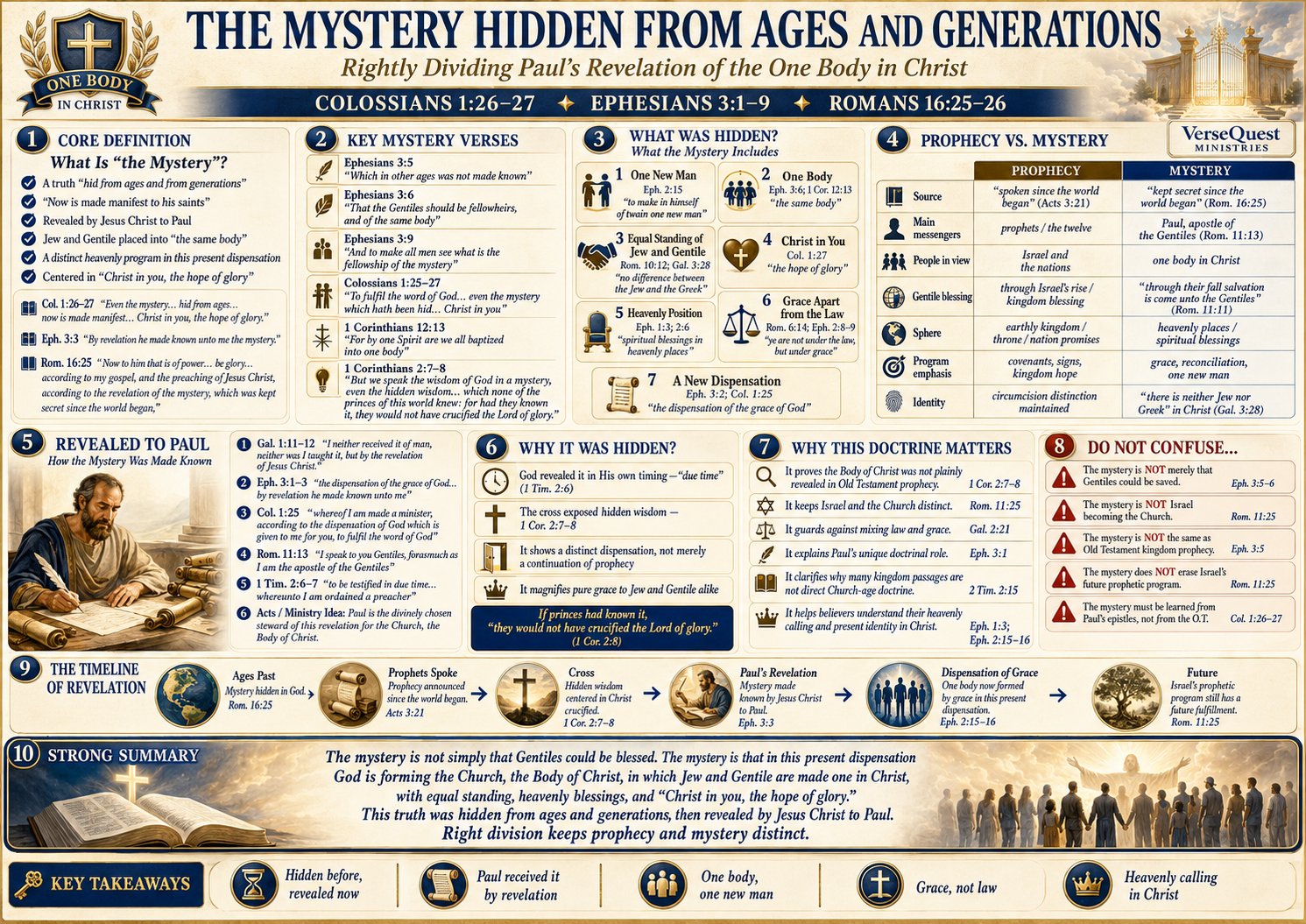
- The Mystery Hidden from Ages and Generations – Paul’s Revelation of the One Body in Christ (KJV Bible Study Chart)
- Understand the mystery hidden from ages and generations with this detailed KJV chart covering Paul’s revelation, the one Body, the one new man, grace, heavenly blessings, and prophecy versus mystery.
- $3.99
- Add to cart
-
-
Bible Study Chart
-
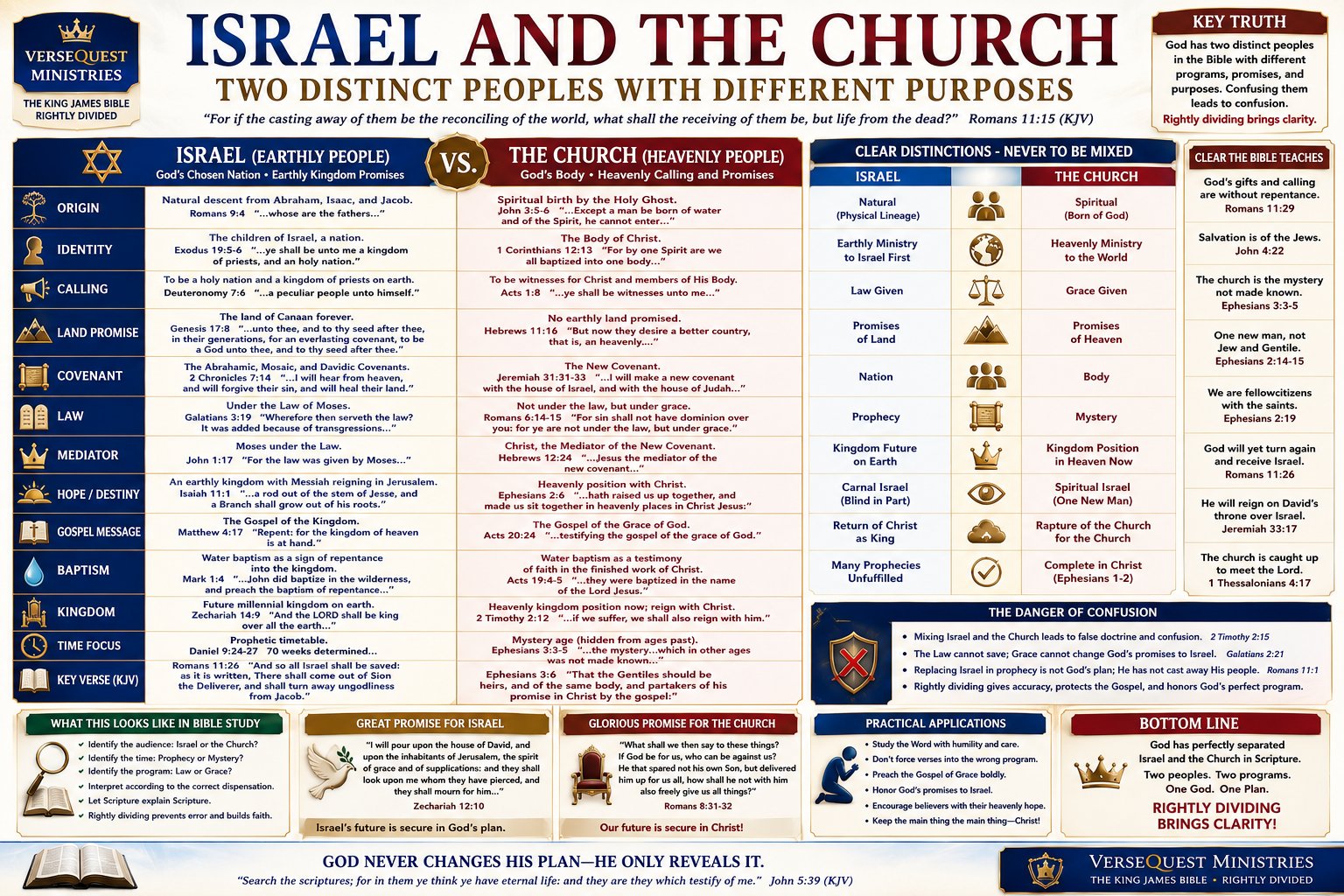
- Israel and the Church Bible Study Chart – Two Distinct Peoples with Different Purposes (KJV)
- Compare Israel and the Church with this detailed KJV Bible study chart covering their distinct origins, identities, covenants, callings, promises, gospel programs, and future destinies.
- $3.99
- Add to cart
-
-
The Church Age vs The Tribulation
-
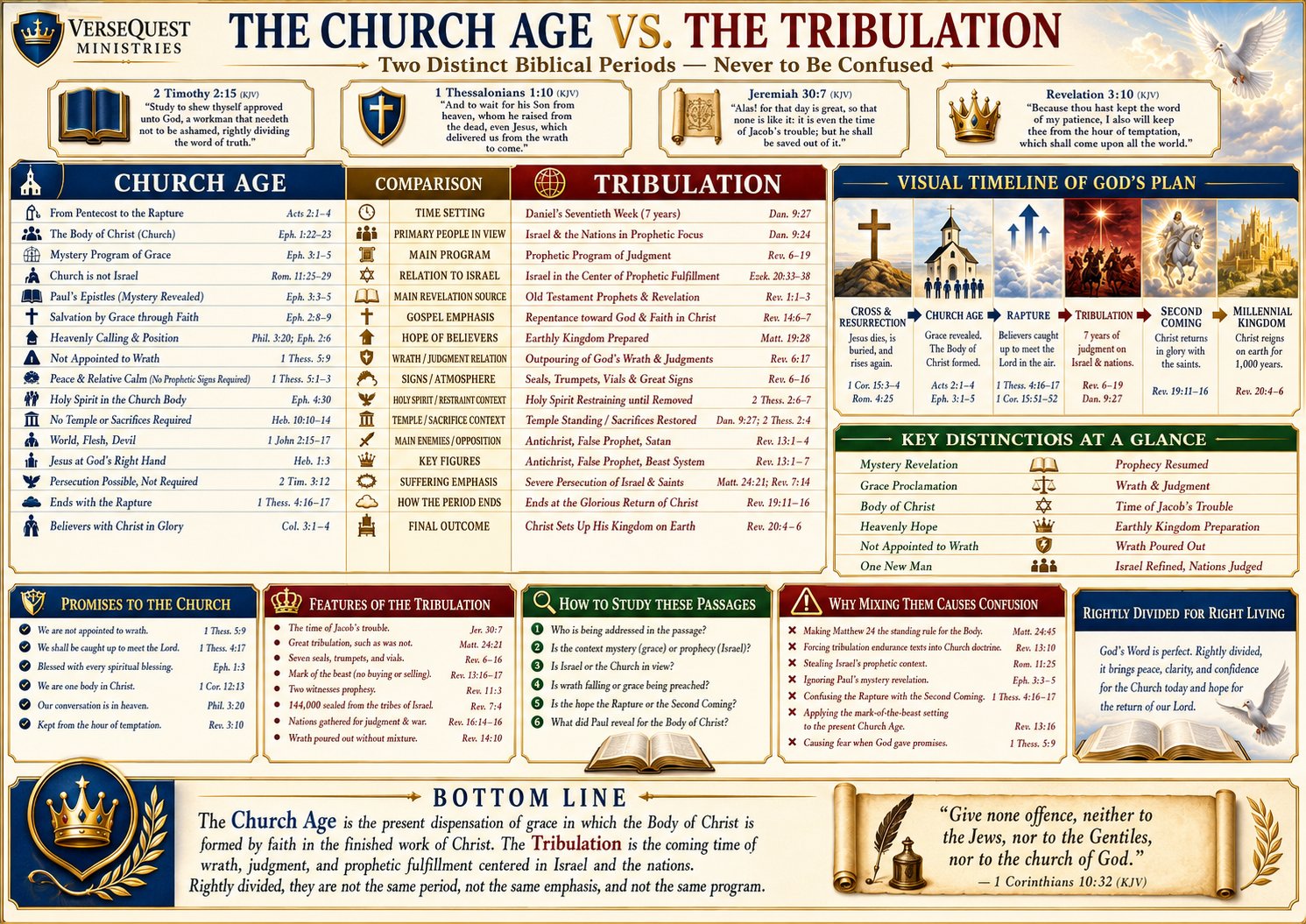
- The Church Age vs. the Tribulation – Two Distinct Biblical Periods KJV Bible Study Chart
- Compare the Church Age and the Tribulation with this detailed KJV chart covering the Body of Christ, Israel, grace, wrath, the Rapture, Antichrist, the Second Coming, and the millennial Kingdom.
- $3.99
- Add to cart
-
-
Daniel Bible study
-
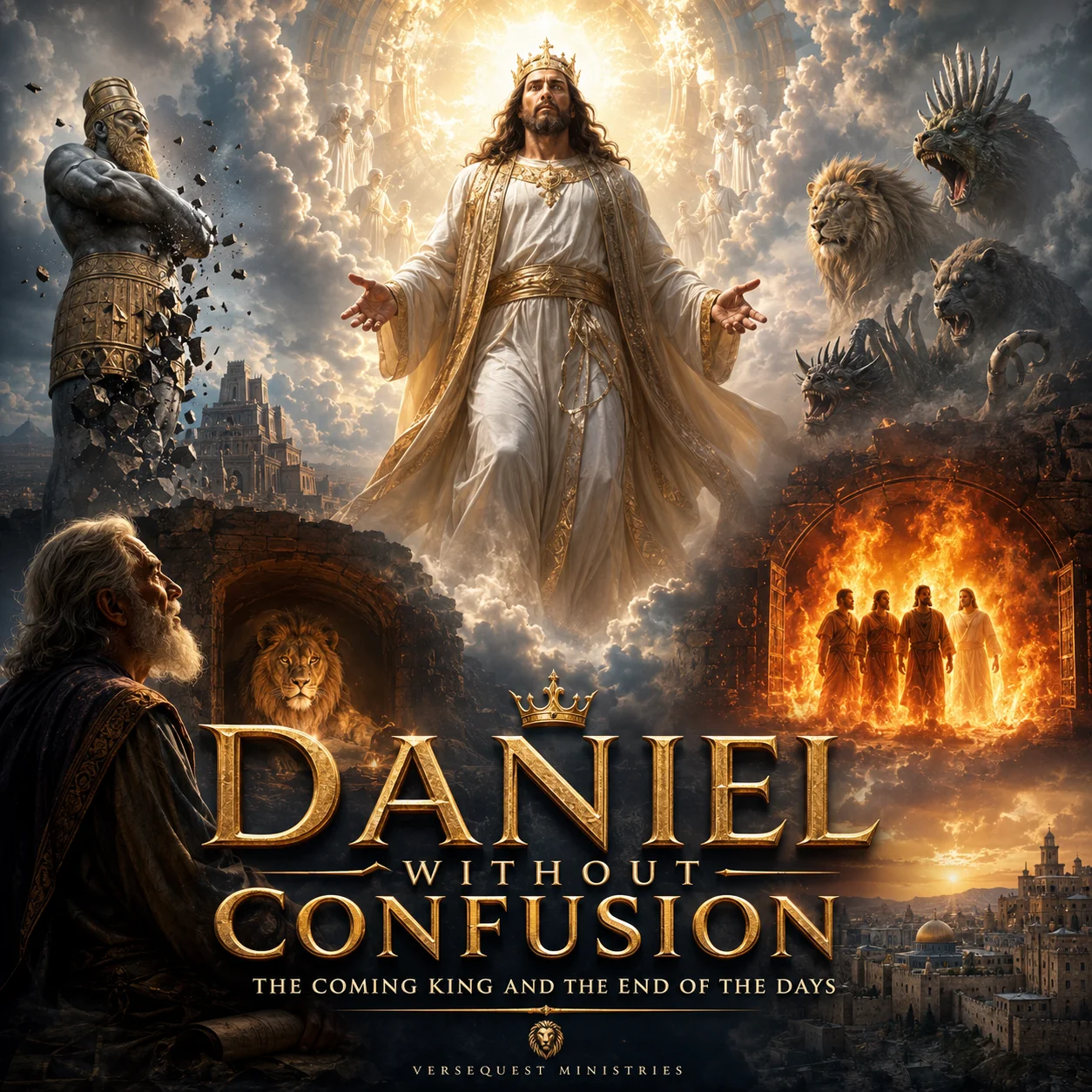
- Daniel Without Confusion — KJV Prophecy Study PDF Book
- A 392-page KJV Bible study through the book of Daniel, covering Babylon, Gentile kingdoms, the seventy weeks, Antichrist, Jacob’s trouble, resurrection, and the coming King. Digital PDF download. Price: $9.99.
- $9.99
- Add to cart
-
-
Jesus Christ Studies
-
-67%
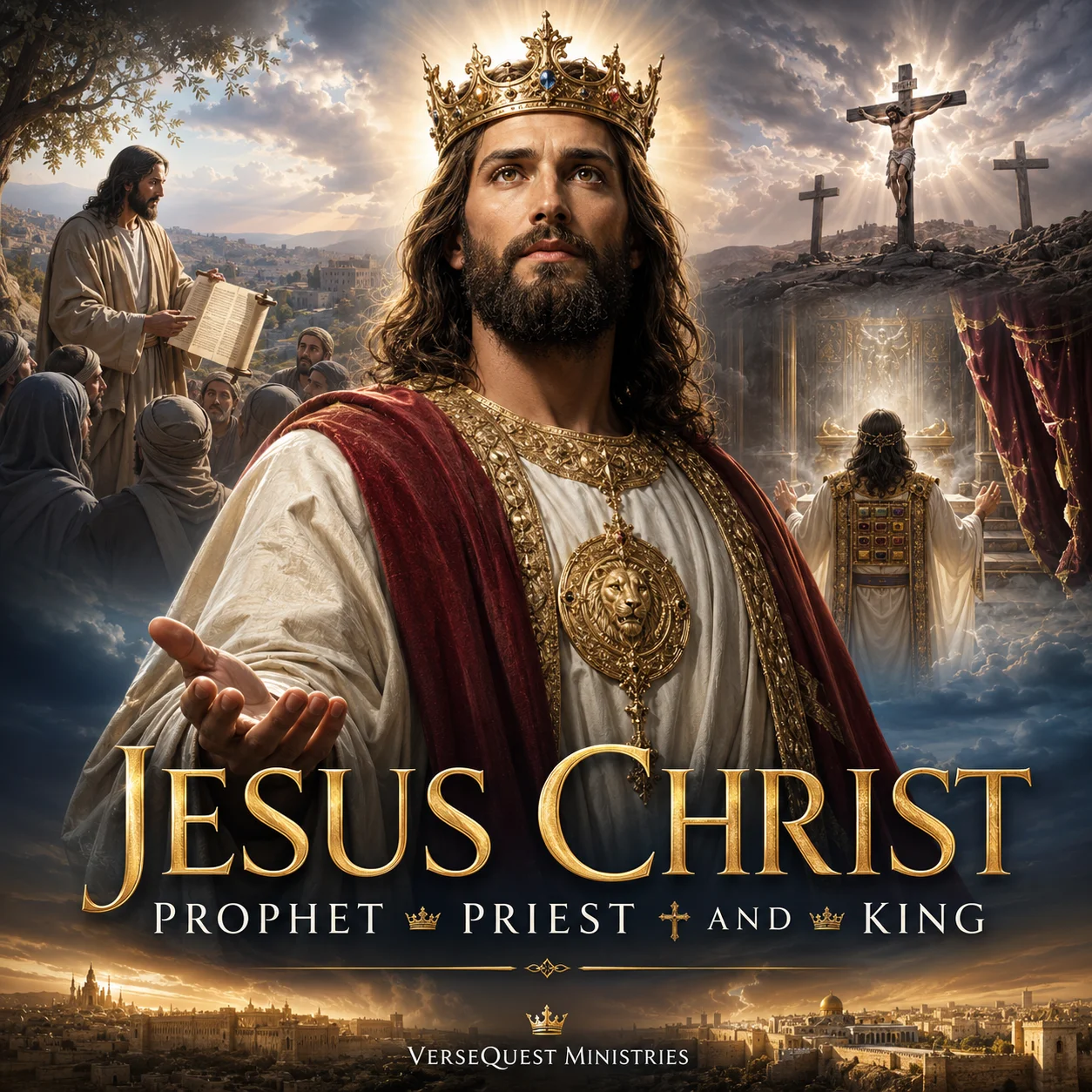
- Jesus Christ Prophet Priest and King – 441-Page PDF Study
- A 441-page premium KJV PDF study on Jesus Christ as Prophet, Priest, and King. This detailed VerseQuest book covers Christ’s prophetic ministry to Israel, His finished sacrifice and present intercession…
- Original price was: $29.99.$9.99Current price is: $9.99.
- Add to cart
-
-67%