
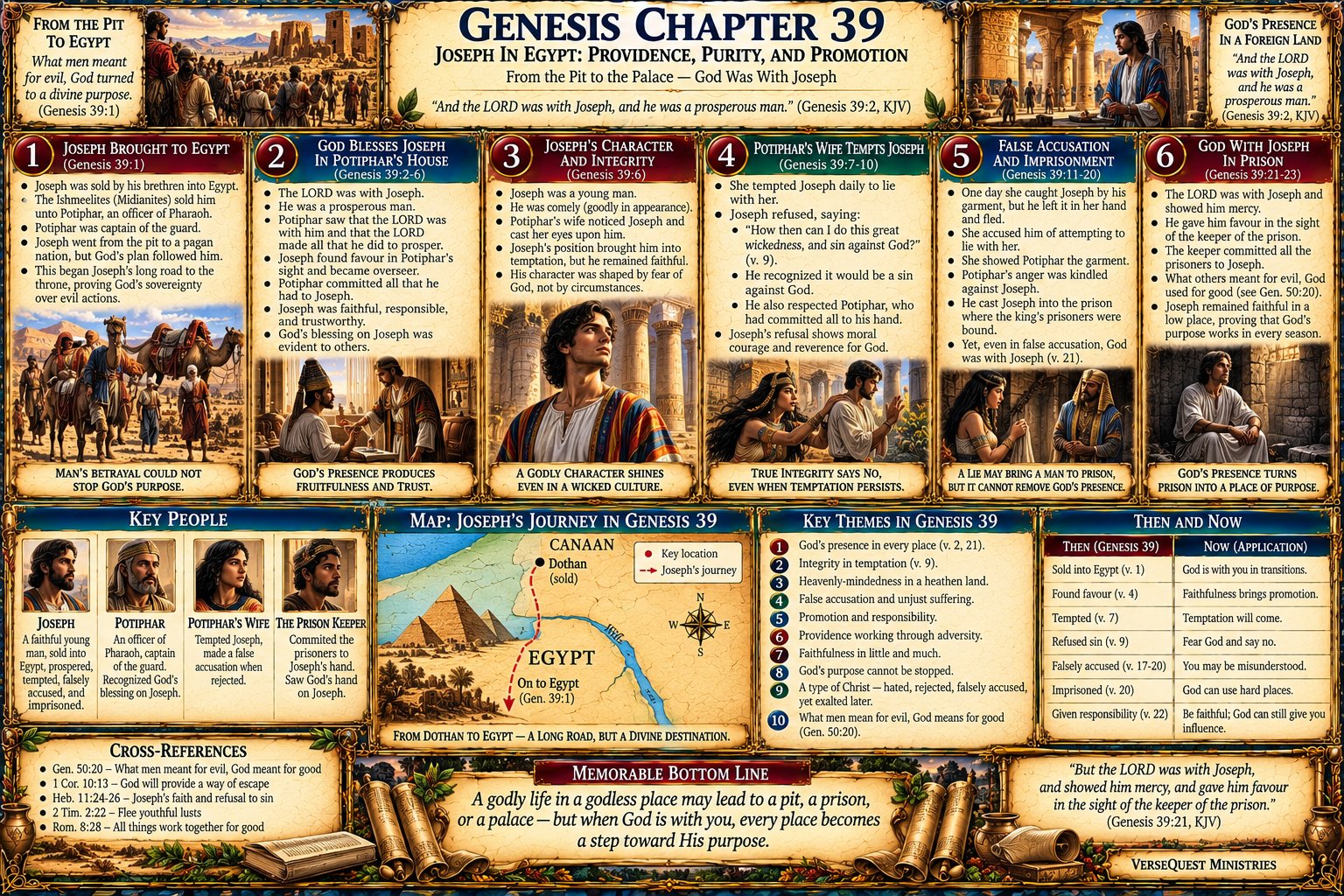
Genesis 39 – Joseph in Egypt: God’s Presence, Potiphar’s House, Temptation, False Accusation, and Faithfulness in Prison (KJV Bible Study Chart)
Explore Genesis 39 with this detailed KJV Bible study chart tracing Joseph from slavery in Potiphar’s household through temptation, false accusation, and imprisonment. See how “the LORD was with Joseph” in every changing circumstance, causing him to prosper and receive increasing responsibility. The chart examines Potiphar’s trust, Joseph’s refusal of his wife’s persistent temptation, his declaration “How then can I do this great wickedness, and sin against God?”, his flight from sin, the false charge made against him, and God’s continued favor in prison. Genesis 39 provides powerful instruction on purity, integrity, stewardship, unjust suffering, divine presence, and providence. Ideal for personal Bible study, Sunday school, homeschool, youth teaching, sermon preparation, discipleship, workplace integrity, purity studies, and a deeper study of Joseph’s life.
$4.99
Description
Genesis 39: Joseph in Egypt—Providence, Purity, and Promotion is a detailed KJV Bible study chart tracing Joseph from slavery in Potiphar’s house through persistent temptation, false accusation, unjust imprisonment, and renewed responsibility in prison. The chapter repeatedly emphasizes one truth that explains Joseph’s survival and prosperity in a foreign land: “the LORD was with Joseph.” His location changes from Canaan to Egypt, from a prosperous household to a prison, but God’s presence remains unchanged.
Joseph is brought into Egypt and purchased by Potiphar, an officer of Pharaoh and captain of the guard. Although Joseph has lost his family, freedom, and former position, he has not lost the presence of God. Genesis says he becomes “a prosperous man,” and Potiphar recognizes that the LORD makes what Joseph does to prosper. Joseph finds favor, is made overseer of the house, and eventually receives responsibility over virtually everything Potiphar owns.
The chapter then turns from prosperity to temptation. Joseph is described as “a goodly person, and well favoured,” and Potiphar’s wife repeatedly attempts to seduce him. Joseph refuses not merely because the act would betray Potiphar, but because he understands its highest offense: “How then can I do this great wickedness, and sin against God?” His integrity is God-centered. When temptation intensifies, Joseph does not negotiate with it; he flees.
His righteousness does not immediately produce an easier life. Potiphar’s wife uses the garment Joseph leaves behind as false evidence and accuses him of attempting the very sin he refused to commit. Potiphar becomes angry and casts Joseph into the prison where Pharaoh’s prisoners are confined. Joseph goes from trusted overseer to accused prisoner without Scripture recording any wrongdoing on his part.
Yet Genesis immediately repeats its central theme: “But the LORD was with Joseph.” God shows him mercy, gives him favor with the keeper of the prison, and once again places responsibility into his hands. The keeper eventually trusts Joseph with the prisoners and does not closely inspect what has been committed to him because the LORD makes Joseph’s work prosper.
Genesis 39 therefore teaches that divine presence is greater than favorable circumstances. Joseph can be faithful in Potiphar’s palace and faithful in prison. Prosperity in the biblical sense is not merely wealth or comfort; Joseph prospers because God accomplishes His purpose through him.
The chapter also prepares for Joseph’s eventual elevation before Pharaoh. What appears to be another devastating setback actually moves him closer to the place where God will use him to preserve many lives. Genesis 50:20 later explains the larger providence: men intend evil, “but God meant it unto good.”
Genesis 39, Joseph in Egypt, Joseph, Potiphar, Potiphar’s wife, captain of the guard, LORD was with Joseph, prosperous man, divine presence, providence, integrity, temptation, sexual purity, flee temptation, sin against God, false accusation, Joseph imprisoned, prison keeper, favor with God, faithfulness, promotion, unjust suffering, God meant it for good, Joseph as a type of Christ
Genesis 39 begins with Joseph already in Egypt after being sold by the merchant caravan. Potiphar, an officer of Pharaoh and captain of the guard, purchases him. From the human perspective Joseph has suffered catastrophic loss, but the chapter immediately gives the divine perspective: “the LORD was with Joseph.” That phrase becomes the key to understanding everything that follows.
Joseph becomes “a prosperous man” while serving in Potiphar’s house. This does not mean he has suddenly become free or wealthy. Rather, God causes his work to prosper even within servitude. Potiphar notices the LORD’s blessing, places Joseph over his household, and entrusts his possessions to him. Joseph’s faithfulness produces confidence because he proves responsible with what has been placed in his hands.
Potiphar’s wife then repeatedly tempts Joseph. His refusal reveals the theological foundation of his integrity. He first recognizes his duty toward Potiphar, who has trusted him completely, but his decisive statement is, “How then can I do this great wickedness, and sin against God?” Sin is ultimately committed against God even when another human being is directly wronged.
Genesis 39:10 emphasizes that the temptation occurs “day by day.” Joseph therefore faces continuing pressure rather than one isolated moment. When she physically catches his garment, he leaves it and flees. His example agrees with later New Testament instruction to “flee fornication” and “flee also youthful lusts.”
Joseph’s obedience does not spare him from false accusation. Potiphar’s wife converts the abandoned garment into supposed evidence and accuses Joseph before the household and her husband. Potiphar’s anger is kindled, and Joseph is placed in the prison where the king’s prisoners are bound.
The chapter does not suggest that Joseph’s suffering proves God has abandoned him. Instead, verse 21 deliberately repeats the earlier truth: “But the LORD was with Joseph.” God shows him mercy and gives him favor before the prison keeper. Soon Joseph again receives responsibility over everything around him.
The repeated pattern is significant. In Potiphar’s house Joseph is trusted because God is with him; in prison he is trusted because God is with him. Location changes, but character and divine presence continue.
Joseph also provides several fitting typological parallels with Christ: he is rejected, suffers innocently, is falsely accused, and later will be exalted. These parallels illustrate Christ without replacing the direct New Testament doctrines concerning Him.
Genesis 39 therefore teaches that faithfulness is not measured by immediate comfort. Joseph obeys in the house, refuses sin in temptation, remains faithful under false accusation, and serves responsibly in prison. God’s providence continues even when Joseph cannot yet see where the road is leading.
Genesis 39 is useful for teaching integrity when nobody appears to be watching, resisting persistent temptation, fleeing sexual sin, honoring God above immediate pleasure, remaining faithful under false accusation, and trusting God when doing right seems to produce suffering rather than reward. It also demonstrates responsible stewardship, faithfulness in small and large assignments, God’s presence in difficult transitions, and providence working through injustice. The chapter is excellent for personal Bible study, Sunday school, homeschool instruction, youth teaching, Bible institutes, sermon preparation, purity studies, workplace integrity lessons, discipleship, and studies of Joseph’s life.
King James Bible, Strong’s Concordance, Thompson Chain-Reference Bible, Treasury of Scripture Knowledge, Nave’s Topical Bible, Genesis 37–50 study notes, Joseph life timeline, Joseph in Egypt charts, Psalm 105 Joseph studies, Acts 7 studies, biblical purity Scripture chains, 1 Corinthians 6 studies, 1 Corinthians 10 temptation studies, 2 Timothy 2:22 studies, Romans 8:28 providence studies, Joseph and Christ typology charts, VerseQuest Genesis charts
Related products
-
Spiritual Growth
-
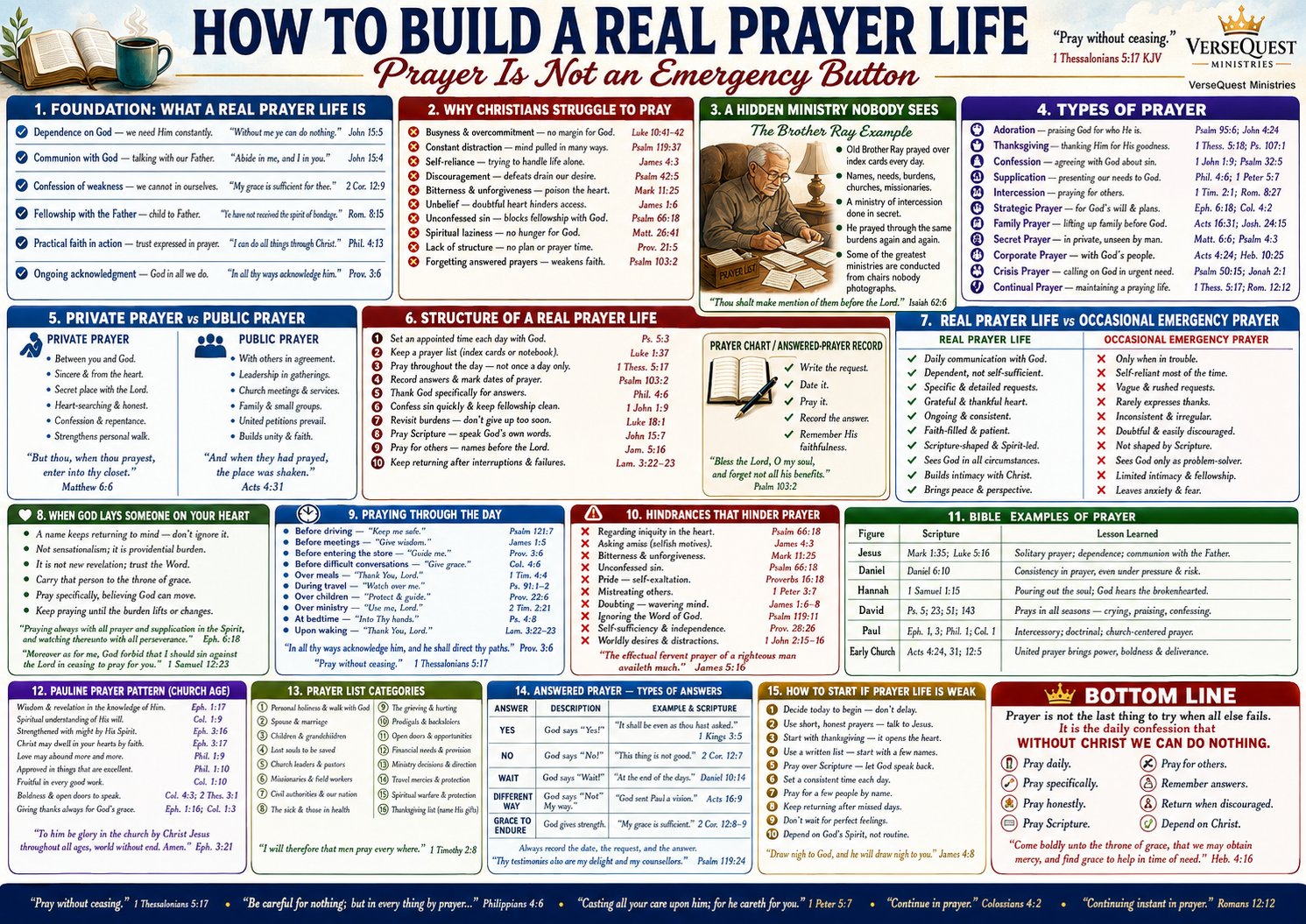
- How to Build a Real Prayer Life – Biblical Prayer Guide and KJV Bible Study Chart
- Build a consistent, biblical prayer life with this detailed KJV Bible study chart. Explore the foundations of prayer, types of prayer, common hindrances, answered prayer, Bible examples, and practical ways…
- $3.99
- Add to cart
-
-
Chart Collections
-
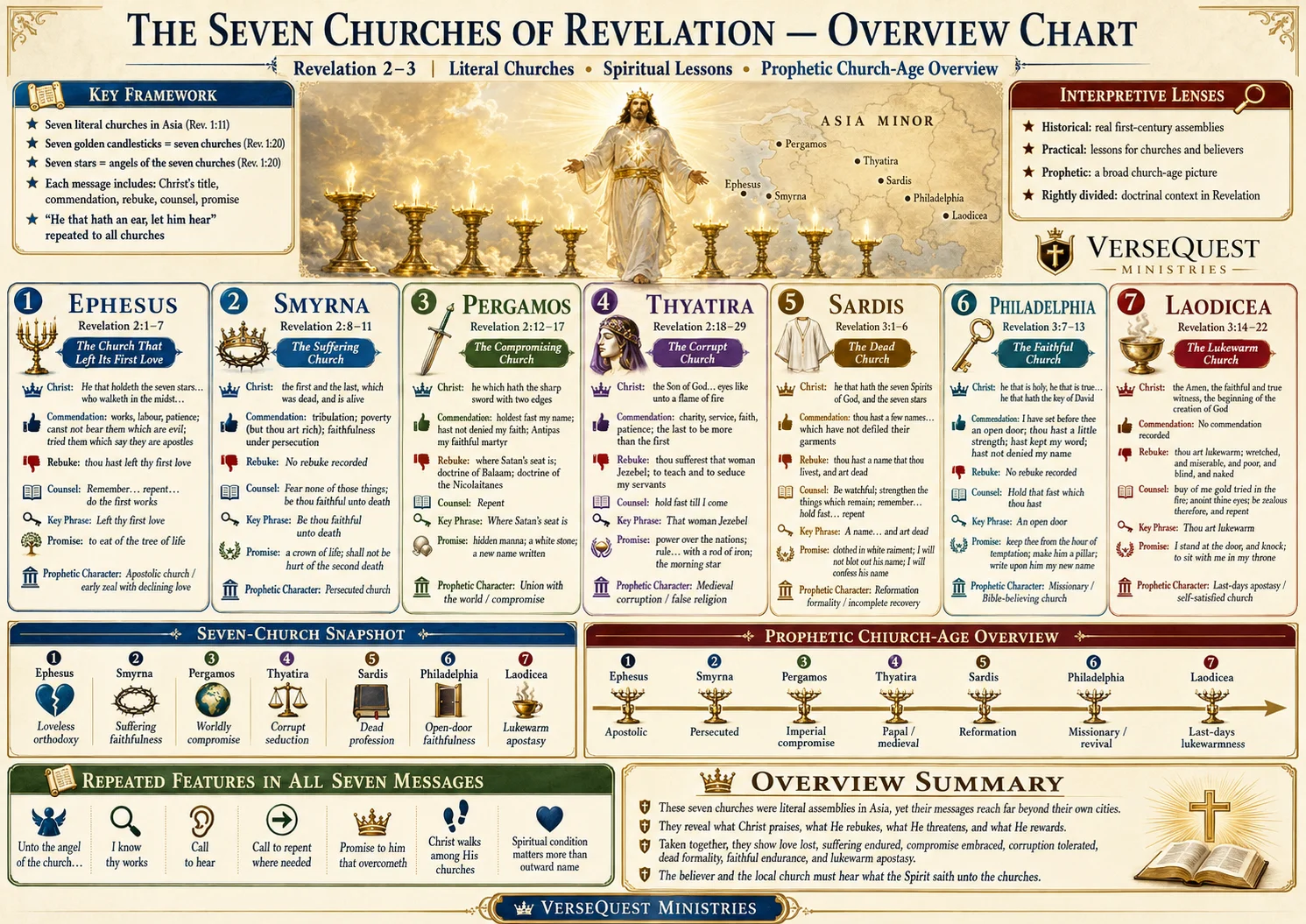
- The Seven Churches of Revelation Chart Collection – Christ Walking Among the Candlesticks
- A premium VerseQuest Ministries™ PDF chart collection covering the Seven Churches of Revelation in Revelation 2–3. Includes one overview chart plus individual KJV Bible study charts for Ephesus, Smyrna, Pergamos,…
- $12.99
- Add to cart
-
-
Paul and the Twelve
-
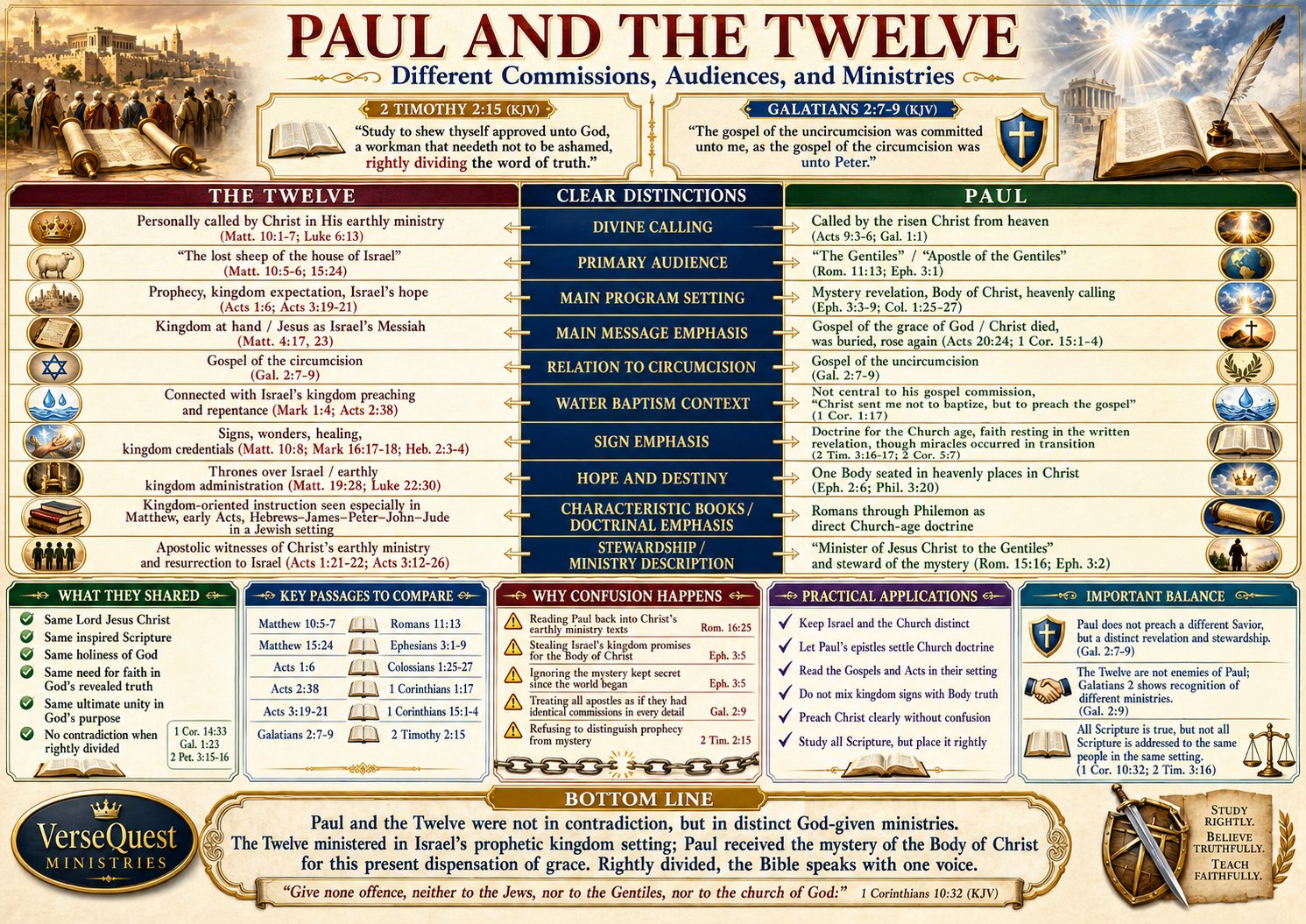
- Paul and the Twelve Bible Study Chart – Different Commissions, Audiences, and Ministries (KJV)
- Compare Paul and the Twelve with this detailed KJV Bible study chart covering their distinct callings, audiences, Kingdom and mystery settings, gospel stewardships, baptism contexts, signs, and future hopes.
- $3.99
- Add to cart
-
-
Bitterness
-
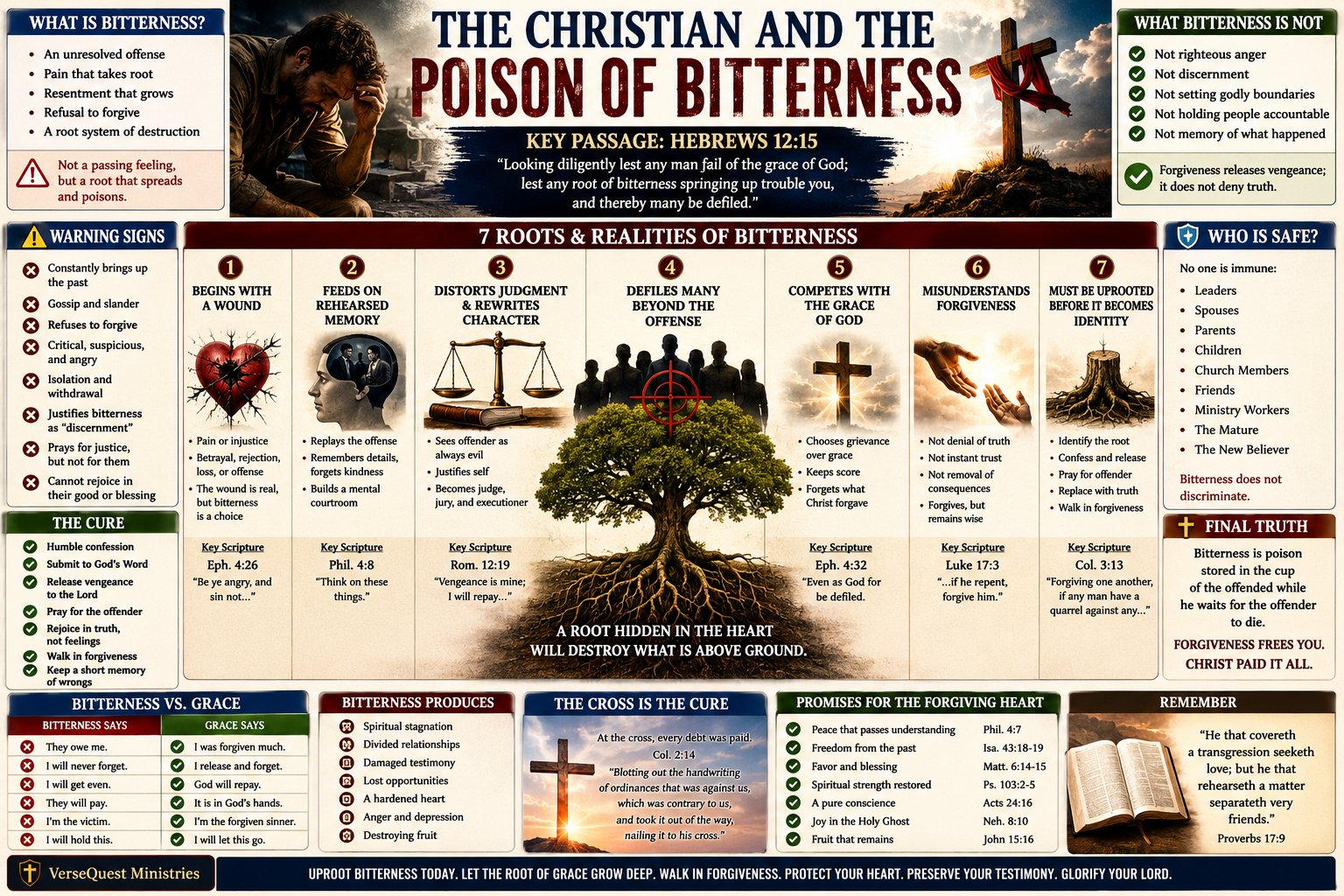
- The Christian and the Poison of Bitterness Bible Study Chart – Forgiveness, Grace, and Healing the Heart (KJV)
- Expose and uproot bitterness with this detailed KJV Bible study chart covering unresolved offenses, warning signs, forgiveness, grace, wise boundaries, the cross, and healing for the Christian heart.
- $3.99
- Add to cart
-
-
Cain and Abel
-
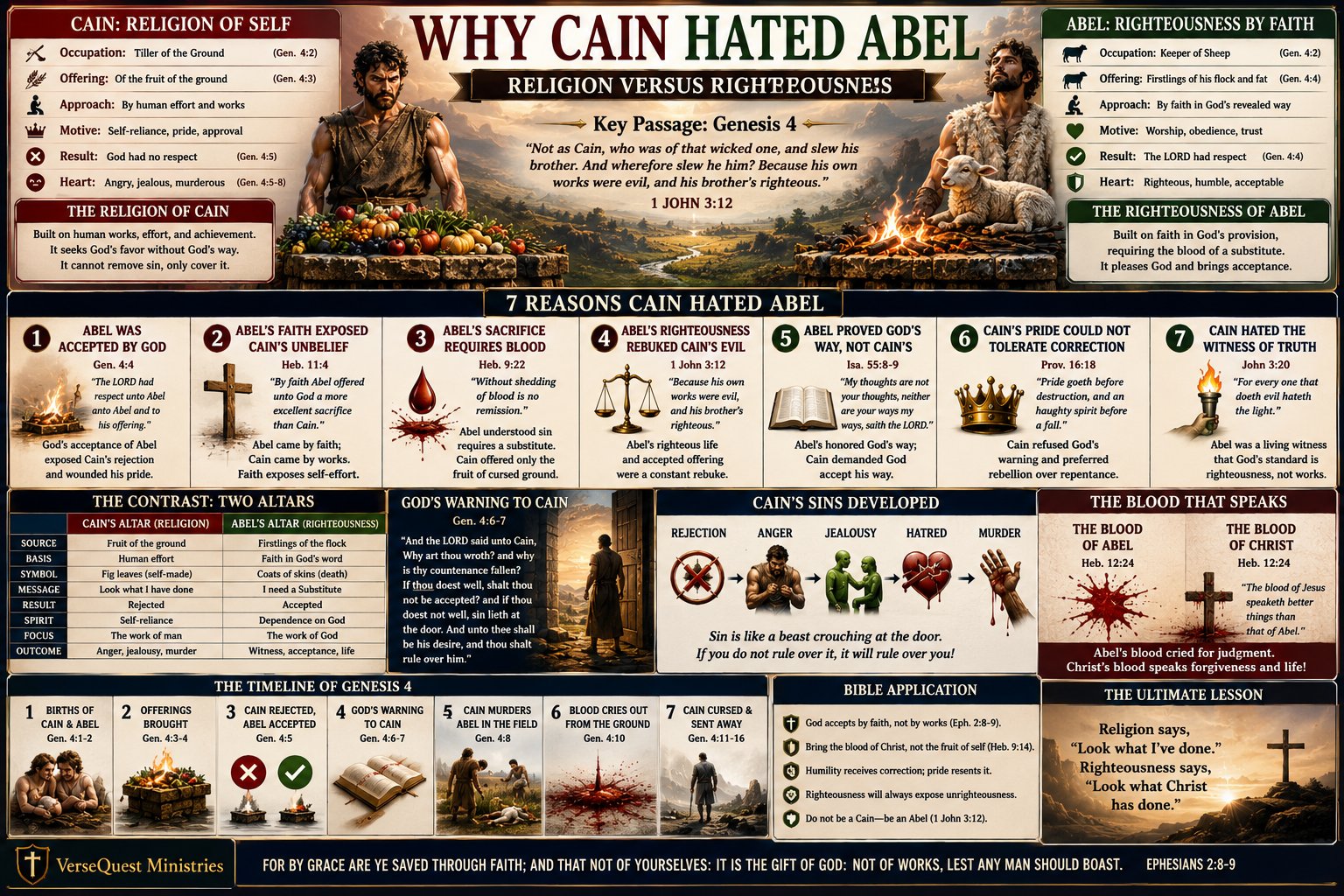
- Why Cain Hated Abel Bible Study Chart – Religion Versus Righteousness, Faith, Works, and Blood Sacrifice (KJV)
- Discover why Cain hated Abel with this detailed KJV Bible study chart comparing religion and righteousness, human works and faith, rejected worship, blood sacrifice, pride, jealousy, and salvation through Christ.
- $3.99
- Add to cart
-