
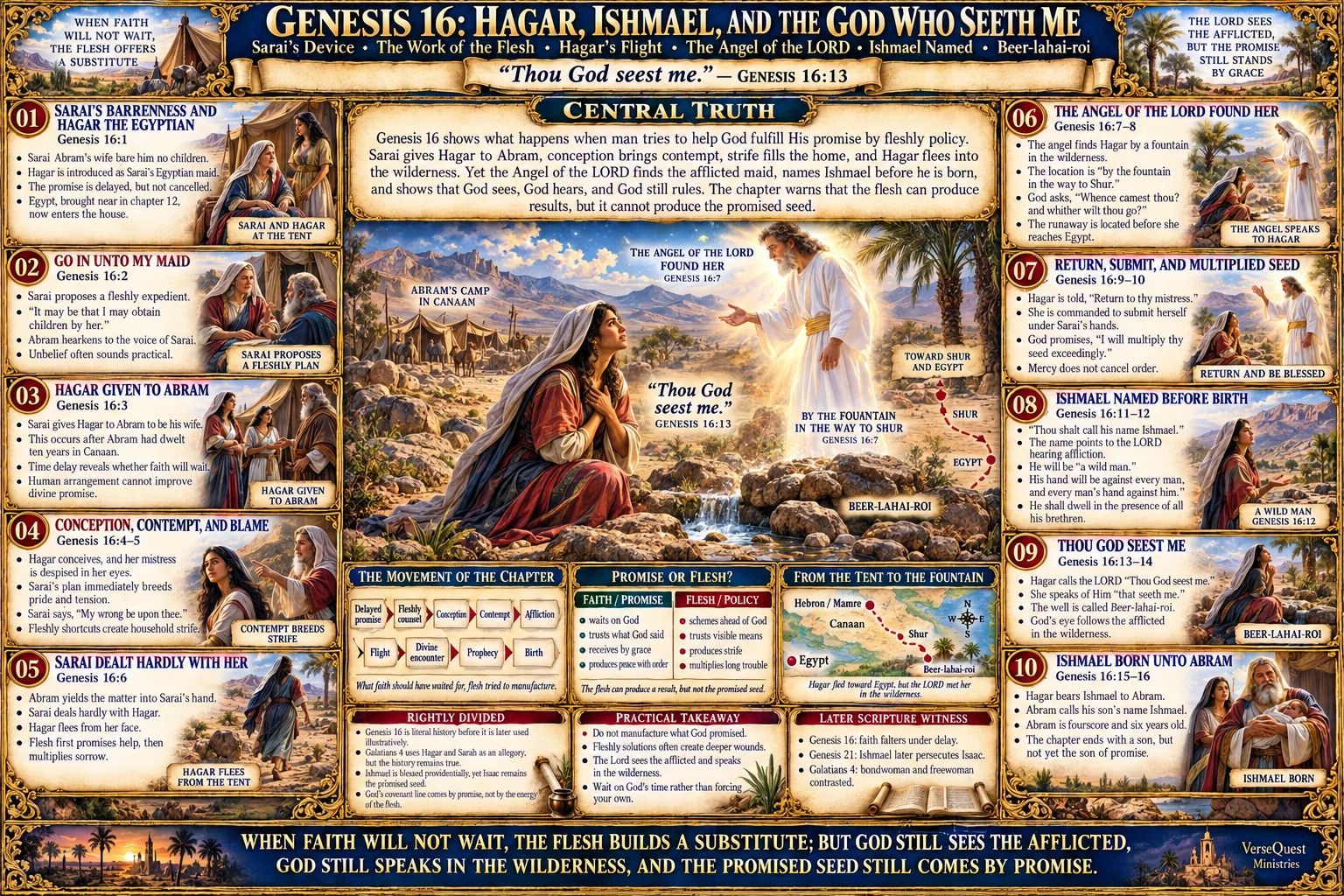
Genesis 16 – Hagar, Ishmael, and the God Who Seeth Me: Sarai’s Device, the Work of the Flesh, the Angel of the LORD, and Beer-lahai-roi (KJV Bible Study Chart)
Explore Genesis 16 with this detailed KJV Bible study chart examining Sarai’s attempt to obtain the promised seed through Hagar, Abram’s participation in the plan, Ishmael’s conception, the resulting contempt and household strife, and Hagar’s flight into the wilderness. Follow the Angel of the LORD as He finds Hagar by the fountain on the way to Shur, commands her to return, promises multiplied descendants, and names her unborn son Ishmael because the LORD has heard her affliction. The chart also explores Hagar’s declaration “Thou God seest me,” Beer-lahai-roi, the distinction between Ishmael and the promised covenant seed, and the contrast between fleshly policy and faith in God’s timing. Ideal for Bible study, homeschool, Sunday school, sermon preparation, and patriarchal studies.
$4.99
Description
Genesis 16: Hagar, Ishmael, and the God Who Seeth Me is a detailed KJV Bible study chart examining what happens when faith grows impatient with God’s timing and attempts to accomplish a divine promise through human policy. Abram has received God’s covenant promises, but Sarai remains barren. Rather than continuing to wait, she proposes that Abram take Hagar, her Egyptian maid, so that a child might be obtained through her. The result is conception, contempt, domestic strife, affliction, flight, and consequences that continue far beyond the immediate household.
Sarai tells Abram, “Go in, I pray thee, unto my maid; it may be that I may obtain children by her.” Abram hearkens to Sarai, and Hagar is given to him as a wife after Abram has dwelt ten years in Canaan. The arrangement appears practical from a human standpoint, but it is not the promised means by which God will ultimately provide the covenant seed. Genesis 16 becomes a powerful demonstration that human ability cannot improve upon divine promise.
When Hagar conceives, her mistress is despised in her eyes. Sarai then blames Abram, and tension overtakes the household. Abram places the matter back into Sarai’s hands, Sarai deals hardly with Hagar, and Hagar flees into the wilderness. What began as a shortcut to solve barrenness produces pride, blame, conflict, and affliction. Flesh may manufacture an immediate result, but it cannot produce what only God has promised to give.
The Angel of the LORD finds Hagar by a fountain in the wilderness on the way to Shur. He asks where she has come from and where she is going, then commands her to return and submit herself under Sarai’s hands. At the same time, Hagar receives a remarkable promise that her seed will be multiplied exceedingly. Divine mercy does not erase order, but neither does affliction place Hagar beyond God’s sight.
The Angel names her unborn son Ishmael, meaning that God has heard her affliction. His future character and relations are foretold, and Hagar responds to the encounter by speaking of the LORD as “Thou God seest me.” The well becomes known as Beer-lahai-roi, memorializing the God who sees the afflicted in the wilderness.
Hagar eventually bears Ishmael when Abram is eighty-six years old. Yet the chapter closes before the promised son has appeared. Ishmael is a real son with real promises concerning his descendants, but he is not the covenant seed later identified through Isaac.
Genesis 16 therefore contrasts promise with flesh, waiting with manipulation, and divine faithfulness with human impatience. Galatians 4 later uses Hagar and Sarah allegorically in a separate doctrinal argument, but the historical events remain real. The great lesson remains: what God has promised must be received on God’s terms and in God’s time.
Genesis 16, Hagar, Ishmael, Sarai, Abram, barrenness, human impatience, work of the flesh, promised seed, flesh versus promise, Hagar the Egyptian, conception and contempt, domestic strife, Hagar’s flight, Angel of the LORD, wilderness encounter, Shur, return and submit, Ishmael named before birth, God hears affliction, Thou God seest me, Beer-lahai-roi, divine mercy, covenant seed
Genesis 16 follows God’s covenant confirmation in Genesis 15, making Sarai’s proposal especially instructive. God has promised Abram an heir from his own body, but Sarai remains barren. Rather than waiting for further revelation concerning how God will fulfill the promise, she offers Hagar, her Egyptian maid, to Abram. Genesis 16:3 states that Hagar is given to Abram “to be his wife” after Abram has lived ten years in Canaan. The arrangement may have appeared culturally practical, but human custom cannot substitute for divine direction.
Hagar conceives, and immediately the household begins experiencing consequences. Her mistress becomes despised in her eyes, Sarai complains to Abram, and Abram places Hagar back under Sarai’s authority. Sarai deals hardly with her, and Hagar flees. The sequence demonstrates how a fleshly solution to one difficulty can create several new difficulties. Conception has occurred, but conception alone does not prove that man has fulfilled God’s covenant promise.
The Angel of the LORD finds Hagar by a fountain in the wilderness on the way to Shur. This is significant because Hagar is not seeking Him; He finds her. She is questioned concerning where she has come from and where she is going and is commanded, “Return to thy mistress, and submit thyself under her hands.” Yet the command is accompanied by mercy. Her descendants will be multiplied exceedingly. God sees her affliction without overturning the order to which she must return.
Her unborn son receives the divinely appointed name Ishmael, because “the LORD hath heard thy affliction.” His future is also foretold: he will be a wild man, his hand will be against every man, and every man’s hand against him. These words concern Ishmael and his descendants and should not be expanded carelessly into accusations against every later people that might claim descent from him.
Hagar responds by calling the LORD who spoke to her “Thou God seest me.” The surrounding language has made Genesis 16 important in studies of the Angel of the LORD. Hagar recognizes the encounter as involving the God who sees her, and the well is called Beer-lahai-roi, associated with the living God who sees.
Genesis 16 ends with Ishmael’s birth when Abram is eighty-six. Ishmael is genuinely blessed by God and later receives promises concerning multiplication and nationhood, but he is not the covenant seed. Genesis 17 and 21 will specifically identify Isaac as the son through whom the covenant line continues.
Galatians 4 later uses Hagar and Sarah allegorically to contrast bondage and promise. That inspired application does not make Genesis 16 fictional. The historical account comes first; Paul later draws doctrinal instruction from it. Genesis 16 therefore teaches that flesh can produce results, but only God can produce the promised seed according to His Word and timing.
Genesis 16 is especially useful for teaching patience with God’s timing, the danger of attempting to manufacture what God has promised, the consequences of fleshly shortcuts, responsibility within family conflict, and God’s compassion toward the afflicted. It also provides important material for studying Hagar and Ishmael, the Angel of the LORD, the distinction between Ishmael and the covenant line through Isaac, and Paul’s later use of Sarah and Hagar in Galatians 4. The chart is useful for personal Bible study, Sunday school, homeschool instruction, Bible institutes, sermon preparation, discipleship, patriarchal studies, and dispensational teaching.
King James Bible, Strong’s Concordance, Thompson Chain-Reference Bible, Treasury of Scripture Knowledge, Nave’s Topical Bible, Genesis 15–21 study notes, Abrahamic covenant charts, Hagar and Ishmael studies, Isaac and Ishmael comparison charts, Angel of the LORD Scripture studies, patriarchal maps of Canaan and Shur, Galatians 4 studies, Romans 4 and 9 studies, Hebrews 11 faith studies, Beer-lahai-roi studies, VerseQuest Genesis charts
Related products
-
Spiritual Growth
-
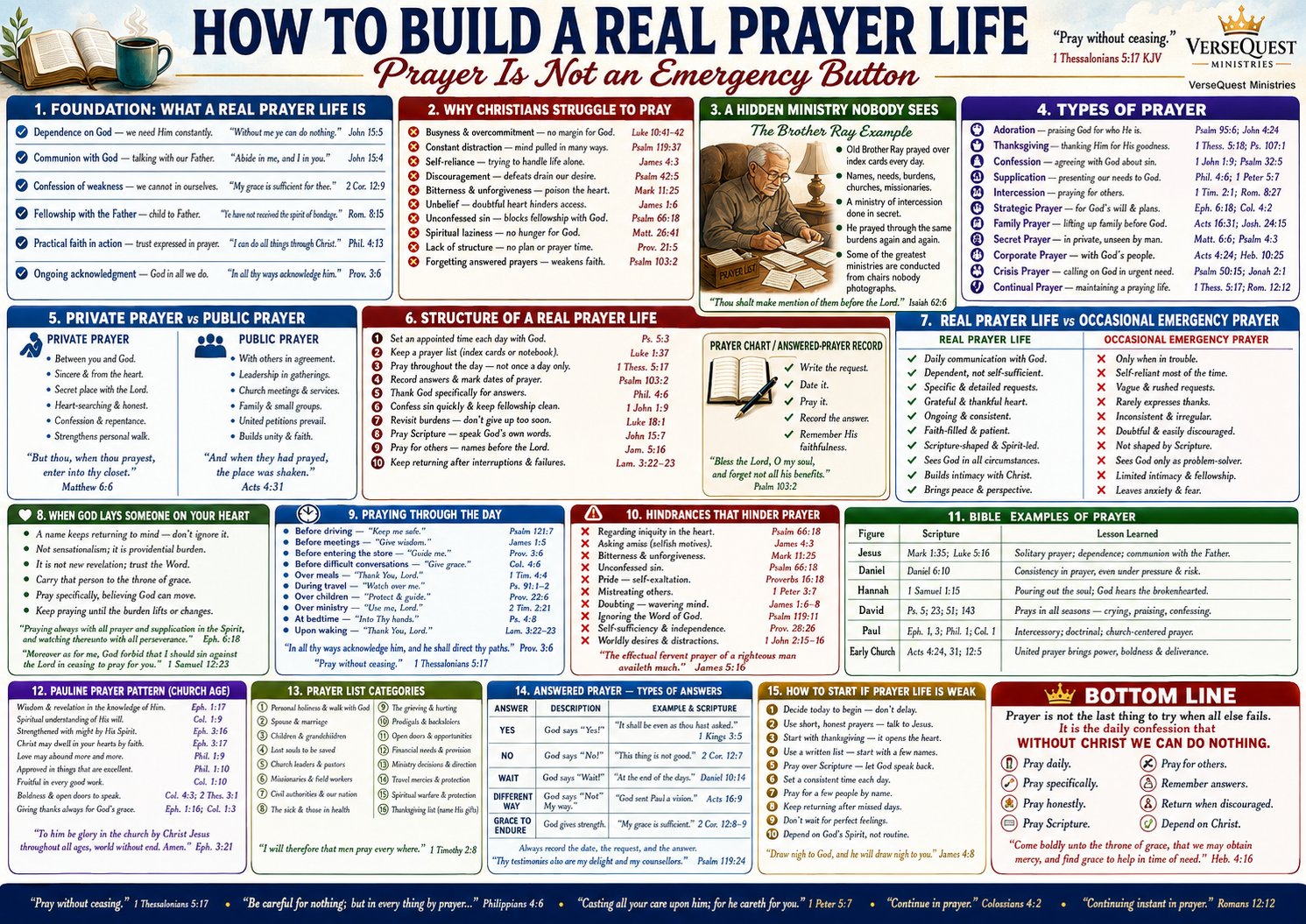
- How to Build a Real Prayer Life – Biblical Prayer Guide and KJV Bible Study Chart
- Build a consistent, biblical prayer life with this detailed KJV Bible study chart. Explore the foundations of prayer, types of prayer, common hindrances, answered prayer, Bible examples, and practical ways…
- $3.99
- Add to cart
-
-
Paul and the Twelve
-
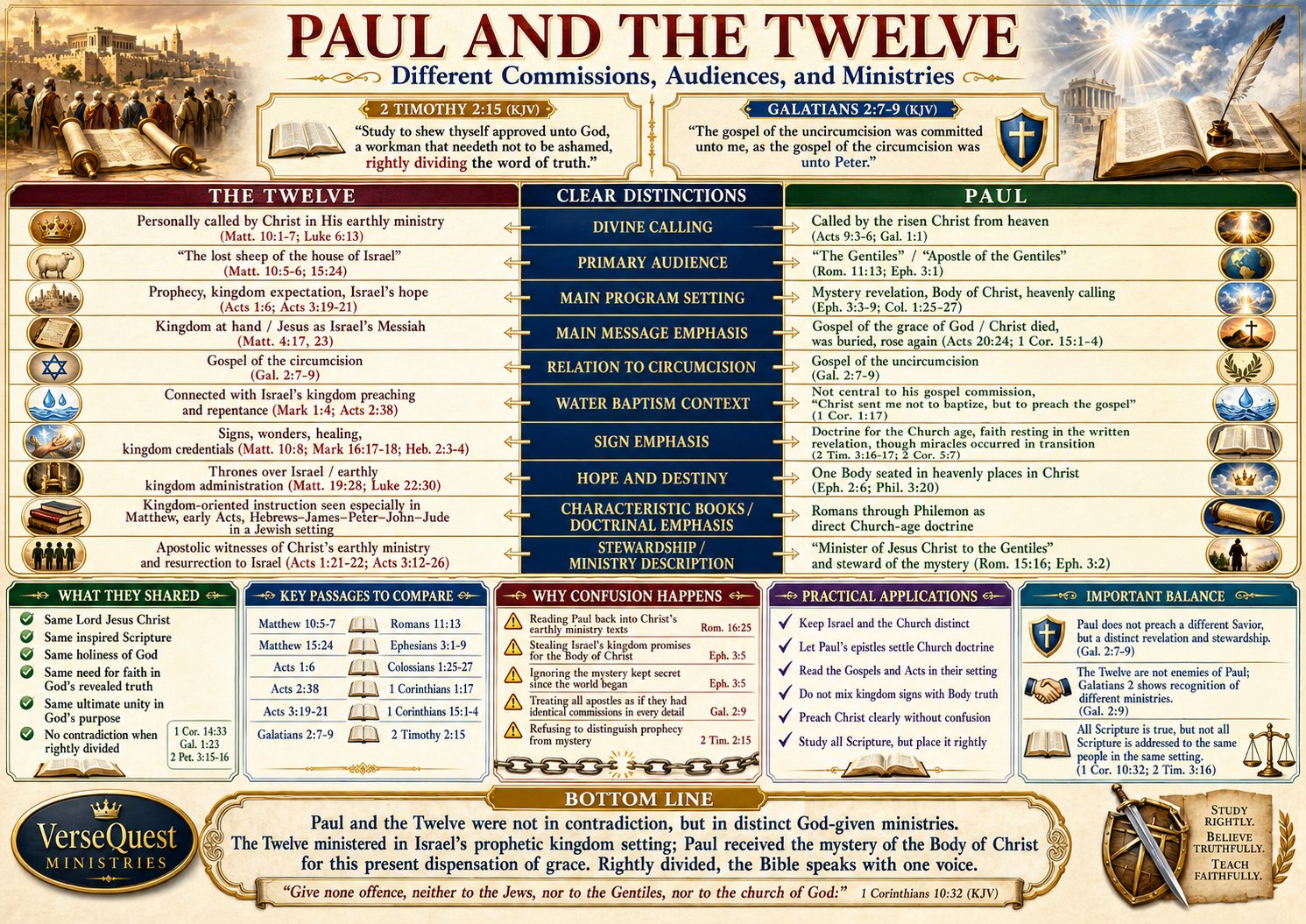
- Paul and the Twelve Bible Study Chart – Different Commissions, Audiences, and Ministries (KJV)
- Compare Paul and the Twelve with this detailed KJV Bible study chart covering their distinct callings, audiences, Kingdom and mystery settings, gospel stewardships, baptism contexts, signs, and future hopes.
- $3.99
- Add to cart
-
-
The Seven Dispensations
-
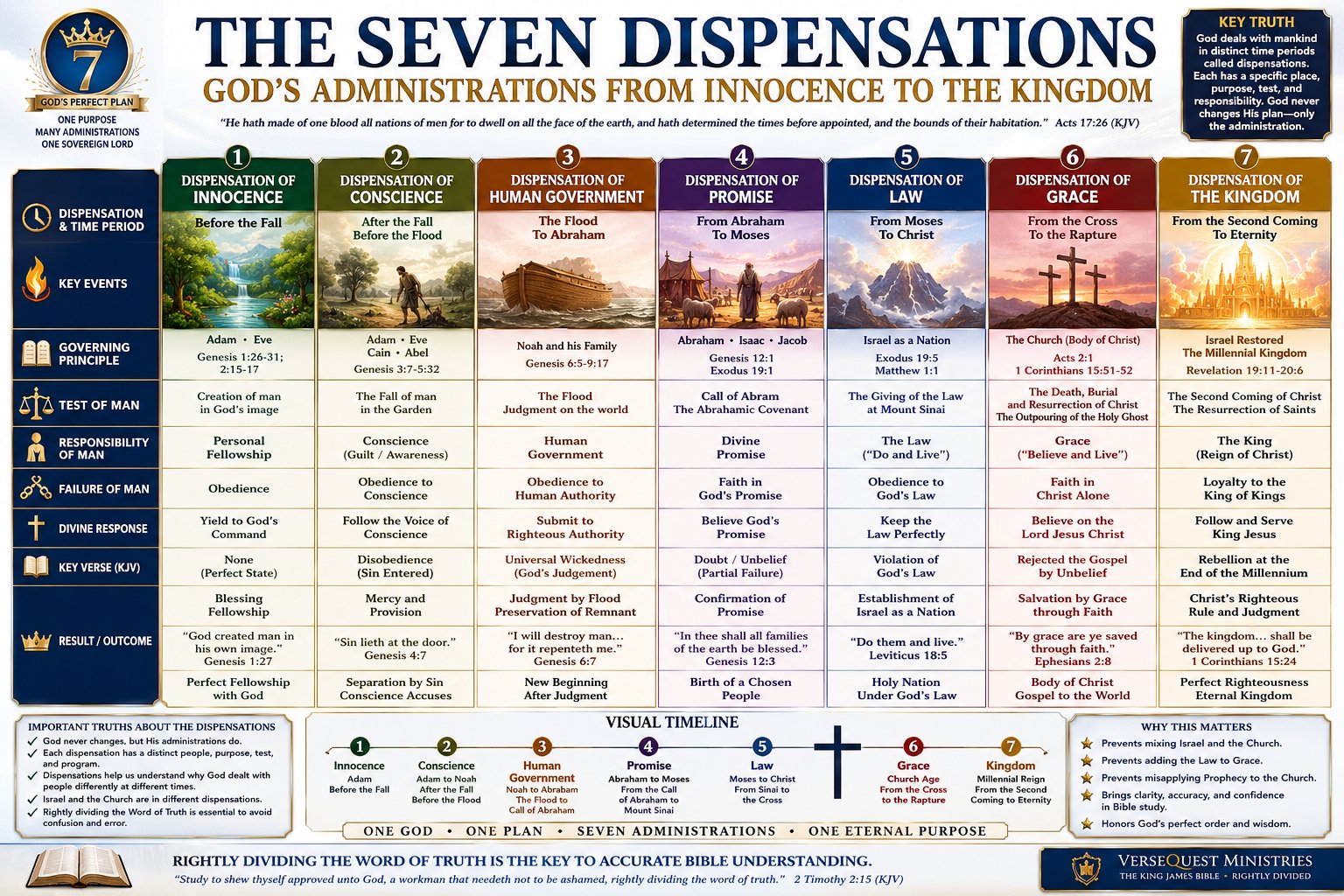
- The Seven Dispensations Bible Study Chart – God’s Administrations from Innocence to the Kingdom (KJV)
- Explore the seven dispensations with this detailed KJV Bible study chart covering Innocence, Conscience, Human Government, Promise, Law, Grace, the Kingdom, and the importance of rightly dividing Scripture.
- $3.99
- Add to cart
-
-
Heavenly Program
-
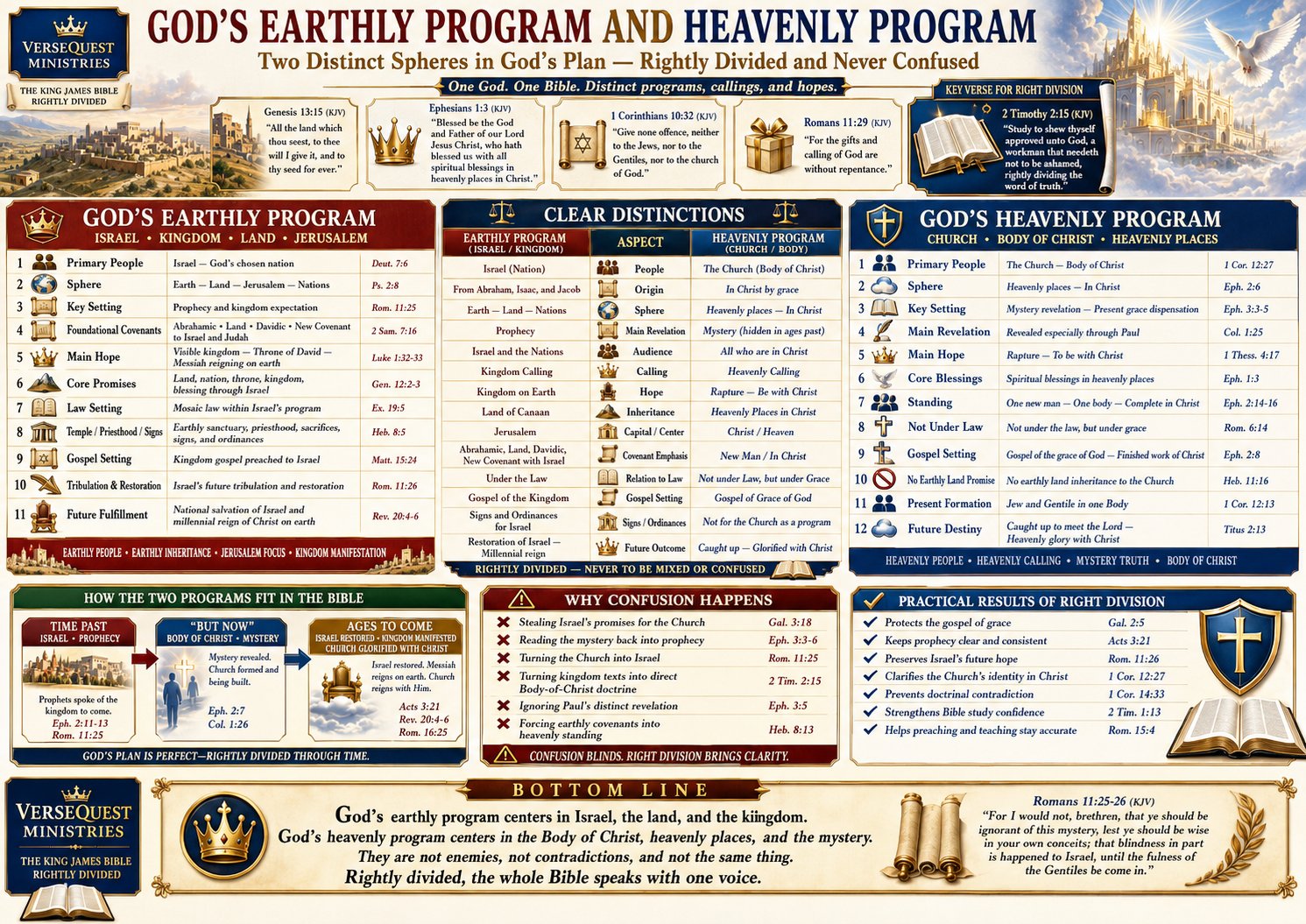
- Israel and the Church: Earthly and Heavenly Callings – KJV Bible Study Chart
- Printable digital KJV Bible study chart comparing Israel’s earthly promises and kingdom hope with the Church’s heavenly calling in Christ. Covers prophecy and mystery, biblical covenants, law and grace, the…
- $3.99
- Add to cart
-
-
Christian Growth
-
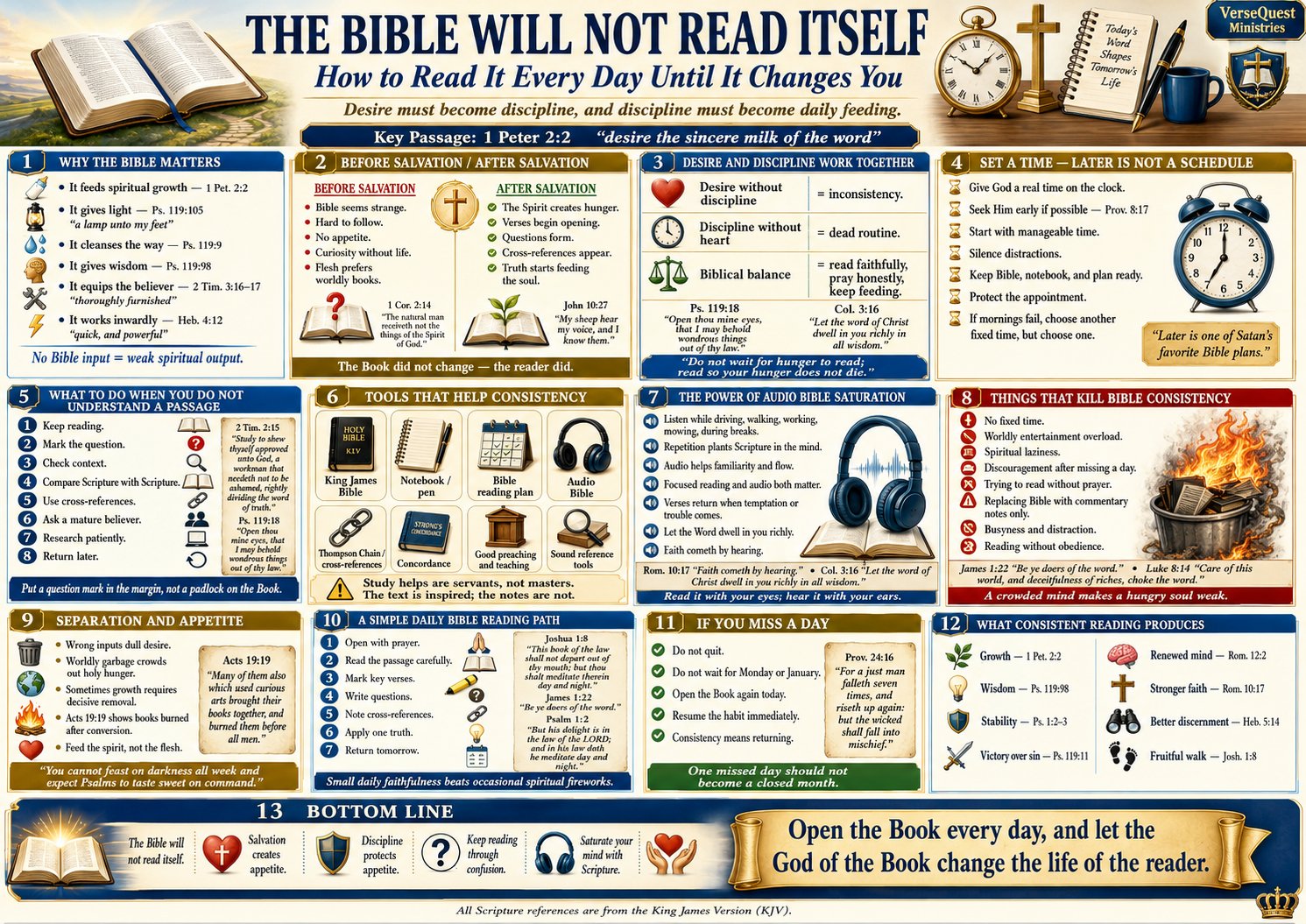
- The Bible Will Not Read Itself – How to Read the Bible Every Day Bible Study Chart (KJV)
- Build a consistent daily Bible reading habit with this detailed KJV Bible study chart. Learn practical steps for reading Scripture faithfully, overcoming inconsistency, understanding difficult passages, and growing spiritually through…
- $3.99
- Add to cart
-