
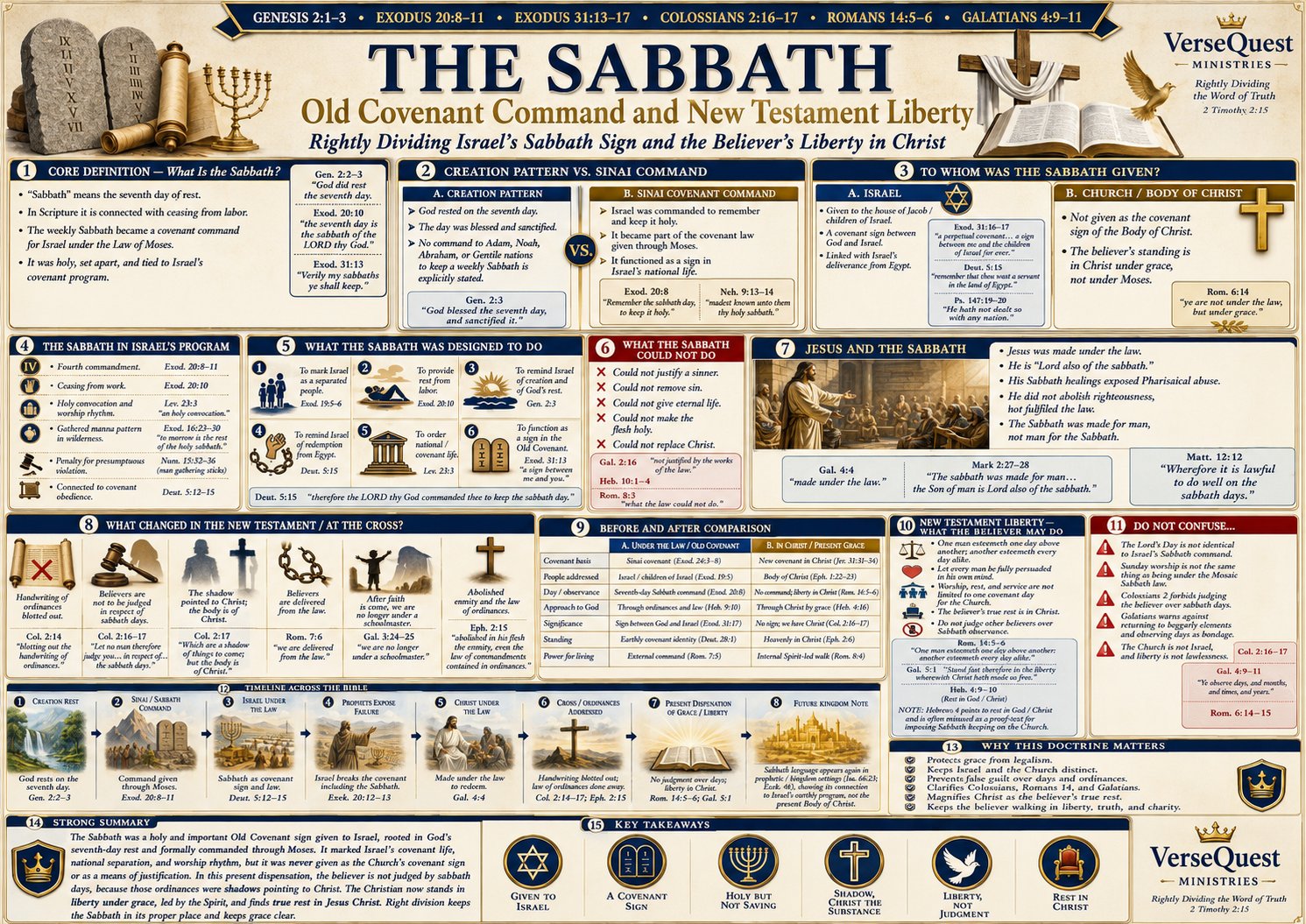
The Sabbath – Israel’s Old Covenant Command and the Believer’s New Testament Liberty in Christ (KJV Bible Study Chart)
Understand the Sabbath with this detailed KJV chart covering creation rest, Israel’s covenant sign, the fourth commandment, Christ’s fulfillment, Sabbath versus Sunday, and New Testament liberty.
$3.99
Description
The Sabbath: Old Covenant Command and New Testament Liberty is a detailed KJV Bible study chart explaining the biblical origin, purpose, covenant setting, limitations, fulfillment, and present-day application of the seventh-day Sabbath.
Built around Genesis 2:1–3, Exodus 20:8–11, Exodus 31:13–17, Colossians 2:16–17, Romans 14:5–6, and Galatians 4:9–11, this chart distinguishes God’s rest following creation from the later covenant command given through Moses to the nation of Israel. It then explains why the Church, the Body of Christ, is not placed under Israel’s Sabbath ordinance during the present dispensation of grace.
The word Sabbath is connected with ceasing or resting. Genesis records that God rested on the seventh day after completing the work of creation. He blessed and sanctified that day, establishing an important creation pattern of completed work and divine rest.
However, the fact that God rested on the seventh day is not identical to the later Sinai command requiring Israel to observe the Sabbath as part of its national covenant. Scripture does not record God commanding Adam, Noah, Abraham, Isaac, Jacob, or the Gentile nations to keep a weekly Sabbath in the same legal form later given to Israel through Moses.
The weekly Sabbath became an explicit covenant command within Israel’s law. The fourth commandment instructed the children of Israel to remember the Sabbath day, cease from ordinary labour, and keep the seventh day holy unto the LORD.
The Sabbath belonged to the larger Mosaic covenant that included commandments, judgments, sacrifices, priesthood regulations, dietary distinctions, holy days, civil laws, ceremonial ordinances, and national responsibilities. It was not an isolated command detached from Israel’s covenant structure.
Exodus 31 identifies the Sabbath as a sign between the LORD and the children of Israel. It marked Israel as God’s separated covenant nation and continually reminded the people that the LORD had sanctified them.
The chart emphasizes the identity of the Sabbath’s covenant audience. It was given to the house of Jacob and the children of Israel, not to the Church as the covenant sign of the Body of Christ. Deuteronomy connects Sabbath observance with Israel’s deliverance from Egyptian bondage, further locating the command within the nation’s historical and covenant experience.
The Body of Christ possesses a different standing. The Church is composed of saved Jews and Gentiles united in one spiritual Body through Jesus Christ. Its members are not placed under the Sinai covenant but stand in Christ under grace.
Romans 6:14 declares, “ye are not under the law, but under grace.” The believer’s righteousness, acceptance, access to God, and eternal security do not depend upon observing Israel’s seventh-day covenant sign.
The chart explains the Sabbath’s role within Israel’s program. It appeared as the fourth commandment, required cessation from work, established a holy national rhythm, governed Israel’s community life, and carried legal penalties for deliberate violation.
The manna account in Exodus 16 prepared Israel to recognize the Sabbath pattern before the formal giving of the Ten Commandments. The people gathered twice as much manna on the sixth day and ceased gathering on the seventh.
Under the law, Sabbath violation was treated seriously because it represented rejection of God’s covenant authority. Numbers 15 records the judgment of a man found gathering sticks on the Sabbath, demonstrating that the command was not merely a private devotional preference.
The Sabbath also served several divinely appointed purposes. It marked Israel as a distinct people, provided regular physical rest, reminded the nation of God’s completed creation, memorialized deliverance from Egypt, ordered Israel’s worship, and functioned as a sign within the old covenant.
The Sabbath was holy because God sanctified and commanded it. Yet holiness within the old covenant did not make the Sabbath capable of justifying sinners, removing guilt, producing eternal life, transforming the sinful heart, or replacing Jesus Christ.
The law could identify disobedience, but it could not regenerate the transgressor. The Sabbath could regulate Israel’s covenant conduct, but it could not become the Saviour.
The chart therefore distinguishes what the Sabbath was designed to do from what it could never accomplish. It could teach rest, obedience, separation, order, remembrance, and covenant responsibility. It could not cleanse the conscience, remove sin, or provide the righteousness required for eternal acceptance.
Jesus Christ was born under the law and faithfully observed the Sabbath within Israel’s covenant setting. He attended the synagogue, taught on the Sabbath, healed the afflicted, and exposed the distortions created by Pharisaical tradition.
Christ did not violate God’s Sabbath command. He challenged man-made additions that transformed a divine gift into an oppressive religious burden. His healings demonstrated that mercy, necessity, and doing good were lawful on the Sabbath.
Jesus declared, “The sabbath was made for man, and not man for the sabbath.” The day was intended as a blessing under God’s authority, not as a mechanism by which religious leaders could dominate people through endless human restrictions.
Christ is also Lord of the Sabbath. He possesses authority over the day because He is greater than every ordinance, institution, and religious tradition connected with it.
The cross brought a decisive dispensational change. Jesus fulfilled the law perfectly, bore its curse, completed redemption, and blotted out the handwriting of ordinances that stood against the sinner.
Romans 7 teaches that believers have become dead to the law through the body of Christ. They now serve in newness of spirit rather than beneath the oldness of the letter.
Galatians 3 explains that after faith has come, believers are no longer under the schoolmaster. The law served its divinely appointed purpose, but the Christian’s standing is now found in Jesus Christ.
Ephesians 2 connects the law of commandments contained in ordinances with the former separation between Israel and the Gentiles. Through the cross, Christ abolished the enmity and created one new man.
Colossians 2 provides one of the clearest Church-age statements concerning the Sabbath: “Let no man therefore judge you in meat, or in drink, or in respect of an holyday, or of the new moon, or of the sabbath days.”
These observances are described as shadows of things to come, while the body or substance is Christ. The Sabbath pointed toward rest and completion, but the believer now possesses the reality in Jesus Christ.
Returning to mandatory Sabbath observance as a requirement for justification, acceptance, spirituality, or salvation maintenance rebuilds a shadow after the Substance has come.
The chart provides a before-and-after comparison. Under the old covenant, Israel was commanded to observe the seventh day as a national covenant sign. Under grace, the Church stands complete in Christ and receives no command making Sabbath observance the covenant test of the Body of Christ.
Under the law, Israel approached God through repeated sacrifices, priests, ordinances, and covenant observances. Believers now approach the Father through the finished sacrifice and eternal priesthood of Jesus Christ.
Israel’s Sabbath standing was connected with an earthly national program. The Body of Christ possesses a heavenly calling and spiritual blessings in Christ.
The chart also explains New Testament liberty. Romans 14 teaches that one believer may esteem one day above another while another esteems every day alike. Each is to be fully persuaded in his own mind and act unto the Lord.
This liberty means that a Christian may voluntarily set aside a day for worship, rest, Bible study, fellowship, or service. It does not mean he may condemn other believers for failing to observe the same personal practice.
Christian worship is not confined to one sacred day. Believers are called to worship, pray, serve, obey, and glorify God throughout the entire week.
The early Christians sometimes assembled on the first day of the week, celebrating the resurrection of Jesus Christ and gathering for fellowship and teaching. However, the New Testament never renames Sunday as the Jewish Sabbath or places the Church under a transferred fourth commandment.
Sunday worship and Sabbath keeping are therefore not identical. The seventh-day Sabbath belonged to Israel’s covenant, while first-day Christian assembly developed within the liberty and resurrection life of the Church.
The believer’s true rest is found in Jesus Christ. Salvation rests upon His finished work rather than human labour, ceremonial observance, or religious performance.
Hebrews 4 uses Sabbath and rest language to direct the reader toward the greater rest connected with faith in God’s completed work. Christ accomplishes what the old covenant shadows could only anticipate.
New Testament liberty does not mean lawlessness. Freedom from the Sabbath ordinance does not permit laziness, neglect of worship, contempt for fellowship, selfish overwork, or disregard for physical rest.
Believers should gather with the local church, receive sound teaching, worship God, serve others, and maintain responsible rhythms of labour and rest. These duties arise from Church-age doctrine, Christian wisdom, love, and devotion—not from placing the Body of Christ under Israel’s Sinai covenant.
The chart warns against several common errors. The Lord’s Day should not be automatically equated with Israel’s Sabbath. Sunday worship should not be described as though God merely moved the Mosaic Sabbath command from Saturday to Sunday.
Colossians 2 should not be ignored when teaching mandatory holy-day observance. Galatians warns against returning to days, months, times, and years as religious bondage.
The chart also rejects the claim that keeping the Sabbath contributes to justification. Salvation is by grace through faith in the finished work of Jesus Christ, not through observance of a day.
Neither should Christians judge another believer’s spirituality by his chosen day of worship or rest. Romans 14 places such personal matters within conscience and liberty rather than Church discipline.
The doctrine must also be handled without contempt for Israel or the Old Testament. The Sabbath was a holy command given by God for a real covenant purpose. Right division does not mock the ordinance; it honours the audience, setting, and purpose God assigned to it.
The timeline traces the Sabbath through Scripture. God rested after creation. The Sabbath command was formally given through Moses. Israel lived beneath that covenant sign and repeatedly failed to keep it.
Jesus Christ entered Israel’s law setting and perfectly fulfilled the law. At the cross, the ordinances were blotted out, and believers were delivered from the law.
The present dispensation is characterized by grace and liberty in Christ. The Church is not judged by Sabbath days, while prophetic passages indicate that Sabbath observance will again appear in connection with Israel and the future Kingdom.
This future prophetic use does not place the present Church under the command. Different passages must remain within their proper programs, peoples, and dispensations.
Understanding the Sabbath protects the gospel from legalism, maintains the distinction between Israel and the Church, clarifies Colossians, Romans, Galatians, and Hebrews, and keeps Jesus Christ at the centre.
The strong conclusion is clear: the Sabbath was a holy and important old-covenant sign given to Israel. It commemorated creation, deliverance, covenant separation, and ordered rest. Yet it could not justify, save, or transform the sinner.
During the present dispensation, the believer is not judged by Sabbath observance but stands in liberty under grace, serves God through the Holy Spirit, gathers with the saints, and rests in the completed work of Jesus Christ.
This chart is ideal for personal Bible study, Sabbath discussions, law-and-grace teaching, Israel-and-Church comparisons, Seventh-day Adventist apologetics, Pauline doctrine, pastoral training, Sunday school, homeschool Bible curriculum, Bible institutes, sermon preparation, and believers seeking a clear KJV explanation of the Sabbath.
The Sabbath, seventh-day Sabbath, old covenant command, New Testament liberty, Israel’s Sabbath sign, creation rest, Sinai covenant, fourth commandment, law and grace, Israel and the Church, Sabbath versus Sunday, Lord of the Sabbath, Christ fulfilled the law, Sabbath as a shadow, Colossians 2:16–17, Romans 14 liberty, Christian worship, rest in Christ, legalism, rightly dividing Scripture
The Sabbath begins with God’s rest after creation, but a creation pattern and a covenant command are not identical. Scripture records God blessing the seventh day before it records a legal obligation requiring a nation to observe it.
The weekly Sabbath command was formally given to Israel through Moses. Exodus 31 explicitly identifies it as a sign between the LORD and the children of Israel.
Deuteronomy connects Sabbath observance with Israel’s deliverance from Egypt. This historical reason confirms its place within the nation’s covenant experience.
The Mosaic Sabbath belonged to a complete covenant containing commandments, sacrifices, priesthood, civil judgments, ceremonial ordinances, and national distinctions.
The Sabbath was holy because God appointed it. Right division should never treat the command with contempt merely because the Church is not under it.
The Sabbath provided physical rest, ordered worship, covenant remembrance, national distinction, and testimony concerning God’s completed creation.
The Sabbath could not justify sinners, regenerate the heart, remove guilt, perfect the conscience, or provide eternal life.
Jesus was made under the law and faithfully honoured the Sabbath. His controversies concerned Pharisaical additions and distorted applications, not rebellion against God’s command.
Christ declared Himself Lord of the Sabbath. The ordinance stands beneath His authority rather than above Him.
The statement that the Sabbath was made for man teaches its beneficial purpose. It does not automatically establish that every person in every dispensation received Israel’s covenant requirement.
Christ’s Sabbath healings demonstrated that mercy and doing good agreed with God’s purpose for the day.
The cross fulfilled the law’s demands and blotted out the handwriting of ordinances. The believer’s standing is now established through Christ rather than covenant observance.
Colossians 2 directly forbids allowing others to judge believers concerning Sabbath days. The Sabbath is identified among shadows whose substance is found in Christ.
Romans 14 permits liberty concerning the esteem of days. The believer should act unto the Lord without judging another Christian’s standing.
Galatians warns against returning to religious bondage involving days, months, times, and years.
Sunday is not the Jewish Sabbath moved to another day. The New Testament records first-day gatherings but never transfers Israel’s seventh-day covenant sign to Sunday.
Christians should assemble with believers, worship faithfully, serve the Lord, and maintain wise patterns of rest. These responsibilities arise from Church-age doctrine rather than the Mosaic Sabbath command.
Christian liberty does not excuse neglect of worship, fellowship, physical health, responsible labour, or devotion to God.
The believer’s deepest rest is found in the finished work of Jesus Christ. Salvation begins when personal works cease as a basis for acceptance and faith rests in what Christ completed.
Hebrews 4 uses rest language to direct readers toward believing God and entering the rest He provides. The passage should not be reduced to mandatory Church-age Sabbath keeping.
Future prophetic passages may contain Sabbath observance in connection with Israel and the Kingdom. Future use does not make the ordinance the present covenant sign of the Church.
The Church does not replace Israel, and Israel’s Sabbath history should not be rewritten as though it were always direct doctrine for the Body of Christ.
Right division honours the Sabbath by placing it where God placed it: within Israel’s old-covenant program, fulfilled in Christ, and not imposed upon the present believer as a condition of salvation or righteousness.
Sabbath Bible studies, law-and-grace comparisons, Israel-and-Church distinctions, Seventh-day Adventist apologetics, teaching Colossians 2, explaining Romans 14, Christian liberty classes, Sabbath-versus-Sunday discussions, interpreting the fourth commandment, Mosaic covenant studies, Pauline doctrine, new-believer discipleship, Sunday school lessons, homeschool Bible curriculum, Christian school teaching, Bible institute classes, pastoral training, sermon preparation
King James Bible, Strong’s Concordance, Thompson Chain-Reference Bible, Treasury of Scripture Knowledge, Nave’s Topical Bible, Genesis 2 study notes, Exodus 20 and 31 commentary notes, Deuteronomy 5 comparison studies, Gospel Sabbath passages, Romans 14 study worksheets, Galatians commentary materials, Colossians 2 study notes, Hebrews 4 resources, law-and-grace charts, Israel-and-Church comparison materials, VerseQuest right-division and doctrine charts
Related products
-
Study Books (PDF)
-
-25%
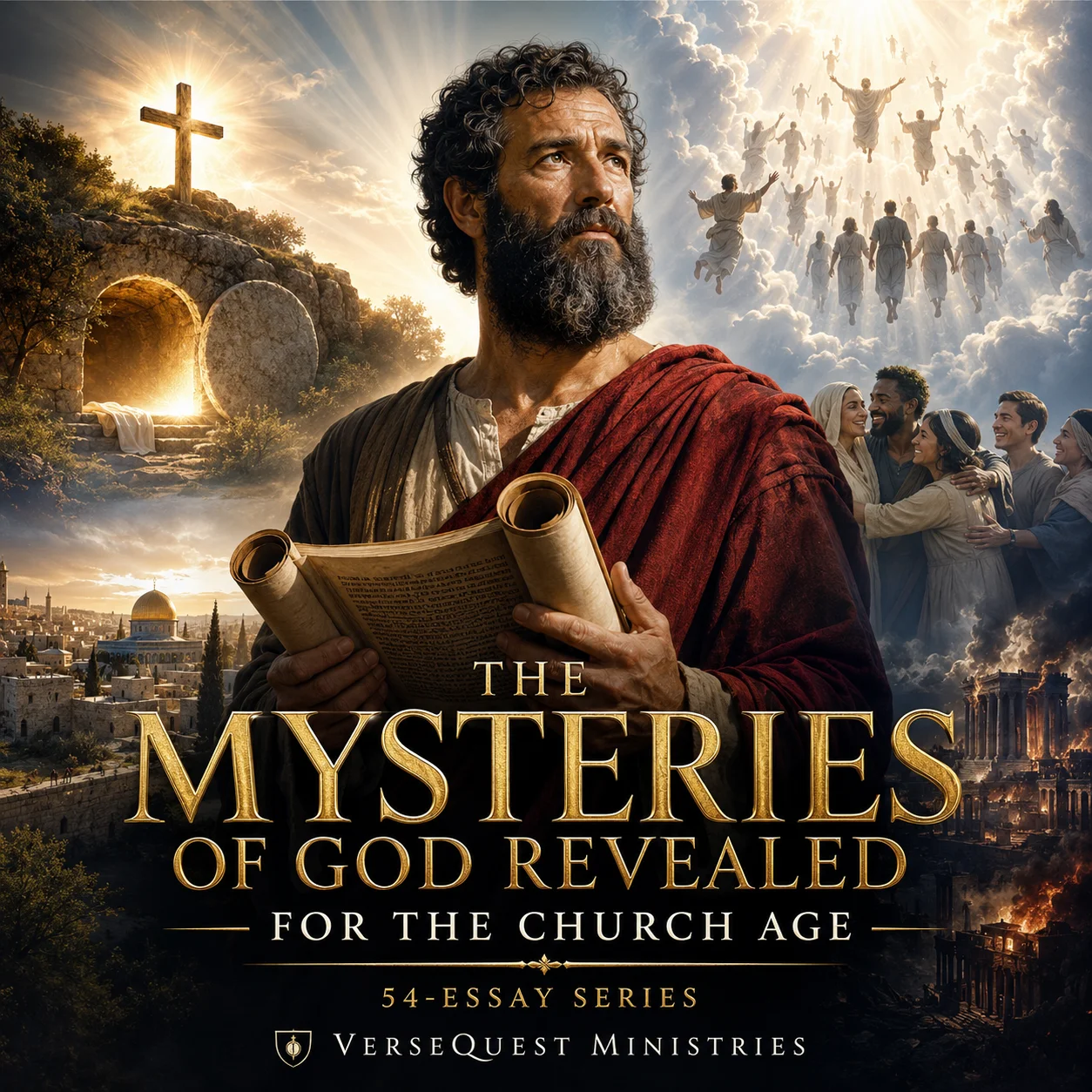
- The Mysteries of God Revealed for the Church Age – Premium Essay Series PDF
- A premium 404-page VerseQuest Ministries digital PDF study book featuring 54 detailed KJV-only essays on the mysteries of God revealed for the Church Age. This rightly divided study covers the…
- Original price was: $39.99.$29.99Current price is: $29.99.
- Add to cart
-
-25%
-
Circumcision
-
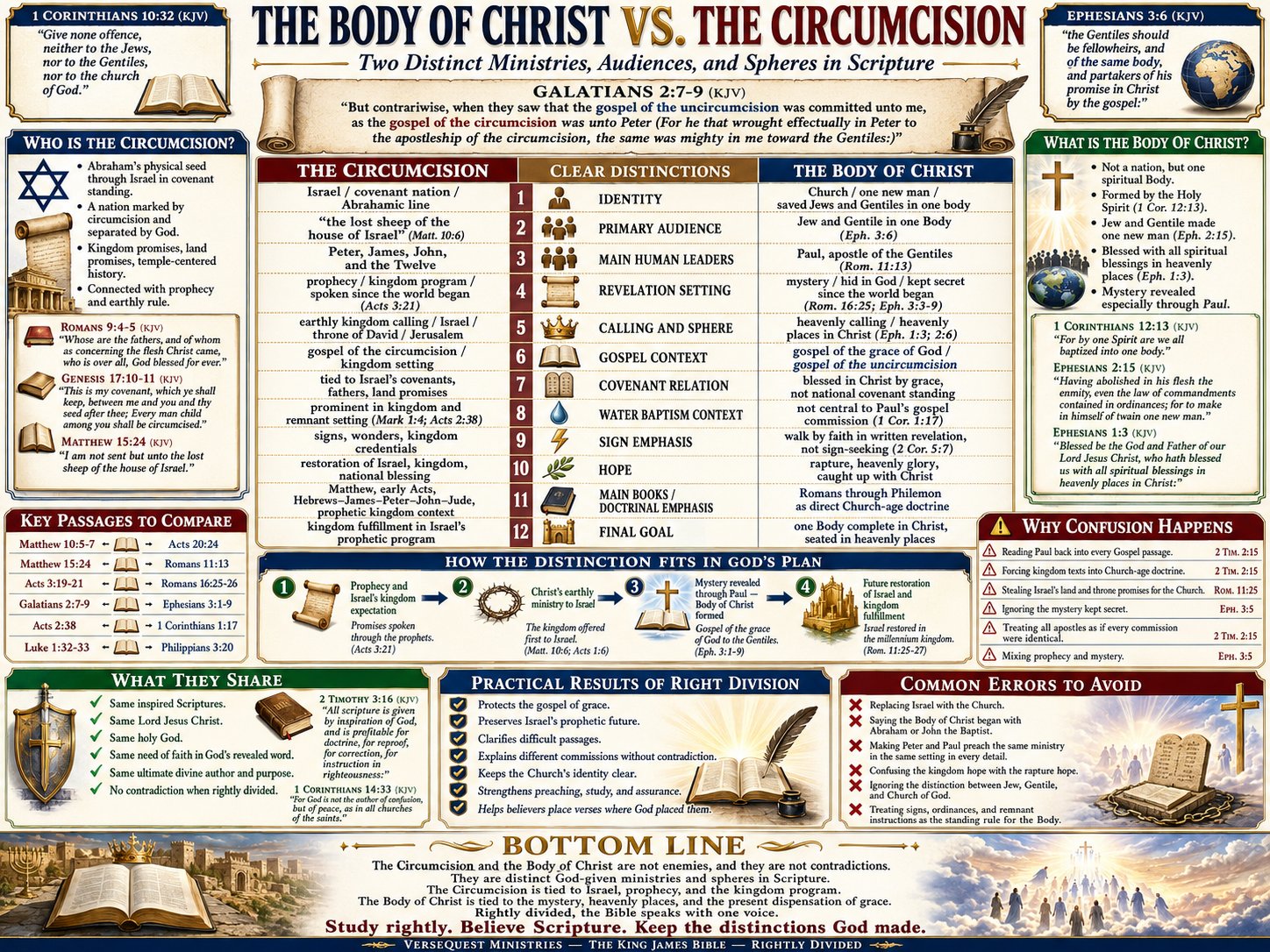
- The Body of Christ vs. the Circumcision – Two Distinct Ministries, Audiences, and Spheres in Scripture (KJV Bible Study Chart)
- Compare the Body of Christ and the circumcision with this detailed KJV chart covering Israel, Peter, Paul, prophecy, mystery, covenant promises, baptism, signs, and the Church’s heavenly hope.
- $3.99
- Add to cart
-
-
Prophecy vs Mystery
-
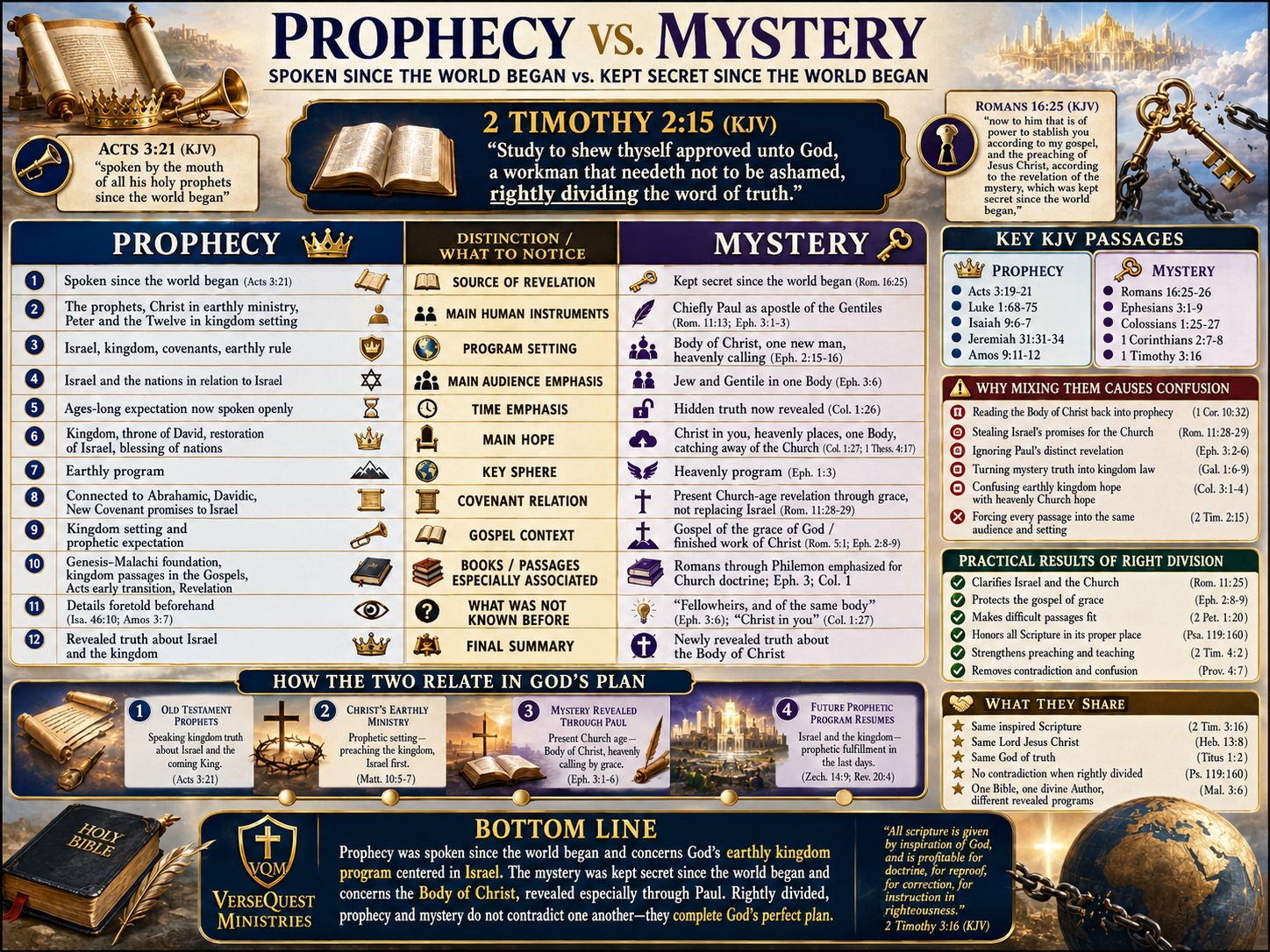
- Prophecy vs. Mystery Bible Study Chart – Spoken Since the World Began vs. Kept Secret Since the World Began (KJV)
- Compare prophecy and mystery with this detailed KJV chart explaining Israel’s earthly Kingdom program, the Body of Christ, Paul’s revelation, the heavenly calling, and the importance of right division.
- $3.99
- Add to cart
-
-
The Gospel of the Kingdom
-
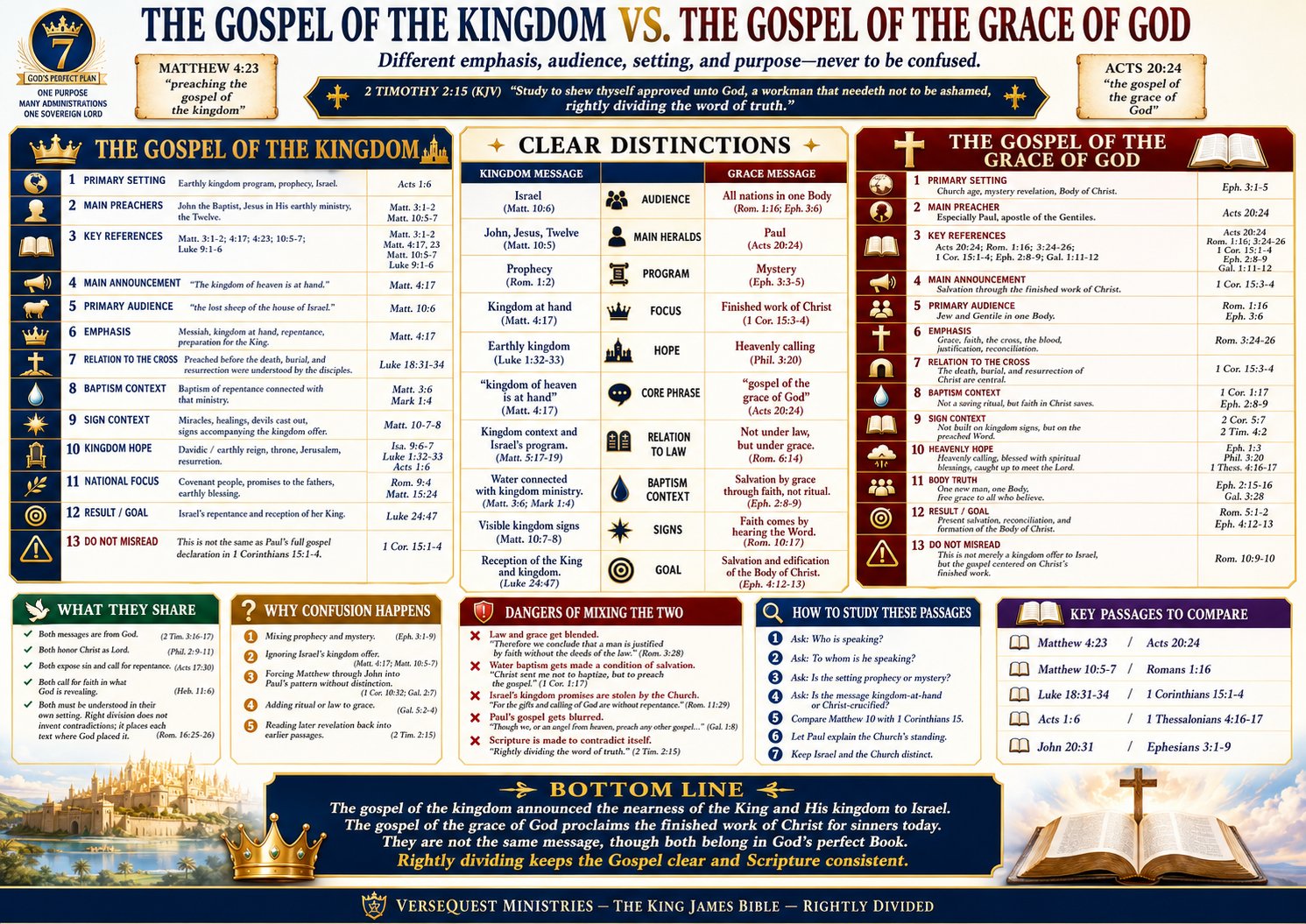
- The Gospel of the Kingdom vs. the Gospel of the Grace of God – KJV Right Division Bible Study Chart
- Compare the gospel of the kingdom and the gospel of the grace of God with this detailed KJV chart covering audience, message, prophecy, mystery, baptism, signs, salvation, and right division.
- $3.99
- Add to cart
-
-
Rightly Divided
-
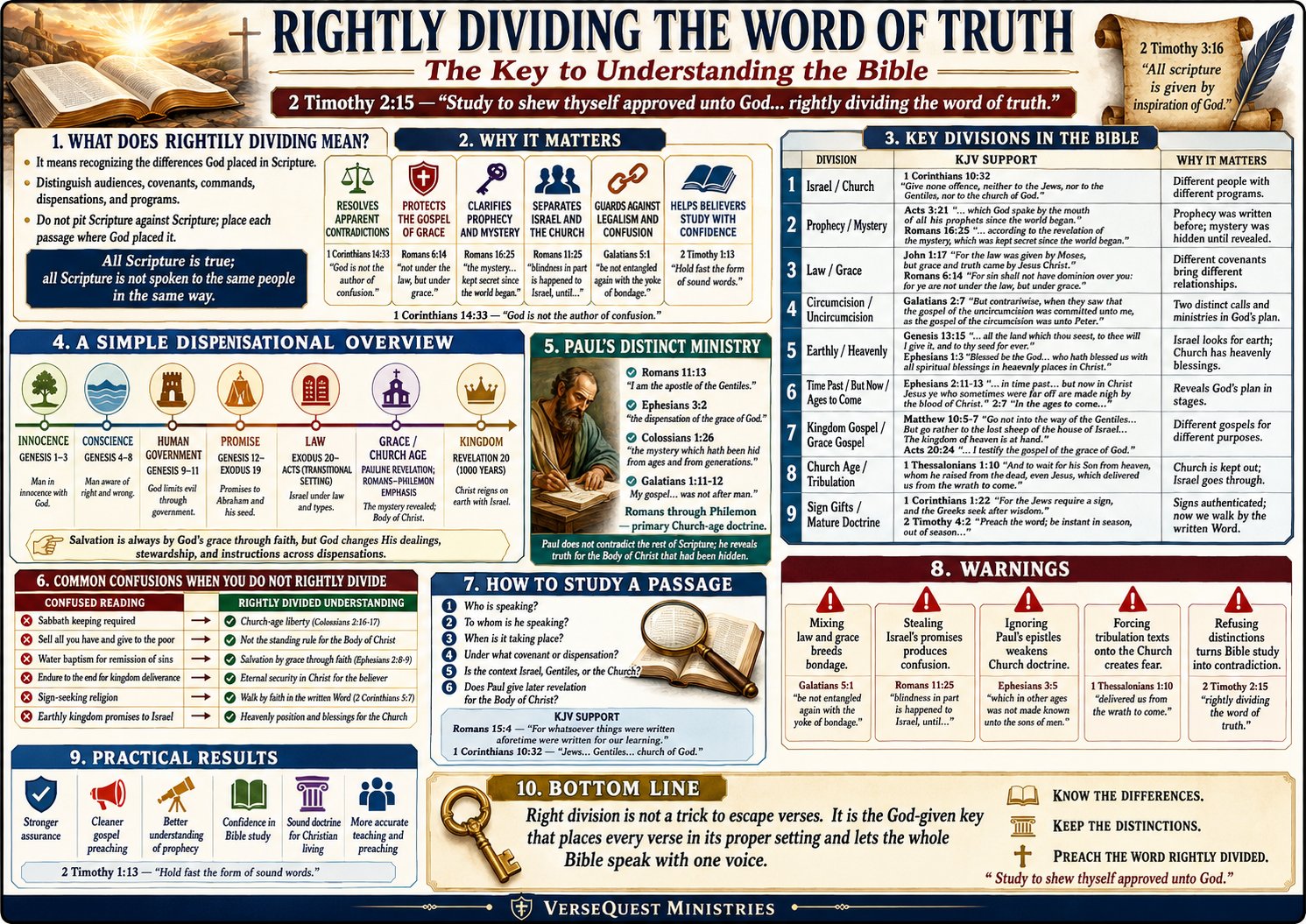
- Rightly Dividing the Word of Truth – KJV Bible Study Chart
- A premium KJV Bible study chart explaining how to rightly divide the word of truth, distinguish key biblical divisions, and study Scripture with clarity and confidence.
- $3.99
- Add to cart
-