
VerseQuest Daily — October 2026: Identity in Christ and the Daily Walk
VerseQuest Daily — October 2026 is a 67-page downloadable PDF containing thirty-one KJV devotionals on identity in Christ and the daily Christian walk. Each reading includes an assigned Scripture passage, a developed devotional, Seven Things to Learn, and a memorable Thought for the Day.
October progresses through 8 Milk, 11 Bread, 9 Meat, and 3 Strong Meat readings covering sonship, assurance, prayer, fellowship, temptation, holiness, forgiveness, contentment, heavenly position, Christian liberty, spiritual fruit, separation, suffering, and future glory. Use it during October or begin at any time as a permanent thirty-one-day discipleship study.
$6.99
Description
VerseQuest Daily — October 2026 is a 67-page downloadable and printable PDF containing thirty-one substantial KJV daily devotionals centered upon the believer’s identity in Christ and the practical Christian walk. This is Month Two of VerseQuest Daily Discipleship Level One: Foundations and Growth. September established the word of God, the gospel, assurance, and the believer’s standing in Christ. October builds upon that foundation by showing how settled spiritual identity should govern ordinary conduct.
The month begins with foundational truths concerning the new birth, adoption, eternal security, God’s faithfulness, prayer, fellowship, wisdom, and deliverance from temptation. It then develops practical instruction concerning holiness, walking by faith, redeeming time, godly speech, anger, forgiveness, humility, contentment, diligence, integrity, and disciplined thinking. The later studies advance into the believer’s heavenly identity, completeness in Christ, death to sin’s old mastery, living consecration, Christian liberty, the fruit of the Spirit, spiritual gifts, separation from the world system, spiritual opposition, suffering, inheritance, and future glory.
Every devotional begins with an assigned passage from the King James Bible. The passage is explained in its proper setting, its doctrine is established, and its truth is brought into daily Christian life. Each reading concludes with Seven Things to Learn and a memorable Thought for the Day. October contains 8 Milk readings, 11 Bread readings, 9 Meat readings, and 3 Strong Meat readings, allowing the reader to advance without abandoning the foundational truths required for a balanced spiritual diet.
This volume can be followed according to the October calendar or begun on any date as a permanent thirty-one-day discipleship course. Most readings can be completed in approximately five to ten minutes, making the PDF suitable for personal devotions, family worship, church groups, Bible studies, Sunday school preparation, and one-to-one discipleship.
VerseQuest Daily is being developed as a four-year Bible growth system containing 1,460 original daily studies. The curriculum is designed so that devotional titles, central lessons, and primary Scripture assignments are not duplicated. Each month provides another balanced portion of Milk, Bread, Meat, and Strong Meat so that readers can grow steadily through the whole counsel of God without being trapped in shallow repetition.
Identity Before Conduct — The Christian walk begins with understanding what God has already accomplished through the new birth, adoption, justification, sealing, and union with Christ. Sonship and Adoption — The believer is not a spiritual orphan attempting to earn entrance into God’s family but a child who approaches God as Father through Jesus Christ. Eternal Security — Christ gives eternal life to His sheep and preserves them in His hand, establishing assurance without excusing careless living. Prayer and Divine Peace — Anxious care is brought before God through prayer, supplication, and thanksgiving rather than being allowed to govern the mind. Christian Fellowship — Believers need encouragement, accountability, exhortation, and the strengthening influence of other faithful Christians. Deliverance From Temptation — Temptation is real, but surrender is not inevitable because God faithfully provides a way of escape. Mental Readiness and Holiness — Biblical holiness begins with a sober, prepared, and guarded mind rather than outward religious performance alone. Redeeming Time — The Christian must recognize the brevity and value of time, reject careless living, and use present opportunities wisely. Governed Speech and Anger — Words should minister grace, while anger must be dealt with before it provides the devil with an open door. Forgiveness and Tenderheartedness — God’s forgiveness in Christ becomes the pattern for removing bitterness and extending grace to others. Christlike Humility — The mind of Christ opposes vainglory, selfish ambition, rivalry, and the desire to exalt oneself over others. Learned Contentment — Contentment is not supplied by comfortable circumstances but learned through dependence upon Christ. Diligence and Integrity — Faithfulness appears in ordinary responsibilities, honest conduct, disciplined labor, and a straight walk. Heavenly Identity and Position — The believer’s life is hidden with Christ and his spiritual position is in heavenly places, even while he continues walking upon the earth. Completeness in Christ — Religious rituals, philosophies, mystical experiences, and human traditions cannot add spiritual fullness to the believer’s complete standing in Christ. Death to Sin’s Old Mastery — Identification with Christ changes the believer’s relationship to sin and provides the ground for practical victory. Consecration and Transformation — The saved person presents his body as a living sacrifice and resists conformity to the world. Grace-Governed Liberty — Christian freedom rejects both legal bondage and selfish license, turning liberty toward love and service. Fruit and Spiritual Gifts — Spiritual fruit reveals inward character, while differing gifts provide distinct opportunities for service within one Body. The Passing World System — The world’s lust, pride, spiritual prince, and rebellious course are distinguished from the people whom believers are commanded to love and reach. Suffering and Future Glory — Faithful suffering does not purchase salvation, but identification with Christ has eternal significance for inheritance, reward, and glory.
The central argument of October is that Christian conduct must grow from Christian identity. The believer does not obey in order to become God’s child, obtain eternal life, earn acceptance, or complete what is lacking in Christ. He walks faithfully because God has already given him life, sonship, security, acceptance, heavenly position, spiritual resources, and completeness through Jesus Christ.
Position and practice must be distinguished without being separated. Position describes what God has made the believer in Christ; practice describes how that believer walks from day to day. A failure in practice does not erase the finished work of Christ, but settled position must never become an excuse for sin, laziness, bitterness, worldliness, or spiritual indifference.
The month also distinguishes assurance from presumption. Eternal security rests upon Christ’s promise and preservation, not upon fluctuating feelings. However, security does not eliminate fatherly correction, accountability, consequences, loss of fellowship, or future examination of Christian service.
Christian liberty is neither lawlessness nor selfish freedom. Grace releases the believer from legal bondage so that he may serve through love. Liberty becomes carnal when it is used to satisfy the flesh, wound another believer, or avoid responsibility.
The fruit of the Spirit and spiritual gifts should not be confused. Fruit concerns the character produced through spiritual life, while gifts concern differing capacities for service within the Body. A visible gift cannot compensate for the absence of love, humility, self-control, faithfulness, or holiness.
Separation from the world does not mean hatred of lost people or abandonment of gospel witness. The world in 1 John describes an organized system of lust, pride, rebellion, and opposition to God. Christians are commanded to reach people while refusing the course and values of the system governing them.
Present suffering must be interpreted in light of eternity. Not every hardship qualifies as suffering with Christ, and suffering never earns salvation. Nevertheless, faithfulness to a rejected Christ may bring opposition, and such suffering carries eternal significance when viewed beside future glory.
Important questions for continued study include: How does sonship differ from being merely one of God’s creatures? What is the relationship between standing and state? How does prayer guard the heart and mind? What practical doors does unresolved anger open? How does grace govern liberty? How do spiritual fruit and gifts differ? What does it mean to be complete in Christ? How should the believer distinguish the people in the world from the world system? How does future glory change the interpretation of present suffering?
For personal Bible study, readers can complete one devotional each day, look up the assigned passage in the King James Bible, review the Seven Things to Learn, and carry the Thought for the Day into prayer and practical obedience. The progression allows newer believers to establish foundational truths while introducing mature readers to deeper doctrinal distinctions.
Pastors, preachers, and Sunday school teachers can use individual readings as the foundation for short messages, class discussions, discipleship lessons, or topical sermon development. Each title, passage, doctrinal emphasis, seven-point summary, and concluding thought provides a ready framework that can be expanded through additional KJV cross-references.
Church groups and small groups can complete the volume as a thirty-one-day shared reading plan. Members may read the devotional privately and then meet to discuss identity in Christ, prayer, fellowship, holiness, forgiveness, Christian liberty, spiritual gifts, separation, and suffering.
Families can use the readings during morning or evening family worship. Parents may read the primary passage aloud, summarize the devotional for younger children, discuss the seven lessons, and ask each family member how the Thought for the Day applies to current responsibilities.
For one-to-one discipleship, the volume provides a structured path from assurance and sonship into practical Christian living. A teacher can work through one or more readings each week, identify misunderstandings, assign supporting passages, and encourage consistent spiritual habits.
A King James Bible for reading every assigned passage in its complete chapter and immediate context.
A reliable KJV concordance for tracing words such as adoption, assurance, fellowship, holiness, contentment, liberty, fruit, gifts, world, suffering, and glory.
A Bible dictionary for examining historical terms, customs, geography, Roman adoption, first-century servanthood, and the background of the Pauline epistles.
A cross-reference Bible or Treasury of Scripture Knowledge for comparing related passages without leaving the wording of the King James Bible.
A dispensational Bible-study resource explaining the distinctions between Israel, the Church, law, grace, salvation, discipleship, standing, state, sonship, fellowship, inheritance, and reward.
A study of Romans 6-8 for deeper examination of identification with Christ, the conflict with sin, adoption, suffering, inheritance, and future glory.
A study of Ephesians and Colossians for the believer’s heavenly position, completeness in Christ, spiritual walk, speech, forgiveness, service, and separation.
A study of Galatians 5 for the relationship between Christian liberty, the flesh, walking in the Spirit, and spiritual fruit.
VerseQuest Daily — August 2026 Free Sample Edition for an additional thirty-one-day collection of original KJV devotionals outside the official Level One curriculum.
VerseQuest Daily — September 2026 for Month One of Discipleship Level One and the foundational studies preceding October.
Related products
-
Bitterness
-
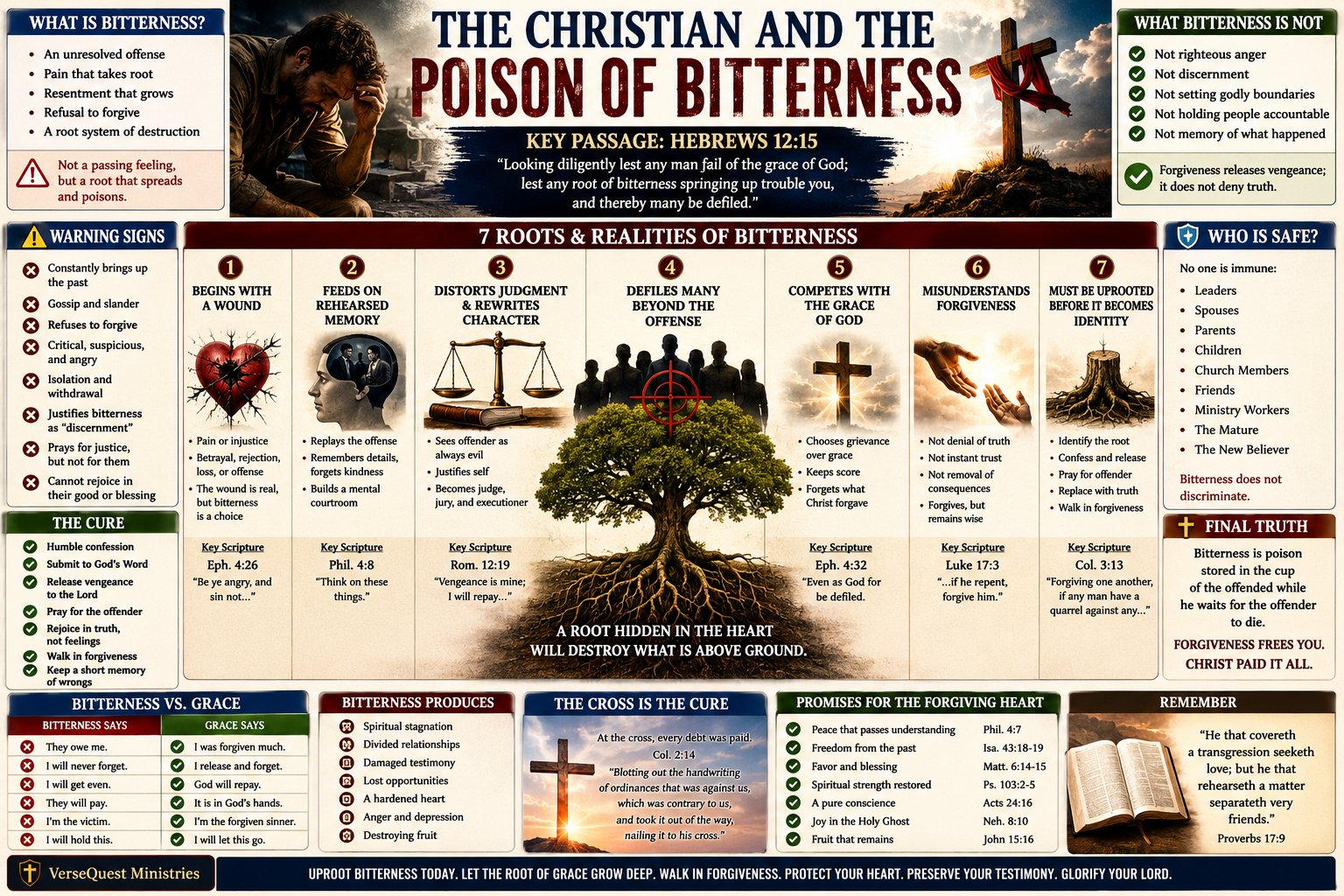
- The Christian and the Poison of Bitterness Bible Study Chart – Forgiveness, Grace, and Healing the Heart (KJV)
- Expose and uproot bitterness with this detailed KJV Bible study chart covering unresolved offenses, warning signs, forgiveness, grace, wise boundaries, the cross, and healing for the Christian heart.
- $3.99
- Add to cart
-
-
Uncategorized
-
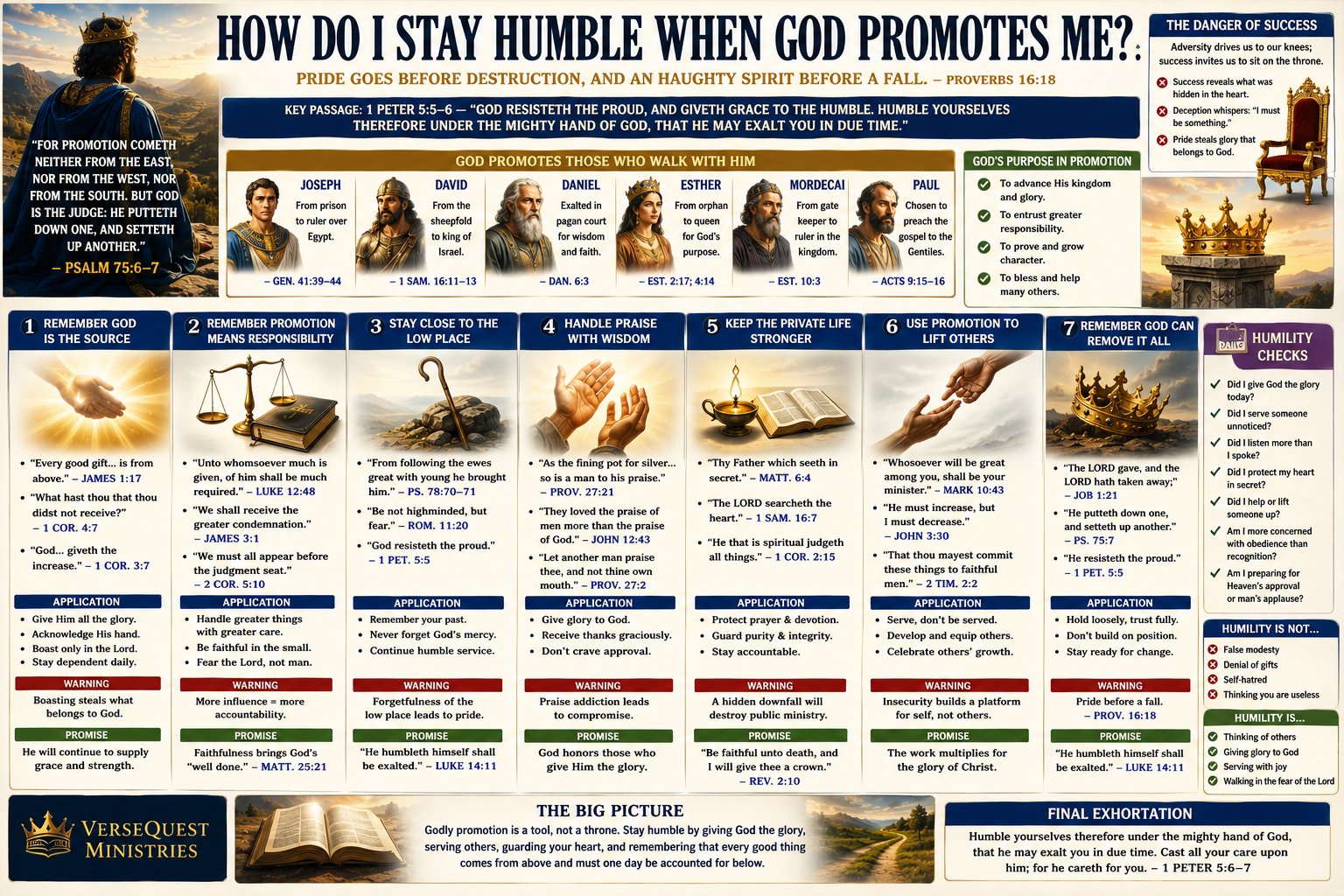
- How to Stay Humble When God Promotes You – Biblical Humility, Success, and Faithful Stewardship (KJV Bible Study Chart)
- Learn how to remain humble when God increases your influence with this detailed KJV Bible study chart covering pride, praise, responsibility, private devotion, servant leadership, and faithful stewardship.
- $3.99
- Add to cart
-
-
Biblical Courage
-
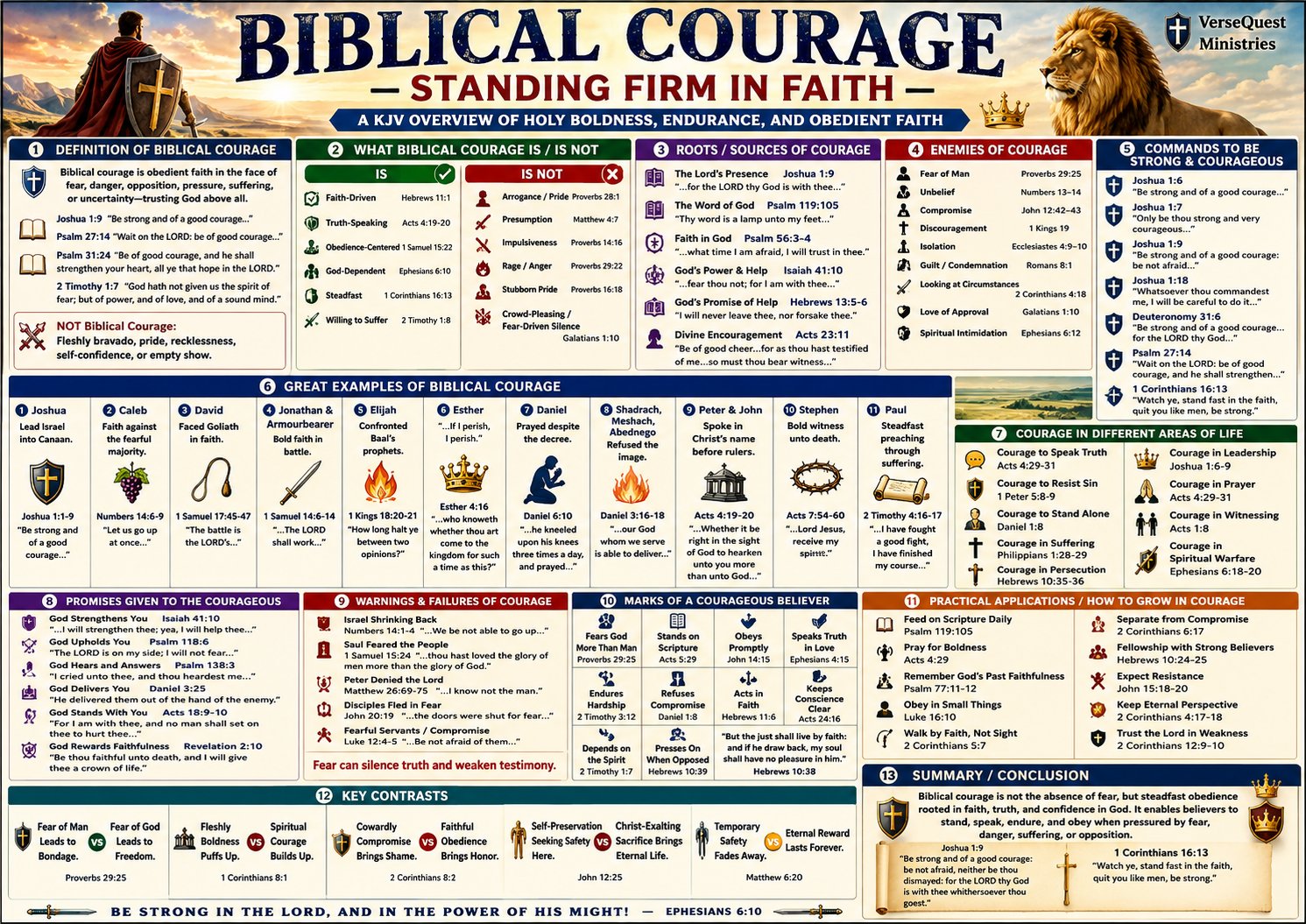
- Biblical Courage Bible Study Chart – Standing Firm in Faith, Holy Boldness, and Obedient Endurance (KJV)
- Stand firm in faith with this detailed KJV Bible study chart covering biblical courage, holy boldness, fear, endurance, obedient faith, spiritual warfare, persecution, and courageous Bible examples.
- $3.99
- Add to cart
-
-
Spiritual Growth
-
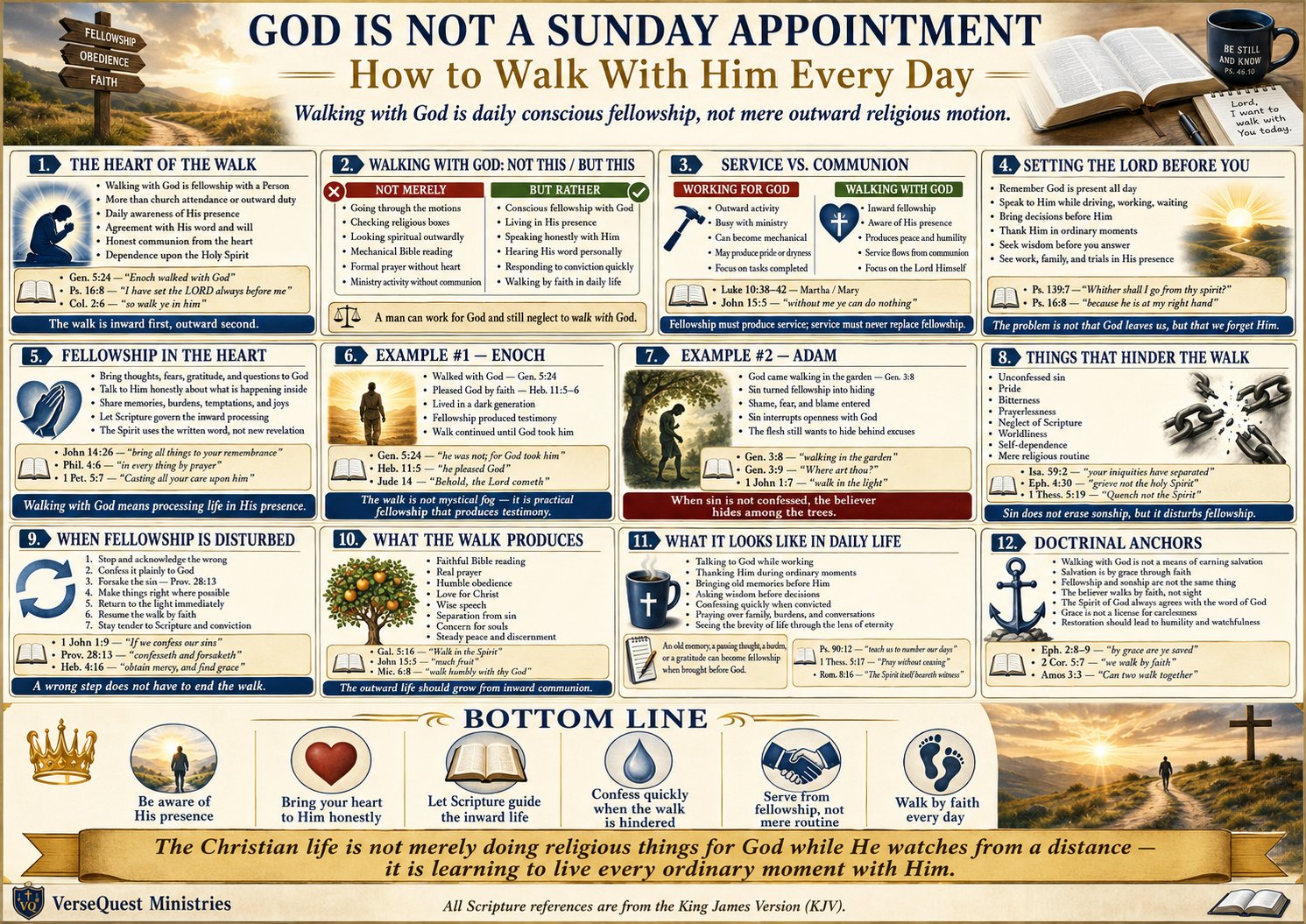
- God Is Not a Sunday Appointment – Walking With God Bible Study Chart
- Discover what it truly means to walk with God every day—not merely performing religious duties, but living in conscious fellowship with Him. This detailed KJV Bible study chart explains the…
- $3.99
- Add to cart
-
-
When Fear of God Vanishes
-
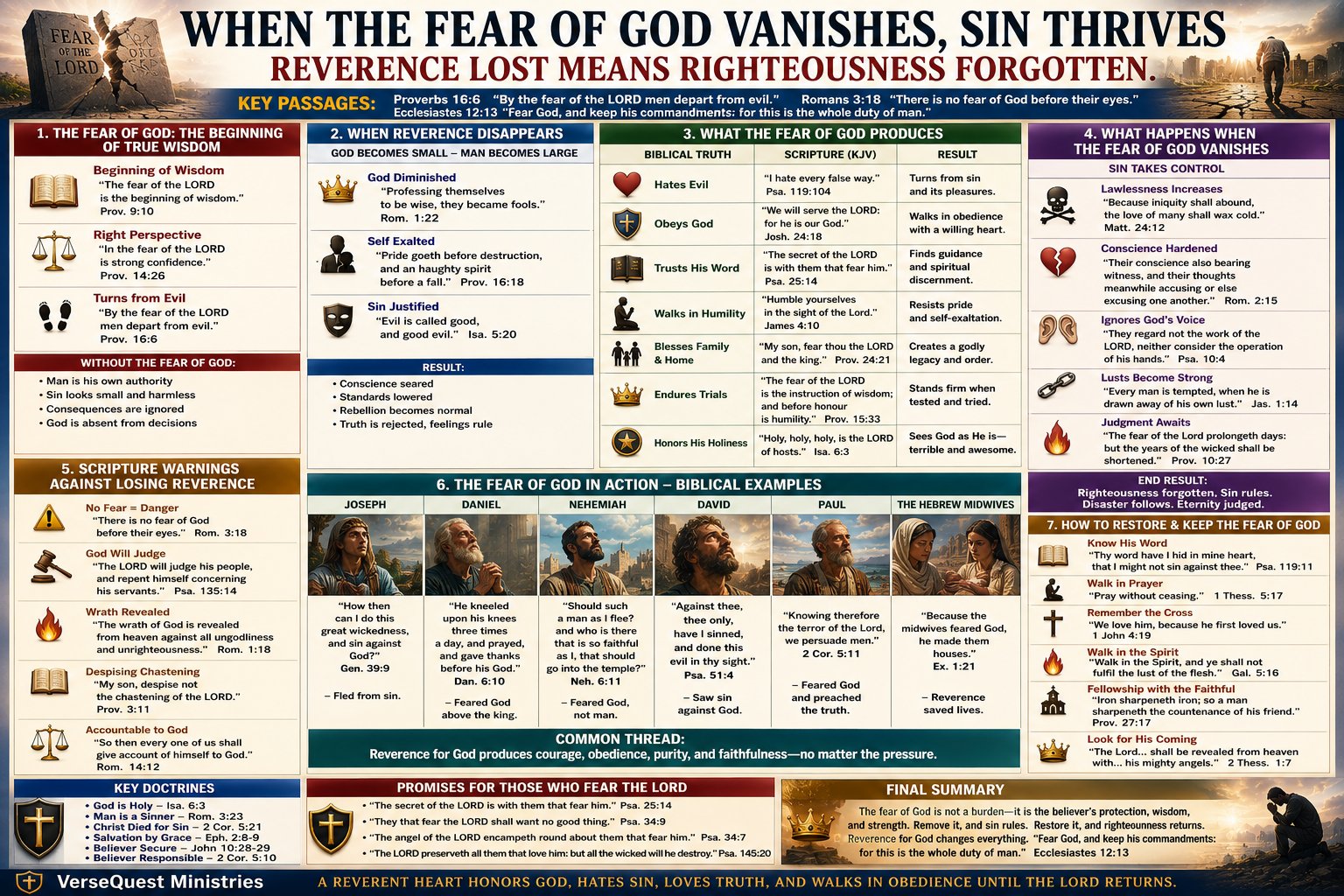
- When the Fear of God Vanishes, Sin Thrives – Reverence, Wisdom, Holiness, and Obedience (KJV Bible Study Chart)
- Understand the fear of God with this detailed KJV Bible study chart covering reverence, wisdom, holiness, obedience, hardened conscience, divine judgment, biblical examples, and restoring godly fear.
- $3.99
- Add to cart
-