
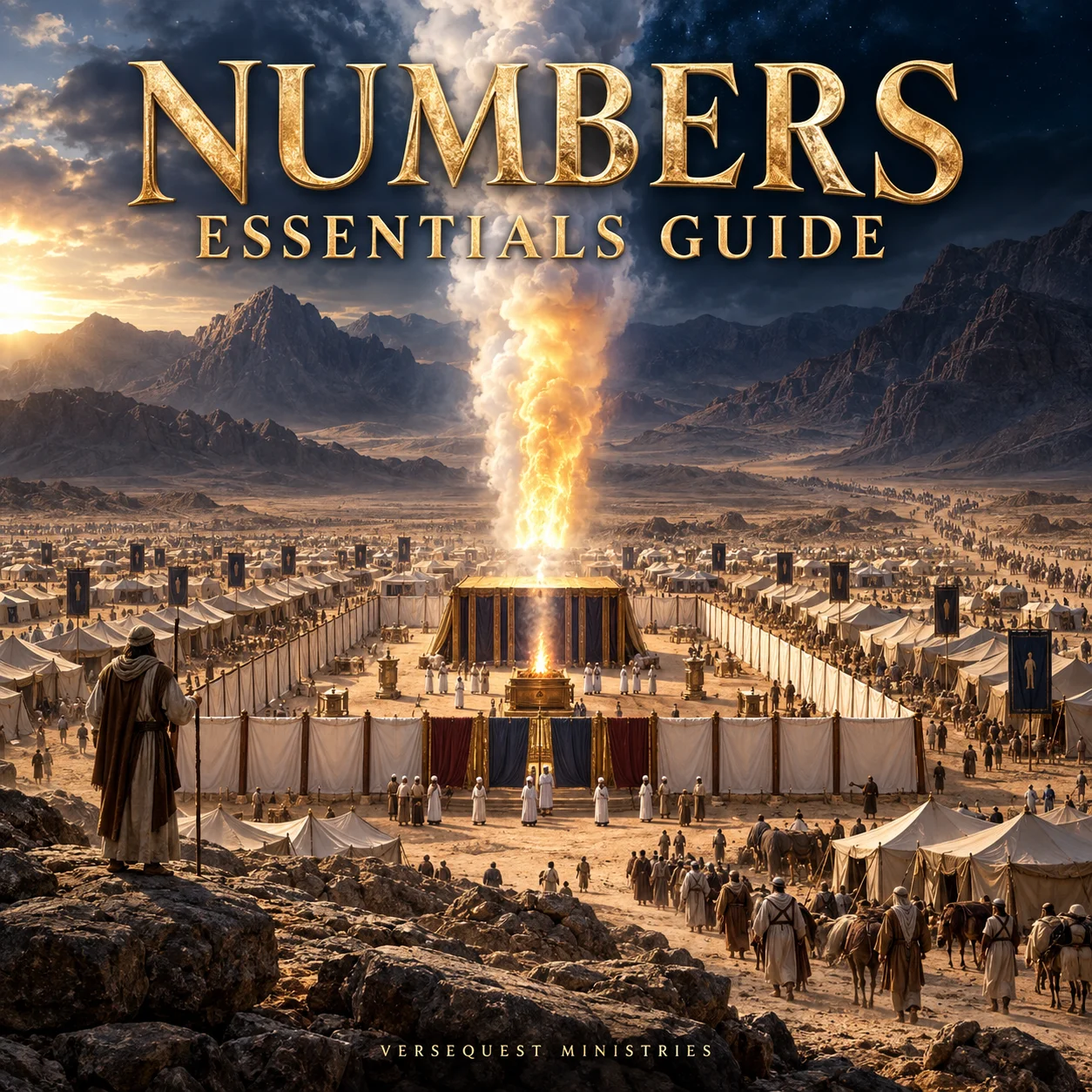
Numbers Essentials Guide
The Numbers Essentials Guide is an 80-page downloadable and printable KJV study that makes Israel’s wilderness journey clear, organized, and easy to follow. It explains the two censuses, the arrangement around the Tabernacle, the work of the Levites, Kadesh-barnea, Korah’s rebellion, the brazen serpent, Balaam, the second generation, and Israel’s preparation to inherit Canaan.
Every featured Bible passage is printed in full from the King James Bible. Twelve teaching units, chapter maps, timelines, key terms, comparison charts, thought-provoking notes, rightly divided distinctions, and memorable takeaways give beginners a substantial foundation without requiring an advanced commentary.
Ideal for new believers, personal study, discipleship, Sunday school, family study, and teaching preparation. 80-page downloadable PDF — $14.99.
$14.99
Description
The Numbers Essentials Guide is an 80-page, downloadable and printable KJV Bible study designed to help beginners understand one of the most frequently overlooked books of the Old Testament. Numbers is far more than a record of censuses, names, and wilderness camps. It is the inspired history of a redeemed nation learning that deliverance from Egypt must be followed by obedience, faith, order, service, and dependence upon God.
Beginning at Mount Sinai and ending on the plains of Moab, this guide follows Israel from preparation to failure and from judgment to renewed hope. Readers will understand why Israel was numbered, how the tribes camped around the Tabernacle, why the Levites received distinct responsibilities, and how the cloud and fire governed the nation’s movement. The guide also explains the significance of the silver trumpets, the Nazarite vow, the priestly blessing, the Passover in the wilderness, and the importance of God’s presence remaining at the center of the camp.
The decisive crisis at Kadesh-barnea receives careful attention. Readers will follow the twelve spies into Canaan, compare the evil report of the ten with the faith of Joshua and Caleb, and understand why Israel’s refusal to enter the land resulted in forty years of wilderness wandering. The guide then examines murmuring, lust, Miriam’s challenge, Korah’s rebellion, Aaron’s budding rod, the red heifer, Moses striking the rock, and the death of the unbelieving generation.
Later sections explain the brazen serpent, Israel’s victories over Sihon and Og, Balaam’s failed attempts to curse Israel, the doctrine of Balaam, the sin at Baal-peor, and the zeal of Phinehas. Readers will also see how God numbered the new generation, appointed Joshua, protected inheritance, established cities of refuge, and prepared Israel to enter the land promised to Abraham, Isaac, and Jacob.
Every featured Scripture passage is printed in full from the Authorized King James Version, allowing readers to study without continually stopping to locate the verses elsewhere. Twelve teaching units, a complete chapter map, a wilderness timeline, essential people and terms, comparison charts, plain explanations, thought-provoking notes, memorable takeaways, and rightly divided applications make the material easy to follow without reducing it to a thin outline.
The guide carefully preserves the biblical distinction between Israel and the Church. Israel’s national promises, Mosaic laws, priesthood, inheritance, and historical judgments are explained in their proper setting before legitimate spiritual applications are made. New Testament passages demonstrate how Israel’s wilderness failures were written for our admonition without placing the Church under Israel’s covenant.
Written for newly saved believers, beginning Bible students, busy readers, families, teachers, and anyone seeking a concise foundation, the Numbers Essentials Guide provides the essential structure needed before advancing into chapter-by-chapter or verse-by-verse study. This 80-page downloadable and printable PDF is available for $14.99.
Redemption followed by responsibility: Israel had been delivered from Egypt before being numbered, organized, and commanded to serve. God’s presence at the center: The Tabernacle occupied the central position in the camp, showing that Israel’s national life was ordered around the LORD. Two censuses and two generations: The first census numbered the generation prepared to march; the second numbered the generation prepared to inherit. Divine order: Tribes, families, leaders, priests, Levites, camps, marches, offerings, and inheritances were governed by God’s command. The holiness of sacred service: The Levites received distinct responsibilities, and unauthorized approach to holy things brought judgment. Divine guidance: The pillar of cloud and fire determined when Israel moved, where the nation rested, and how long it remained. Murmuring and unbelief: Repeated complaints revealed distrust of God’s provision, promises, leadership, and care. The crisis at Kadesh-barnea: Israel stood at the border of promise but turned back because the people believed the evil report instead of God’s word. Faithful minorities: Joshua and Caleb demonstrate that biblical faith may stand against the fearful judgment of the majority. Intercession and mediation: Moses repeatedly stood between a rebellious nation and deserved judgment. Rebellion against appointed authority: Miriam, Aaron, Korah, Dathan, Abiram, and others reveal different forms of resistance to God’s order. Judgment within the wilderness: Plagues, serpents, leprosy, exclusion, and death show that redemption did not make rebellion harmless. Christ pictured in Numbers: The smitten rock, the brazen serpent, and the high priest provide scripturally established connections to Christ. Balaam and religious compromise: What Balaam could not accomplish through cursing, he sought to accomplish through corruption. Leadership succession: Moses’ ministry approaches its conclusion while Joshua is publicly appointed to lead the next generation. Inheritance and preparation: The closing chapters move from wilderness wandering to boundaries, tribal portions, cities, vows, offerings, and readiness to enter Canaan. God’s faithfulness: Human failure never cancels the promises God has sworn or prevents Him from accomplishing His purpose. Rightly divided application: Israel remains Israel, the Church remains the Church, and historical commands are distinguished from spiritual admonitions.
Central Argument
Numbers demonstrates that God redeemed Israel, placed His presence at the center of the nation, and faithfully led the people toward Canaan. The first generation nevertheless refused to believe His promise and died in the wilderness, while God preserved His covenant and prepared the next generation to inherit the land.
Major Observations
- Numbers begins with Israel ordered at Sinai and ends with Israel ordered on the plains of Moab.
- The two censuses provide the book’s basic frame: the generation leaving Egypt and the generation preparing to enter Canaan.
- The book moves through three principal stages: preparation at Sinai, failure in the wilderness, and preparation in Moab.
- Kadesh-barnea is the major turning point. The wilderness wandering was a judicial sentence resulting from unbelief, not an accidental delay caused by poor navigation.
- The Tabernacle’s central location taught Israel that God’s presence, not military power or human leadership, was the center of national life.
- Joshua and Caleb prove that faith is determined by agreement with God’s word rather than agreement with the majority.
- Korah’s rebellion was more than a personality dispute. It challenged the order, leadership, and priesthood established by God.
- The brazen serpent presented God’s remedy to people who had already been bitten and were dying. Christ applies this event directly to His own lifting up.
- Balaam could not reverse God’s blessing by speaking a curse, but his corrupt counsel helped lead Israel into idolatry and fornication.
- The death of the first generation did not end God’s purpose. A second generation was numbered, instructed, and prepared to inherit.
Important Distinctions
- Israel is a literal covenant nation; the Church does not replace Israel.
- The Mosaic priesthood and Levitical service must not be transferred directly to New Testament church offices.
- Israel’s national warfare and civil judgments do not authorize private religious warfare by Christians.
- Historical interpretation must come before spiritual application.
- Temporal judgment and loss must not be carelessly confused with the loss of salvation.
- The wilderness experiences warn Christians without placing Christians under the Mosaic covenant.
Doctrinal Conclusions
- Redemption precedes service, but redemption does not make obedience unnecessary.
- Religious privilege cannot substitute for personal faith.
- Unbelief can stand within sight of God’s promise and still refuse to enter.
- Murmuring is not harmless speech; it reveals distrust of God’s character and provision.
- God-established authority must not be challenged through jealousy, ambition, or self-appointment.
- Compromise may accomplish what open opposition could not.
- Human failure does not overturn the word, covenant, or faithfulness of God.
Key Facts to Remember
- Numbers contains 36 chapters.
- The book begins in the wilderness of Sinai and ends on the plains of Moab near Jericho.
- The first military census numbered 603,550 men, excluding the Levites.
- The second military census numbered 601,730 men in the new generation.
- Ten spies brought an evil report; Joshua and Caleb stood by faith.
- Israel’s forty years in the wilderness corresponded to the forty days in which the spies searched the land.
- The first generation died in the wilderness except for Joshua and Caleb.
- Moses was denied entrance into Canaan after striking the rock at Meribah.
- Aaron died on Mount Hor, and Eleazar succeeded him as high priest.
- Joshua was appointed publicly as Moses’ successor.
- Six cities of refuge were appointed, with three on each side of Jordan.
Memorable Teaching Points
- Numbers is not mainly about counting people; it is about whether a redeemed people will trust the God who redeemed them.
- A large number can measure strength, but it cannot measure faith.
- The distance to Canaan was not Israel’s greatest problem; the unbelief in their hearts was.
- The wilderness did not expose weakness in God. It exposed unbelief in Israel.
- Faith does not deny the giants; it measures the giants against the promise of God.
- Balaam’s mouth could not curse Israel, but his counsel helped corrupt Israel.
- Numbers begins with a generation counted for war and ends with a new generation ordered for inheritance.
Subjects for Further Study
- How do the tribal camp arrangements emphasize the centrality of the Tabernacle?
- What similarities and differences appear between the two censuses?
- How does the New Testament interpret the wilderness failures?
- What does Scripture reveal about the doctrine and way of Balaam?
- How does Christ interpret the brazen serpent in John 3?
- What leadership lessons can be learned by comparing Moses, Korah, Balaam, Phinehas, and Joshua?
- How do the closing inheritance laws demonstrate that God still intended Israel to possess the promised land?
Personal Bible study: Use the guide before or alongside a complete reading of Numbers. Its timeline, chapter maps, key terms, full Scripture selections, and concise explanations will help readers maintain the flow of the wilderness narrative.
New-believer discipleship: The guide introduces foundational lessons concerning faith, obedience, leadership, murmuring, compromise, judgment, and God’s faithfulness without requiring the student to begin with an advanced commentary.
Sunday school and Bible classes: Teachers can organize lessons around the twelve units, using the Scripture boxes, teaching points, comparison charts, thought-provoking questions, and memorable summaries as class material.
Sermon preparation: Pastors and preachers can use the guide to identify the principal events, doctrinal distinctions, New Testament connections, and practical warnings found throughout Numbers.
Small-group study: A group can read the printed passage, discuss the explanatory material, answer the thought-provoking questions, and summarize the lesson together.
Family Bible study: Parents can use the chapter maps and plain explanations to introduce children and teenagers to the wilderness journey without losing the biblical structure of the book.
Ministry training: The sections on Moses, Aaron, the Levites, Korah, Joshua, Balaam, and Phinehas provide valuable lessons concerning calling, responsibility, authority, intercession, compromise, and succession.
Topical teaching: Individual portions can support focused studies on the Tabernacle, the priesthood, the spies, the brazen serpent, Balaam, murmuring, cities of refuge, biblical leadership, or Israel’s inheritance.
The Authorized King James Bible as the final authority for reading and comparing every passage.
A complete reading of Numbers 1–36 using the guide’s chapter maps as a reference.
Exodus Essentials Guide for the account of Israel’s redemption, the giving of the law, and the construction of the Tabernacle.
Leviticus Essentials Guide for the sacrifices, priesthood, ceremonial cleansing, appointed feasts, and holiness laws that provide essential background for Numbers.
Genesis Essentials Guide for the Abrahamic promises behind Israel’s identity and inheritance.
Dispensational Truth Essentials Guide for help distinguishing Israel’s covenant position from the doctrine and calling of the Church.
A reliable KJV concordance for tracing words such as wilderness, congregation, murmur, inheritance, tabernacle, priest, plague, cloud, and journey.
A Bible dictionary for studying the people, locations, materials, sacrifices, and cultural setting of the wilderness period.
A cross-reference Bible or Treasury of Scripture Knowledge for following the New Testament use of Israel’s wilderness history.
Maps showing Mount Sinai, Kadesh-barnea, Edom, Moab, the route east of Jordan, and the plains opposite Jericho.
A wilderness timeline comparing the first census, Kadesh rebellion, wandering period, death of the first generation, second census, and preparation to enter Canaan.
A Tabernacle diagram showing the sanctuary, court, furnishings, Levitical responsibilities, and arrangement of Israel’s camp.
Related products
-
Bible Prophecy Charts
-
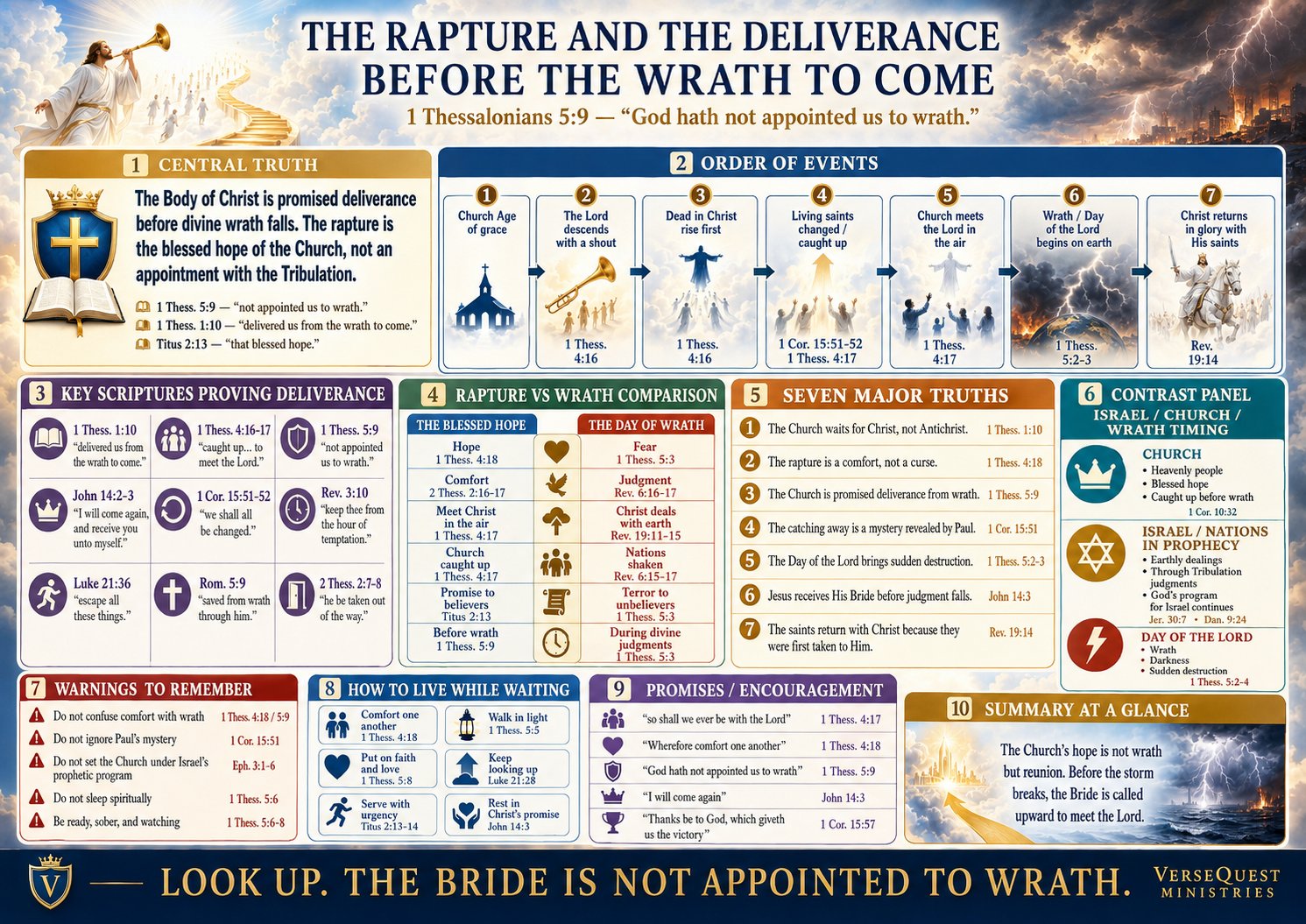
- The Rapture and the Deliverance Before the Wrath to Come – Printable Bible Study Chart
- Printable KJV Bible study chart on The Rapture and the Deliverance Before the Wrath to Come, showing from 1 Thessalonians 5:9 that the Church is not appointed to wrath. This…
- $4.99
- Add to cart
-
-
Revelation
-
-71%
- Moses and Elijah: The Two Witnesses Made Plain
- Moses and Elijah: The Two Witnesses Made Plain is a 636-page premium VerseQuest PDF study proving from Scripture that the Two Witnesses of Revelation 11 are Moses and Elijah. This…
- Original price was: $34.99.$9.99Current price is: $9.99.
- Add to cart
-
-71%
-
Book of Revelation
-
- Revelation a Little Bit Deeper – 100 KJV Studies
- Go beyond the familiar outlines of Revelation with 100 detailed KJV Bible studies examining passages, symbols, judgments, heavenly structures, prophetic distinctions, and doctrinal truths often overlooked or only briefly discussed.…
- $29.99
- Add to cart
-
-
Giants in the Bible
-
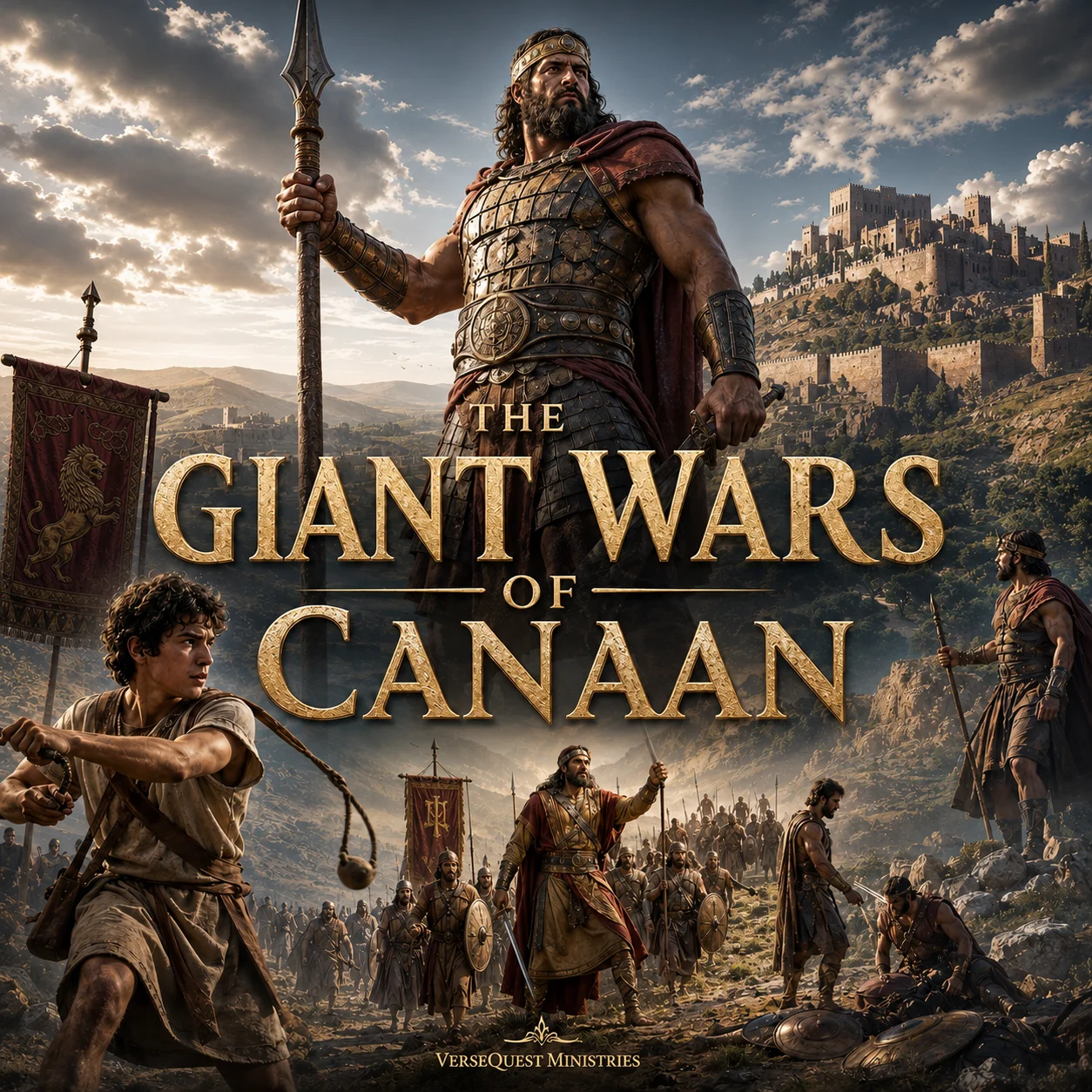
- The Giant Wars of Canaan — 50-Study KJV Bible Book PDF | 381 Pages
- The Giant Wars of Canaan is a 381-page, 50-study KJV Bible examination tracing the conflict from the Rephaim and Anakim to Og, Joshua, Caleb, Goliath, and David’s mighty men. This…
- $9.99
- Add to cart
-
-
Rome Bible study
-
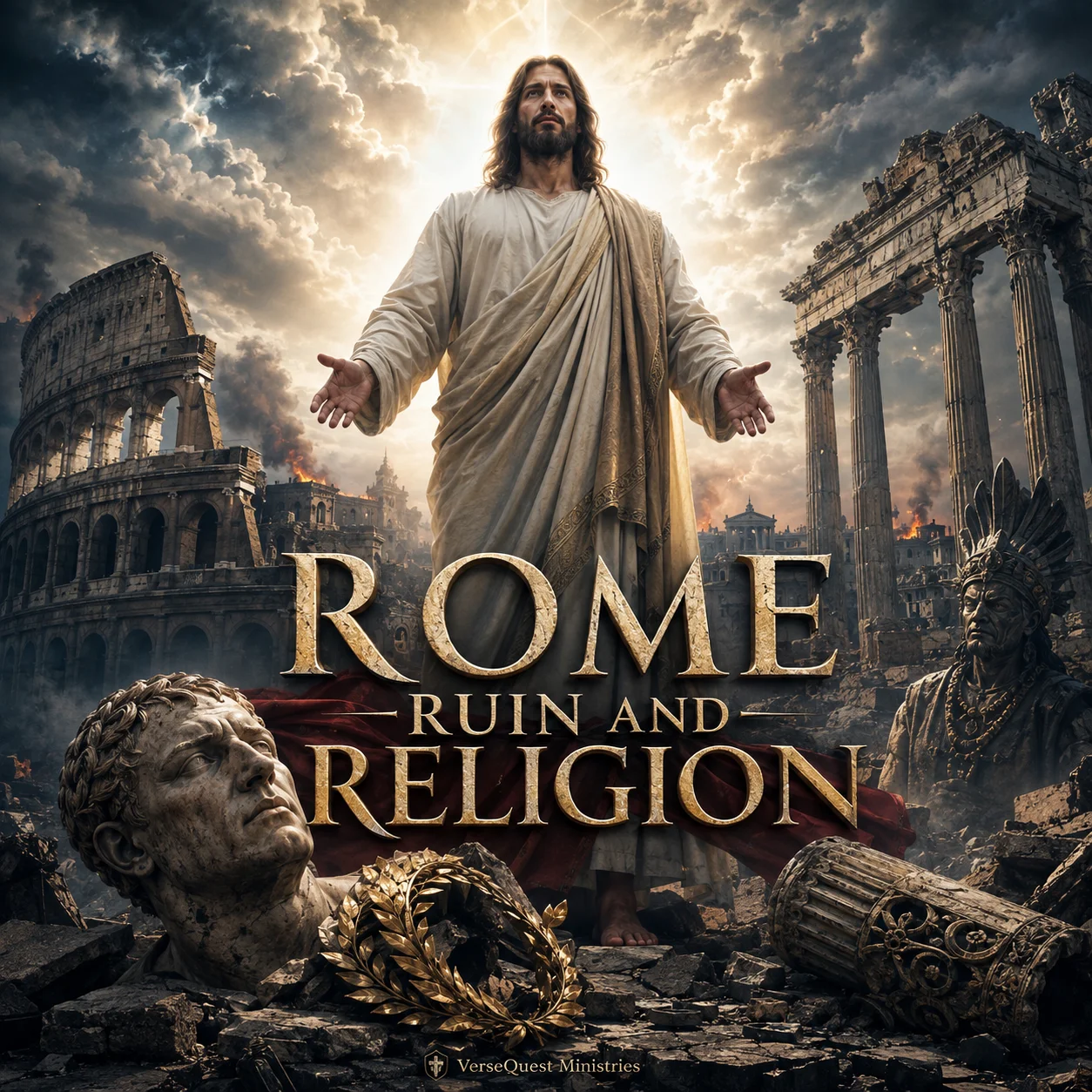
- Rome Ruin And Religion PDF Book – 379 Page KJV Bible Study
- Rome Ruin And Religion is a 379-page VerseQuest PDF book exposing pagan Rome, failed gods, Catholic error, priestcraft, sacred tradition, sacramental salvation, and the collapse of man’s cities under the…
- $9.99
- Add to cart
-