
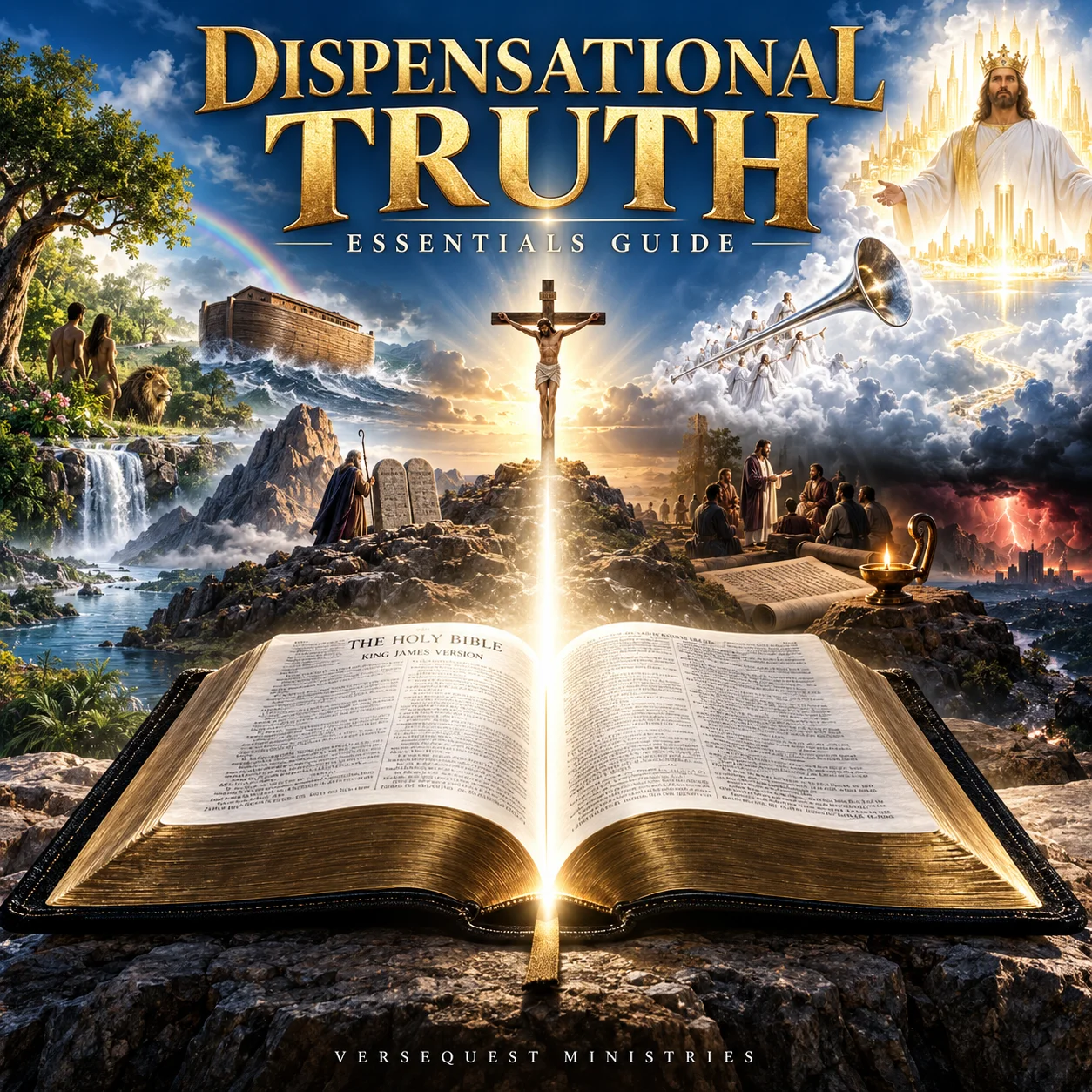
Dispensational Truth – Essentials Guide: How to Rightly Divide the Word of Truth and Understand God’s Plan Through the Ages
Dispensational Truth – Essentials Guide is a 59-page downloadable and printable KJV Bible-study PDF created to make right division understandable for beginners. It explains dispensations, covenants, Israel and the Church, Acts as a transitional book, law and grace, salvation, the Rapture, the Tribulation, Christ’s Millennial Kingdom, and eternity.
Major King James Bible passages are printed in full, allowing readers to see the controlling Scriptures without continually stopping to look them up. Clear explanations, comparison tables, summary boxes, difficult-passage guides, twenty doctrinal checkpoints, a Scripture index, and a five-minute teaching outline make this a practical introduction and continuing reference.
$14.99
Description
Dispensational Truth – Essentials Guide is a 59-page downloadable and printable PDF designed to give beginning Bible students a clear, dependable introduction to rightly dividing the word of truth. It explains why passages that appear contradictory often belong to different people, covenants, time periods, or divine arrangements. Rather than avoiding difficult verses, this guide teaches readers how to place every passage where God placed it.
The study begins with the command of 2 Timothy 2:15 and develops five essential questions for interpreting Scripture: Who is speaking? To whom is He speaking? When was it spoken? What arrangement was in force? What is actually at stake? Readers are also introduced to important terms such as dispensation, right division, covenant, testament, stewardship, progressive revelation, mystery, kingdom, Jew, Gentile, and Church.
A complete beginner’s map follows God’s dealings from Eden through conscience, human government, Abrahamic promise, the Mosaic Law, the New Testament Church, the Tribulation, the Millennial Kingdom, and eternity. Each setting is explained according to its revelation, responsibility, human failure, judgment, and place within God’s larger program.
Special attention is given to the biblical distinction between Israel and the Church. The guide explains Israel’s national covenants, land, throne, and kingdom promises while showing that the Church is one spiritual Body composed of saved Jews and Gentiles in Christ. It firmly rejects replacement theology and demonstrates why Israel’s present blindness does not cancel God’s future restoration of the nation.
The guide also explains why Acts must be understood as a transitional book. It traces the movement from the Jerusalem-centered ministry of the Twelve to the opening of the door to the Gentiles and the full revelation of present Church doctrine through Paul’s epistles. The different orders found in Acts 2, Acts 8, Acts 10, and Acts 19 are carefully organized so that readers do not turn transitional events into competing salvation plans for today.
Law and grace, the different gospel settings, salvation before and after Calvary, eternal security, Pauline revelation, and the dangers of hyper-dispensationalism are examined in straightforward language. The prophetic section distinguishes the pre-Tribulation Rapture from the Second Advent and explains the Tribulation, the restoration of Israel, Christ’s literal thousand-year reign, the Great White Throne Judgment, and the eternal state.
Major King James Bible passages are printed in full throughout the guide. Readers do not have to stop every few paragraphs to locate the controlling verses. Comparison tables, summary boxes, difficult-passage guides, twenty doctrinal checkpoints, a Scripture index, a one-page summary, and a five-minute teaching outline make the material easy to study, review, remember, and teach.
This guide is especially suitable for readers who are new to dispensational truth, those who have struggled with larger theological works, or anyone seeking a fast-moving introduction before beginning deeper study. It can be used by individual Bible students, pastors, preachers, Sunday school teachers, families, discipleship leaders, and Bible-study groups.
The Bible remains the final authority throughout the study. Charts and teachers can help identify the divisions, but neither is permitted to overrule the words of Scripture.
The command to study and rightly divide the word of truth The difference between interpretation, doctrine, and personal application God’s unchanging character and changing administrations The meaning of a biblical dispensation Stewardship, responsibility, revelation, failure, and judgment Progressive revelation throughout Scripture The distinction between an age, dispensation, covenant, and testament The three biblical peoples: Jew, Gentile, and Church Israel’s national identity and unconditional promises The Church as the spiritual Body of Christ The rejection of replacement theology Eden, conscience, human government, promise, and law The finished redemptive work of Calvary Acts as a transitional book The developing order of events in Acts 2, 8, 10, and 19 Paul’s stewardship and revelation of Church doctrine The difference between Israel’s kingdom message and the present gospel Salvation by grace through faith without works Eternal security and the sealing of the believer The proper relationship between grace and Christian conduct The distinction between the Rapture and Second Advent The Tribulation as the time of Jacob’s trouble The future restoration of Israel Christ’s literal thousand-year reign Distinct biblical judgments The Great White Throne and eternal state The proper handling of Matthew, Hebrews, James, and Revelation The dangers of both non-dispensational confusion and hyper-dispensational excess
- The central command is not merely to read Scripture but to study and rightly divide it according to 2 Timothy 2:15.
- Every passage should be examined according to its speaker, audience, historical setting, governing arrangement, and subject.
- All Scripture is inspired and profitable, but not every command is doctrinally addressed to the Church.
- A dispensation is primarily an administration or stewardship, not merely a block of years on a chart.
- Covenants often continue across dispensational boundaries and therefore provide essential markers of continuity.
- The Bible explicitly distinguishes Jews, Gentiles, and the Church of God.
- Israel’s national covenants, land, throne, and kingdom promises have not been transferred permanently to the Church.
- Human failure appears under every historical arrangement, proving that mankind’s deepest problem is sin rather than environment or government.
- Calvary completed the redemptive work, while Acts records the historical transition through which its doctrinal meaning became fully revealed.
- Acts should be read forward. Later inspired revelation explains earlier transitional events.
- Acts 2:38 belongs to Peter’s message to Israel at Pentecost and must not be used to make water baptism the means of regeneration for Gentiles today.
- Paul’s epistles establish the present doctrinal standing of the Church, including justification, spiritual circumcision, sealing, union with Christ, and the believer’s heavenly position.
- Present salvation rests upon Christ’s death, burial, and resurrection and is received by faith without works.
- Good works follow salvation as its proper fruit; they do not purchase, complete, or preserve justification.
- The Rapture and Second Advent differ in direction, purpose, subjects, timing, and prophetic setting.
- The Tribulation is connected with Israel, Daniel’s final week, the man of sin, the Beast’s mark, and the time of Jacob’s trouble.
- Christ will return visibly and bodily to reign over the earth for one thousand years.
- The Judgment Seat of Christ and the Great White Throne are separate judgments involving different people and issues.
- Right division should solve apparent contradictions without discarding Scripture or dividing the Bible into unusable fragments.
- A chart must remain the servant of Scripture. Scripture must never be forced to serve a chart.
Subjects for further study include the kingdom of heaven and kingdom of God, Daniel’s seventy weeks, the mysteries revealed through Paul, the biblical doctrine of the Body of Christ, Israel’s future restoration, the judgments of Scripture, and the relationship between the New Testament in Christ’s blood and the future new covenant with Israel and Judah.
This guide can serve as a personal introduction to dispensational Bible study. Its short units, complete Scripture passages, comparison tables, and summary statements allow readers to progress without requiring previous theological education.
Pastors and preachers can use it as a foundation for sermon preparation on right division, biblical covenants, Israel and the Church, Acts, law and grace, salvation, the Rapture, the Tribulation, and the Millennial Kingdom. The organized comparisons can also help clarify difficult passages during question-and-answer sessions.
Sunday school teachers and small-group leaders can divide the guide into its eight principal units and use each unit as a separate lesson. The questions, checkpoints, definitions, and Scripture panels provide a ready framework for discussion and review.
Families can read one or two pages at a time and discuss the audience, setting, covenant, and doctrinal purpose of each passage. The language is accessible enough for newer students while retaining sufficient doctrinal substance for experienced readers.
Bible institutes and ministry-training classes can use the guide as an introductory survey before assigning larger dispensational works. The five-minute explanation, twenty checkpoints, Scripture index, and one-page summary also make it useful as a teaching and review reference.
A King James Bible should remain the reader’s primary study resource. Every secondary reference should be tested by the exact wording and context of Scripture.
A complete KJV concordance can help readers trace terms such as dispensation, covenant, testament, mystery, kingdom, Jew, Gentile, Church, law, grace, and promise throughout the Bible.
A reliable KJV cross-reference Bible or Treasury of Scripture Knowledge can assist readers in following connected passages without depending exclusively upon a theological system.
Peter S. Ruckman’s How to Teach Dispensational Truth provides a deeper examination of the doctrinal framework emphasized in this guide.
Clarence Larkin’s Dispensational Truth offers extensive historical charts and visual organization for readers prepared to undertake a larger study.
The Scofield Reference Bible provides classic dispensational notes and cross-references that can be compared carefully with the King James Bible.
Bible timelines, covenant charts, maps of Israel, and charts comparing the Rapture with the Second Advent can help readers visualize the historical and prophetic relationships introduced in the guide.
Related products
-
Doctrine
-
-50%
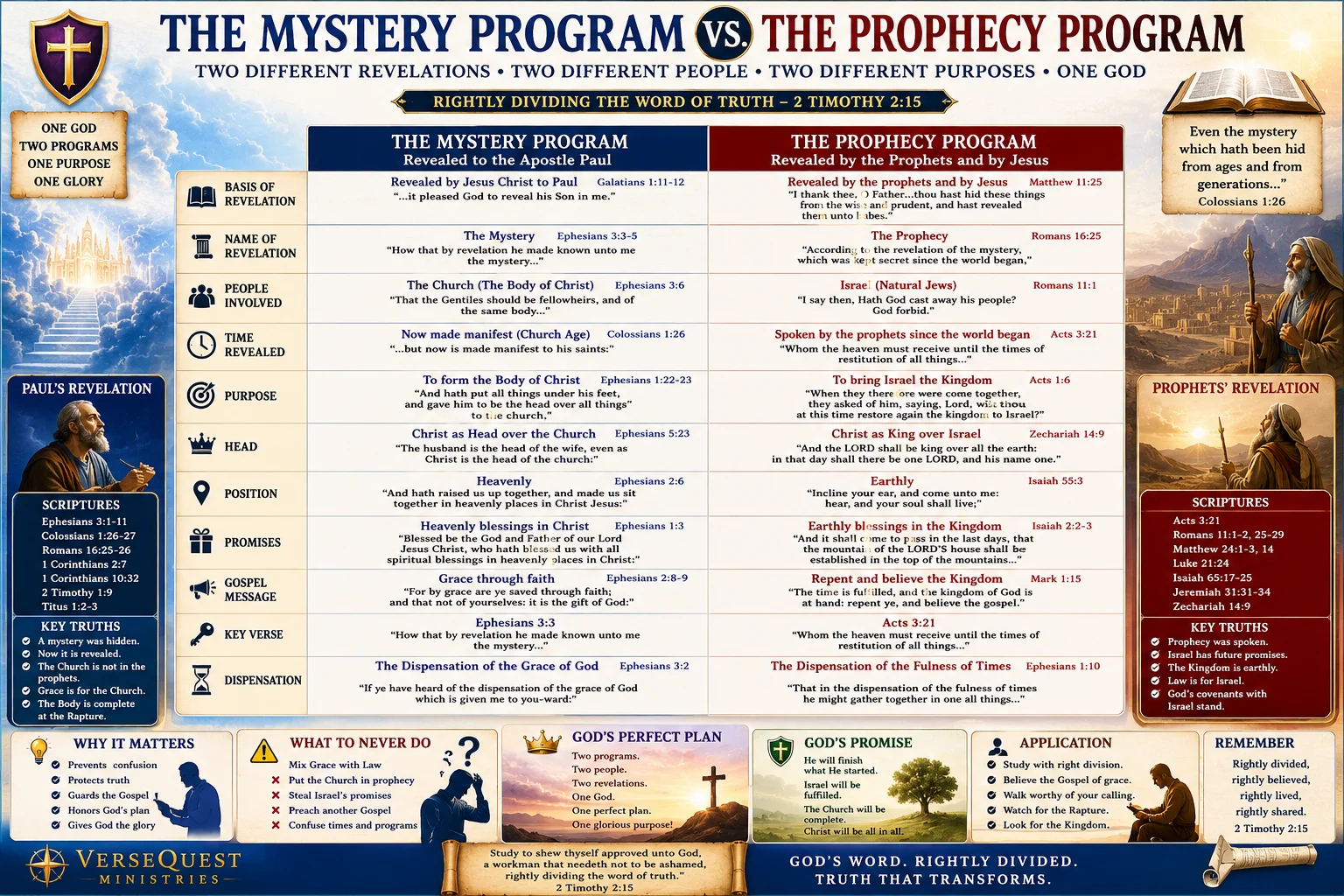
- The Mystery Program vs. Prophecy Program Chart — KJV Rightly Divided
- Premium printable KJV Bible study chart comparing the mystery program revealed through Paul with the prophecy program spoken by the prophets. Rightly divided and designed for teaching and personal study.
- Original price was: $10.00.$4.99Current price is: $4.99.
- Add to cart
-
-50%
-
Revelation of the Body of Christ
-
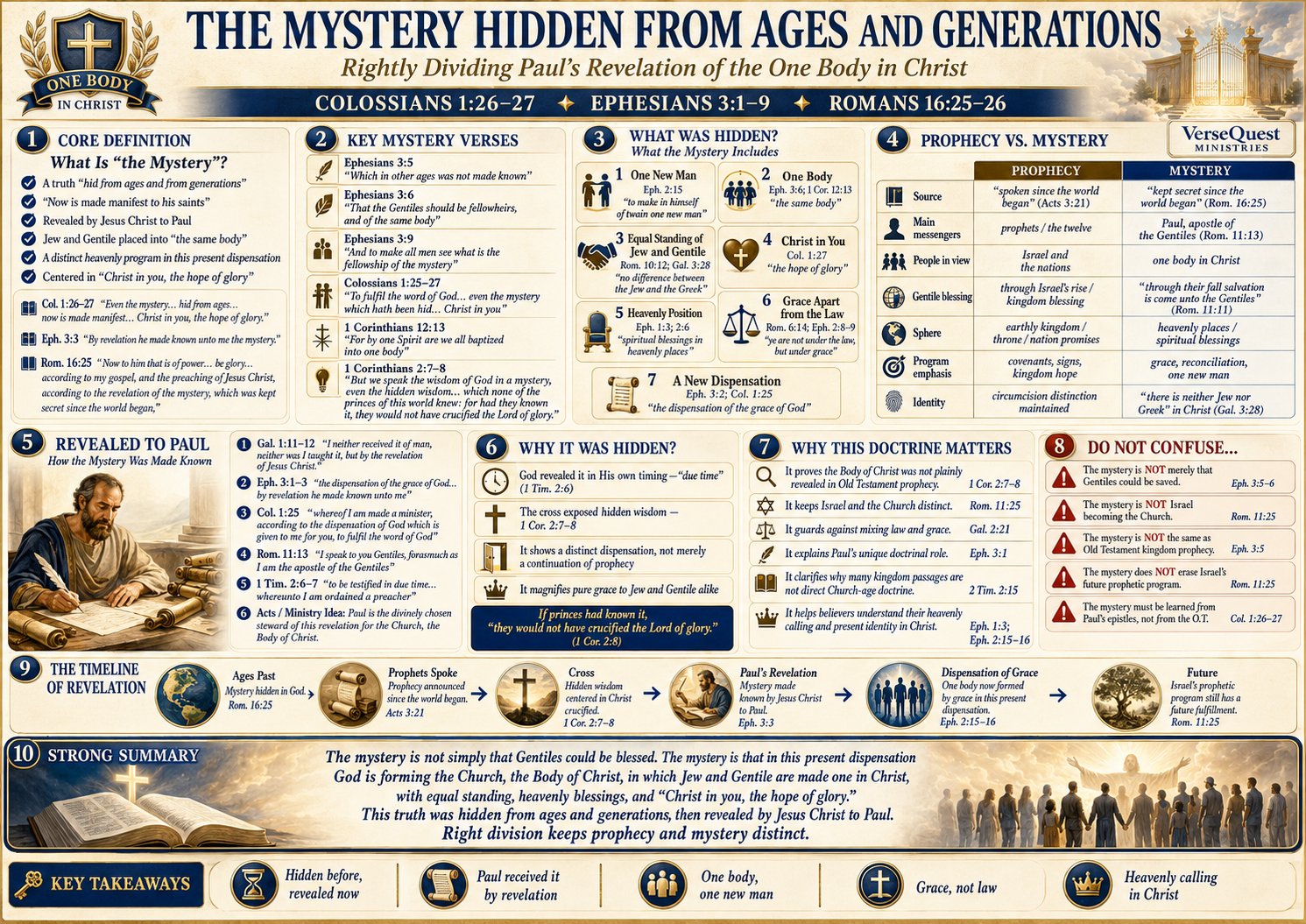
- The Mystery Hidden from Ages and Generations – Paul’s Revelation of the One Body in Christ (KJV Bible Study Chart)
- Understand the mystery hidden from ages and generations with this detailed KJV chart covering Paul’s revelation, the one Body, the one new man, grace, heavenly blessings, and prophecy versus mystery.
- $3.99
- Add to cart
-
-
Ages To Come
-
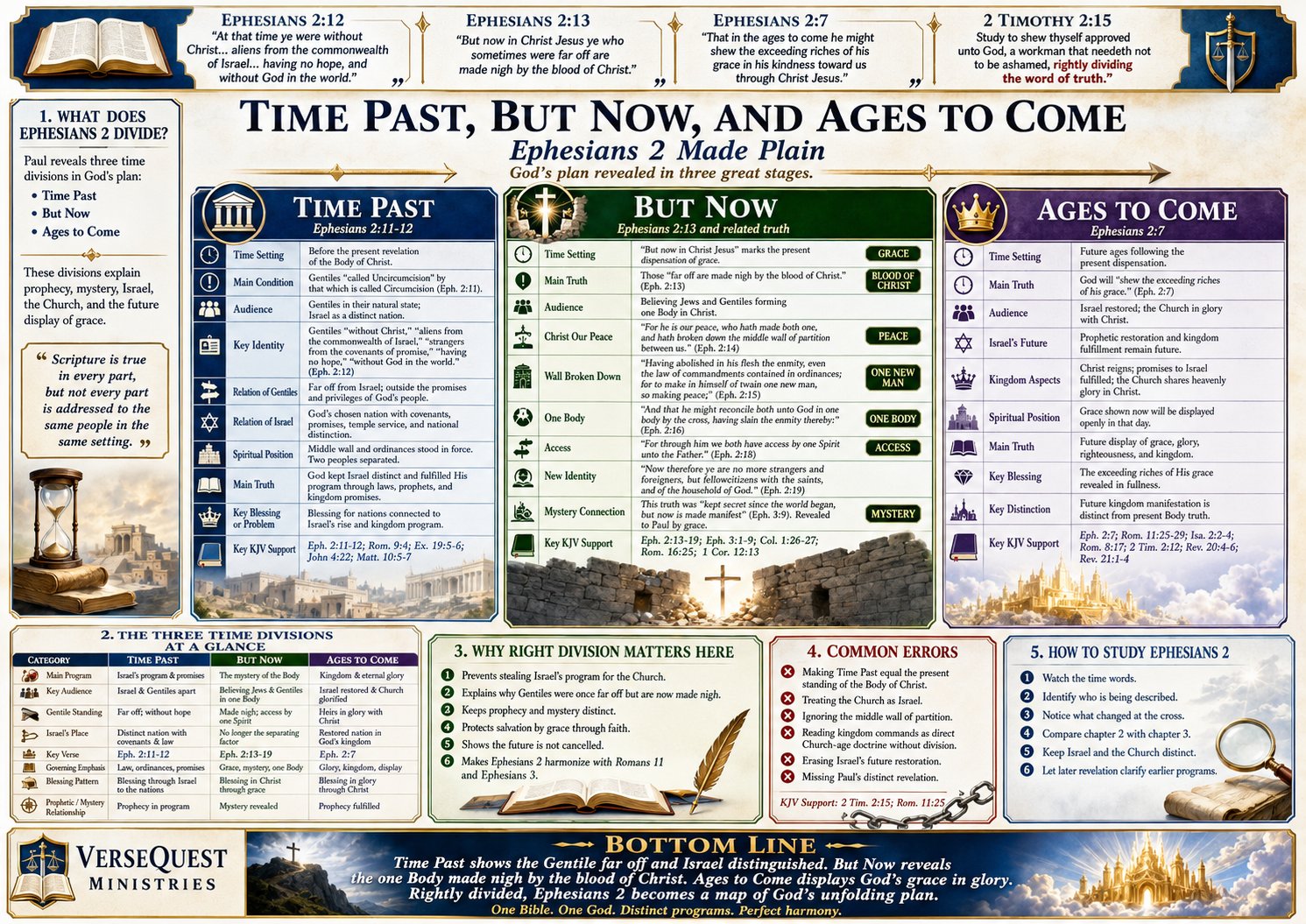
- Time Past, But Now, and Ages to Come – Ephesians 2 Rightly Divided KJV Bible Study Chart
- Understand Ephesians 2 with this detailed KJV chart explaining Time Past, But Now, Ages to Come, Gentile distance, the one Body, Israel’s future, and the importance of right division.
- $3.99
- Add to cart
-
-
Doctrine
-
-50%
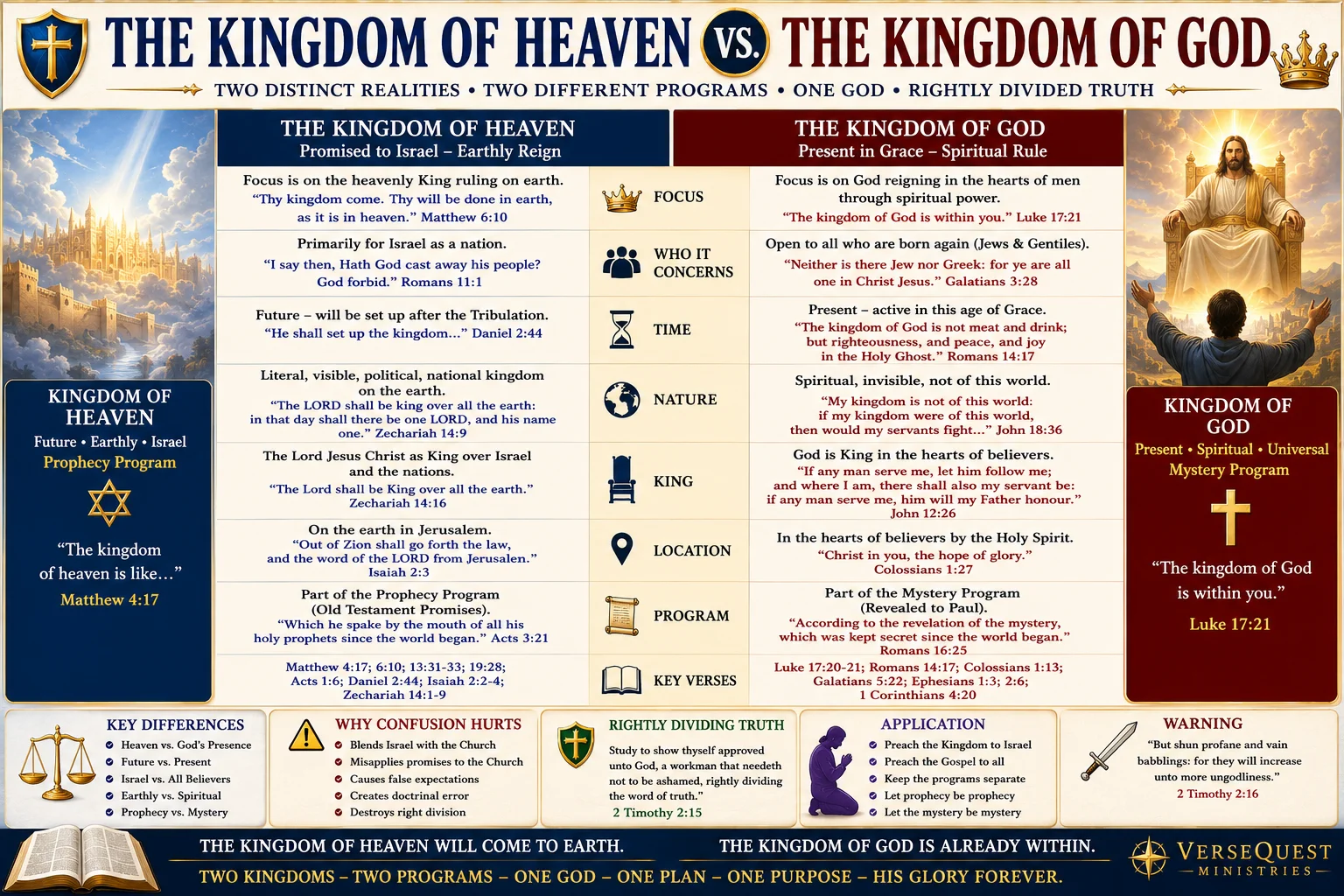
- The Kingdom of Heaven vs. The Kingdom of God Chart — KJV Rightly Divided
- Premium printable KJV Bible study chart comparing the Kingdom of Heaven and the Kingdom of God from a rightly divided perspective, showing their distinctions, purposes, promises, and biblical application.
- Original price was: $10.00.$4.99Current price is: $4.99.
- Add to cart
-
-50%
-
The Gospel of the Kingdom
-
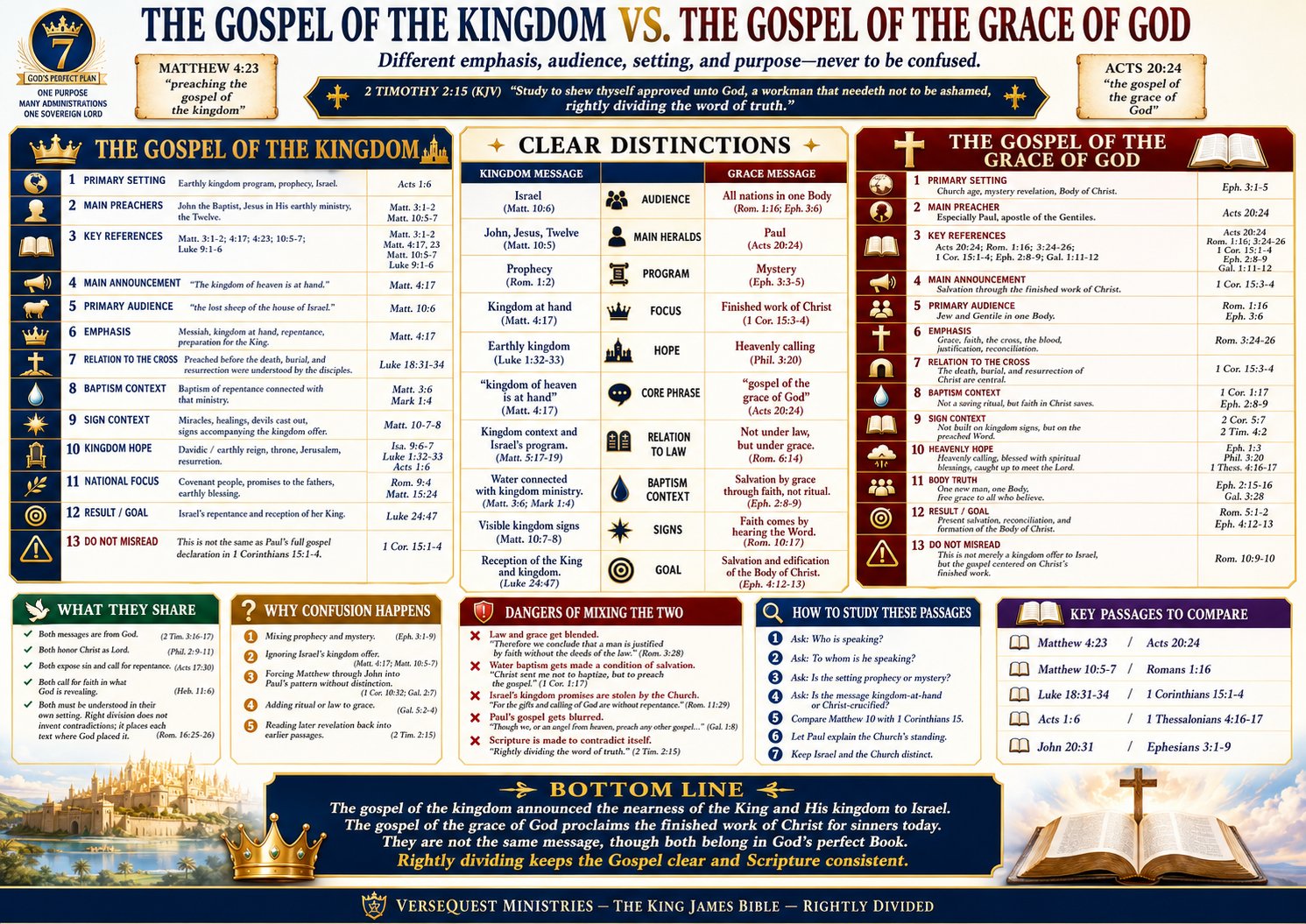
- The Gospel of the Kingdom vs. the Gospel of the Grace of God – KJV Right Division Bible Study Chart
- Compare the gospel of the kingdom and the gospel of the grace of God with this detailed KJV chart covering audience, message, prophecy, mystery, baptism, signs, salvation, and right division.
- $3.99
- Add to cart
-