
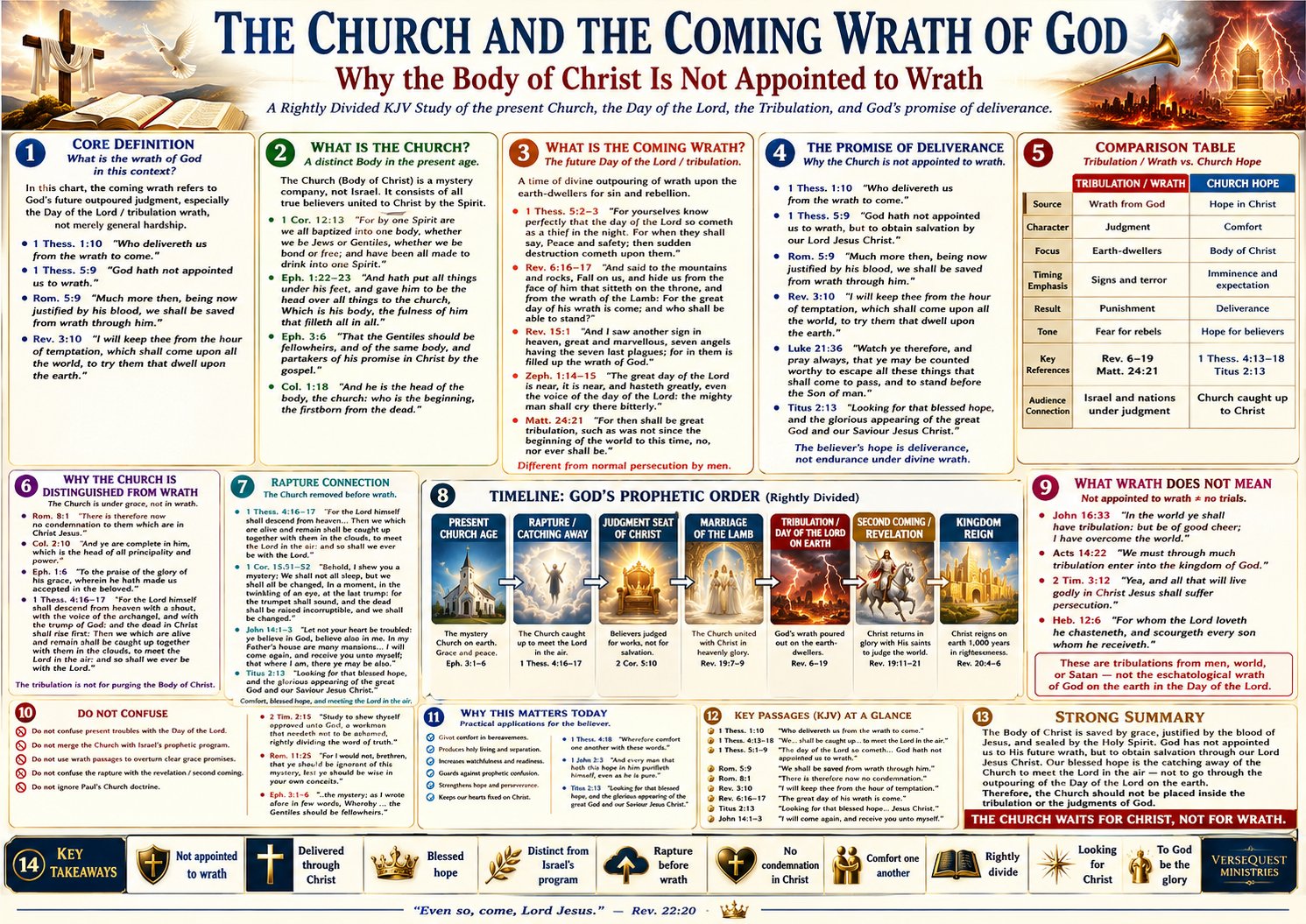
The Church and the Coming Wrath of God – Why the Body of Christ Is Not Appointed to Tribulation Wrath (KJV Bible Study Chart)
Understand why the Body of Christ is not appointed to coming Tribulation wrath with this detailed KJV chart covering the Church, Day of the Lord, Revelation judgments, pre-Tribulation Rapture, Israel’s prophetic program, Christian suffering, deliverance, and the return of Jesus Christ.
$3.99
Description
The Church and the Coming Wrath of God: Why the Body of Christ Is Not Appointed to Wrath is a detailed, rightly divided KJV Bible study chart explaining the distinction between ordinary Christian suffering and the future prophetic outpouring of divine wrath during the Day of the Lord and the Tribulation.
Built around 1 Thessalonians 1:10, 1 Thessalonians 5:9, Romans 5:9, Revelation 3:10, 1 Thessalonians 4:13–18, 1 Corinthians 15:51–52, John 14:1–3, and Titus 2:13, this chart presents the Church’s appointed hope as deliverance through Jesus Christ rather than endurance beneath the eschatological wrath of God.
The chart defines the coming wrath as God’s future and purposeful judgment upon the earth-dwellers for sin, rebellion, unbelief, and rejection of His authority. It is associated especially with the Day of the Lord, Daniel’s seventieth week, the Tribulation judgments, and the prophetic events described throughout Revelation 6–19.
This coming wrath must not be confused with every hardship experienced by Christians. Believers may suffer persecution, hatred, sickness, loss, chastening, grief, opposition, imprisonment, and even martyrdom during the present age. The Church has never been promised freedom from the wrath of men, the attacks of Satan, the consequences of living in a fallen world, or the Father’s loving correction.
The promise is that the Body of Christ has not been appointed to the future outpouring of God’s Tribulation wrath. First Thessalonians 5:9 states, “For God hath not appointed us to wrath, but to obtain salvation by our Lord Jesus Christ.”
First Thessalonians 1:10 describes believers as waiting for God’s Son from heaven, “even Jesus, which delivered us from the wrath to come.” The Church’s expectation is directed toward Jesus Christ rather than toward the beast, the mark, the abomination of desolation, or the judgments falling upon the earth.
Romans 5:9 grounds this deliverance in Christ’s blood: “Much more then, being now justified by his blood, we shall be saved from wrath through him.” The believer’s deliverance is not earned through superior holiness, prophetic knowledge, endurance, preparedness, or religious performance. It rests upon the finished work of Jesus Christ.
The chart carefully defines the Church as the Body of Christ, a distinct mystery people formed during the present dispensation of grace. It consists of saved Jews and Gentiles spiritually united in one Body through the Holy Spirit.
First Corinthians 12:13 teaches that by one Spirit believers are baptized into one Body. Ephesians identifies Christ as the Head of that Body and explains the mystery in which believing Jews and Gentiles become fellowheirs and members of the same Body.
The Church is therefore not Israel, nor has it replaced Israel in God’s prophetic plan. Israel retains literal promises, covenants, a national identity, and a future restoration that God will fulfill after the present mystery program reaches its appointed conclusion.
The future Tribulation belongs especially to Israel’s prophetic calendar and the nations under judgment. Daniel’s seventieth week concerns Daniel’s people and holy city. Jeremiah identifies the future crisis as “the time of Jacob’s trouble.”
Revelation’s seals, trumpets, and vials are not merely intensified forms of ordinary human persecution. They are judgments initiated from heaven and poured upon a rebellious world.
Revelation 6 presents men hiding from the face of the One seated upon the throne and from the wrath of the Lamb. Revelation 15 describes seven angels possessing the final plagues in which the wrath of God is filled up.
Zephaniah calls the Day of the Lord a day of wrath, trouble, distress, devastation, darkness, and divine judgment. Matthew 24 describes a great Tribulation unlike anything before or afterward.
The Church’s calling and hope stand in deliberate contrast. Tribulation wrath is characterized by judgment, signs, terror, punishment, and God’s dealings with Israel and the nations. The Church’s hope is characterized by comfort, expectation, deliverance, resurrection, transformation, and reunion with Jesus Christ.
Revelation 3:10 promises preservation “from the hour of temptation, which shall come upon all the world, to try them that dwell upon the earth.” The promise concerns deliverance from a global hour, not merely protection from one isolated local trial.
The wording does not simply promise strength to endure within the appointed hour. It presents deliverance from the hour that will test the earth-dwellers.
The chart connects this promise with the Rapture. First Thessalonians 4:16–17 reveals that the Lord Himself will descend from heaven, the dead in Christ will rise first, and living believers will be caught up together with them to meet the Lord in the air.
First Corinthians 15:51–52 describes the instantaneous transformation of living saints as mystery truth. Not every Church-age believer will die, but every believer included in the Body of Christ will be changed.
John 14 records Christ’s promise to return and receive His own unto Himself. Titus 2:13 calls this future expectation “that blessed hope.”
The Rapture is therefore the Church’s deliverance before the Tribulation wrath begins. The believer’s hope is not that he will be preserved through the beast’s kingdom until the last possible moment. His hope is that Jesus Christ will gather His Body before God resumes the final prophetic dealings associated with Israel and the rebellious nations.
The chart explains why the Church is distinguished from wrath. The believer is already justified through Jesus Christ and possesses no eternal condemnation.
Romans 8:1 declares, “There is therefore now no condemnation to them which are in Christ Jesus.” God does not place the justified Body of Christ beneath an appointed period whose central purpose is judgment upon unbelieving earth-dwellers.
The believer is complete in Christ. Colossians 2:10 teaches that Christians are complete in the Saviour rather than standing upon probation.
The believer is accepted in the Beloved, sealed by the Holy Spirit, and spiritually joined to Jesus Christ. The Rapture does not occur because Christians have earned an escape but because God has established a distinct purpose and destiny for the Body of Christ.
The chart specifically warns against the idea that the Tribulation functions as a purging process for the Church. Jesus Christ’s blood cleanses from all sin, and the Holy Spirit sanctifies the believer.
The Church does not require the Antichrist, the mark of the beast, the trumpet judgments, or the vials of wrath to finish what Jesus Christ began. The cross, the Word, the Holy Spirit, chastening, and practical sanctification are God’s appointed means for the believer’s present growth.
The Tribulation is not spiritual purgatory for an unfinished Church. It is part of God’s prophetic judgment and His renewed dealings with Israel and the nations.
A major timeline presents God’s prophetic order from a rightly divided, pre-Tribulation perspective. The present Church Age is the mystery period in which the gospel of grace is proclaimed and the Body of Christ is formed.
The Church Age is followed by the Rapture, when believers are caught up to meet the Lord in the air.
The Judgment Seat of Christ follows, where saved believers’ works and stewardship are examined for reward rather than eternal salvation.
The marriage of the Lamb presents the Church united with Christ in heavenly glory.
The Tribulation then unfolds upon the earth through the judgments described in Revelation 6–19.
Jesus Christ returns visibly with His saints in the Second Coming, destroys His enemies, delivers Israel, and establishes His Kingdom.
The millennial reign follows, during which Christ rules upon the earth for one thousand years.
This order distinguishes the Rapture from the Second Coming. At the Rapture, Christ comes for His saints. At the Second Coming, He returns with His saints.
At the Rapture, believers meet the Lord in the air. At the Second Coming, Christ descends to the earth in judgment and glory.
The Rapture brings comfort and deliverance to the Church. The Second Coming brings vengeance upon the rebellious world and begins the visible Kingdom reign of Jesus Christ.
The chart contrasts Tribulation wrath with the Church’s hope. The source of the Tribulation judgments is God’s wrath, while the source of the believer’s hope is Christ.
The character of the Tribulation is judgment. The character of the Church’s expectation is comfort.
The Tribulation focuses upon earth-dwellers, Israel, and the nations under prophetic judgment. The Rapture focuses upon the Body of Christ being gathered to the Lord.
The Tribulation is preceded and accompanied by signs and terror. The Church’s hope is connected with imminence and expectancy.
The result of Tribulation wrath is punishment and national judgment. The result of the Rapture is deliverance, transformation, reunion, and everlasting presence with Christ.
The chart carefully explains what “not appointed to wrath” does not mean. It does not mean believers will experience no tribulation of any kind.
Jesus Christ plainly said that believers would have tribulation in the world. Acts records the apostles teaching that believers may enter the Kingdom of God through many tribulations.
Second Timothy warns that all who live godly in Christ Jesus will suffer persecution. Christians should therefore expect opposition rather than interpret every hardship as proof that God’s promise has failed.
Not being appointed to wrath does not remove fatherly chastening. Hebrews 12 teaches that the Lord chastens those He loves.
Chastening is not the eschatological wrath of God. It is the loving discipline of a Father correcting His children.
Not being appointed to wrath also does not mean the Church escapes every consequence of human decisions, national decline, economic hardship, war, disease, or satanic attack.
The promise concerns the future prophetic wrath of the Day of the Lord, not immunity from every painful experience in this present age.
The chart warns against confusing present troubles with the Day of the Lord. War, earthquakes, persecution, and disaster may resemble aspects of prophecy, but ordinary hardship does not automatically mean the Church has entered Daniel’s seventieth week.
The Church must not be merged with Israel’s prophetic program. Passages addressed to Judea, Jerusalem, the Sabbath, the Temple, and Daniel’s abomination should not be transferred automatically to the Body of Christ.
Wrath passages should not be used to overturn plain promises of deliverance. The student should interpret difficult prophetic passages through context, audience, timing, and right division.
The Rapture should not be confused with the visible Revelation or Second Coming. Similar language concerning clouds, trumpets, gathering, or Christ’s return does not require every passage to describe the same event.
Paul’s Church doctrine must not be ignored. Ephesians reveals the mystery of the Body, First Thessalonians reveals the catching away, and First Corinthians reveals the transformation of living saints.
The doctrine matters practically because it provides comfort during bereavement. Believers do not sorrow without hope because the dead in Christ will rise.
It produces holiness and readiness. First John teaches that the person possessing this hope purifies himself.
It guards against prophetic confusion. Believers can distinguish present Church doctrine from Israel’s future Tribulation setting.
It strengthens hope during persecution. Christians may face the wrath of men, but their future is not the wrath of God.
It keeps attention fixed upon Jesus Christ. The Church waits for the Saviour rather than building its hope around the Antichrist.
The doctrine also produces gospel urgency. The coming wrath is real, and those outside Jesus Christ remain exposed to judgment.
The believer should therefore preach the gospel clearly while the present day of grace continues. Jesus Christ died for sins, was buried, and rose again. The sinner is saved by grace through faith in Him.
The Church’s deliverance should never produce pride. Believers are not spared because they are wiser, stronger, more moral, or more deserving than others.
Every saved person was once guilty and under condemnation. Deliverance comes entirely through the mercy, blood, righteousness, and promise of Jesus Christ.
The chart’s strong summary is clear: the Body of Christ is saved by grace, justified by Christ’s blood, placed into Jesus Christ, and sealed by the Holy Spirit.
God has not appointed the Church to the future Tribulation wrath but to obtain salvation through the Lord Jesus Christ.
The Church’s blessed hope is the catching away of the Body of Christ before the prophetic outpouring of the Day of the Lord upon the earth.
Christians should not place themselves inside the Tribulation or confuse the Church with Israel’s prophetic program. They should remain watchful, holy, faithful, hopeful, and prepared to meet Jesus Christ.
The Church waits for Christ—not for wrath.
Church not appointed to wrath, Body of Christ, coming wrath of God, Tribulation wrath, Day of the Lord, wrath to come, delivered through Jesus Christ, pre-Tribulation Rapture, catching away of the Church, Church versus Israel, Daniel’s seventieth week, time of Jacob’s trouble, Revelation judgments, not appointed to wrath, no condemnation in Christ, mystery Body of Christ, Rapture before Tribulation, blessed hope, Second Coming, rightly divided prophecy
The coming wrath discussed in this chart refers especially to the future prophetic wrath of the Day of the Lord and the Tribulation.
It is not merely another name for every hardship, persecution, illness, war, or trial experienced by believers.
First Thessalonians 1:10 describes Jesus Christ as the One who delivers believers from the wrath to come.
First Thessalonians 5:9 states that God has not appointed the Church to wrath.
Romans 5:9 connects deliverance from wrath with justification through Christ’s blood.
Revelation 3:10 promises deliverance from the worldwide hour of temptation.
The Church is the Body of Christ rather than national Israel.
Believing Jews and Gentiles are spiritually placed into one Body through the Holy Spirit.
The Body of Christ belongs to mystery truth revealed especially through Paul.
Israel’s prophetic covenants, national identity, and future restoration remain intact.
Daniel’s seventieth week concerns Daniel’s people and holy city.
Jeremiah identifies the future Tribulation as the time of Jacob’s trouble.
The Tribulation is a period of divine judgment rather than merely human persecution.
Revelation’s seals, trumpets, and vials proceed from God’s throne and execute His wrath.
The Church has never been promised freedom from persecution by men or opposition from Satan.
Jesus Christ said believers would experience tribulation in the world.
Godly believers may suffer persecution during the present age.
Fatherly chastening is not the same as Tribulation wrath.
Chastening corrects God’s children; prophetic wrath judges a rebellious world.
The Church does not require the Tribulation to purge or complete it.
Christ’s blood cleanses believers, and the Holy Spirit performs the work of sanctification.
The Rapture removes the Body of Christ before the outpouring of future wrath.
At the Rapture, the dead in Christ rise and living believers are changed.
The Church meets the Lord Jesus Christ in the air.
The Rapture is distinct from the Second Coming.
At the Rapture, Christ comes for His saints.
At the Second Coming, Christ returns with His saints.
The Judgment Seat of Christ concerns reward for saved believers rather than eternal condemnation.
The marriage of the Lamb occurs in the heavenly sequence before Christ’s visible return in Revelation 19.
The Second Coming follows the Tribulation and brings judgment upon Christ’s enemies.
Christ’s thousand-year Kingdom follows His return to earth.
Not appointed to wrath does not mean believers experience no trials.
It does not promise escape from human violence, economic hardship, illness, or ordinary consequences in a fallen world.
It does not eliminate the need for holiness, watchfulness, endurance, or faithful service.
It does not authorize date-setting or sensational prophecy claims.
The doctrine should produce comfort, readiness, purity, gospel urgency, and expectation of Jesus Christ.
The Church’s hope is deliverance through Christ rather than endurance under God’s prophetic wrath.
The proper order is the Church Age, Rapture, Judgment Seat, marriage of the Lamb, Tribulation, Second Coming, and Kingdom reign.
The Church waits for Christ, not for wrath.
Church-not-appointed-to-wrath studies, pre-Tribulation Rapture teaching, Day-of-the-Lord instruction, Tribulation studies, Church-and-Israel distinctions, explaining 1 Thessalonians 5:9, teaching Revelation 3:10, prophecy timelines, Rapture-versus-Second-Coming lessons, Christian suffering versus divine wrath, eternal-security instruction, bereavement comfort, holiness and readiness, new-believer discipleship, prophecy conferences, Sunday school lessons, homeschool Bible curriculum, Christian school teaching, Bible institute classes, sermon preparation
King James Bible, Strong’s Concordance, Thompson Chain-Reference Bible, Treasury of Scripture Knowledge, Nave’s Topical Bible, First Thessalonians 1 and 4–5 study notes, Romans 5 and 8 commentary materials, Revelation 3 and 6–19 outlines, Daniel 9 seventy-weeks charts, Day-of-the-Lord studies, pre-Tribulation Rapture timelines, Church-versus-Israel charts, Rapture-versus-Second-Coming resources, Pauline mystery studies, eternal-security materials, VerseQuest prophecy and right-division charts
Related products
-
Prophecy vs Mystery
-
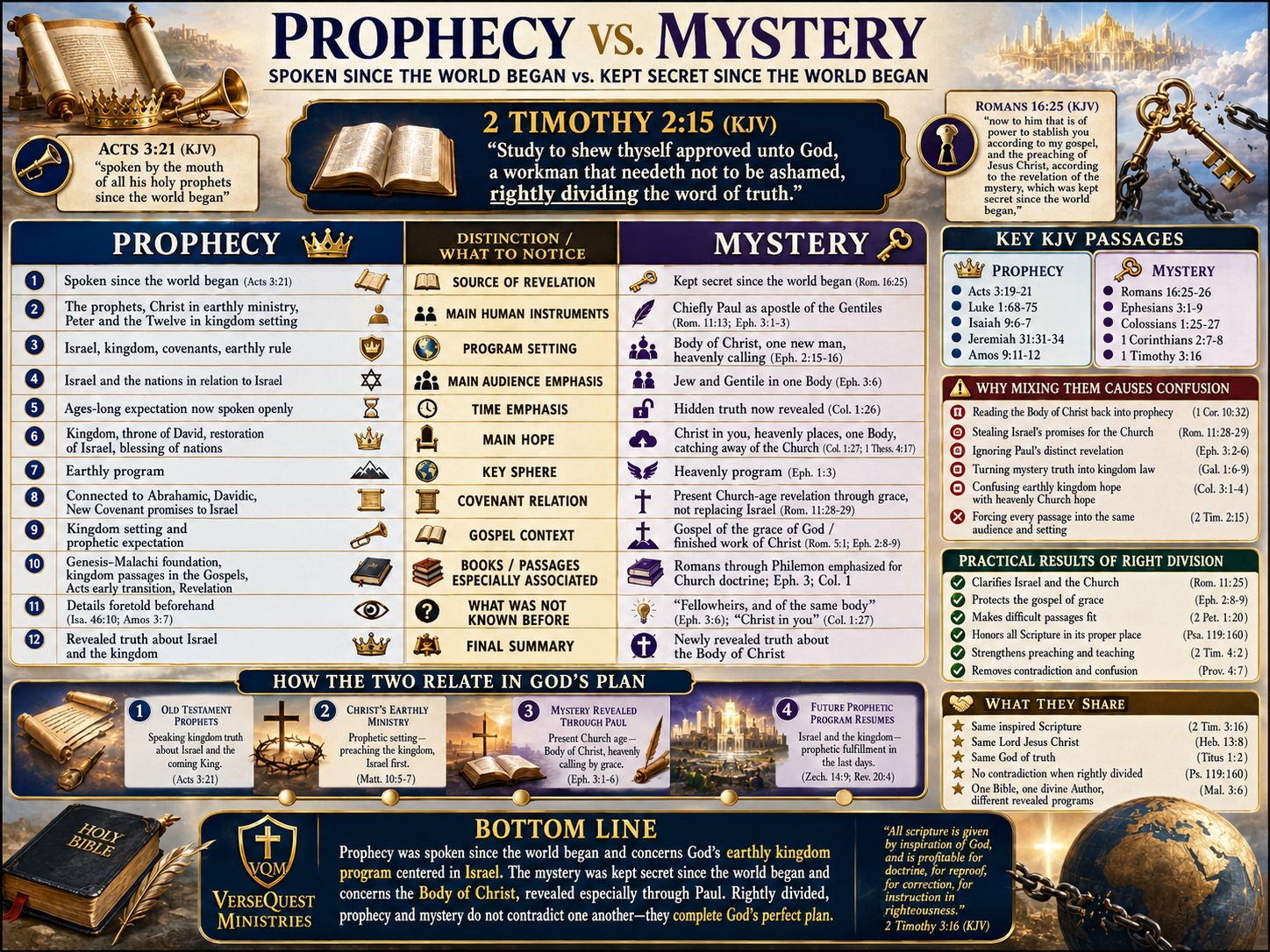
- Prophecy vs. Mystery Bible Study Chart – Spoken Since the World Began vs. Kept Secret Since the World Began (KJV)
- Compare prophecy and mystery with this detailed KJV chart explaining Israel’s earthly Kingdom program, the Body of Christ, Paul’s revelation, the heavenly calling, and the importance of right division.
- $3.99
- Add to cart
-
-
Doctrine
-
-50%
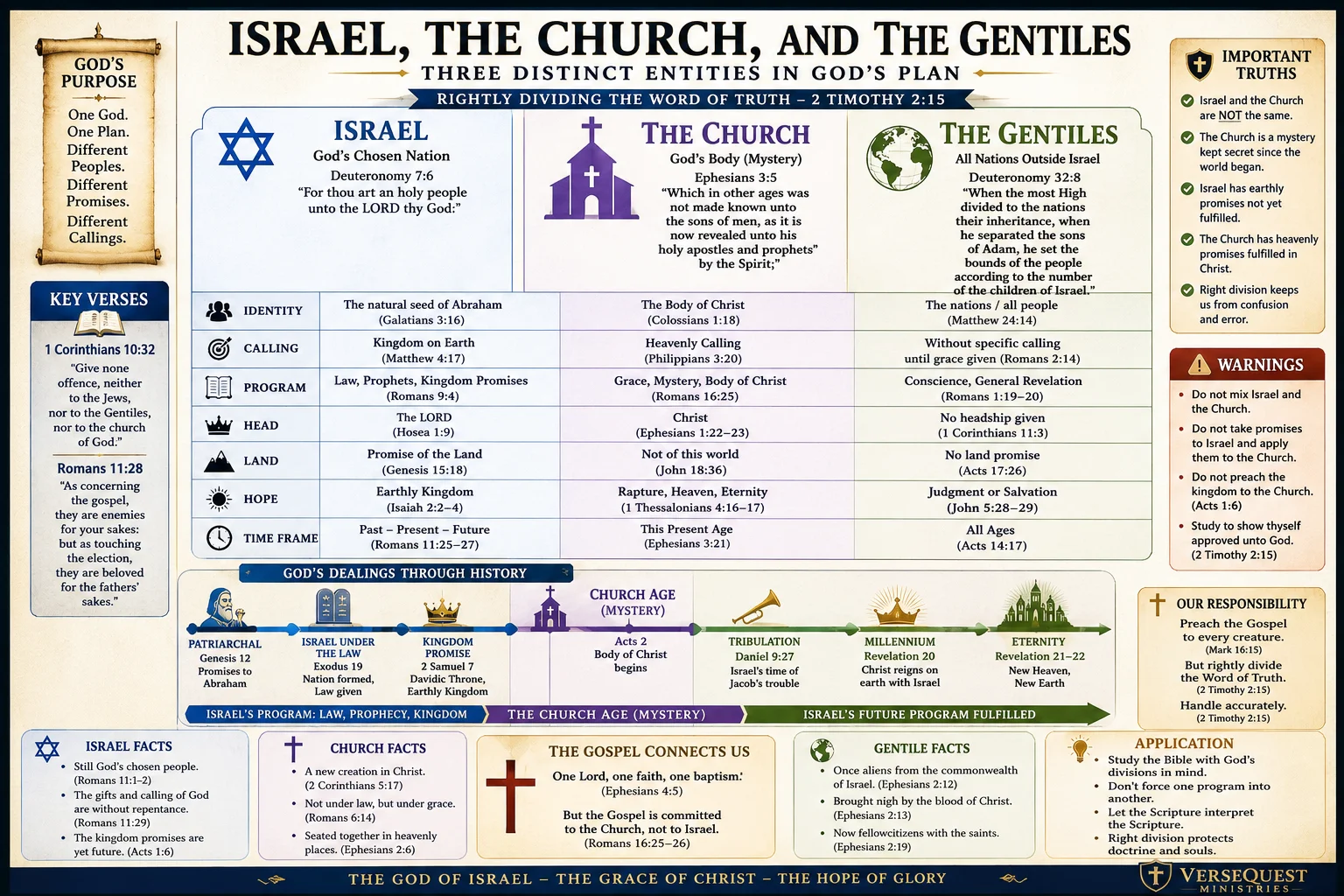
- Israel, the Church, and the Gentiles Chart — KJV Rightly Divided
- Premium printable KJV Bible study chart comparing Israel, the Church, and the Gentiles as three distinct entities in God’s plan. Rightly divided, visually organized, and designed for teaching and personal…
- Original price was: $10.00.$4.99Current price is: $4.99.
- Add to cart
-
-50%
-
Circumcision
-
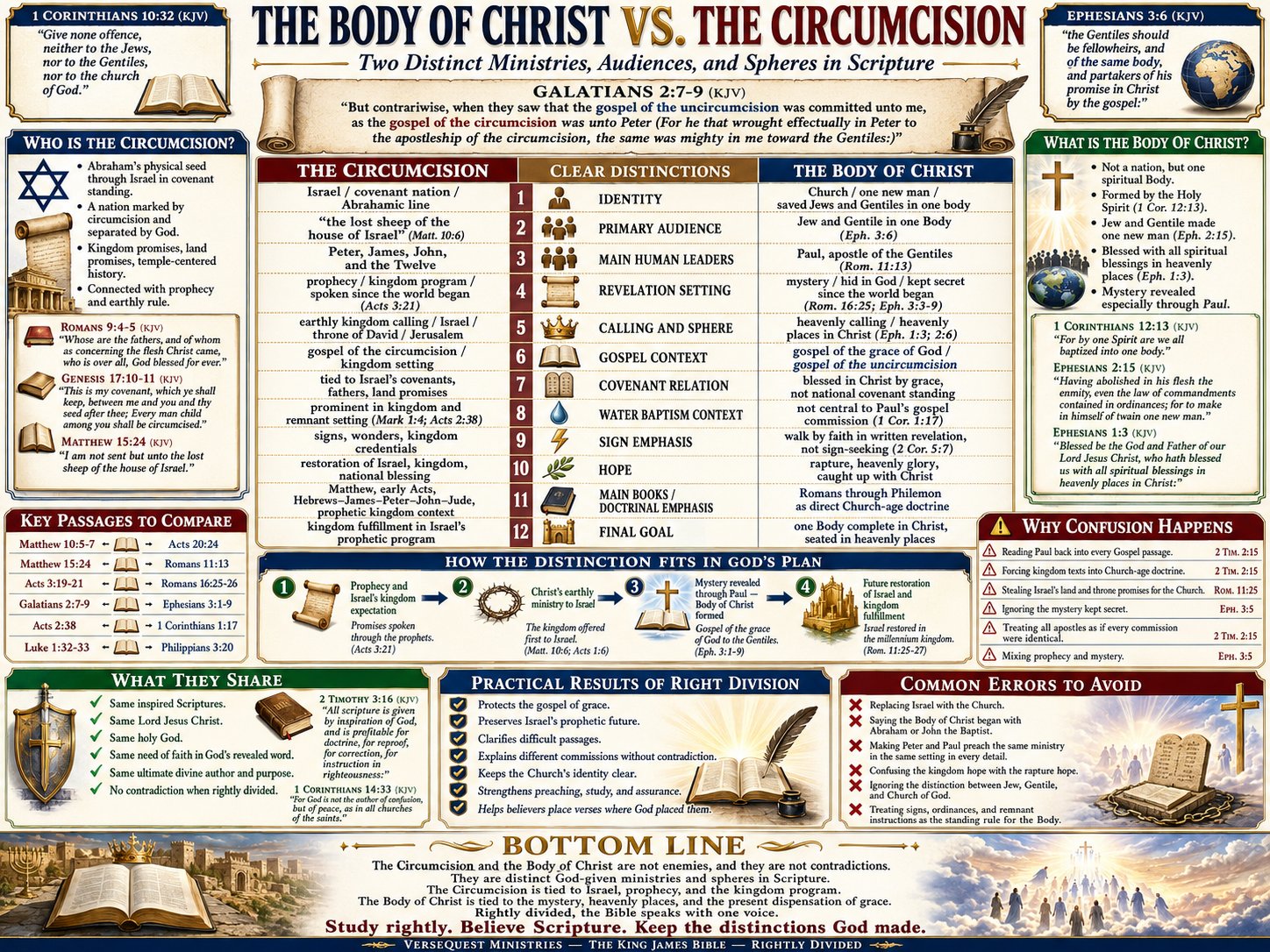
- The Body of Christ vs. the Circumcision – Two Distinct Ministries, Audiences, and Spheres in Scripture (KJV Bible Study Chart)
- Compare the Body of Christ and the circumcision with this detailed KJV chart covering Israel, Peter, Paul, prophecy, mystery, covenant promises, baptism, signs, and the Church’s heavenly hope.
- $3.99
- Add to cart
-
-
Bible Study Chart
-
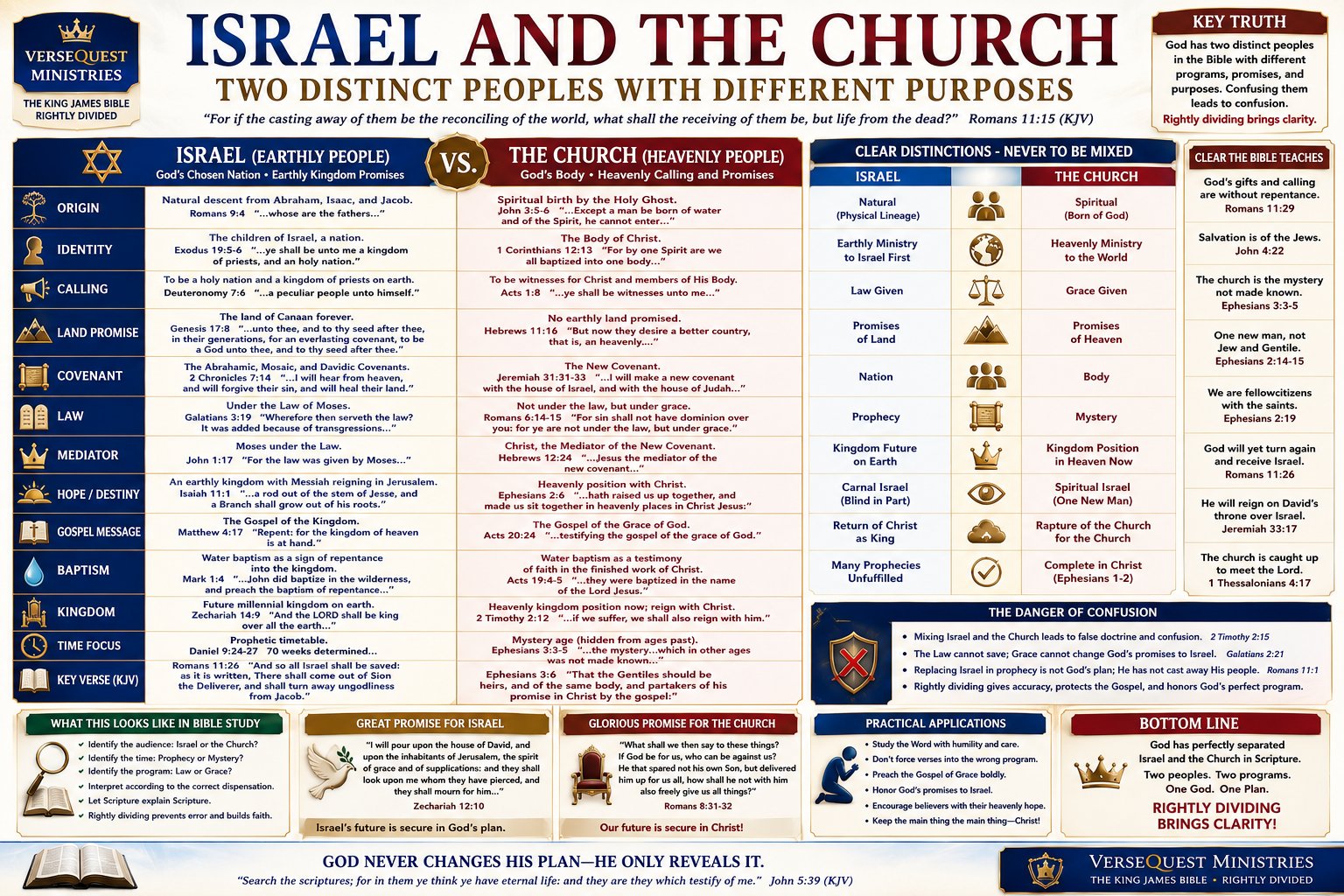
- Israel and the Church Bible Study Chart – Two Distinct Peoples with Different Purposes (KJV)
- Compare Israel and the Church with this detailed KJV Bible study chart covering their distinct origins, identities, covenants, callings, promises, gospel programs, and future destinies.
- $3.99
- Add to cart
-
-
Doctrine
-
-50%
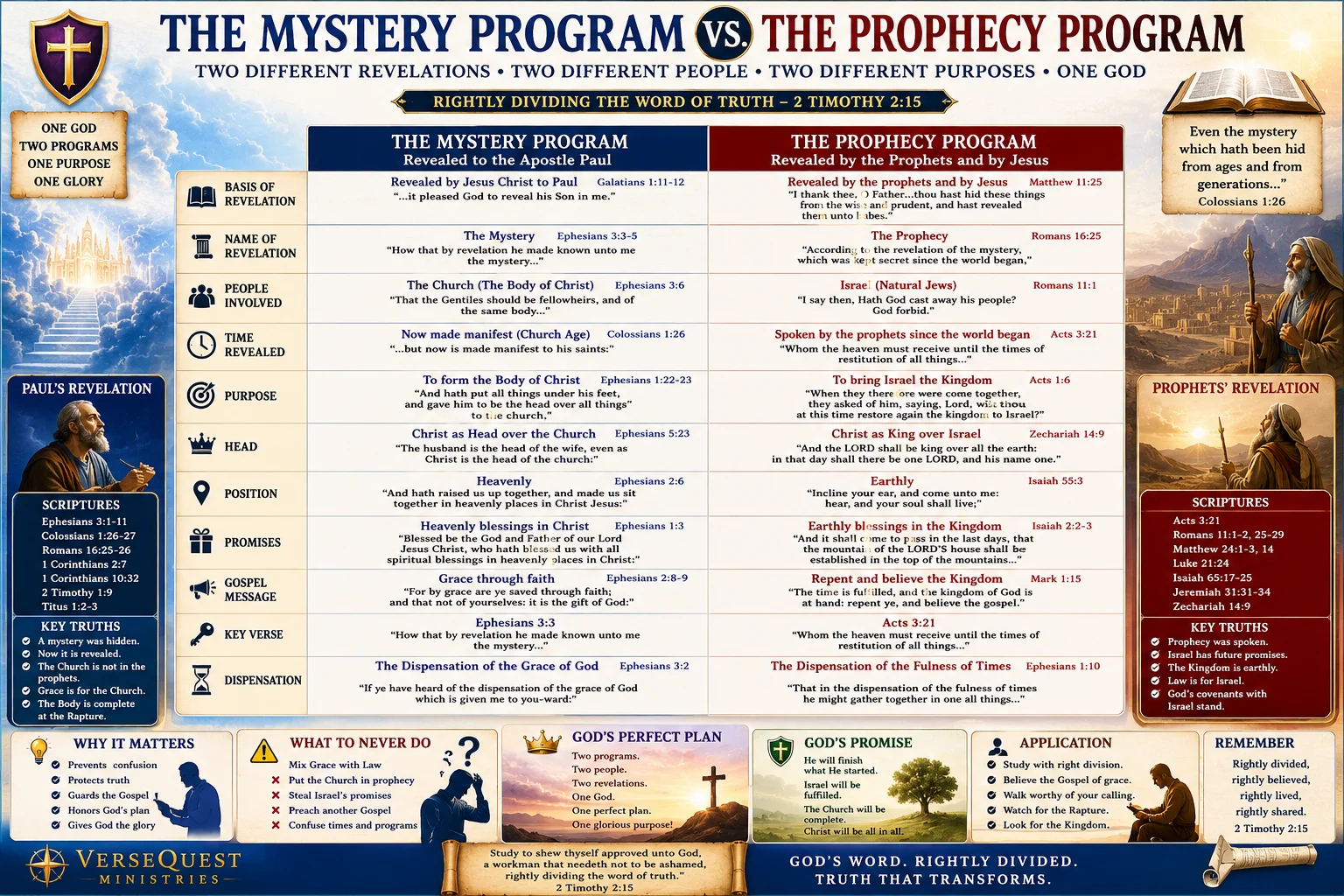
- The Mystery Program vs. Prophecy Program Chart — KJV Rightly Divided
- Premium printable KJV Bible study chart comparing the mystery program revealed through Paul with the prophecy program spoken by the prophets. Rightly divided and designed for teaching and personal study.
- Original price was: $10.00.$4.99Current price is: $4.99.
- Add to cart
-
-50%