

Renewed Day by Day: The Biblical Doctrine of Divine Renewal
Renewed Day by Day: The Biblical Doctrine of Divine Renewal is a 251-page downloadable KJV Bible-study book tracing the doctrine of renewal from the Old Testament through the Pauline epistles. Across 30 detailed studies, it examines renewed strength, a renewed spirit, the renewing of the mind, renewed knowledge, the inward man, regeneration, the Holy Ghost, the old and new man, suffering, spiritual growth, and the believer’s final hope of bodily redemption.
The book includes the complete 30-part series, a thorough introduction, a full conclusion, and a detailed illustrated study chart for review and teaching. It is designed for serious Bible students, pastors, preachers, teachers, families, and anyone who wants to understand how God keeps the believer alive on the inside while the outward man perishes.
251 pages — Downloadable PDF — $21.99
$21.99
Description
Renewed Day by Day: The Biblical Doctrine of Divine Renewal is a 251-page downloadable PDF book presenting a thorough King James Bible study of one of Scripture’s most practical and overlooked doctrines: renewal. Across 30 substantial studies, this work traces every major biblical use of renewal from the Old Testament into the Pauline epistles, showing exactly what God renews, how He renews it, what He never promises to renew, and how the doctrine applies to the daily Christian walk.
The study begins where the Bible begins. Samuel speaks of renewing the kingdom at Gilgal. Asa renews the altar of the LORD after putting away idols. David prays for God to renew a right spirit within him. Job speaks of renewed strength. The Psalms describe youth renewed like the eagle’s and God renewing the face of the earth. Isaiah promises renewed strength to those who wait upon the LORD, while Jeremiah cries for God to renew Israel’s days as of old. These passages establish that biblical renewal is never merely emotional refreshment. It involves restoration, correction, strength, order, dependence, repentance, and the sovereign work of God.
The New Testament brings the doctrine directly into the Christian life. Romans 12:2 commands believers to be transformed by the renewing of the mind. Ephesians 4:23 speaks of being renewed in the spirit of the mind. Colossians 3:10 declares that the new man is renewed in knowledge after the image of his Creator. Titus 3:5 distinguishes regeneration from the continuing renewing work of the Holy Ghost. Second Corinthians 4:16 gives the central truth of the entire study: though the outward man perishes, the inward man can be renewed day by day.
One of the strongest conclusions developed throughout the book is that Scripture never promises to renew the flesh. The flesh is not gradually improved until it becomes spiritual. Romans declares that the carnal mind is enmity against God and cannot be made subject to His law. The old man is crucified, the flesh must be denied provision, and the believer is commanded to walk in the Spirit. This distinction exposes the weakness of religious self-improvement and establishes the biblical difference between regeneration, practical sanctification, the old man, the new man, the outward man, and the inward man.
The book also gives careful attention to the renewing of the mind. Every believer lives in a world constantly attempting to shape his thinking. Scripture does not answer that pressure with mental emptiness, mystical impressions, or religious slogans. It answers it with truth. The Holy Ghost renews through the words He inspired. The new man is renewed in knowledge. The mind must be brought continually beneath the authority of Scripture if the believer is going to resist conformity to the world and prove what is the good, acceptable, and perfect will of God.
Several chapters deal directly with suffering, weakness, aging, disappointment, and the outward man perishing. Second Corinthians 4 is examined in depth to show why Paul refused to faint even while enduring tremendous opposition and bodily weakness. His confidence was not based upon easy circumstances. He understood that temporary affliction was working in view of eternal glory and that the unseen realities of God were more permanent than anything his eyes could presently observe.
The study also examines Titus 3:5 and the relationship between regeneration and renewal. The washing of regeneration is shown to be the work of God rather than a religious ceremony capable of producing spiritual life. Regeneration happens once; renewal continues. Salvation is by grace through faith, while spiritual growth continues as the believer yields to the Holy Ghost, learns the word of God, renews the mind, refuses the flesh, and walks according to the new life already given in Christ.
Hebrews 6 is treated carefully and in its proper biblical setting, addressing the difficult statement concerning those whom it is impossible “to renew them again unto repentance.” Rather than ripping the passage from its context and using it to overthrow the Church-age believer’s security in Christ, the study maintains the necessary dispensational distinctions and allows Scripture to interpret Scripture.
The final chapters bring the entire doctrine together. The Christian life is not the old man becoming holy. It is the new man walking under the power of the Holy Ghost while the believer refuses the demands of the flesh. The outward man may weaken. Circumstances may deteriorate. Opposition may increase. Age may take its toll. Yet none of these things has the authority to stop inward renewal. God is able to strengthen His people internally even while everything visible is moving toward decay.
The book concludes by looking beyond present renewal toward the redemption of the body. The conflict with flesh is temporary. The believer is awaiting the day when corruption puts on incorruption, mortality puts on immortality, and the Lord Jesus Christ changes our vile body that it may be fashioned like unto His glorious body. Daily renewal is therefore not an endless maintenance program. It is part of the believer’s journey from regeneration to glorification.
This edition contains the complete 30-study Renewed Day by Day series, along with a full introduction, concluding study, series conclusion, and an illustrated doctrinal chart designed to help readers review the principal truths of biblical renewal at a glance. The finished downloadable PDF contains 251 pages and is available for $21.99.
It is designed for serious Bible students, pastors, preachers, Sunday school teachers, Christian families, discipleship leaders, and anyone who wants to understand what the King James Bible actually teaches about spiritual renewal rather than settling for vague religious language about “starting over.”
The Biblical Doctrine of Renewal — A Bible-wide examination of how Scripture uses the language of renewing, renewed, renewest, and renewing. Renewing the Kingdom — Restoration of proper divine order as illustrated in Samuel’s call to renew the kingdom at Gilgal. Renewing the Altar — The relationship between removing idols, restoring worship, and returning what belongs to God to its proper place. Renewing a Right Spirit — David’s prayer for inward correction following sin and repentance. Renewed Strength — The difference between self-reliance and the strength God supplies to those who wait upon Him. Renewed Days — The biblical relationship between turning to God and restoration. Renewed Youth — Spiritual vitality and divine strength even as the outward man ages. Renewal in Creation — God’s sovereign power displayed in His renewing of the face of the earth. The Renewed Mind — Transformation through biblical thinking rather than conformity to the world. The Spirit of the Mind — The importance not only of correct information but also of the inward disposition carrying that truth. The New Man — The believer’s new identity and life in Christ rather than an improved version of Adam. Renewed Knowledge — Growth through biblical truth and increasing conformity to the image of the Creator. Regeneration and Renewal — The distinction between receiving new life once and experiencing ongoing spiritual renewal. The Renewing Work of the Holy Ghost — The Holy Ghost as the divine agent of spiritual renewal. The Holy Ghost and Scripture — The Spirit’s work in harmony with the words He inspired rather than contrary to them. The Flesh and the Old Man — Why Scripture never promises a renewed flesh and why the believer must deny its rule. Walking in the Spirit — God’s answer to the continuing conflict between flesh and Spirit. The Outward and Inward Man — Physical decline contrasted with continuing inward spiritual renewal. Affliction and Eternal Glory — Understanding present suffering in light of its temporary duration and eternal outcome. Living by Unseen Realities — Learning to judge present circumstances by eternal truth rather than sight alone. Eternal Security and Spiritual Growth — Preserving the distinction between the believer’s secure position in Christ and his daily practical walk. Final Bodily Redemption — Renewal ultimately pointing toward resurrection, glorification, and complete deliverance from mortality.
Central Argument: Biblical renewal is God’s work of restoring, strengthening, correcting, and sustaining what belongs to Him. It must never be confused with the improvement of the flesh.
Major Observation: Scripture repeatedly speaks of renewing strength, spirit, days, youth, the earth, the mind, knowledge, and the inward man, but never of renewing the flesh.
Old Man vs. New Man: The old man is crucified; the new man is created according to God and renewed in knowledge.
Flesh vs. Spirit: The flesh remains contrary to the Spirit. Christian victory comes through walking in the Spirit rather than attempting to make flesh spiritual.
Regeneration vs. Renewal: Regeneration gives spiritual life once. Renewal describes continuing growth, strengthening, correction, and practical sanctification after salvation.
Standing vs. State: The believer’s position in Christ is secure, while his daily walk requires obedience, renewed thinking, and spiritual growth.
Mind Renewal: Romans 12:2 identifies the renewed mind as God’s answer to the conforming pressure of the world.
Knowledge Matters: Colossians 3:10 ties renewal directly to knowledge. Biblical ignorance does not produce spiritual maturity.
The Spirit of the Mind: Ephesians 4:23 shows that renewal involves more than collecting information; it reaches the inner attitude and disposition governing thought.
The Holy Ghost: Titus 3:5 establishes the renewing work of the Holy Ghost, while the rest of Scripture shows that His work never contradicts the written word He inspired.
Waiting Upon the LORD: Isaiah 40:31 establishes dependence rather than self-reliance as the source of renewed strength.
Suffering and Renewal: Second Corinthians 4 proves that outward decline and inward growth can occur at the same time.
Temporary vs. Eternal: Present affliction must be measured against eternal glory rather than judged as though present circumstances were the whole story.
Seen vs. Unseen: Spiritual endurance grows when eternal realities govern the interpretation of visible circumstances.
The Flesh: Discipline can restrain flesh, but it cannot change its nature. Romans 13:14 therefore commands believers to make no provision for it.
Practical Renewal: Renewal requires returning to Scripture, refusing worldly thinking, walking in the Spirit, confessing sin, obeying revealed truth, and feeding the new man.
Hebrews 6: The phrase “renew them again unto repentance” must be handled according to its proper audience and context rather than used to contradict clear Church-age teaching concerning the believer’s security in Christ.
Final Hope: The Christian is not waiting for mortal flesh to become perfect. He is awaiting the redemption of the body and final glorification.
Memorable Teaching Point: God does not renew the flesh; He renews the inward man.
Further Study Questions: How does Romans 12 connect mind renewal with discerning God’s will? How does Ephesians 4 distinguish the old man from the new man? Why is knowledge central to Colossians 3:10? How does 2 Corinthians 4 change the believer’s view of weakness and suffering? What does Titus 3:5 teach about the relationship between salvation and renewal?
Personal Bible Study: Readers can work through the 30 studies individually, compare the related passages, and build a full biblical understanding of renewal from the Old Testament through the Pauline epistles.
Sermon Preparation: Pastors and preachers can use individual studies as foundations for sermons on renewed strength, the renewed mind, the old and new man, regeneration, walking in the Spirit, suffering, eternal perspective, or practical sanctification.
Sunday School: Teachers can divide the material into a multi-week topical study covering renewal, spiritual growth, biblical thinking, the Holy Ghost, the flesh, and the inward man.
Discipleship: The distinction between regeneration and renewal makes the book useful for helping believers understand salvation, assurance, sanctification, spiritual growth, and their daily walk after conversion.
Small Groups: Individual chapters can be assigned for group reading and discussion, especially those dealing with discouragement, weakness, suffering, renewed thinking, temptation, and walking in the Spirit.
Family Bible Study: Mature families can use selected studies to teach the importance of biblical thinking, dependence upon God, resisting worldly conformity, and feeding the new man rather than the flesh.
Bible Institute or Classroom Instruction: The doctrinal distinctions concerning flesh and Spirit, old man and new man, regeneration and sanctification, and outward man and inward man make the resource suitable for structured doctrinal instruction.
Ministry Training: The book can help ministry workers recognize the difference between genuine spiritual renewal and mere religious activity, emotional excitement, or outward self-improvement.
Topical Teaching: The study chart at the end provides a compact review tool for tracing the primary renewal passages and teaching the doctrine as a unified biblical subject.
The King James Bible — The primary resource for following every renewal passage and examining each text within its surrounding context.
Strong Concordance or Complete Bible Concordance — Useful for tracing every occurrence of renew, renewed, renewest, renewing, old man, new man, inward man, flesh, Spirit, mind, and regeneration.
KJV Cross-Reference Bible — Helpful for connecting Romans 12, Ephesians 4, Colossians 3, Titus 3, Galatians 5, and 2 Corinthians 4 with related passages throughout Scripture.
Bible Dictionary — Useful for historical background on Gilgal, Asa, Israel’s kingdom, altars, and other Old Testament settings addressed in the series.
Pauline Epistle Study Tools — Romans, Corinthians, Galatians, Ephesians, Philippians, Colossians, and Titus are especially important for understanding the Church-age doctrine of inward renewal.
Romans Without Confusion — A related VerseQuest resource that can complement the sections dealing with Romans, grace, the flesh, the believer’s position in Christ, and the renewed mind.
VerseQuest Bible-Study Charts — Relevant VerseQuest charts can be used alongside the book wherever they address related doctrinal subjects. The detailed Renewed Day by Day chart included at the end of this book provides the primary visual summary for this study.
Related products
-
Church Hypocrisy
-
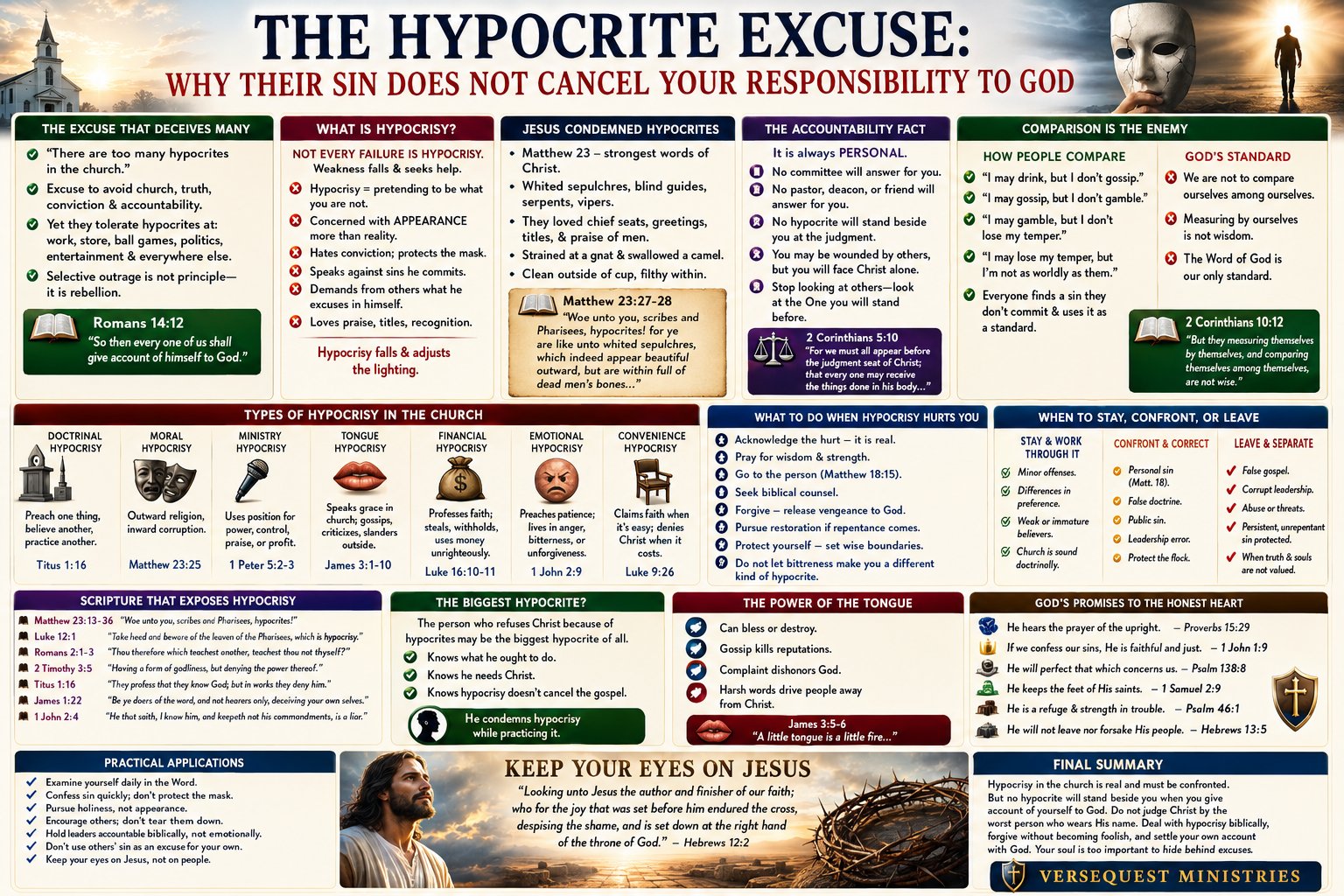
- The Hypocrite Excuse – Why Their Sin Does Not Cancel Your Responsibility to God (KJV Bible Study Chart)
- Confront the hypocrite excuse with this detailed KJV chart covering church hypocrisy, personal accountability, religious pretense, comparison, church hurt, correction, boundaries, and keeping your eyes on Jesus.
- $3.99
- Add to cart
-
-
KJV Bible Study Resources
-
-60%
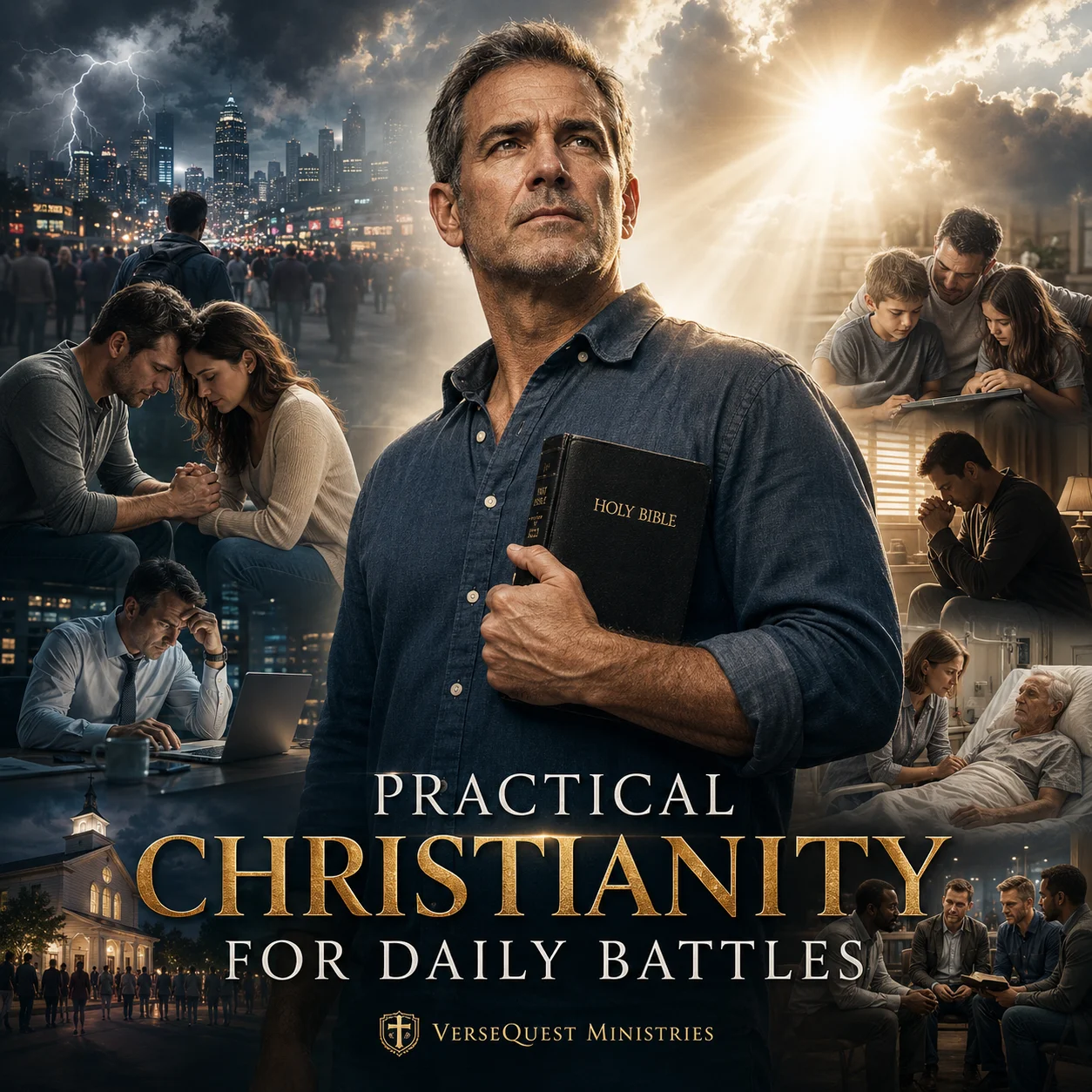
- Practical Christianity for Daily Battles – 329-Page KJV Study PDF
- A premium 329-page KJV study PDF with 40 full essays applying sound, rightly divided Bible doctrine to real daily Christian battles. Topics include temptation, anxiety, marriage, parenting, pornography, grief, church…
- Original price was: $24.99.$9.99Current price is: $9.99.
- Add to cart
-
-60%
-
October 2026 Devotional
-

- VerseQuest Daily — October 2026: Identity in Christ and the Daily Walk
- VerseQuest Daily — October 2026 is a 67-page downloadable PDF containing thirty-one KJV devotionals on identity in Christ and the daily Christian walk. Each reading includes an assigned Scripture passage,…
- $6.99
- Add to cart
-
-
Biblical Submission
-
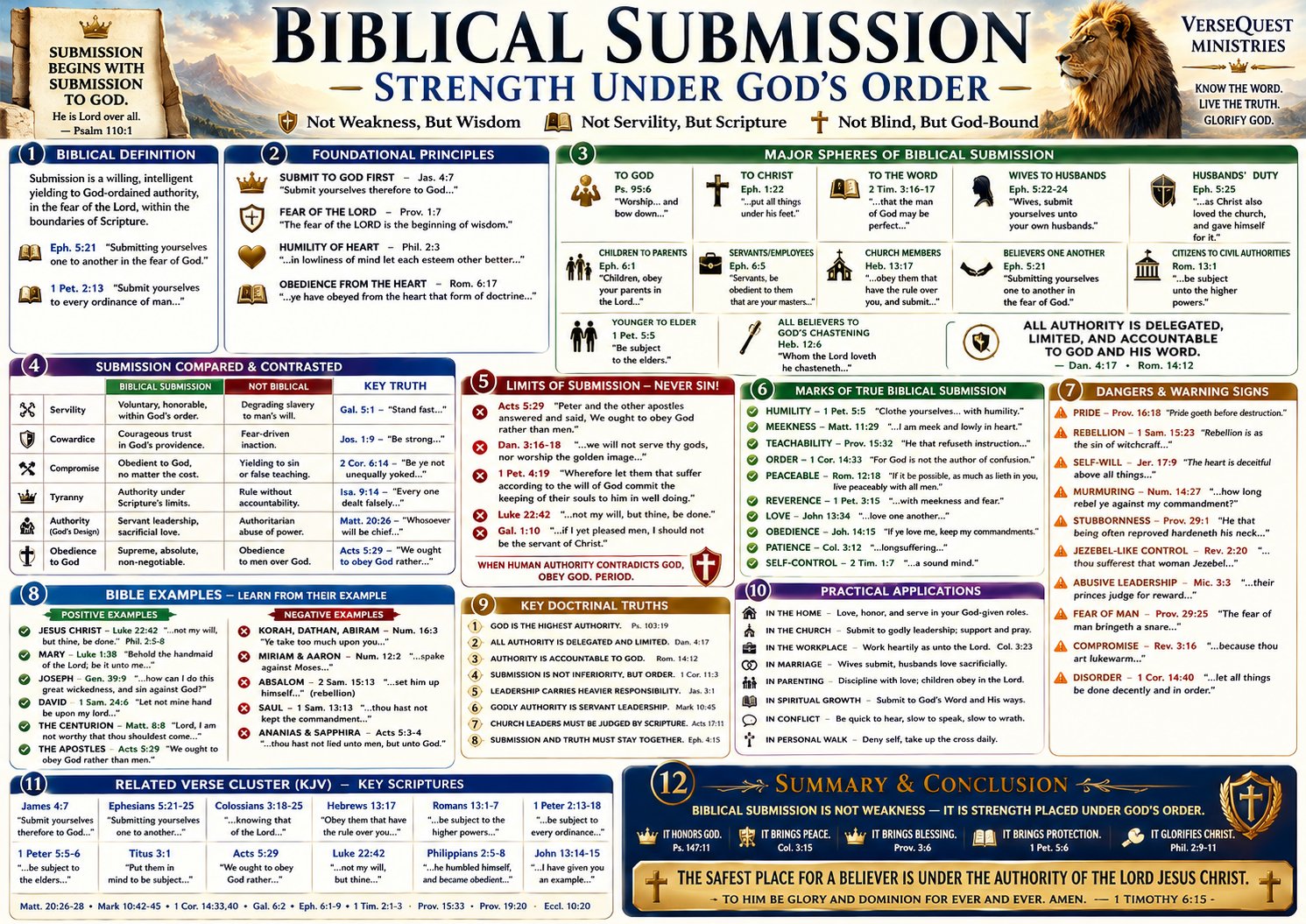
- Biblical Submission Bible Study Chart – Strength Under God’s Order, Authority, and Scriptural Limits (KJV) Product Description
- Study biblical submission with this detailed KJV chart covering God-ordained authority, servant leadership, obedience, marriage, church, government, and the Scriptural limits of submission.
- $3.99
- Add to cart
-
-
The Clock Is Eating Your Life
-
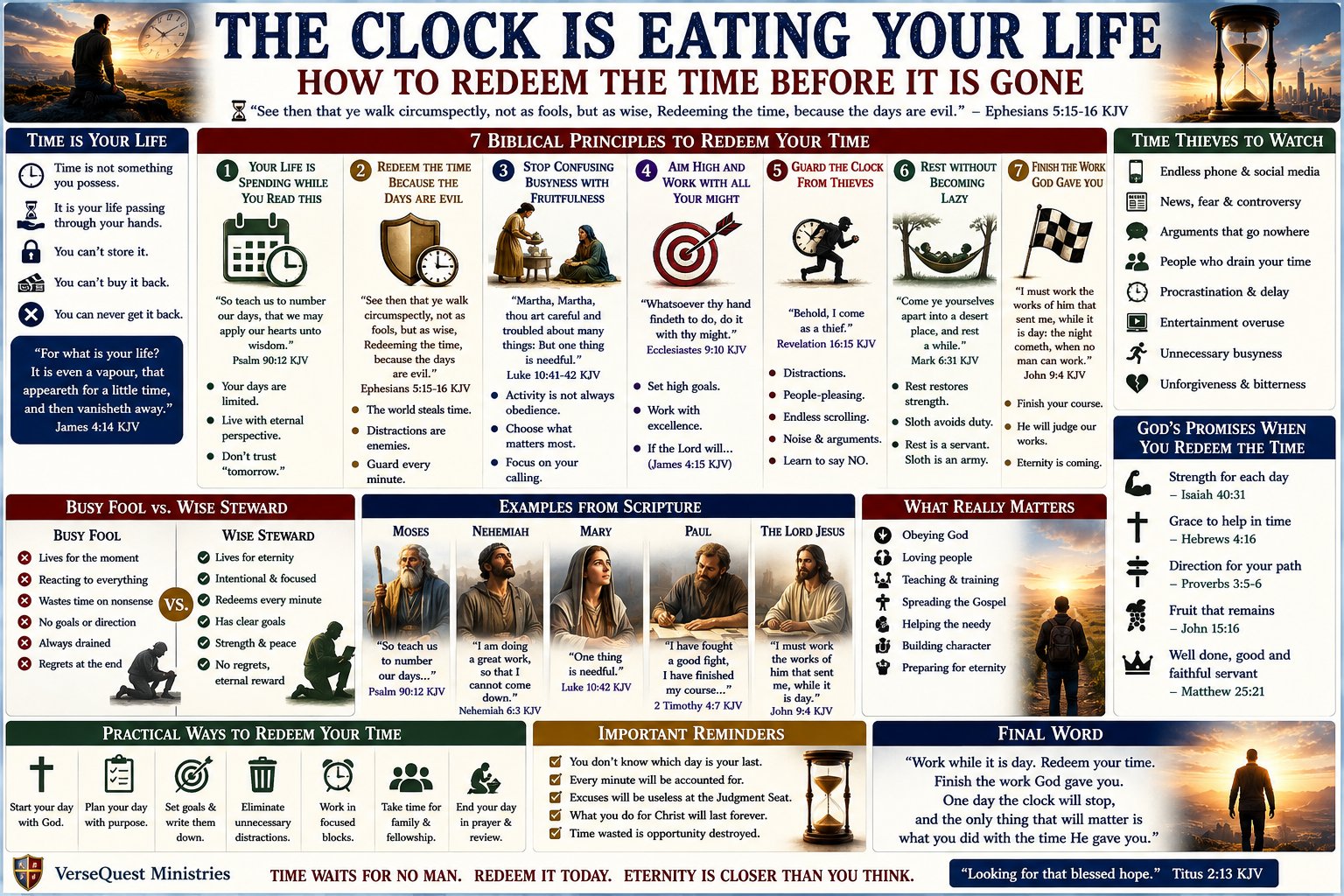
- The Clock Is Eating Your Life – How to Redeem the Time Before It Is Gone (KJV Bible Study Chart)
- Learn how to redeem the time with this detailed KJV chart covering biblical priorities, busyness versus fruitfulness, time thieves, diligence, proper rest, practical scheduling, eternal purpose, and finishing the work…
- $3.99
- Add to cart
-