
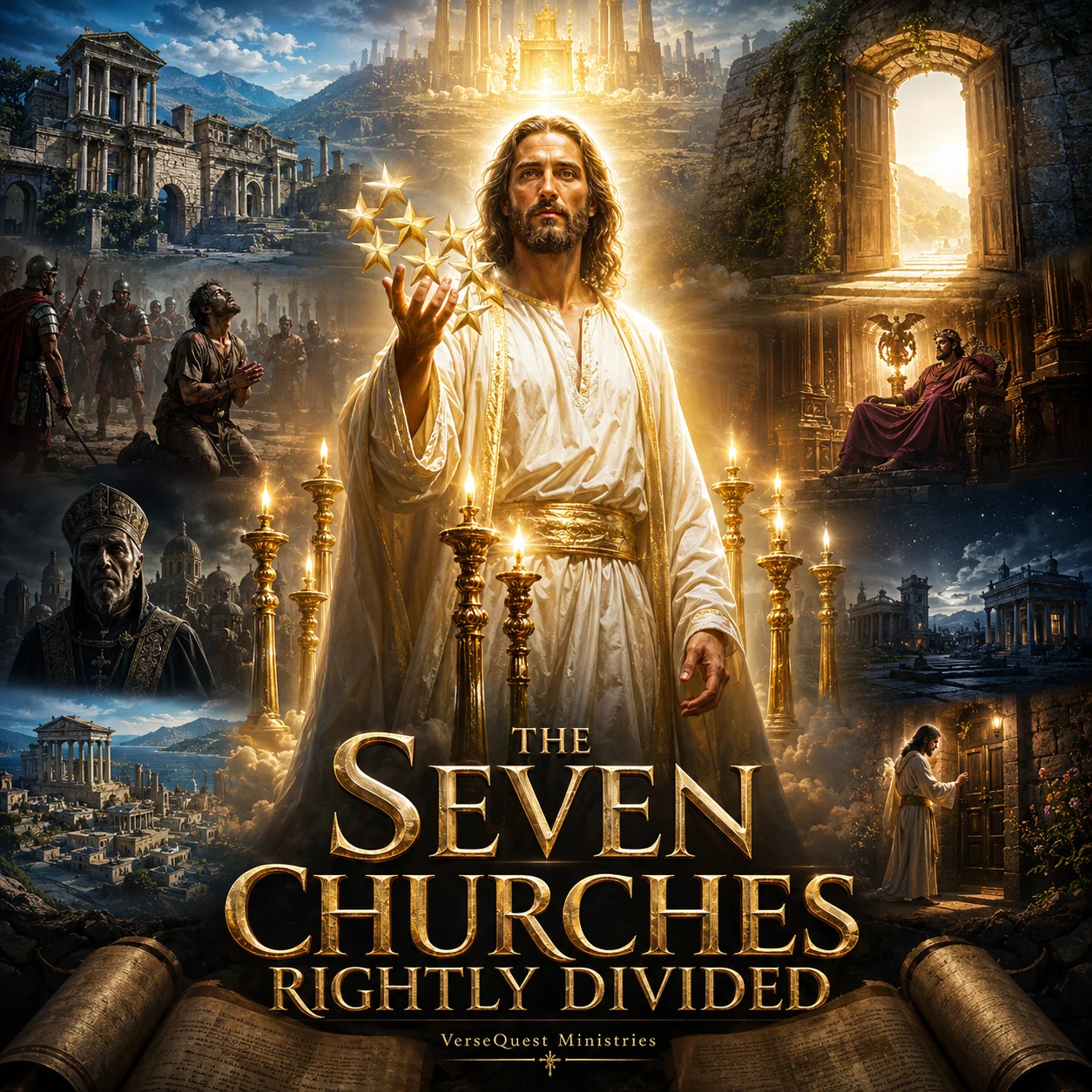
The Seven Churches Rightly Divided – 691-Page PDF Book
A monumental 691-page King James Bible study of the seven churches in Revelation 2–3.
The Seven Churches Rightly Divided examines Ephesus, Smyrna, Pergamos, Thyatira, Sardis, Philadelphia, and Laodicea through a powerful threefold approach:
Literal Historical • Spiritual Application • Prophetical View
This downloadable PDF contains 100 detailed studies, a full introduction and conclusion, doctrinal comparisons, church-history analysis, overcomer promises, prophetic applications, and an exclusive full-color Bible study chart.
Format: Digital PDF
Length: 691 pages
Price: $29.99
Publisher: VerseQuest Ministries
Original price was: $29.99.$19.99Current price is: $19.99.
Description
The Seven Churches Rightly Divided
A 691-Page KJV Bible Study of Revelation 2–3
The seven churches of Revelation are among the most studied, debated, misunderstood, and prophetically significant churches in the entire Bible.
What did Jesus Christ mean when He addressed Ephesus, Smyrna, Pergamos, Thyatira, Sardis, Philadelphia, and Laodicea?
Were these only seven historical churches located in Asia?
Do their spiritual conditions still appear in churches today?
Do they also present a prophetical panorama of professing Christianity from the apostolic period to the final Laodicean age?
The Seven Churches Rightly Divided answers these questions through an extensive 691-page study grounded in the King James Bible and organized around a strong threefold interpretation:
1. Literal Historical Interpretation
Each letter was originally written to a real local church in a real city. The book examines the historical setting, religious environment, political pressures, doctrinal problems, local characteristics, warnings, and promises connected with each congregation.
2. Spiritual Application
Every church and individual believer can learn from these seven messages.
Ephesus warns that correct doctrine can survive after first love has departed.
Smyrna proves that suffering and poverty do not mean a church has failed.
Pergamos exposes the danger of compromise with worldly and political power.
Thyatira reveals what happens when corruption is allowed to teach.
Sardis warns that a living reputation can hide a dead spiritual condition.
Philadelphia demonstrates what Christ can accomplish through a church with little strength that keeps His word.
Laodicea shows how prosperity, self-sufficiency, and lukewarm religion can leave Christ standing outside His own church.
3. Prophetical Interpretation
The seven churches also present a broad prophetical panorama of professing church history:
Ephesus — Apostolic labor and declining love
Smyrna — Persecution and martyrdom
Pergamos — Political compromise and worldly union
Thyatira — Roman ecclesiastical domination and corruption
Sardis — The incomplete Protestant Reformation
Philadelphia — Bible preservation, revival, missions, and open doors
Laodicea — End-time wealth, apostasy, and lukewarm religion
This study does not force church history into artificial dates that Scripture never supplies. Instead, it demonstrates how the seven dominant conditions broadly correspond with the historical development of professing Christianity while recognizing that all seven conditions may appear in any generation.
What This Book Examines
This comprehensive Bible study addresses major questions surrounding Revelation 2 and 3, including:
- Why Jesus Christ selected seven churches
- Christ walking among the seven golden candlesticks
- The angels or messengers of the churches
- Why grace still examines Christian works
- The removal of a local church’s candlestick
- The difference between corporate judgment and lost salvation
- Ephesus leaving its first love
- False apostles and Nicolaitan teaching
- Smyrna’s persecution and the traditional ten Roman persecutions
- Faithfulness unto death and the crown of life
- Pergamos dwelling where Satan’s seat was
- Constantine, political favor, and the church’s marriage to worldly power
- Balaam, Nicolaitanism, and religious compromise
- Thyatira, Jezebel, and the long Roman night
- Sardis and the half-finished Protestant Reformation
- Philadelphia, the King James Bible, missions, and open doors
- Laodicea, textual criticism, modernism, religious wealth, and lukewarmness
- Christ standing outside His own church
- The meaning of the overcomer promises
- The tree of life
- Hidden manna, the white stone, and the new name
- White garments and public vindication
- The book of life and eternal security
- The pretribulation rapture
- The worldwide hour of temptation
- The rod of iron and Christ’s coming kingdom
- New Jerusalem
- The believer’s future reign with Christ
Salvation, Service, and Eternal Security Rightly Divided
A major emphasis of this book is the biblical difference between salvation and Christian service.
Salvation is the free gift of God received through faith in the finished work of Jesus Christ. The believer is justified, sealed, accepted in Christ, and given eternal life.
Christian service is later examined for fellowship, testimony, chastening, crowns, rewards, and future responsibility.
This distinction helps explain difficult passages involving:
- Candlestick removal
- Crowns that may be lost
- White garments
- The book of life
- Overcoming
- Faithfulness unto death
- Future reigning with Christ
The book refuses both works salvation and careless Christianity. Grace secures the believer, while the judgment seat of Christ gives every act of service eternal significance.
The Seven Churches and Bible Prophecy
Understanding these seven letters opens the structure of Revelation and many other major New Testament prophecies.
The study helps readers distinguish:
- Israel from the Church
- The rapture from the Second Advent
- Ordinary Christian tribulation from Daniel’s seventieth week
- The judgment seat of Christ from the great white throne
- Salvation from rewards
- The present Church Age from the coming Millennium
- The spiritual Body of Christ from individual local churches
The seven churches serve as the doorway into Revelation’s later prophecies concerning the Tribulation, Antichrist, Israel’s restoration, the return of Christ, the Millennium, final judgment, and New Jerusalem.
Included in This PDF Book
- 691 professionally arranged pages
- 100 detailed Bible study chapters
- Extensive introduction
- Thorough final conclusion
- Ten organized major sections
- Historical and doctrinal comparisons
- KJV Scripture throughout
- Prophetical church-age panorama
- Overcomer promise studies
- Detailed table of contents
- Full-color series artwork
- Exclusive threefold interpretation chart
- Literal, spiritual, and prophetical applications
Who This Book Is For
This PDF is ideal for:
- Pastors and Bible teachers
- Sunday school instructors
- Revelation study groups
- Prophecy students
- King James Bible believers
- Dispensational Bible students
- Church-history researchers
- Christians studying Revelation 2–3
- Readers seeking a deeper understanding of the Church Age
- Believers wanting difficult passages explained clearly
Written to Be Deep but Understandable
This is not a shallow overview, but neither is it written to bury the reader beneath academic language.
The studies go deeply into doctrine, prophecy, church history, eternal security, rewards, and dispensational distinctions while remaining clear enough for ordinary Bible readers to follow.
Every chapter is designed to make the text easier to understand, teach, remember, and apply.
Digital Product Information
Product: Digital Bible study book
Format: PDF
Pages: 691
Price: $29.99
Delivery: Immediate digital download after purchase
Publisher: VerseQuest Ministries
No physical book will be shipped.
Seven Churches of Revelation, Revelation 2–3, Threefold Interpretation, Literal Historical Interpretation, Spiritual Application, Prophetical Church Ages, Christ Among the Candlesticks, Local Church Accountability, First Love, Persecution, Church and State Compromise, Roman Ecclesiastical Corruption, Protestant Reformation, King James Bible Preservation, Missionary Open Doors, Laodicean Apostasy, Overcomer Promises, Eternal Security, Christian Rewards, Judgment Seat of Christ, Pretribulation Rapture, Israel and the Church, Second Coming, Millennial Kingdom, New Jerusalem, Rightly Dividing the Word of Truth
The Seven Churches Rightly Divided is a 691-page King James Bible study containing 100 detailed lessons on Revelation 2–3. The book examines Ephesus, Smyrna, Pergamos, Thyatira, Sardis, Philadelphia, and Laodicea through a complete threefold interpretation: literal historical meaning, spiritual application, and prophetical church-age correspondence.
The literal historical study treats all seven churches as real first-century congregations located in Asia. Their cities, religious pressures, political environments, local conditions, strengths, failures, warnings, and promises are examined carefully. Historical information is used to illuminate the biblical text, but the King James Bible remains the final authority.
The spiritual application demonstrates that all seven church conditions can appear in any generation. Ephesus warns against labor without first love. Smyrna teaches faithfulness through suffering. Pergamos exposes compromise with worldly power. Thyatira warns against allowing corruption to teach. Sardis reveals how reputation can hide spiritual deadness. Philadelphia shows what Christ can accomplish through a church with little strength that keeps His word. Laodicea exposes prosperity, self-sufficiency, lukewarmness, and religion operating while Christ stands outside.
The prophetical view presents the seven churches as a broad panorama of professing church history: apostolic decline, Roman persecution, political compromise, medieval ecclesiastical corruption, the incomplete Protestant Reformation, Bible preservation and missionary expansion, and final Laodicean apostasy. These are dominant historical conditions rather than rigid, exclusive periods with inspired beginning and ending dates.
Special attention is given to difficult doctrines and frequently misunderstood passages, including the seven candlesticks, the angels of the churches, Nicolaitan deeds and doctrine, Balaam, Jezebel, the ten days of persecution, the crown of life, hidden manna, the white stone, white garments, the book of life, the open door, the hour of temptation, Christ knocking outside His own church, and the promises made to the overcomer.
The study clearly distinguishes salvation from service. Eternal life is the free gift of God received through faith in the finished work of Jesus Christ. The believer is justified, sealed, accepted in Christ, and placed into one spiritual Body. Christian works are later examined for testimony, fellowship, chastening, crowns, rewards, and future responsibility. Candlestick removal, lost crowns, defiled garments, and corporate church judgment must never be confused with the loss of a born-again believer’s eternal salvation.
The book also explains the distinction between Israel and the Church, the rapture and the Second Advent, ordinary Christian suffering and the future Tribulation, the judgment seat of Christ and the great white throne, the present Church Age and the Millennial Kingdom, and the local church and the spiritual Body of Christ.
The overcomer promises are traced from the tree of life and the second death to hidden manna, the white stone, the new name, white raiment, the book of life, authority over the nations, New Jerusalem, and sitting with Christ in His throne. Every believer is positionally an overcomer through faith in Jesus Christ, while practical faithfulness affects reward, recognition, fellowship, and future reigning.
The final sections show how Revelation 2–3 opens the larger prophetic structure of the New Testament. The Church will be caught up to meet Christ, Israel will return to the center of prophecy, the worldwide Tribulation will unfold, Antichrist will rise, Jesus Christ will return visibly, the nations will be judged, the Millennium will begin, and the redeemed will serve beneath the King before the final eternal order of New Jerusalem.
This study is deep but written plainly. It is designed for pastors, Bible teachers, Sunday school classes, prophecy students, Revelation study groups, and individual believers who want a thorough, organized, KJV Bible-believing explanation of the seven churches.
The central challenge of the book remains Christ’s repeated command:
“He that hath an ear, let him hear what the Spirit saith unto the churches.” — Revelation 3:22
This study teaches believers to evaluate churches according to Christ’s verdict rather than attendance, wealth, reputation, political influence, or visible success. Every congregation must preserve love for Christ, sound doctrine, biblical holiness, faithful preaching, prayer, missions, and submission to the word of God.
Ephesus warns against labor without first love. Smyrna teaches faithfulness during suffering. Pergamos exposes compromise with worldly and political power. Thyatira warns against tolerating false doctrine and religious corruption. Sardis shows that a living reputation may hide spiritual death. Philadelphia demonstrates how Christ uses churches with little strength that keep His word. Laodicea reveals how prosperity and self-sufficiency can leave Christ standing outside His own church.
The book also teaches readers to distinguish salvation from service, eternal security from corporate church judgment, crowns from eternal life, the rapture from the Second Advent, Israel from the Church, the judgment seat of Christ from the great white throne, and the present Church Age from the coming Tribulation and Millennium.
Readers are challenged to hear what the Spirit says, examine their own church and personal testimony, reject compromise, strengthen what remains, hold fast to the King James Bible, use every open gospel door, remain watchful for Christ’s return, and serve faithfully in light of future rewards and kingdom responsibility.
The King James Bible; The Seven Churches Rightly Divided — Threefold Interpretation Chart by VerseQuest Ministries; the VerseQuest Revelation Expanded Study Series; VerseQuest Sermon Outline: Rightly Dividing the Ages; VerseQuest Sermon Outline: The Three Groups in Scripture — Jews, Gentiles, and the Church of God; VerseQuest Sermon Outline: Things Spoken and Things Kept Secret; related VerseQuest studies on the pretribulation rapture, eternal security, the judgment seat of Christ, the book of life, the Millennial Kingdom, and New Jerusalem.
Related products
-
Doctrine
-
-50%
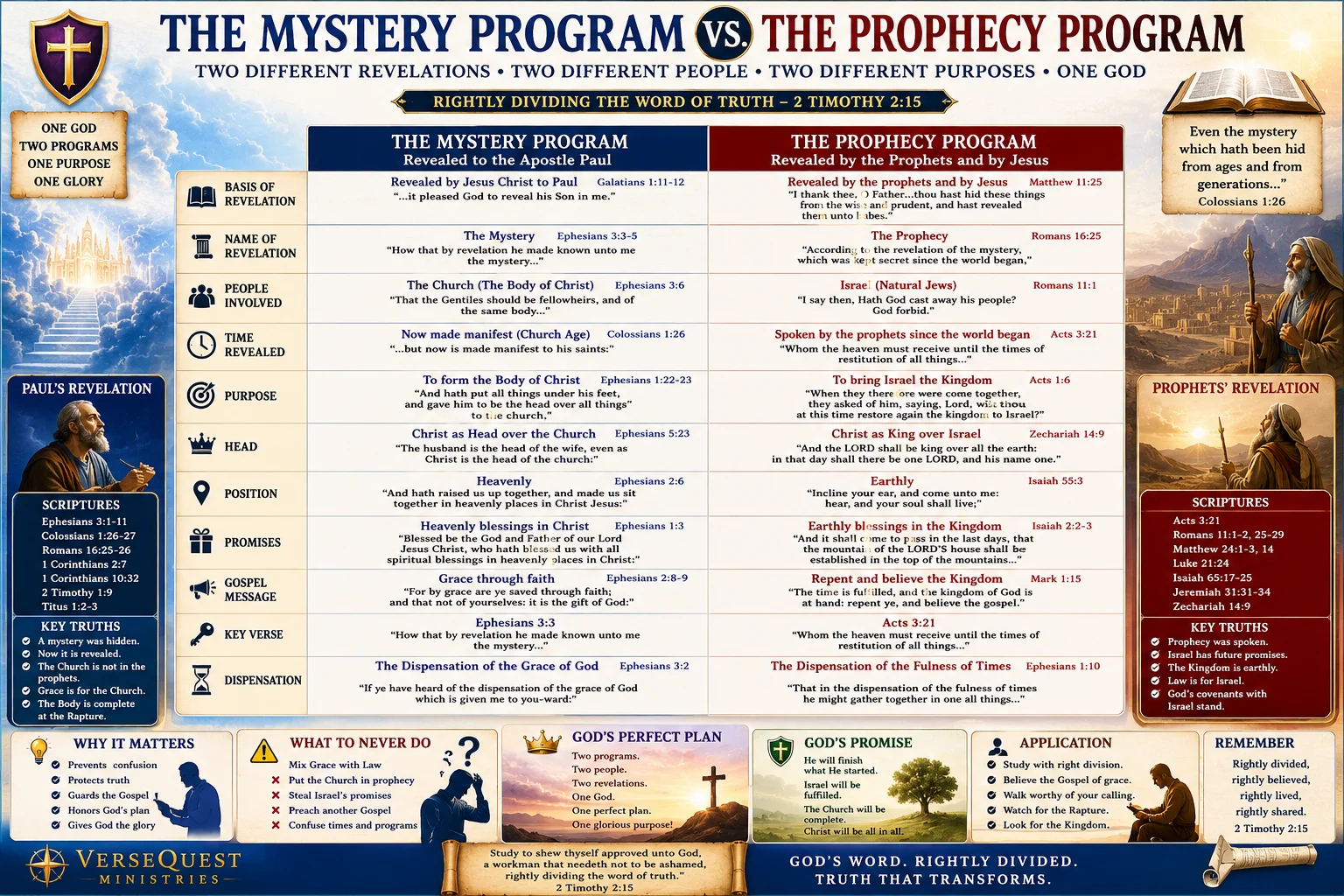
- The Mystery Program vs. Prophecy Program Chart — KJV Rightly Divided
- Premium printable KJV Bible study chart comparing the mystery program revealed through Paul with the prophecy program spoken by the prophets. Rightly divided and designed for teaching and personal study.
- Original price was: $10.00.$4.99Current price is: $4.99.
- Add to cart
-
-50%
-
Revelation
-
-71%
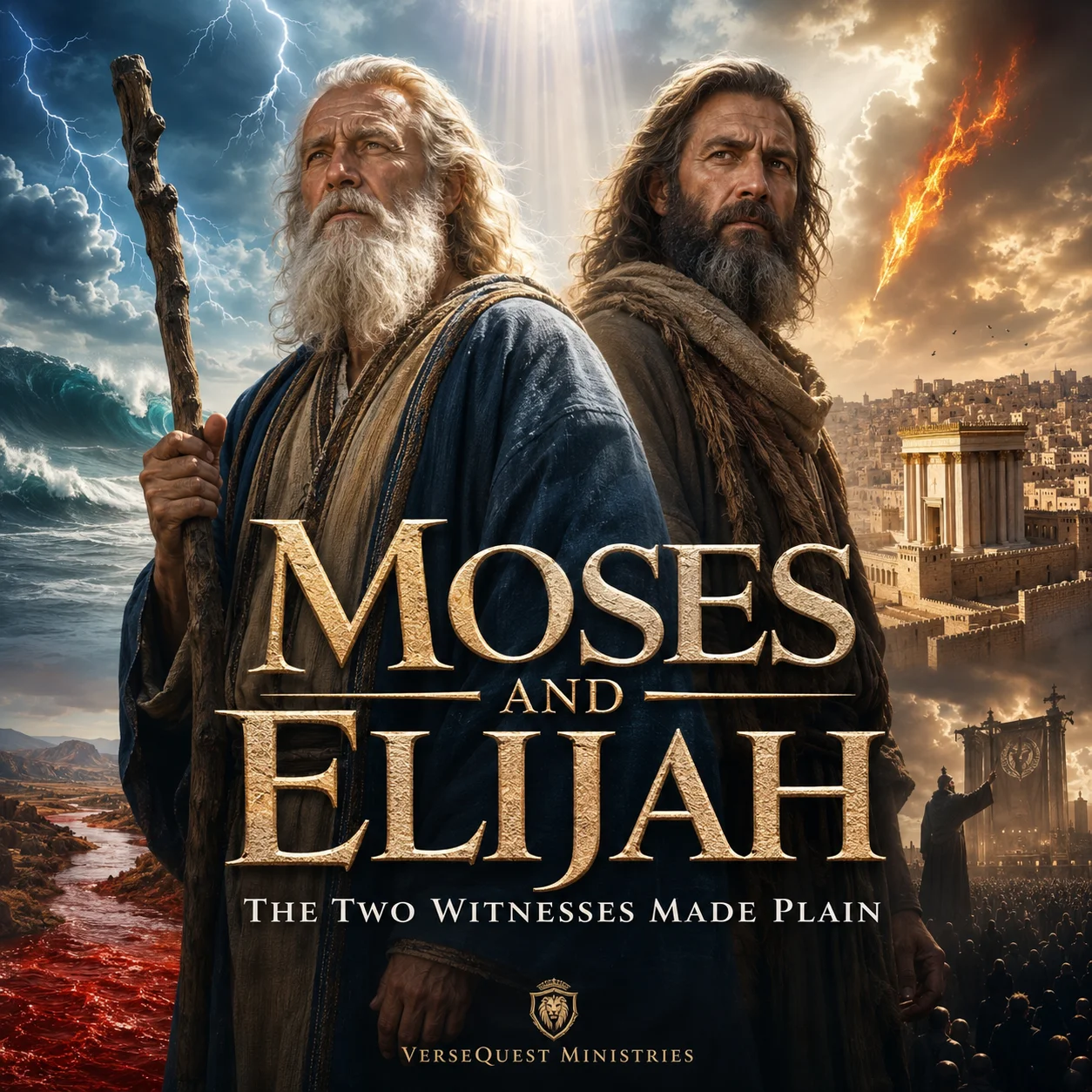
- Moses and Elijah: The Two Witnesses Made Plain
- Moses and Elijah: The Two Witnesses Made Plain is a 636-page premium VerseQuest PDF study proving from Scripture that the Two Witnesses of Revelation 11 are Moses and Elijah. This…
- Original price was: $34.99.$9.99Current price is: $9.99.
- Add to cart
-
-71%
-
Doctrine
-
-50%
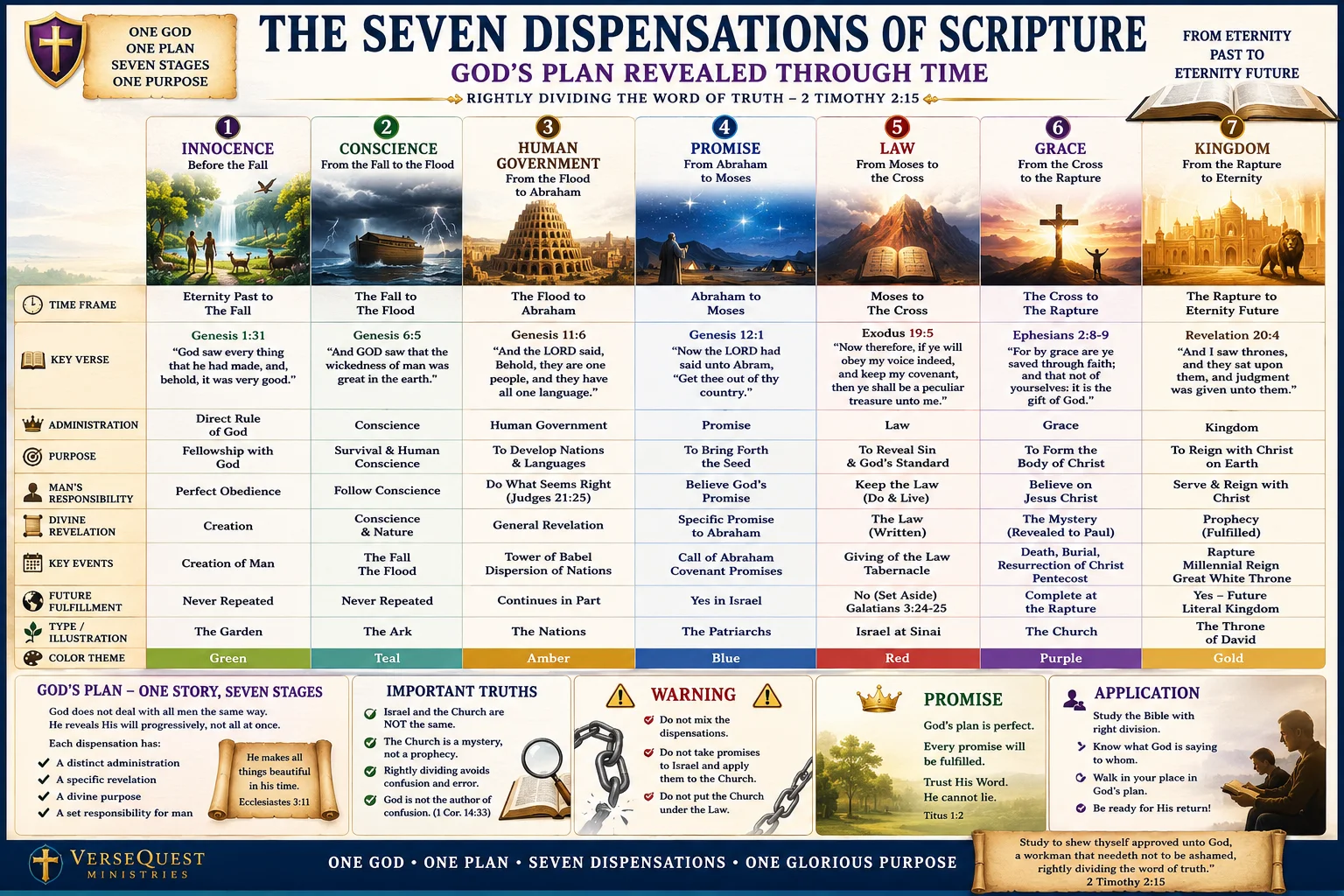
- The Seven Dispensations of Scripture Chart — KJV Rightly Divided (Copy)
- Premium printable KJV Bible study chart explaining the seven dispensations of Scripture from Innocence to the Kingdom. Rightly divided, visually organized, and designed for teaching, printing, and personal study.
- Original price was: $10.00.$4.99Current price is: $4.99.
- Add to cart
-
-50%
-
Heaven
-
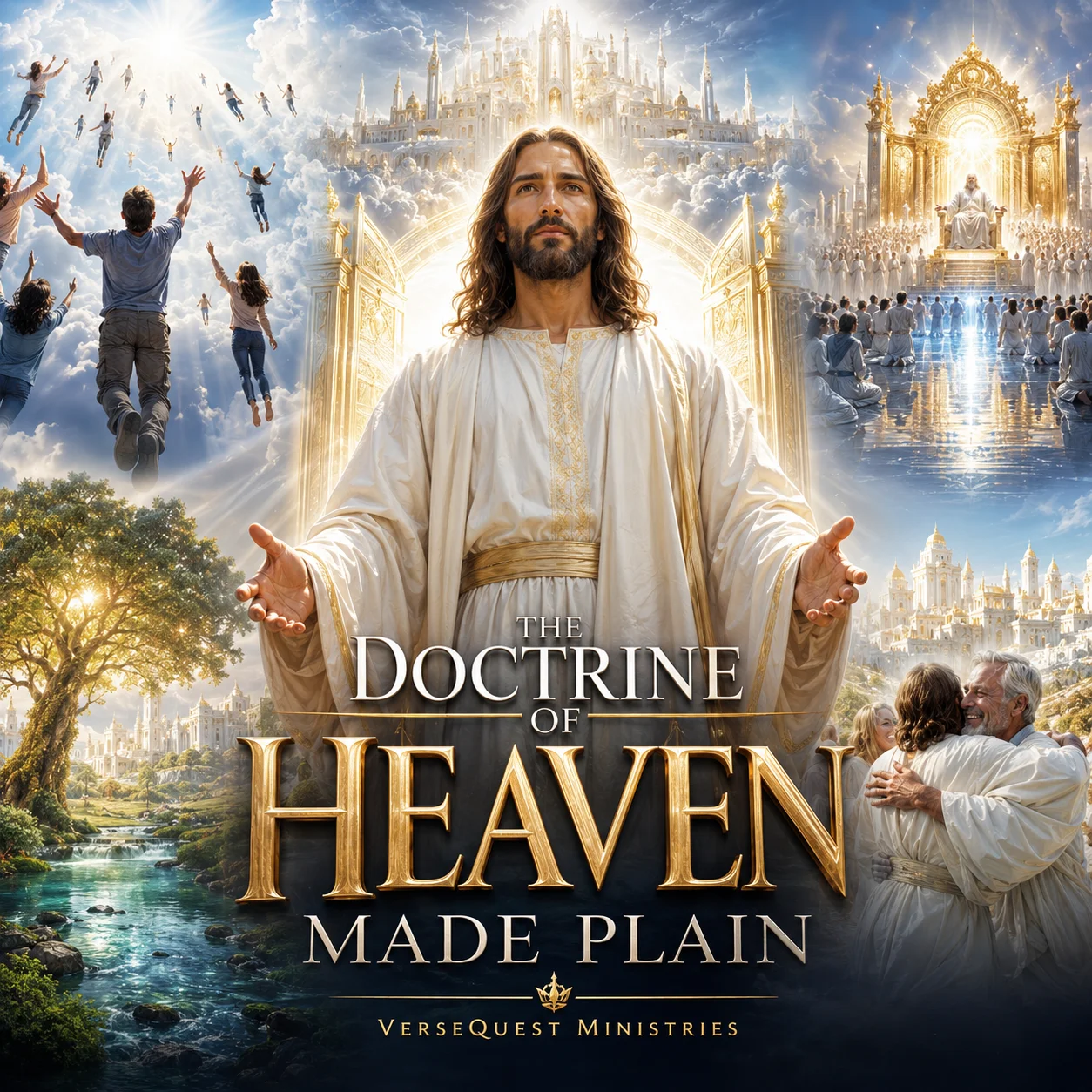
- The Doctrine of Heaven Made Plain — 599-Page KJV Bible Study PDF
- A massive 599-page KJV, rightly divided study on heaven, covering the present heaven, resurrection body, Rapture, Millennium, New Jerusalem, eternal state, hard questions, funeral lies, and cult errors.
- $34.99
- Add to cart
-
-
Doctrine
-
-50%
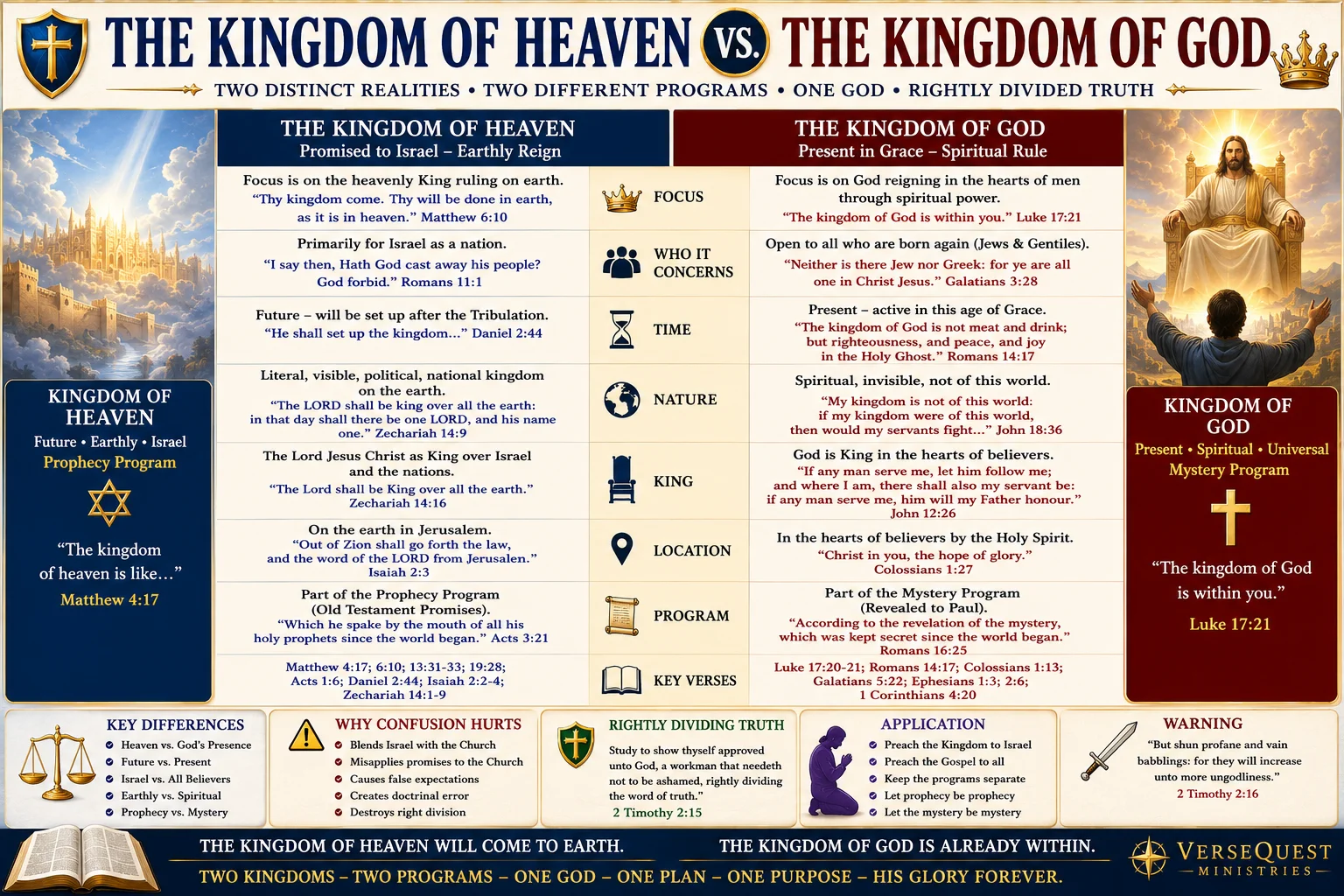
- The Kingdom of Heaven vs. The Kingdom of God Chart — KJV Rightly Divided
- Premium printable KJV Bible study chart comparing the Kingdom of Heaven and the Kingdom of God from a rightly divided perspective, showing their distinctions, purposes, promises, and biblical application.
- Original price was: $10.00.$4.99Current price is: $4.99.
- Add to cart
-
-50%