
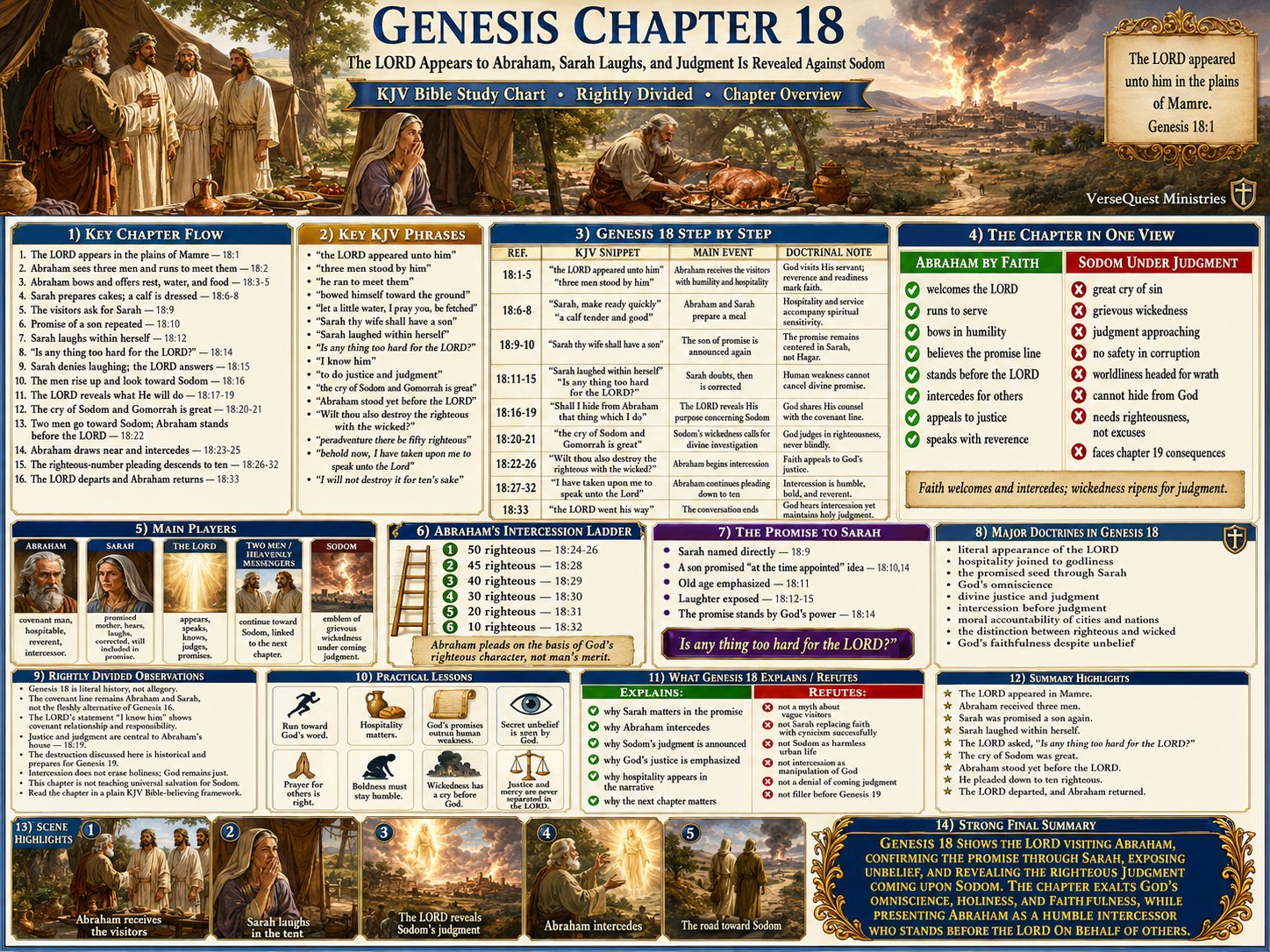
Genesis Chapter 18 Bible Study Chart – The LORD Appears to Abraham, Sarah Laughs, and Judgment Is Revealed Against Sodom (KJV)
Explore Genesis Chapter 18 with this detailed KJV Bible study chart covering the LORD’s visit to Abraham, Sarah’s laughter, Isaac’s promise, Abraham’s intercession, and the coming judgment of Sodom.
$3.99
Description
Genesis Chapter 18: The LORD Appears to Abraham, Sarah Laughs, and Judgment Is Revealed Against Sodom is a detailed KJV Bible study chart examining the divine visit in the plains of Mamre, Abraham’s hospitality, the renewed promise of Isaac’s birth, Sarah’s unbelieving laughter, the revelation of Sodom’s coming judgment, and Abraham’s remarkable intercession before the LORD.
The chapter begins with the LORD appearing to Abraham as he sits in the tent door during the heat of the day. Abraham sees three men, runs to meet them, bows himself toward the ground, and urgently offers rest, water, bread, and a prepared meal. His response demonstrates reverence, readiness, generosity, and hospitality toward heavenly visitors.
Abraham does not offer casual leftovers. Sarah quickly prepares cakes, Abraham selects a tender calf, and the meal is served with butter and milk. The scene establishes hospitality as a serious biblical virtue and shows Abraham serving eagerly rather than reluctantly.
The chart follows Genesis 18 step by step, distinguishing the LORD from the two men who later continue toward Sodom. The appearance is treated as literal biblical history rather than mythology, while the chapter’s language reveals that God personally communicates with Abraham concerning both promise and judgment.
During the meal, the visitors ask, “Where is Sarah thy wife?” The LORD then repeats the promise that Sarah will bear a son. The covenant line remains centred upon Abraham and Sarah—not Hagar, Ishmael, or a human substitute. Isaac will be born at the appointed time according to God’s power.
Sarah hears the promise from inside the tent and laughs within herself. Both Abraham and Sarah are advanced in age, and the natural circumstances appear impossible. Yet the LORD exposes Sarah’s hidden response and asks one of Scripture’s great questions: “Is any thing too hard for the LORD?”
This question reaches beyond Sarah’s immediate situation. The birth of Isaac will not depend upon human strength, favourable circumstances, or natural probability. The Almighty God who established the covenant is fully able to fulfil the promise when every human resource has failed.
Sarah denies that she laughed because she is afraid, but the LORD answers, “Nay; but thou didst laugh.” The exchange demonstrates God’s complete knowledge of hidden thoughts, private reactions, fear, and unbelief. Secret doubt may remain unseen by others, but it is never concealed from God.
The chapter then turns from covenant promise to approaching judgment. The men rise and look toward Sodom, while Abraham accompanies them on their way. The LORD asks whether He should hide from Abraham what He is about to do, revealing the special covenant relationship and responsibility attached to Abraham’s calling.
God declares that Abraham will become a great and mighty nation and that all nations of the earth will be blessed in him. He also explains that Abraham is to command his children and household to keep the way of the LORD and practise justice and judgment. Covenant privilege therefore carries moral and instructional responsibility.
The cry of Sodom and Gomorrah is great, and their sin is very grievous. Divine judgment is not based upon rumour, prejudice, or arbitrary anger. God sees, knows, investigates, and judges with perfect righteousness. The chapter reveals both His omniscience and His moral government over cities and nations.
The two men continue toward Sodom, but Abraham remains standing before the LORD. He draws near and begins one of the Bible’s greatest prayers of intercession: “Wilt thou also destroy the righteous with the wicked?” Abraham’s appeal is not grounded in sentimental denial of Sodom’s wickedness. It rests upon the righteous character of the Judge of all the earth.
The chart traces Abraham’s intercession from fifty righteous people to forty-five, forty, thirty, twenty, and finally ten. At every stage, the LORD patiently answers. Abraham speaks with humility, acknowledging that he is but dust and ashes, yet he also speaks with courage, persistence, and reverence.
Abraham does not ask God to call evil good or overlook unrepentant wickedness. He appeals for the preservation of the city if a righteous remnant can be found within it. His prayer demonstrates that biblical intercession takes sin seriously while seeking mercy for others.
The chapter presents a powerful contrast between Abraham by faith and Sodom under judgment. Abraham welcomes the LORD, runs to serve, bows in humility, believes the covenant line, stands before God, intercedes for others, and appeals to divine justice. Sodom is marked by grievous wickedness, an increasing cry of sin, approaching wrath, and the absence of safety within corruption.
The destruction itself does not occur until Genesis 19, but Genesis 18 explains why judgment is coming. Sodom is not destroyed because of an impulsive divine reaction. Its wickedness has become grievous, its cry has reached heaven, and its moral condition stands ready for righteous judgment.
Additional sections identify the chapter’s major doctrines, including the literal appearance of the LORD, hospitality joined with godliness, God’s omniscience, the promised seed through Sarah, divine justice, judgment before destruction, Abraham’s intercession, moral accountability, the distinction between righteous and wicked, and God’s faithfulness despite human unbelief.
Practical lessons emphasize running toward God’s Word, serving others willingly, believing promises that surpass human ability, remembering that God sees hidden unbelief, praying for others before judgment falls, approaching God boldly but reverently, and trusting that the Judge of all the earth will always do right.
This chart is ideal for personal Bible study, Genesis teaching, Abraham and Sarah studies, the promised birth of Isaac, biblical hospitality, prayer and intercession, divine judgment, Sodom and Gomorrah studies, Sunday school, homeschool Bible curriculum, Christian schools, Bible institutes, sermon preparation, and rightly divided study of God’s covenant dealings.
The LORD appearing to Abraham, plains of Mamre, biblical hospitality, heavenly visitors, Sarah’s laughter, hidden unbelief, nothing too hard for the LORD, promised son Isaac, appointed time, Abrahamic covenant, divine omniscience, Sodom and Gomorrah, grievous sin, righteous judgment, Abraham’s intercession, prayer for others, righteous remnant, justice and mercy, Judge of all the earth, covenant responsibility
Genesis 18 begins with a literal appearance of the LORD to Abraham in the plains of Mamre. The chapter presents divine visitation within real history, involving conversation, hospitality, covenant promise, moral instruction, and coming judgment.
Abraham responds immediately when he sees the visitors. He runs, bows, prepares food, and serves. His hospitality is active, generous, and reverent. Biblical service does not wait to be begged before responding to a genuine need.
The promise remains centred upon Sarah. God does not adjust His plan to accommodate the fleshly arrangement of Genesis 16. Isaac will come through the woman whom God appointed and at the time God declared.
Sarah’s laughter reveals the pressure created by long delay and impossible circumstances. Her body and Abraham’s age offer no natural basis for confidence, but the promise rests upon God’s power rather than human ability.
“Is any thing too hard for the LORD?” becomes the doctrinal centre of the promise section. The question exposes the weakness of judging divine promises solely by present circumstances.
The LORD knows that Sarah laughed within herself. God sees thoughts before they become words and unbelief before it becomes public action. His correction is direct, but the promise is not cancelled by Sarah’s moment of weakness.
Abraham’s covenant position includes responsibility. He is expected to command his children and household to keep the way of the LORD. Biblical leadership must pass truth to the next generation rather than merely enjoy personal blessing.
Sodom’s judgment is morally grounded. Its cry is great, and its sin is grievous. God’s willingness to examine the matter emphasizes righteous judgment rather than ignorance, haste, or arbitrary punishment.
Abraham’s intercession combines boldness with humility. He draws near, asks repeatedly, appeals to God’s character, and remembers that he is dust and ashes. Effective intercession neither treats God casually nor remains silent when others face danger.
Abraham does not defend Sodom’s wickedness. He pleads concerning the righteous within the city. Biblical mercy never requires calling evil harmless or accusing divine justice of cruelty.
The descending numbers—from fifty to ten—show Abraham’s persistence and God’s patience. The conversation also prepares the reader for Lot’s deliverance and Sodom’s destruction in Genesis 19.
The LORD remains righteous whether He grants mercy or executes judgment. Abraham’s question, “Shall not the Judge of all the earth do right?” receives its full answer throughout Scripture: God’s judgments are always holy, informed, measured, and just.
Genesis chapter study, Abraham and Sarah lessons, biblical hospitality, faith during impossible circumstances, overcoming unbelief, prayer and intercession, God’s omniscience, divine justice, Sodom and Gomorrah teaching, covenant responsibility, family discipleship, Sunday school lessons, homeschool Bible curriculum, Christian school instruction, Bible institute classes, sermon preparation, pastoral prayer training, biblical worldview instruction
King James Bible, Strong’s Concordance, Thompson Chain-Reference Bible, Treasury of Scripture Knowledge, Nave’s Topical Bible, Bible atlas, maps of Mamre and the cities of the plain, Genesis commentary notes, Abrahamic covenant studies, prayer and intercession resources, studies on Sodom and Gomorrah, Scripture cross-reference guide, Hebrews 11 study materials, VerseQuest Genesis chapter charts
Related products
-
Study Books (PDF)
-
-25%
- The Mysteries of God Revealed for the Church Age – Premium Essay Series PDF
- A premium 404-page VerseQuest Ministries digital PDF study book featuring 54 detailed KJV-only essays on the mysteries of God revealed for the Church Age. This rightly divided study covers the…
- Original price was: $39.99.$29.99Current price is: $29.99.
- Add to cart
-
-25%
-
Prophecy Studies
-
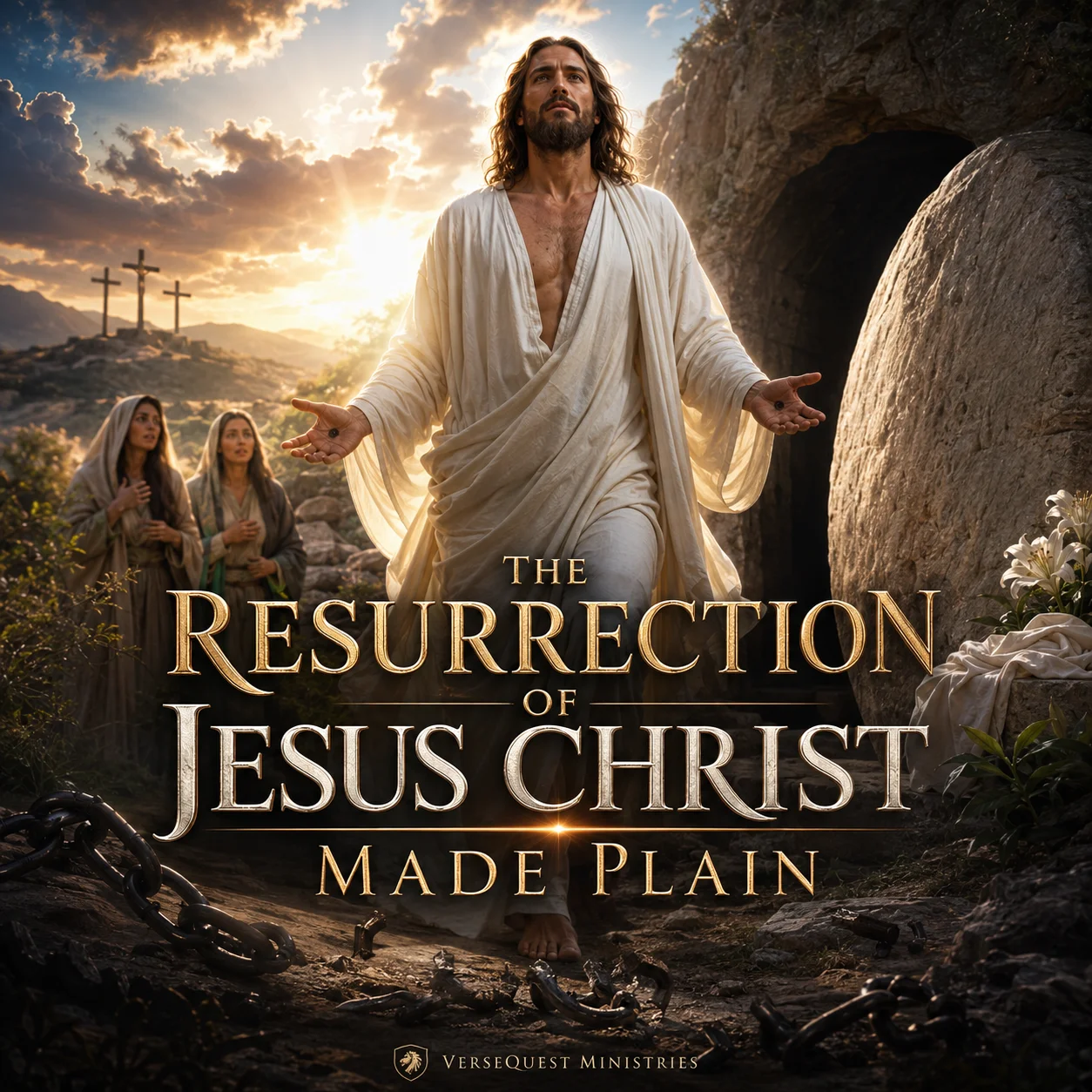
- The Resurrection of Jesus Christ Made Plain – 501-Page KJV Bible Study
- A massive 501-page VerseQuest Ministries PDF Bible study defending and explaining the bodily resurrection of Jesus Christ from a KJV, rightly divided perspective. This 80-essay study covers the empty tomb,…
- $34.99
- Add to cart
-
-
Doctrine Series
-
-14%
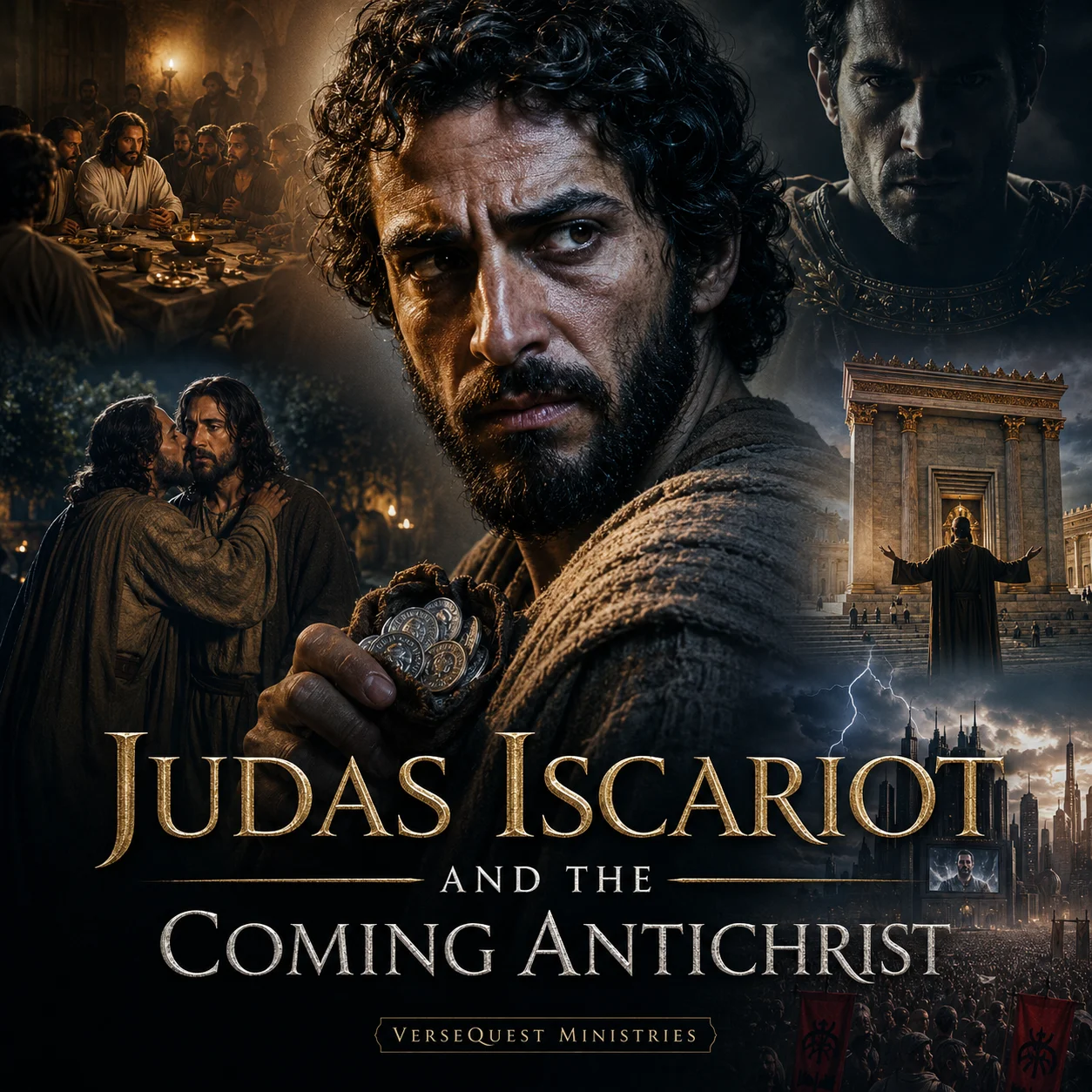
- Judas Iscariot and the Coming Antichrist – Premium KJV Prophecy Study
- A massive 459-page premium KJV prophecy study tracing the biblical connection between Judas Iscariot, the son of perdition, and the coming Antichrist. This detailed VerseQuest Ministries PDF examines Judas’ betrayal,…
- Original price was: $34.99.$29.99Current price is: $29.99.
- Add to cart
-
-14%
-
Premium Studies
-
-25%
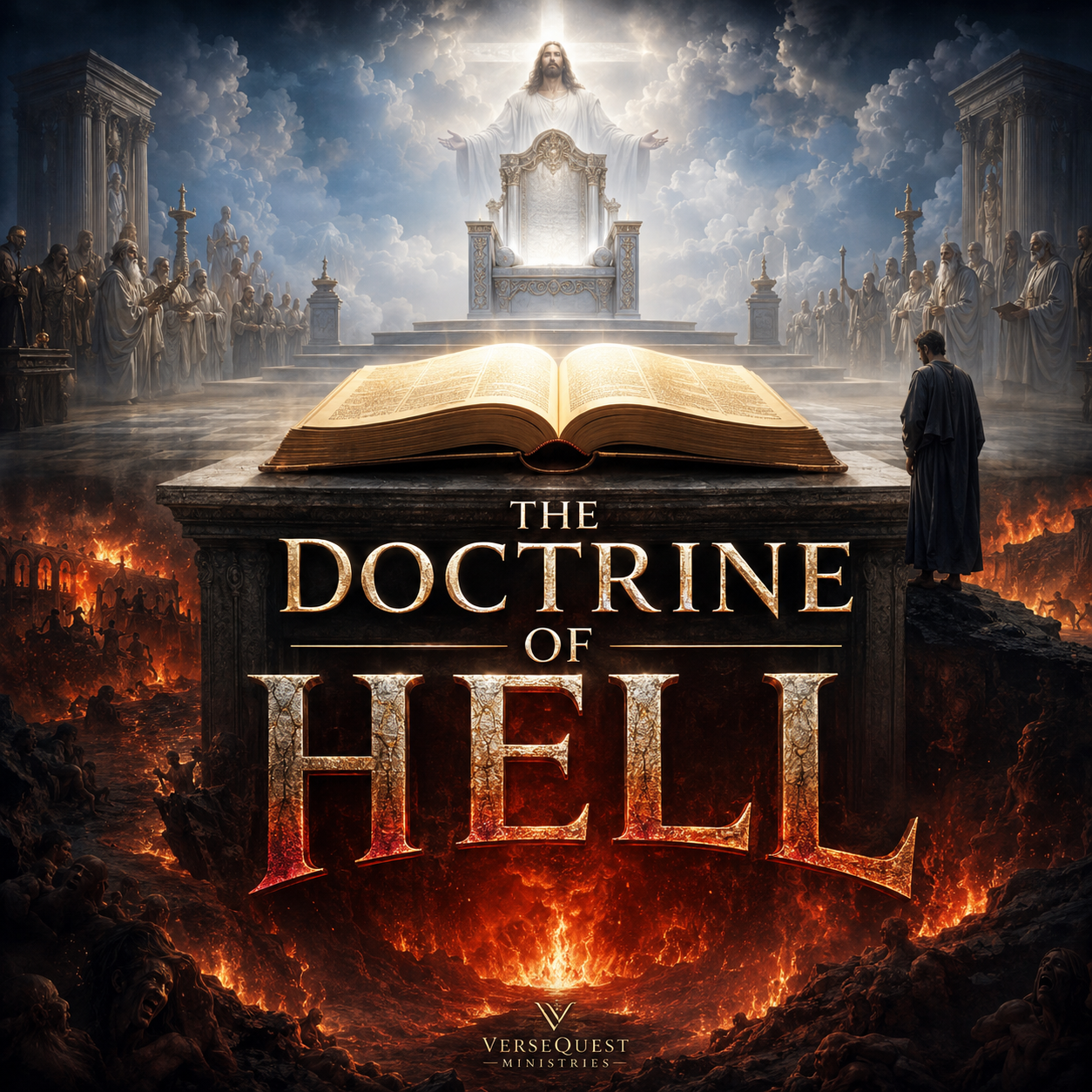
- The Doctrine of Hell — Premium Essay Series PDF
- A 383-page premium VerseQuest PDF study book containing 54 KJV essays on hell, fire, darkness, judgment, the lake of fire, the second death, and Jesus Christ as the only escape.
- Original price was: $39.99.$29.99Current price is: $29.99.
- Add to cart
-
-25%
-
Jesus Christ
-
-10%
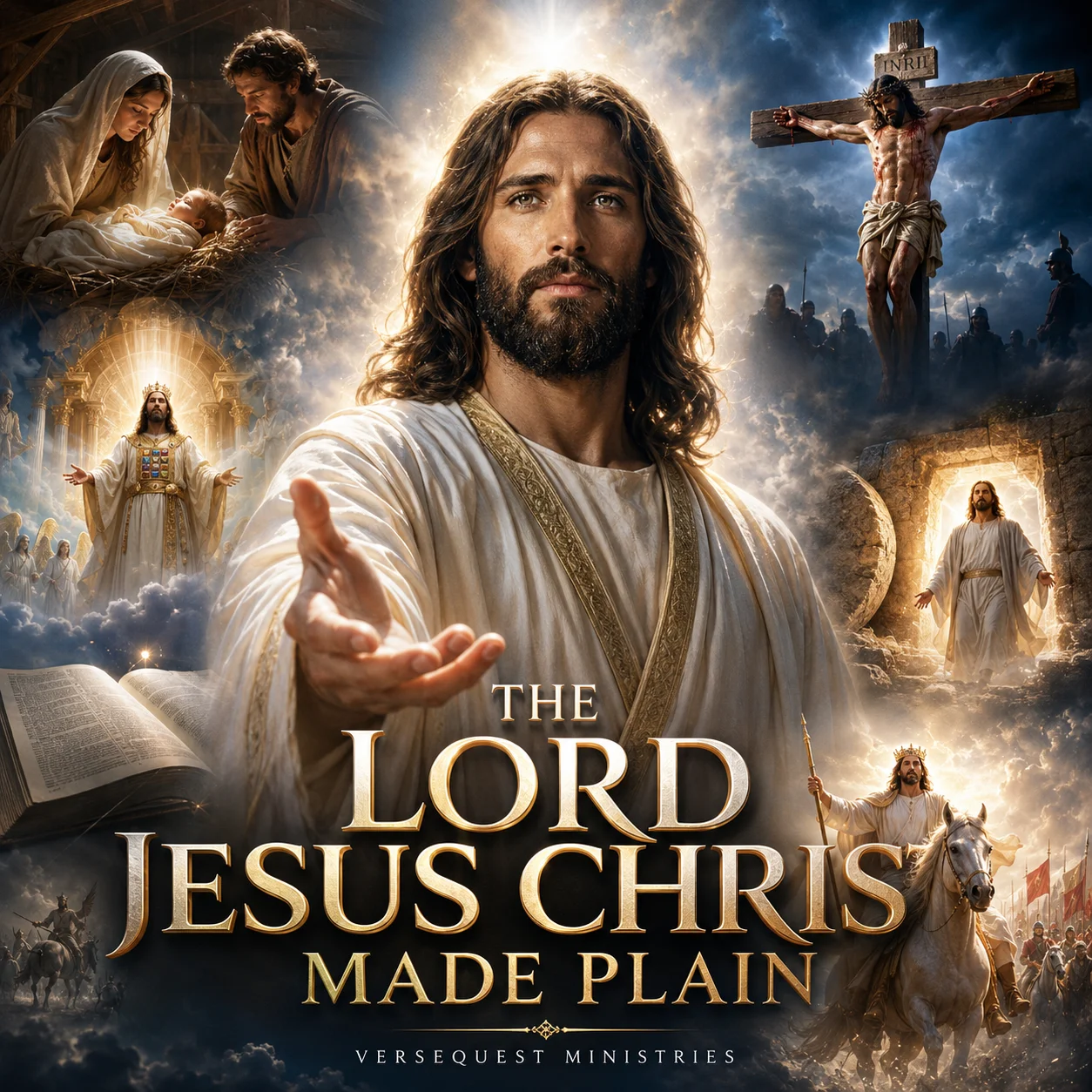
- The Lord Jesus Christ Made Plain – 637-Page KJV Bible Study
- A massive 637-page, 100-part KJV Bible study on the Person and work of the Lord Jesus Christ. This premium VerseQuest resource covers His deity, incarnation, blood, cross, resurrection, present ministry,…
- Original price was: $39.00.$34.99Current price is: $34.99.
- Add to cart
-
-10%