
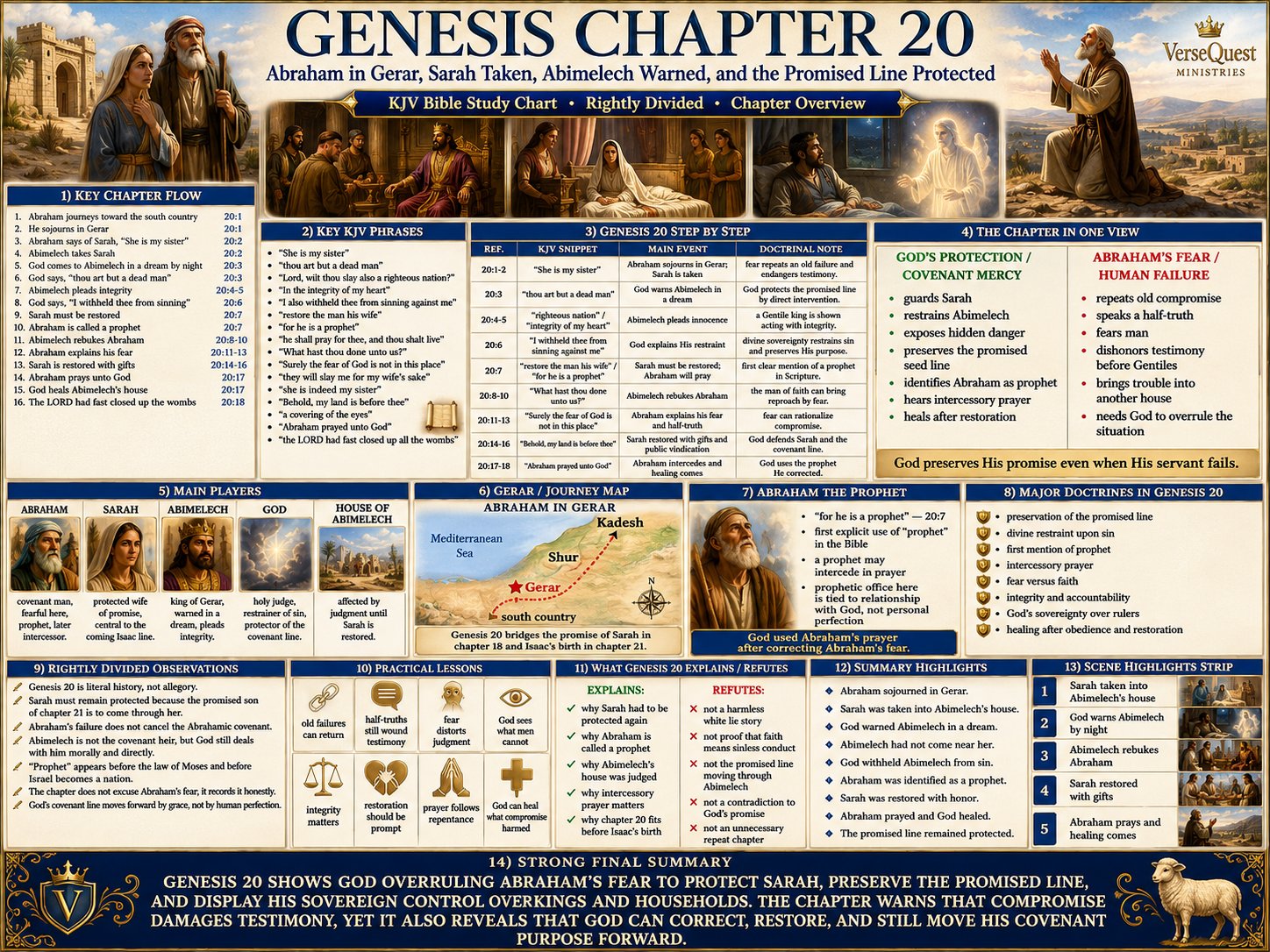
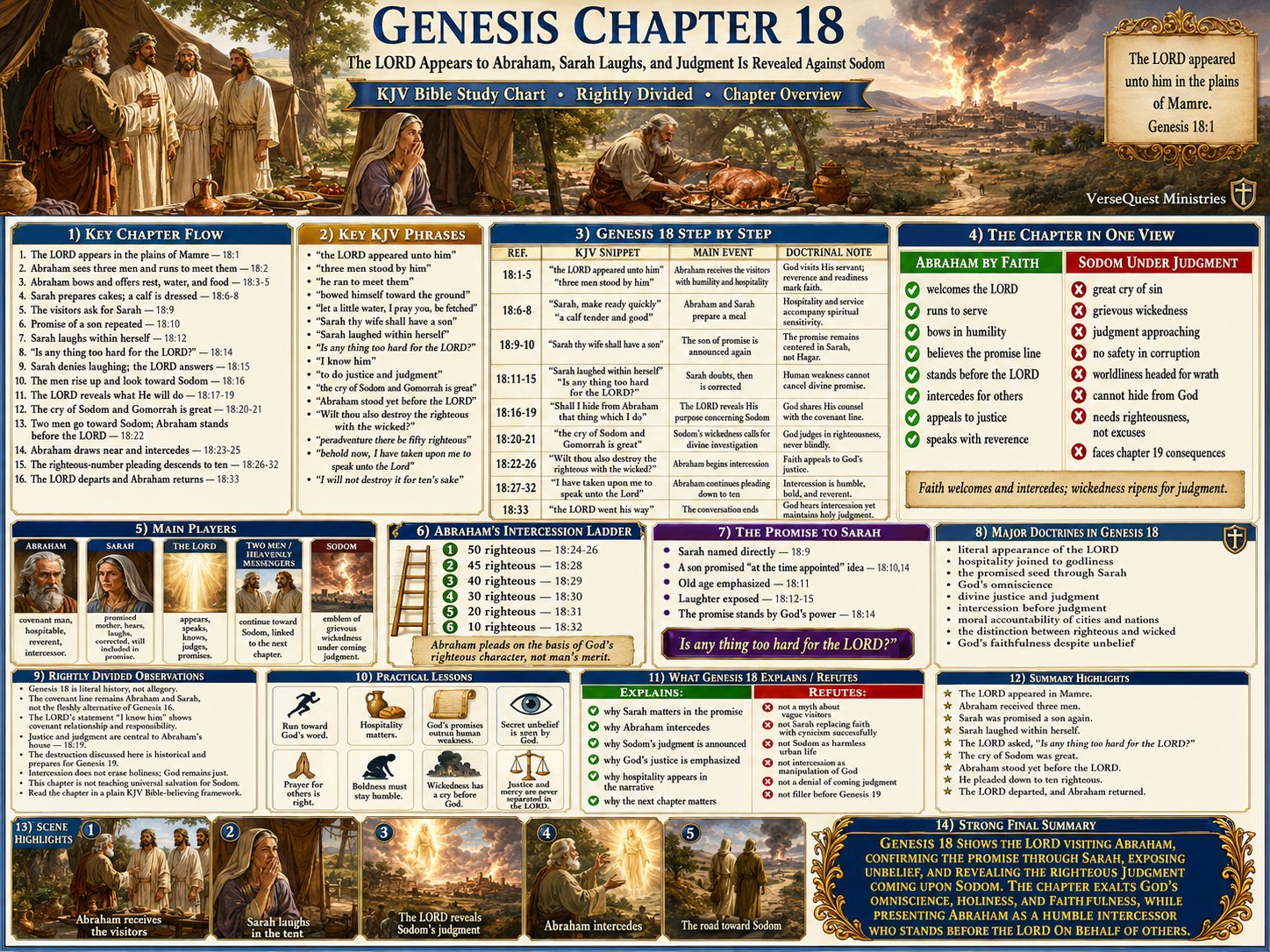
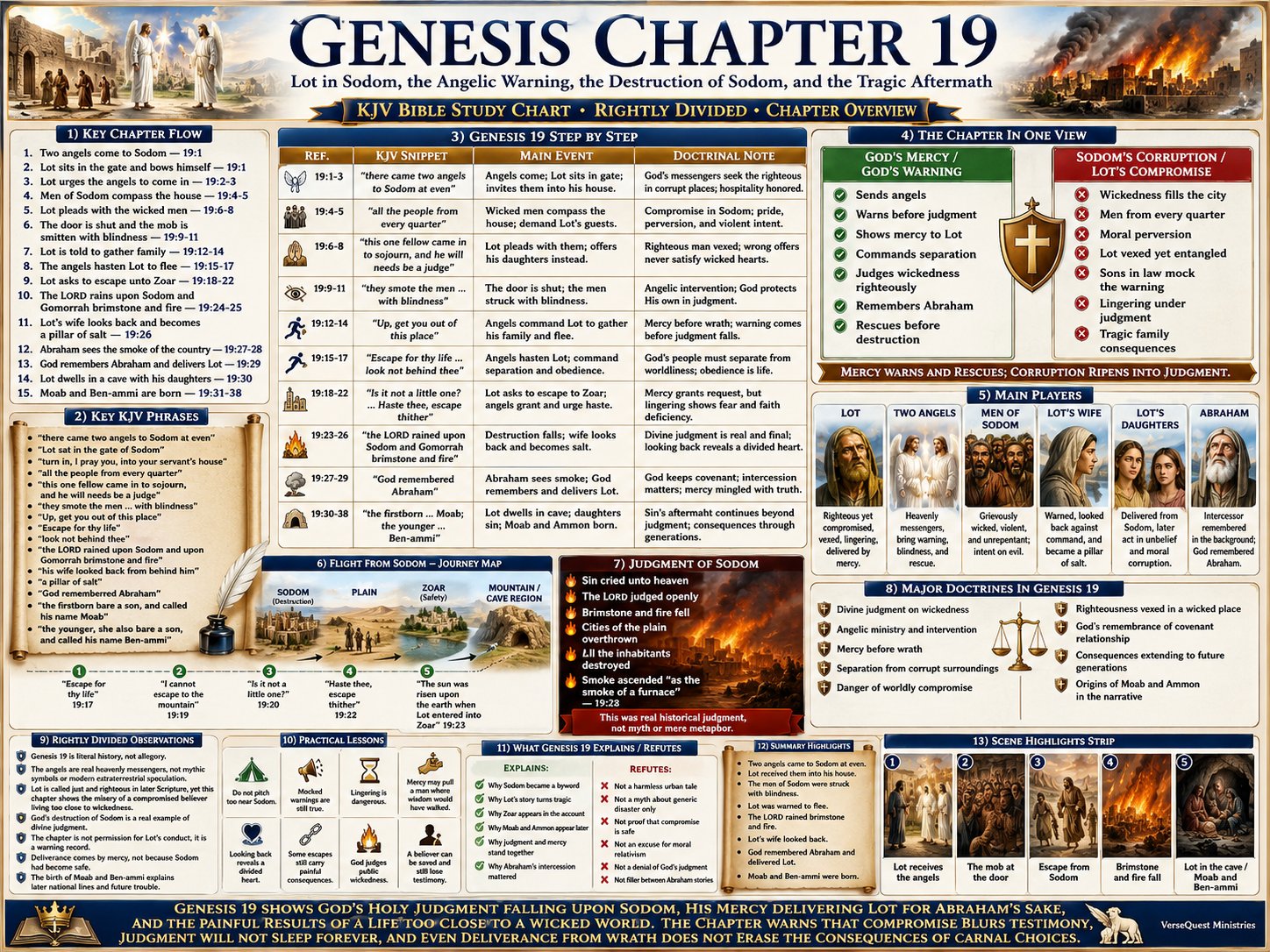
Genesis Chapter 19 Bible Study Chart – Lot in Sodom, the Angelic Warning, the Destruction of Sodom, and the Tragic Aftermath (KJV)
Explore Genesis Chapter 19 with this detailed KJV Bible study chart covering Lot in Sodom, the angelic warning, brimstone and fire, Lot’s wife, divine mercy, and the tragic consequences of worldly compromise.
$3.99
Description
Genesis Chapter 19: Lot in Sodom, the Angelic Warning, the Destruction of Sodom, and the Tragic Aftermath is a detailed KJV Bible study chart examining God’s warning before judgment, the rescue of Lot and his family, the destruction of Sodom and Gomorrah, Lot’s wife becoming a pillar of salt, and the painful consequences of a life lived too close to a wicked world.
The chapter begins with two angels arriving in Sodom at evening. Lot is sitting in the gate of the city, a position suggesting that he has become established within Sodom’s civic life. He welcomes the visitors, bows respectfully, urges them to enter his home, and prepares a meal for them. Although Lot remains troubled by the surrounding wickedness, his residence in Sodom has placed him and his family in grave spiritual danger.
The men of Sodom soon surround Lot’s house and demand access to his guests. The scene reveals that the corruption of the city is not isolated or hidden. Men from every quarter participate in the public display of wickedness, violence, and moral disorder. Genesis presents Sodom as a city whose sin has ripened for divine judgment.
Lot attempts to protect the visitors but makes a deeply wrong and indefensible offer concerning his daughters. The chart does not excuse this proposal. It demonstrates how prolonged compromise can distort judgment, weaken moral clarity, and place an entire household in danger. A righteous man may remain inwardly grieved by evil while becoming dangerously entangled with the world around him.
The angels intervene, pull Lot safely into the house, shut the door, and strike the attacking men with blindness. Even then, the men continue exhausting themselves in their attempt to find the door. The incident shows both the intensity of Sodom’s rebellion and the supernatural protection God provides before judgment falls.
Lot is commanded to warn his sons-in-law and gather his family for immediate escape. His warning, however, appears to them as mockery. Lot has lived close enough to Sodom that his testimony carries little weight when the crisis arrives. The chapter offers a sobering lesson: a compromised life may speak the truth too late and discover that those closest to it no longer take the warning seriously.
As morning approaches, the angels hasten Lot, his wife, and his daughters. Lot lingers, but the messengers take them by the hand because the LORD is merciful unto him. Their rescue rests upon divine compassion rather than Lot’s decisiveness. God warns, separates, and physically removes them before destruction begins.
The command is urgent and unmistakable: “Escape for thy life; look not behind thee.” Lot is told to flee to the mountain, but he pleads for permission to enter the small city of Zoar. God grants the request, again demonstrating mercy toward a fearful and hesitant man.
When Lot enters Zoar, the LORD rains brimstone and fire upon Sodom and Gomorrah. The cities of the plain are overthrown, their inhabitants are destroyed, and the land is consumed under divine judgment. The chart presents this event as real biblical history, not as mythology, symbolism, or a merely natural disaster later given religious meaning.
Lot’s wife looks back from behind him and becomes a pillar of salt. Her action reveals more than a momentary glance. Although her body had left Sodom, her heart remained attached to the life being judged. The Lord Jesus later used her as a direct warning: “Remember Lot’s wife.”
Abraham rises early and looks toward the place where he had stood before the LORD. He sees the smoke of the country rising like the smoke of a furnace. Genesis then explains that God remembered Abraham and delivered Lot from the overthrow. Abraham’s intercession in Genesis 18 mattered, even though Sodom itself was not spared.
The chapter contrasts God’s mercy and warning with Sodom’s corruption and Lot’s compromise. God sends angels, warns before judgment, commands separation, remembers Abraham, and rescues Lot. Sodom is characterized by grievous wickedness, violence, moral corruption, contempt for warning, and destruction. Lot is delivered, yet his family still suffers devastating consequences from years of worldly entanglement.
Lot eventually leaves Zoar and lives in a cave with his two daughters. The final events of the chapter record another tragic collapse of moral judgment and the births of Moab and Ben-ammi, ancestors of the Moabites and Ammonites. The consequences of Sodom continue beyond the city’s destruction and affect later generations.
Major doctrines in Genesis 19 include divine judgment upon wickedness, angelic ministry, mercy before wrath, the necessity of separation, the danger of compromise, God’s remembrance of covenant relationships, the reality of intercessory influence, and the long-term consequences of sinful decisions.
The chapter does not teach that Lot earned deliverance through personal merit. Second Peter describes him as a righteous man whose soul was vexed by the unlawful deeds around him, yet Genesis records the damage caused by his choices. A believer can be delivered from judgment and still lose testimony, influence, family stability, and lasting reward through compromise.
This chart is ideal for personal Bible study, Genesis teaching, studies of Lot and Sodom, divine judgment, Christian separation, family leadership, compromised testimony, intercessory prayer, Sunday school, homeschool Bible curriculum, Bible institutes, sermon preparation, discipleship, and biblical worldview instruction.
Lot in Sodom, destruction of Sodom and Gomorrah, angelic warning, divine judgment, mercy before wrath, Christian separation, worldly compromise, weakened testimony, Lot’s wife, pillar of salt, remember Lot’s wife, Abraham’s intercession, God remembered Abraham, escape from judgment, moral corruption, family consequences, lingering in danger, Zoar, Moab and Ammon, righteous judgment
Genesis 19 continues directly from Abraham’s intercession in Genesis 18. The two angels who departed toward Sodom arrive at evening, while the LORD’s judgment moves toward its appointed time.
Lot’s position in the gate shows how thoroughly he has become established in Sodom. He is no longer merely pitching his tent toward the city. What began as a choice based upon visible prosperity has developed into deep social and family entanglement.
Lot displays genuine hospitality toward the angels, but his later response to the mob exposes severely damaged judgment. His terrible offer concerning his daughters must not be defended as righteous conduct. It illustrates what years of compromise can do to moral clarity.
The men of Sodom persist even after being struck with blindness. Judgment does not create their rebellion; it exposes how deeply rebellion already controls them.
Lot’s sons-in-law treat his warning as mockery. A compromised testimony may speak correct words while lacking the credibility needed to make others listen. Truth should be proclaimed from a life that supports its warning.
Lot lingers even when destruction is imminent. The angels take him, his wife, and his daughters by the hand because the LORD is merciful. His deliverance magnifies divine compassion rather than human resolve.
The command not to look back reveals that separation must involve the heart as well as the feet. Lot’s wife physically leaves Sodom but remains inwardly attached to what God is judging.
The destruction by brimstone and fire is presented as a direct act of God. Later Scripture repeatedly treats Sodom as a historical example of divine judgment rather than a fictional morality tale.
Abraham’s intercession does not preserve Sodom, but God remembers Abraham and delivers Lot. Prayer may not always produce the exact outcome requested, yet faithful intercession still matters within God’s sovereign purpose.
Lot is saved from the city but loses nearly everything connected with his life there. Deliverance from wrath does not mean compromise has no consequences. His home, possessions, influence, wife, and family stability are devastated.
The cave episode demonstrates that sin’s consequences may continue after the immediate judgment has passed. The origins of Moab and Ammon become part of the later biblical record and show how one generation’s choices can affect those that follow.
Genesis 19 warns believers not to pitch their tents toward Sodom, settle comfortably within corruption, or assume there will always be more time to separate. Mercy warns before judgment, but the door of escape does not remain open forever.
Genesis chapter study, divine judgment teaching, Christian separation, warnings against worldly compromise, family leadership, maintaining a credible testimony, responding promptly to God’s warnings, intercessory prayer, moral discernment, consequences of delayed obedience, Sunday school lessons, homeschool Bible curriculum, Christian school instruction, Bible institute classes, sermon preparation, discipleship training, pastoral counseling, biblical worldview instruction
King James Bible, Strong’s Concordance, Thompson Chain-Reference Bible, Treasury of Scripture Knowledge, Nave’s Topical Bible, Bible atlas, maps of the cities of the plain, Genesis commentary notes, studies on Lot and Abraham, Christian separation resources, biblical family counseling materials, Scripture cross-reference guide, studies on divine judgment, VerseQuest Genesis chapter charts
Related products
-
Chart Collections
-
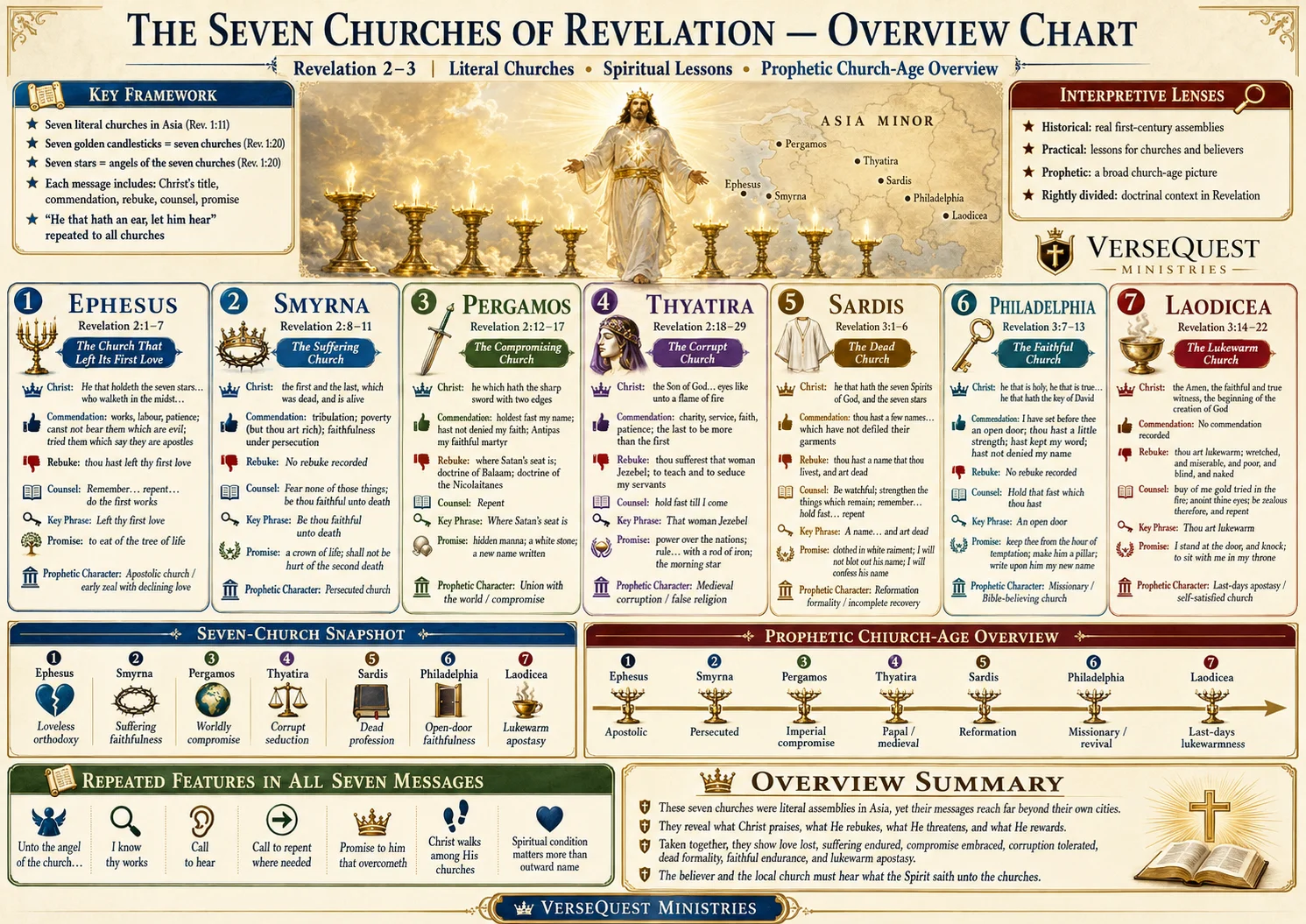
- The Seven Churches of Revelation Chart Collection – Christ Walking Among the Candlesticks
- A premium VerseQuest Ministries™ PDF chart collection covering the Seven Churches of Revelation in Revelation 2–3. Includes one overview chart plus individual KJV Bible study charts for Ephesus, Smyrna, Pergamos,…
- $12.99
- Add to cart
-
-
Premium VerseQuest Books
-
-75%
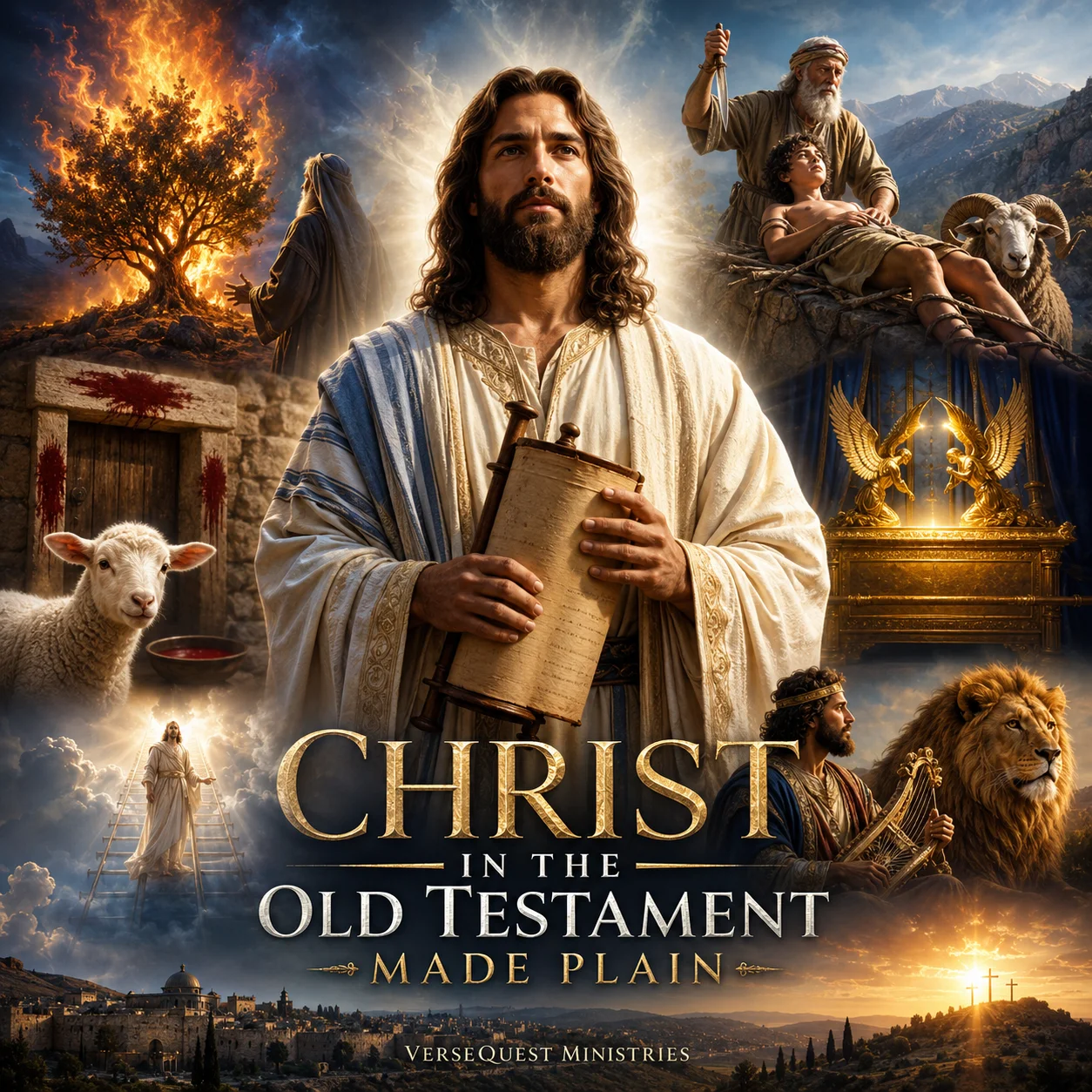
- Christ in the Old Testament Made Plain — 100-Essay KJV Study PDF
- A massive 670-page premium KJV Bible study PDF featuring 100 detailed essays showing Jesus Christ throughout the Old Testament in promise, type, sacrifice, Christophany, prophecy, suffering, resurrection, priesthood, and future…
- Original price was: $39.99.$9.99Current price is: $9.99.
- Add to cart
-
-75%
-
Names of Christ
-
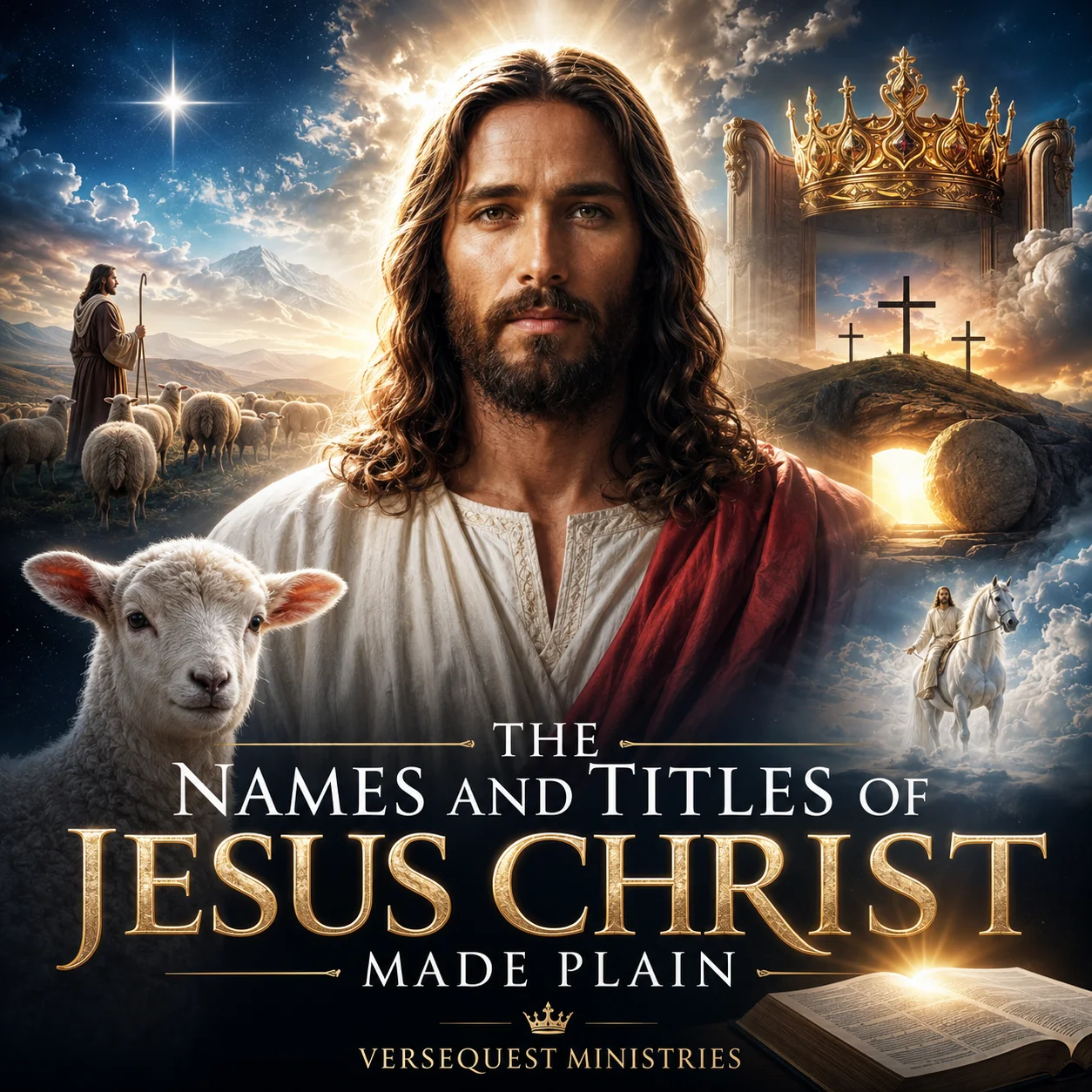
- The Names and Titles of Jesus Christ Made Plain
- A complete 100-essay KJV Bible study on the names and titles of the Lord Jesus Christ, showing His deity, humanity, blood atonement, resurrection, priesthood, headship over the Church, shepherd care,…
- $29.99
- Add to cart
-
-
Prophecy Studies
-

- The Resurrection of Jesus Christ Made Plain – 501-Page KJV Bible Study
- A massive 501-page VerseQuest Ministries PDF Bible study defending and explaining the bodily resurrection of Jesus Christ from a KJV, rightly divided perspective. This 80-essay study covers the empty tomb,…
- $34.99
- Add to cart
-
-
Bible Prophecy Charts
-
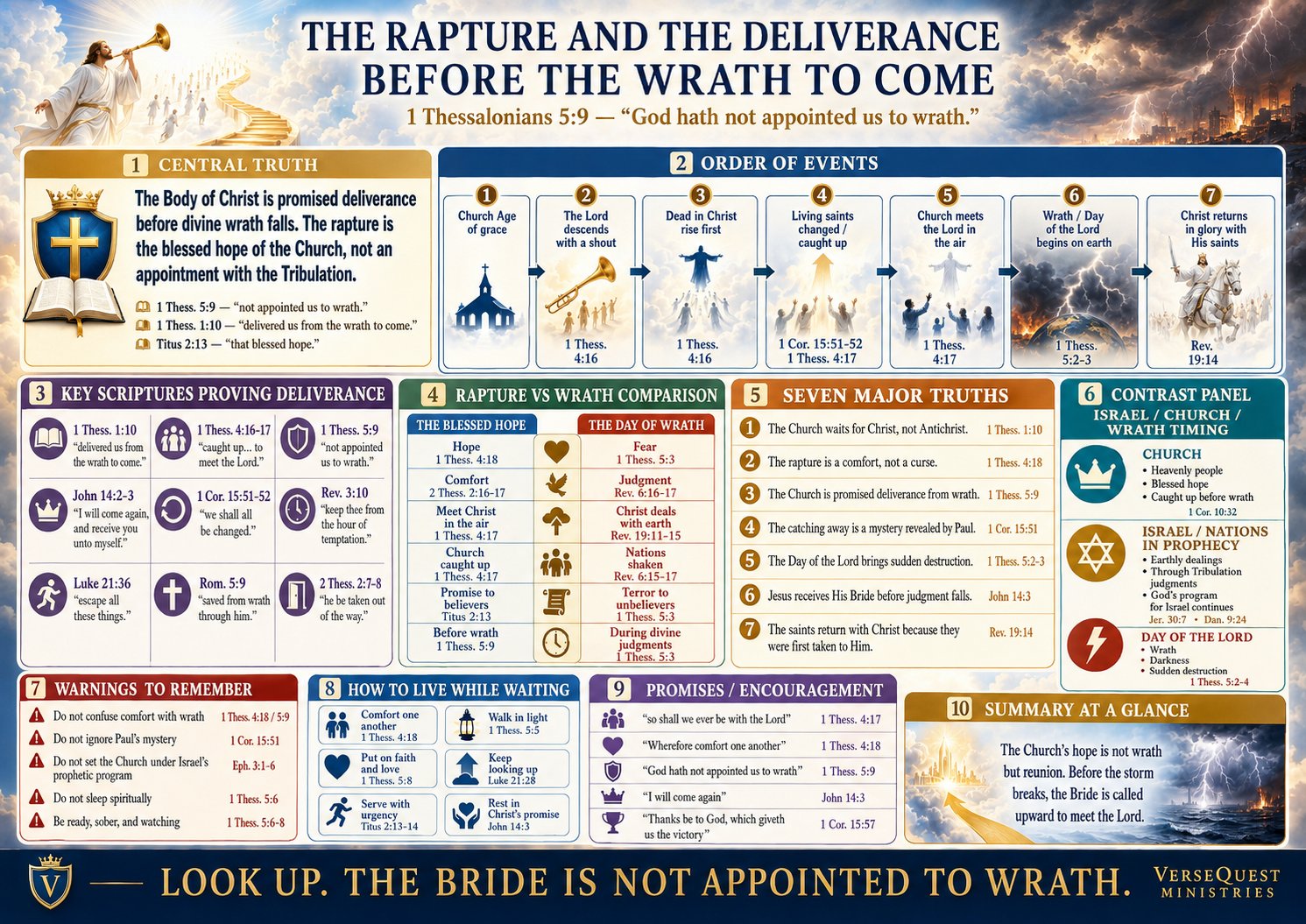
- The Rapture and the Deliverance Before the Wrath to Come – Printable Bible Study Chart
- Printable KJV Bible study chart on The Rapture and the Deliverance Before the Wrath to Come, showing from 1 Thessalonians 5:9 that the Church is not appointed to wrath. This…
- $4.99
- Add to cart
-