
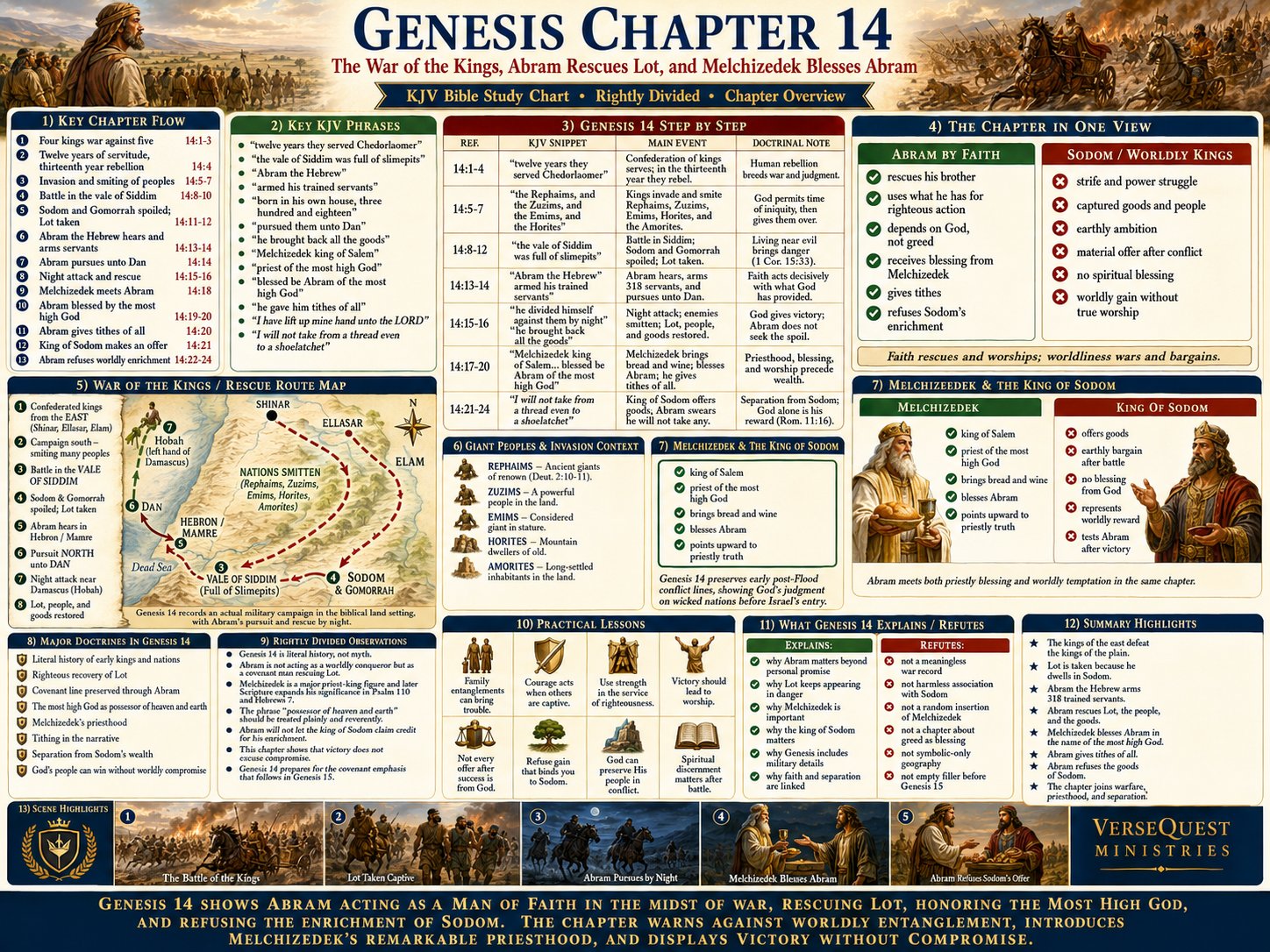
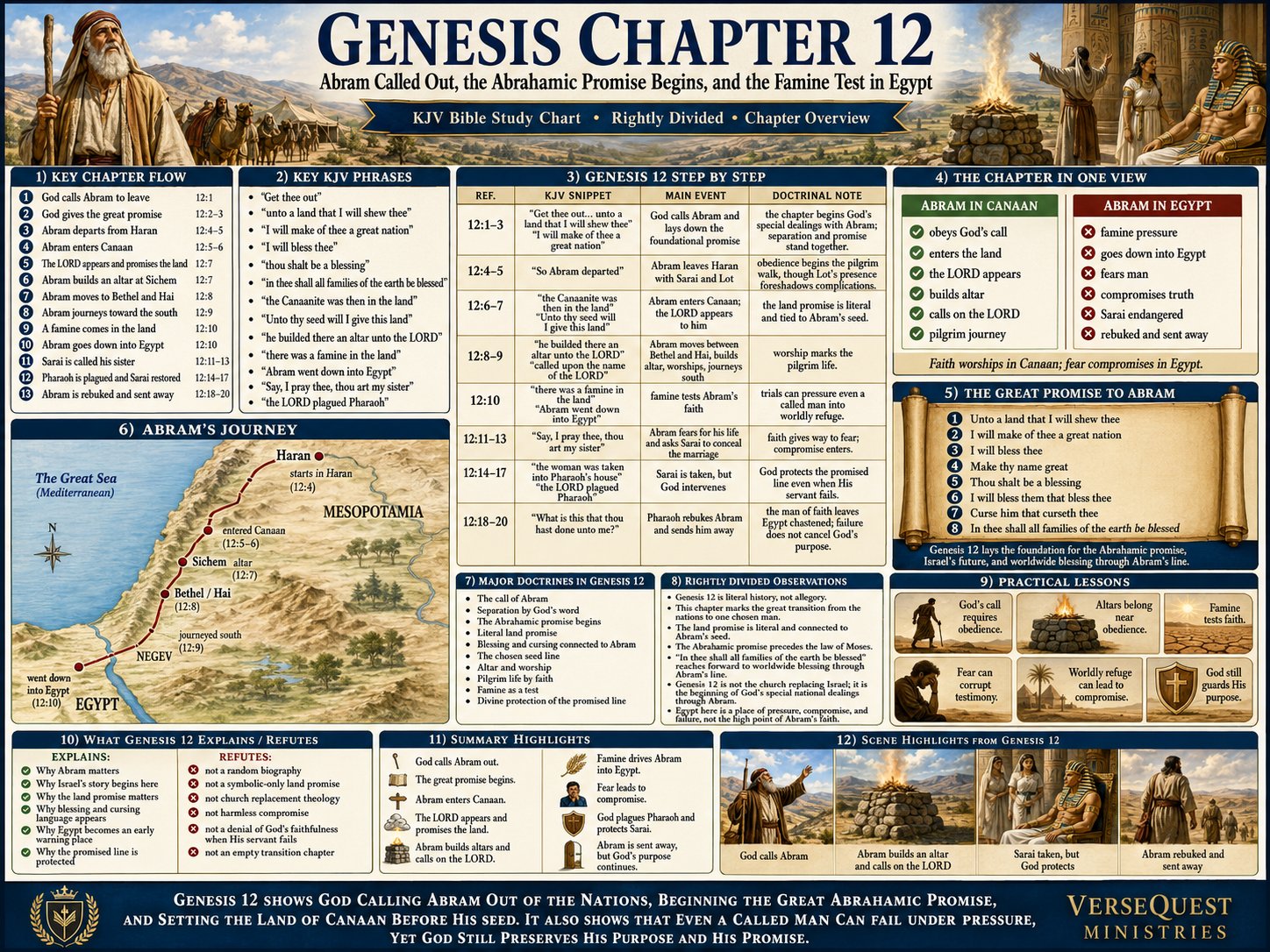
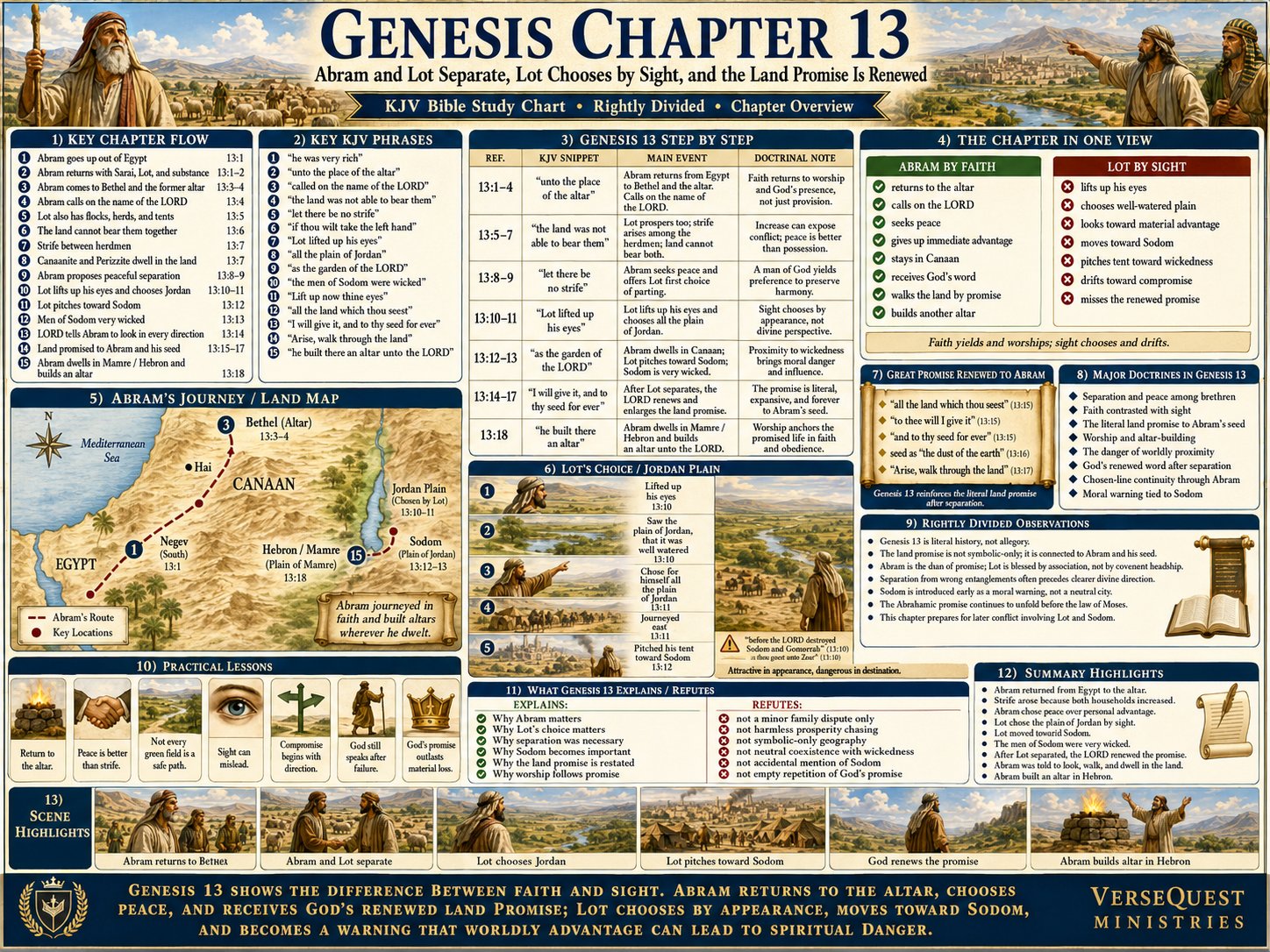
Genesis Chapter 13 Bible Study Chart – Abram and Lot Separate, Lot Chooses by Sight, and the Land Promise Is Renewed (KJV)
Explore Genesis Chapter 13 with this detailed KJV Bible study chart covering Abram and Lot’s separation, faith versus sight, Lot’s move toward Sodom, and God’s renewed land promise.
$3.99
Description
Genesis Chapter 13: Abram and Lot Separate, Lot Chooses by Sight, and the Land Promise Is Renewed is a detailed KJV Bible study chart examining the sharp spiritual contrast between Abram’s walk of faith and Lot’s walk by sight. The chapter records Abram’s return from Egypt, his restoration to the altar, the conflict between his herdsmen and Lot’s, their peaceful separation, Lot’s choice of the well-watered plain of Jordan, and God’s renewed promise concerning the land.
The chapter opens with Abram returning from Egypt into the land of Canaan. He comes again to Bethel, to the place where his altar had stood, and calls upon the name of the LORD. This return is spiritually significant. Abram’s failure in Egypt does not become the final word. He returns to worship, fellowship, and the place where he had previously met with God. The chart highlights this restoration as one of the chapter’s clearest practical lessons.
As Abram and Lot increase in possessions, the land is no longer able to bear them together. Strife develops between their herdsmen while the Canaanite and Perizzite remain in the land. Abram refuses to allow conflict to continue before the watching world. He seeks peace and offers Lot the first choice, demonstrating that faith can surrender immediate advantage because it trusts God’s promise.
A major comparison contrasts Abram by faith with Lot by sight. Abram returns to the altar, calls upon the LORD, seeks peace, remains in Canaan, receives God’s word, walks through the land by promise, and builds another altar. Lot lifts up his eyes, chooses by outward appearance, seeks material advantage, moves toward Sodom, and gradually drifts into spiritual danger.
Lot’s decision is not presented as an openly wicked act at first. The plain of Jordan appears well watered and prosperous, even “as the garden of the LORD.” Yet appearance does not reveal destination. Lot chooses what looks best materially while ignoring the moral condition of Sodom. The chart carefully traces this downward progression: he sees the plain, chooses it, journeys east, pitches his tent toward Sodom, and places himself near men described as wicked and sinners before the LORD exceedingly.
Abram, by contrast, yields the visible advantage and remains in the land God promised. After Lot separates from him, the LORD renews and enlarges the promise. Abram is told to lift up his eyes, view the land in every direction, arise, and walk through it. God promises the land to Abram and his seed forever and compares his descendants to the dust of the earth.
The contrast between Lot lifting up his own eyes and God telling Abram to lift up his eyes is central to the chapter. Lot chooses according to natural sight, while Abram receives divine perspective. One man chooses what appears immediately profitable; the other trusts what God has spoken.
The chapter concludes with Abram dwelling in the plain of Mamre near Hebron and building another altar unto the LORD. Worship frames the chapter. Abram begins by returning to an altar and ends by building one. His life is marked not merely by movement through the land but by fellowship with God.
Additional sections cover the chapter flow, key KJV phrases, Abram’s journey map, Lot’s choice, the renewed land promise, major doctrines, rightly divided observations, practical lessons, summary highlights, and the truths Genesis 13 explains and refutes. This chart is ideal for personal Bible study, Genesis teaching, faith and decision-making studies, separation, Christian living, the Abrahamic promise, Israel and the land, Sunday school, homeschool curriculum, Bible institutes, and sermon preparation.
Abram and Lot, faith versus sight, spiritual restoration, return to the altar, worship, conflict and peace, separation, surrendering advantage, Lot’s choice, Jordan plain, Sodom, worldly attraction, spiritual drift, renewed land promise, Abrahamic covenant, promised seed, pilgrimage, divine guidance, material prosperity, moral danger
Genesis 13 begins with Abram returning from Egypt to the place of the altar. His failure in the previous chapter is real, but it is not final. Restoration begins when he returns to worship, calls upon the LORD, and resumes his walk in the land of promise.
Prosperity creates a new kind of test. Abram and Lot possess so much livestock and substance that the land cannot support them together. Material increase does not automatically produce peace. Without spiritual wisdom, even blessing can become a source of conflict.
Abram takes the initiative to end the strife. Although he is the elder and the man to whom the promise was given, he allows Lot to choose first. Faith can afford to yield because it trusts God to fulfill His word.
Lot lifts up his eyes and evaluates the land by visible advantage. The Jordan plain appears fertile, prosperous, and attractive. Yet spiritual decisions cannot be made safely by appearance alone. What looks like opportunity may place a man near destruction.
Lot’s movement toward Sodom happens gradually. He chooses the plain, journeys east, dwells in its cities, and pitches his tent toward Sodom. Compromise often advances by small steps long before open disaster appears.
The men of Sodom are already identified as wicked and sinners before the LORD exceedingly. Lot’s choice therefore reflects more than agricultural judgment. He accepts moral danger in exchange for material benefit.
After Lot separates, God renews the land promise to Abram. Separation from a compromising relationship brings clearer direction and renewed assurance. Abram receives not merely the land he can see but a promise extending to his seed forever.
The chapter contrasts two acts of looking. Lot lifts up his eyes according to sight. God tells Abram to lift up his eyes according to promise. Natural sight seeks immediate advantage; faith sees through the lens of God’s word.
Abram ends the chapter by building an altar at Hebron. The man of faith is not defined by possessing the best-looking land but by walking with God, believing His promise, and worshipping wherever the LORD places him.
Genesis chapter study, biblical decision-making, faith versus sight, conflict resolution, Christian separation, spiritual restoration, trusting God’s promises, warnings about worldly compromise, Sunday school lessons, homeschool Bible curriculum, Christian school instruction, Bible institute classes, sermon preparation, discipleship training, pastoral counseling, Abrahamic covenant studies, Israel and the land promise, Christian living instruction
King James Bible, Strong’s Concordance, Thompson Chain-Reference Bible, Treasury of Scripture Knowledge, Nave’s Topical Bible, Bible atlas, maps of Abram’s journeys, Genesis commentary notes, Abrahamic covenant study resources, Scripture cross-reference guide, studies on Lot and Sodom, Christian decision-making resources, VerseQuest Genesis chapter charts
Related products
-
The Rapture
-
-67%
- Caught Up Before the Wrath – 66-Essay KJV Rapture Study
- Caught Up Before the Wrath is a 430-page premium KJV Bible study defending the pre-tribulation Rapture of the Church from a rightly divided, dispensational perspective. This 66-essay VerseQuest Ministries book…
- Original price was: $29.99.$9.99Current price is: $9.99.
- Add to cart
-
-67%
-
Christology Studies
-
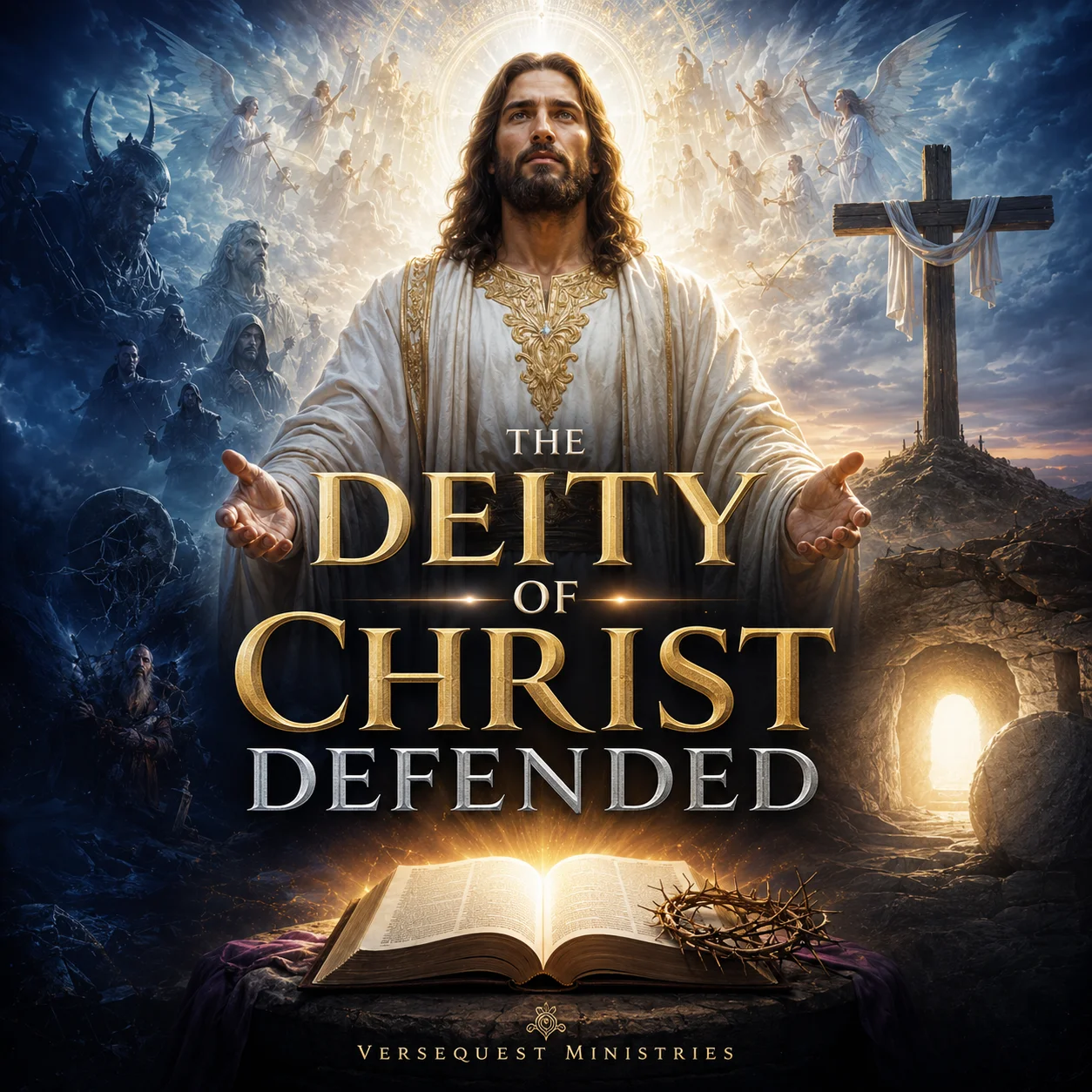
- The Deity of Christ Defended — 66 KJV Studies Proving Jesus Christ Is God Manifest in the Flesh
- he Deity of Christ Defended is a 444-page premium KJV Bible study defending the full deity of the Lord Jesus Christ. This 66-study book proves from Scripture that Jesus is…
- $29.99
- Add to cart
-
-
Prophecy Studies
-
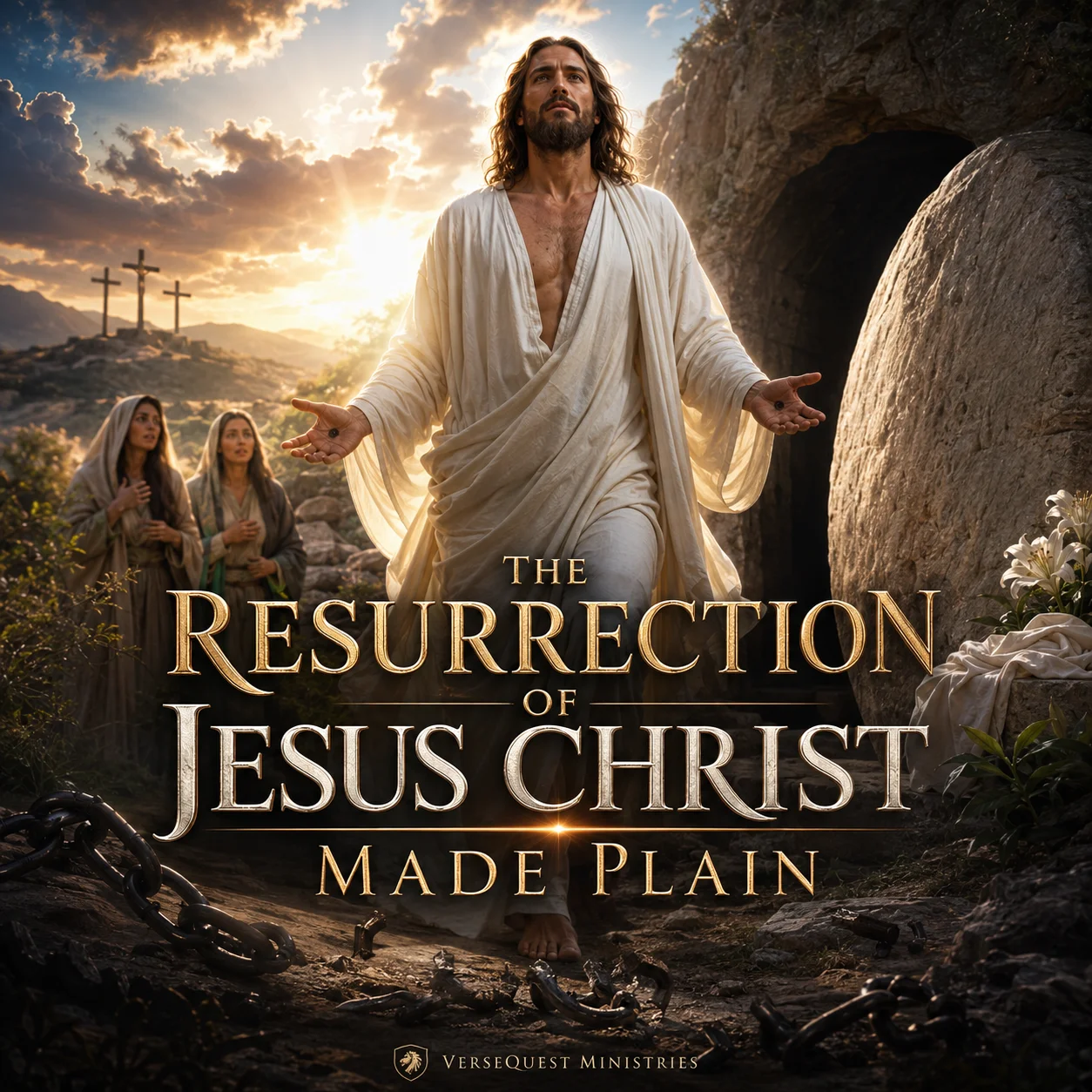
- The Resurrection of Jesus Christ Made Plain – 501-Page KJV Bible Study
- A massive 501-page VerseQuest Ministries PDF Bible study defending and explaining the bodily resurrection of Jesus Christ from a KJV, rightly divided perspective. This 80-essay study covers the empty tomb,…
- $34.99
- Add to cart
-
-
Kingdom Hall
-
-71%
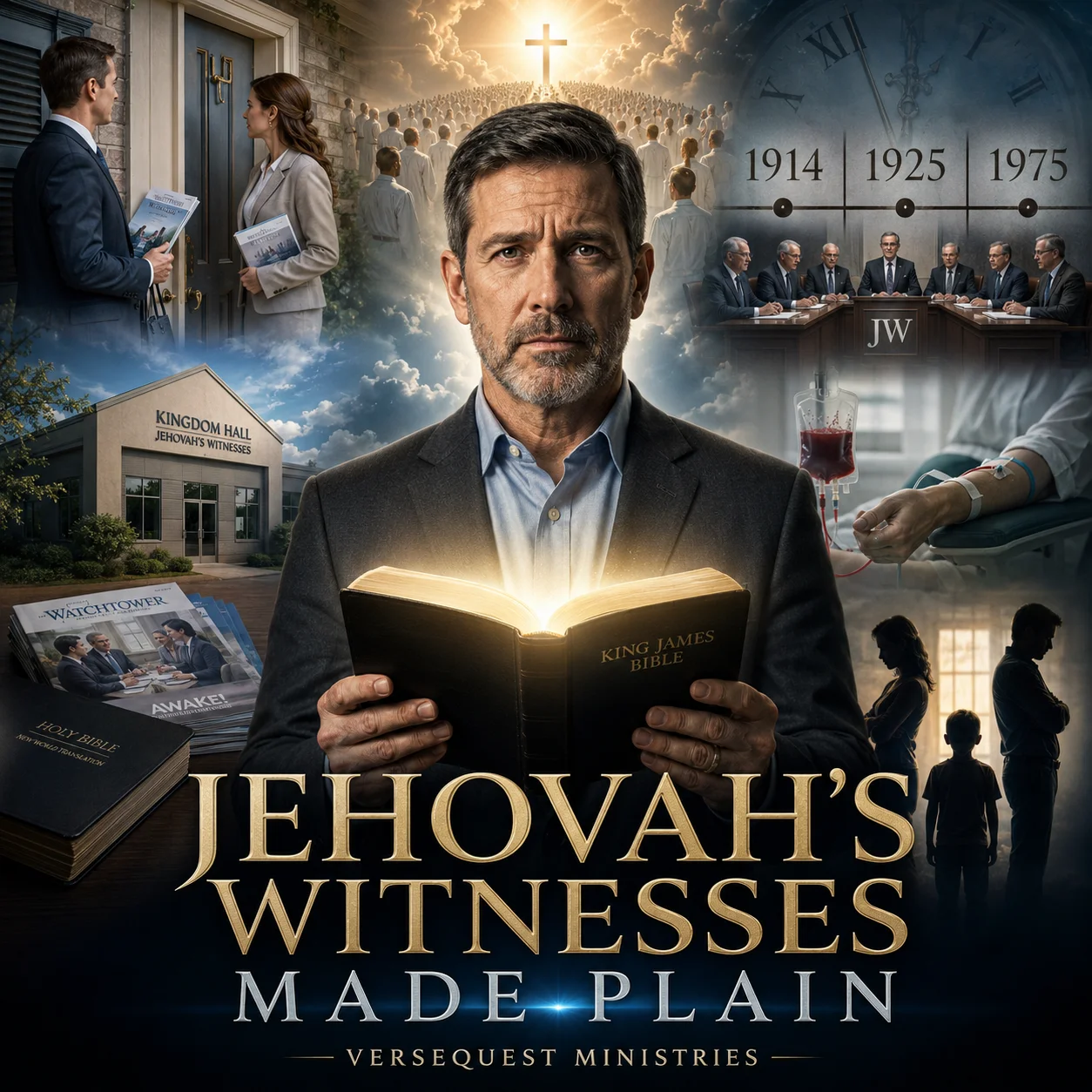
- Jehovah’s Witnesses Made Plain – 574-Page KJV Watchtower Study
- A massive 574-page VerseQuest study exposing the Watchtower system from the King James Bible. This detailed 100-essay book covers the false Christ, false gospel, New World Translation, failed prophecy, 144,000,…
- Original price was: $34.99.$9.99Current price is: $9.99.
- Add to cart
-
-71%
-
Study Books (PDF)
-
-25%
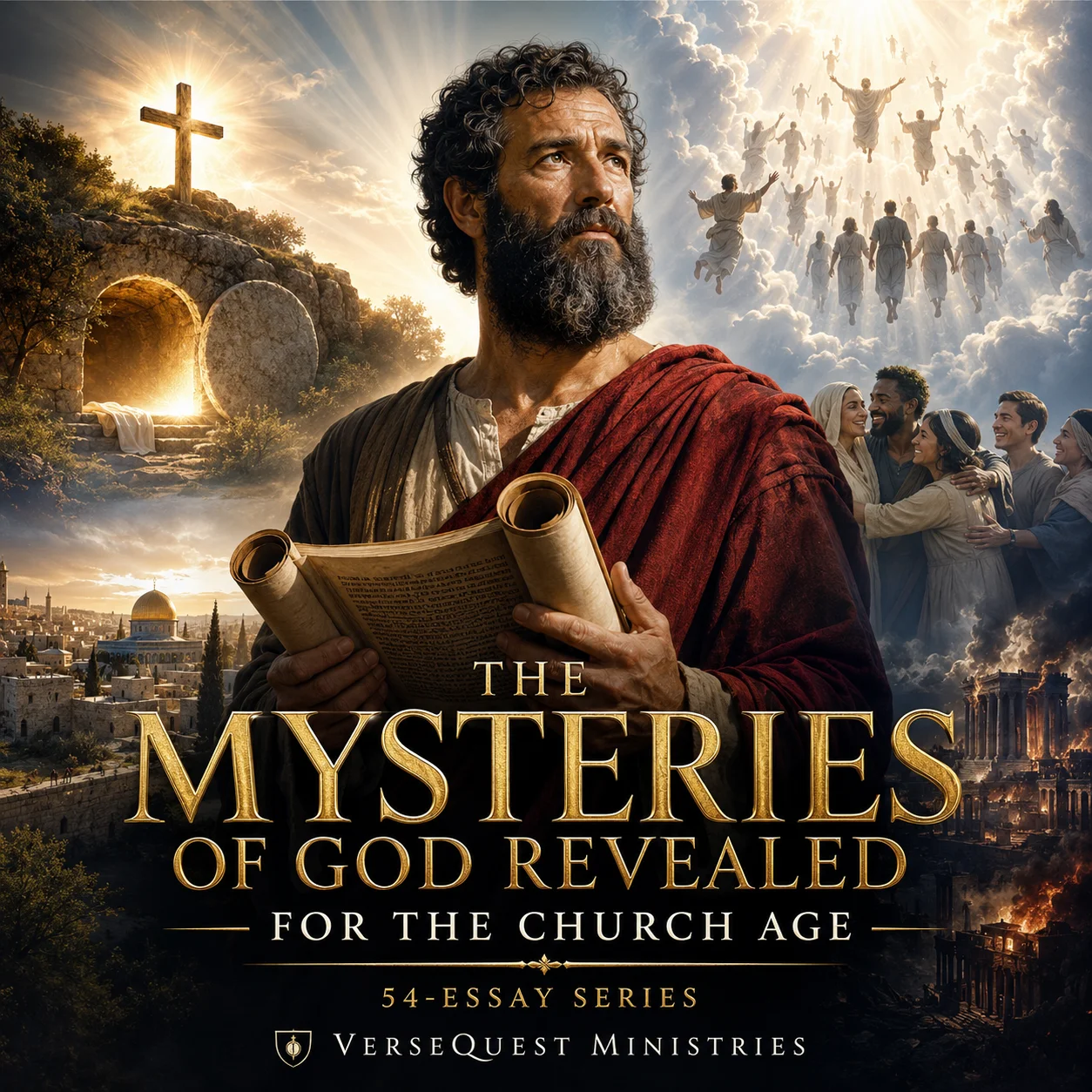
- The Mysteries of God Revealed for the Church Age – Premium Essay Series PDF
- A premium 404-page VerseQuest Ministries digital PDF study book featuring 54 detailed KJV-only essays on the mysteries of God revealed for the Church Age. This rightly divided study covers the…
- Original price was: $39.99.$29.99Current price is: $29.99.
- Add to cart
-
-25%