
Genesis Chapter 12 Bible Study Chart – Abram Called Out, the Abrahamic Promise, and the Famine Test in Egypt (KJV)
Explore Genesis Chapter 12 with this detailed KJV Bible study chart covering Abram’s call, the Abrahamic promise, the land of Canaan, the famine test, Egypt, and God’s protection of the promised line.
$3.99
Description
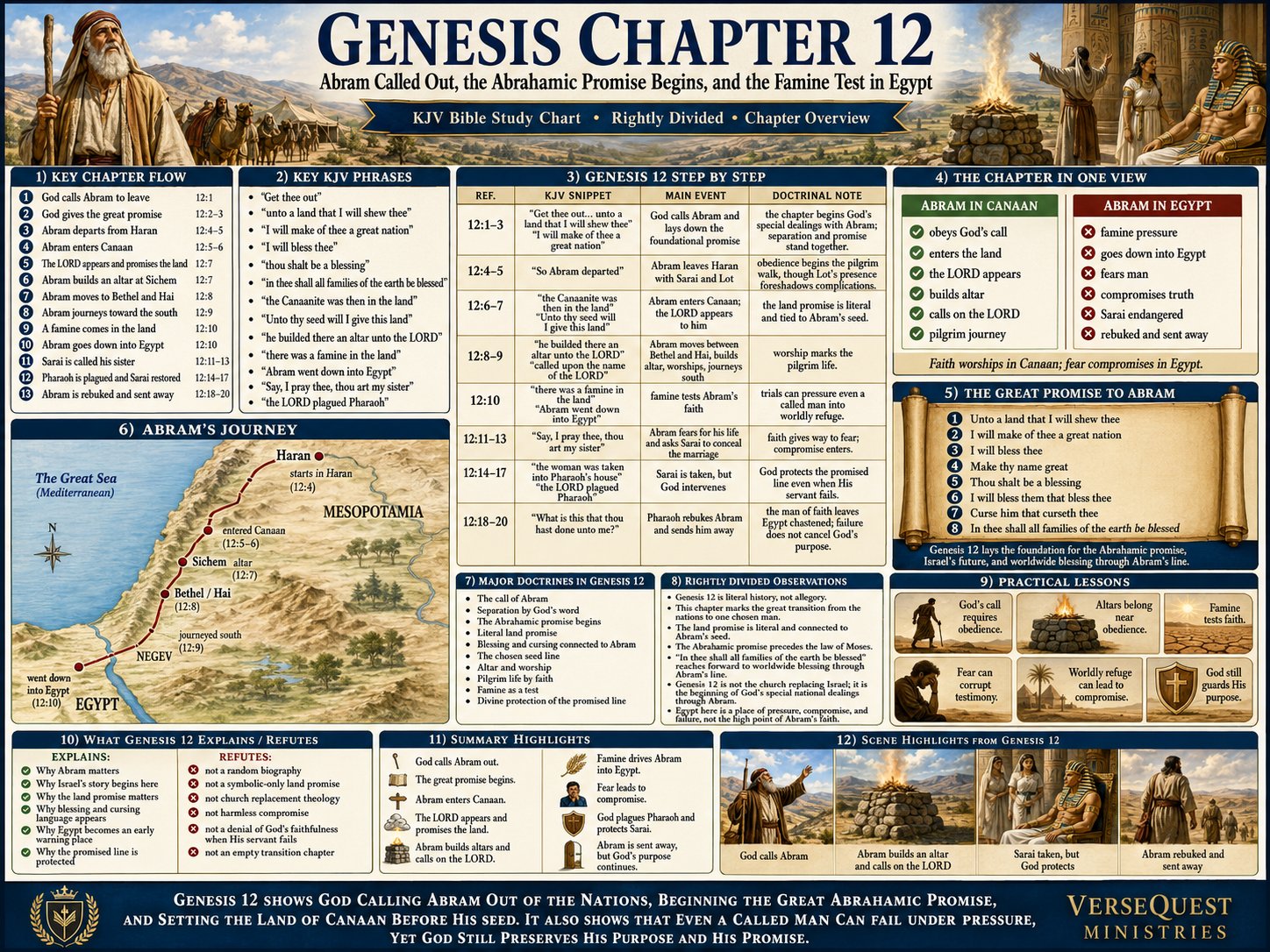
Genesis Chapter 12: Abram Called Out, the Abrahamic Promise Begins, and the Famine Test in Egypt is a detailed KJV Bible study chart examining one of the great turning points in the book of Genesis. After tracing the nations through Noah’s descendants and the scattering at Babel, Scripture narrows its focus to one man: Abram. Through him, God begins a special covenant program involving a chosen seed, a promised land, a great nation, and future blessing extending to all families of the earth.
The chart follows Genesis 12 step by step, beginning with God’s command for Abram to leave his country, kindred, and father’s house and journey to a land that the LORD would show him. This call required separation, obedience, and faith. Abram did not receive every detail in advance. He was called to move on the authority of God’s word and trust the One who had spoken.
A major section presents the great promise given to Abram in Genesis 12:1–3. God promises to show him a land, make of him a great nation, bless him, make his name great, make him a blessing, bless those who bless him, curse those who curse him, and bring blessing to all families of the earth through him. These promises establish the foundation for the Abrahamic covenant, Israel’s national future, the land promise, and the wider redemptive purpose that ultimately reaches the nations.
The chart traces Abram’s journey from Haran into Canaan, including his arrival near Sichem, the LORD’s appearance to him, the promise of the land to his seed, the building of altars, his movement between Bethel and Hai, and his continued journey southward. Worship marks Abram’s pilgrim life in Canaan, showing that obedience and fellowship with God belong together.
A central contrast compares Abram in Canaan with Abram in Egypt. In Canaan, he obeys God’s call, enters the promised land, builds altars, calls upon the LORD, and walks as a pilgrim. In Egypt, famine pressure leads him downward, fear influences his decisions, truth is compromised, Sarai is endangered, and Pharaoh must rebuke him. The comparison offers a sober lesson concerning how quickly faith can weaken when fear replaces dependence upon God.
The famine becomes Abram’s first major test after entering the land. Instead of seeking direction from the LORD, he goes down into Egypt. His decision illustrates how trials can pressure even a called man into seeking worldly refuge. The chapter does not hide Abram’s failure, proving that Scripture presents its leading figures honestly rather than turning them into flawless legends.
Despite Abram’s compromise, God protects Sarai and preserves the promised line. Pharaoh’s house is plagued, Sarai is restored, and Abram is sent away. This does not excuse Abram’s conduct, but it demonstrates that God’s faithfulness does not collapse when His servant fails. The divine promise rests upon God’s purpose, not upon Abram’s perfection.
The chart also explains the doctrinal importance of Genesis 12 in rightly divided Bible study. This chapter marks the transition from God’s broad dealings with the nations to His special dealings with Abram and the nation that will come from him. The land promise is literal, the chosen seed is historical, and the blessing connected with Abram becomes central to the rest of Scripture.
Additional sections cover key KJV phrases, major doctrines, practical lessons, rightly divided observations, Abram’s journey map, and the truths Genesis 12 explains and refutes. This chart is ideal for personal Bible study, Genesis teaching, Abrahamic covenant studies, Israel studies, prophecy, dispensational teaching, apologetics, homeschool curriculum, Sunday school, Bible institutes, and sermon preparation.
Abram’s call, Abrahamic promise, separation, obedience, faith, promised land, chosen seed, great nation, blessing and cursing, all families of the earth blessed, pilgrimage, altar worship, calling upon the LORD, famine test, Egypt, fear of man, compromise, Sarai protected, divine faithfulness, preservation of the promised line
Genesis 12 begins a major new division in the biblical record. After dealing with mankind broadly through creation, the Flood, and Babel, God calls one man out from the nations and begins a special covenant purpose through him. Abram becomes central to the unfolding story of Israel, the promised land, and worldwide blessing.
The command “Get thee out” requires separation. Abram must leave familiar surroundings, family connections, and inherited security to follow the LORD. Biblical faith often begins with obedience to God’s word before every detail of the journey is known.
The promise of Genesis 12:1–3 contains personal, national, territorial, and worldwide elements. God promises Abram a land, a nation, a great name, divine protection, and a place of blessing to the nations. These promises shape the rest of Genesis and much of the entire Bible.
The land promise is literal and connected to Abram’s seed. When Abram arrives in Canaan, the LORD appears and says, “Unto thy seed will I give this land.” The promise should not be reduced to a vague spiritual metaphor.
Abram’s altars reveal the proper response to divine guidance. He worships near Sichem, moves toward Bethel and Hai, and calls upon the name of the LORD. The pilgrim life is sustained by worship and dependence upon God.
The famine tests Abram shortly after his obedience. Trials do not necessarily mean a believer has left God’s will. However, the response to the trial matters. Abram goes into Egypt without any recorded command from God and allows fear to shape his conduct.
Abram’s request that Sarai identify herself as his sister shows how fear can produce compromise. A man may preserve part of the truth while using it deceptively. The chapter warns that partial truth used to mislead is still sinful.
God protects Sarai and preserves the promised line even when Abram fails. Pharaoh’s rebuke is humiliating, but the promise continues. The lesson is not that failure is harmless, but that God remains faithful to His larger purpose.
Genesis 12 introduces the pattern of blessing and cursing connected with Abram. Those who bless him are blessed, and those who curse him come under divine judgment. This principle becomes increasingly important as Scripture develops the history of Israel.
Genesis chapter study, Abrahamic covenant teaching, Israel and the land promise, faith and obedience, separation from the world, trusting God in trials, fear and compromise, pilgrim life, altar worship, Sunday school lessons, homeschool Bible curriculum, Christian school instruction, Bible institute classes, sermon preparation, discipleship training, prophecy studies, dispensational teaching, biblical worldview instruction
King James Bible, Strong’s Concordance, Thompson Chain-Reference Bible, Treasury of Scripture Knowledge, Nave’s Topical Bible, Bible atlas, maps of Abram’s journeys, Genesis commentary notes, Abrahamic covenant study resources, Israel and prophecy charts, Scripture cross-reference guide, VerseQuest Genesis chapter charts, VerseQuest dispensational charts
Related products
-
The Rapture
-
-67%

- Caught Up Before the Wrath – 66-Essay KJV Rapture Study
- Caught Up Before the Wrath is a 430-page premium KJV Bible study defending the pre-tribulation Rapture of the Church from a rightly divided, dispensational perspective. This 66-essay VerseQuest Ministries book…
- Original price was: $29.99.$9.99Current price is: $9.99.
- Add to cart
-
-67%
-
The Rapture
-
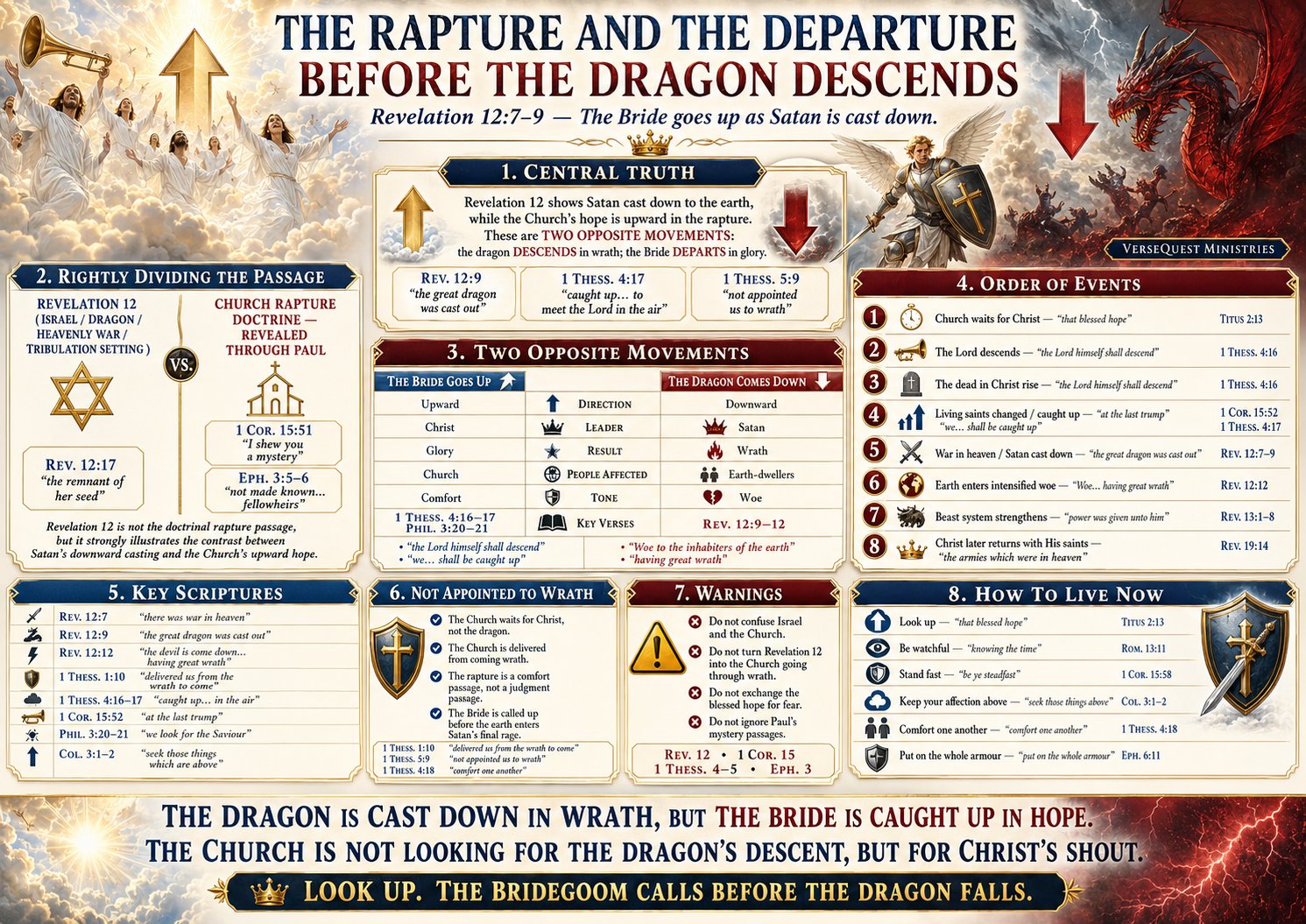
- The Rapture and the Departure Before the Dragon Descends – Printable Bible Study Chart
- Printable KJV Bible study chart on The Rapture and the Departure Before the Dragon Descends, showing the Bride caught up before Satan is cast down in wrath. This premium VerseQuest…
- $4.99
- Add to cart
-
-
Angels
-
-67%

- The Doctrine of Angels Made Plain – 620-Page KJV Bible Study PDF
- The Doctrine of Angels Made Plain is a 620-page KJV Bible study that traces angels from Genesis to Revelation. This premium VerseQuest PDF explains holy angels, Christ’s supremacy over angels,…
- Original price was: $29.99.$9.99Current price is: $9.99.
- Add to cart
-
-67%
-
Prophecy Studies
-

- The Resurrection of Jesus Christ Made Plain – 501-Page KJV Bible Study
- A massive 501-page VerseQuest Ministries PDF Bible study defending and explaining the bodily resurrection of Jesus Christ from a KJV, rightly divided perspective. This 80-essay study covers the empty tomb,…
- $34.99
- Add to cart
-
-
Premium Studies
-
-25%

- The Doctrine of Hell — Premium Essay Series PDF
- A 383-page premium VerseQuest PDF study book containing 54 KJV essays on hell, fire, darkness, judgment, the lake of fire, the second death, and Jesus Christ as the only escape.
- Original price was: $39.99.$29.99Current price is: $29.99.
- Add to cart
-
-25%