
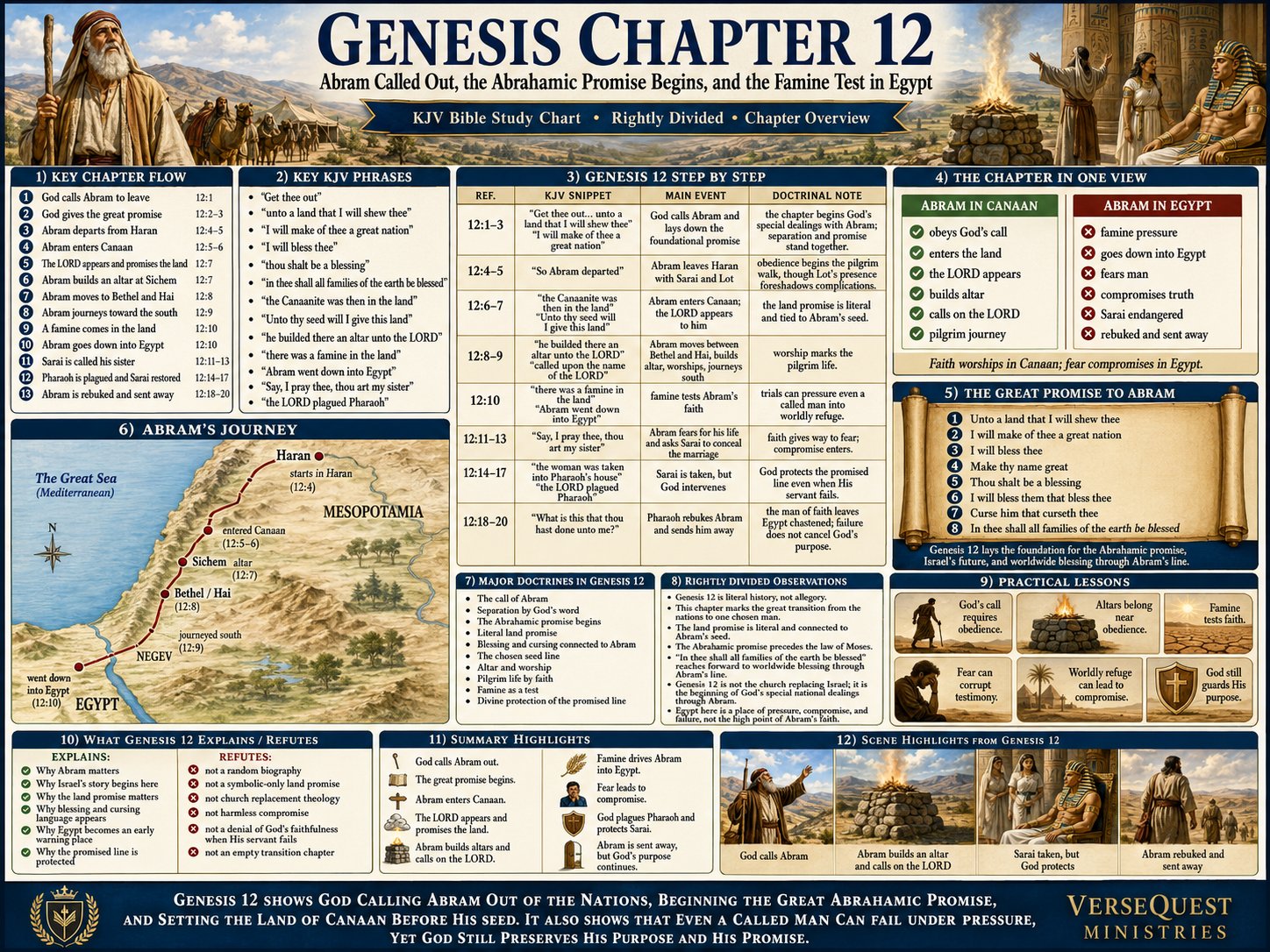
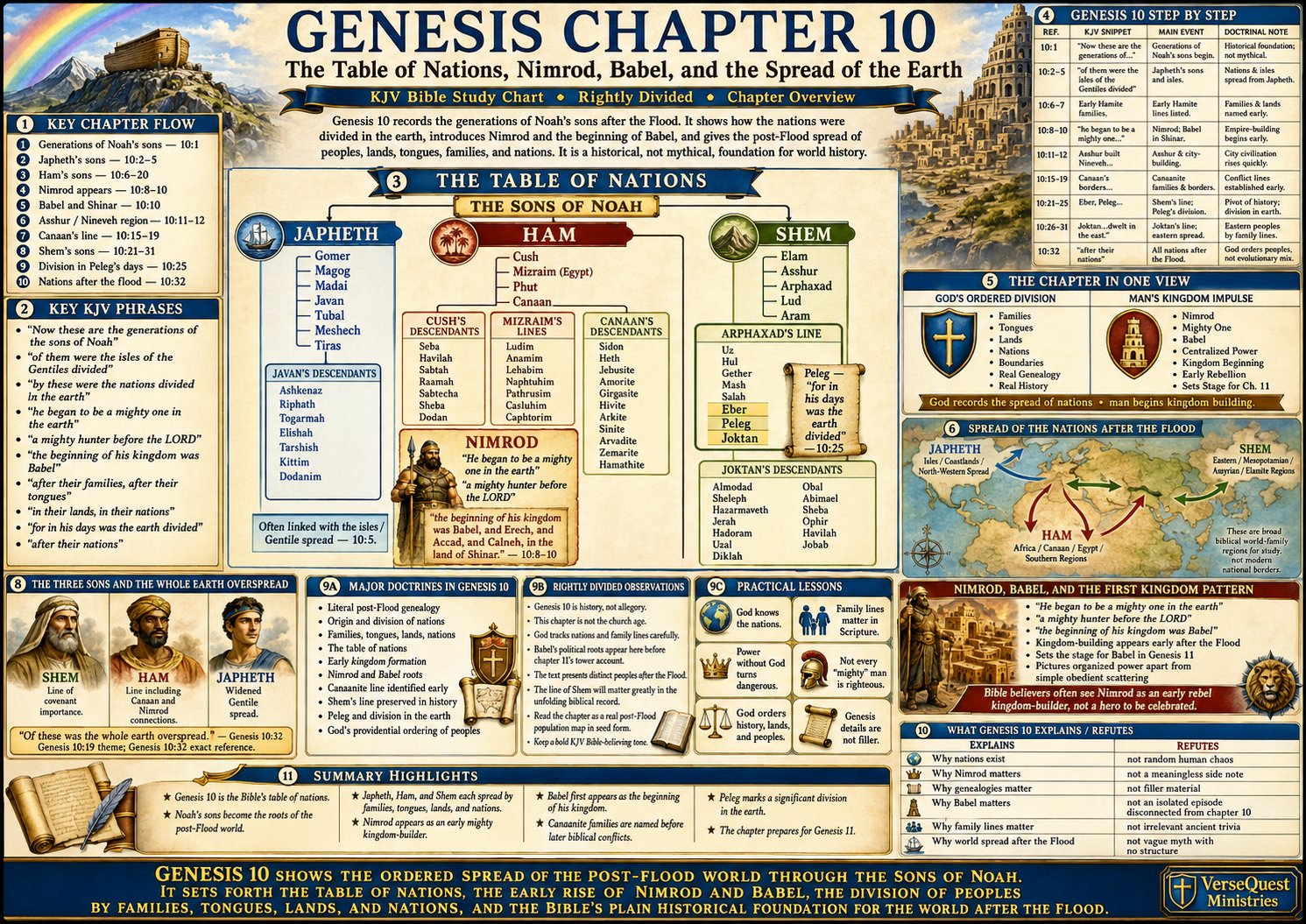
Genesis Chapter 11 Bible Study Chart – Babel, the Confusion of Tongues, and the Line to Abram (KJV)
Explore Genesis Chapter 11 with this detailed KJV Bible study chart covering the Tower of Babel, the confusion of tongues, the scattering of nations, and the preserved line from Shem to Abram.
$3.99
Description
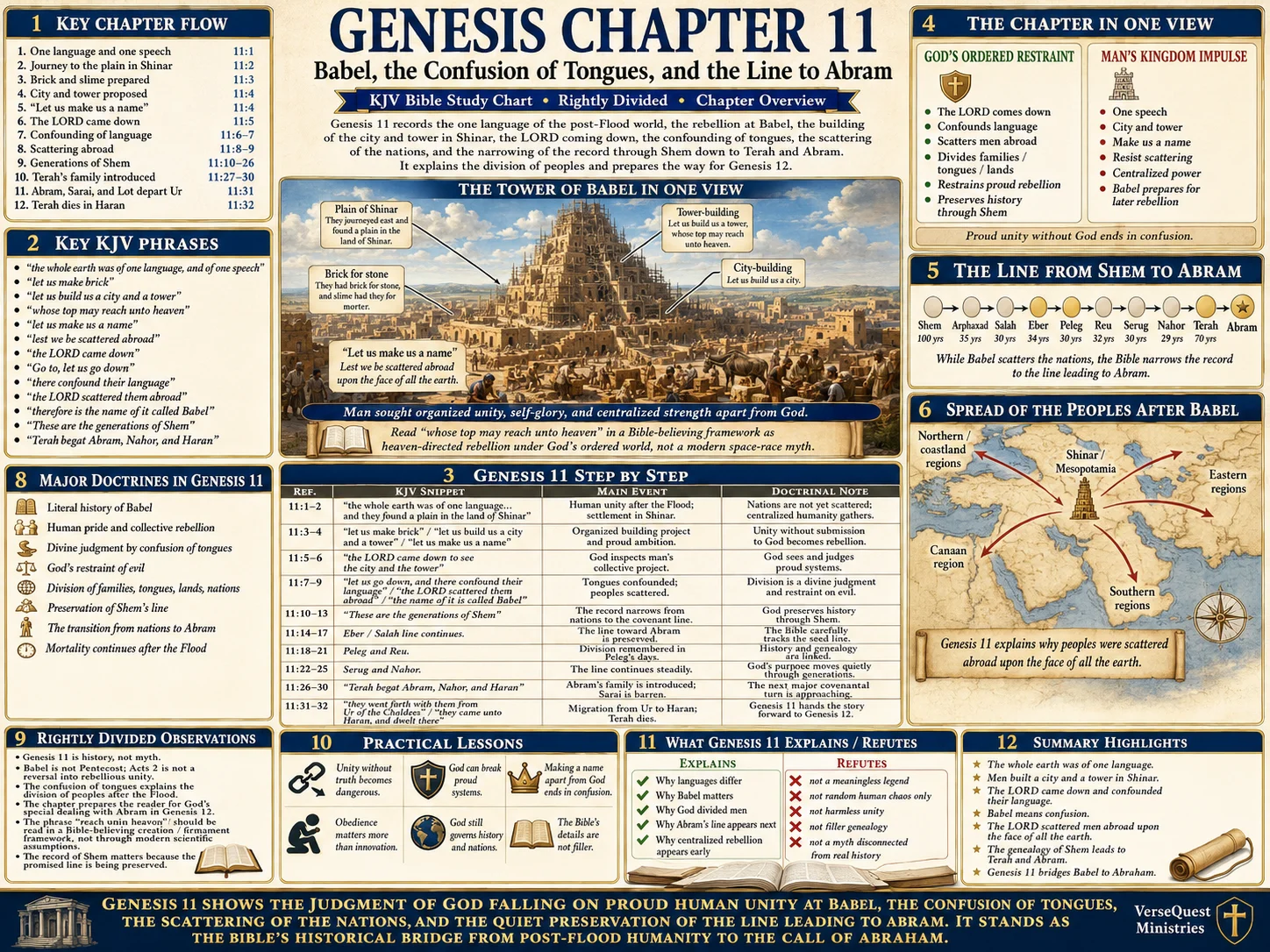
Genesis Chapter 11: Babel, the Confusion of Tongues, and the Line to Abram is a detailed KJV Bible study chart explaining the rebellion at Babel, the divine confusion of languages, the scattering of the nations, and the preservation of the family line leading from Shem to Abram.
The chapter begins with the post-Flood world united by one language and one speech. As mankind journeys to the plain of Shinar, the people begin an ambitious building project involving a city and a tower whose top would reach unto heaven. Their stated purpose is to make themselves a name and prevent their dispersion across the earth. Genesis 11 therefore presents organized human unity in resistance to God’s command rather than unity grounded in obedience to Him.
A central visual overview examines the Tower of Babel and the motives behind it. The people substitute brick for stone and slime for mortar, establish a city, build a tower, seek a celebrated name, and centralize their strength. Their project represents self-glory, collective pride, political concentration, religious rebellion, and dependence upon human achievement apart from God.
The chart carefully explains the phrase concerning the tower reaching unto heaven within a Bible-believing framework. Babel is not presented as an innocent construction project or a primitive misunderstanding of architecture. It represents a heaven-directed rebellion under centralized human authority and provides the foundation for the later biblical system associated with Babylon.
God comes down to inspect the city and tower, demonstrating that no human system escapes His notice. The LORD confounds the people’s language, breaks their ability to cooperate, and scatters them abroad upon the face of the earth. The confusion of tongues is therefore presented as a deliberate divine judgment and restraint upon organized rebellion.
A major comparison contrasts God’s ordered restraint with man’s kingdom impulse. Man seeks one speech, one city, one tower, one name, and centralized power. God divides languages, scatters the peoples, establishes national boundaries, restrains collective pride, and preserves the line through which His redemptive purpose will continue.
The chart also traces the spread of peoples after Babel into broad northern, eastern, southern, and Canaanite regions. This dispersion explains the division of families, tongues, lands, and nations already introduced in Genesis 10. The two chapters work together: Genesis 10 records the resulting nations, while Genesis 11 explains the divine event that caused their scattering.
The second half of Genesis 11 narrows the biblical record from the nations to the family line leading to Abram. The genealogy traces Shem, Arphaxad, Salah, Eber, Peleg, Reu, Serug, Nahor, Terah, and Abram. While Babel scatters the nations, God quietly preserves the promised line through which the biblical account will move forward.
The chapter concludes with Terah’s family leaving Ur of the Chaldees and traveling toward Canaan before settling in Haran. Abram, Sarai, and Lot are introduced, preparing the reader for the call of Abram in Genesis 12 and the beginning of God’s special dealings with the Hebrew nation.
Additional sections cover the chapter flow, key KJV phrases, major doctrines, rightly divided observations, practical lessons, summary highlights, and the truths Genesis 11 explains and refutes. This chart is ideal for studying Babel, Babylon, the origin of languages, national divisions, human government, centralized rebellion, biblical genealogy, and the transition from Noah’s descendants to Abraham.
Tower of Babel, confusion of tongues, origin of languages, scattering of nations, plain of Shinar, human pride, collective rebellion, centralized power, making a name, divine judgment, divine restraint, national boundaries, Babylonian kingdom pattern, generations of Shem, line to Abram, biblical genealogy, post-Flood history, God’s sovereignty over nations
Genesis 11 presents human unity without submission to God. Unity itself is not automatically righteous. When people unite around pride, rebellion, self-exaltation, and disobedience, their collective strength becomes dangerous rather than virtuous.
The people settle in Shinar even though mankind had been commanded to replenish the earth. Their city and tower are designed to prevent scattering and preserve centralized power. The project therefore resists God’s ordered plan for the spread of families and nations.
The declaration “Let us make us a name” reveals the heart of Babel. Human glory replaces God’s glory. The builders seek permanence, reputation, security, and influence through their own achievement rather than through dependence upon the LORD.
God’s descent does not imply that He lacks knowledge. It emphasizes divine inspection and judgment. The proudest human tower remains small beneath the authority of the Creator.
The confusion of languages restrains organized rebellion. By removing a common speech, God interrupts mankind’s ability to consolidate power under one rebellious system. The scattering is both judgment and mercy because it limits the immediate reach of human wickedness.
Genesis 10 and Genesis 11 should be read together. Genesis 10 records the families, tongues, lands, and nations, while Genesis 11 explains how the division of languages caused those populations to scatter across the earth.
Babel establishes a kingdom pattern that continues throughout Scripture. Centralized power, self-glory, false religion, commercial strength, and rebellion against God later emerge in the biblical system called Babylon.
The genealogy from Shem to Abram demonstrates that God’s redemptive purpose continues quietly while nations rise and scatter. Human empires may dominate the foreground, but God preserves the line through which His promises will be fulfilled.
The chapter ends by introducing Abram, Sarai, and Lot. Genesis 11 closes the post-Flood national section and prepares the reader for God’s call of one man in Genesis 12.
Genesis chapter study, Tower of Babel teaching, origin of languages, Babylon studies, prophecy preparation, human government, national boundaries, biblical history, Sunday school lessons, homeschool Bible curriculum, Christian school instruction, Bible institute classes, sermon preparation, apologetics, discipleship training, biblical worldview instruction, genealogy studies, studies on pride and rebellion
King James Bible, Strong’s Concordance, Thompson Chain-Reference Bible, Treasury of Scripture Knowledge, Nave’s Topical Bible, Bible atlas, ancient Mesopotamia maps, biblical genealogy charts, Genesis commentary notes, Scripture cross-reference guide, studies on Babel and Babylon, studies on Abram and the patriarchs, VerseQuest Genesis chapter charts
Related products
-
Jesus Christ Studies
-
-67%
- Jesus Christ Prophet Priest and King – 441-Page PDF Study
- A 441-page premium KJV PDF study on Jesus Christ as Prophet, Priest, and King. This detailed VerseQuest book covers Christ’s prophetic ministry to Israel, His finished sacrifice and present intercession…
- Original price was: $29.99.$9.99Current price is: $9.99.
- Add to cart
-
-67%
-
Jesus Christ / Christology
-
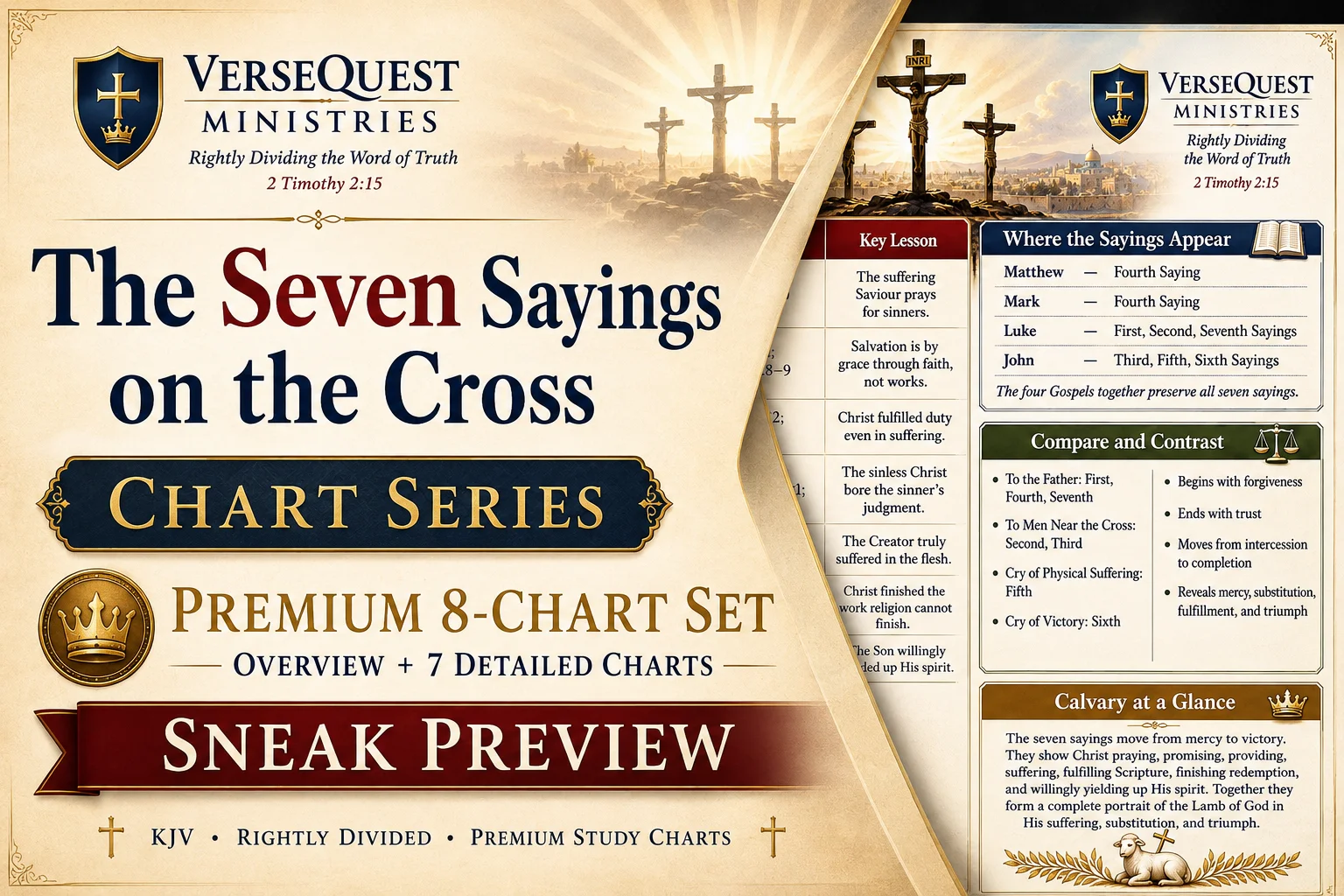
- The Seven Sayings on the Cross – Premium 8-Chart KJV Study Set
- A premium VerseQuest Ministries digital PDF study set on The Seven Sayings on the Cross, featuring an overview chart plus seven detailed KJV Bible study charts. This resource examines Calvary,…
- $12.99
- Add to cart
-
-
VerseQuest Premium Library
-
-67%
- The Book of Psalms Made Plain – 383-Page KJV Psalm Study
- The Book of Psalms Made Plain is a 383-page premium KJV Bible study featuring 54 detailed essays through the major themes, doctrines, prophecies, prayers, laments, and praises of the Psalms.…
- Original price was: $29.99.$9.99Current price is: $9.99.
- Add to cart
-
-67%
-
Bible Overview Series
-
- The New Jerusalem Made Plain — 621-Page PDF Study
- The New Jerusalem Made Plain is a massive 621-page KJV/rightly divided PDF study on the literal holy city revealed in Revelation 21–22. This 100-essay book makes the New Jerusalem plain…
- $34.99
- Add to cart
-
-
Christology Studies
-
- The Deity of Christ Defended — 66 KJV Studies Proving Jesus Christ Is God Manifest in the Flesh
- he Deity of Christ Defended is a 444-page premium KJV Bible study defending the full deity of the Lord Jesus Christ. This 66-study book proves from Scripture that Jesus is…
- $29.99
- Add to cart
-