
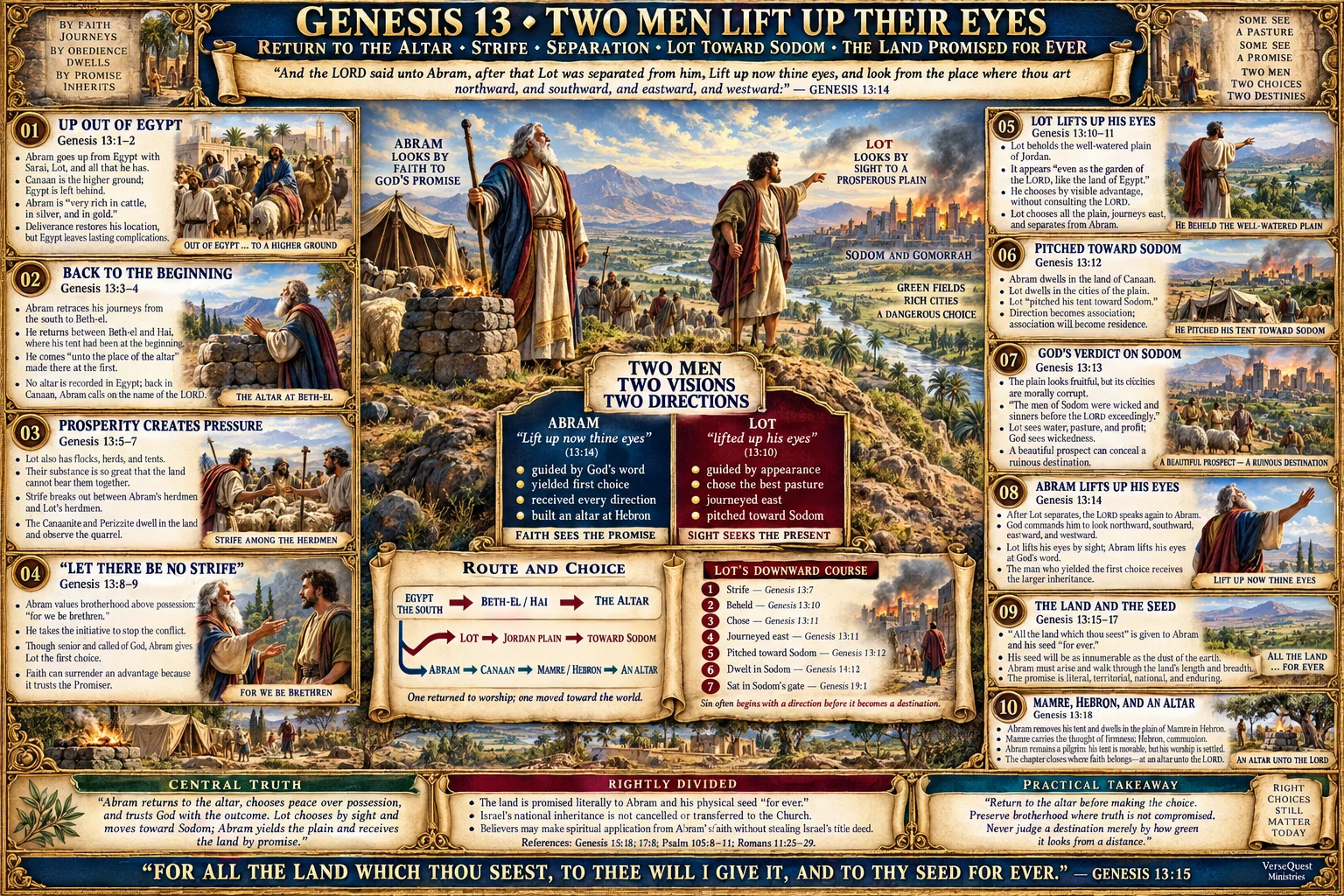
Genesis 13 – Two Men Lift Up Their Eyes: Abram, Lot, Separation, Sodom, and the Land Promised Forever (KJV Bible Study Chart)
Explore Genesis 13 with this detailed KJV Bible study chart tracing Abram’s return from Egypt, restoration at the altar, conflict between the herdsmen, peaceful separation from Lot, and the dramatic contrast between faith and sight. Follow Lot as he chooses the well-watered Jordan plain and pitches his tent toward wicked Sodom, while Abram waits upon God and receives the renewed promise of the land to himself and his seed forever. The chart also examines the progression of Lot’s downward course, Abram’s worship at Hebron, and the rightly divided distinction between Israel’s literal land inheritance and the spiritual blessings believers receive through Christ. Ideal for Bible study, sermon preparation, homeschool, Sunday school, discipleship, and dispensational teaching.
$4.99
Description
Genesis 13: Two Men Lift Up Their Eyes is a detailed KJV Bible study chart tracing Abram’s return from Egypt, his restoration at the altar, the strife between his herdsmen and Lot’s, their peaceful separation, Lot’s choice of the well-watered plain toward Sodom, and God’s renewed promise of the land to Abram and his seed forever. The chapter presents a powerful contrast between faith and sight, worship and worldly attraction, surrender and self-interest, and two men whose choices begin carrying them toward very different destinations.
Abram comes “up out of Egypt” with Sarai, Lot, and great material wealth. Yet the most important movement is spiritual rather than geographical. He returns to the place between Beth-el and Hai where his tent and altar had been at the beginning and again calls upon the name of the LORD. Egypt had increased his possessions, but Canaan restores him to worship. The chapter therefore begins with return, recovery, and renewed dependence upon God.
Prosperity soon creates pressure. Abram and Lot possess so many cattle, flocks, herds, and tents that the land cannot bear them dwelling together. Strife develops between their herdsmen while the Canaanite and Perizzite remain in the land. Abram refuses to let material prosperity destroy brotherly peace. He tells Lot, “Let there be no strife, I pray thee, between me and thee… for we be brethren.” Though Abram is the elder and the man to whom God has given the promise, he graciously gives Lot the first choice.
Lot “lifted up his eyes” and sees the well-watered plain of Jordan. It appears prosperous, fertile, and advantageous, but the visible beauty conceals spiritual danger. Lot chooses the plain, journeys east, and pitches his tent toward Sodom. Genesis immediately supplies God’s evaluation: “But the men of Sodom were wicked and sinners before the LORD exceedingly.” What looks profitable to human sight may conceal a ruinous destination.
After Lot separates, the LORD tells Abram, “Lift up now thine eyes.” The contrast is deliberate. Lot lifts his eyes according to appearance; Abram lifts his eyes at God’s command. The LORD promises the land northward, southward, eastward, and westward to Abram and his seed “for ever.” Abram is also promised descendants as numerous as the dust of the earth.
Within a rightly divided framework, this land promise belongs literally to Abram and his physical seed and is not cancelled or transferred to the Church. Believers today receive spiritual blessings connected with Abraham through Christ, but those blessings do not erase Israel’s national and territorial promises.
Abram responds by moving to the plain of Mamre in Hebron and building another altar unto the LORD. Genesis 13 therefore ends where faith belongs: not looking toward Sodom, but dwelling beneath God’s promise and worshipping at the altar. Lot chooses what looks best now; Abram trusts the One who owns the future.
Genesis 13, Abram and Lot, return from Egypt, altar at Beth-el, strife among herdsmen, let there be no strife, separation, Lot lifts up his eyes, Jordan plain, Sodom, faith versus sight, worldly attraction, Abram lifts up his eyes, land promise, seed promise, promised land forever, Mamre, Hebron, altar unto the LORD, Israel’s inheritance, Abrahamic promise
Genesis 13 begins with Abram returning “up out of Egypt” into the south of Canaan. He is accompanied by Sarai, Lot, and great wealth in cattle, silver, and gold. Yet the key restoration occurs when Abram returns to Beth-el and Hai, “unto the place of the altar, which he had made there at the first.” No altar is recorded during his Egyptian sojourn. Back in the land of promise, Abram again calls upon the name of the LORD. The chapter therefore begins with a believer returning to the place of worship and dependence after a season of fear and compromise.
Abram and Lot have become so prosperous that the land cannot support their combined possessions. Strife develops between their herdsmen. Abram refuses to allow material blessing to destroy brotherly peace and says, “Let there be no strife… for we be brethren.” Though Abram holds the divine promise and could have insisted upon priority, he gives Lot the first choice. Faith can surrender an immediate advantage because it trusts God with the outcome.
Lot “lifted up his eyes” and selects the well-watered plain of Jordan. The land appears “even as the garden of the LORD” and economically attractive, but Genesis immediately warns that “the men of Sodom were wicked and sinners before the LORD exceedingly.” Lot chooses according to sight without any recorded consultation with God. He journeys east and pitches his tent toward Sodom. Later chapters show the progression continuing until he dwells in Sodom and eventually sits in its gate. Genesis 13 records the direction before later chapters reveal the destination.
After Lot separates, God tells Abram, “Lift up now thine eyes.” This creates a striking contrast. Lot lifts his eyes independently and chooses what appears best; Abram lifts his eyes at God’s command and receives what God has promised. The LORD tells him to look in every direction and declares, “all the land which thou seest, to thee will I give it, and to thy seed for ever.”
The land promise is literal and territorial. Within a rightly divided interpretation, it belongs to Abram and his physical descendants and is not cancelled by the existence of the Church. Gentile believers receive spiritual blessing through Christ, but that does not erase Israel’s national promises. Romans 11 reinforces that God has not cast away His people or revoked His calling.
God also promises to multiply Abram’s seed as the dust of the earth. Abram then moves to the plain of Mamre in Hebron and builds another altar unto the LORD. The chapter closes with worship rather than worldly attraction. Genesis 13 therefore presents two visions and two directions: Lot chooses by what he can see, while Abram lives by what God has said.
Genesis 13 is useful for teaching restoration after failure, the importance of returning to worship, handling conflict among brethren, surrendering personal advantage, trusting God rather than appearances, resisting worldly attraction, and understanding how small directional choices can develop into larger spiritual consequences. It is especially valuable for personal Bible study, family devotions, Sunday school, homeschool instruction, Bible institutes, sermon preparation, discipleship, studies on Abraham and Lot, land-promise teaching, Christian decision-making, and dispensational instruction concerning Israel’s literal inheritance.
King James Bible, Strong’s Concordance, Thompson Chain-Reference Bible, Treasury of Scripture Knowledge, Nave’s Topical Bible, Genesis 12–19 study notes, Abrahamic covenant charts, patriarchal maps of Canaan, Abram and Lot comparison studies, Sodom and Gomorrah charts, land-promise Scripture chains, Hebrews 11 faith studies, Romans 4 Abraham studies, Romans 11 Israel studies, Galatians 3 promise studies, biblical decision-making studies, VerseQuest Genesis charts
Related products
-
Spiritual Growth
-
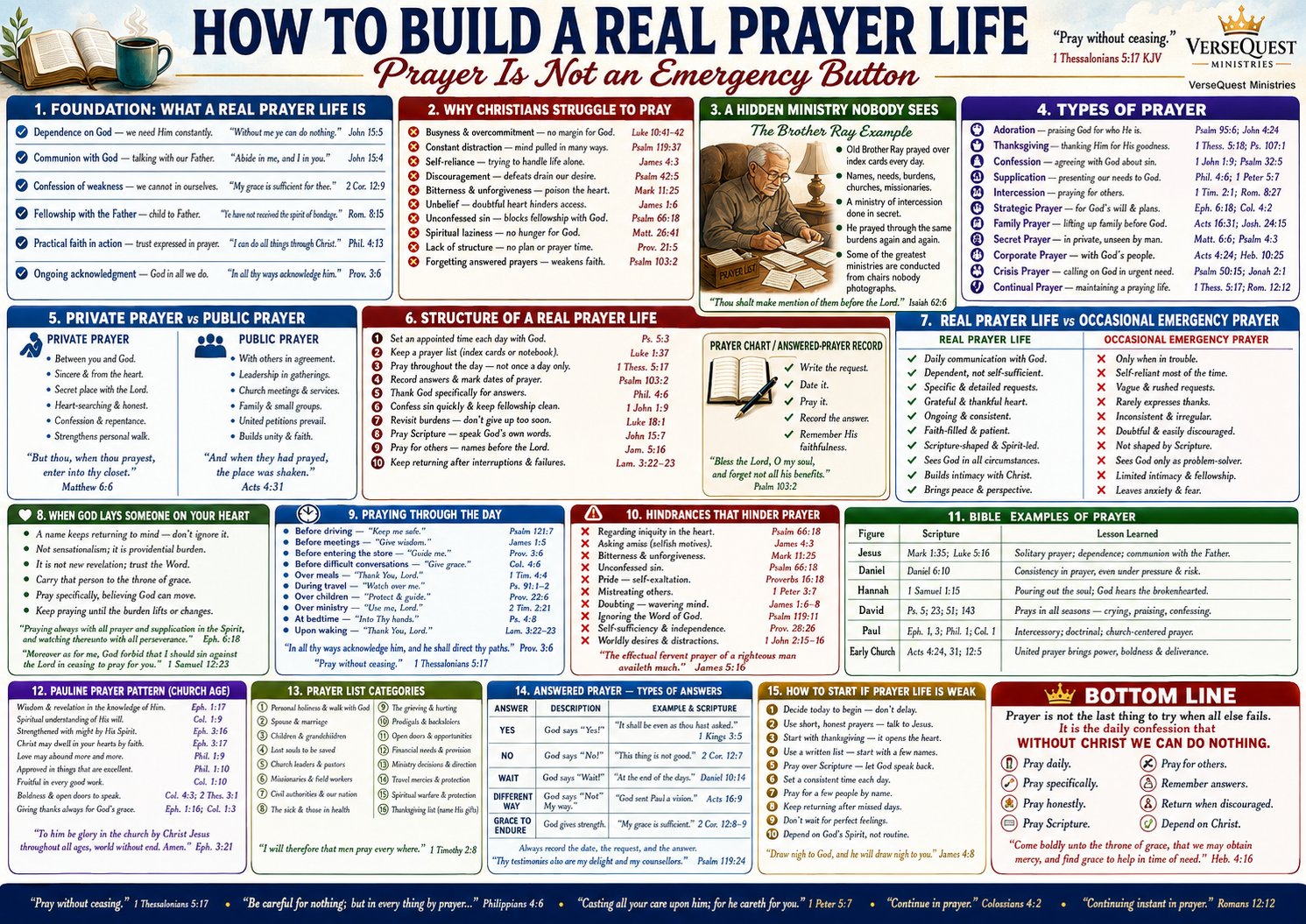
- How to Build a Real Prayer Life – Biblical Prayer Guide and KJV Bible Study Chart
- Build a consistent, biblical prayer life with this detailed KJV Bible study chart. Explore the foundations of prayer, types of prayer, common hindrances, answered prayer, Bible examples, and practical ways…
- $3.99
- Add to cart
-
-
Chart Collections
-
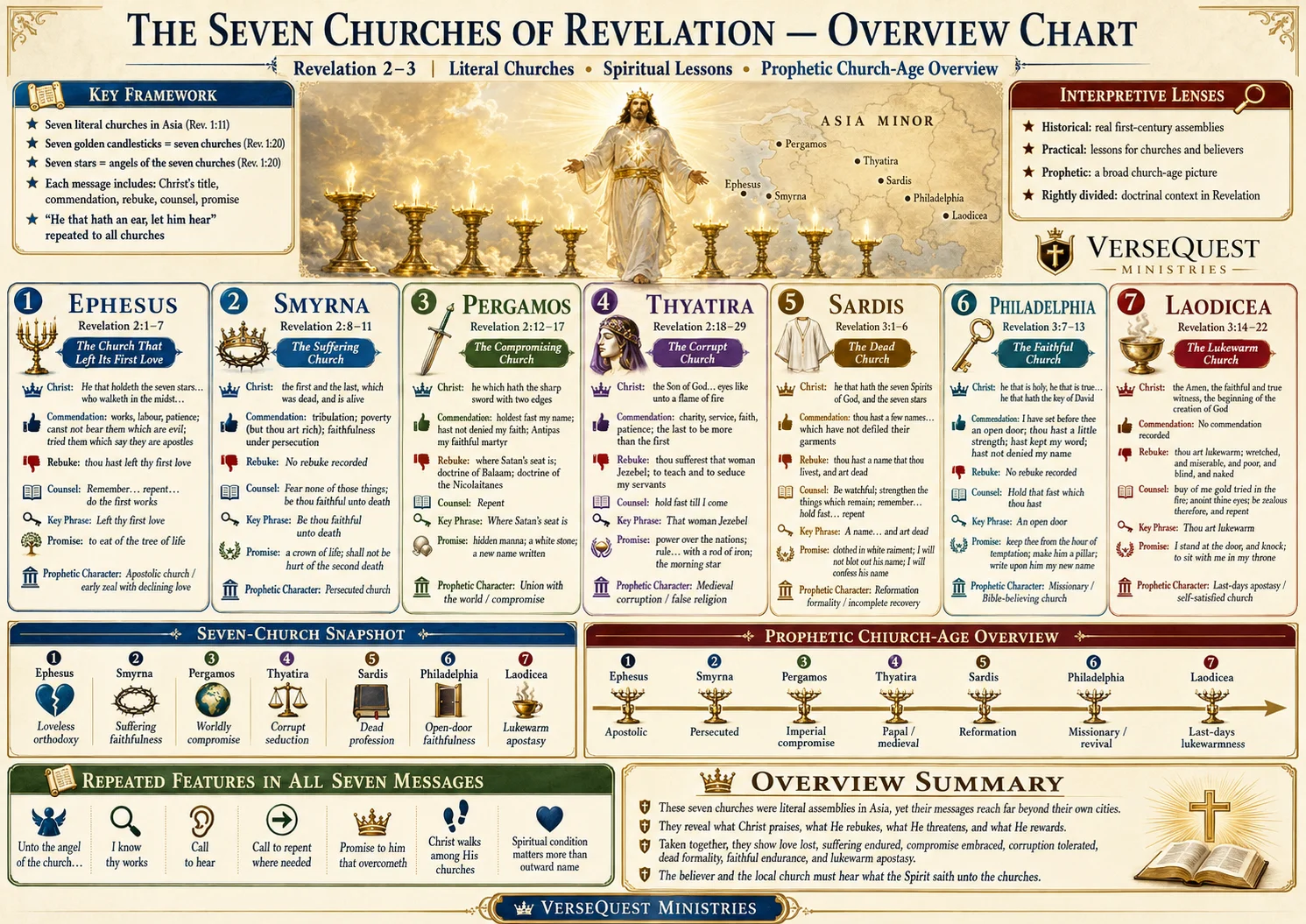
- The Seven Churches of Revelation Chart Collection – Christ Walking Among the Candlesticks
- A premium VerseQuest Ministries™ PDF chart collection covering the Seven Churches of Revelation in Revelation 2–3. Includes one overview chart plus individual KJV Bible study charts for Ephesus, Smyrna, Pergamos,…
- $12.99
- Add to cart
-
-
Uncategorized
-
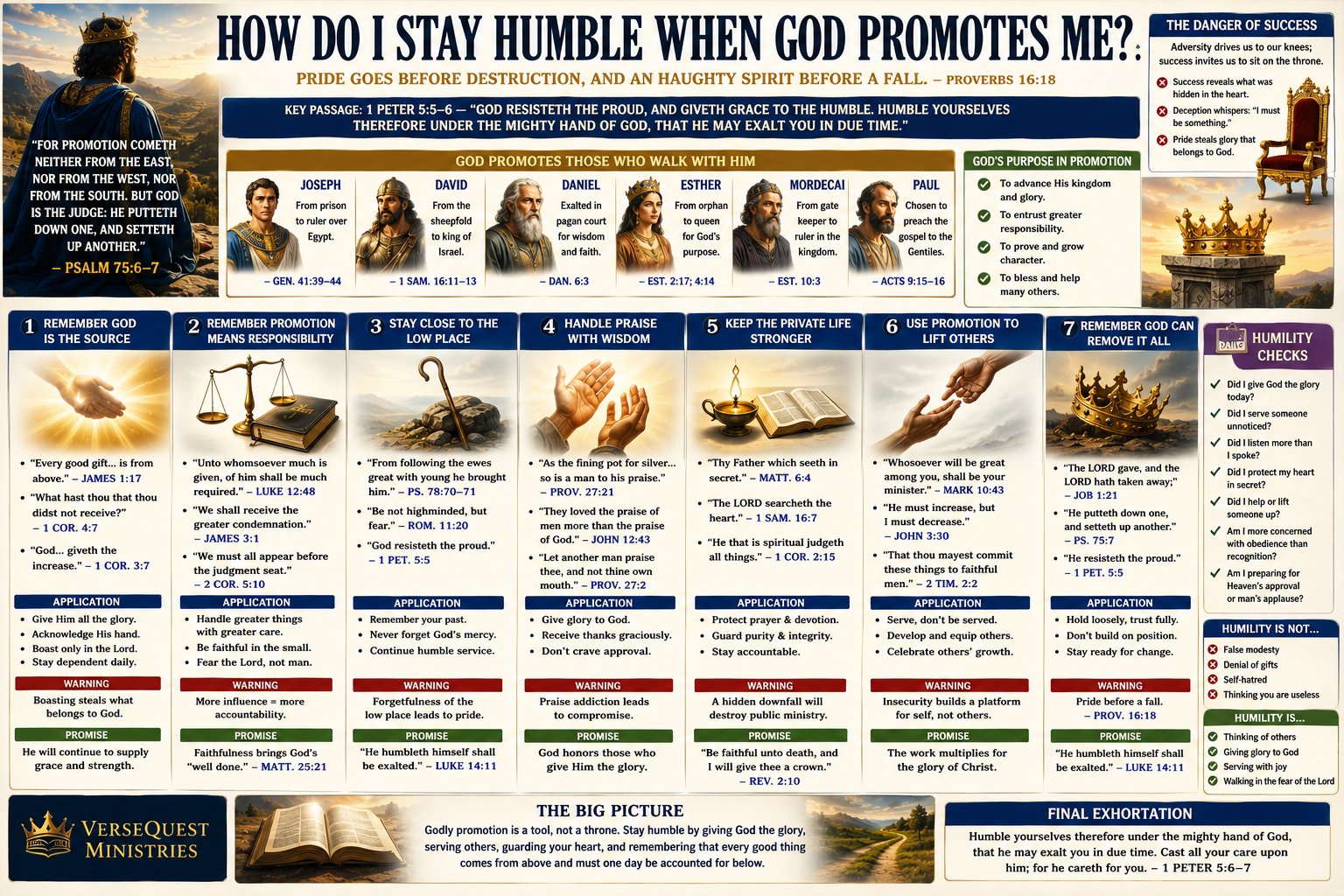
- How to Stay Humble When God Promotes You – Biblical Humility, Success, and Faithful Stewardship (KJV Bible Study Chart)
- Learn how to remain humble when God increases your influence with this detailed KJV Bible study chart covering pride, praise, responsibility, private devotion, servant leadership, and faithful stewardship.
- $3.99
- Add to cart
-
-
Law vs Grace
-
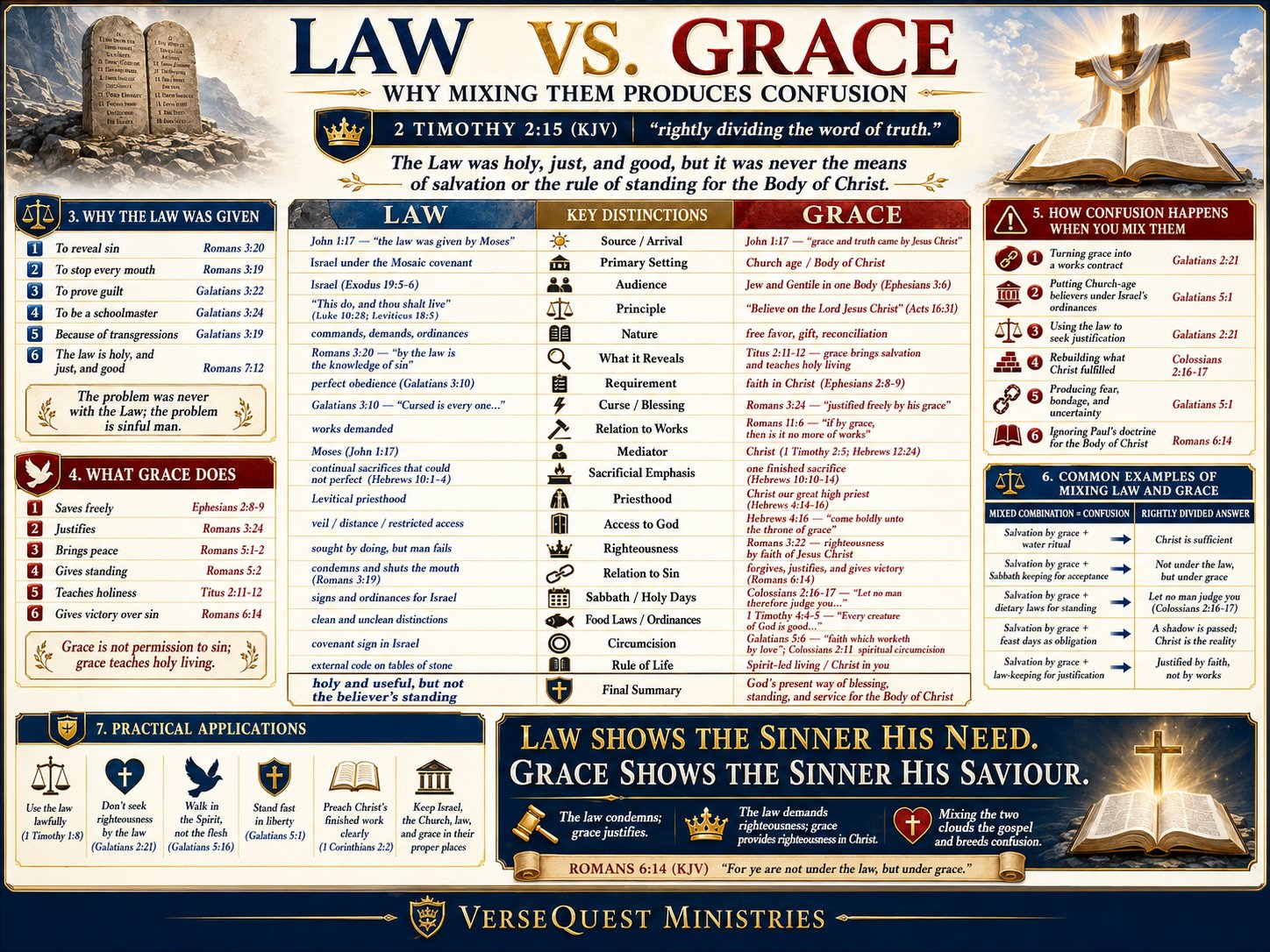
- Law vs. Grace Bible Study Chart – Why Mixing Them Produces Confusion (KJV)
- Compare law and grace with this detailed KJV Bible study chart explaining salvation, justification, holiness, Israel’s Mosaic covenant, Christian liberty, and the danger of mixing law with the gospel.
- $3.99
- Add to cart
-
-
Genesis Study
-
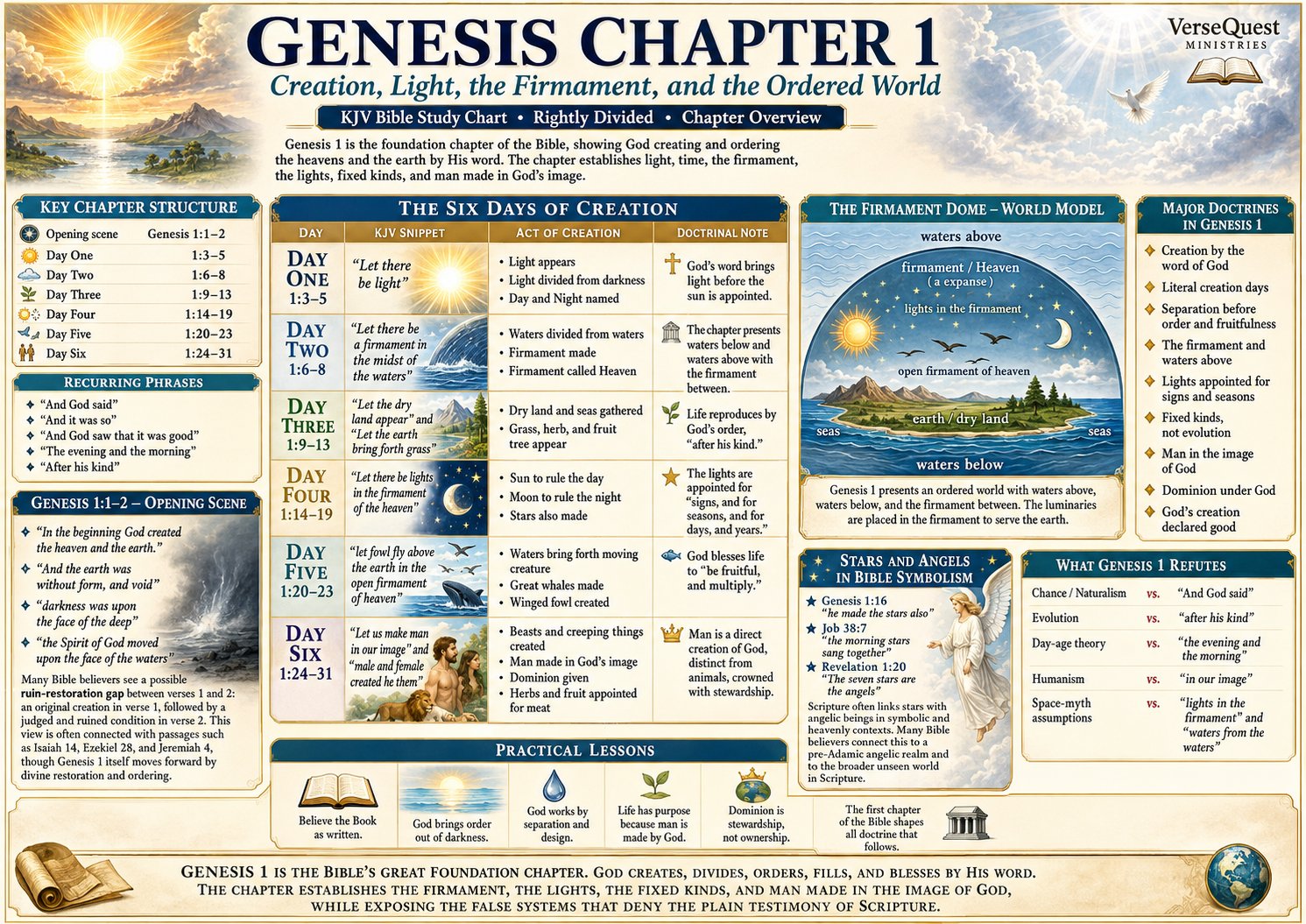
- Genesis Chapter 1 Bible Study Chart – Creation, Light, the Firmament, and the Ordered World (KJV)
- Explore Genesis Chapter 1 with this detailed KJV Bible study chart covering the six days of creation, the firmament, light, fixed kinds, man in God’s image, major doctrines, recurring phrases,…
- $3.99
- Add to cart
-