
VerseQuest Daily — September 2026
VerseQuest Daily — September 2026 is a 66-page downloadable KJV devotional PDF containing thirty complete daily studies. Each entry provides an assigned Scripture reading, a developed devotional, seven clear lessons, and a memorable Thought for the Day.
Beginning with the authority of Scripture and the gospel of grace, the month progresses through assurance, identity in Christ, spiritual growth, the Body of Christ, right division, Paul’s mystery, and the Judgment Seat of Christ. Its balanced Milk, Bread, Meat, and Strong Meat approach establishes foundational truth while steadily leading the reader into deeper biblical understanding.
Follow the dated readings throughout September or begin at any time and use the volume as a thirty-day discipleship study. It is designed for personal devotions, family study, Bible classes, small groups, teaching preparation, and Christian growth.
$6.99
Description
VerseQuest Daily — September 2026 is a 66-page downloadable KJV devotional PDF containing thirty complete daily studies for September 1–30, 2026. Bearing the subtitle “A Daily Portion of KJV Truth, Rightly Divided,” this inaugural monthly volume was created to give believers more than a pleasant religious thought or a hurried verse before beginning the day. Every devotional starts with the words of God, explains the passage in its proper setting, establishes sound doctrine, applies the truth to Christian living, and leaves the reader with clear lessons to remember.
The September journey begins where every sound Christian life must begin: with the divine authority and daily guidance of Scripture. It then confronts the universality and consequences of sin before clearly presenting the gospel of Christ’s death, burial, and resurrection. The reader is led through the blood of Christ, salvation by grace apart from works, believing on the Lord Jesus Christ, and the necessity of the new birth.
The studies then establish the believer in biblical assurance, the sealing of the Holy Spirit, peace with God, imputed righteousness, redemption, reconciliation, acceptance in Christ, and the reality of becoming a new creature. These truths help the Christian understand the difference between attempting to earn God’s acceptance and resting in the acceptance already provided through Jesus Christ.
Later readings address the conflict between the flesh and the Spirit, restored fellowship, spiritual appetite, obedience, position and practice, the Spirit’s baptism of believers into the Body of Christ, the unity of that Body, spiritual circumcision, and the old man and new man. The final studies introduce essential rightly divided distinctions involving Jew, Gentile, and the Church of God; the mystery revealed through Paul; and the Judgment Seat of Christ.
Each dated entry contains a devotional title, specific topic, assigned KJV Scripture reading, developed devotional exposition, Seven Things to Learn, and a memorable Thought for the Day. The month is deliberately balanced with 10 Milk studies, 11 Bread studies, 6 Meat studies, and 3 Strong Meat studies. This allows newer believers to become established while steadily introducing deeper doctrine and discernment.
This 6-by-9-inch digital devotional can be followed according to its September 2026 dates or used afterward as a timeless thirty-day discipleship resource. It is suitable for personal devotions, family reading, discipleship meetings, Sunday school preparation, small-group discussion, pastoral teaching, and ministry training. The objective is not merely to complete another reading plan, but to know the words of God, believe them, rightly divide them, and allow them to govern the Christian walk.
The divine authority of Scripture — The Christian life must be governed by God’s inspired and preserved words rather than feelings, traditions, or human opinions. The daily guidance of God’s word — Scripture supplies sufficient light for the believer’s next faithful step. The universal guilt of mankind — Every sinner stands guilty before God and cannot establish personal righteousness. The consequences of sin — Sin earns death, while eternal life is received as God’s gift through Jesus Christ. The gospel defined biblically — Christ died for our sins, was buried, and rose again according to the Scriptures. Salvation through Christ’s blood — Justification and reconciliation rest upon Christ’s finished sacrifice. Grace apart from works — Salvation is received through faith and cannot be earned through religious performance. The necessity of the new birth — Religious activity cannot replace the spiritual life God gives through Christ. Biblical assurance and eternal security — The believer can know that he possesses eternal life and is sealed by the Holy Spirit. Justification and imputed righteousness — God counts the righteousness of Christ to the believing sinner. The believer’s new standing — Redemption, reconciliation, acceptance, and completeness are found in Christ. The new creature and two natures — The believer possesses new life while continuing to face conflict with the flesh. Standing and daily fellowship — Failure affects fellowship and usefulness but does not undo the believer’s position in Christ. Growth through the word — Spiritual maturity requires an appetite for Scripture and continued obedience. The Body of Christ — Saved believers are spiritually baptized into one Body and united under one Head. Spiritual circumcision — The believer’s relationship to Christ involves a spiritual operation made without hands. The old man and new man — Christian conduct should reflect the believer’s new identity rather than the former manner of life. Rightly dividing the word of truth — All Scripture is profitable, but commands, promises, peoples, and dispensational settings must remain properly distinguished. Jew, Gentile, and the Church of God — These biblical groups must not be carelessly merged. The mystery revealed through Paul — The present Body of Christ forms part of truth once hidden and subsequently revealed. The Judgment Seat of Christ — Saved believers will be examined for their service and stewardship, not retried to determine their salvation. Balanced spiritual nourishment — Milk, Bread, Meat, and Strong Meat work together to produce established and discerning Christians.
Central Argument
Christian growth must begin with the authority of Scripture and the certainty of the gospel. The believer must first understand what God has said, what sin has done, what Christ accomplished, and what faith receives. From that foundation, the Christian can understand his position in Christ, walk in fellowship, grow through the word, recognize the Body of Christ, rightly divide Scripture, and prepare for future accountability.
Progression of the Month
The opening studies establish the inspiration and daily guidance of Scripture. The next section moves from universal guilt and the wages of sin to Christ’s death, burial, resurrection, blood, grace, and the new birth. The middle of the month develops assurance, sealing, justification, imputed righteousness, redemption, reconciliation, acceptance, and new creation. The closing portion addresses spiritual conflict, fellowship, growth, obedience, position and practice, the Body of Christ, spiritual circumcision, right division, Paul’s mystery, and the Judgment Seat of Christ.
Important Distinctions
- Salvation is God’s gift; Christian service is the believer’s grateful response.
- Justification establishes peace with God; daily fellowship concerns the believer’s walk.
- The believer’s standing in Christ is settled; his practical conduct must continue to mature.
- Confession restores fellowship; it does not cause a saved believer to be born again repeatedly.
- The baptism of the Spirit places believers into Christ’s Body and must not be confused with every reference to water baptism.
- All Scripture is profitable, but not every command or promise is addressed directly to the Body of Christ.
- Israel, the Gentiles, and the Church of God are related within God’s purposes but are not interchangeable.
- The Judgment Seat of Christ examines a believer’s service and reward, not whether Christ’s finished work was sufficient to save him.
Doctrinal Conclusions
Salvation is by grace through faith in the finished work of Jesus Christ. The believer is justified by faith, redeemed through Christ’s blood, reconciled to God, accepted in Christ, sealed by the Holy Spirit, and given eternal life. Christian growth does not improve the finished work of Christ; it brings the believer’s daily conduct into agreement with his settled position.
Memorable Teaching Points
- The Bible is not merely the entrance to Christian life; it remains the ground upon which the believer stands.
- Sin pays wages, but eternal life is a gift.
- Grace has no pay window because Christ has already paid the price.
- Assurance rests upon God’s written record rather than changing emotions.
- The Christian is not merely a repaired sinner but a new creature in Christ.
- Right division does not remove Scripture; it keeps every portion where God placed it.
- The believer is saved forever but will still answer for how he served.
Subjects for Further Study
- How does biblical inspiration extend to the words of Scripture?
- What is the difference between justification, redemption, reconciliation, and forgiveness?
- How does the sealing of the Holy Spirit establish assurance?
- What is the difference between the believer’s standing and state?
- How should a Christian understand the continuing conflict with the flesh?
- What is the Spirit’s baptism into the Body of Christ?
- Why must Israel and the Church remain doctrinally distinct?
- What truth comprises the mystery revealed through Paul?
- What will be examined at the Judgment Seat of Christ?
Personal Bible study: Follow one dated reading each day, reading the complete KJV passage before working through the devotional, seven lessons, and concluding thought.
New-believer discipleship: Use the month as an organized introduction to Scripture, sin, salvation, assurance, identity in Christ, spiritual growth, and right division.
Family study: Read the passage and devotional together, then use the seven lessons to guide discussion and review.
Sunday school: Develop individual entries into lessons on salvation, eternal security, Christian growth, the Body of Christ, or dispensational distinctions.
Small groups: Assign one or more readings before each gathering and discuss the doctrine, practical application, and Thought for the Day.
Sermon preparation: Use the daily topics and passages as starting points for sermons, doctrinal messages, and practical Bible teaching.
Pastoral counseling: Apply appropriate studies when helping someone understand assurance, guilt, forgiveness, reconciliation, spiritual conflict, or restored fellowship.
Ministry training: Teach developing workers how to move from the text to doctrine, distinction, application, review, and personal reflection.
Self-paced courses: Use the dated volume at any time as a thirty-day introductory discipleship course rather than limiting it to September 2026.
Review and retention: Revisit the Seven Things to Learn and Thought for the Day to reinforce the principal truth of each study.
A King James Bible with cross-references for reading each assigned passage in its immediate and broader biblical context.
A complete Bible concordance for tracing important terms such as grace, justification, redemption, reconciliation, mystery, body, and judgment.
The Treasury of Scripture Knowledge for locating closely connected passages throughout the Bible.
Noah Webster’s 1828 American Dictionary for studying the historical meanings of important English words used in the King James Bible.
A reliable Bible atlas and chronological timeline for distinguishing biblical locations, historical settings, and dispensational developments.
VerseQuest’s The Words God Refused to Lose for a deeper examination of biblical inspiration and preservation.
VerseQuest Romans Commentary studies for further exposition of sin, justification, grace, righteousness, Christian standing, and spiritual growth.
VerseQuest studies on Law versus Grace for a fuller understanding of salvation apart from works and the believer’s relationship to biblical law.
VerseQuest studies and sermon outlines on right division for further examination of Israel, the Church, dispensational distinctions, and Pauline doctrine.
A personal study notebook for recording doctrinal observations, questions, cross-references, applications, and the truths that require further study.
Related products
-
Law vs Grace
-
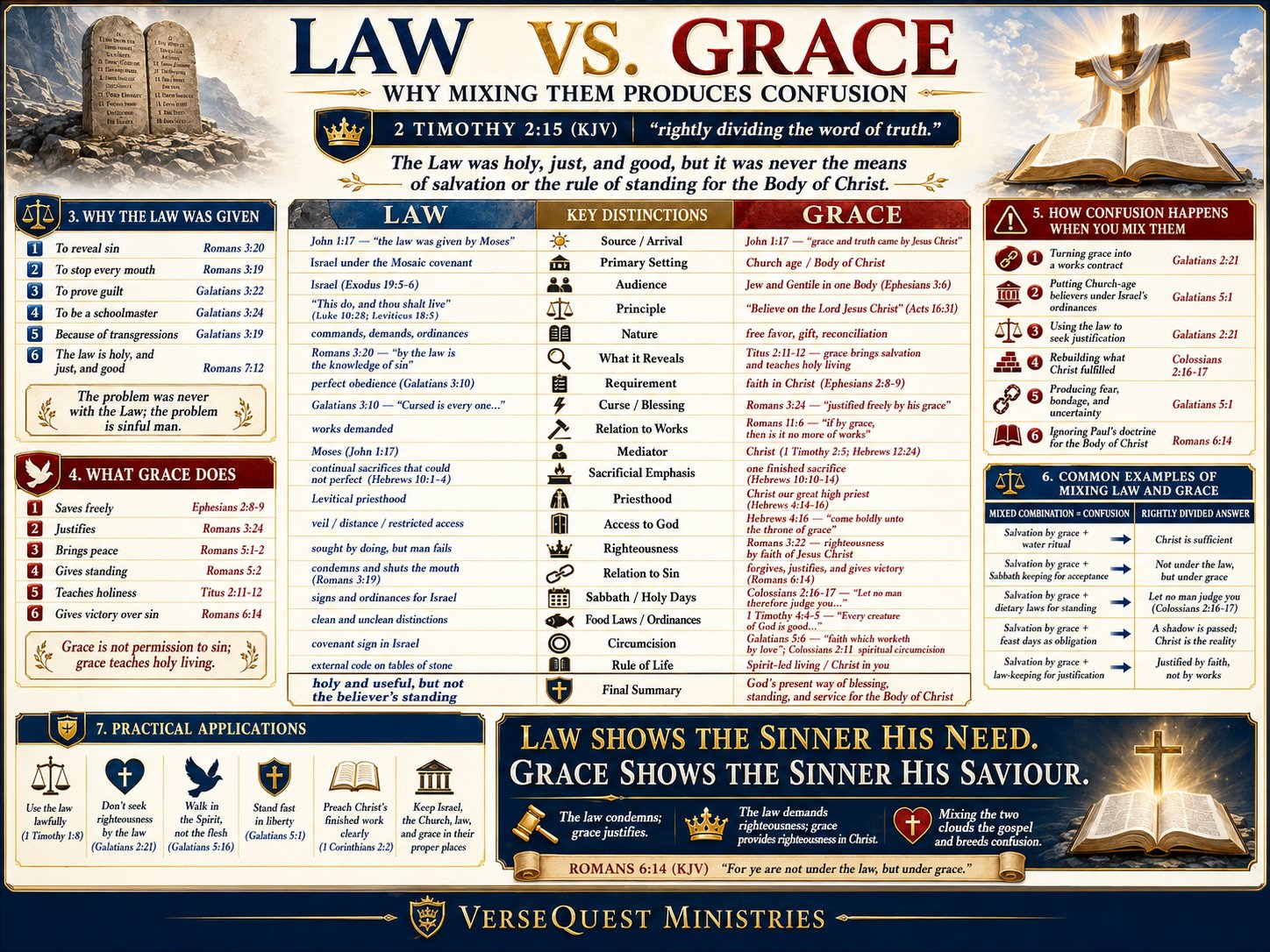
- Law vs. Grace Bible Study Chart – Why Mixing Them Produces Confusion (KJV)
- Compare law and grace with this detailed KJV Bible study chart explaining salvation, justification, holiness, Israel’s Mosaic covenant, Christian liberty, and the danger of mixing law with the gospel.
- $3.99
- Add to cart
-
-
The Church Age vs The Tribulation
-
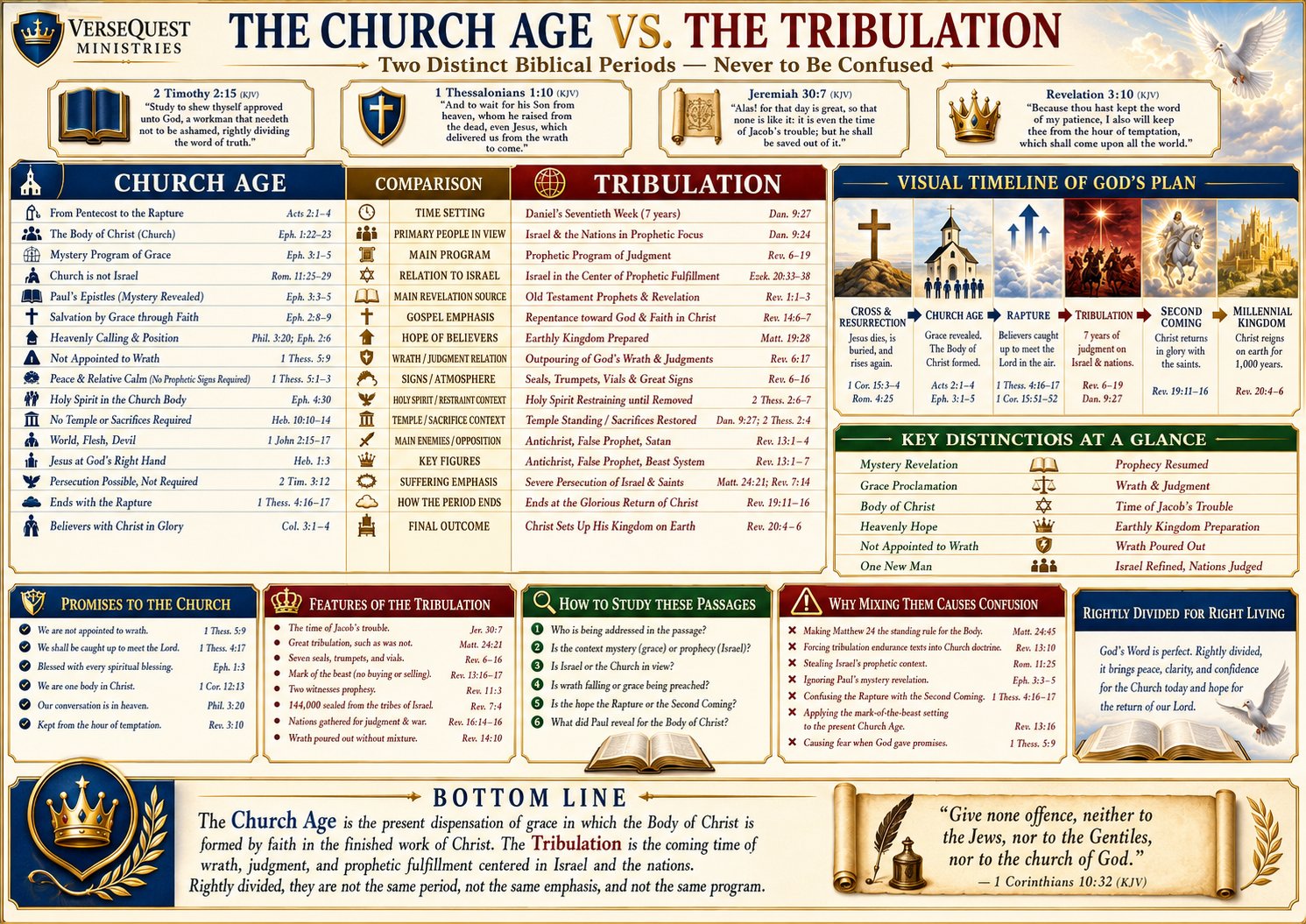
- The Church Age vs. the Tribulation – Two Distinct Biblical Periods KJV Bible Study Chart
- Compare the Church Age and the Tribulation with this detailed KJV chart covering the Body of Christ, Israel, grace, wrath, the Rapture, Antichrist, the Second Coming, and the millennial Kingdom.
- $3.99
- Add to cart
-
-
Prophecy vs Mystery
-
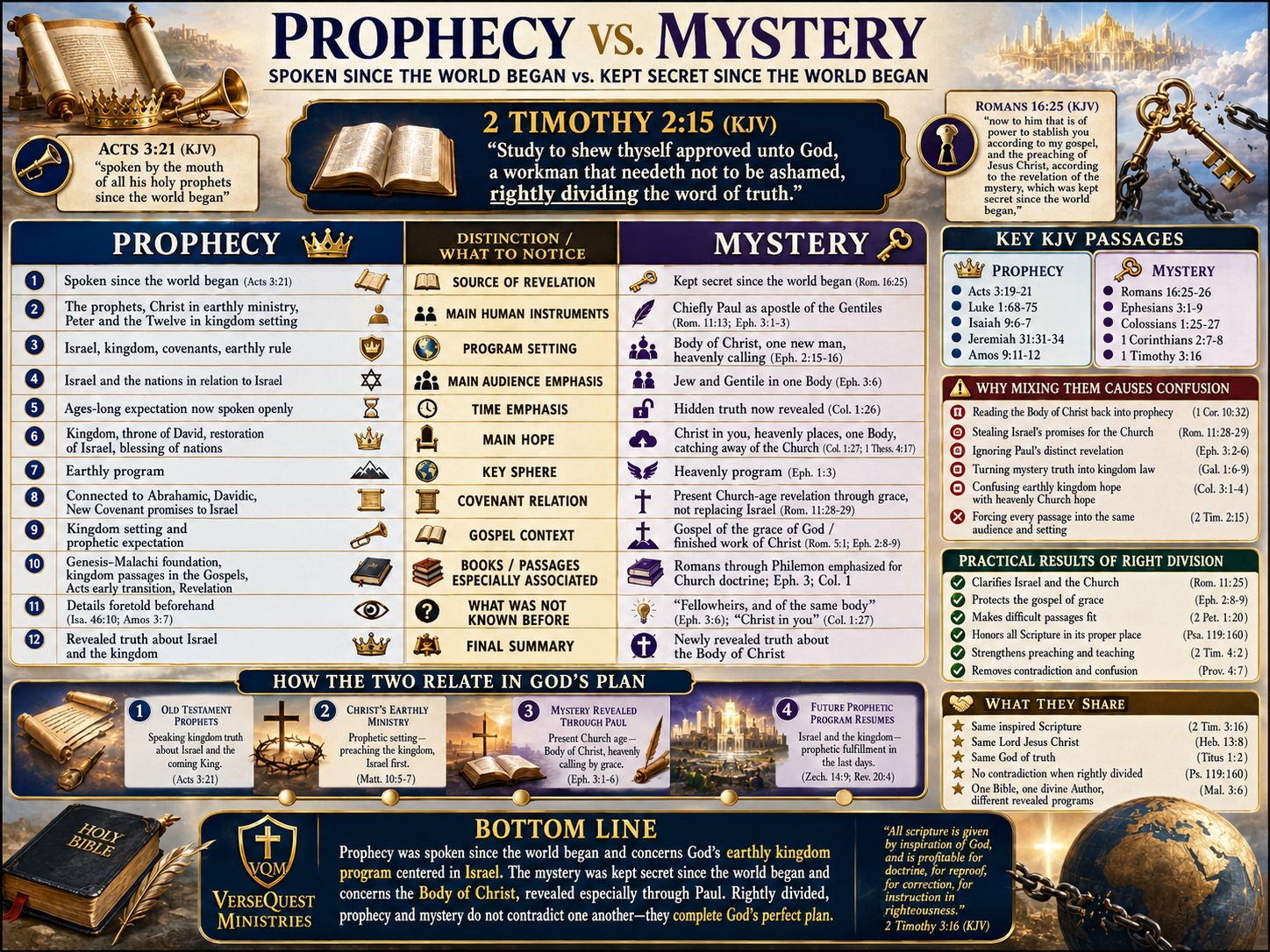
- Prophecy vs. Mystery Bible Study Chart – Spoken Since the World Began vs. Kept Secret Since the World Began (KJV)
- Compare prophecy and mystery with this detailed KJV chart explaining Israel’s earthly Kingdom program, the Body of Christ, Paul’s revelation, the heavenly calling, and the importance of right division.
- $3.99
- Add to cart
-
-
Water Baptism Across the Bible
-
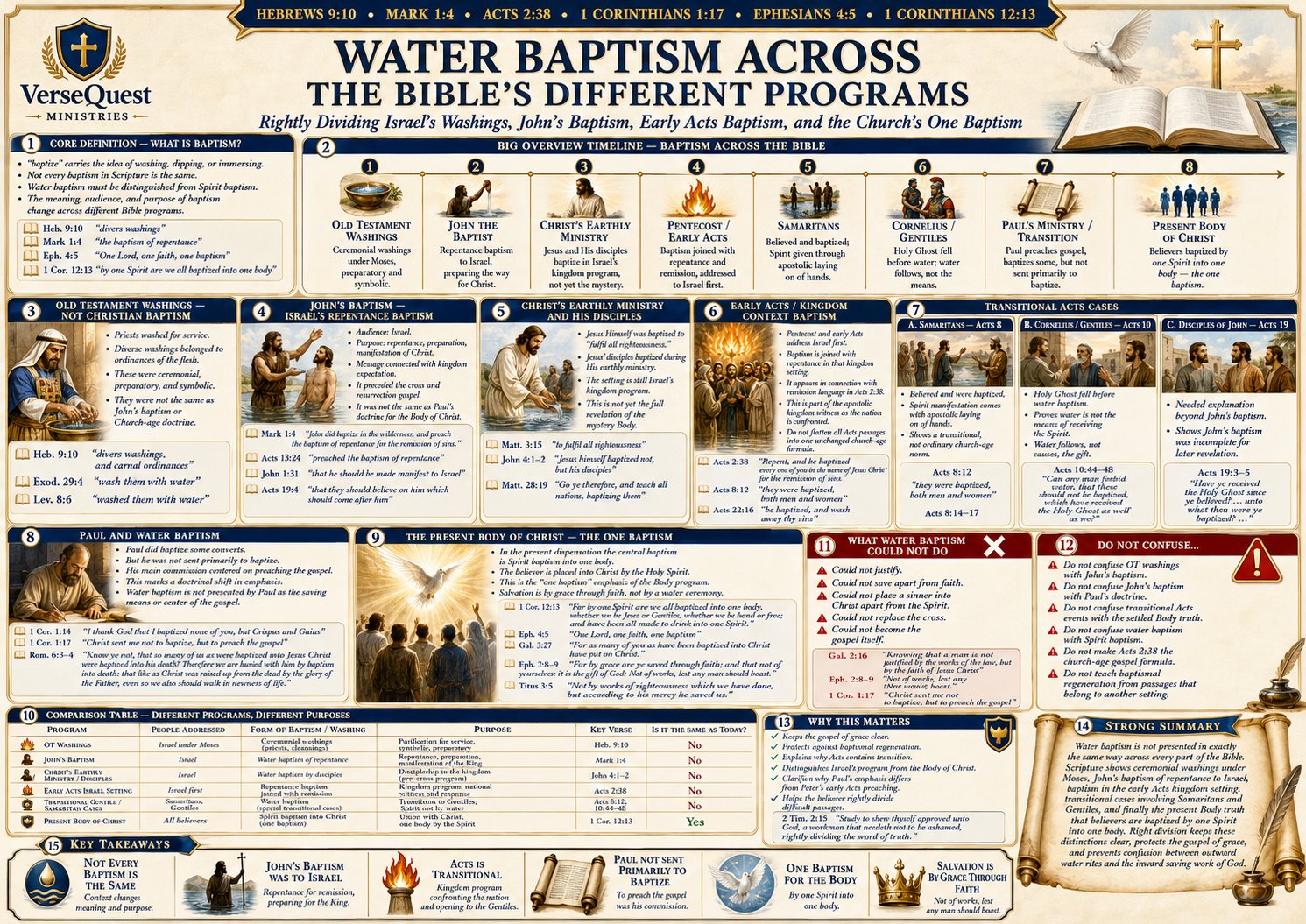
- Water Baptism Across the Bible’s Different Programs – Israel’s Washings, John’s Baptism, Acts, Paul, and the Church’s One Baptism (KJV Bible Study Chart)
- Compare water baptism throughout Scripture with this detailed KJV chart covering Old Testament washings, John’s baptism, Christ’s ministry, early Acts, transitional cases, Paul, and the one Spirit baptism of the…
- $3.99
- Add to cart
-
-
Revelation of the Body of Christ
-
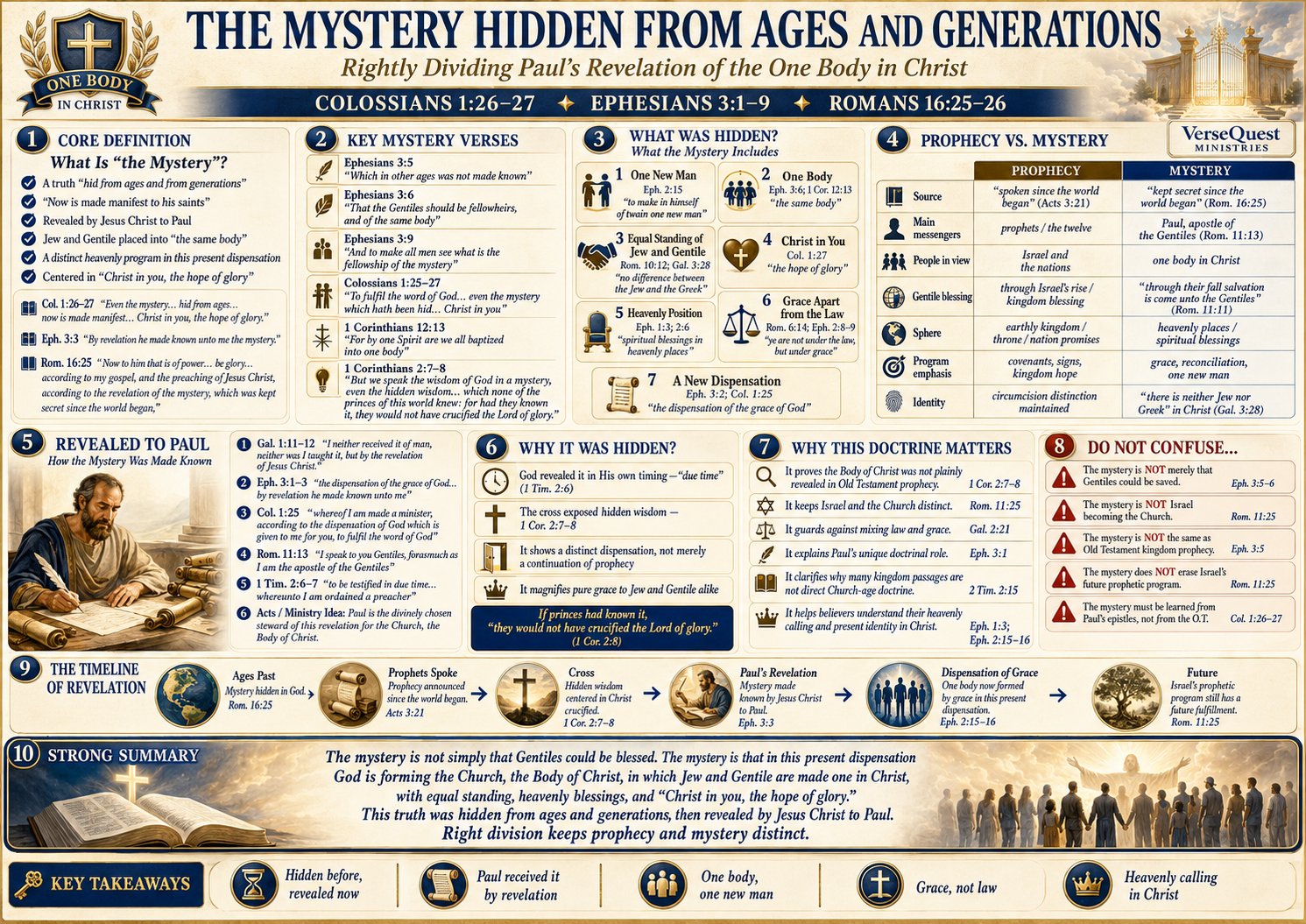
- The Mystery Hidden from Ages and Generations – Paul’s Revelation of the One Body in Christ (KJV Bible Study Chart)
- Understand the mystery hidden from ages and generations with this detailed KJV chart covering Paul’s revelation, the one Body, the one new man, grace, heavenly blessings, and prophecy versus mystery.
- $3.99
- Add to cart
-