
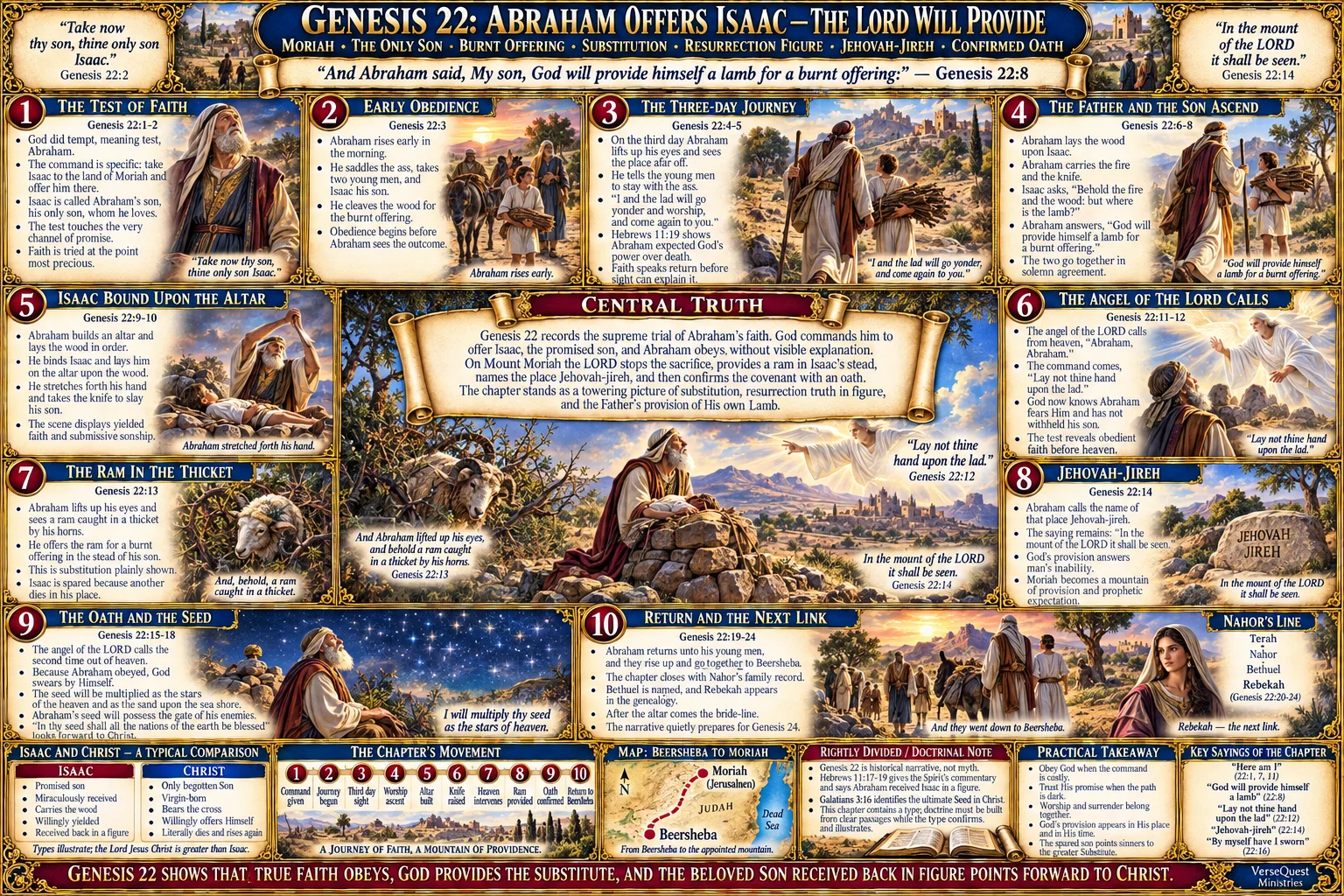
Genesis 22 – Abraham Offers Isaac: The Only Son, Mount Moriah, the Ram in the Thicket, Jehovahjireh, and the Confirmed Oath (KJV Bible Study Chart)
Explore Genesis 22 with this detailed KJV Bible study chart examining Abraham’s supreme test of faith, the command to offer Isaac, the three-day journey into the land of Moriah, and Abraham’s confidence that he and the lad would return. Follow the father and son up the mountain as Isaac carries the wood and Abraham declares, “God will provide himself a lamb.” The chart traces Isaac bound upon the altar, the Angel of the LORD stopping Abraham, the ram offered “in the stead of his son,” the naming of Jehovahjireh, and God’s covenant oath concerning Abraham’s seed. It also highlights Hebrews 11’s resurrection figure, the typological parallels between Isaac and Christ, and the introduction of Rebekah’s family line. Ideal for Bible study, sermon preparation, homeschool, Sunday school, covenant studies, and Christological teaching.
$4.99
Description
Genesis 22: Abraham Offers Isaac—The LORD Will Provide is a detailed KJV Bible study chart examining one of the greatest tests of faith and one of the clearest Old Testament pictures of substitution, resurrection in figure, and the Father’s beloved Son. God commands Abraham to take Isaac, “thine only son Isaac, whom thou lovest,” into the land of Moriah and offer him for a burnt offering upon a mountain that God will reveal.
Abraham responds with immediate obedience. He rises early, prepares the ass, takes two young men and Isaac, splits the wood, and begins the journey. On the third day Abraham sees the appointed place afar off and tells the servants, “I and the lad will go yonder and worship, and come again to you.” Hebrews 11 explains the faith behind those words: Abraham accounted that God was able to raise Isaac from the dead, “from whence also he received him in a figure.”
The father and son ascend together. Isaac carries the wood while Abraham carries the fire and knife. Isaac asks the central question, “Behold the fire and the wood: but where is the lamb for a burnt offering?” Abraham replies, “My son, God will provide himself a lamb for a burnt offering.” The words point beyond Abraham’s immediate circumstances toward the biblical theme of God providing the sacrifice.
Abraham builds the altar, arranges the wood, binds Isaac, and stretches forth his hand to slay his son. At the decisive moment, the Angel of the LORD calls from heaven and stops him. Abraham’s faith has been demonstrated openly: he has not withheld his son from God.
Abraham then sees a ram caught by its horns in a thicket and offers it “in the stead of his son.” The substitution is unmistakable. Isaac lives because another victim dies in his place. Abraham names the place Jehovahjireh, declaring, “In the mount of the LORD it shall be seen.”
The Angel of the LORD then confirms God’s promise by an oath. Abraham’s seed will be multiplied as the stars of heaven and sand upon the seashore, will possess the gate of his enemies, and through his seed all nations will be blessed.
Genesis 22 therefore joins faith, obedience, substitution, resurrection truth in figure, covenant promise, and prophetic typology. Isaac is not Christ, but his experience powerfully anticipates the greater Son who would willingly give Himself. The chapter closes by introducing Rebekah through Nahor’s family line, quietly preparing the way for the bride narrative of Genesis 24.
Genesis 22, Abraham offers Isaac, sacrifice of Isaac, Mount Moriah, land of Moriah, only son Isaac, beloved son, test of faith, early obedience, three-day journey, father and son, God will provide himself a lamb, Isaac bound, altar and wood, Angel of the LORD, ram in the thicket, substitution, Jehovahjireh, resurrection in figure, covenant oath, promised seed, Abrahamic covenant, type of Christ, Rebekah introduced
Genesis 22 begins by stating that God “did tempt Abraham.” In KJV usage, the word here means to test or prove, not to entice Abraham to sin. God commands him to take Isaac, “thine only son Isaac, whom thou lovest,” to the land of Moriah. Ishmael was still living, but Isaac was the unique covenant son and the child of promise, which Hebrews 11:17 expresses by calling him Abraham’s “only begotten son.”
Abraham rises early and obeys without recorded argument. He takes Isaac, two young men, the wood, and supplies for the journey. On the third day he sees the appointed place and tells the servants, “I and the lad will go yonder and worship, and come again to you.” Hebrews 11:17–19 explains that Abraham believed God could raise Isaac from the dead because God had already promised that the covenant line would continue through him. Abraham therefore receives Isaac back “in a figure.”
Isaac carries the wood while Abraham carries the fire and knife. When Isaac asks where the lamb is, Abraham answers, “God will provide himself a lamb for a burnt offering.” In the immediate event God supplies a ram, while the wording also fits the larger biblical revelation that God Himself ultimately supplies the sacrificial Lamb.
Abraham builds the altar, binds Isaac, places him upon the wood, and reaches for the knife. The Angel of the LORD stops him, declaring that Abraham has not withheld his son. The test demonstrates the reality of Abraham’s obedient faith. James 2 later appeals to this event when discussing faith demonstrated by works.
A ram caught by its horns in a thicket is offered “in the stead of his son.” This is explicit substitution: Isaac is spared while another dies in his place. The scene therefore provides a powerful type of Christ’s substitutionary sacrifice, while the doctrine of Christ’s atonement must ultimately be established from direct New Testament passages.
Abraham names the place Jehovahjireh, with the KJV text reading, “In the mount of the LORD it shall be seen.” Genesis speaks of the land of Moriah; 2 Chronicles 3:1 later identifies Mount Moriah with the location where Solomon built the temple in Jerusalem.
The Angel of the LORD then confirms God’s promise with an oath. Abraham’s seed will multiply as the stars and sand, possess the gate of his enemies, and bring blessing to all nations. Galatians 3 ultimately connects the promised Seed with Christ without erasing the literal historical promises given to Abraham’s descendants.
The chapter closes with Nahor’s genealogy and the introduction of Rebekah. What appears at first to be a simple family record actually prepares the narrative for Genesis 24. After the offered son is received back in figure, Scripture begins introducing the woman who will become Isaac’s bride.
Genesis 22 is useful for teaching obedience when God’s command is costly, confidence in God’s promises when circumstances seem contradictory, substitutionary sacrifice, resurrection faith, and the importance of surrendering even what is most precious to God. It also provides foundational material for studying Hebrews 11, James 2, the typological relationship between Isaac and Christ, Mount Moriah, Jehovahjireh, and the Abrahamic covenant. The chart is ideal for personal Bible study, Sunday school, homeschool instruction, Bible institutes, sermon preparation, Christological studies, dispensational teaching, covenant studies, and lessons on faith, worship, surrender, provision, and obedience.
King James Bible, Strong’s Concordance, Thompson Chain-Reference Bible, Treasury of Scripture Knowledge, Nave’s Topical Bible, Genesis 21–24 study notes, Abrahamic covenant charts, Mount Moriah studies, 2 Chronicles 3 temple studies, Hebrews 11 faith studies, James 2 Abraham studies, biblical sacrifice charts, substitutionary atonement studies, Isaac and Christ comparison charts, Jehovahjireh word studies, patriarchal maps from Beersheba to Moriah, VerseQuest Genesis charts
Related products
-
Biblical Submission
-
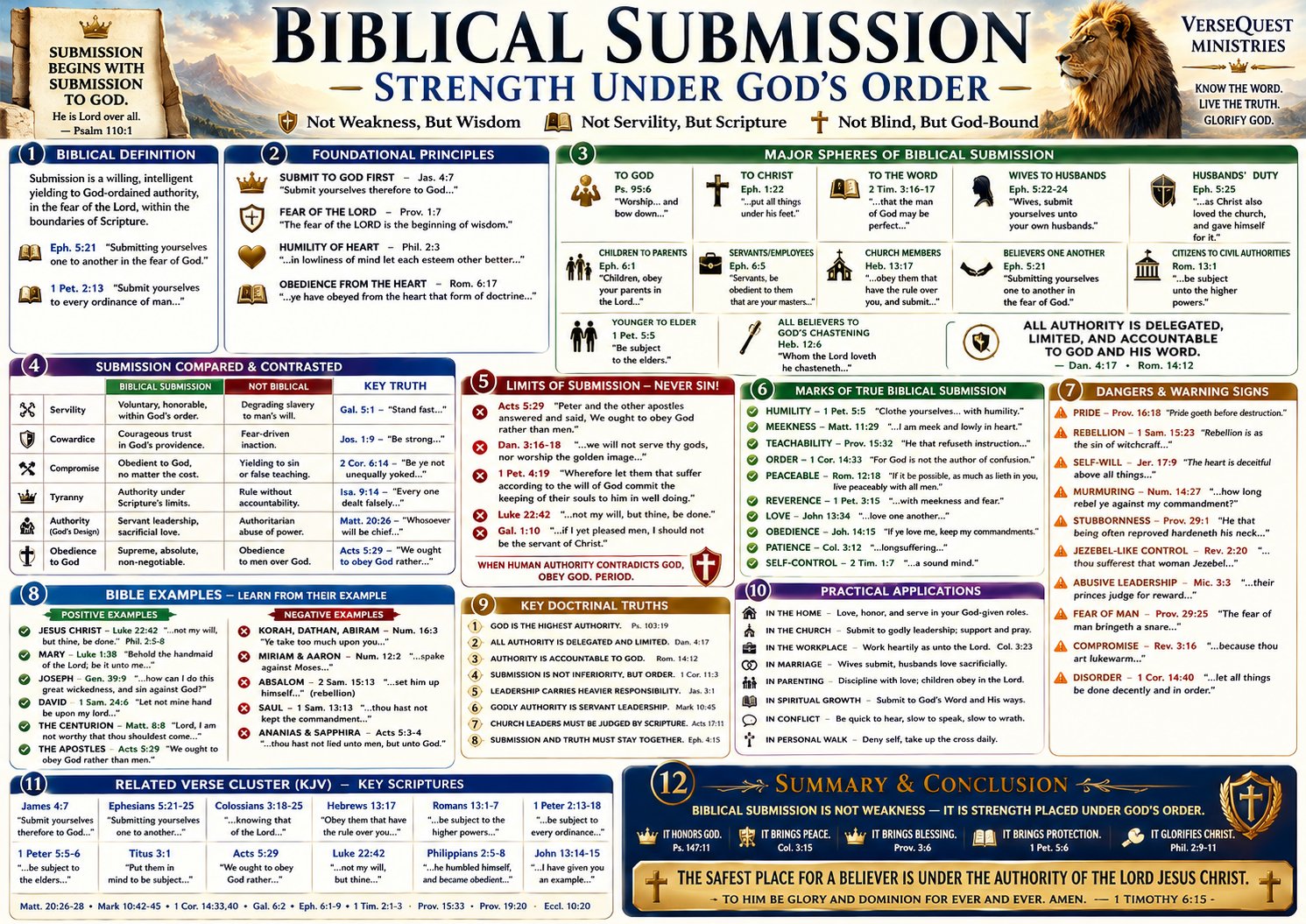
- Biblical Submission Bible Study Chart – Strength Under God’s Order, Authority, and Scriptural Limits (KJV) Product Description
- Study biblical submission with this detailed KJV chart covering God-ordained authority, servant leadership, obedience, marriage, church, government, and the Scriptural limits of submission.
- $3.99
- Add to cart
-
-
Genesis Study
-
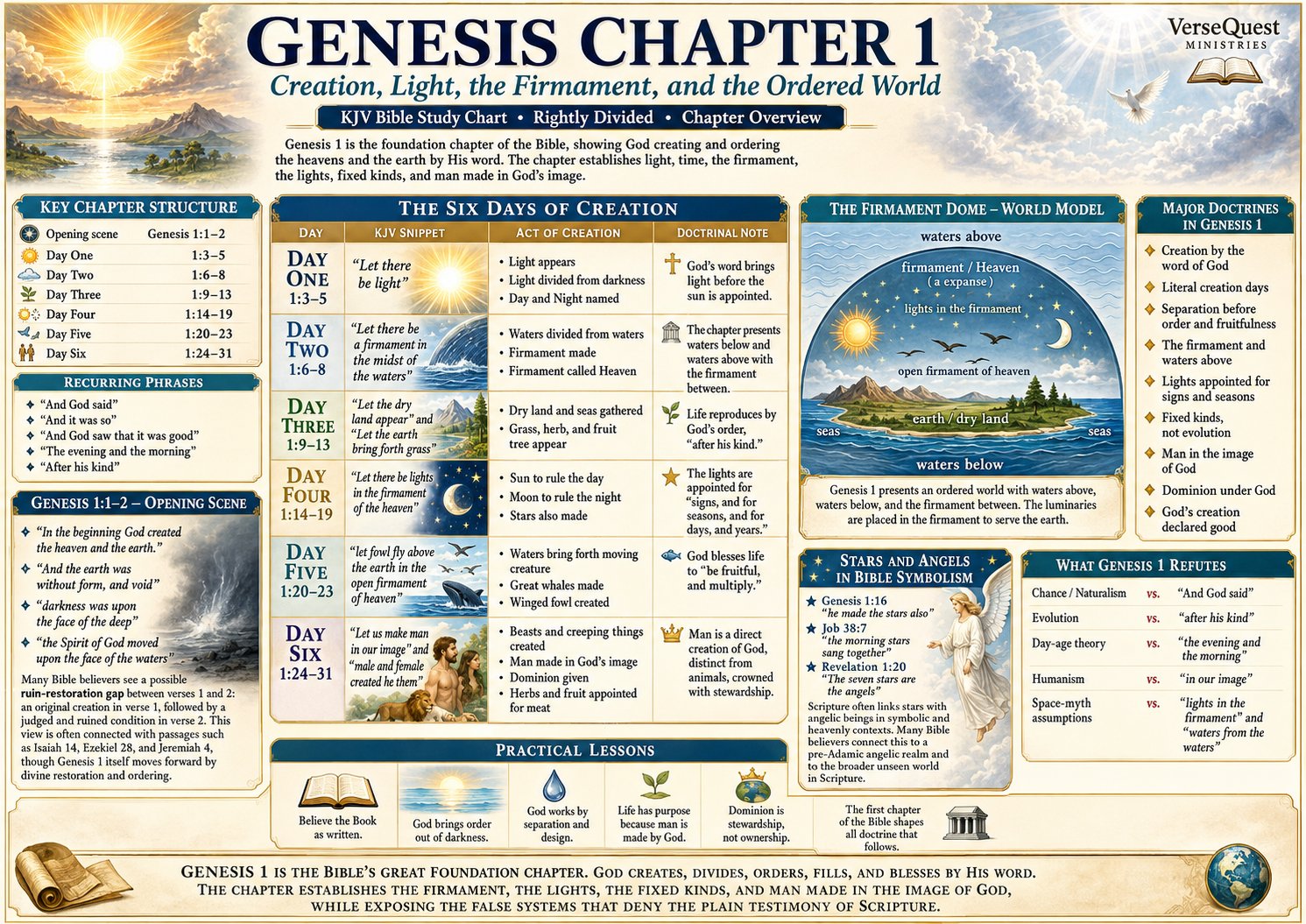
- Genesis Chapter 1 Bible Study Chart – Creation, Light, the Firmament, and the Ordered World (KJV)
- Explore Genesis Chapter 1 with this detailed KJV Bible study chart covering the six days of creation, the firmament, light, fixed kinds, man in God’s image, major doctrines, recurring phrases,…
- $3.99
- Add to cart
-
-
The Seven Dispensations
-
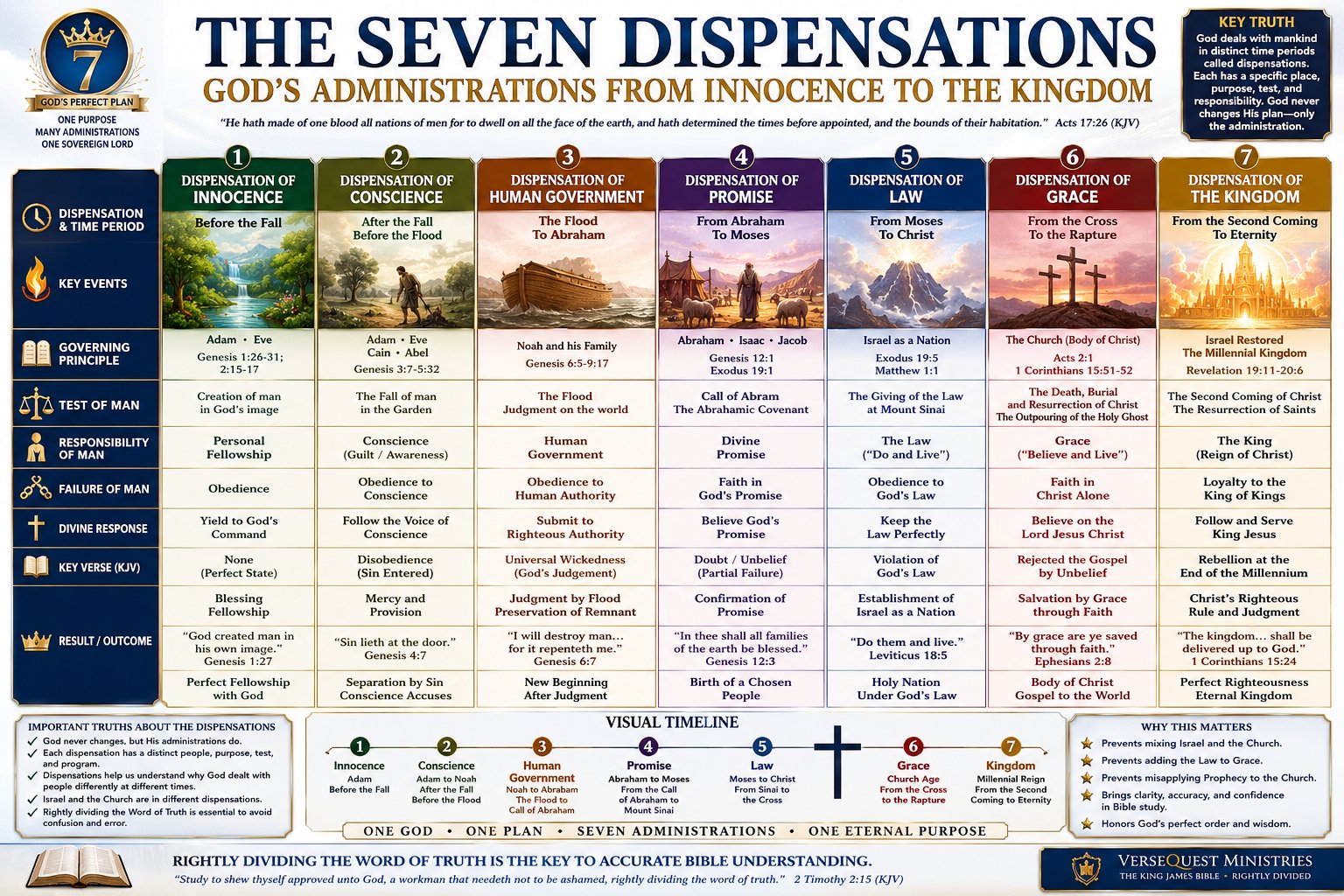
- The Seven Dispensations Bible Study Chart – God’s Administrations from Innocence to the Kingdom (KJV)
- Explore the seven dispensations with this detailed KJV Bible study chart covering Innocence, Conscience, Human Government, Promise, Law, Grace, the Kingdom, and the importance of rightly dividing Scripture.
- $3.99
- Add to cart
-
-
Heavenly Program
-
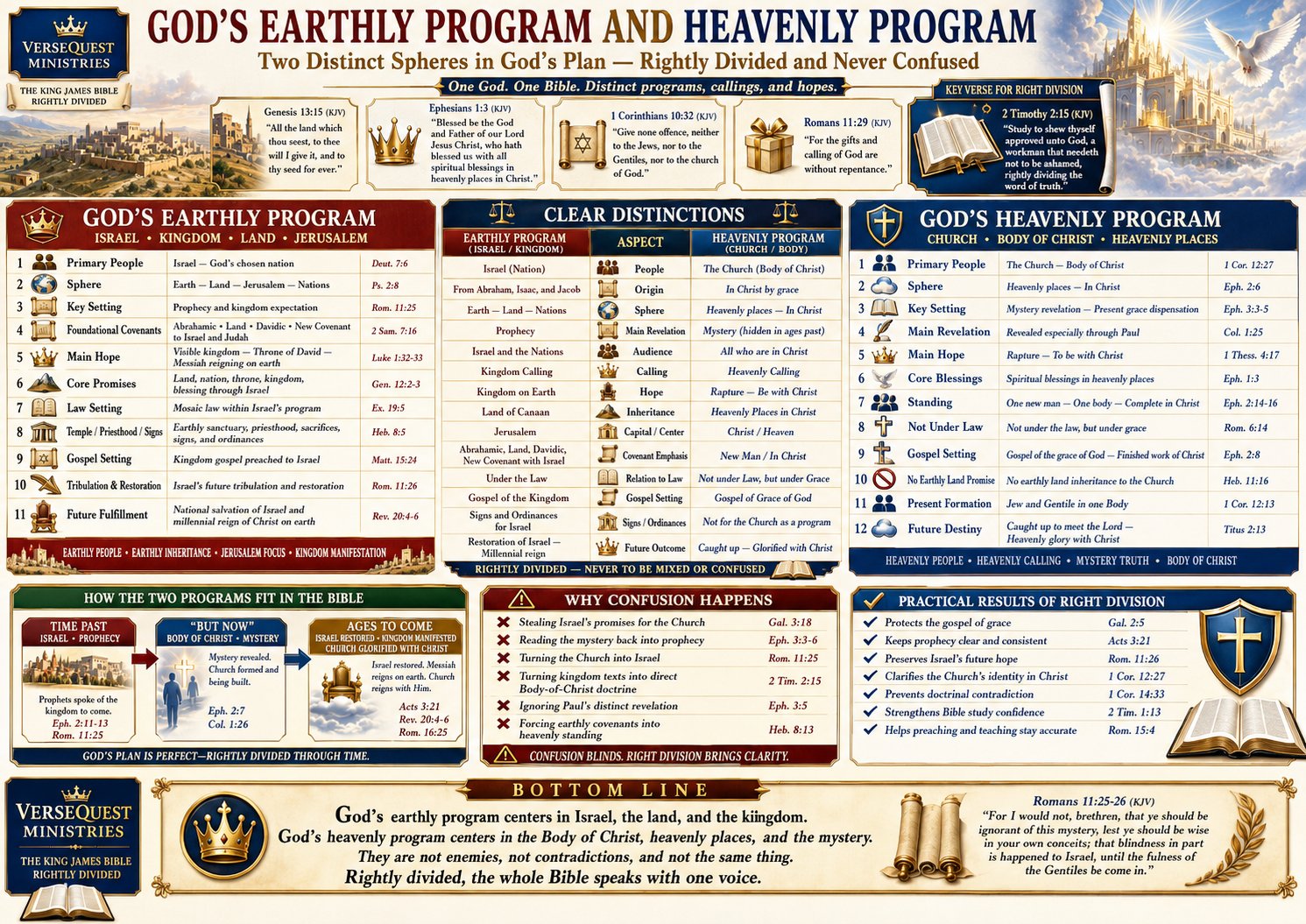
- Israel and the Church: Earthly and Heavenly Callings – KJV Bible Study Chart
- Printable digital KJV Bible study chart comparing Israel’s earthly promises and kingdom hope with the Church’s heavenly calling in Christ. Covers prophecy and mystery, biblical covenants, law and grace, the…
- $3.99
- Add to cart
-
-
Biblical Humility
-
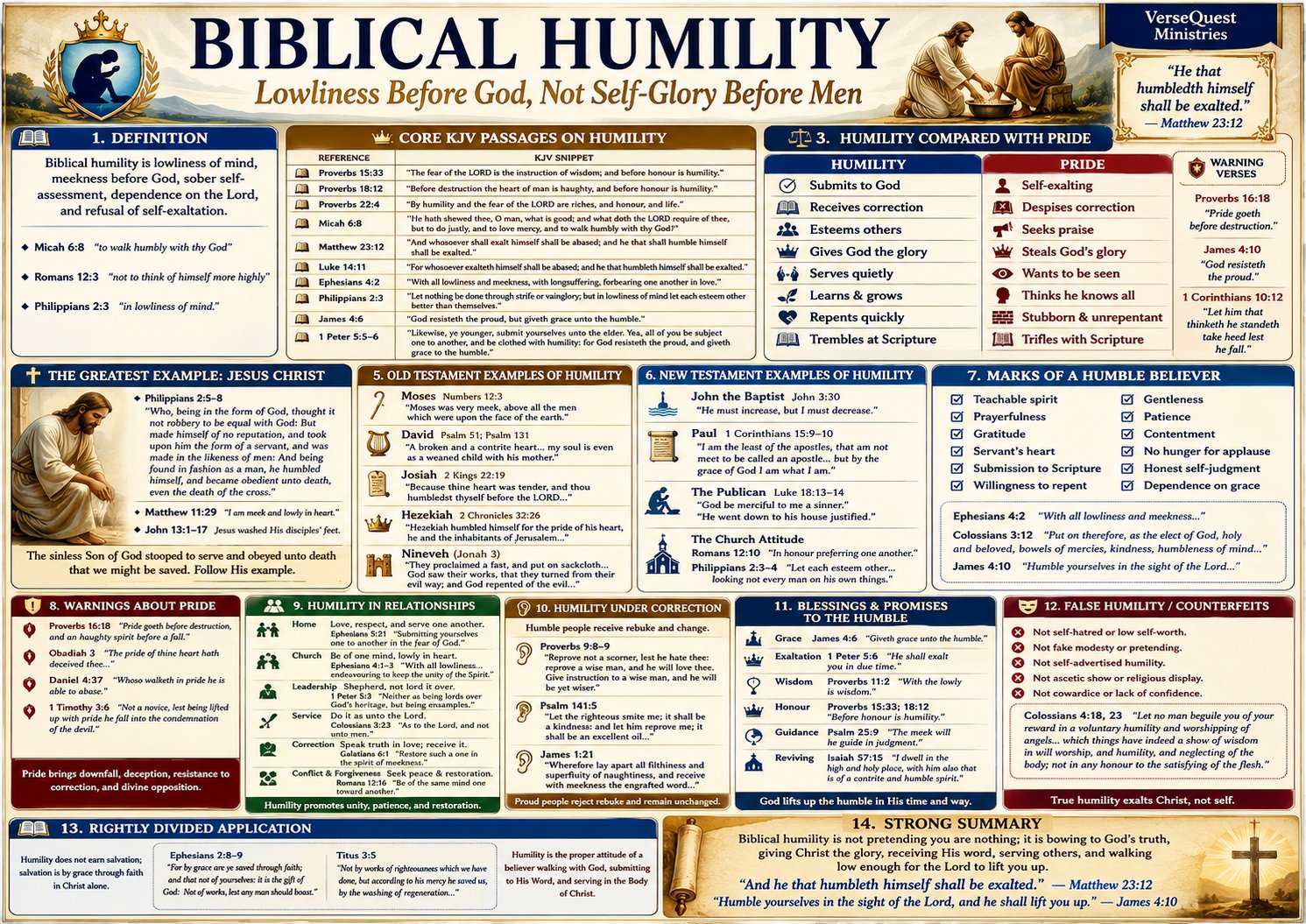
- Biblical Humility Bible Study Chart – Lowliness Before God, Not Self-Glory Before Men (KJV)
- Study biblical humility with this detailed KJV chart comparing humility and pride, Christ’s example, receiving correction, servant leadership, grace, and practical Christian living.
- $3.99
- Add to cart
-