
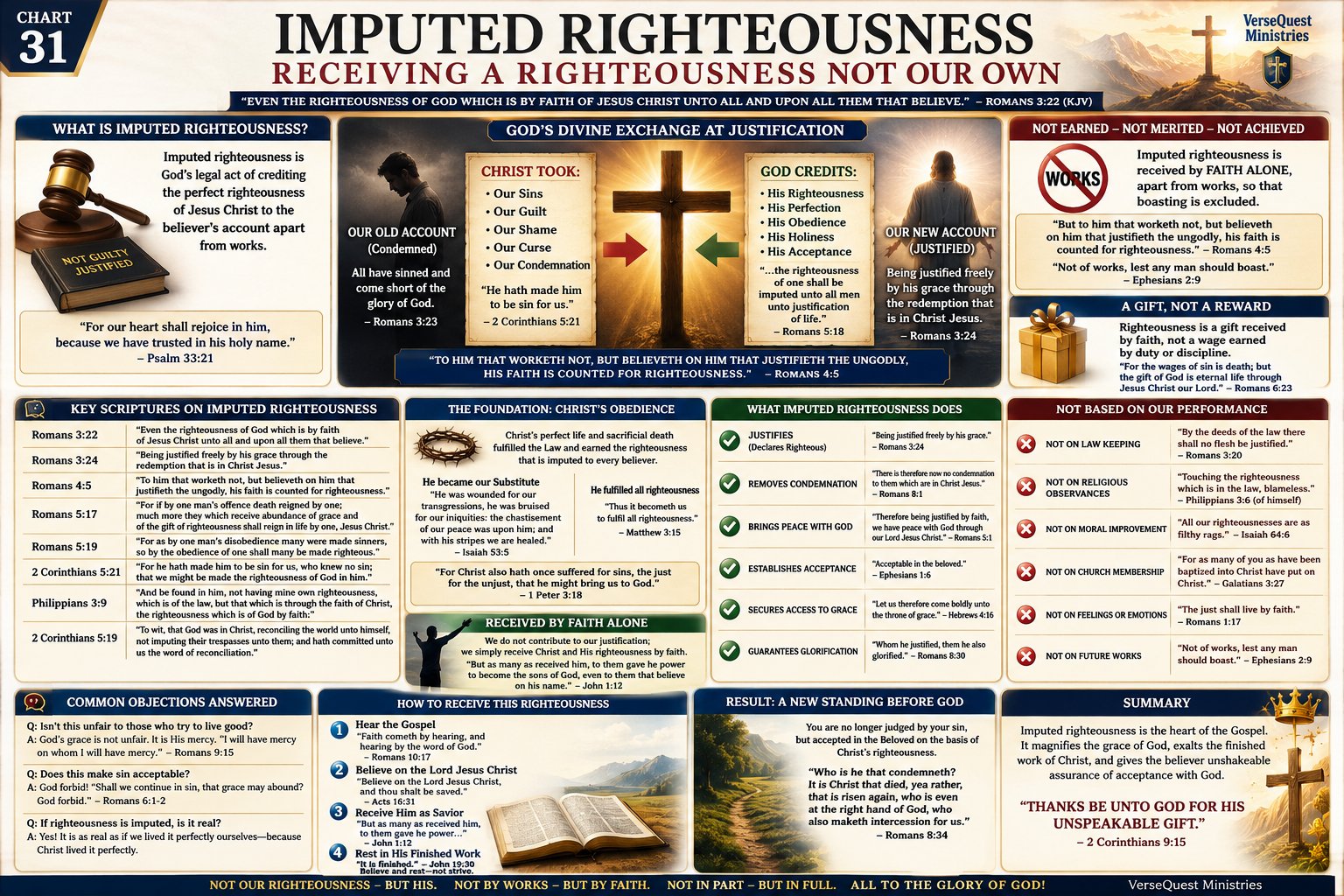
Imputed Righteousness – The Righteousness of Jesus Christ Credited to the Believer by Faith Alone (KJV Bible Study Chart)
Understand imputed righteousness with this detailed KJV chart explaining the divine exchange, justification by faith, Christ’s righteousness credited to the believer, peace with God, no condemnation, and acceptance apart from works.
$3.99
Description
Imputed Righteousness: Receiving a Righteousness Not Our Own is a detailed KJV Bible study chart explaining how God justifies the ungodly sinner by crediting the righteousness of Jesus Christ to everyone who believes the gospel.
Built around Romans 3:22, Romans 4:5, Romans 5:17–19, 2 Corinthians 5:21, Philippians 3:9, and 1 Corinthians 1:30, this chart presents one of the foundational doctrines of salvation by grace: the sinner does not become acceptable to God by producing enough personal righteousness. He is declared righteous because God places him in Christ and credits Christ’s perfect righteousness to his account.
Imputed righteousness is God’s legal declaration that the believing sinner is forgiven, justified, accepted, and counted righteous in His sight. It is not a claim that the believer has already achieved practical sinless perfection. It concerns his settled standing before God on the basis of the finished work and perfect obedience of Jesus Christ.
The word imputed carries the idea of reckoning, counting, or crediting something to another person’s account. Romans 4 repeatedly uses this accounting language. Abraham believed God, and righteousness was counted unto him. The righteousness did not originate in Abraham’s religious performance; it was credited to him through faith.
Every sinner begins with a guilty account. Sin, shame, condemnation, debt, wrath, and death stand against fallen man. No amount of moral improvement can erase the record already written, and no future good deed can transform previous rebellion into perfect obedience.
God does not lower His standard, pretend sin does not matter, or declare wickedness acceptable. Divine justice must be satisfied. The gospel reveals how God can remain perfectly righteous while justifying the sinner who believes in Jesus Christ.
Jesus Christ knew no sin, committed no sin, and possessed no sinful nature. He fulfilled righteousness perfectly, obeyed the Father completely, and offered Himself as the spotless sacrifice for sinners.
Second Corinthians 5:21 declares, “For he hath made him to be sin for us, who knew no sin; that we might be made the righteousness of God in him.” At the cross, Christ bore the sinner’s guilt and condemnation so that the believer could receive a righteous standing in Him.
The chart presents this truth as the divine exchange. The sinner’s sin, guilt, shame, condemnation, and penalty were laid upon Jesus Christ. In return, the believing sinner receives Christ’s righteousness, acceptance, obedience, perfection, and standing before God.
This exchange does not mean that Jesus became morally sinful in character. The sinless Substitute was judicially treated as bearing the sinner’s guilt and punishment. He carried sin’s legal charge without becoming corrupted by sin.
Likewise, the believer does not become inherently divine or instantly sinless in practical conduct. He is legally counted righteous because he stands in Jesus Christ. His position is perfect even while his practical Christian growth continues.
The chart’s central courtroom image shows God as the righteous Judge. Without Christ, the sinner’s account reads guilty. With Christ, the believer is forgiven, accepted, righteous, justified, redeemed, declared holy, and received before God.
This verdict rests entirely upon Christ. God does not examine the believer’s record and discover enough merit to justify him. He sees the believer in His Son and credits Christ’s righteousness to the believer’s account.
Romans 3:22 describes “the righteousness of God which is by faith of Jesus Christ unto all and upon all them that believe.” God’s righteousness is not earned by the sinner; it is received through faith.
Romans 4:5 gives the doctrine in its plainest form: “But to him that worketh not, but believeth on him that justifieth the ungodly, his faith is counted for righteousness.”
The verse does not describe God justifying people after they have made themselves godly. It says that God justifies the ungodly person who believes. Grace meets the sinner in his guilt and supplies the righteousness he lacks.
Romans 5 explains that Adam’s disobedience brought sin and condemnation into the human race. Through the obedience of Jesus Christ, many are made righteous.
The believer’s righteous standing therefore rests upon Christ’s obedience, not his own ability to reproduce Christ’s perfection. The first Adam’s offense brought condemnation; the last Adam’s finished work brings justification and life.
Philippians 3:9 records Paul’s desire to be found in Christ, “not having mine own righteousness, which is of the law,” but possessing the righteousness that comes through faith in Christ.
Paul had religious heritage, education, zeal, circumcision, law knowledge, and outward morality. Yet he rejected all confidence in those accomplishments as a basis for acceptance before God.
Human righteousness cannot be combined with Christ’s righteousness as though Jesus supplies what the sinner lacks after the sinner has contributed his best effort. Christ is not a partial Saviour completing an almost-sufficient human record.
The believer receives a righteousness entirely outside himself. It is perfect because Christ is perfect, complete because His work is complete, and secure because His standing cannot fail.
First Corinthians 1:30 says that Christ is made unto the believer wisdom, righteousness, sanctification, and redemption. The Christian’s boast therefore belongs entirely in the Lord.
A major comparison contrasts earned righteousness with imputed righteousness. Earned righteousness is based upon what man does. Imputed righteousness is based upon what Christ did.
Earned righteousness must be maintained through continued personal performance. Imputed righteousness has already been completed by Jesus Christ.
A works system can never produce certainty because the sinner must continually ask whether he has performed enough, obeyed enough, sacrificed enough, improved enough, and remained faithful enough.
Imputed righteousness provides certainty because it rests upon God’s declaration. Christ’s obedience does not fluctuate, His sacrifice does not weaken, and His resurrection does not require repetition.
Earned righteousness is temporary and conditional because human performance changes. Imputed righteousness is eternal and secure because it rests upon the unchanging Son of God.
The works system produces pride when a person believes he is succeeding and despair when he recognizes his failure. Grace produces peace, worship, gratitude, rest, humility, and confidence in Christ.
Imputed righteousness is a legal transaction rather than the gradual development of Christian character. The believer is declared righteous at the moment of faith, not after years of successful sanctification.
Practical righteousness and spiritual growth remain important, but they must not be confused with the righteousness that establishes the believer’s standing before God.
The believer should grow in holiness, obey Scripture, confess sin, walk in the Spirit, serve others, and become increasingly Christlike. These works follow justification but do not produce it.
The distinction between declared righteousness and developed character preserves both grace and Christian responsibility. Justification is God’s completed verdict. Sanctification concerns the believer’s continuing walk.
A newly saved believer possesses the same perfect righteous standing in Christ as a mature Christian who has served faithfully for decades. Their growth, usefulness, knowledge, and reward may differ, but neither possesses a superior legal standing before God.
The chart strongly rejects the idea that imputed righteousness is the righteousness we produce. It is not moral reform, religious improvement, church membership, baptism, emotional confidence, or personal sincerity.
It is not partial, incomplete, or waiting for the believer to finish it. Christ declared His redemptive work finished, and God credits the result to everyone who trusts Him.
Water baptism cannot impute righteousness. Church membership cannot impute righteousness. Sacraments cannot impute righteousness. Law-keeping cannot impute righteousness. Only God can declare the sinner righteous through Jesus Christ.
Ephesians 2:8–9 teaches salvation by grace through faith and not of works. Titus 3:5 states that God saves according to His mercy rather than works of righteousness performed by man.
Human works may appear righteous before other people, but they cannot satisfy God’s infinite holiness or remove the legal guilt of sin.
The believer’s peace with God flows from justification. Romans 5:1 says, “Therefore being justified by faith, we have peace with God through our Lord Jesus Christ.”
Peace with God is more than an inward feeling of calm. It is the objective end of hostility between the justified sinner and the righteous God. Christ has answered the offense that stood between them.
Imputed righteousness also brings freedom from condemnation. Romans 8:1 declares that there is no condemnation to those who are in Christ Jesus.
The believer’s eternal sentence cannot return whenever he experiences spiritual weakness. His daily fellowship may suffer, chastening may come, and reward may be lost, but his righteous standing remains grounded in Christ.
The doctrine also gives bold access to God. Hebrews teaches that believers may come boldly to the throne of grace because their access is based upon Jesus Christ rather than personal worthiness.
The believer is accepted in the Beloved. He does not approach God as a spiritual outsider attempting to persuade the Judge to become merciful. He approaches as one already accepted through the Son.
Imputed righteousness also secures a heavenly inheritance. The believer’s hope does not rest upon accumulating sufficient religious merit but upon the inheritance God reserves for those who belong to Christ.
The chart’s practical application directs the believer to rest in Jesus Christ rather than himself. Continual inspection of personal performance cannot produce peace because the flesh will always supply another reason for accusation.
The Christian should stop measuring acceptance by failures, emotions, spiritual victories, or the opinions of other people. God’s verdict rests upon Christ’s finished work.
When Satan accuses, the believer should answer with the cross. The answer is not, “I have performed well enough.” The answer is that Jesus Christ died, rose again, and has supplied the righteousness God requires.
The believer should walk in the confidence of completed redemption without turning grace into carelessness. Imputed righteousness does not make sin harmless. It gives the Christian a secure foundation from which to pursue holiness.
A person who understands imputed righteousness does not need to obey from terror that one failure will erase eternal life. He obeys from gratitude because he has been forgiven, justified, accepted, and received in Christ.
The doctrine destroys religious boasting. No believer can claim that God accepted him because of superior morality, family background, church affiliation, theological knowledge, giving, prayer, ministry, or discipline.
Every saved person stands before God through the same righteousness of Jesus Christ. The ground is level at the cross because no sinner brings sufficient righteousness of his own.
This truth also protects weak and struggling believers from despair. A Christian may require correction, restoration, stronger doctrine, and serious practical growth without becoming unjustified.
God’s acceptance is not rebuilt every morning through successful behaviour. It was established permanently through Jesus Christ.
The chart’s final message is that our righteousness is positional, not conditional. The believer’s standing is located in Christ and therefore rests upon His perfection rather than our changing condition.
This does not mean practical conduct is irrelevant. Position should produce practice, grace should produce gratitude, and justification should lead to sanctification. But the order must never be reversed.
The sinner is not justified because he became righteous in daily conduct. He begins to pursue righteousness because God has justified him freely in Jesus Christ.
The doctrine of imputation magnifies the mercy, holiness, justice, and wisdom of God. God does not ignore sin. He judges it fully at the cross. He does not accept imperfect righteousness. He supplies perfect righteousness in His Son.
The gospel therefore offers more than forgiveness. God does not merely remove the believer’s negative record and leave the account empty. He credits the positive righteousness of Jesus Christ.
The believer moves from guilt to acceptance, from condemnation to justification, from debt to redemption, from wrath to peace, and from spiritual poverty to an inheritance in Christ.
The strong conclusion is clear: according to the King James Bible, the sinner is not accepted because he possesses sufficient righteousness of his own. He is accepted because God credits the righteousness of Jesus Christ to everyone who believes.
Our sin was placed upon Christ. His righteousness is credited to us. The transaction is complete, the verdict is certain, and the glory belongs entirely to God.
This resource is ideal for personal Bible study, justification-by-faith teaching, salvation counseling, assurance studies, grace-versus-works instruction, Pauline doctrine, new-believer discipleship, Sunday school, homeschool Bible curriculum, Christian schools, Bible institutes, sermon preparation, and gospel presentation.
Imputed righteousness, righteousness of Jesus Christ, justification by faith, righteousness credited to the believer, divine exchange, counted righteous, faith alone, salvation by grace, Christ’s obedience, Christ made sin for us, accepted in the Beloved, peace with God, no condemnation, God justifies the ungodly, imputation versus works, earned versus credited righteousness, positional righteousness, finished work of Christ, assurance of salvation, Pauline doctrine
Imputed righteousness is God crediting the righteousness of Jesus Christ to the believer’s account.
The doctrine concerns legal standing before God rather than immediate sinless perfection in daily conduct.
Every sinner begins guilty before God. Human morality cannot erase past sin or produce perfect righteousness.
The law reveals God’s standard but cannot provide the righteousness it demands.
Romans 3 presents the righteousness of God through faith in Jesus Christ unto all and upon all who believe.
Romans 4 uses accounting language such as counted, reckoned, and imputed to explain justification.
Abraham believed God, and righteousness was counted to him. His acceptance did not rest upon law-keeping, circumcision, or human merit.
Romans 4:5 states that God justifies the ungodly person who believes. The sinner is not required to make himself godly before receiving justification.
Christ knew no sin. He alone was qualified to bear the sinner’s guilt without requiring a sacrifice for Himself.
Second Corinthians 5:21 presents the divine exchange: Christ was made sin for us so that believers might be made the righteousness of God in Him.
Christ did not become morally corrupt. He judicially bore the guilt and punishment of sinners.
The believer does not become deity or instantly incapable of sin. He receives a righteous position in Christ.
Adam’s disobedience brought condemnation. Christ’s obedience provides the ground upon which believers are made righteous.
Philippians 3 rejects personal righteousness derived from the law and rests in the righteousness that comes through faith in Christ.
Imputed righteousness is based upon Christ’s performance rather than the believer’s performance.
Earned righteousness can never provide assurance because the sinner never knows whether he has done enough.
Imputed righteousness provides certainty because it rests upon God’s declaration and Christ’s finished obedience.
The righteousness credited to the believer is complete. It does not require future religious works to finish it.
Church membership does not impute righteousness. Water baptism does not impute righteousness. Sacraments do not impute righteousness.
Good works belong in Christian growth and service but cannot become the basis of justification.
Justification and sanctification must be distinguished. Justification is declared; practical sanctification develops throughout the believer’s life.
A struggling Christian may have a weak daily walk while retaining a perfect standing in Jesus Christ.
Imputed righteousness brings peace with God because the legal hostility caused by sin has been answered through Christ.
It brings no condemnation because the believer’s eternal sentence was borne by Jesus Christ.
It provides bold access to God because the believer approaches in Christ’s merit rather than his own.
It brings acceptance in the Beloved and a secure heavenly inheritance.
The doctrine excludes boasting. Every believer stands through the same righteousness of Christ.
The doctrine also destroys despair. The believer does not need to produce a second righteousness after receiving Christ’s perfect righteousness.
Satan’s accusations should be answered with the cross rather than self-defense based upon personal performance.
The believer should pursue holiness from gratitude and security, not as an attempt to purchase or preserve acceptance.
God remains just while justifying the believer because Christ fully paid sin’s penalty.
The believer receives more than a cleared account. God credits the positive righteousness of Jesus Christ.
The gospel order is Christ’s finished work, faith, justification, imputed righteousness, peace with God, and then a life of grateful obedience.
The final confidence of the believer is simple: his standing is secure because Christ’s work is perfect and complete.
Imputed-righteousness studies, justification-by-faith teaching, grace-versus-works lessons, salvation counseling, gospel presentation, assurance-of-salvation instruction, explaining Romans 3–5, teaching 2 Corinthians 5:21, standing-versus-walk studies, refuting self-righteousness, Catholic apologetics, new-believer discipleship, Pauline doctrine classes, Sunday school lessons, homeschool Bible curriculum, Christian school teaching, Bible institute classes, pastoral training, sermon preparation
King James Bible, Strong’s Concordance, Thompson Chain-Reference Bible, Treasury of Scripture Knowledge, Nave’s Topical Bible, Romans 3–5 study notes, 2 Corinthians 5 commentary materials, Philippians 3 study resources, justification-by-faith worksheets, grace-versus-works comparison charts, standing-versus-state studies, gospel presentation materials, salvation-assurance resources, Pauline epistle outlines, biblical accounting and imputation word studies, VerseQuest salvation and doctrine charts
Related products
-
Repentance Rightly Divided
-
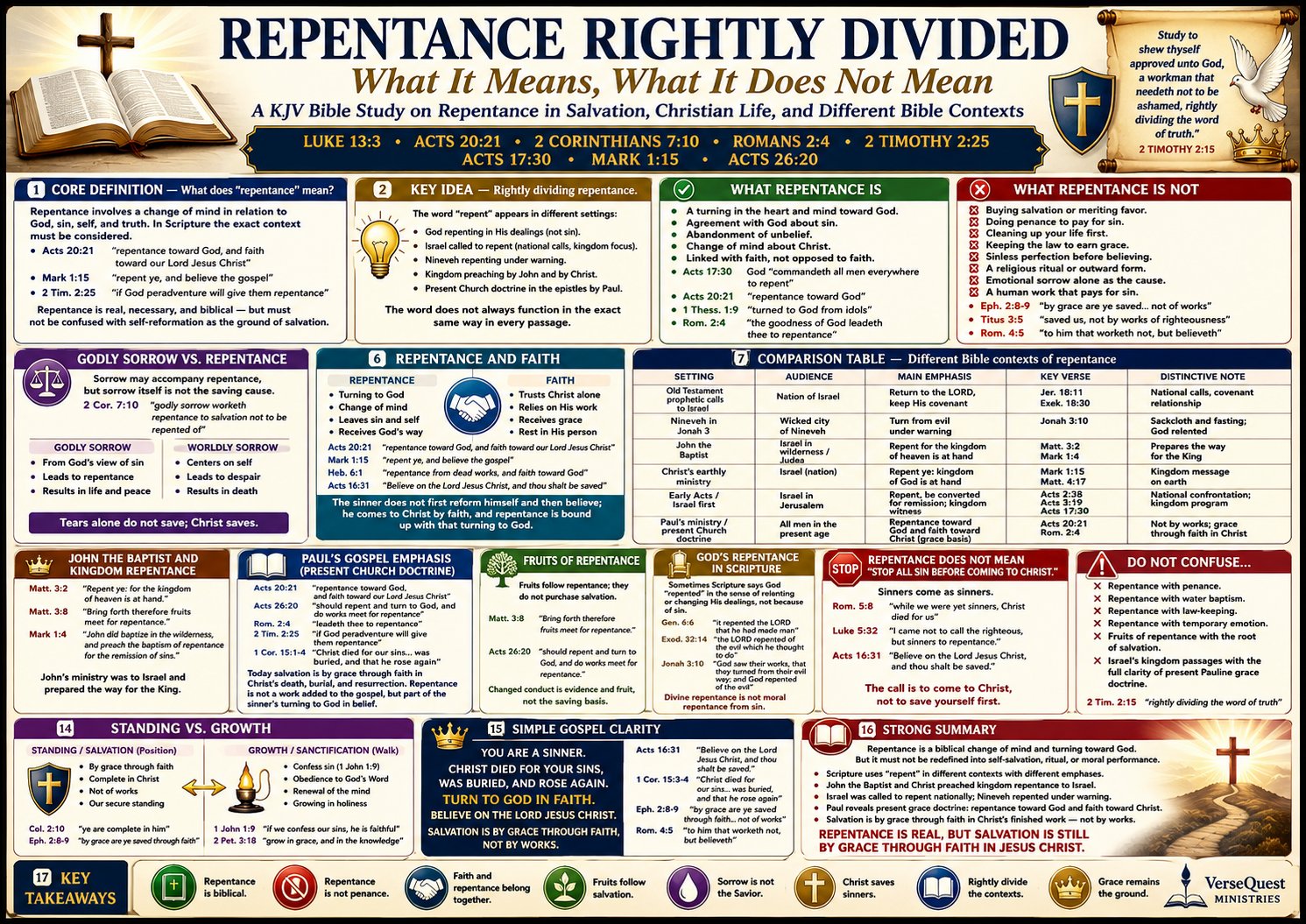
- Repentance Rightly Divided – What It Means, What It Does Not Mean, and Its Place in Salvation and Christian Life (KJV Bible Study Chart)
- Understand repentance rightly divided with this detailed KJV chart covering change of mind, repentance and faith, godly sorrow, fruits of repentance, Kingdom contexts, Christian growth, and salvation by grace through…
- $3.99
- Add to cart
-
-
Holy Spirit of Promise
-
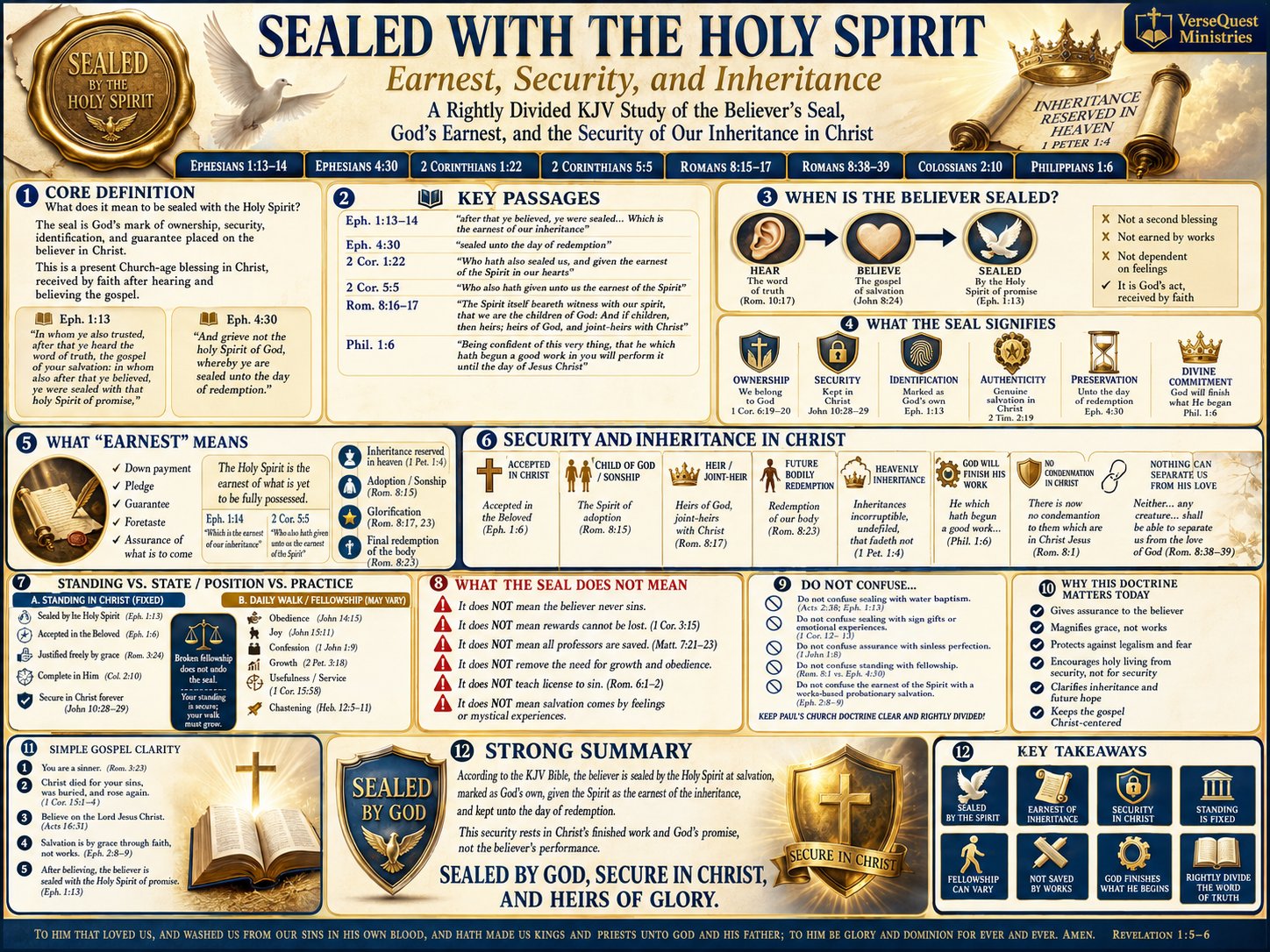
- Sealed with the Holy Spirit – God’s Earnest, the Believer’s Security, and Our Guaranteed Inheritance in Christ (KJV Bible Study Chart)
- Understand what it means to be sealed with the Holy Spirit with this detailed KJV chart covering God’s ownership, the earnest of the inheritance, eternal security, sonship, bodily redemption, standing…
- $3.99
- Add to cart
-
-
Another Jesus
-
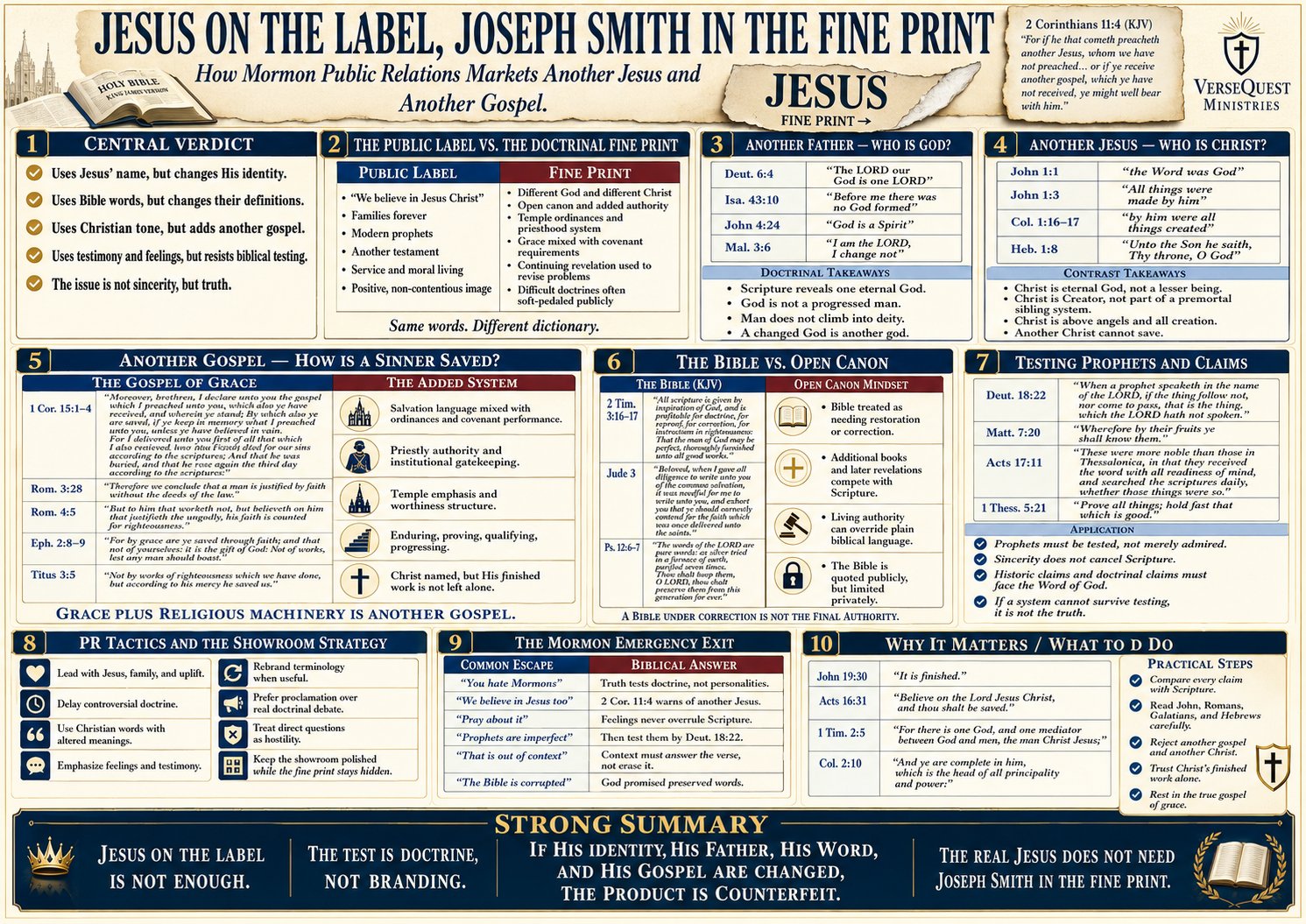
- Jesus on the Label, Joseph Smith in the Fine Print – Mormonism, Another Jesus, and Another Gospel KJV Bible Study Chart
- Compare Mormonism with the King James Bible through this detailed chart covering another Jesus, another gospel, Joseph Smith, modern prophets, open canon, temple ordinances, and salvation by grace.
- $3.99
- Add to cart
-
-
Christian Growth After Salvation
-
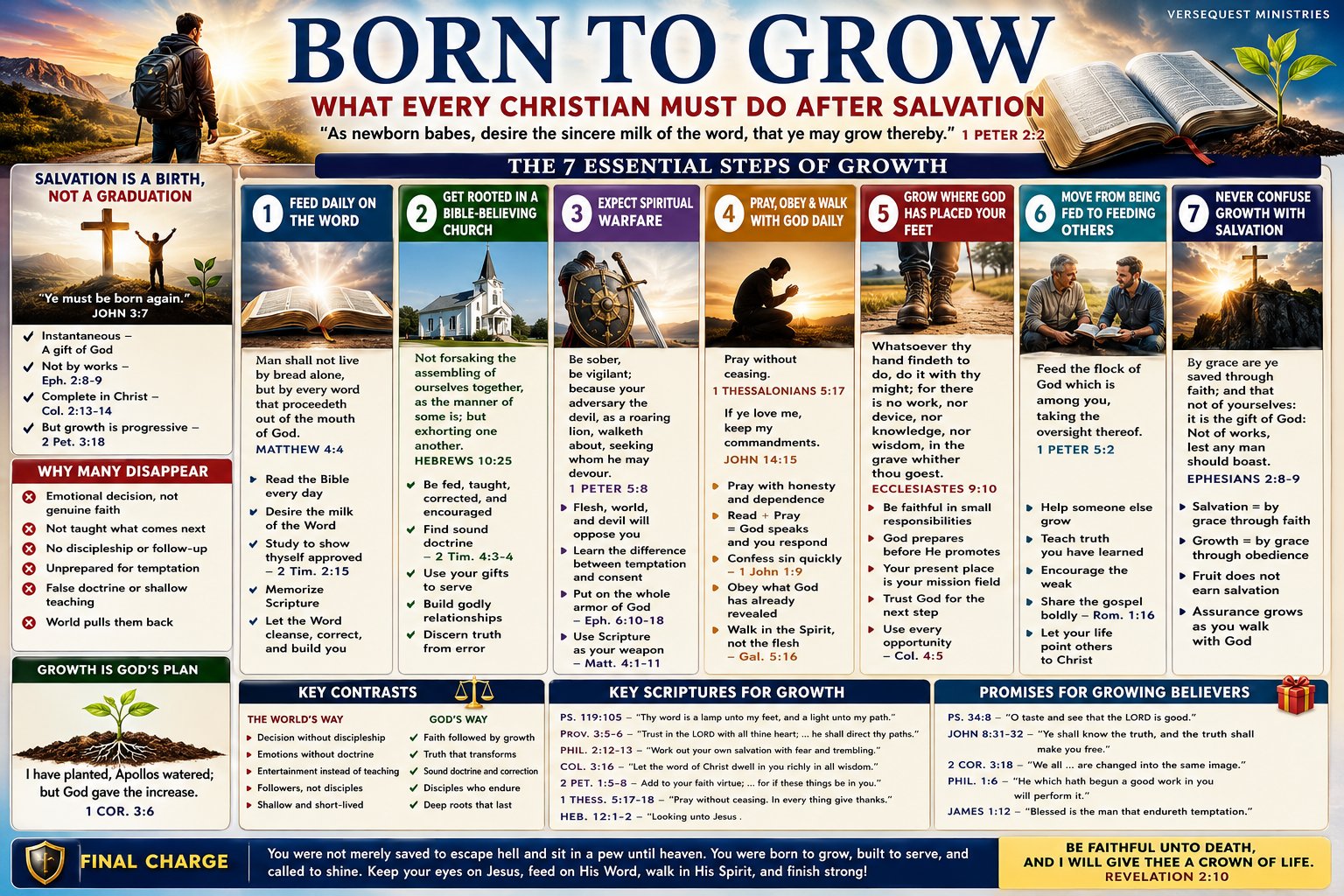
- Born to Grow – Seven Essential Steps Every Christian Must Take After Salvation (KJV Bible Study Chart)
- Help new and growing believers follow seven essential steps after salvation with this detailed KJV chart on Scripture, church, spiritual warfare, prayer, obedience, service, grace, and assurance.
- $3.99
- Add to cart
-
-
Ages To Come
-
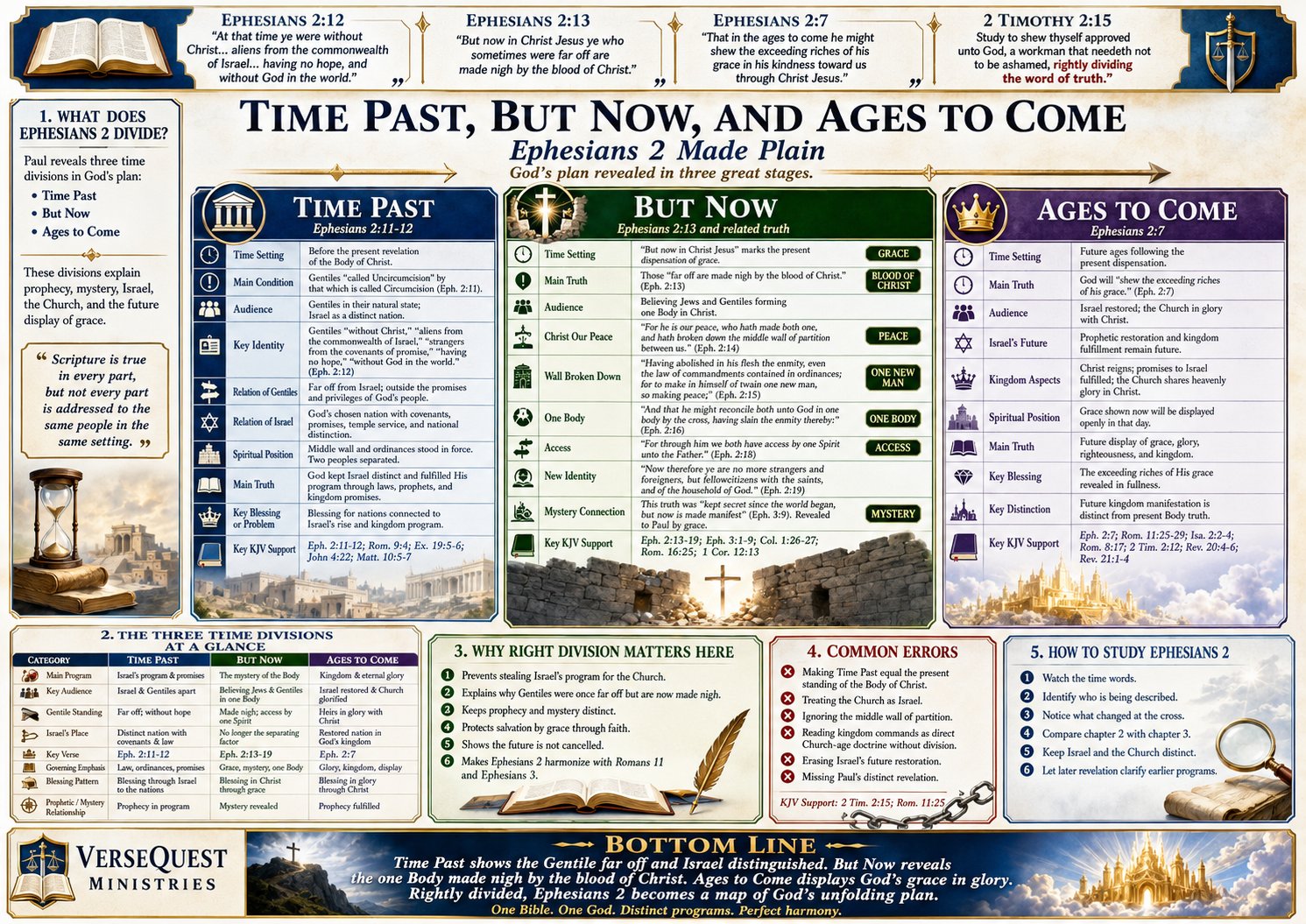
- Time Past, But Now, and Ages to Come – Ephesians 2 Rightly Divided KJV Bible Study Chart
- Understand Ephesians 2 with this detailed KJV chart explaining Time Past, But Now, Ages to Come, Gentile distance, the one Body, Israel’s future, and the importance of right division.
- $3.99
- Add to cart
-