Sermon Title:
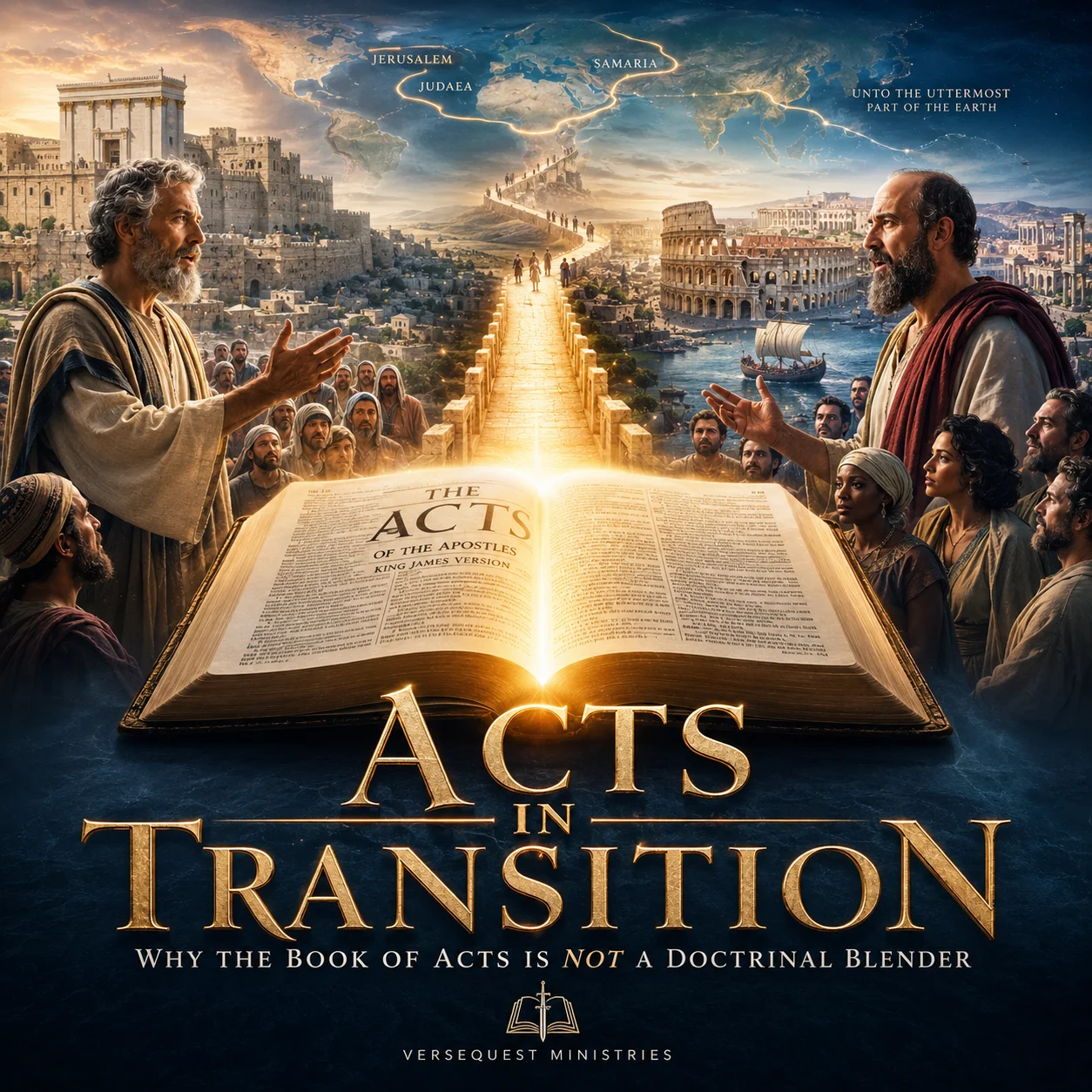
Acts in Transition: Why the Book of Acts Is Not a Doctrinal Blender
Key Passage:
Acts 1:6–8 — “When they therefore were come together, they asked of him, saying, Lord, wilt thou at this time restore again the kingdom to Israel? And he said unto them, It is not for you to know the times or the seasons, which the Father hath put in his own power. But ye shall receive power, after that the Holy Ghost is come upon you: and ye shall be witnesses unto me both in Jerusalem, and in all Judaea, and in Samaria, and unto the uttermost part of the earth.”
Series:
Foundations of Right Division
Topic:
Why Acts Is a Transition Book
Book:
Acts, Galatians, Romans, Ephesians, 1 Corinthians, 2 Timothy
Speaker:
Paul Tackett
Suggested Sermon Text:
Acts 1:6–8; Acts 2:14–39; Acts 3:19–21; Acts 7:51–60; Acts 9:1–16; Acts 10:34–48; Acts 13:38–48; Acts 15:1–21; Acts 20:24; Acts 28:23–31; Galatians 2:7–9; Romans 11:13; Ephesians 3:1–9; 2 Timothy 2:15
Short Sermon Description:
This sermon outline explains why the book of Acts must be understood as a transition book, not as a flat doctrinal manual where every chapter gives the same instructions for the same audience under the same dispensation. Acts begins with the apostles asking about the restoration of the kingdom to Israel, continues with Peter preaching to Israel in Jerusalem, records Israel’s continued rejection, introduces Saul of Tarsus, opens the door to Gentiles, settles the question of Gentiles and the law, and ends with Paul preaching among the Gentiles in Rome. This study shows how Acts moves from Jerusalem to the uttermost part of the earth, from Peter’s kingdom-centered ministry to Paul’s Gentile ministry, from Israel’s prophetic emphasis to the revelation of the mystery, and from signs and transitional events to the full establishment of Church-age doctrine. It equips pastors, teachers, Bible students, and believers to rightly divide Acts, protect the gospel of grace, and avoid building permanent doctrine on transitional ground.
Acts in Transition
Why the Book of Acts Is Not a Doctrinal Blender
Introduction
The book of Acts is one of the most abused books in the Bible because men often treat it as though every chapter is giving the same doctrinal instruction to the same people under the same program. They read Acts 2, Acts 8, Acts 10, Acts 13, Acts 15, Acts 19, and Acts 28 as though there is no transition, no movement, no unfolding of God’s dealings, and no difference between Peter’s ministry to Israel and Paul’s ministry to the Gentiles. That is how men end up building doctrines of salvation around water baptism, tongues, signs, laying on of hands, apostolic miracles, communal living, temple worship, Jewish feasts, and kingdom language, while ignoring the clear Pauline gospel of grace.
Acts 1:6–8 gives the built-in roadmap for the book. The apostles ask, “Lord, wilt thou at this time restore again the kingdom to Israel?” That question was not stupid. They were not asking about a fantasy. Israel had been promised a kingdom. The prophets spoke of restoration. The Lord Jesus had preached the kingdom of heaven. The apostles expected the kingdom because the Bible gave them reason to expect it. Jesus did not rebuke them by saying, “There will never be a restored kingdom to Israel.” He told them the times and seasons were in the Father’s power, then He gave them a witness program that would begin at Jerusalem and move outward to Judaea, Samaria, and the uttermost part of the earth.
That is exactly what Acts records. It begins in Jerusalem, Jewish, temple-connected, prophetic, and kingdom-minded. Peter stands up with the eleven and addresses Israel. Israel’s leaders continue resisting the Holy Ghost. Stephen is stoned. Saul, the enemy of the disciples, is saved and called. Peter is sent to Cornelius. Paul becomes the apostle of the Gentiles. The gospel goes to the nations. The question of Gentiles and the law is handled in Acts 15. Israel’s rejection continues. Acts ends not with Peter in Jerusalem, but with Paul in Rome, declaring that the salvation of God is sent unto the Gentiles. That is not random history. That is transition.
I. Acts Begins With the Question of Israel’s Kingdom
Key Text: Acts 1:6
Supporting Texts: Luke 1:32–33; Daniel 2:44; Matthew 19:28
Acts begins after the resurrection of Jesus Christ, and the apostles ask, “Lord, wilt thou at this time restore again the kingdom to Israel?” Many modern teachers mock that question, as if the apostles were still carnal for expecting a literal kingdom. But the question was rooted in Scripture. Luke 1:32–33 said Christ would sit on the throne of His father David and reign over the house of Jacob forever. Daniel 2:44 said the God of heaven would set up a kingdom that would never be destroyed. Matthew 19:28 promised the twelve would sit upon twelve thrones judging the twelve tribes of Israel.
The apostles were not asking whether God would create a Gentile denominational system or an invisible replacement Israel. They asked about the restoration of the kingdom to Israel. That language matters. Restoration means something had been promised and would be brought back into order. Israel means Israel. The kingdom means the kingdom. Jesus did not deny the expectation. He simply told them the timing belonged to the Father.
This opening question places Acts in a kingdom and Israel framework from the beginning. The book does not begin with Paul’s revelation of the mystery. It begins with Jewish apostles in Jerusalem thinking in terms of Israel’s restoration. That does not mean Acts never moves beyond that setting. It means the movement must be followed carefully. If a man misses the opening question, he will likely misread the entire book.
Main Truth:
Acts begins with Israel’s kingdom expectation, proving the book opens on prophetic ground before moving into transition.
II. Acts 1:8 Gives the Geographical and Dispensational Movement of the Book
Key Text: Acts 1:8
Supporting Texts: Acts 2:5; Acts 8:1; Acts 13:46; Acts 28:28
Acts 1:8 gives the outline of the book: “Jerusalem,” “all Judaea,” “Samaria,” and “the uttermost part of the earth.” That movement is not merely geographical. It is dispensationally significant. The witness begins in Jerusalem, the center of Israel’s religious life. It spreads to Judaea, then Samaria, and eventually to the Gentile world. Acts records God moving outward from Israel’s center to the nations.
Acts 2 takes place in Jerusalem, with Jews gathered from every nation under heaven. Peter preaches to “ye men of Judaea” and “ye men of Israel.” Acts 8 moves into Samaria through persecution. Acts 10 opens the door to Cornelius, a Gentile. Acts 13 records Paul and Barnabas turning to the Gentiles after Jewish opposition. Acts 28 ends with Paul saying, “Be it known therefore unto you, that the salvation of God is sent unto the Gentiles, and that they will hear it.”
This movement proves Acts is not static. It is not one unchanging doctrinal platform from chapter 1 to chapter 28. The book has motion. It begins with Peter and Jerusalem. It ends with Paul and Rome. It begins with Israel being addressed nationally. It ends with the gospel going freely to Gentiles. The wise workman follows the movement instead of flattening the book into a single formula.
Main Truth:
Acts 1:8 gives the movement of Acts from Jerusalem to the Gentiles, showing the book’s transitional character.
III. Peter’s Early Acts Ministry Is Directed to Israel
Key Text: Acts 2:14
Supporting Texts: Acts 2:22; Acts 2:36; Acts 3:12–21
Peter’s sermon in Acts 2 is not addressed to a Gentile church congregation. Peter stands up with the eleven and says, “Ye men of Judaea.” Then he says, “Ye men of Israel.” Then he concludes, “Therefore let all the house of Israel know assuredly.” The audience is unmistakable. The sermon is Jewish, prophetic, and Jerusalem-centered. Peter quotes Joel. He quotes David. He speaks of Jesus as the one whom Israel crucified and whom God raised up.
In Acts 3, Peter again addresses Israel. He says, “Ye men of Israel,” and calls them to repent so that the times of refreshing may come and God may send Jesus Christ. He says heaven must receive Christ until the times of restitution of all things spoken by the prophets since the world began. That is prophetic kingdom language. It is not the full revelation of the mystery of the Body of Christ later given through Paul.
This matters because many build permanent Church-age doctrine from Peter’s early Acts preaching without considering audience and setting. Peter’s message is true. It is inspired. It is profitable. But it is in a Jewish prophetic transition context. The sinner today is not saved by pretending he is an Israelite in Acts 2. He is saved by believing Paul’s clear gospel: Christ died for our sins, was buried, and rose again the third day.
Main Truth:
Peter’s early Acts ministry is directed to Israel and must be understood in its Jewish prophetic context.
IV. Acts Records Israel’s Continued Rejection
Key Text: Acts 7:51–52
Supporting Texts: Acts 4:1–3; Acts 5:17–18; Acts 7:57–60
Acts is not merely the story of the Church growing. It is also the record of Israel’s leaders continuing to resist the testimony of the Holy Ghost. In Acts 4, the religious leaders oppose the apostles. In Acts 5, they imprison them. In Acts 7, Stephen stands before the council and says, “Ye stiffnecked and uncircumcised in heart and ears, ye do always resist the Holy Ghost.” That is a national indictment against Israel’s leadership.
Stephen rehearses Israel’s history of resistance and then charges them with betraying and murdering the Just One. The result is not national repentance. The result is murder. They gnash on him with their teeth, cast him out of the city, and stone him. Stephen sees Jesus standing on the right hand of God, but Israel’s leaders stop their ears. That moment is one of the great turning points in Acts.
At Stephen’s death, a young man named Saul is present, keeping the raiment of those who slew him. That is no accident. The next major development in God’s program will be the salvation of that persecutor. Israel’s continued rejection sets the stage for God to raise up Paul, the apostle of the Gentiles, and reveal the dispensation of grace. The transition is unfolding before the reader’s eyes.
Main Truth:
Acts records Israel’s continued rejection of the Spirit’s witness, preparing the way for Paul’s Gentile ministry.
V. Saul’s Conversion Marks a Major Turning Point
Key Text: Acts 9:15
Supporting Texts: Acts 9:1–6; Acts 22:14–21; Acts 26:15–18
Acts 9 introduces Saul of Tarsus, the persecutor of the disciples, meeting the risen Lord Jesus Christ. Saul is not seeking God. He is breathing out threatenings and slaughter. But the risen Christ arrests him from heaven. This is not a minor conversion story. It is a turning point in the book of Acts and in the unfolding of the present dispensation. The chief persecutor will become the apostle of the Gentiles.
Acts 9:15 says Saul is a chosen vessel to bear Christ’s name before the Gentiles, kings, and the children of Israel. Later, Paul recounts his calling in Acts 22 and Acts 26, emphasizing that Christ sent him far hence unto the Gentiles. Romans 11:13 confirms his office: “I am the apostle of the Gentiles.” This is different from Peter’s apostleship of the circumcision.
Saul’s conversion shows the grace of God in a powerful way. The man who deserved judgment received mercy. First Timothy 1:16 later says Paul became a pattern to them who should hereafter believe. That pattern belongs to the dispensation of grace. Acts cannot be understood properly if Paul is treated as merely another preacher repeating Peter. His salvation and commission mark a major transition toward Gentile grace.
Main Truth:
Saul’s conversion marks a major turning point as God raises up the apostle of the Gentiles for the ministry of grace.
VI. Cornelius Shows the Door Opening to Gentiles
Key Text: Acts 10:44–45
Supporting Texts: Acts 10:28; Acts 11:15–18; Acts 15:7–9
Acts 10 records Peter being sent to Cornelius. This event is important because it shows God opening the door to Gentiles in a way that Jewish believers could not deny. Peter had to be prepared by a vision because he understood the separation between Jew and Gentile. He says in Acts 10:28 that it was unlawful for a Jewish man to keep company with one of another nation, but God showed him not to call any man common or unclean.
While Peter is speaking, the Holy Ghost falls on Cornelius and those with him. The Jews who came with Peter are astonished because the gift of the Holy Ghost is poured out on the Gentiles. Acts 11 later shows Peter explaining this event to the believers in Jerusalem. They glorify God, saying, “Then hath God also to the Gentiles granted repentance unto life.” This was not business as usual for them. It was shocking evidence of God’s work among Gentiles.
Acts 15 later refers back to this event when the question of Gentiles and the law is debated. Peter says God put no difference between them and us, purifying their hearts by faith. Cornelius does not erase Paul’s distinctive ministry, but it does show the transitional opening of Gentile inclusion. God is moving beyond Jerusalem in accordance with Acts 1:8.
Main Truth:
Cornelius shows God opening the door to Gentiles and preparing the way for the broader Gentile ministry in Acts.
VII. Paul’s Ministry Turns the Emphasis Toward the Gentiles
Key Text: Acts 13:46
Supporting Texts: Acts 13:38–39; Acts 18:6; Acts 28:28
Acts 13 is another major turning point. Paul preaches in Antioch of Pisidia, declaring forgiveness of sins through Jesus Christ and justification from all things from which they could not be justified by the law of Moses. That sounds like Paul. That is grace truth coming into focus. When the Jews contradict and blaspheme, Paul and Barnabas say, “lo, we turn to the Gentiles.”
This turning to the Gentiles happens repeatedly in Acts. In Acts 18:6, Paul says, “Your blood be upon your own heads; I am clean: from henceforth I will go unto the Gentiles.” In Acts 28:28, he says, “the salvation of God is sent unto the Gentiles, and that they will hear it.” The repetition shows a pattern. Israel is addressed. Many reject. The gospel goes to the Gentiles.
Paul’s ministry does not mean Jews can no longer be saved. Paul himself had a burden for Israel. But the book’s emphasis moves increasingly toward Gentile grace and Paul’s apostolic ministry. Acts records that movement historically. The Church must learn its doctrine from Paul’s epistles while using Acts to understand the transition that led there.
Main Truth:
Paul’s ministry shifts the emphasis in Acts toward Gentile grace and the gospel committed to the apostle of the Gentiles.
VIII. Acts 15 Settles That Gentiles Are Not Under the Law for Salvation
Key Text: Acts 15:10–11
Supporting Texts: Acts 15:1; Galatians 2:1–9; Romans 6:14
Acts 15 deals with a crucial question: must Gentile believers be circumcised and keep the law of Moses to be saved? Certain men said, “Except ye be circumcised after the manner of Moses, ye cannot be saved.” That is the same spirit of religious bondage that still works today. It wants to add law to grace and make salvation depend on human compliance with ordinances.
Peter says, “Now therefore why tempt ye God, to put a yoke upon the neck of the disciples?” Then he says, “But we believe that through the grace of the Lord Jesus Christ we shall be saved, even as they.” That is a major statement. The Jerusalem council does not put Gentiles under the law for salvation. Paul and Barnabas testify of God’s work among the Gentiles. James gives judgment. The transition is clarified: Gentiles are not to be brought under Moses as a salvation requirement.
Romans 6:14 later states the doctrinal truth plainly: “ye are not under the law, but under grace.” Acts 15 shows the historical crisis where this issue had to be faced during the transition. If a man uses Acts to put believers back under law, he has missed the very lesson Acts 15 records. The gospel of grace must remain free from circumcision, law-keeping, and religious conditions added by men.
Main Truth:
Acts 15 proves Gentile believers are not placed under the law of Moses for salvation.
IX. Acts Ends With Paul in Rome and Salvation Sent to the Gentiles
Key Text: Acts 28:28
Supporting Texts: Acts 28:23–31; Romans 11:25; Ephesians 3:1–9
Acts ends far from where it began. It begins with the apostles in Jerusalem asking about the kingdom to Israel. It ends with Paul in Rome, preaching the kingdom of God and teaching those things concerning the Lord Jesus Christ with all confidence, no man forbidding him. In Acts 28, Paul again testifies to the Jews. Some believe, and some believe not. Then Paul quotes Isaiah about Israel’s blindness and declares that the salvation of God is sent unto the Gentiles.
That ending is not accidental. It shows the movement of the book fulfilled. Jerusalem to Rome. Israel addressed, Israel largely rejecting, Gentiles hearing. The book does not end with the kingdom restored to Israel. It ends with Paul preaching freely among the Gentiles. That sets the stage for understanding Paul’s prison epistles and the full revelation of the mystery.
Romans 11:25 explains that blindness in part has happened to Israel until the fulness of the Gentiles be come in. Ephesians 3 explains the mystery revealed through Paul. Acts gives the historical transition; Paul’s epistles give the doctrinal explanation. The believer who tries to make Acts the final doctrinal authority instead of reading it through Paul’s completed revelation will remain confused.
Main Truth:
Acts ends with Paul in Rome and salvation sent to the Gentiles, confirming the book’s transition from Jerusalem-centered Israel to Gentile grace.
Conclusion
Acts is a transition book. It begins with Israel’s kingdom question and ends with salvation sent to the Gentiles. It begins with Peter preaching to Israel in Jerusalem and ends with Paul preaching in Rome. It begins on prophetic kingdom ground and moves toward the full revelation of the mystery through Paul. It records signs, wonders, Jewish feasts, temple connections, water baptisms, tongues, apostolic miracles, and transitional events that must be interpreted in their historical and dispensational setting.
Most doctrinal confusion from Acts comes from treating transition as final form. Men take Acts 2:38 and make it the Church-age gospel. They take tongues in Acts and make them the norm for spiritual power. They take signs and wonders and make them a permanent demand. They take Jewish kingdom preaching and mix it with Paul’s gospel. They take events that show God moving from Israel to the Gentiles and turn them into formulas for today. That is not rightly dividing the word of truth. That is mishandling the Book.
The answer is not to ignore Acts. Acts is inspired Scripture. It is profitable. It is necessary. But it must be read for what it is: the historical bridge from the earthly ministry and kingdom offer to Israel into the Gentile ministry of Paul and the dispensation of grace. Let Acts move. Let Peter be Peter. Let Paul be Paul. Let Israel be Israel. Let the Church be the Church. Let the gospel of grace stand clear. When Acts is rightly divided, confusion lifts and the Bible becomes a Book of divine order.
Final Call
The sinner today does not need to build his salvation on transitional signs, Jewish ceremonies, water formulas, or religious systems. He needs the finished gospel of Jesus Christ. Christ died for our sins according to the Scriptures. He was buried. He rose again the third day according to the Scriptures. That is the gospel by which men are saved today.
Believe on the Lord Jesus Christ, and thou shalt be saved. Do not trust water, works, signs, sacraments, church membership, law, or feelings. Trust the crucified, buried, risen Saviour.
Believer, study Acts carefully. Do not flatten it. Do not abuse it. Do not use it to corrupt Paul’s gospel. Follow the transition, then let Paul’s epistles establish your Church-age doctrine. Study to shew thyself approved unto God, rightly dividing the word of truth.
Closing Verse:
Acts 28:28 — “Be it known therefore unto you, that the salvation of God is sent unto the Gentiles, and that they will hear it.”
Closing Statement:
Acts is the bridge from Israel’s kingdom setting to Gentile grace, and the workman who rightly divides that bridge will not mistake transition for final Church-age doctrine.