
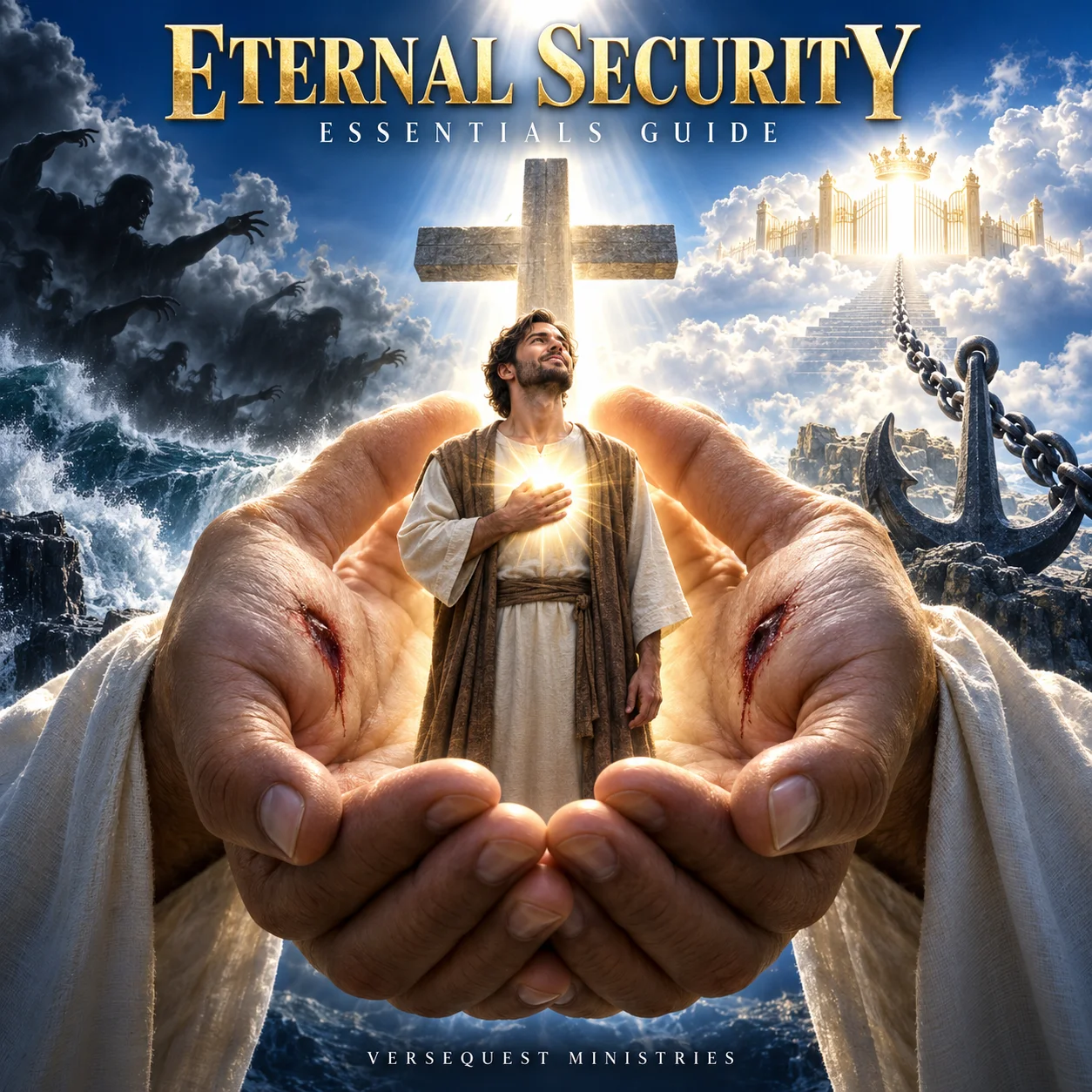
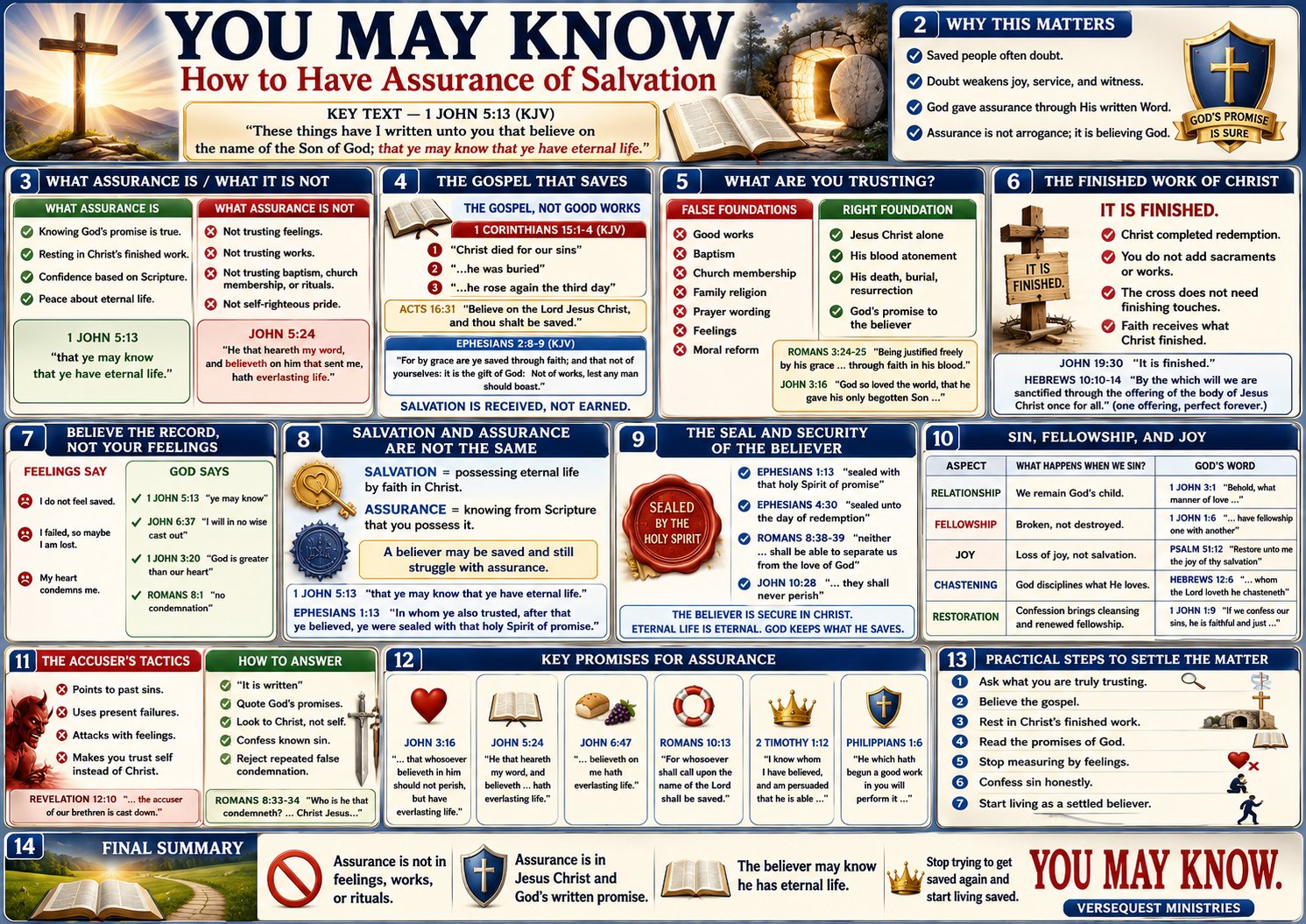
Eternal Security – Once Saved, Always Saved: The Believer’s Unchanging Security in Jesus Christ (KJV Bible Study Chart)
Understand eternal security with this detailed KJV chart covering everlasting life, Christ’s finished work, justification, the Holy Spirit’s seal, standing versus fellowship, chastening, reward, and God’s power to keep every genuine believer.
$3.99
Description
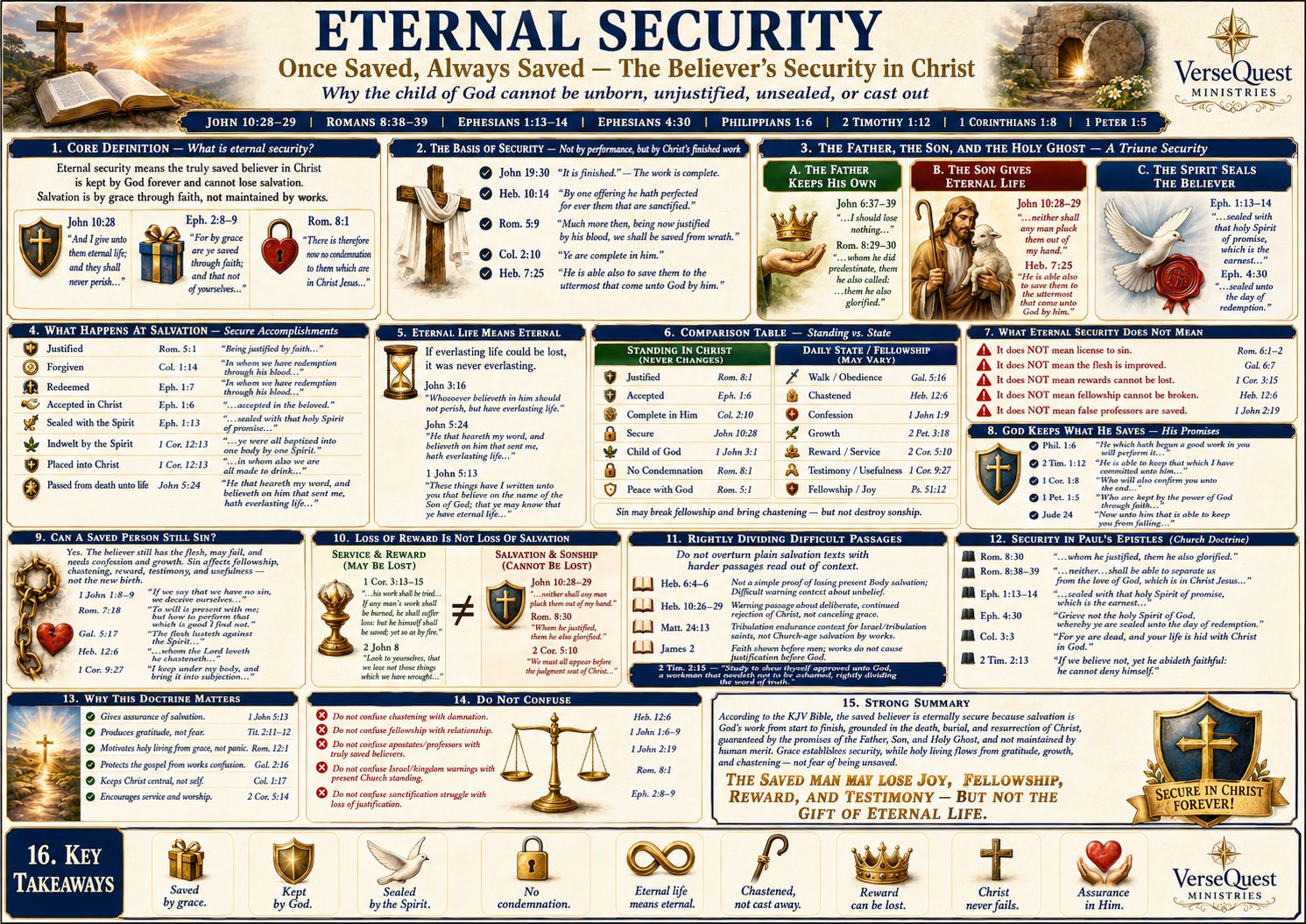
Eternal Security: Once Saved, Always Saved—The Believer’s Security in Christ is a detailed KJV Bible study chart explaining why a genuinely saved believer cannot become unborn, unjustified, unsealed, separated from Christ, or cast out of God’s family.
Built around John 10:28–29, Romans 8:38–39, Ephesians 1:13–14, Ephesians 4:30, Philippians 1:6, 2 Timothy 1:12, 1 Corinthians 1:8, and 1 Peter 1:5, this chart presents eternal security as the result of God’s finished saving work rather than the believer’s ability to maintain salvation through personal performance.
Eternal security means that the person who has truly trusted the gospel of Jesus Christ is saved eternally, placed into Christ, sealed by the Holy Spirit, justified before God, and kept by divine power. Salvation is received by grace through faith and is preserved by the same God who provided it.
The doctrine does not teach that every person who has repeated a prayer, joined a church, received baptism, or made an outward profession is necessarily saved. Eternal security belongs to those who have genuinely believed the gospel and received eternal life through Jesus Christ.
John 10 records Christ’s promise concerning His sheep: “I give unto them eternal life; and they shall never perish.” Eternal life is not temporary life, probationary life, or life that continues only while the believer performs successfully. It is the life Christ gives, and He declares that those who possess it shall never perish.
The believer’s security rests upon Christ’s finished work. Jesus declared from the cross, “It is finished.” Redemption was completed, the debt was paid, divine justice was satisfied, and no later religious work is required to finish what the Son of God accomplished.
Hebrews teaches that Christ offered one sacrifice for sins and perfected forever those who are sanctified. His sacrifice is not repeated every time a believer fails, nor must the Christian add personal suffering, law-keeping, sacraments, or continued merit to preserve its saving power.
Romans 5 teaches that believers are justified by Christ’s blood and saved from wrath through Him. Justification is God’s judicial declaration that the believer is righteous in Christ. A person justified by God cannot be successfully condemned by another accuser.
Colossians 2 declares that believers are complete in Christ. The Christian may still require extensive growth, correction, chastening, maturity, and practical sanctification, but his acceptance before God is already complete in Jesus Christ.
The chart presents eternal security as a work involving the Father, the Son, and the Holy Spirit. The Father keeps His own, the Son gives eternal life and continually intercedes, and the Holy Spirit seals the believer unto the day of redemption.
John 6 teaches that everyone the Father gives to Christ will come to Him and that Christ will lose none of them. Salvation is not maintained by the sheep holding tightly enough to the Shepherd; it is secured by the Shepherd who refuses to lose His sheep.
Romans 8 traces God’s saving purpose from foreknowledge and predestination through calling, justification, and glorification. The passage presents glorification with absolute certainty because God’s saving purpose cannot fail.
Jesus Christ gives eternal life and promises that no one can pluck the believer out of His hand. The Father is greater than all, and no one can pluck the believer from the Father’s hand. The believer is therefore held by divine power rather than human strength.
Hebrews 7 teaches that Christ is able to save completely those who come to God through Him because He lives forever to make intercession for them. The Saviour who died for the believer now represents him continually before the Father.
The Holy Spirit seals the believer after he trusts the gospel. Ephesians 1 describes the Spirit as the earnest or guarantee of the inheritance, while Ephesians 4 states that believers are sealed “unto the day of redemption.”
The Spirit’s seal does not last merely until the believer’s next failure. It extends to the day when the redemption of the body is completed. The seal belongs to God and rests upon His faithfulness rather than the Christian’s emotional condition.
A major section explains what happens at salvation. The believer is justified, forgiven, redeemed, accepted in Christ, sealed and indwelt by the Holy Spirit, placed into the Body of Christ, and passed from death unto life.
These are not merely future possibilities. They are present accomplishments resulting from faith in the gospel. The believer does not repeatedly move in and out of Christ whenever his daily condition changes.
Justification means the believer has received a righteous standing before God. Forgiveness means his sins have been pardoned through Christ’s blood. Redemption means the price of deliverance has been paid.
Acceptance in Christ means the believer’s standing rests in the Beloved rather than personal merit. The Spirit’s indwelling means God has taken up residence within the believer. Spiritual baptism places the believer into the one Body, and passing from death unto life describes a permanent change of spiritual position.
The chart strongly emphasizes that eternal life means eternal. If everlasting life could be lost, it was never everlasting. Christ does not promise life lasting until the next serious failure; He promises everlasting life to everyone who believes.
John 5:24 declares that the believer has everlasting life, will not come into condemnation, and has passed from death unto life. First John 5:13 states that believers may know that they possess eternal life.
The doctrine carefully distinguishes the believer’s standing in Christ from his daily state or fellowship. Standing is established by God and does not change. Daily condition can improve or deteriorate according to obedience, sin, confession, growth, and fellowship.
The believer’s unchanging standing includes justification, acceptance, completeness in Christ, sonship, no condemnation, security, and peace with God.
His daily walk may involve obedience or disobedience, fellowship or distance, confession or concealment, growth or stagnation, reward or loss, usefulness or damaged testimony, and joy or sorrow.
Sin can break fellowship and bring fatherly chastening, but it cannot reverse spiritual birth or destroy sonship. A disobedient child remains a child, though he may require serious correction.
This distinction protects believers from two opposite errors. It prevents despair by teaching that daily failure does not undo justification, and it prevents carelessness by teaching that sin still damages fellowship, testimony, usefulness, health, relationships, and reward.
Eternal security does not mean license to sin. Romans 6 rejects that conclusion with the words, “God forbid.” Grace does not teach believers to live carelessly; it teaches them to deny ungodliness and live soberly, righteously, and godly.
Security does not mean the flesh has improved. The believer still possesses a fallen nature capable of temptation and sin. Christian growth requires walking in the Spirit, renewing the mind, studying Scripture, praying, and resisting the flesh.
Security does not mean rewards cannot be lost. First Corinthians 3 teaches that a believer’s work may be burned while the person himself remains saved. Eternal life and Christian reward must not be treated as the same category.
Security does not mean fellowship cannot be broken. First John teaches that sin interrupts fellowship and requires confession. David lost the joy of salvation but did not ask to be spiritually reborn.
Security does not mean false professors are saved. First John 2 distinguishes those who merely associate outwardly with believers from those who truly belong to Christ. A false profession does not become genuine merely because eternal security is true.
The chart addresses the question, “Can a saved person still sin?” Scripture plainly teaches that believers remain capable of sin. First John warns that anyone claiming sinless perfection deceives himself.
The existence of sin does not prove the believer has become unsaved. It proves the continuing need for confession, correction, practical sanctification, and dependence upon the Holy Spirit.
God chastens His children because they belong to Him. Hebrews 12 teaches that fatherly discipline is evidence of sonship, not evidence that the child has been cast out.
Chastening may involve conviction, loss of peace, exposure, damaged usefulness, consequences, weakness, or severe correction. God’s discipline seeks holiness and restoration rather than eternal condemnation.
A saved believer may also suffer loss at the judgment seat of Christ. Service, motives, doctrine, faithfulness, and stewardship will be evaluated. Some works will receive reward, while others will be burned.
Loss of reward is not loss of salvation. First Corinthians 3 says the person may suffer loss “but he himself shall be saved.” The gift of eternal life must not be confused with rewards earned through faithful service.
The chart presents promises showing that God keeps those He saves. Philippians 1:6 promises that He who began a good work will perform it until the day of Jesus Christ.
Second Timothy 1:12 expresses Paul’s confidence that Christ is able to keep what has been committed unto Him. First Corinthians 1 promises that God will confirm believers unto the end.
First Peter 1 describes believers as kept by the power of God through faith unto salvation ready to be revealed. Jude declares that God is able to keep His people from falling and present them faultless before His glory.
The believer’s confidence is not that he is strong enough to hold himself. His confidence is that God is faithful enough to keep what He has saved.
A major section rightly divides difficult passages frequently used against eternal security. Hebrews 6 and Hebrews 10 must be interpreted according to their audience, warning context, and connection with Jewish unbelief rather than isolated from the rest of Scripture.
Matthew 24 concerns a Tribulation and Kingdom setting and should not be used to overturn clear Church-age doctrine concerning justification, sealing, and eternal life.
James 2 addresses faith demonstrated through works and should not be used to teach that the believer’s justification before God is preserved through personal merit.
Hard passages must be read in the light of clear salvation passages rather than clear promises being weakened by verses removed from their proper context.
Paul’s epistles provide direct Church doctrine concerning eternal security. Romans 8 declares that nothing can separate believers from God’s love in Christ. Ephesians teaches that believers are sealed unto redemption.
Colossians teaches that the believer’s life is hidden with Christ in God. Second Timothy teaches that even when believers are unfaithful, Christ remains faithful because He cannot deny Himself.
This does not praise unbelief or excuse apostasy. It magnifies the unchangeable character of Christ and the believer’s spiritual union with Him.
The chart warns against confusing chastening with damnation, fellowship with relationship, apostates and false professors with genuine believers, Tribulation or Kingdom warnings with present Church standing, and practical sanctification struggles with loss of justification.
Understanding eternal security produces assurance rather than arrogance. It gives the believer confidence that God’s promise is true and frees him to serve from gratitude rather than fear.
It motivates holy living because the Christian belongs permanently to Jesus Christ. Security is not permission to live for self; it is the foundation for faithful worship, obedience, and service.
The doctrine protects the gospel from works-based confusion. If salvation can be lost through insufficient performance, then works become part of maintaining eternal life and grace is no longer fully grace.
Eternal security keeps Christ central. The believer rests upon what Christ accomplished rather than endlessly examining whether his own spiritual performance has become good enough to preserve redemption.
The strong summary is clear: according to the King James Bible, the genuine believer is eternally secure because salvation is God’s work from beginning to end. It is grounded in Christ’s death, burial, and resurrection, guaranteed by the promises of the Father, Son, and Holy Spirit, and maintained by divine rather than human power.
The saved believer may lose joy, fellowship, peace, testimony, usefulness, health, opportunities, and reward. He may experience severe chastening and painful consequences. But he cannot lose the gift of eternal life that God has given him in Jesus Christ.
This resource is ideal for personal Bible study, eternal-security teaching, assurance counseling, new-believer discipleship, salvation-by-grace studies, pastoral counseling, Sunday school, homeschool Bible curriculum, Bible institutes, sermon preparation, gospel follow-up, and anyone struggling with fear that salvation can be lost.
Eternal security, once saved always saved, believer’s security in Christ, eternal life, everlasting life, kept by God, sealed by the Holy Spirit, no condemnation, justified by faith, accepted in Christ, complete in Christ, salvation by grace, standing versus state, fellowship versus relationship, fatherly chastening, loss of reward, judgment seat of Christ, assurance of salvation, perseverance of God, rightly dividing difficult passages
Eternal security applies to genuinely saved believers, not merely to everyone who has made an outward religious profession.
Salvation is received by grace through faith in Jesus Christ and is not maintained by human works.
Jesus gives eternal life. If the life He gives could cease, the biblical term eternal would lose its plain meaning.
John 10 states that Christ’s sheep shall never perish and cannot be plucked from His hand.
The Father is greater than all and keeps those He has given to Christ. The believer is held by both the Father’s and the Son’s power.
Christ’s finished work is the basis of security. Redemption does not require additional payments or repeated sacrifices.
Justification is God’s declaration that the believer is righteous in Christ. No accusation can overturn the verdict of the Judge who justified him.
The believer is complete in Christ. Christian maturity develops progressively, but acceptance before God is already settled.
The Holy Spirit seals the believer after he trusts the gospel. The seal continues unto the day of redemption.
The Spirit is the earnest of the inheritance, providing God’s guarantee that the promised redemption will be completed.
At salvation, the believer is justified, forgiven, redeemed, accepted, indwelt, sealed, placed into Christ, and passed from death unto life.
Standing in Christ is permanent. Daily state, fellowship, obedience, joy, service, and usefulness may vary greatly.
Sin can damage fellowship without destroying relationship. A disobedient child remains a child but experiences correction.
Security does not provide permission to sin. Romans 6 rejects that conclusion with “God forbid.”
Grace teaches holiness. The secure believer belongs to Christ and should therefore live in obedience and gratitude.
The flesh remains capable of sin. Eternal security does not teach that believers become sinlessly perfect.
A saved believer may lose reward. First Corinthians 3 distinguishes the loss of works and reward from the salvation of the person.
Chastening is evidence of sonship. God disciplines His children because He has not abandoned them.
False professors should not be confused with saved believers who struggle. A person may possess outward religion without ever receiving Christ.
God finishes what He begins. Philippians 1:6 grounds the believer’s future in divine faithfulness.
The believer is kept by God’s power, not merely by personal determination.
Romans 8 presents the believer’s glorification as certain within God’s completed purpose.
Nothing can separate the believer from God’s love in Christ—not death, life, angels, principalities, powers, present things, future things, height, depth, or any other creature.
Christ’s continuing intercession guarantees that the believer has a living High Priest representing him before the Father.
Difficult warning passages should be interpreted according to audience and context. They must not be used to erase clear promises of everlasting life.
Kingdom and Tribulation endurance passages should not be forced into direct Church-age standing doctrine.
Fellowship can be broken and restored through confession. Relationship and eternal life remain grounded in Christ.
Practical sanctification affects growth and usefulness but does not become the foundation of justification.
The believer’s confidence should remain in Christ rather than in his fluctuating feelings, strength, or performance.
The doctrine’s central truth is that salvation is God’s gift, God’s work, and God’s responsibility to complete.
Eternal-security Bible studies, once-saved-always-saved teaching, assurance-of-salvation counseling, new-believer discipleship, explaining the Holy Spirit’s seal, distinguishing standing from fellowship, fatherly chastening studies, judgment-seat and reward lessons, refuting works-based salvation, rightly dividing warning passages, pastoral counseling, gospel follow-up, Sunday school lessons, homeschool Bible curriculum, Christian school teaching, Bible institute classes, sermon preparation
King James Bible, Strong’s Concordance, Thompson Chain-Reference Bible, Treasury of Scripture Knowledge, Nave’s Topical Bible, Romans 5–8 study notes, John 6 and John 10 commentary materials, Ephesians 1 assurance studies, Hebrews warning-passage worksheets, eternal-security Scripture cards, salvation-assurance workbook, judgment-seat and rewards studies, law-and-grace comparison charts, Pauline epistle outlines, VerseQuest salvation and doctrine charts
Related products
-
Premium Studies
-
-25%
- The Doctrine of Hell — Premium Essay Series PDF
- A 383-page premium VerseQuest PDF study book containing 54 KJV essays on hell, fire, darkness, judgment, the lake of fire, the second death, and Jesus Christ as the only escape.
- Original price was: $39.99.$29.99Current price is: $29.99.
- Add to cart
-
-25%
-
Doctrine Series
-

- The Lost Tribes Myth Exposed (213-Page Premium Study)
- A 213-page premium KJV study exposing the Lost Tribes myth, tribal identity errors, prophecy abuse, race theories, and false Israel claims through 35 detailed essays.
- $24.99
- Add to cart
-
-
Bible Overview Series
-
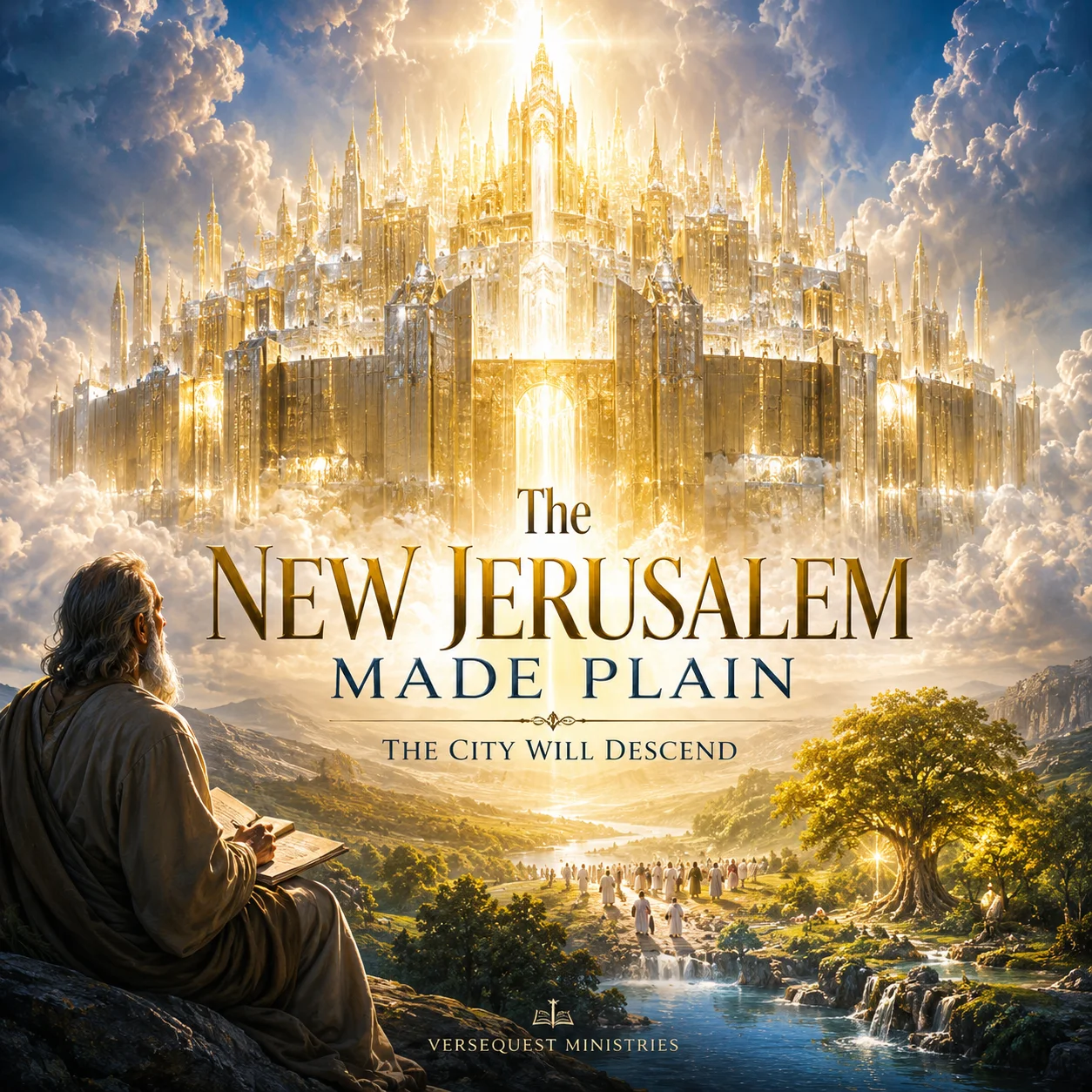
- The New Jerusalem Made Plain — 621-Page PDF Study
- The New Jerusalem Made Plain is a massive 621-page KJV/rightly divided PDF study on the literal holy city revealed in Revelation 21–22. This 100-essay book makes the New Jerusalem plain…
- $34.99
- Add to cart
-
-
Jesus Christ
-
-67%

- The Millennium Made Plain – 416-Page KJV Study on Christ’s Future Reign
- A premium 416-page KJV, rightly divided Bible study on the literal future Millennial reign of Jesus Christ. The Millennium Made Plain explains Revelation 19–20, Israel’s restoration, Satan’s binding, the Kingdom…
- Original price was: $29.99.$9.99Current price is: $9.99.
- Add to cart
-
-67%
-
The Rapture
-
-67%
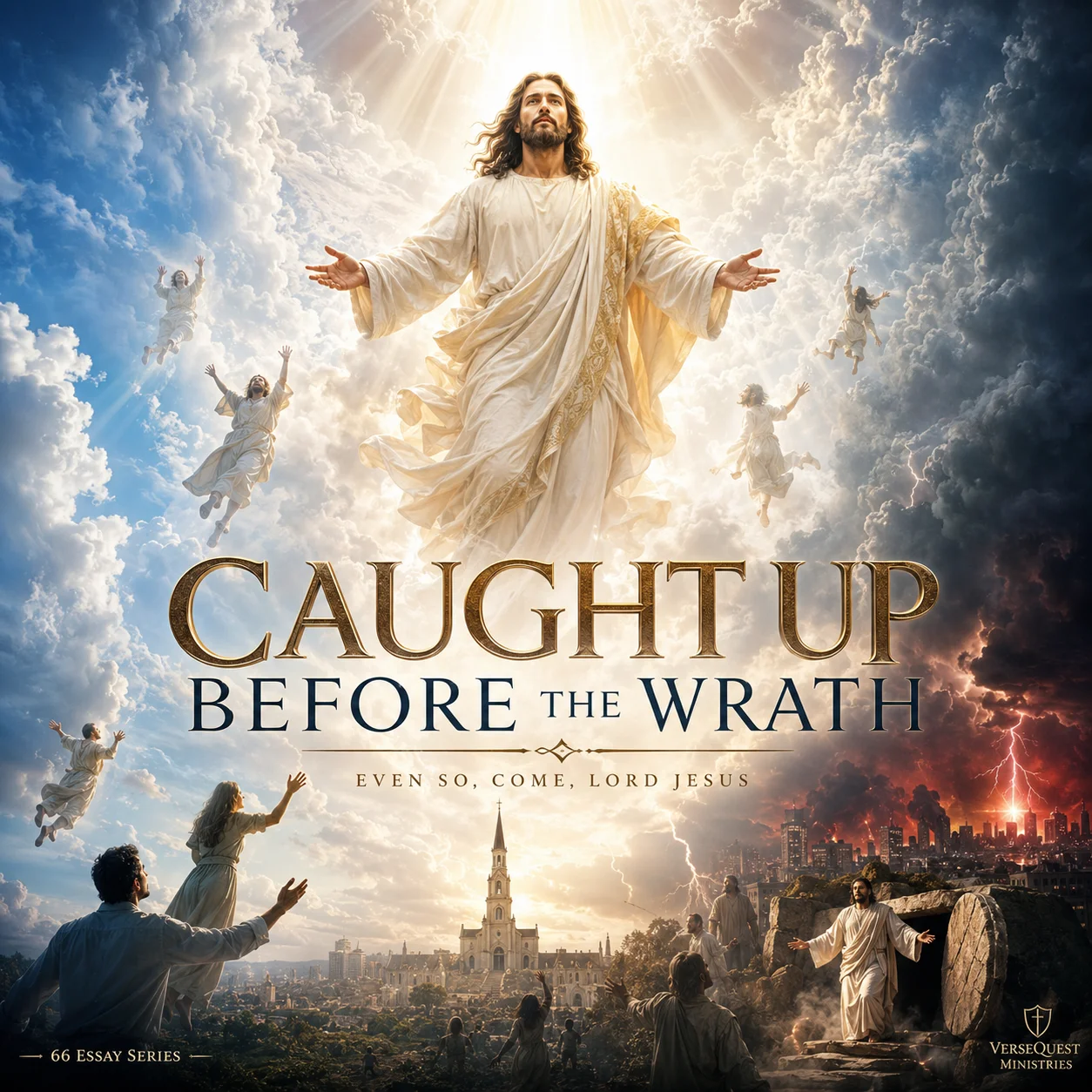
- Caught Up Before the Wrath – 66-Essay KJV Rapture Study
- Caught Up Before the Wrath is a 430-page premium KJV Bible study defending the pre-tribulation Rapture of the Church from a rightly divided, dispensational perspective. This 66-essay VerseQuest Ministries book…
- Original price was: $29.99.$9.99Current price is: $9.99.
- Add to cart
-
-67%