
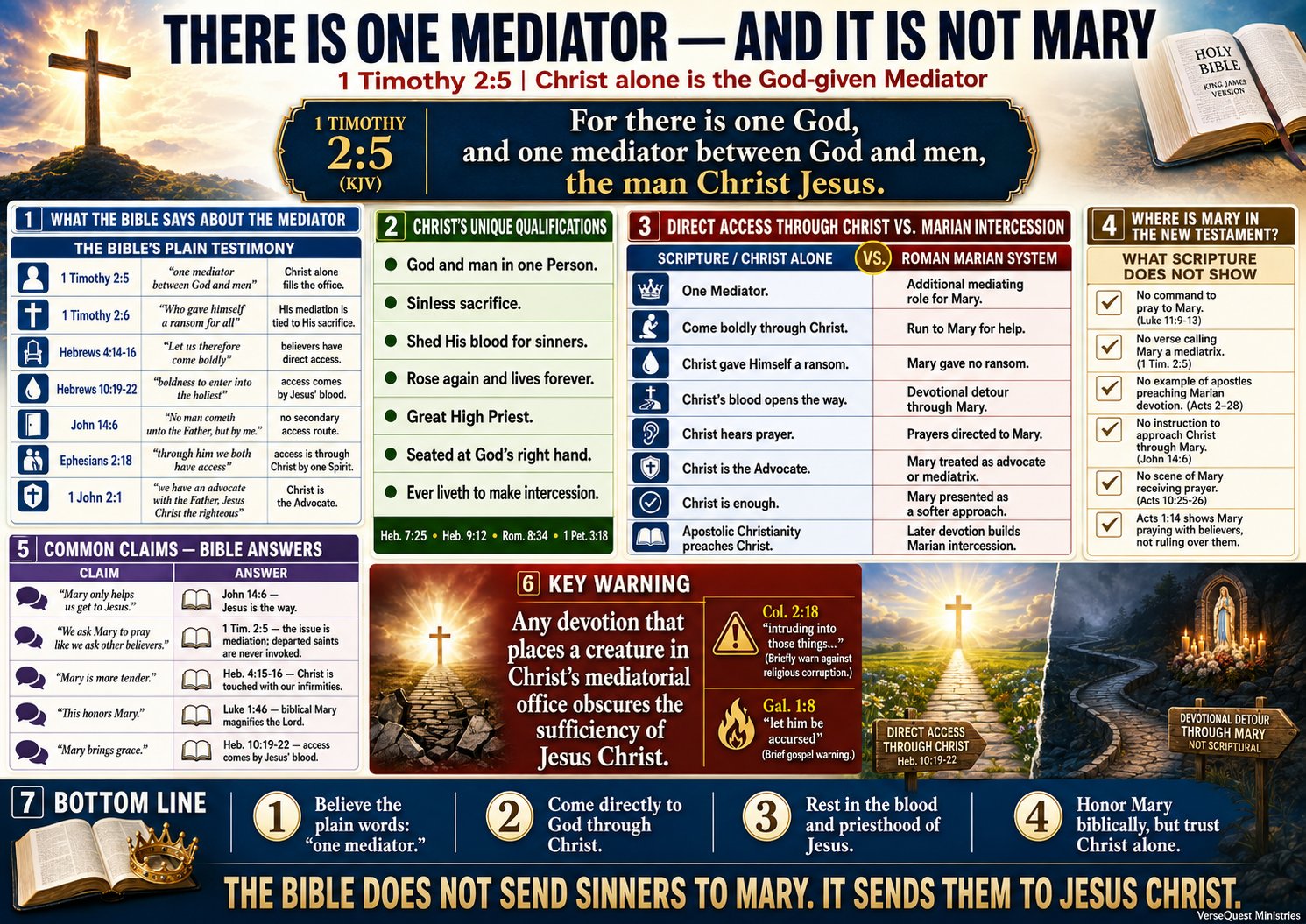
There Is One Mediator—and It Is Not Mary – Christ Alone and Direct Access to God (KJV Bible Study Chart)
Examine the Bible’s teaching on the one Mediator with this detailed KJV chart covering Christ’s unique qualifications, direct access to God, Marian intercession claims, and the eternal priesthood of Jesus.
$3.99
Description
There Is One Mediator—and It Is Not Mary is a detailed KJV Bible study chart presenting the plain teaching of 1 Timothy 2:5: “For there is one God, and one mediator between God and men, the man Christ Jesus.” It explains why Jesus Christ alone possesses the divine qualifications, sacrificial work, eternal priesthood, and biblical authority required to stand between sinful mankind and a holy God.
The issue is not whether Mary should be respected as the earthly mother of Jesus. Scripture calls her blessed among women, records her humble submission to God, and preserves her important place in the history of Christ’s incarnation. The issue is whether the New Testament gives Mary a mediatorial office, instructs believers to pray to her, or presents her as an advocate through whom Christians should approach Jesus Christ. This chart demonstrates that it does not.
Christ’s mediation is unique because His Person and work are unique. He is God manifest in the flesh, fully divine and fully human, without sin, and perfectly qualified to represent both God and man. Mary was a faithful human servant who needed a Saviour, but Jesus Christ is the Saviour, the ransom, the Advocate, the Great High Priest, and the one Mediator appointed by God.
First Timothy 2:5 does not describe Christ as one mediator among several. It identifies one God and one Mediator. The following verse connects that office directly with Christ giving Himself “a ransom for all.” Biblical mediation is therefore grounded in sacrifice. Jesus shed His blood, bore sin, died, rose again, ascended to heaven, and now lives forever to make intercession. Mary performed none of those redemptive works.
The chart gathers the Bible’s plain testimony concerning direct access through Christ. Hebrews invites believers to come boldly to the throne of grace. Access to the holiest is opened by the blood of Jesus. John 14:6 declares that no man comes to the Father except through Christ. Ephesians 2:18 teaches that believers have access to the Father through Him by one Spirit. First John 2:1 identifies Jesus Christ the righteous as the believer’s Advocate.
A central comparison contrasts Scripture and Christ alone with the later Roman Marian system. Scripture presents one Mediator, while Marian devotion assigns an additional mediating role to Mary. Scripture tells believers to come boldly through Christ, while the Marian system encourages them to seek help through Mary. Christ gave Himself as the ransom; Mary did not. Christ’s blood opens the way; no devotional detour is required.
The chart also examines Mary’s place in the New Testament after Christ’s birth. There is no command to pray to Mary, no verse naming her as mediatrix, no example of the apostles preaching Marian devotion, no instruction to approach Christ through her, and no recorded scene of Mary receiving the prayers of believers. Acts 1:14 instead presents Mary praying with the disciples, not receiving prayer from them.
Common claims are answered from Scripture. The idea that Mary merely helps Christians reach Jesus is answered by Christ’s declaration that He Himself is the way. Comparing prayer to Mary with asking living believers to pray ignores the biblical difference between fellowship among living Christians and invoking departed saints. The claim that Mary is more tender than Christ diminishes the sympathy of the Great High Priest who was touched with the feeling of our infirmities.
Mary’s own words direct glory toward God. In Luke 1, she magnifies the Lord and rejoices in “God my Saviour.” At the marriage in Cana, her final recorded command in Scripture points away from herself and toward Christ: “Whatsoever he saith unto you, do it.” Biblical honour for Mary therefore receives the testimony Scripture gives without assigning her titles, powers, prayers, or offices that Scripture never gives.
The chart’s key warning is that any devotion placing a creature within Christ’s mediatorial office obscures the sufficiency of Jesus Christ. No saint, priest, pope, angel, religious institution, or departed believer can add to the access secured by His blood. The finished work of Christ does not need a softer intermediary, additional advocate, or heavenly assistant.
Jesus Christ’s priesthood is complete and eternal. He is seated at the right hand of God, ever lives to make intercession, and is able to save to the uttermost those who come unto God by Him. His mediation cannot be transferred, supplemented, improved, or shared with another creature.
This chart does not encourage contempt toward Catholics or careless disrespect toward Mary. It calls believers to test doctrine by Scripture, preach Christ clearly, and direct sinners to the only Mediator who paid their debt. Christian love tells the truth about salvation and refuses to place religious tradition above the written Word.
The bottom line is simple: believe the plain words “one mediator,” come directly to God through Jesus Christ, rest in His blood and eternal priesthood, honour Mary according to Scripture, and trust Christ alone. The Bible does not send sinners to Mary. It sends them to Jesus Christ.
This resource is ideal for personal Bible study, Christian apologetics, Roman Catholic doctrine comparisons, evangelism, discipleship, Sunday school, homeschool Bible curriculum, Bible institutes, pastoral teaching, sermon preparation, and anyone studying the unique mediatorial office of the Lord Jesus Christ.
One Mediator, Christ alone, direct access to God, the man Christ Jesus, Christ’s ransom, the blood of Jesus, Great High Priest, eternal intercession, Christ our Advocate, sufficiency of Christ, Mary in the New Testament, Marian intercession, Roman Catholic doctrine, biblical honour for Mary, prayer through Christ, finished redemption, apostolic Christianity, Scripture as final authority, salvation through Jesus Christ, Christian apologetics
First Timothy 2:5 uses exclusive language: one God and one Mediator. The verse does not leave room for a secondary heavenly mediator functioning beside Jesus Christ.
Christ’s mediatorial office rests upon His unique identity. He is both God and man in one Person. No merely human servant, however faithful or honoured, possesses that qualification.
Verse 6 connects mediation with ransom. Jesus Christ gave Himself for sinners. Any claim to a mediating office must confront the fact that Christ alone paid the redemptive price.
Believers are repeatedly invited to approach God directly through Christ. Hebrews does not tell Christians to seek another person who will persuade Jesus to hear them. It commands them to come boldly through their Great High Priest.
Jesus is not reluctant to receive sinners. He was touched with the feeling of our infirmities, experienced temptation without sin, and invites the burdened to come unto Him. No softer or more compassionate mediator is required.
The New Testament honours Mary without assigning her divine attributes. She is never described as omniscient, omnipresent, able to hear millions of prayers, or possessing authority to dispense grace.
Mary identifies God as her Saviour. This places her among those who needed divine salvation rather than beside Christ as a co-redemptive figure.
Acts 1 shows Mary praying with other believers. The passage offers no example of the early Church directing prayers toward her or treating her as its heavenly advocate.
Asking a living Christian to pray is not equivalent to praying to a departed saint. The first is ordinary Christian fellowship; the second requires biblical authorization that the New Testament never provides.
Christ is the believer’s Advocate with the Father. He ever lives to make intercession and possesses an unchangeable priesthood. His advocacy is complete and eternal.
Honouring Mary biblically means accepting what Scripture says about her faithful obedience and unique historical role. It does not mean giving her titles or functions absent from Scripture.
The safest doctrine is the plain doctrine: sinners come to God through Jesus Christ alone. His blood opened the way, His resurrection guarantees life, and His eternal priesthood remains sufficient.
Doctrine of Christ, Christian apologetics, Roman Catholic doctrine comparisons, evangelism with Catholic friends and relatives, teaching direct access to God, studies in 1 Timothy, studies in Hebrews, doctrine of the priesthood of Christ, salvation teaching, gospel presentation, new-believer discipleship, Sunday school lessons, homeschool Bible curriculum, Christian school instruction, Bible institute classes, pastoral training, sermon preparation, Bible doctrine classes
King James Bible, Strong’s Concordance, Thompson Chain-Reference Bible, Treasury of Scripture Knowledge, Nave’s Topical Bible, 1 Timothy study notes, Hebrews commentary notes, Scripture comparison worksheets, studies on the priesthood of Christ, resources on the blood atonement, Christian apologetics materials, Roman Catholic doctrine comparison notes, gospel presentation resources, VerseQuest doctrine and salvation charts
Related products
-
VerseQuest Premium Library
-
-67%
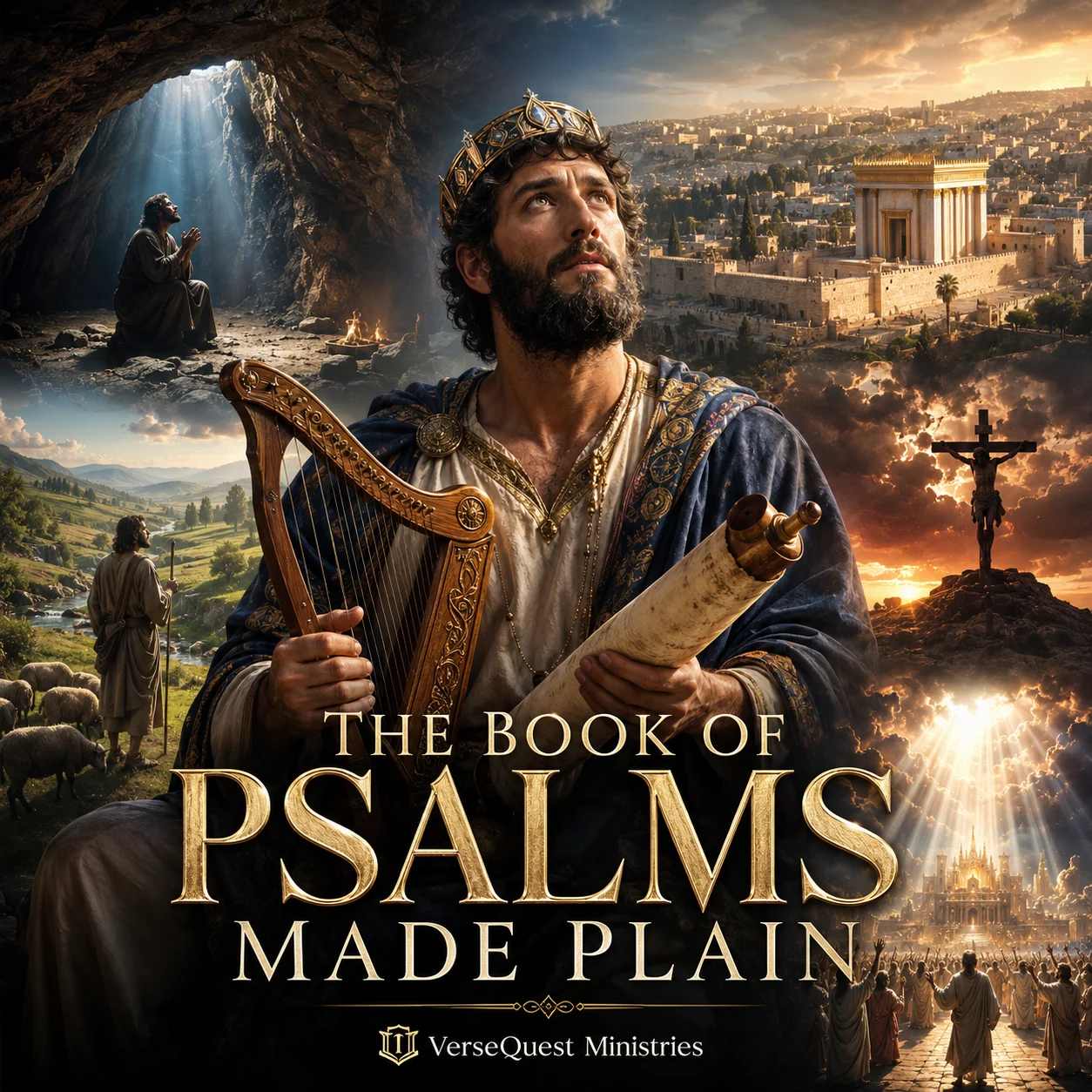
- The Book of Psalms Made Plain – 383-Page KJV Psalm Study
- The Book of Psalms Made Plain is a 383-page premium KJV Bible study featuring 54 detailed essays through the major themes, doctrines, prophecies, prayers, laments, and praises of the Psalms.…
- Original price was: $29.99.$9.99Current price is: $9.99.
- Add to cart
-
-67%
-
Angels
-
-67%
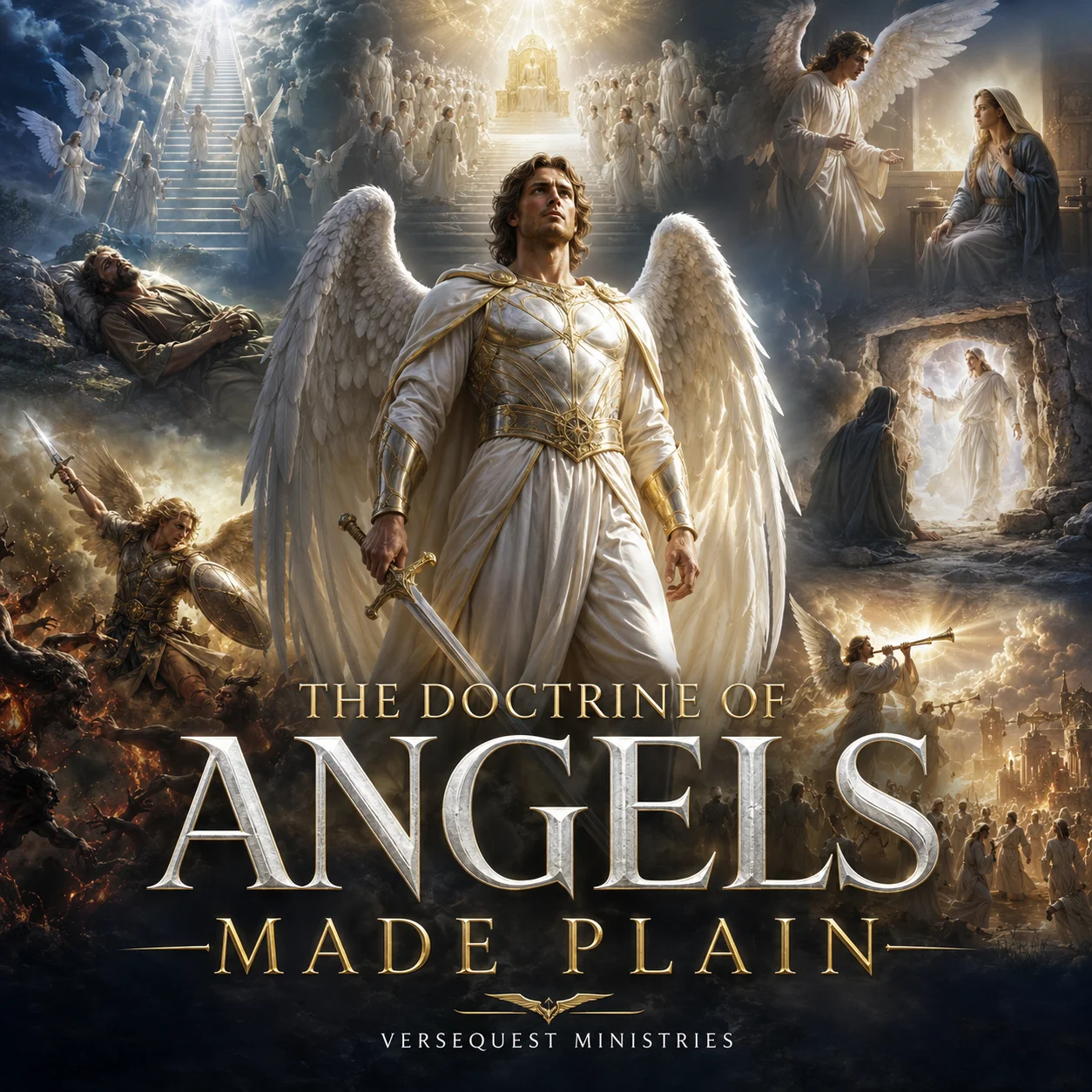
- The Doctrine of Angels Made Plain – 620-Page KJV Bible Study PDF
- The Doctrine of Angels Made Plain is a 620-page KJV Bible study that traces angels from Genesis to Revelation. This premium VerseQuest PDF explains holy angels, Christ’s supremacy over angels,…
- Original price was: $29.99.$9.99Current price is: $9.99.
- Add to cart
-
-67%
-
KJV Bible Study Resources
-
-60%
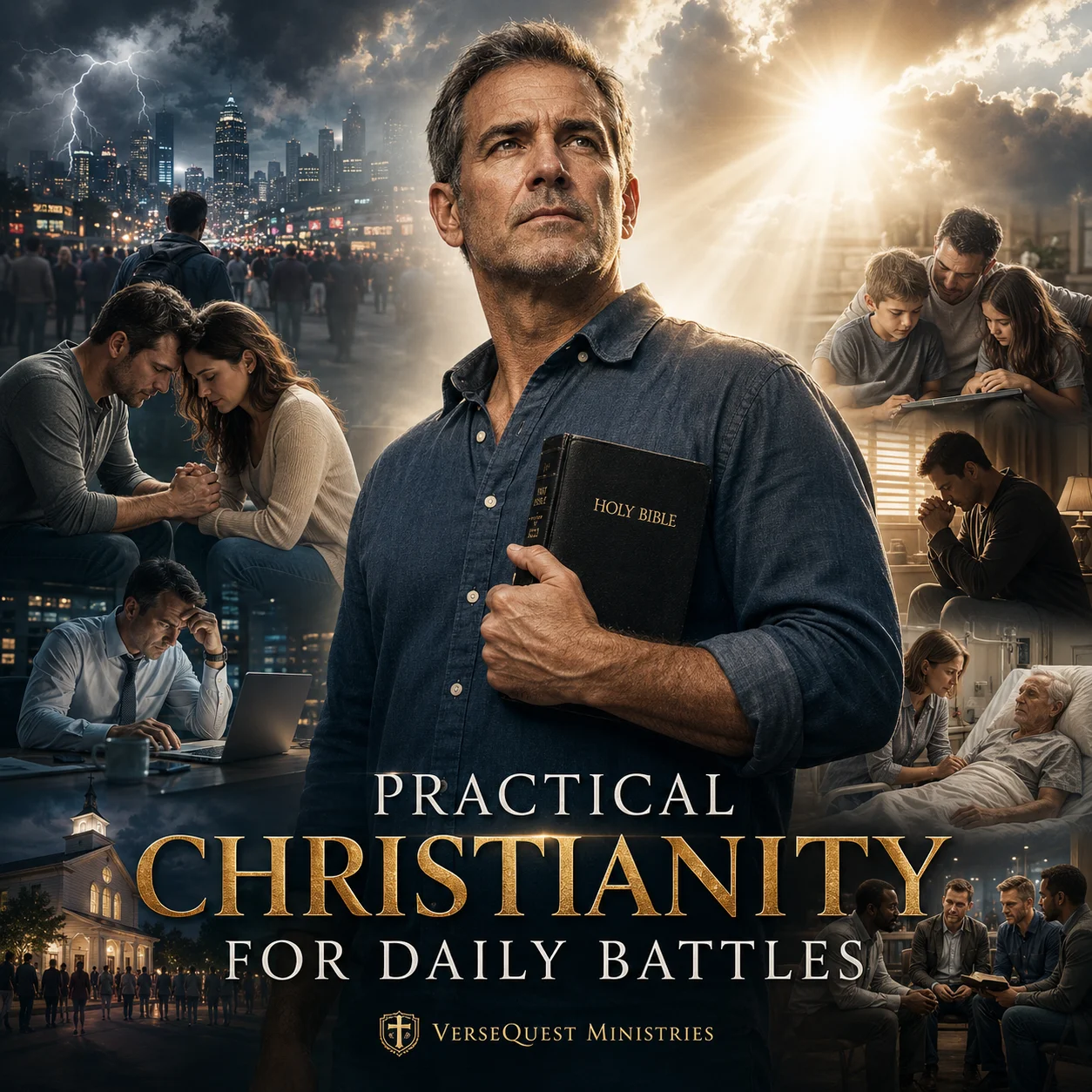
- Practical Christianity for Daily Battles – 329-Page KJV Study PDF
- A premium 329-page KJV study PDF with 40 full essays applying sound, rightly divided Bible doctrine to real daily Christian battles. Topics include temptation, anxiety, marriage, parenting, pornography, grief, church…
- Original price was: $24.99.$9.99Current price is: $9.99.
- Add to cart
-
-60%
-
The Rapture
-
-67%
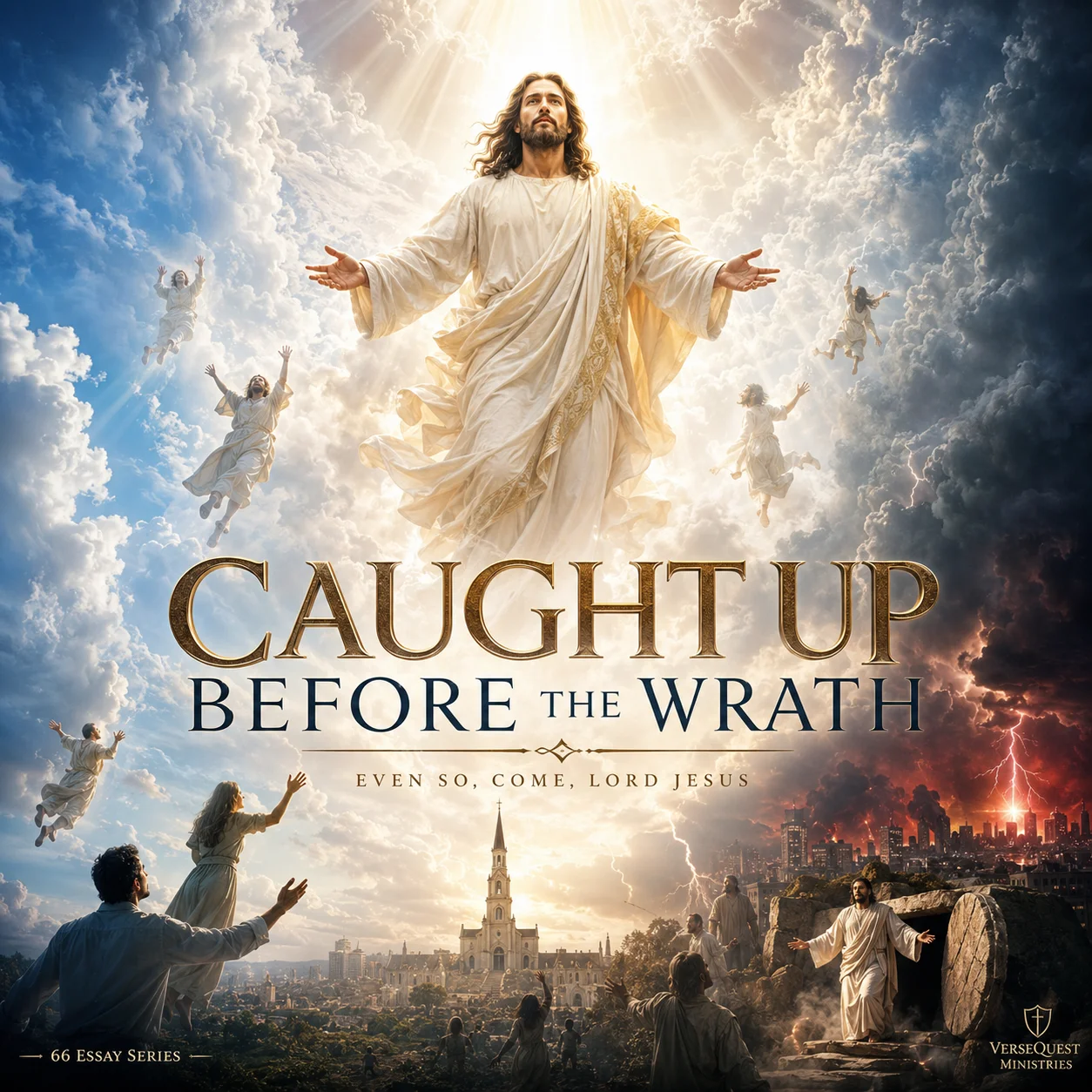
- Caught Up Before the Wrath – 66-Essay KJV Rapture Study
- Caught Up Before the Wrath is a 430-page premium KJV Bible study defending the pre-tribulation Rapture of the Church from a rightly divided, dispensational perspective. This 66-essay VerseQuest Ministries book…
- Original price was: $29.99.$9.99Current price is: $9.99.
- Add to cart
-
-67%
-
Doctrine Series
-
-14%
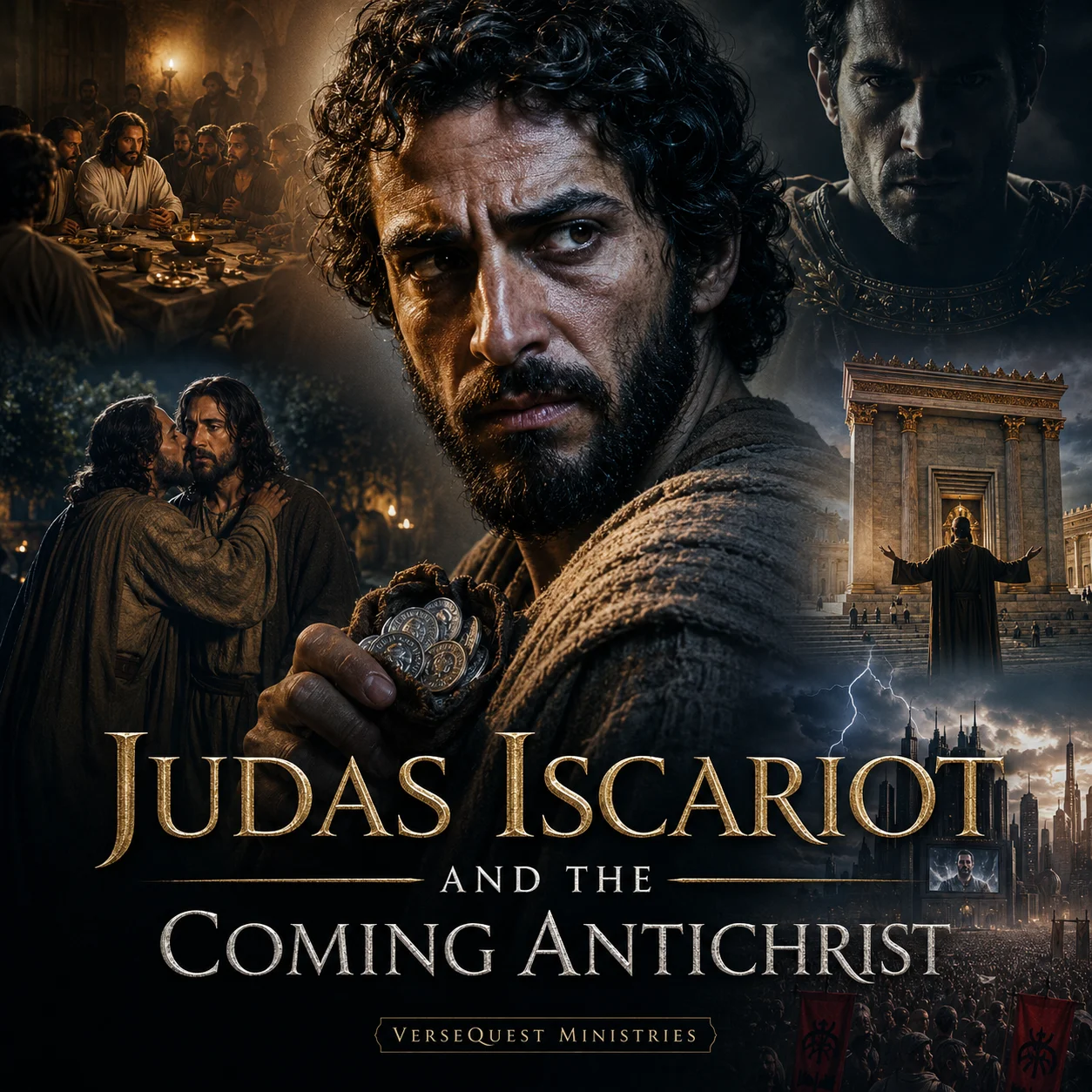
- Judas Iscariot and the Coming Antichrist – Premium KJV Prophecy Study
- A massive 459-page premium KJV prophecy study tracing the biblical connection between Judas Iscariot, the son of perdition, and the coming Antichrist. This detailed VerseQuest Ministries PDF examines Judas’ betrayal,…
- Original price was: $34.99.$29.99Current price is: $29.99.
- Add to cart
-
-14%