
When Condemnation Met the Substitute – 2 Corinthians 5:21, Imputed Righteousness, and No Condemnation in Christ (KJV Bible Study Chart)
Understand 2 Corinthians 5:21 with this detailed KJV Bible study chart covering condemnation, Christ the sinless Substitute, imputed righteousness, justification, the great exchange, and eternal security.
$3.99
Description
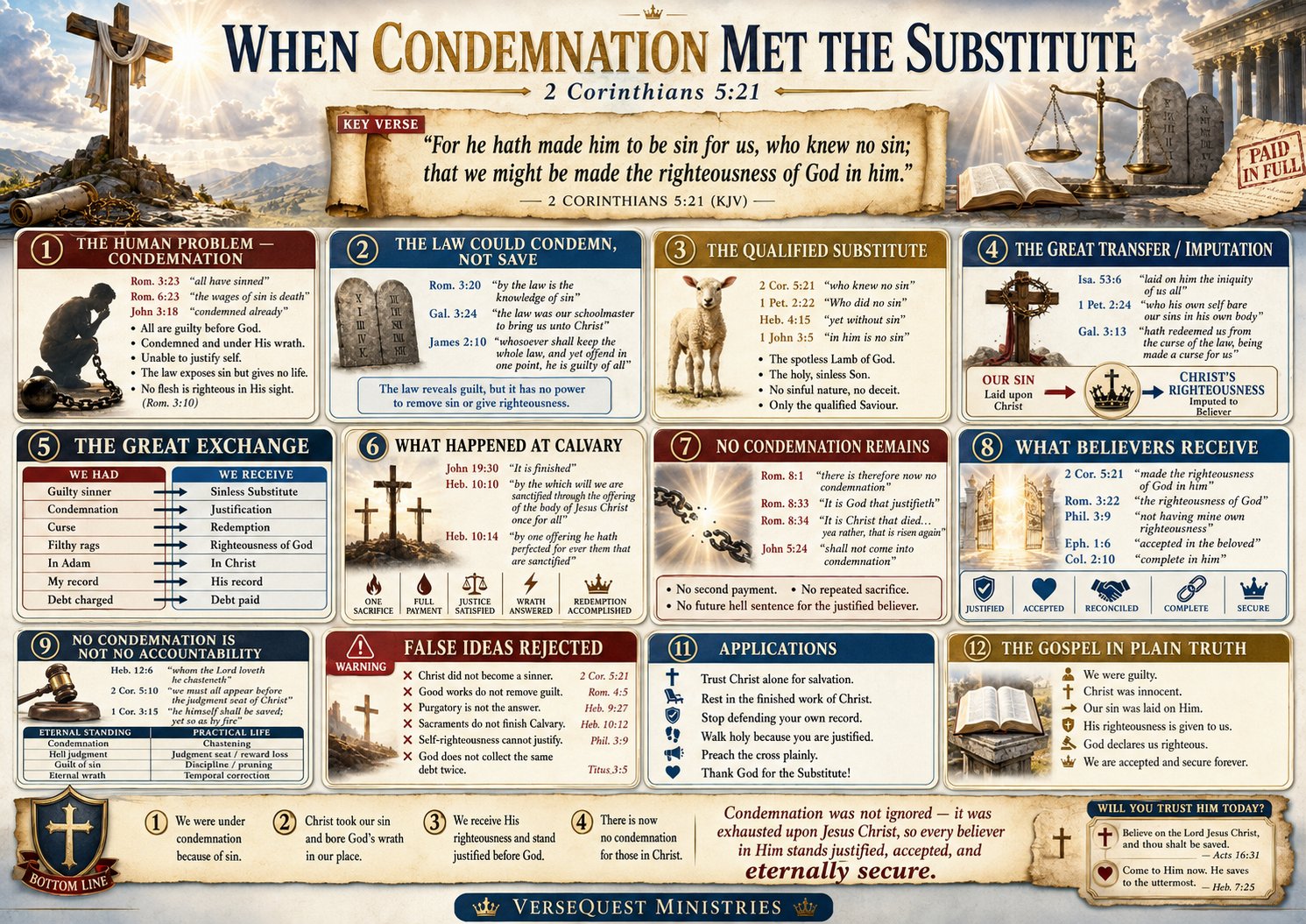
When Condemnation Met the Substitute is a detailed KJV Bible study chart explaining the great doctrinal truth of 2 Corinthians 5:21: Jesus Christ, who knew no sin, bore the sinner’s condemnation so that believing sinners might be made the righteousness of God in Him.
The chart presents the gospel as more than religious improvement, moral rehabilitation, or divine tolerance of sin. Humanity stood guilty before God, condemned under His righteous judgment, unable to justify itself, and incapable of producing the righteousness required for acceptance. God did not ignore that condemnation. At Calvary, condemnation met a qualified Substitute.
The chart begins with the universal human problem. Romans 3:23 declares that all have sinned, Romans 6:23 identifies death as sin’s wages, and John 3:18 describes the unbelieving sinner as condemned already. Every person enters the world connected with Adam’s fallen race, possessing a guilty record and standing beneath the judgment of a holy God.
Human effort cannot solve this problem. Good works may improve earthly conduct, but they cannot erase guilt, reverse death, satisfy divine justice, or manufacture perfect righteousness. Romans 3 declares that no flesh will be justified in God’s sight through the deeds of the law.
The law could condemn, but it could not save. It revealed sin, stopped the sinner’s mouth, established guilt, and functioned as a schoolmaster pointing toward Christ. Like a courtroom standard, the law accurately exposed the offense but possessed no sacrificial power to remove the sentence.
The chart emphasizes that Jesus Christ was the only qualified Substitute. He knew no sin, did no sin, and had no sin in Him. He was the spotless Lamb of God, the holy Son of God, and the only Person capable of bearing another’s guilt without first needing judgment for His own.
The statement that God made Christ “to be sin for us” does not mean Jesus became a sinner, acquired a sinful nature, or committed evil. The sinless Christ was judicially treated as the sinner’s Substitute. Our iniquity was laid upon Him, He bore our sins in His own body upon the tree, and He endured the curse and judgment our guilt deserved.
A major section explains the doctrine of imputation, or the great transfer. Our sin was laid upon Christ, and Christ’s righteousness is credited to the believer. The gospel does not teach that God merely overlooks a defective human record. The believer receives a new standing in Jesus Christ.
The chart presents this as the great exchange. The guilty sinner receives a sinless Substitute. Condemnation gives way to justification. The curse is answered by redemption. Filthy rags are replaced by the righteousness of God. The believer moves from Adam into Christ, from his own record to Christ’s record, and from unpaid debt to a debt fully satisfied.
Calvary accomplished what the law, human morality, religious sacraments, and self-reformation could never accomplish. Jesus declared, “It is finished.” He offered one sufficient sacrifice, answered divine wrath, satisfied justice, completed redemption, and perfected forever those who are sanctified.
Because the payment was complete, no second payment remains. Christ does not need to be sacrificed repeatedly, and the justified believer does not remain under the threat of a future hell sentence. God does not collect the same debt twice.
Romans 8:1 therefore declares, “There is therefore now no condemnation to them which are in Christ Jesus.” The believer’s security rests not upon flawless Christian performance but upon his position in the One who bore condemnation completely.
The chart carefully distinguishes no condemnation from no accountability. A saved believer remains eternally secure in Christ, but his Christian life still matters. God chastens His children, believers will appear before the judgment seat of Christ, and careless service may result in lost reward.
Chastening is not eternal condemnation. The judgment seat of Christ is not the Great White Throne. Loss of reward is not loss of salvation. Temporary discipline is not future wrath. These distinctions protect both eternal security and responsible Christian living.
The chart identifies what believers receive through Christ: justification, acceptance, reconciliation, completeness, righteousness, and security. They are accepted in the Beloved, made nigh by Christ’s blood, reconciled to God, and complete in Him.
Several false ideas are directly rejected. Christ did not become morally sinful. Good works cannot remove guilt. Purgatory is unnecessary because Christ’s sacrifice was sufficient. Religious sacraments cannot finish what Jesus finished at Calvary. Self-righteousness cannot justify, and God does not demand a second payment for a debt Christ paid in full.
The gospel is summarized in plain truth: mankind is guilty, Christ was innocent, our sin was laid upon Him, His righteousness is given to believing sinners, God declares them righteous, and they are accepted and secure in Christ.
The chart’s practical applications call sinners to trust Christ alone for salvation and believers to rest in His finished work. Christians should stop defending their old record, walk in holiness because they have been justified, preach the cross plainly, and thank God for the Substitute.
This resource is ideal for personal Bible study, gospel presentation, salvation teaching, eternal-security studies, justification classes, pastoral counseling, discipleship, Sunday school, homeschool Bible curriculum, Bible institutes, sermon preparation, and studies of substitution, imputation, redemption, reconciliation, and the finished work of Christ.
Condemnation, substitutionary atonement, 2 Corinthians 5:21, the great exchange, imputed righteousness, justification by faith, Christ our Substitute, no condemnation in Christ, the law and guilt, human depravity, the sinless Saviour, Christ made sin for us, the righteousness of God, redemption, reconciliation, debt paid in full, finished work of Christ, eternal security, judgment seat of Christ, salvation by grace
Every sinner stands condemned apart from Jesus Christ. Condemnation is not merely a negative feeling or damaged self-image. It is a judicial standing beneath the righteous judgment of God because of sin.
The law reveals guilt but provides no righteousness to the lawbreaker. It can identify the transgression and pronounce the sentence, but it cannot regenerate the sinner or remove the record.
Jesus Christ alone qualified to become the Substitute because He knew no sin. His sacrifice possessed infinite value because the One who died was the holy and sinless Son of God.
Second Corinthians 5:21 does not teach that Christ became morally corrupt. He remained the spotless Lamb while bearing the judicial charge, penalty, curse, and condemnation belonging to sinners.
Isaiah 53 explains that the LORD laid upon Christ the iniquity of us all. First Peter 2:24 states that He bore our sins in His own body on the tree. Substitution means He stood in the guilty sinner’s place.
Imputation is a courtroom truth. The believer’s sin was charged to Christ, while the righteousness of Christ is credited to the believer. God justifies the ungodly through faith without pretending that sin never mattered.
The believer is not accepted because God discovered hidden goodness in him. He is accepted in the Beloved because Jesus Christ supplied the righteousness he could never produce.
The great exchange changes the believer’s standing. He moves from condemnation to justification, from Adam to Christ, from alienation to reconciliation, and from unpaid guilt to completed redemption.
Christ’s words “It is finished” declare that the redemptive payment was completed at Calvary. No sacrament, priesthood, penance, purgatory, or religious work can add to the finished sacrifice.
Hebrews teaches that Christ offered one sacrifice for sins forever. Repeated sacrifices would imply that the first payment was insufficient, but Scripture declares that His single offering perfected forever those who are sanctified.
Romans 8:1 promises no condemnation to those in Christ. This security rests upon Christ’s completed work and the believer’s position in Him, not upon emotional assurance or flawless conduct.
No condemnation does not mean no chastening. God disciplines His children for their growth, but fatherly correction is not the wrath reserved for condemned sinners.
No condemnation does not mean no judgment-seat accountability. Believers will have their service evaluated and may gain or lose reward, but the judgment seat does not determine whether Christ’s blood successfully saved them.
The Christian should pursue holiness because he is justified, not attempt holiness in order to become justified. Grace establishes a new life of gratitude, obedience, and service.
The gospel is not that guilty sinners make themselves worthy of Christ. It is that the worthy Christ took the guilty sinner’s place and gives His righteousness to everyone who believes.
Gospel presentation, salvation by grace teaching, justification by faith, substitutionary atonement studies, imputed righteousness instruction, eternal-security classes, explaining Romans 8:1, distinguishing standing from daily walk, judgment-seat teaching, refuting purgatory, answering works-based salvation, pastoral counseling, new-believer discipleship, Sunday school lessons, homeschool Bible curriculum, Christian school instruction, Bible institute classes, sermon preparation
King James Bible, Strong’s Concordance, Thompson Chain-Reference Bible, Treasury of Scripture Knowledge, Nave’s Topical Bible, Romans 3–8 study notes, 2 Corinthians 5 commentary notes, Isaiah 53 cross-reference study, Hebrews 9–10 study materials, justification and imputation worksheets, eternal-security resources, gospel presentation cards, salvation assurance studies, VerseQuest salvation and doctrine charts
Related products
-
Lordship Salvation Exposed
-
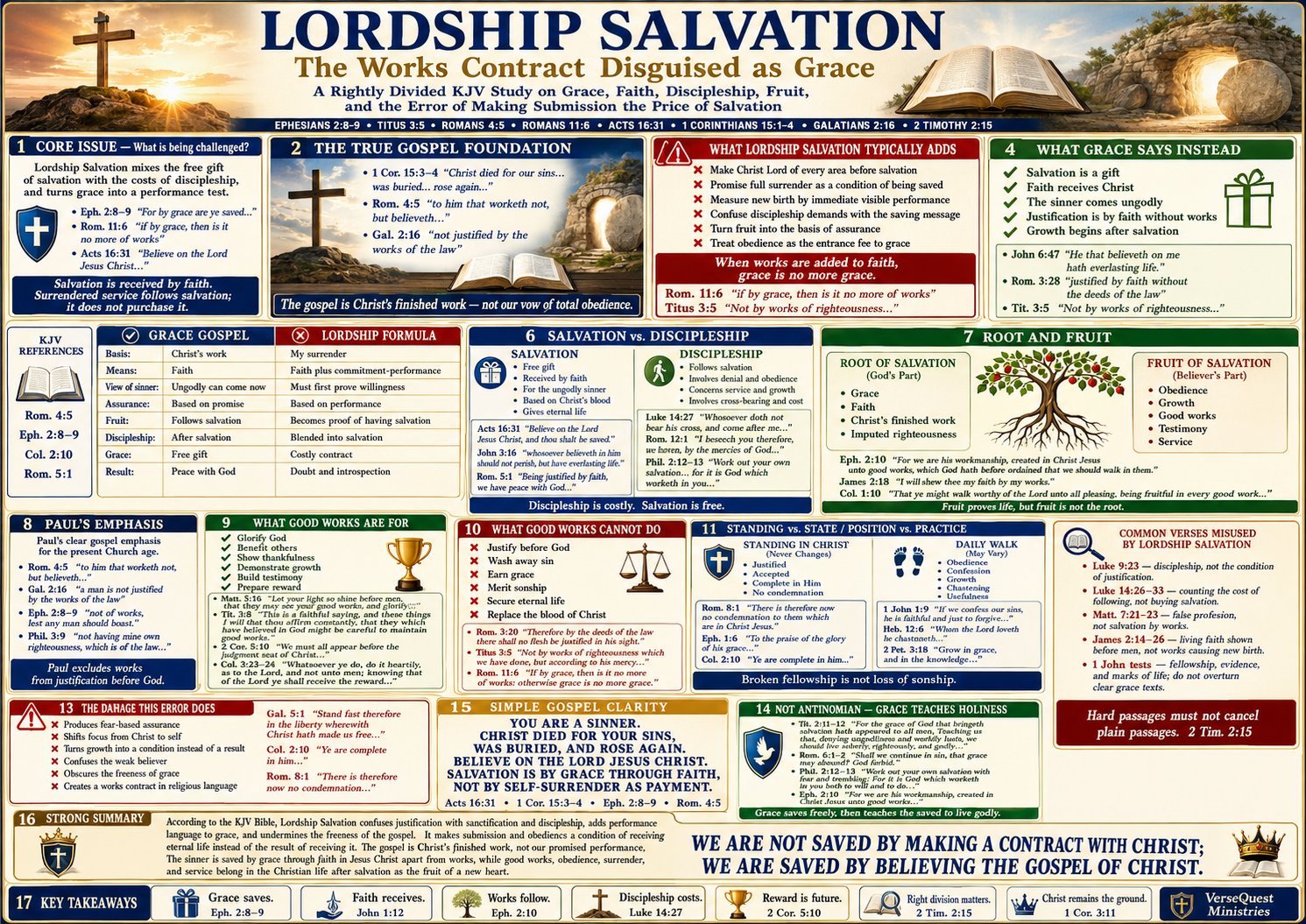
- Lordship Salvation Exposed – The Works Contract Disguised as Grace and the Difference Between Salvation and Discipleship (KJV Bible Study Chart)
- Examine Lordship Salvation with this detailed KJV chart distinguishing the free gift of salvation from costly discipleship, justification from sanctification, and the root of grace from the fruit of Christian…
- $3.99
- Add to cart
-
-
Righteousness of Christ
-
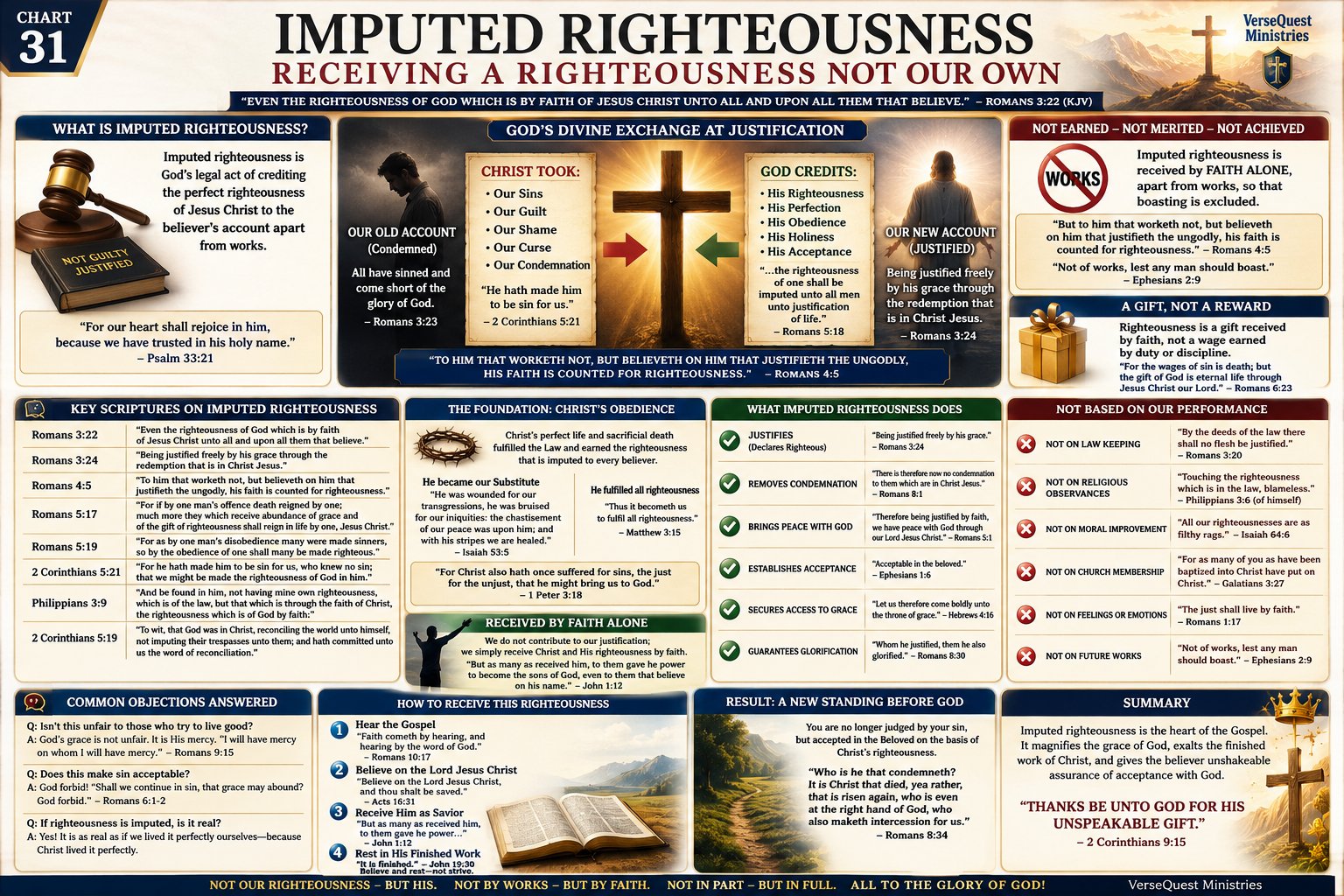
- Imputed Righteousness – The Righteousness of Jesus Christ Credited to the Believer by Faith Alone (KJV Bible Study Chart)
- Understand imputed righteousness with this detailed KJV chart explaining the divine exchange, justification by faith, Christ’s righteousness credited to the believer, peace with God, no condemnation, and acceptance apart from…
- $3.99
- Add to cart
-
-
Doctrine
-
-50%
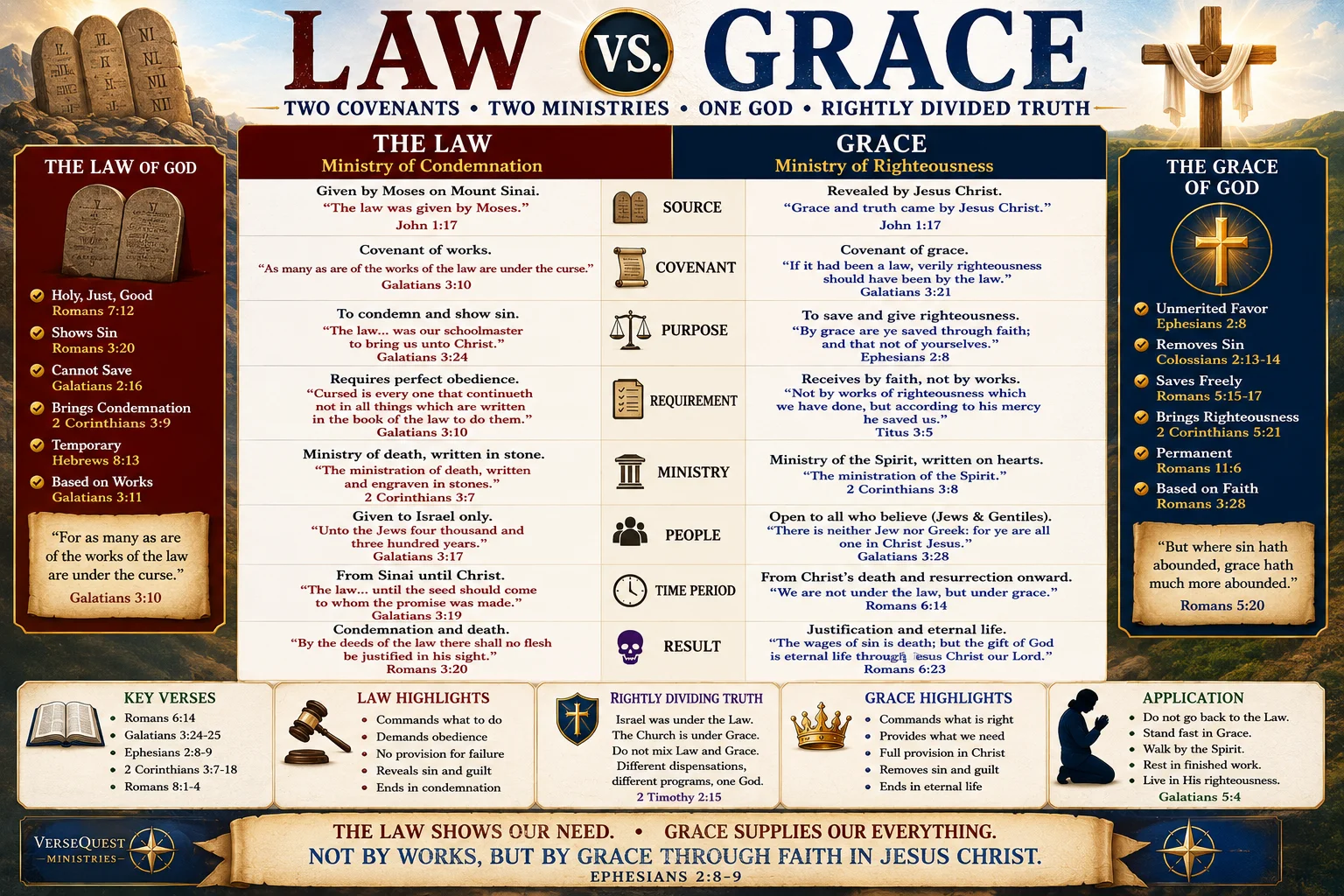
- Law vs. Grace Chart — KJV Rightly Divided
- Premium printable KJV Bible study chart comparing Law and Grace from a rightly divided perspective, showing works versus faith, condemnation versus righteousness, and Moses versus Christ.
- Original price was: $10.00.$4.99Current price is: $4.99.
- Add to cart
-
-50%
-
How To Be Saved
-
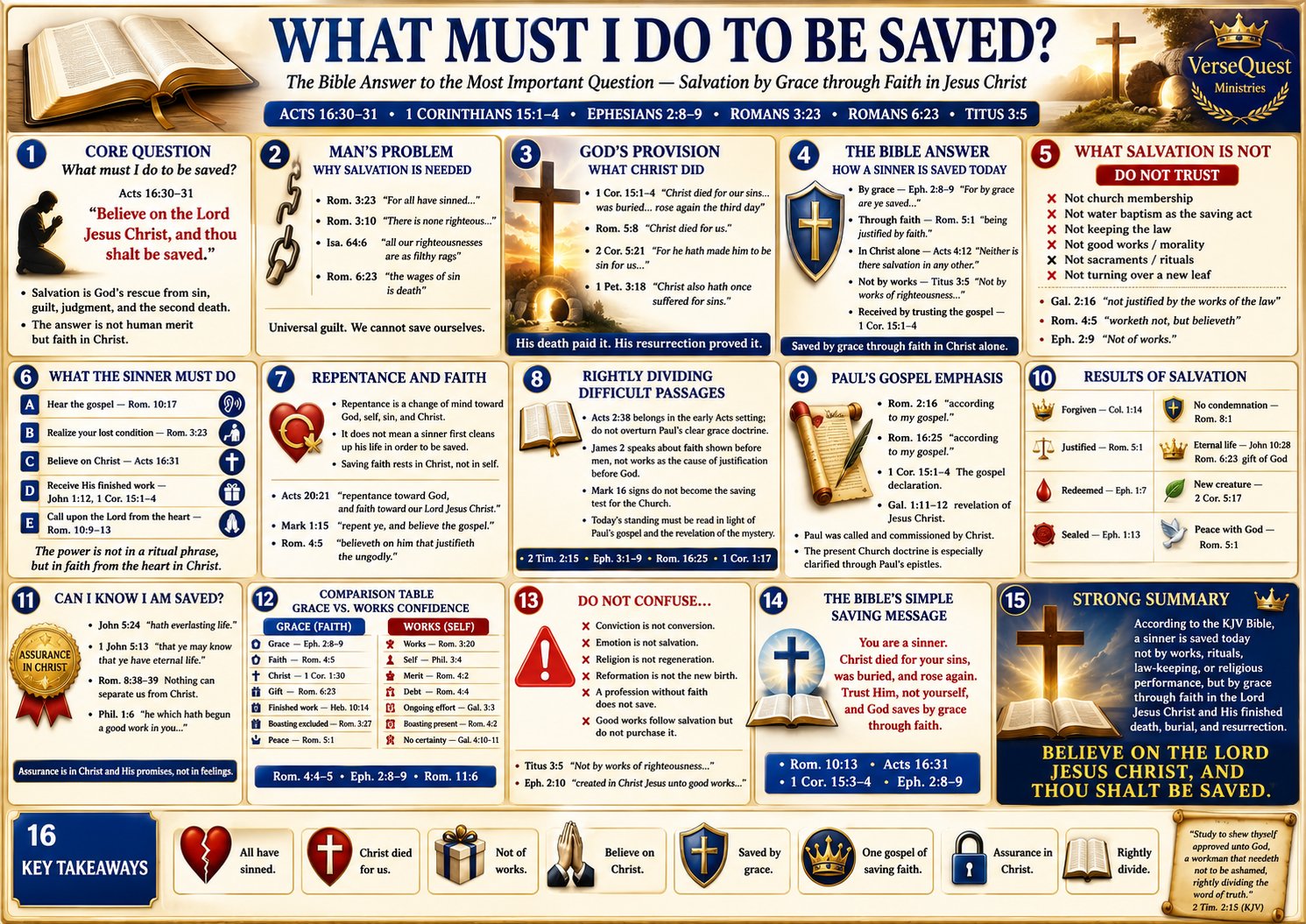
- What Must I Do to Be Saved? – Salvation by Grace Through Faith in Jesus Christ (KJV Bible Study Chart)
- Discover the Bible’s answer to “What must I do to be saved?” with this detailed KJV chart covering sin, Christ’s gospel, grace, faith, repentance, assurance, eternal life, and salvation apart…
- $3.99
- Add to cart
-
-
The Gospel of the Kingdom
-
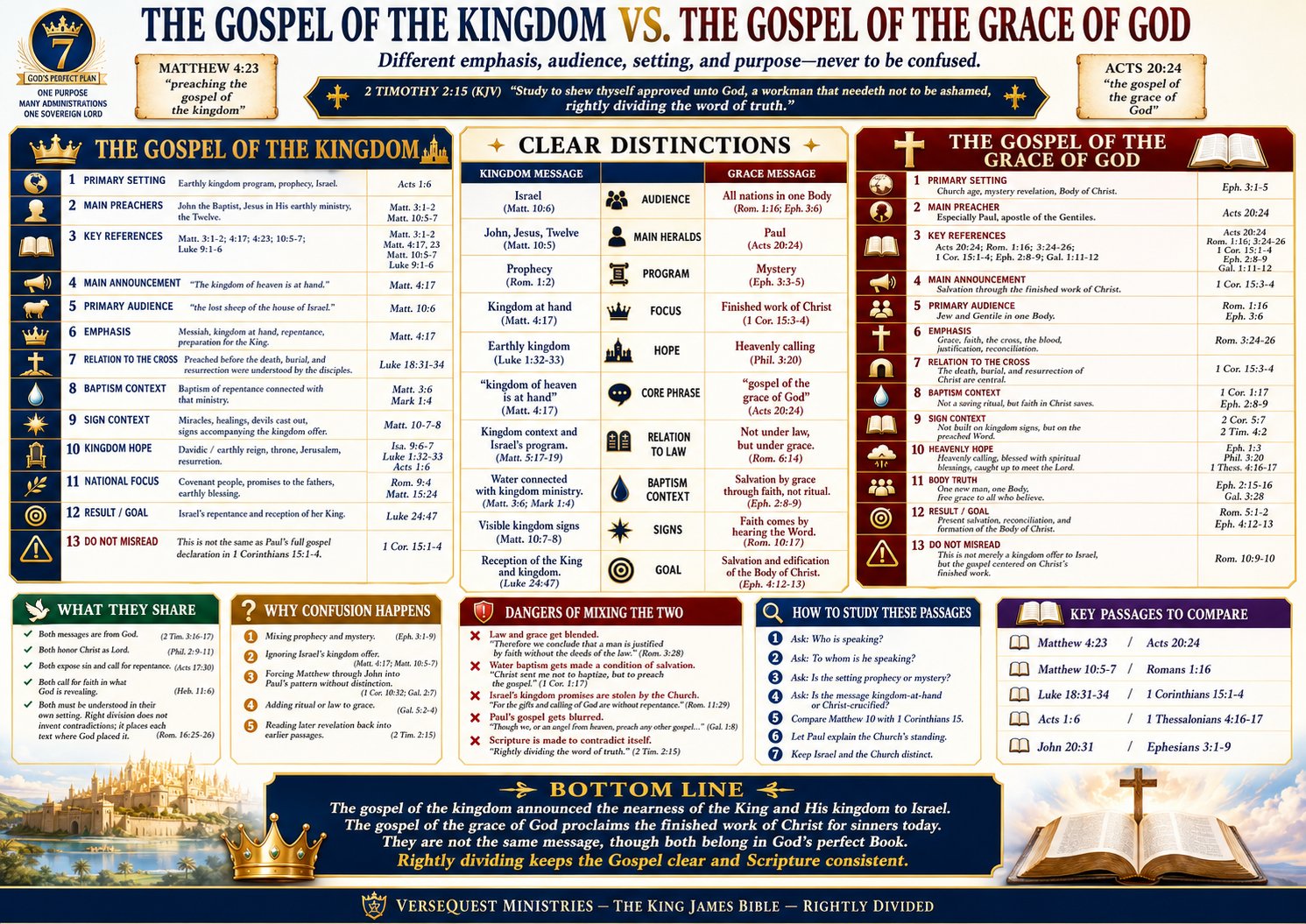
- The Gospel of the Kingdom vs. the Gospel of the Grace of God – KJV Right Division Bible Study Chart
- Compare the gospel of the kingdom and the gospel of the grace of God with this detailed KJV chart covering audience, message, prophecy, mystery, baptism, signs, salvation, and right division.
- $3.99
- Add to cart
-