
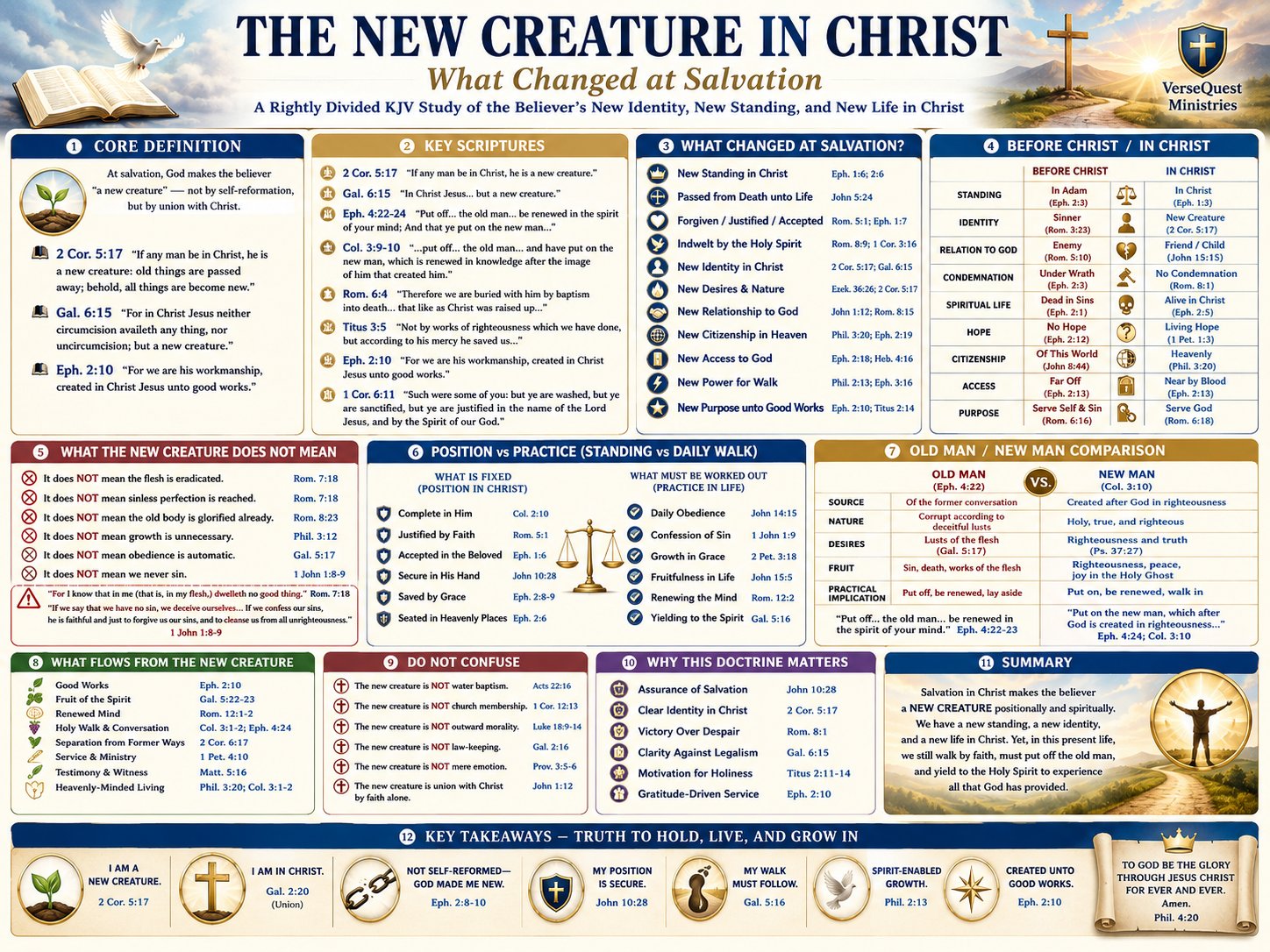
The New Creature in Christ – What Changed at Salvation: The Believer’s New Identity, Standing, and Life (KJV Bible Study Chart)
Understand what changed at salvation with this detailed KJV chart covering the believer’s new standing, identity, life, access to God, indwelling Spirit, old man versus new man, position versus practice, sanctification, and good works.
$3.99
Description
The New Creature in Christ: What Changed at Salvation is a detailed KJV Bible study chart explaining the spiritual transformation, new standing, new identity, and new life God gives to every sinner who believes the gospel of the Lord Jesus Christ.
Built around 2 Corinthians 5:17, Galatians 6:15, Ephesians 2:10, Ephesians 4:22–24, Colossians 3:9–10, Romans 6:4, Titus 3:5, and 1 Corinthians 6:11, this chart distinguishes the believer’s completed position in Christ from his continuing practical growth in the Christian life.
Second Corinthians 5:17 declares, “Therefore if any man be in Christ, he is a new creature: old things are passed away; behold, all things are become new.” Salvation is not merely a sinner making better choices, improving his habits, joining a church, adopting Christian vocabulary, or turning over a new leaf. God places the believer into Jesus Christ and gives him an entirely new spiritual standing.
The new creature is not created through human self-reformation. It is not the old sinner repaired, polished, educated, baptized, and made religious. It is new life produced by God through union with Jesus Christ.
The chart begins with the core definition: at salvation, God makes the believer “a new creature” through spiritual union with His Son. The source of this new life is not human effort but the grace, power, and workmanship of God.
Galatians 6:15 teaches that neither circumcision nor uncircumcision provides spiritual standing. Religious distinctions, fleshly ceremonies, and outward identity cannot create new life. What matters is “a new creature.”
Ephesians 2:10 states that believers are God’s workmanship, “created in Christ Jesus unto good works.” Good works do not create the new creature. They flow from the life God has already created.
This order is essential. The sinner is not saved by producing good works. He is saved by grace through faith in Jesus Christ and then created unto good works.
The chart gathers key Scriptures defining this transformation. Second Corinthians 5:17 announces the new creature. Galatians 6:15 places the new creation above outward religious distinctions.
Ephesians 4 commands believers to put off the old man and put on the new man, which is created after God in righteousness and true holiness.
Colossians 3 describes the new man as renewed in knowledge after the image of the One who created him. The Christian possesses new spiritual life, but his thinking must continue to be renewed through the written Word of God.
Romans 6:4 connects the believer’s union with Christ’s death and resurrection with walking in “newness of life.” The believer is not merely forgiven so that he may return unchanged to the old life. He is called to walk according to the new position God has given him.
Titus 3:5 declares that salvation is not by works of righteousness but by God’s mercy, through the washing of regeneration and renewing of the Holy Ghost.
First Corinthians 6:11 reminds believers that they were washed, sanctified, and justified in the name of the Lord Jesus and by the Spirit of God. Their former sins described what they once were; those sins no longer define their standing in Christ.
A major section of the chart asks, “What changed at salvation?” The answer is not one isolated improvement but an entire new spiritual position.
The believer receives a new standing in Christ. Before salvation, he stood in Adam beneath sin and condemnation. After salvation, he stands in Jesus Christ, accepted according to the righteousness and finished work of the Saviour.
The believer passes from death unto life. John 5:24 states that the person who hears Christ’s Word and believes on the Father who sent Him has everlasting life, will not come into condemnation, and has passed from death unto life.
This is not merely a future promise. Eternal life becomes the believer’s present possession at the moment of faith.
The believer is forgiven, justified, and accepted. Forgiveness removes the debt of sin. Justification gives the believer a righteous legal standing before God. Acceptance places him in the Beloved rather than leaving him to earn divine favour.
The believer is indwelt by the Holy Spirit. Romans 8:9 teaches that the Spirit of God dwells in everyone who belongs to Christ. First Corinthians 3:16 describes believers as the temple of God.
The Holy Spirit is not a temporary visitor who remains only while the Christian performs well. He seals, indwells, teaches, sanctifies, comforts, and empowers the believer.
The believer receives a new identity in Jesus Christ. He is no longer defined merely by earthly history, former failures, family background, religious heritage, social standing, nationality, or past sin.
His central identity is now found “in Christ.” He is a child of God, a member of Christ’s Body, accepted in the Beloved, spiritually seated in heavenly places, and complete in the Saviour.
The believer receives new desires and a new nature. This does not mean that every old appetite disappears immediately or that spiritual maturity arrives at once.
It means God has created within the believer a new spiritual life that loves truth, desires holiness, responds to Scripture, seeks fellowship with God, and opposes the sinful desires of the flesh.
Ezekiel’s promise of a new heart belongs within Israel’s covenant and prophetic setting, but it illustrates the broader biblical truth that God alone can produce inward spiritual transformation. Present Church doctrine reveals the believer as a new creature through union with Christ.
The believer enters a new relationship with God. Before salvation, he was alienated and at enmity. In Christ, he is reconciled, received, and brought near.
Romans 5:10 teaches that enemies are reconciled to God through the death of His Son. The gospel does not merely change the sinner’s opinion of himself; it changes his standing in relation to God.
The believer receives a new citizenship in heaven. Philippians 3:20 states, “For our conversation is in heaven; from whence also we look for the Saviour, the Lord Jesus Christ.”
The Christian continues to live physically upon earth, but his spiritual citizenship, hope, inheritance, and ultimate destiny are heavenly.
He also receives new access to God. Ephesians 2:18 teaches that believers have access by one Spirit unto the Father. Hebrews 4:16 invites them to come boldly to the throne of grace.
The believer does not require an earthly priesthood, religious mediator, sacramental system, or institutional gatekeeper to approach God. His access rests upon Jesus Christ.
The Christian receives new power for his walk. Philippians 2:13 teaches that God works in believers both to will and to do of His good pleasure.
Ephesians 3:16 speaks of being strengthened with might by God’s Spirit in the inner man. Christian living is therefore not the old flesh attempting to imitate Christ through determination alone.
The believer receives a new purpose unto good works. Ephesians 2:10 and Titus 2:14 teach that those redeemed by Christ should become zealous of good works.
Good works are not the root of salvation, but they are the proper fruit of salvation. Grace saves freely and then teaches the believer to live soberly, righteously, and godly.
The chart provides a direct comparison between the sinner before Christ and the believer in Christ.
Before salvation, the sinner’s standing is in Adam. In Christ, the believer possesses a new standing in the Saviour.
Before Christ, his identity is that of a sinner beneath Adamic condemnation. In Christ, he is a new creature.
Before Christ, his relationship to God is one of alienation and enmity. In Christ, he becomes God’s child and friend through reconciliation.
Before Christ, he remains under wrath. In Christ, there is no condemnation.
Before Christ, he is spiritually dead in sins. In Christ, he is made alive.
Before Christ, he has no biblical hope. In Christ, he possesses a living hope grounded in resurrection and eternal promise.
Before Christ, his citizenship is of this present world. In Christ, his citizenship is heavenly.
Before Christ, he is far off. In Christ, he is made near by the blood of Jesus Christ.
Before Christ, he serves sin and self. In Christ, he is liberated to serve God in righteousness.
This comparison magnifies the greatness of salvation. God does not merely help the sinner cope with his old standing. He removes him from Adam’s condemned position and places him into Jesus Christ.
The chart carefully explains what the new creature does not mean. First, it does not mean the flesh has been eradicated.
Romans 7:18 states, “For I know that in me (that is, in my flesh,) dwelleth no good thing.” Paul remained honest about the flesh even after salvation.
The new creature does not mean sinless perfection has already been reached. First John warns believers that claiming to have no sin is self-deception.
The believer possesses a perfect standing in Christ while continuing to require confession, correction, growth, renewal, and practical sanctification.
The new creature does not mean the believer’s old body has already been glorified. Romans 8 teaches Christians to wait for the redemption of the body.
The believer’s spirit has been made alive, but his mortal body remains subject to weakness, suffering, aging, sickness, temptation, and death until resurrection or the Rapture.
The new creature does not mean growth is unnecessary. Philippians 3 reveals Paul pressing forward rather than claiming he had already attained full practical perfection.
Second Peter 3:18 commands believers to grow in grace and in the knowledge of Jesus Christ. New life begins at salvation, but maturity develops over time.
The new creature does not mean obedience becomes automatic. Galatians 5 describes a continuing conflict between the flesh and the Spirit.
The believer must choose to walk in the Spirit, put off the old conduct, renew the mind, mortify sinful practices, and obey God’s Word.
The new creature does not mean a Christian will never sin. First John 1:8–9 addresses believers who still require confession and cleansing in fellowship.
The possibility of sin does not undo the reality of the new birth. It demonstrates why believers must remain dependent upon the Holy Spirit and the written Word.
A central section distinguishes position from practice, or standing from daily walk.
The believer’s position in Jesus Christ is fixed. He is complete in Christ, justified by faith, accepted in the Beloved, secure in the Saviour’s hand, saved by grace, and spiritually seated in heavenly places.
These blessings do not rise and fall with emotions, daily performance, spiritual energy, or the opinion of other people.
The believer’s practice must be worked out in daily life. He must obey, confess sin, grow in grace, bear fruit, renew his mind, and yield to the Holy Spirit.
Position is what God has made the believer in Christ. Practice is how the believer lives because of that position.
Standing is settled by grace. Walk develops through obedience.
The chart prevents two opposite errors. The first is legalism, which makes daily performance the basis of acceptance. The second is carelessness, which treats secure standing as permission for an ungodly walk.
The biblical order preserves both assurance and accountability. The believer rests in Christ for acceptance and then seeks to honour Christ through obedience.
The chart compares the old man and new man. The old man belongs to the former conversation and is corrupt according to deceitful lusts.
The new man is created after God in righteousness and true holiness.
The old man desires the lusts of the flesh. The new man desires righteousness, truth, fellowship, and obedience.
The old man produces sin, corruption, death, and the works of the flesh. The new man produces righteousness, peace, joy, holiness, and the fruit of the Spirit.
The old man must be put off in practice. The new man must be put on and continually renewed.
This language does not teach that the Christian possesses two independent persons inside him. It describes the conflict between the old fleshly principle and the new spiritual life in Christ.
The believer remains one responsible person. He cannot excuse sin by blaming the old man as though another individual acted without his consent.
The old man does not need improvement; he was judged at the cross. The believer must reckon him dead, refuse his demands, and put off his former conduct.
The new man must be nourished through Scripture, prayer, fellowship, obedience, sound doctrine, service, and walking in the Spirit.
Another major section explains what flows from the new creature. First, good works should follow.
Ephesians 2:10 teaches that believers were created in Christ Jesus unto good works. These works do not purchase salvation, but they glorify God and display the reality of new life.
Second, the fruit of the Spirit should develop. Love, joy, peace, longsuffering, gentleness, goodness, faith, meekness, and temperance reveal the Spirit’s influence.
Third, the believer should possess a renewed mind. Romans 12 calls for transformation through the renewing of the mind.
The world, flesh, culture, tradition, and personal experience have trained the sinner to think incorrectly. Scripture teaches the believer to judge life according to divine truth.
Fourth, the new creature should produce a holy walk and conversation. Colossians 3 and Ephesians 4 call believers to reject lying, anger, corrupt speech, bitterness, malice, uncleanness, and covetousness.
Holiness is not the ground of justification, but it is the proper response of someone created in righteousness.
Fifth, the believer should practise separation from former ways. Second Corinthians 6 warns against unequal yokes and unclean spiritual fellowship.
Separation is not isolation, pride, or refusal to show love. It is the recognition that the believer now belongs to Christ and should not return to spiritual partnerships that contradict His truth.
Sixth, the new creature should enter service and ministry. First Peter 4 teaches believers to use the gifts they have received as faithful stewards of God’s grace.
Every Christian does not possess the same role, ability, platform, or public ministry, but every believer has opportunities to serve.
Seventh, the new creature should produce testimony and witness. Matthew 5 describes believers as light in the world.
A changed life cannot replace the spoken gospel, but it should support the message rather than contradict it.
Eighth, the believer should become heavenly minded. Philippians 3 and Colossians 3 call Christians to seek things above.
Heavenly mindedness does not mean neglecting earthly responsibility. It means performing earthly duties with eternal values, heavenly citizenship, and Christ’s return in view.
The chart includes an important “Do Not Confuse” section. The new creature must not be confused with water baptism.
Baptism may serve as an outward testimony in its proper setting, but water cannot create the new birth, place a sinner into Christ spiritually, or produce the righteousness of God.
The new creature must not be confused with church membership. Joining a congregation does not automatically join a sinner to Jesus Christ.
A person may possess his name upon a church roll while remaining absent from the Lamb’s book of life. Spiritual union with Christ comes through faith in the gospel.
The new creature must not be confused with outward morality. The Pharisees possessed impressive outward religion while remaining inwardly corrupt.
Moral improvement may benefit society, family, employment, and relationships, but it cannot produce spiritual life.
The new creature must not be confused with law-keeping. Galatians declares that neither circumcision nor uncircumcision creates the new creature.
The Mosaic law can expose sin but cannot impart life. The new creation comes through Jesus Christ.
The new creature must not be confused with emotional experience. Feelings may accompany salvation, but emotion is not regeneration.
A person may cry, rejoice, tremble, feel relief, or experience excitement without believing the gospel. Another person may trust Christ quietly and possess the same complete salvation.
The new creature is union with Christ by faith. John 1:12 teaches that those who receive Christ by believing on His name receive the right to become the sons of God.
The doctrine matters because it gives assurance of salvation. John 10:28 promises eternal life and security to Christ’s sheep.
The believer’s confidence rests upon his position in Jesus Christ rather than the strength of his emotions or the perfection of his daily walk.
The doctrine provides clear identity. Second Corinthians 5:17 teaches that the believer is no longer defined by the old life.
This protects Christians from living permanently beneath labels created by former sins, human opinion, past shame, family failure, or religious condemnation.
The doctrine brings victory over despair. Romans 8:1 announces no condemnation in Christ.
The believer may require correction, restoration, and growth, but he does not need to live as though Calvary accomplished nothing.
The doctrine guards against legalism. Galatians teaches that outward religious ordinances do not create the new creature.
The doctrine motivates holiness. Titus 2 teaches that grace instructs the saved person to deny ungodliness and live righteously.
The doctrine produces gratitude-driven service. Ephesians 2:10 places works after grace. The believer serves because he has been saved, not in order to purchase salvation.
The chart’s summary is clear: salvation in Jesus Christ makes the believer a new creature positionally and spiritually.
He receives a new standing, a new identity, a new relationship with God, new access, new life, new desires, new citizenship, new power, and a new purpose.
Yet during this present earthly life, he continues to walk by faith, put off the old man, renew his mind, and yield to the Holy Spirit.
The believer must not confuse the perfection of his position with the present development of his practice. He is complete in Christ, but he should continue growing into the practical experience of what God has already provided.
The key takeaways are memorable. The believer can say, “I am a new creature.” He can say, “I am in Christ.” He was not self-reformed; God made him new.
His position is secure, but his walk must follow. Growth is enabled by the Holy Spirit, and he has been created unto good works.
The final glory belongs to God through Jesus Christ. Salvation begins with grace, rests in Christ, is received by faith, and produces a life increasingly shaped by the Word and Spirit of God.
This resource is ideal for personal Bible study, new-believer discipleship, salvation and regeneration teaching, Christian-identity studies, standing-versus-state instruction, sanctification classes, pastoral counseling, recovery from shame and failure, Sunday school, homeschool Bible curriculum, Christian schools, Bible institutes, sermon preparation, and church membership instruction.
New creature in Christ, what changed at salvation, new creation, new identity in Christ, new standing before God, passed from death unto life, justified and accepted, indwelling Holy Spirit, child of God, heavenly citizenship, access to God, old man versus new man, position versus practice, standing versus daily walk, created unto good works, renewed mind, spiritual growth, practical sanctification, union with Christ, salvation by grace
The new creature is produced by God through spiritual union with Jesus Christ.
Salvation is not self-reformation, moral improvement, religious membership, or outward ceremony.
Second Corinthians 5:17 teaches that anyone in Christ is a new creature.
The phrase “in Christ” identifies the believer’s new spiritual position and source of life.
Old things passing away does not mean every memory, habit, temptation, or physical weakness vanishes instantly.
It means the believer’s former condemned standing in Adam has been replaced by a new standing in Jesus Christ.
The new creature is not created by water baptism, circumcision, law-keeping, church membership, or personal merit.
Galatians 6:15 places the new creature above outward religious distinctions.
The believer is God’s workmanship, created in Christ Jesus unto good works.
Good works follow salvation as fruit; they do not create the new life.
At salvation, the believer is justified, forgiven, redeemed, accepted, reconciled, and delivered from condemnation.
He passes from spiritual death unto eternal life.
He is indwelt and sealed by the Holy Spirit.
He receives a new identity as a child of God and member of Christ’s Body.
He receives direct access to the Father through Jesus Christ and the Holy Spirit.
He receives heavenly citizenship and a living hope.
He receives new power for Christian obedience, though he must still yield to the Spirit.
The believer’s standing is fixed in Christ. His daily walk may vary.
Standing includes justification, acceptance, completeness, sonship, security, and no condemnation.
Practice includes obedience, confession, growth, fruitfulness, service, fellowship, chastening, and testimony.
Failure in practice does not erase the believer’s position, but it can damage joy, fellowship, usefulness, and reward.
The new creature does not mean the flesh has been eradicated.
The believer still possesses an unglorified body and faces the old nature’s sinful demands.
The new creature does not mean sinless perfection has been achieved.
First John teaches believers to confess sin honestly rather than claim perfection.
The new creature does not make spiritual growth automatic.
The believer must study Scripture, renew his mind, pray, fellowship, obey, and walk in the Spirit.
The old man is connected with the former conversation and deceitful lusts.
The new man is created after God in righteousness and true holiness.
The old man must be put off in practical conduct.
The new man must be put on through renewed thinking and obedience.
The flesh cannot be rehabilitated into righteousness. It must be denied and mortified.
The new man is renewed in knowledge after the image of the Creator.
Scripture is essential to the believer’s practical transformation.
The fruit of the Spirit should increasingly appear in the believer’s life.
Good works, service, witness, holiness, separation, and heavenly mindedness should flow from new life.
These fruits do not maintain salvation; they express and honour it.
The believer should not measure his identity primarily through his past, failures, emotions, or the opinions of others.
His central identity is established by God’s declaration that he is in Christ.
The doctrine gives assurance while also motivating obedience.
Grace does not leave the believer unchanged in purpose. It creates him unto good works.
The Christian is not saved by becoming good enough; he is saved by Christ and then called to walk worthy of his new position.
The proper order is grace, faith, union with Christ, new life, renewed thinking, spiritual growth, good works, and faithful service.
The believer is already complete in Christ, but his daily conduct should increasingly display the life God placed within him.
New-creature Bible studies, Christian identity teaching, new-believer discipleship, explaining regeneration, salvation doctrine, standing-versus-state studies, old-man and new-man instruction, practical sanctification, assurance-of-salvation counseling, overcoming shame and condemnation, walking in the Spirit, teaching good works after salvation, church membership classes, pastoral counseling, Sunday school lessons, homeschool Bible curriculum, Christian school teaching, Bible institute classes, sermon preparation
King James Bible, Strong’s Concordance, Thompson Chain-Reference Bible, Treasury of Scripture Knowledge, Nave’s Topical Bible, Second Corinthians 5 study notes, Romans 6–8 commentary materials, Ephesians 2 and 4 worksheets, Colossians 3 studies, new-believer discipleship workbook, standing-versus-state charts, two-natures resources, walking-in-the-Spirit studies, assurance-of-salvation materials, Christian-identity Scripture cards, Pauline epistle outlines, VerseQuest salvation and Christian Living charts
Related products
-
Kingdom Hall
-
-71%
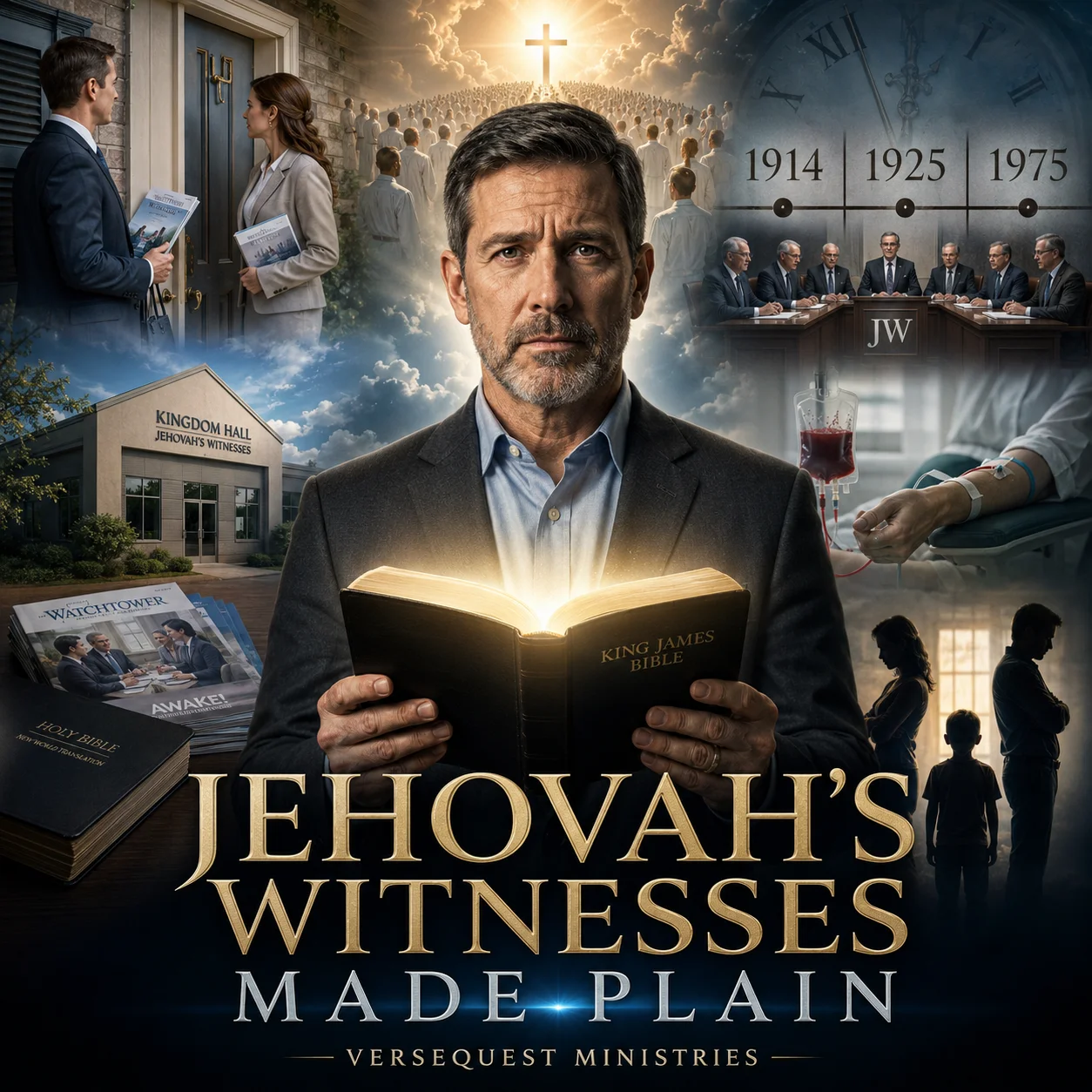
- Jehovah’s Witnesses Made Plain – 574-Page KJV Watchtower Study
- A massive 574-page VerseQuest study exposing the Watchtower system from the King James Bible. This detailed 100-essay book covers the false Christ, false gospel, New World Translation, failed prophecy, 144,000,…
- Original price was: $34.99.$9.99Current price is: $9.99.
- Add to cart
-
-71%
-
Doctrine Series
-
-14%
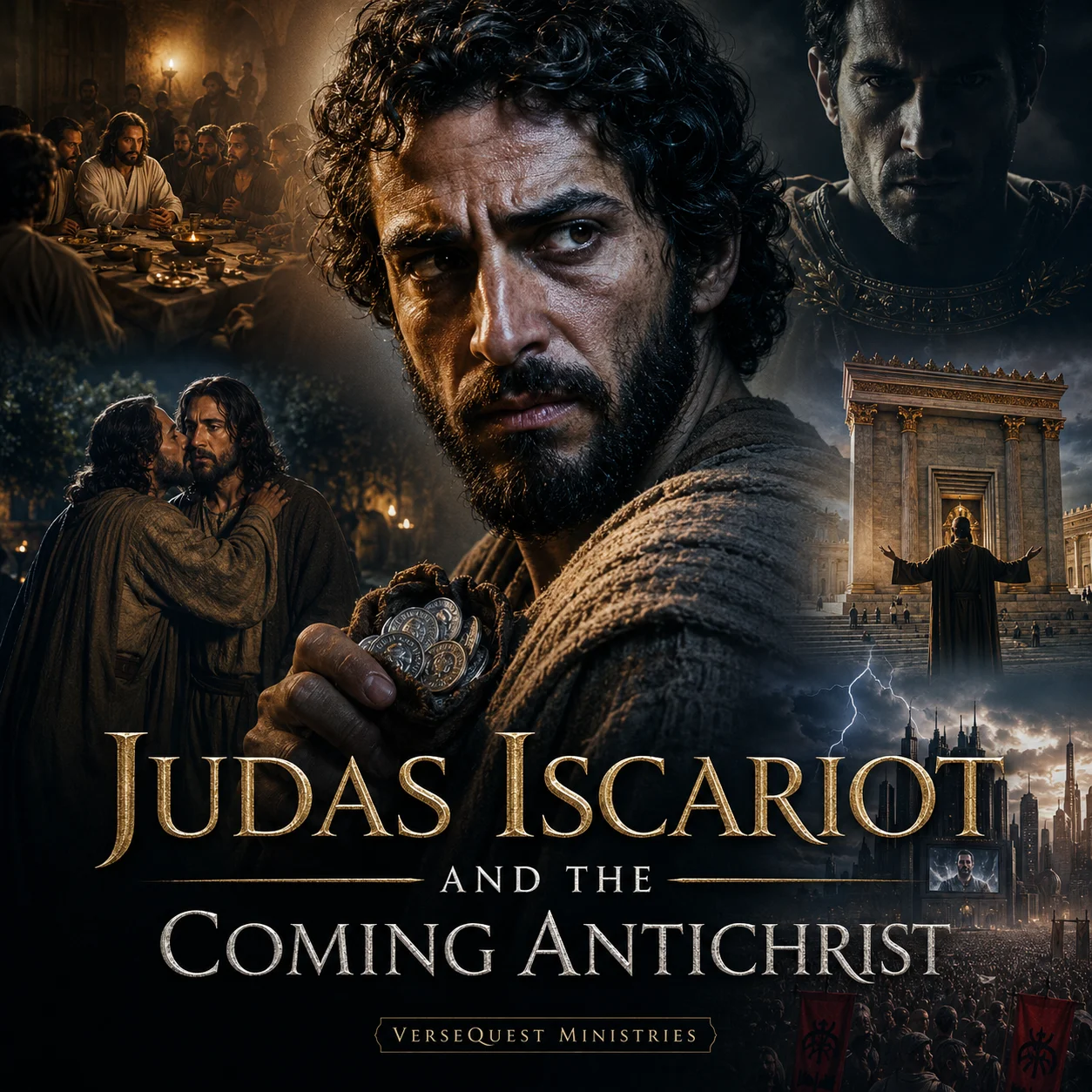
- Judas Iscariot and the Coming Antichrist – Premium KJV Prophecy Study
- A massive 459-page premium KJV prophecy study tracing the biblical connection between Judas Iscariot, the son of perdition, and the coming Antichrist. This detailed VerseQuest Ministries PDF examines Judas’ betrayal,…
- Original price was: $34.99.$29.99Current price is: $29.99.
- Add to cart
-
-14%
-
Christology Studies
-
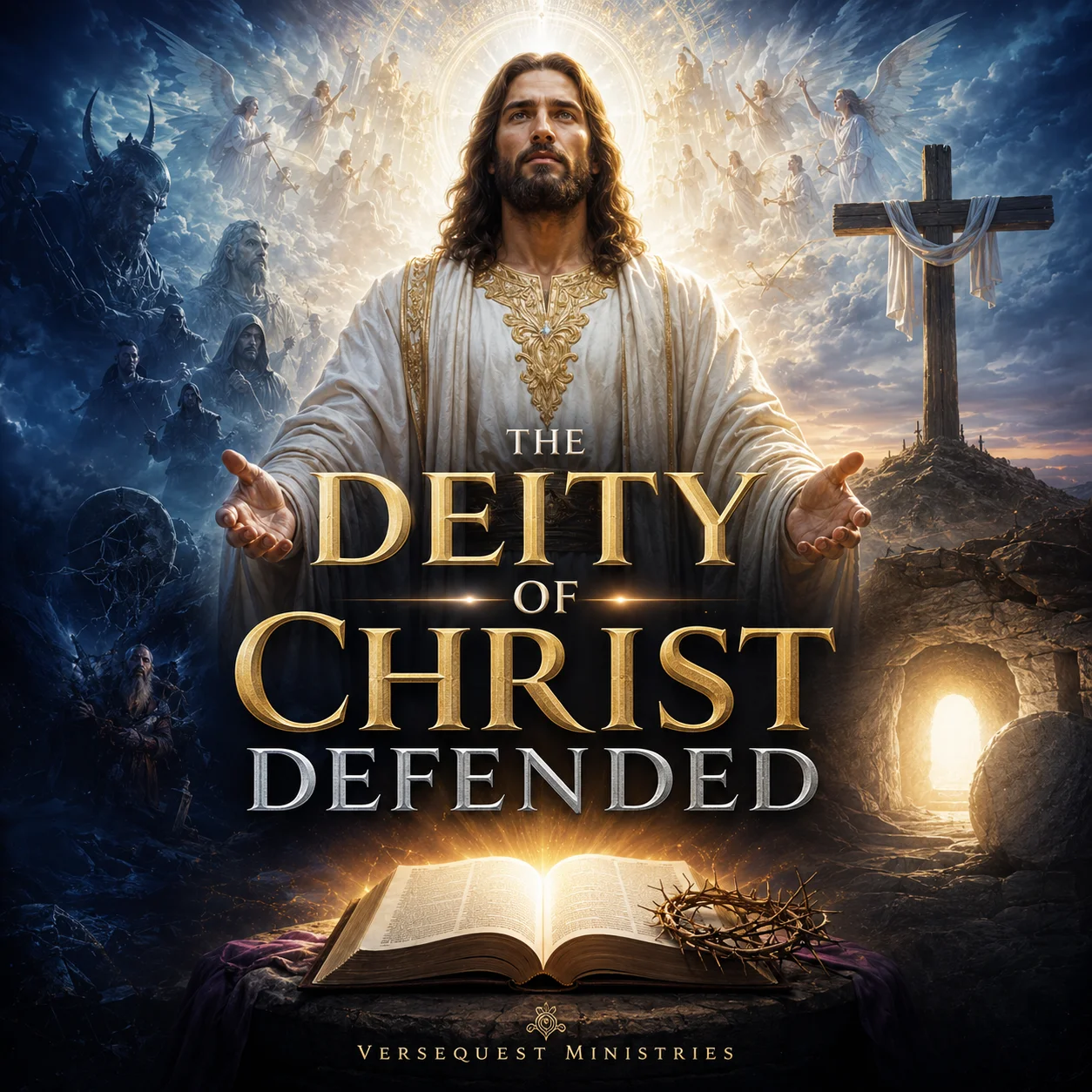
- The Deity of Christ Defended — 66 KJV Studies Proving Jesus Christ Is God Manifest in the Flesh
- he Deity of Christ Defended is a 444-page premium KJV Bible study defending the full deity of the Lord Jesus Christ. This 66-study book proves from Scripture that Jesus is…
- $29.99
- Add to cart
-
-
Revelation
-
-71%
- Moses and Elijah: The Two Witnesses Made Plain
- Moses and Elijah: The Two Witnesses Made Plain is a 636-page premium VerseQuest PDF study proving from Scripture that the Two Witnesses of Revelation 11 are Moses and Elijah. This…
- Original price was: $34.99.$9.99Current price is: $9.99.
- Add to cart
-
-71%
-
Jesus Christ / Christology
-
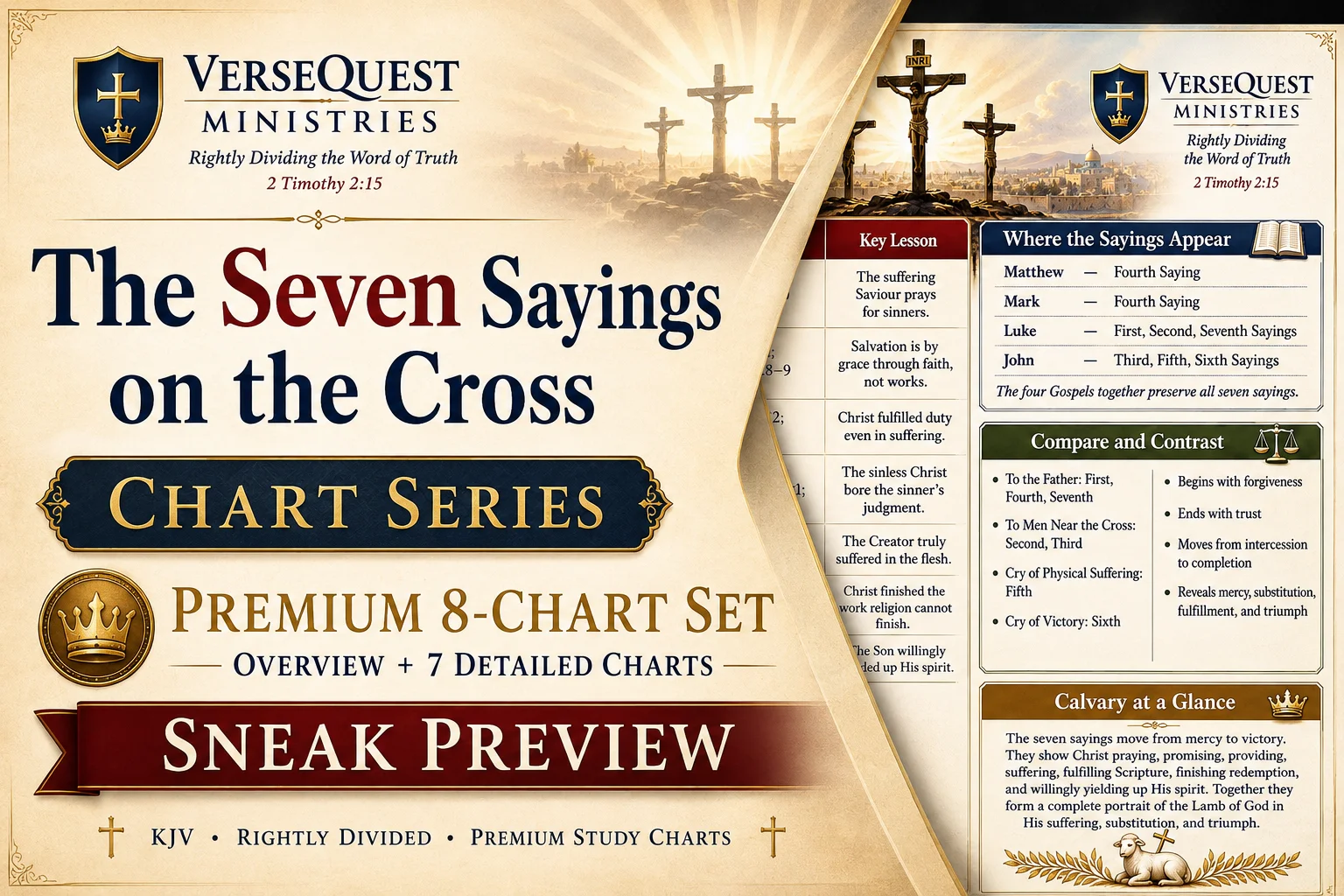
- The Seven Sayings on the Cross – Premium 8-Chart KJV Study Set
- A premium VerseQuest Ministries digital PDF study set on The Seven Sayings on the Cross, featuring an overview chart plus seven detailed KJV Bible study charts. This resource examines Calvary,…
- $12.99
- Add to cart
-