
The Five Crowns – Rewards, Faithful Service, and Accountability at the Judgment Seat of Christ (KJV Bible Study Chart)
Study the Five Crowns and the Judgment Seat of Christ with this detailed KJV chart covering Christian service, motive, stewardship, the testing of works, salvation versus reward, loss of reward, endurance, soul-winning, discipline, and faithful shepherding.
$3.99
Description
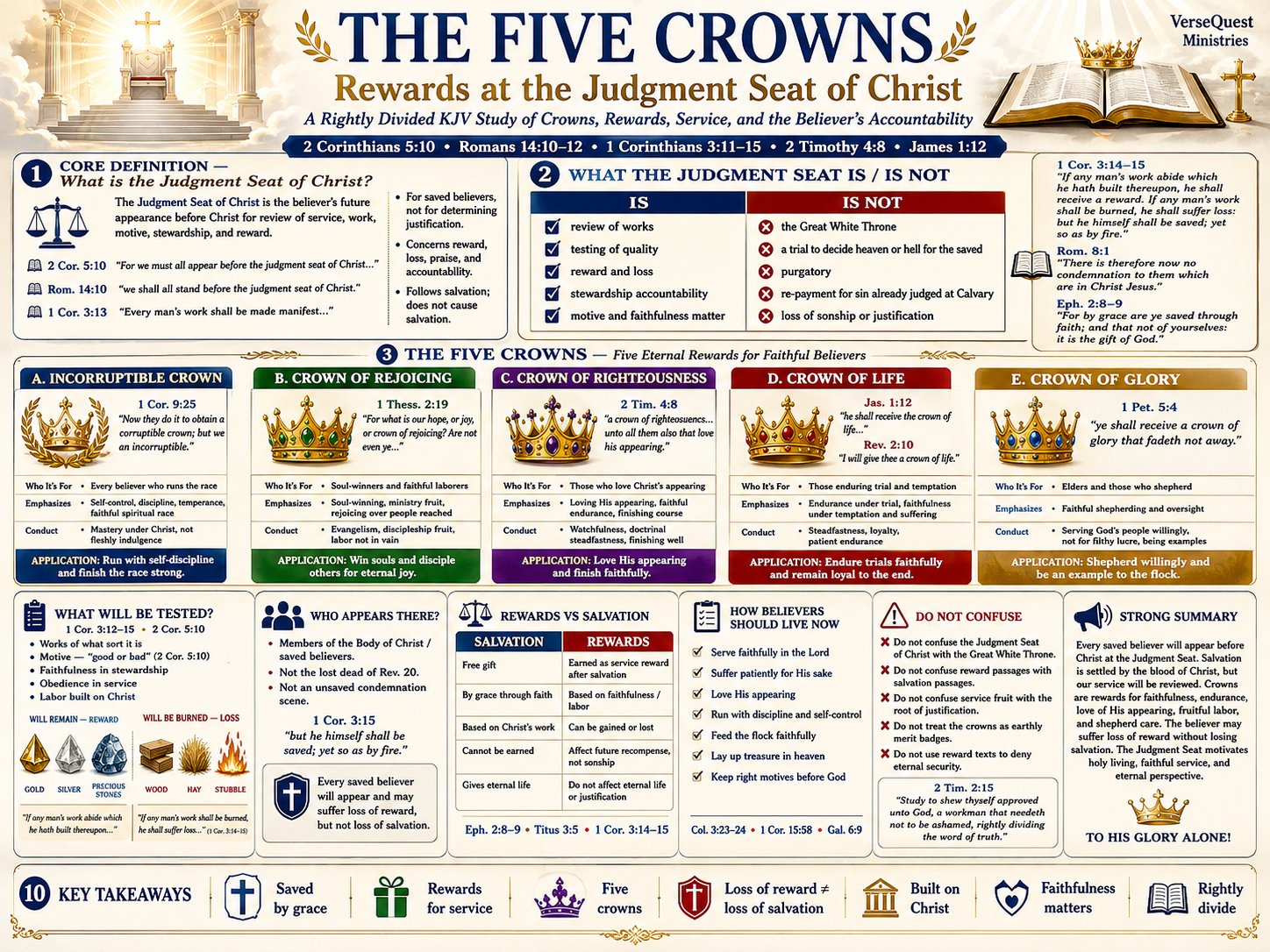
The Five Crowns: Rewards at the Judgment Seat of Christ is a detailed KJV Bible study chart explaining the believer’s future appearance before Jesus Christ, the testing of Christian service, the difference between salvation and reward, and the five crowns commonly identified in the New Testament as rewards for faithful believers.
Built around 2 Corinthians 5:10, Romans 14:10–12, 1 Corinthians 3:11–15, 1 Corinthians 9:25, 1 Thessalonians 2:19, 2 Timothy 4:8, James 1:12, Revelation 2:10, and 1 Peter 5:4, this chart presents the Judgment Seat of Christ as a serious but distinctly Christian judgment. It concerns the believer’s work, motive, stewardship, faithfulness, endurance, and reward after salvation. It is not a trial to determine whether a saved person will enter heaven or be cast into hell.
Second Corinthians 5:10 declares, “For we must all appear before the judgment seat of Christ.” Every believer will personally stand before the Lord Jesus Christ and give account of the Christian life he lived after salvation. Earthly reputation, public applause, denominational position, platform size, financial success, and outward activity will not settle the matter. Jesus Christ will examine the truth of the work, the motive behind it, and the faithfulness with which it was performed.
Romans 14:10–12 teaches that every believer will stand before the Judgment Seat and give account of himself to God. The believer will not answer for another Christian’s stewardship, calling, opportunities, or failures. Each servant will answer for the light, time, gifts, responsibilities, truth, and opportunities entrusted personally to him.
The Judgment Seat of Christ follows salvation; it does not cause salvation. The sinner is saved by grace through faith in the finished work of Jesus Christ. Eternal life is God’s gift, justification is by faith, and redemption was purchased by Christ’s blood. Christian reward, however, is connected with faithful service after salvation.
The chart carefully distinguishes the Judgment Seat of Christ from the Great White Throne described in Revelation 20. The Judgment Seat concerns saved believers and the examination of their service. The Great White Throne concerns the final judgment of the unsaved dead. Blending these two judgments creates unnecessary fear and obscures the believer’s secure position in Christ.
The Judgment Seat is not purgatory, a second payment for sin, or an opportunity to repay a debt Christ supposedly left unfinished. Jesus Christ bore the believer’s sins at Calvary, and His sacrifice was sufficient. The Lord will not require another payment for a debt He declared paid in full.
The Judgment Seat is also not a trial deciding whether the believer remains justified. Romans 8:1 declares that there is no condemnation to those who are in Christ Jesus. The believer’s standing rests upon Christ, while the Judgment Seat examines how that believer served after receiving salvation.
First Corinthians 3 presents Jesus Christ as the only foundation. Paul writes, “For other foundation can no man lay than that is laid, which is Jesus Christ.” Everything built in the Christian life must rest upon Him. Religious labour performed upon another foundation possesses no lasting spiritual value.
The passage describes two categories of building material: gold, silver, and precious stones, or wood, hay, and stubble. These materials picture the quality of the believer’s work rather than its outward size or visibility.
Gold, silver, and precious stones endure the fire. They represent work grounded in truth, performed through faith, motivated by love for Christ, and carried out in obedience to God’s Word. Wood, hay, and stubble may appear impressive temporarily, but they cannot survive Christ’s examination.
The fire does not test whether the believer belongs to Christ. It tests “every man’s work of what sort it is.” The issue is quality, motive, truth, and faithfulness. A large ministry may contain much combustible material, while a quiet believer’s unnoticed service may endure as precious work before God.
First Corinthians 3:15 provides one of the clearest distinctions between salvation and reward: “If any man’s work shall be burned, he shall suffer loss: but he himself shall be saved; yet so as by fire.” A believer may suffer genuine loss of reward while remaining saved.
Loss of reward is serious. It means wasted opportunity, unfaithful stewardship, inferior labour, impure motives, and work that cannot receive Christ’s approval. Yet loss of reward must never be confused with loss of justification, sonship, or eternal life.
The first crown presented is the Incorruptible Crown, found in 1 Corinthians 9:25. Paul compares Christian service with an athlete running for a prize. Earthly athletes discipline themselves to obtain a corruptible crown, but believers labour for an incorruptible one.
The Incorruptible Crown emphasizes self-control, discipline, temperance, spiritual endurance, and mastery over fleshly indulgence. Paul understood that Christian service requires more than good intentions. The servant must bring the body under subjection rather than allowing appetite, comfort, laziness, distraction, pride, or emotional impulse to govern the race.
This crown does not teach that bodily discipline earns salvation. Paul was already saved and called. His discipline concerned usefulness, service, testimony, and reward. The Christian runs because he belongs to Christ, not to persuade Christ to save him.
The practical application is direct: run the race with purpose, exercise self-control, refuse needless distractions, and finish strongly. A servant who refuses every form of discipline will eventually be controlled by whatever appetite speaks most loudly.
The second crown is the Crown of Rejoicing, connected with 1 Thessalonians 2:19. Paul called the believers reached through his ministry his hope, joy, and crown of rejoicing in the presence of the Lord Jesus Christ at His coming.
This crown is often associated with soul-winning, gospel labour, discipleship, ministry fruit, and rejoicing over people brought to Christ and strengthened in the faith. The emphasis is not merely producing public decisions but investing faithfully in souls.
Evangelism includes preaching the gospel clearly, directing sinners to faith in Jesus Christ, and refusing to corrupt the message with works, ritual, philosophy, or religious manipulation. Discipleship involves helping believers grow in sound doctrine, holiness, assurance, service, and biblical understanding.
The servant who labours for souls must remember that only God saves and gives the increase. Christian workers may plant and water, but they cannot regenerate anyone. Their responsibility is to proclaim the gospel faithfully and serve the people God places before them.
The Crown of Rejoicing reminds believers that people matter more than religious machinery. Buildings, programs, numbers, and platforms will pass away, but souls possess eternal value.
The third crown is the Crown of Righteousness, described in 2 Timothy 4:8. Paul wrote near the end of his course that the Lord, the righteous Judge, had laid up for him a crown of righteousness, and not for him only, but for all who love Christ’s appearing.
This crown emphasizes love for the appearing of Jesus Christ, doctrinal steadfastness, faithful endurance, watchfulness, and finishing the course without abandoning the faith.
Loving Christ’s appearing is more than enjoying prophecy charts or speculating about current events. It means desiring the Lord Himself, living in readiness, refusing worldly entanglement, and ordering the Christian life in light of His return.
Paul could speak confidently because he had fought a good fight, finished his course, and kept the faith. He did not claim sinless perfection. He testified that through suffering, opposition, imprisonment, and rejection, he had remained faithful to the truth entrusted to him.
The Crown of Righteousness encourages believers to endure when faithfulness becomes costly. The Christian should not surrender sound doctrine for popularity, soften the gospel for approval, or abandon service because the world resists biblical truth.
The fourth crown is the Crown of Life, found in James 1:12 and Revelation 2:10. James promises the crown of life to the man who endures temptation and remains faithful after being tried. Revelation connects this crown with faithfulness unto death.
The Crown of Life emphasizes endurance beneath trial, steadfastness in temptation, loyalty under suffering, and faithfulness when obedience carries a painful price.
Trials reveal what governs the heart. Pressure may expose bitterness, fear, pride, self-preservation, or unbelief. It may also reveal genuine faith, patience, loyalty, and dependence upon God.
The crown is not earned by suffering merely for suffering’s sake. Many people suffer because of foolish choices, rebellion, or natural consequences. The biblical emphasis is patient faithfulness while being tried for obedience to Christ.
Temptation itself is not the crown. Enduring temptation without surrendering to sin is the issue. The believer must depend upon Scripture, prayer, the indwelling Holy Spirit, and the help of Jesus Christ.
Revelation 2:10 calls believers to remain faithful even unto death. This does not mean every believer must become a martyr to receive the Crown of Life. It emphasizes unwavering loyalty when the ultimate pressure is brought against the testimony of Christ.
The fifth crown is the Crown of Glory, promised in 1 Peter 5:4. Peter addresses elders and those charged with shepherding God’s flock. When the Chief Shepherd appears, faithful shepherds will receive a crown of glory that does not fade away.
This crown emphasizes faithful pastoral oversight, willing service, care for the flock, biblical leadership, sound teaching, protection from error, and godly example.
The shepherd must not serve for filthy lucre, personal control, recognition, or domination. He must care for God’s people willingly and remember that the flock belongs to the Chief Shepherd.
Biblical leadership is not tyranny. The pastor, elder, or teacher does not own the people, their consciences, their families, or their lives. He is a steward accountable to Jesus Christ for how he feeds, protects, teaches, corrects, and leads.
The Crown of Glory should sober every person holding spiritual influence. A title does not guarantee reward. The Lord will examine whether leaders fed the flock with Scripture, guarded against wolves, lived as examples, and served for Christ’s glory rather than personal advancement.
Although the Crown of Glory is especially connected with faithful shepherds, its principles apply broadly to everyone entrusted with spiritual care, instruction, encouragement, or leadership. Parents, teachers, ministry workers, and mature believers should recognize the sacred responsibility of influencing others.
The chart explains what will be tested at the Judgment Seat. Christian works will be examined according to their quality. Second Corinthians 5:10 also emphasizes whether conduct was good or bad in relation to the believer’s stewardship.
Motives will matter. A good action may be performed for pride, praise, manipulation, control, money, competition, or public image. Jesus Christ knows not only what was done but why it was done.
Faithfulness will matter. The Lord does not require every believer to possess the same calling, resources, gifts, opportunities, or visible results. He does require faithfulness with what each person has received.
Obedience will matter. A believer may achieve something outwardly impressive while neglecting God’s actual command. Success outside the will of God is not spiritual success.
Labour built upon Christ will matter. Work performed through human ambition, false doctrine, fleshly methods, or another gospel cannot receive the same approval as service grounded upon Jesus Christ and His Word.
The chart identifies who appears at the Judgment Seat. Saved believers and members of the Body of Christ will stand before the Lord. This is not an assembly of the lost dead awaiting final condemnation.
The chart also distinguishes reward from salvation. Salvation is a free gift; reward is connected with service. Salvation is received by grace through faith; reward is associated with labour, endurance, motive, and faithfulness after salvation.
Salvation rests upon Christ’s finished work. Reward concerns what the believer builds upon that foundation. Salvation cannot be earned. Reward may be gained or lost.
Salvation gives eternal life. Reward affects future recompense, praise, responsibility, honour, and the believer’s joy in Christ’s Kingdom and eternal purposes.
This distinction protects the gospel while preserving Christian accountability. Removing works from salvation does not remove works from the Christian life. The believer is saved apart from works but created in Jesus Christ unto good works.
The chart presents practical ways believers should live now. They should serve faithfully in the Lord, remembering that no labour performed according to His will is wasted.
Believers should suffer patiently for Christ’s sake rather than allowing hardship to produce bitterness, compromise, or retreat.
They should love Christ’s appearing, remaining ready, doctrinally sound, and less attached to this present world.
Christians should run with discipline and self-control. The race cannot be finished well through uncontrolled appetite, constant distraction, spiritual laziness, or indulgence.
Those entrusted with the flock should shepherd willingly, faithfully, and humbly. Spiritual leadership must be exercised under Scripture and beneath the authority of the Chief Shepherd.
Believers should lay up treasure in heaven rather than spending the entire Christian life pursuing temporary possessions, applause, status, or comfort.
They should also guard their motives. Good deeds performed for human praise may receive their reward now and possess little remaining value before Christ.
The chart warns against several common confusions. The Judgment Seat of Christ must not be confused with the Great White Throne.
Reward passages must not be used to overturn salvation passages. First Corinthians 3 expressly teaches that works may be burned while the believer remains saved.
Service fruit must not be confused with the root of justification. Works follow salvation; they do not purchase it.
Crowns should not be treated as earthly merit badges, opportunities for pride, or proof that certain Christians possess greater saving standing than others.
Reward texts must not be used to deny eternal security. The possibility of lost reward assumes the continuing salvation of the believer whose work is judged.
The doctrine should produce holy motivation rather than unhealthy competition. Believers should not serve merely to possess more crowns than someone else. Every reward ultimately magnifies the grace, power, and faithfulness of Jesus Christ.
Any crown received will testify that the Lord gave strength, opportunity, truth, grace, and endurance. The believer’s final boast remains in Christ alone.
The strong summary is clear: every saved believer will appear before Jesus Christ at the Judgment Seat. Salvation is settled through Christ’s blood and received by grace through faith, but Christian service will be examined.
The Lord will review works, motives, quality, stewardship, faithfulness, and obedience. Some works will endure and receive reward; others will be burned, producing loss.
The Five Crowns highlight self-discipline, soul-winning and fruitful ministry, love for Christ’s appearing, endurance through trial, and faithful shepherding.
The believer may suffer loss of reward without losing salvation. This distinction should never make Christian service casual. It should produce seriousness, gratitude, diligence, humility, and a desire to hear the words, “Well done, thou good and faithful servant.”
This resource is ideal for personal Bible study, Judgment Seat of Christ teaching, Christian reward studies, discipleship, ministry training, pastoral accountability, soul-winning instruction, endurance studies, prophecy classes, Christian leadership, Sunday school, homeschool Bible curriculum, Bible institutes, sermon preparation, and church membership instruction.
The Five Crowns, Judgment Seat of Christ, Bema Seat, Christian rewards, loss of reward, saved yet as by fire, gold silver precious stones, wood hay stubble, Incorruptible Crown, Crown of Rejoicing, Crown of Righteousness, Crown of Life, Crown of Glory, faithful Christian service, eternal reward, Christian accountability, motives and stewardship, soul-winning, endurance under trial, faithful shepherding
The Judgment Seat of Christ is the believer’s future appearance before Jesus Christ for the examination of Christian service, motive, stewardship, and faithfulness.
It is not the Great White Throne judgment of the unsaved dead.
The Judgment Seat does not determine whether a saved believer enters heaven or hell.
Justification was settled through faith in Jesus Christ and His finished work.
The believer’s sins were judged at Calvary. The Judgment Seat is not a second payment for sins Christ already bore.
The Judgment Seat is not purgatory, temporary damnation, or loss of sonship.
Every saved believer will give a personal account to God.
The believer will answer for his own calling, opportunities, gifts, knowledge, resources, and stewardship.
Jesus Christ is the only foundation upon which lasting Christian service can be built.
Gold, silver, and precious stones represent work that endures Christ’s testing.
Wood, hay, and stubble represent work that cannot survive His examination.
The fire tests the quality or “sort” of every person’s work.
Public visibility does not determine spiritual value.
The Lord examines motives as well as outward accomplishments.
Work may appear religious while being driven by pride, money, competition, control, or praise.
Faithfulness matters more than earthly fame or numerical success.
The believer may receive reward when his work remains.
A believer may suffer loss when his work is burned.
First Corinthians 3:15 clearly distinguishes loss of reward from loss of salvation.
The Incorruptible Crown is connected with spiritual discipline, self-control, temperance, and running the Christian race faithfully.
The Crown of Rejoicing is connected with people reached, discipled, and established through faithful gospel ministry.
The Crown of Righteousness is promised to those who love Christ’s appearing and finish their course faithfully.
The Crown of Life is connected with enduring temptation, trial, suffering, and faithfulness unto death.
The Crown of Glory is connected especially with elders and shepherds who feed and oversee God’s flock faithfully.
Crowns are rewards of grace and should never become grounds for fleshly boasting.
Any faithful service is possible only because God supplies truth, strength, opportunity, and grace.
Salvation is a free gift. Reward is connected with labour after salvation.
Salvation is based entirely upon Christ’s work. Reward concerns the believer’s service upon that foundation.
Salvation cannot be earned or lost through performance.
Reward may be gained or lost according to faithfulness.
Christian service should flow from gratitude rather than fear of losing eternal life.
The doctrine of reward does not weaken eternal security. It explains accountability within eternal security.
Grace does not remove stewardship. Saved believers remain accountable for how they live.
Good works do not create spiritual life, but they should follow salvation.
Believers should serve faithfully, guard their motives, endure hardship, love Christ’s appearing, practise self-control, and care for others.
Pastors and elders should remember that the flock belongs to Jesus Christ.
Soul-winning must centre upon the true gospel rather than emotional manipulation or religious pressure.
Endurance under trial should produce faithfulness rather than bitterness.
Loving Christ’s appearing should produce readiness, holiness, and doctrinal steadfastness.
The Judgment Seat should motivate serious service without producing terror concerning justification.
The believer’s greatest desire should be Christ’s approval and glory rather than public applause.
Judgment Seat of Christ studies, Five Crowns lessons, Christian reward teaching, salvation-versus-reward instruction, pastoral accountability, soul-winning training, Christian discipleship, spiritual discipline, endurance through trials, loving Christ’s appearing, faithful ministry service, eternal-security teaching, stewardship classes, leadership training, Sunday school lessons, homeschool Bible curriculum, Christian school teaching, Bible institute classes, sermon preparation
King James Bible, Strong’s Concordance, Thompson Chain-Reference Bible, Treasury of Scripture Knowledge, Nave’s Topical Bible, First Corinthians 3 study notes, Second Corinthians 5 commentary materials, judgment-seat timelines, Christian reward worksheets, Five Crowns Scripture cards, stewardship studies, soul-winning resources, pastoral leadership guides, endurance and persecution studies, Rapture and Second Coming charts, Pauline epistle outlines, VerseQuest prophecy and Christian Living charts
Related products
-
Jesus Christ
-
-10%
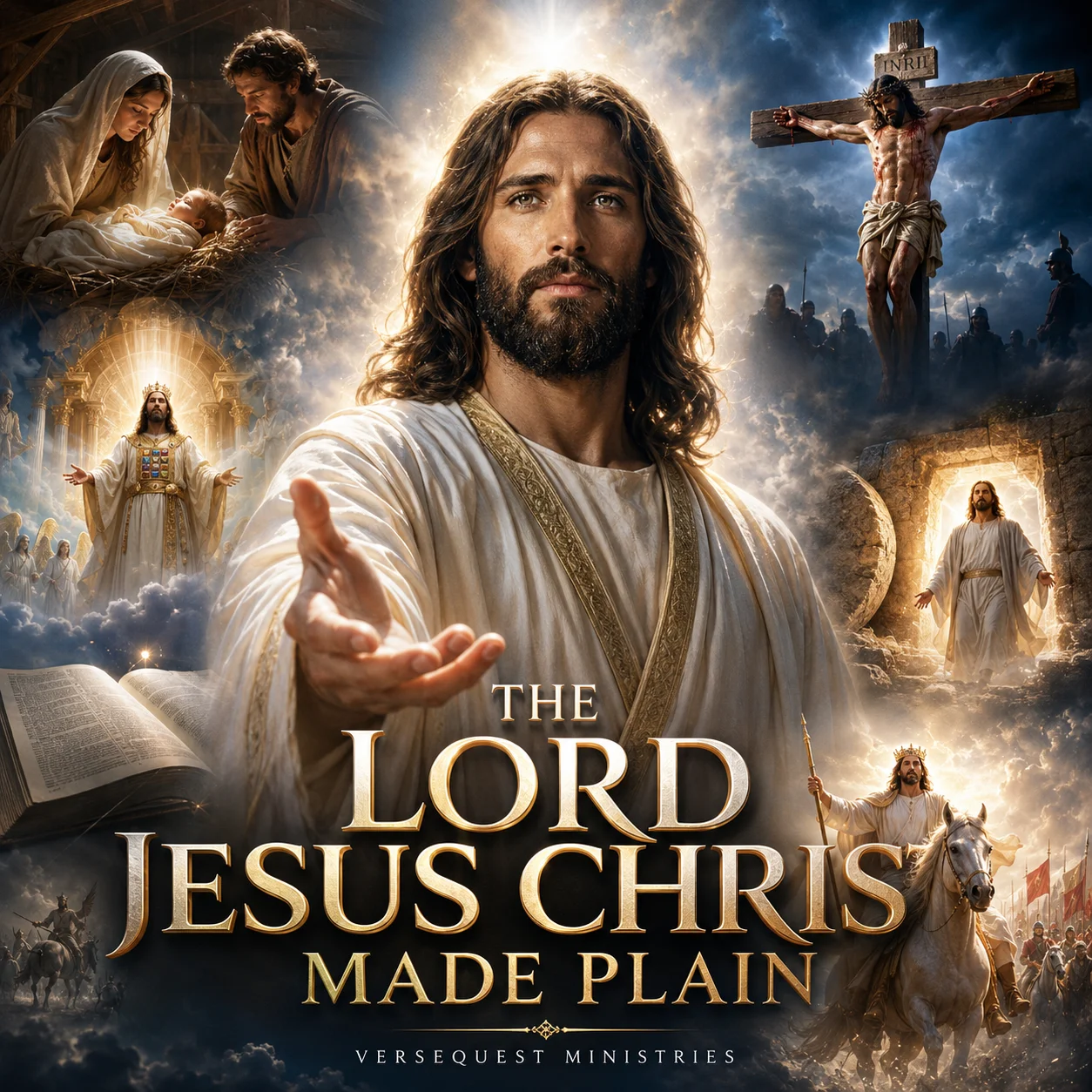
- The Lord Jesus Christ Made Plain – 637-Page KJV Bible Study
- A massive 637-page, 100-part KJV Bible study on the Person and work of the Lord Jesus Christ. This premium VerseQuest resource covers His deity, incarnation, blood, cross, resurrection, present ministry,…
- Original price was: $39.00.$34.99Current price is: $34.99.
- Add to cart
-
-10%
-
Christology Studies
-
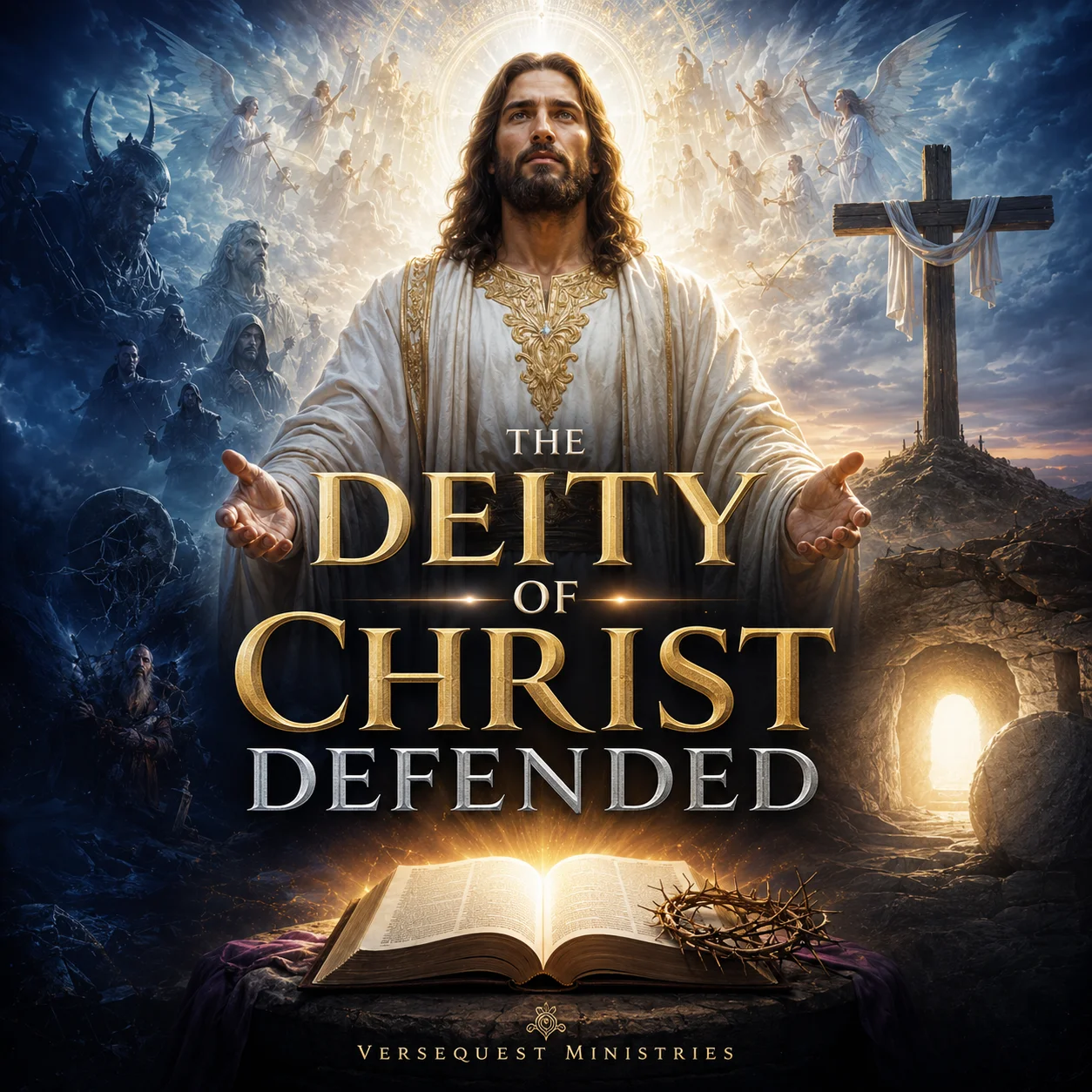
- The Deity of Christ Defended — 66 KJV Studies Proving Jesus Christ Is God Manifest in the Flesh
- he Deity of Christ Defended is a 444-page premium KJV Bible study defending the full deity of the Lord Jesus Christ. This 66-study book proves from Scripture that Jesus is…
- $29.99
- Add to cart
-
-
Jesus Christ / Christology
-
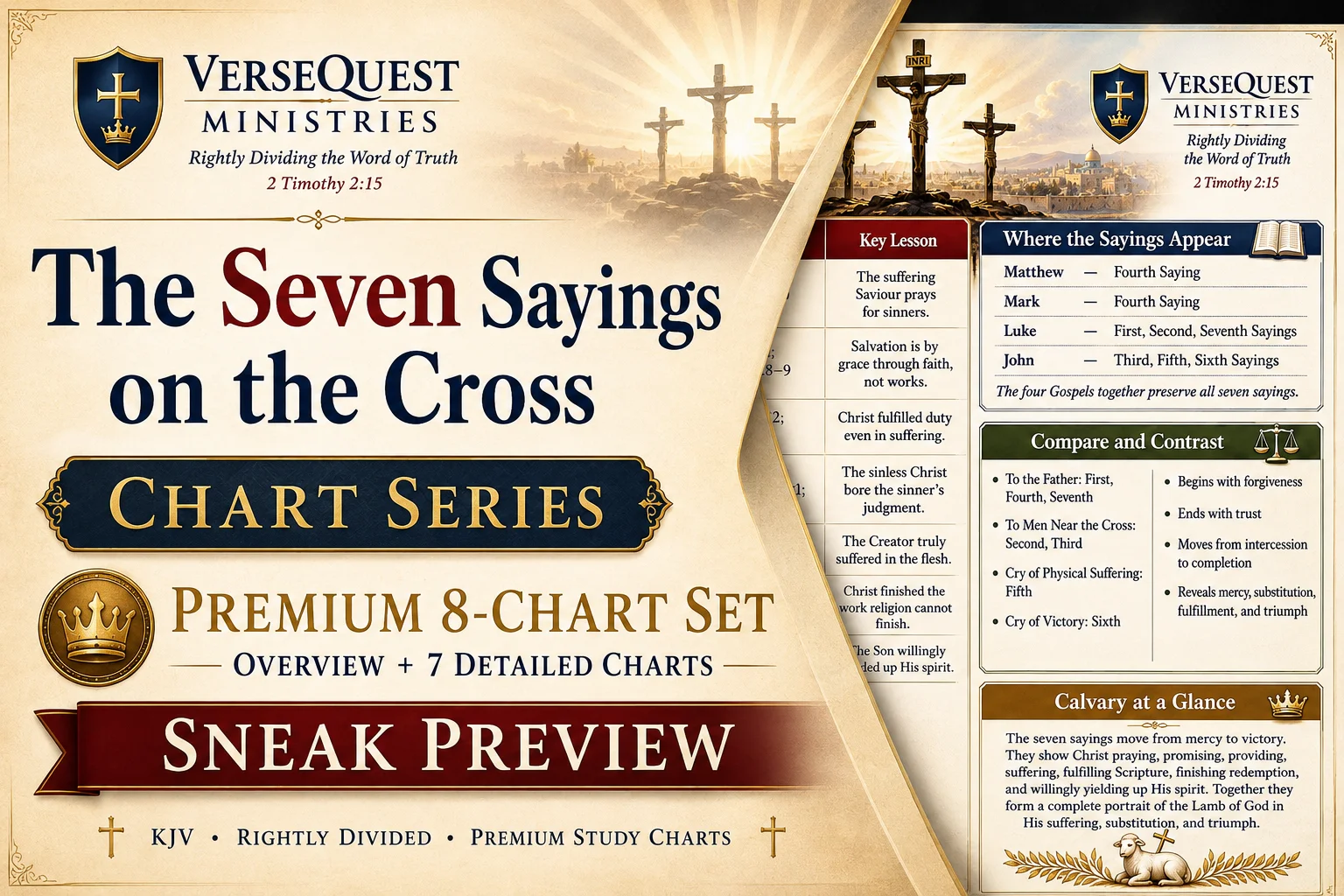
- The Seven Sayings on the Cross – Premium 8-Chart KJV Study Set
- A premium VerseQuest Ministries digital PDF study set on The Seven Sayings on the Cross, featuring an overview chart plus seven detailed KJV Bible study charts. This resource examines Calvary,…
- $12.99
- Add to cart
-
-
Doctrine Series
-
- The Lost Tribes Myth Exposed (213-Page Premium Study)
- A 213-page premium KJV study exposing the Lost Tribes myth, tribal identity errors, prophecy abuse, race theories, and false Israel claims through 35 detailed essays.
- $24.99
- Add to cart
-
-
The Rapture
-
-67%
- Caught Up Before the Wrath – 66-Essay KJV Rapture Study
- Caught Up Before the Wrath is a 430-page premium KJV Bible study defending the pre-tribulation Rapture of the Church from a rightly divided, dispensational perspective. This 66-essay VerseQuest Ministries book…
- Original price was: $29.99.$9.99Current price is: $9.99.
- Add to cart
-
-67%