
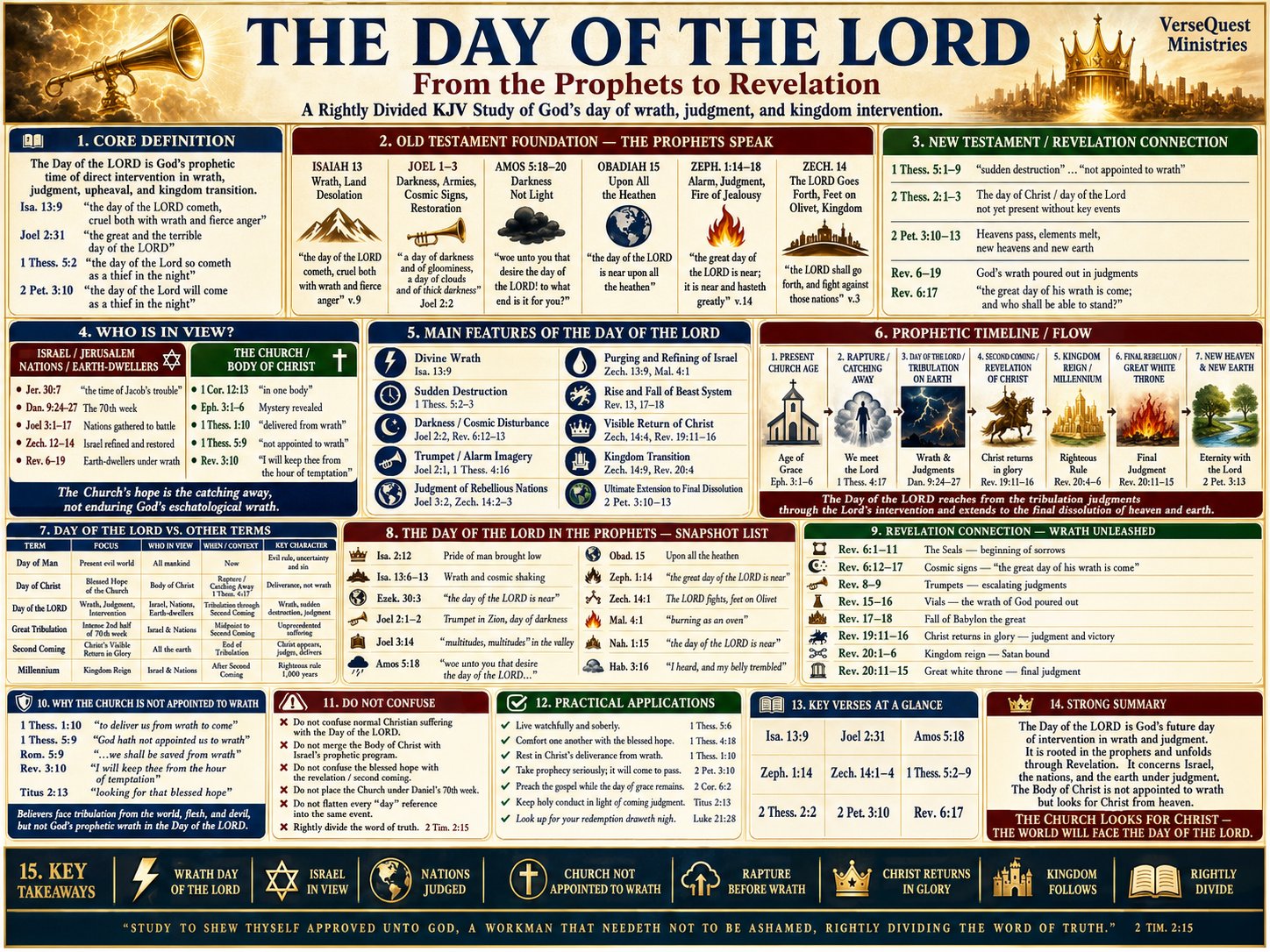
The Day of the Lord – From the Prophets to Revelation: Wrath, Judgment, Christ’s Return, and Kingdom Intervention (KJV Bible Study Chart)
Trace the Day of the Lord from the Old Testament prophets through Revelation with this detailed KJV chart covering Israel, Jerusalem, divine wrath, Daniel’s seventieth week, the Rapture, Tribulation judgments, Christ’s visible return, the millennial Kingdom, final judgment, and the new creation.
$3.99
Description
The Day of the Lord: From the Prophets to Revelation is a comprehensive, rightly divided KJV Bible study chart tracing one of Scripture’s greatest prophetic themes from Isaiah, Joel, Amos, Obadiah, Zephaniah, and Zechariah through First and Second Thessalonians, Second Peter, and the book of Revelation. It explains what the Day of the Lord is, who is primarily in view, how it relates to the Tribulation, why the Church is not appointed to its wrath, when Jesus Christ returns, and how God’s prophetic intervention reaches through judgment, the millennial Kingdom, final rebellion, and the dissolution of the present heavens and earth.
Built around Isaiah 13:9, Joel 2:31, Amos 5:18–20, Obadiah 15, Zephaniah 1:14–18, Zechariah 14:1–9, 1 Thessalonians 5:1–9, 2 Thessalonians 2:1–3, 2 Peter 3:10–13, and Revelation 6–20, this chart presents the Day of the Lord as God’s future prophetic time of direct intervention in wrath, judgment, upheaval, national accountability, the overthrow of rebellious kingdoms, the restoration of Israel, and the establishment of the visible rule of Jesus Christ.
The Day of the Lord is not merely another name for ordinary suffering, difficult political conditions, natural disasters, Christian persecution, or every conflict occurring in the present age. Scripture describes it as a distinct prophetic period in which God openly interrupts the ordinary course of human government and demonstrates His authority over Israel, the nations, Satan’s kingdom, the beast system, the earth, and the heavens themselves.
Isaiah 13:9 declares, “Behold, the day of the LORD cometh, cruel both with wrath and fierce anger, to lay the land desolate.” The prophets did not describe this day as a vague spiritual influence or a gradual improvement of human civilization. They spoke of wrath, darkness, trembling, desolation, cosmic disturbance, national judgment, and the overthrow of pride.
Joel calls it “the great and the terrible day of the LORD.” Amos warns those who casually desire it that the Day of the Lord will be darkness rather than light. Obadiah declares that the Day of the Lord is near upon the heathen. Zephaniah describes it as a day of wrath, trouble, distress, wasteness, desolation, darkness, gloominess, clouds, and thick darkness.
These prophetic witnesses agree that the Day of the Lord brings the end of mankind’s illusion that God will allow rebellion to continue forever without direct intervention. Human government may ignore Scripture, exalt rulers, persecute the righteous, divide the land, attack Jerusalem, worship created things, and congratulate itself on progress, but the prophetic clock moves toward a day when the Lord personally answers the rebellion.
The chart begins with a core definition: the Day of the Lord is God’s appointed prophetic period of direct intervention in wrath, judgment, upheaval, and Kingdom transition. It is larger than one isolated event and should not be reduced to a single twenty-four-hour day. The word day may designate a period characterized by a particular authority, condition, or divine purpose.
The present age may be described broadly as man’s day, during which human government, uncertainty, sin, deception, and the apparent triumph of evil are permitted to continue. The Day of the Lord reverses that condition. The Lord openly asserts His claims, judges rebellion, restores His prophetic order, and prepares the world for the reign of His Anointed King.
The Old Testament prophets provide the foundation for understanding the doctrine. Isaiah 13 connects the Day of the Lord with divine wrath, the humiliation of human pride, the shaking of heaven, and judgment upon the land. The passage reaches beyond one ancient political event and contributes to the larger prophetic picture of the Lord judging the rebellious world.
Joel 1–3 describes devastation, armies, trumpet warnings, darkness, cosmic signs, the outpouring of God’s Spirit, Israel’s restoration, and the gathering of nations for judgment. Joel’s prophecy joins local historical warning with the final Day-of-the-Lord crisis surrounding Jerusalem and the nations.
Amos 5 rebukes those who desired the Day of the Lord without understanding its character. They assumed divine intervention would automatically favour them, yet God warned that religious profession without righteousness would not protect rebels from judgment. The day would be darkness and not light.
Obadiah declares that the Day of the Lord is near upon all the heathen. The nations will reap according to their treatment of God’s people and their rebellion against His authority. What they have done will return upon their own heads.
Zephaniah presents one of the Bible’s strongest descriptions of the Day of the Lord. The prophet announces alarm, judgment, fire, jealousy, distress, darkness, destruction, and the inability of silver or gold to deliver anyone from divine wrath. Wealth, position, military power, and political alliances will provide no refuge when God acts.
Zechariah 14 brings the prophetic theme to the visible return of Jesus Christ. The nations gather against Jerusalem, the city faces severe conflict, and then “the LORD shall go forth, and fight against those nations.” His feet stand upon the Mount of Olives, the landscape changes, and the LORD becomes King over all the earth.
The Day of the Lord therefore cannot be separated from Israel, Jerusalem, the gathering of the nations, the visible appearing of Christ, and the establishment of His Kingdom. God’s prophetic program remains literal, earthly, national, and centred upon the promises He made to Israel.
The chart identifies those primarily in view. Israel and Jerusalem stand at the centre of the prophetic setting. Jeremiah calls the coming crisis the time of Jacob’s trouble. Daniel’s seventieth week is determined upon Daniel’s people and holy city. Joel gathers the nations for judgment, Zechariah brings them against Jerusalem, and Revelation pours wrath upon rebellious earth-dwellers.
The nations are also in view because the Day of the Lord is not merely an internal Jewish trial. The kingdoms of the world have rejected God, opposed His truth, persecuted His servants, embraced the beast, and gathered against the returning King. The Lord judges both Israel’s rebellion and the nations’ hostility while preserving a remnant and fulfilling His covenants.
The Church, the Body of Christ, possesses a distinct calling and hope. First Corinthians 12:13 teaches that saved Jews and Gentiles are baptized by one Spirit into one Body. Ephesians 3 identifies this Body as mystery truth previously hidden and later revealed through Paul.
The Church is not Israel, Jerusalem, Jacob, Daniel’s people, or one of the nations gathered for Day-of-the-Lord judgment. It is a heavenly people blessed in Christ and waiting to be caught up to meet the Lord in the air.
First Thessalonians 1:10 describes Jesus as the One “which delivered us from the wrath to come.” First Thessalonians 5:9 states, “For God hath not appointed us to wrath, but to obtain salvation by our Lord Jesus Christ.” Revelation 3:10 speaks of being kept from the worldwide hour of temptation that will test the earth-dwellers.
These promises do not teach that Christians will never suffer. Believers may experience persecution, sickness, hardship, bereavement, chastening, poverty, warfare, opposition, martyrdom, and tribulation from the world. The Church has never been promised exemption from the wrath of men, the attacks of Satan, or the trials of life in a fallen creation.
The promise concerns the future eschatological wrath of God. The Body of Christ may suffer in the present world, but it is not appointed to the prophetic Day-of-the-Lord judgments poured from heaven.
The Church’s hope is the catching away described in First Thessalonians 4:16–17. The Lord Himself descends from heaven, the dead in Christ rise first, living believers are caught up with them, and the entire Body meets the Lord in the air.
The Rapture is therefore placed before the Day-of-the-Lord wrath in the chart’s prophetic timeline. The Church looks for Christ, not for the seals to open, the beast to receive authority, the abomination to stand in the holy place, or the vials to be poured upon the earth.
The chart’s prophetic flow begins with the present Church Age, the dispensation of grace in which the gospel is preached and the Body of Christ is formed. This is followed by the Rapture or catching away, when the Church is gathered to Christ.
The Day of the Lord then unfolds through the Tribulation judgments associated with Daniel’s seventieth week. Israel’s prophetic clock resumes, the beast rises, the covenant is broken, the abomination is established, the nations rebel, and divine wrath is poured upon the earth.
Jesus Christ then returns visibly in the Second Coming. He comes with His saints, defeats His enemies, delivers Israel’s remnant, judges the nations, and establishes His Kingdom.
The millennial reign follows. Jesus Christ rules upon the earth for one thousand years, Satan is bound, righteousness is publicly administered, and the promises concerning Messiah’s earthly Kingdom receive their appointed fulfillment.
At the end of the Millennium, Satan is released for a little season, leads one final rebellion, and is defeated by fire from God. The Great White Throne follows, where the unsaved dead are judged and cast into the lake of fire.
Second Peter 3 carries the Day-of-the-Lord theme to the final dissolution of the present heavens and earth. The heavens pass away, the elements melt with fervent heat, the earth and its works are burned, and God brings forth a new heaven and new earth wherein dwelleth righteousness.
The Day of the Lord therefore includes more than the opening moment of Tribulation wrath. It is the extended divine intervention that overturns man’s rebellious order, brings Christ’s visible Kingdom, judges Satan’s final revolt, and removes the present creation before the eternal order appears.
The chart identifies several major features of the Day of the Lord. The first is divine wrath. Isaiah, Zephaniah, First Thessalonians, and Revelation describe God’s anger and righteous judgment against rebellion.
The second feature is sudden destruction. First Thessalonians 5 warns that while the world says peace and safety, sudden destruction comes upon them. The world’s political assurances will not cancel the prophetic Word of God.
The third feature is darkness and cosmic disturbance. Joel describes the sun, moon, and stars being affected. Revelation records earthquakes, darkness, falling stars, cosmic upheaval, and the shaking of creation.
The fourth feature is trumpet and alarm imagery. The prophets sound warnings because the day is approaching. Revelation develops this imagery through the seven trumpet judgments that intensify divine wrath.
The fifth feature is the judgment of rebellious nations. Joel gathers the multitudes into the valley of decision, Zechariah brings nations against Jerusalem, and Revelation records the kings of the earth aligning with the beast and gathering toward Armageddon.
The sixth feature is the purging and refining of Israel. The Tribulation does not mean God has rejected Israel forever. Through judgment, He brings a remnant to repentance and prepares the nation to receive her Messiah.
The seventh feature is the rise and fall of the beast system. Revelation 13–18 reveals the Antichrist’s political, religious, and economic order. It appears dominant for a short time but collapses beneath God’s judgment.
The eighth feature is the visible return of Christ. Zechariah 14 and Revelation 19 leave no room for reducing the Second Coming to an inward spiritual experience. Jesus Christ returns personally, visibly, bodily, and triumphantly.
The ninth feature is the Kingdom transition. The kingdoms of this world become the kingdoms of the Lord and His Christ. The counterfeit ruler is removed, and the rightful King receives visible dominion.
The tenth feature is the ultimate extension to the final dissolution of the present creation. Second Peter 3 teaches that the Day of the Lord reaches to the burning of the present heavens and earth and the appearing of the new creation.
The chart also distinguishes the Day of the Lord from related biblical terms. The day of man describes the present order in which mankind governs, judges, builds, boasts, and rebels under conditions of uncertainty and evil. Human rulers appear to possess the final word, but their day is temporary.
The Day of Christ is especially connected with the Church’s blessed hope, gathering, reward, and accountability before Jesus Christ. Pauline references direct believers toward Christ, the completion of His work in the Church, and the examination of Christian service.
The Day of the Lord concerns divine intervention, Israel, the nations, wrath, judgment, the overthrow of rebellion, and Kingdom transition. These distinctions prevent every prophetic phrase involving a day from being forced into one undifferentiated event.
The Great Tribulation is the unequalled period of trouble within Daniel’s final week, especially the intensified latter half following the abomination of desolation. It forms a central part of the Day of the Lord but should not be treated as the entire prophetic program by itself.
The Second Coming is Christ’s visible return at the conclusion of the Tribulation. It is one of the great climactic events of the Day of the Lord, but the Day extends beyond His appearing into the Kingdom and final judgment program.
The Millennium is the thousand-year Kingdom reign of Jesus Christ following His return. It is characterized by righteous government, the binding of Satan, and the fulfillment of earthly Kingdom promises.
The book of Revelation supplies the fullest New Testament expansion of the Day-of-the-Lord judgments. Revelation 6 opens the seals and introduces deceptive conquest, warfare, famine, death, martyrdom, and cosmic terror. The sixth seal announces the great day of the Lamb’s wrath.
Revelation 8–9 brings the trumpet judgments, striking the earth, sea, rivers, heavenly lights, and mankind. The three woes intensify the judgment through demonic torment and mass death.
Revelation 15–16 pours out the seven vials, identified as the completion of God’s wrath. Sores, blood, scorching heat, darkness, the drying of the Euphrates, demonic gathering, earthquake, and hail bring the beast’s world to collapse.
Revelation 17–18 judges Babylon’s religious, political, and commercial systems. The proud world order that enriched merchants, deceived nations, corrupted rulers, and persecuted saints falls in one prophetic hour.
Revelation 19 presents the visible return of Jesus Christ. Heaven opens, the King of kings rides forth, the armies of heaven follow Him, the beast and false prophet are captured, and the rebellious armies are destroyed.
Revelation 20 presents the Kingdom reign, Satan’s binding, his final release and rebellion, the Great White Throne, and the lake of fire. The Day-of-the-Lord program removes every final challenge to God’s authority.
Second Peter 3 carries the doctrine beyond Revelation 20’s final judgment to the destruction of the present heavens and earth. Believers look for new heavens and a new earth wherein dwelleth righteousness.
The chart explains why the Church is not appointed to this wrath. The believer has been justified through Christ’s blood, placed into Jesus Christ, sealed by the Holy Spirit, accepted in the Beloved, and delivered from eternal condemnation.
The Tribulation is not a purgatory for the Body of Christ. Jesus Christ does not require seals, trumpets, vials, Antichrist persecution, or beast worship to complete the redemption He declared finished.
Practical sanctification remains important, and believers may face the Father’s chastening when disobedient. Yet chastening is not the Day-of-the-Lord wrath, and Christian growth is not achieved by placing the Church inside Israel’s final prophetic week.
The doctrine also protects God’s faithfulness to Israel. The Church has not stolen Israel’s identity, cancelled her covenants, or absorbed every earthly promise. The Lord will resume His prophetic dealings with the nation and complete what He promised to the fathers.
The chart warns against confusing ordinary Christian suffering with the Day of the Lord. A war, earthquake, pandemic, persecution, economic collapse, or political crisis may be severe without constituting the full prophetic day described by Isaiah, Joel, Zechariah, Paul, Peter, and Revelation.
The Body of Christ must not be merged with Israel’s prophetic program. Daniel’s seventieth week belongs to Daniel’s people and holy city. Jeremiah’s trouble belongs to Jacob. Matthew 24 speaks of Judea, the holy place, the abomination, and Israel’s prophetic setting.
The blessed hope should not be confused with the visible Revelation or Second Coming. At the Rapture, Christ gathers the Church to Himself in the air. At the Second Coming, He returns with His saints to the earth in judgment.
The Church must not be placed inside Daniel’s seventieth week. The present mystery dispensation fits between Israel’s sixty-ninth and seventieth prophetic weeks, and the Church is caught away before the final week begins.
Every prophetic day must not be flattened into the same moment. Scripture uses related terms with different audiences, purposes, and emphases. Right division allows every passage to speak accurately within its own setting.
The practical applications of the doctrine are powerful. Believers should live watchfully and soberly because the present world is temporary and Jesus Christ may gather His Church at any time.
Christians should comfort one another with the blessed hope rather than terrorize one another with speculation. The dead in Christ will rise, living believers will be changed, and the Body will be forever with the Lord.
The Church should rest in Christ’s deliverance from wrath. Assurance does not come from the believer’s ability to survive the Tribulation but from the finished work and promise of Jesus Christ.
Prophecy should be taken seriously. God fulfilled the prophecies of Christ’s first coming and will fulfill the remaining prophecies concerning Israel, Antichrist, judgment, Christ’s return, and the Kingdom.
The gospel should be preached while the present day of grace remains open. The Day of the Lord demonstrates that divine patience is not divine indifference. Judgment is coming, and sinners need the salvation offered through Jesus Christ.
Believers should keep holy conduct in view. Second Peter asks what manner of persons Christians ought to be in all holy conversation and godliness when the present creation is destined for dissolution.
The doctrine should cause believers to look up, knowing that redemption draws near. The Church’s eyes belong upon Christ, not upon the beast as its expected hope.
The strong summary is clear: the Day of the Lord is God’s future prophetic period of intervention in wrath and judgment. It is rooted in the Old Testament prophets and unfolds fully through Revelation. It concerns Israel, the nations, rebellious earth-dwellers, the beast system, Christ’s visible return, the millennial Kingdom, final judgment, and the dissolution of the present heavens and earth.
The Body of Christ is not appointed to this prophetic wrath. The Church’s blessed hope is to be caught up to meet the Lord before the Day-of-the-Lord judgments begin.
The Church looks for Christ. The rebellious world will face the Day of the Lord. The King rejected at His first coming will return in glory, destroy every counterfeit kingdom, reign in righteousness, and bring God’s prophetic program to its appointed conclusion.
The Day of the Lord, Day of the Lord prophecy, wrath of God, Day of the Lord in the prophets, Isaiah 13, Joel 2, Amos 5, Obadiah 15, Zephaniah 1, Zechariah 14, Day of the Lord in Revelation, Israel in prophecy, Jerusalem in prophecy, judgment of the nations, Daniel’s seventieth week, Jacob’s trouble, Church not appointed to wrath, pre-Tribulation Rapture, Second Coming of Christ, millennial Kingdom, Great White Throne, new heaven and new earth, rightly divided prophecy
The Day of the Lord is God’s future prophetic period of direct intervention in wrath, judgment, upheaval, and Kingdom transition. The doctrine begins in the Old Testament prophets and develops through the New Testament and Revelation. It should not be reduced to one ordinary calendar day, one isolated battle, or one moment within the Tribulation. It is an extended prophetic program characterized by the Lord openly asserting His authority over Israel, the nations, Satan’s system, and the present creation.
Isaiah, Joel, Amos, Obadiah, Zephaniah, and Zechariah describe the Day of the Lord through the language of wrath, darkness, alarm, cosmic disturbance, national judgment, Jerusalem’s crisis, and the visible intervention of God. These prophets establish that the day concerns more than private spirituality or internal church experience. It involves literal nations, earthly events, divine judgments, and the return of the Lord to rule.
Israel, Jerusalem, the nations, and rebellious earth-dwellers are primarily in view. Jeremiah calls the future crisis Jacob’s trouble, Daniel’s seventieth week is determined upon Israel and Jerusalem, and Zechariah places the nations around the holy city when the Lord returns. The Church is the mystery Body of Christ and must not be inserted into Israel’s prophetic calendar.
The Church is not appointed to Day-of-the-Lord wrath. First Thessalonians teaches that Jesus delivers believers from the wrath to come and that God has not appointed the Body of Christ to wrath. This does not promise freedom from ordinary trials, persecution, sickness, chastening, martyrdom, or suffering from the world. It concerns deliverance from the future divine wrath poured upon the earth.
The Rapture precedes the Day-of-the-Lord judgments in the pre-Tribulation framework presented by the chart. Jesus Christ descends from heaven, the dead in Christ rise, living believers are changed, and the Church is caught up to meet Him in the air. The Church waits for Christ rather than the Antichrist, the abomination of desolation, or the mark of the beast.
The Tribulation forms the opening judgment phase of the Day of the Lord. Revelation’s seals, trumpets, and vials progressively unleash divine wrath upon the rebellious world. Antichrist’s kingdom rises, Israel is refined, Tribulation saints are persecuted, the nations are gathered, Babylon falls, and the world is prepared for Christ’s visible appearing.
The Second Coming is the climactic visible intervention of Jesus Christ within the Day of the Lord. At the Rapture, Christ comes for His saints; at the Second Coming, He returns with His saints. His feet stand upon the Mount of Olives, the beast and false prophet are destroyed, Israel’s remnant is delivered, and the rebellious nations are judged.
The millennial Kingdom follows the Second Coming. Jesus Christ reigns upon the earth for one thousand years, Satan is bound, and righteous government replaces the beast’s counterfeit rule. The Millennium is part of the Lord’s intervention and Kingdom program and should not be spiritualized into the present Church Age.
At the end of the Millennium, Satan is released, leads a final rebellion, and is cast into the lake of fire. The Great White Throne judges the unsaved dead. Second Peter 3 then carries the Day-of-the-Lord doctrine to the dissolution of the present heavens and earth and the appearance of a new heaven and new earth wherein dwelleth righteousness.
The Day of the Lord should be distinguished from the Day of Christ, the Great Tribulation, the Second Coming, and the Millennium. These terms are related but are not identical in every detail. Right division examines audience, timing, purpose, movement, and result rather than treating every prophetic expression as interchangeable.
The doctrine should produce watchfulness, sobriety, gospel urgency, holiness, comfort, and confidence in the written Word. Divine patience will not continue forever, and human rebellion will not possess the final word. The Church’s hope is deliverance through Christ, while the world’s rebellion moves toward the Day of the Lord.
Day-of-the-Lord Bible studies, Old Testament prophecy surveys, Isaiah and Joel teaching, Zephaniah and Zechariah studies, Tribulation instruction, Daniel’s seventieth-week lessons, Church-and-Israel distinctions, pre-Tribulation Rapture teaching, Rapture-versus-Second-Coming comparisons, Revelation judgment studies, millennial Kingdom instruction, Great White Throne lessons, Christian suffering versus divine wrath, prophecy timelines, pastoral training, prophecy conferences, Sunday school lessons, homeschool Bible curriculum, Christian school teaching, Bible institute classes, sermon preparation
King James Bible, Strong’s Concordance, Thompson Chain-Reference Bible, Treasury of Scripture Knowledge, Nave’s Topical Bible, Old Testament prophetic-book outlines, Day-of-the-Lord Scripture chains, Daniel 9 seventy-weeks charts, Matthew 24 study materials, First and Second Thessalonians commentary notes, Revelation 6–20 timelines, seals-trumpets-vials comparison charts, Church-versus-Israel resources, pre-Tribulation Rapture studies, Second Coming charts, millennial Kingdom materials, Great White Throne studies, VerseQuest prophecy and right-division charts
Related products
-
Kingdom Hall
-
-71%
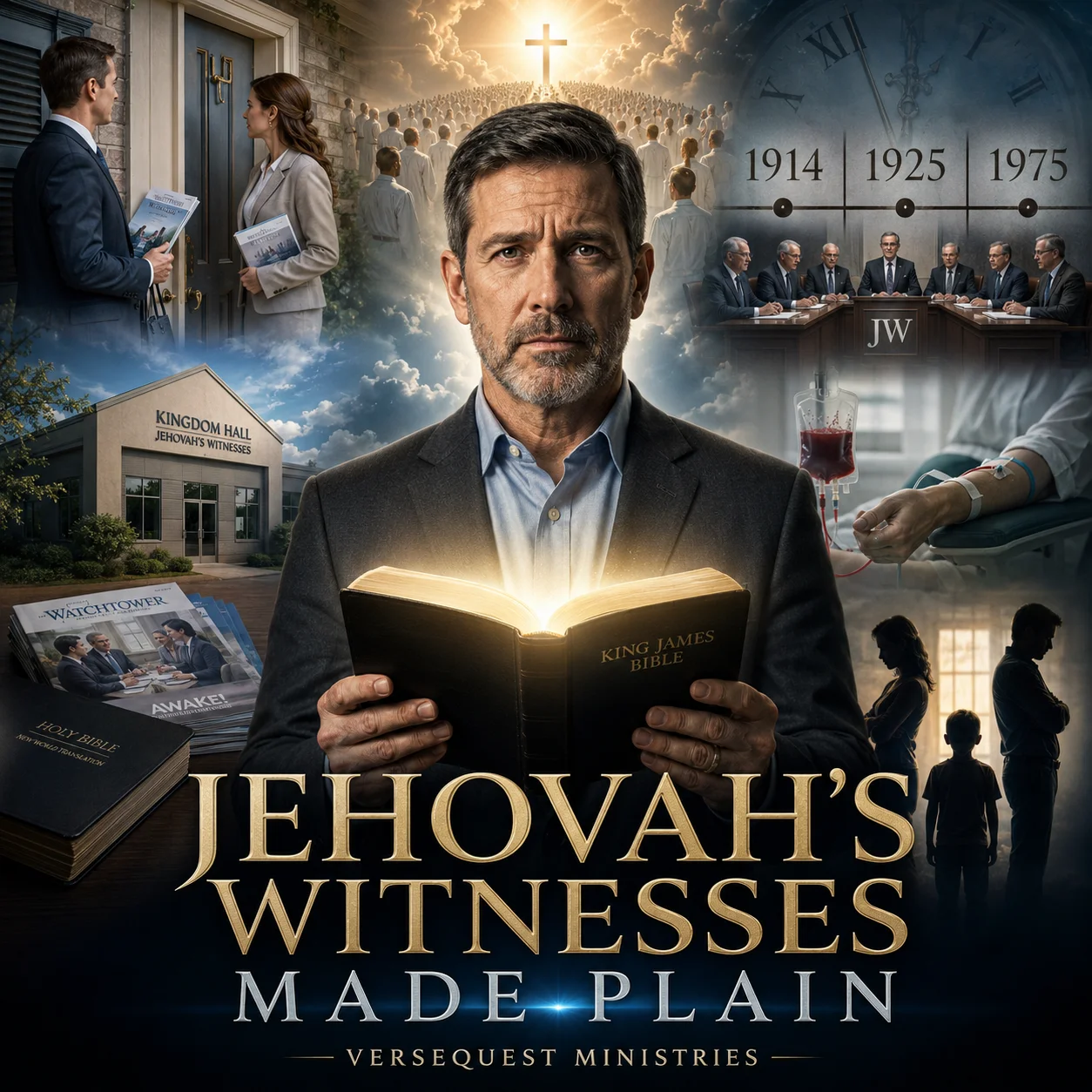
- Jehovah’s Witnesses Made Plain – 574-Page KJV Watchtower Study
- A massive 574-page VerseQuest study exposing the Watchtower system from the King James Bible. This detailed 100-essay book covers the false Christ, false gospel, New World Translation, failed prophecy, 144,000,…
- Original price was: $34.99.$9.99Current price is: $9.99.
- Add to cart
-
-71%
-
Bible Prophecy Charts
-
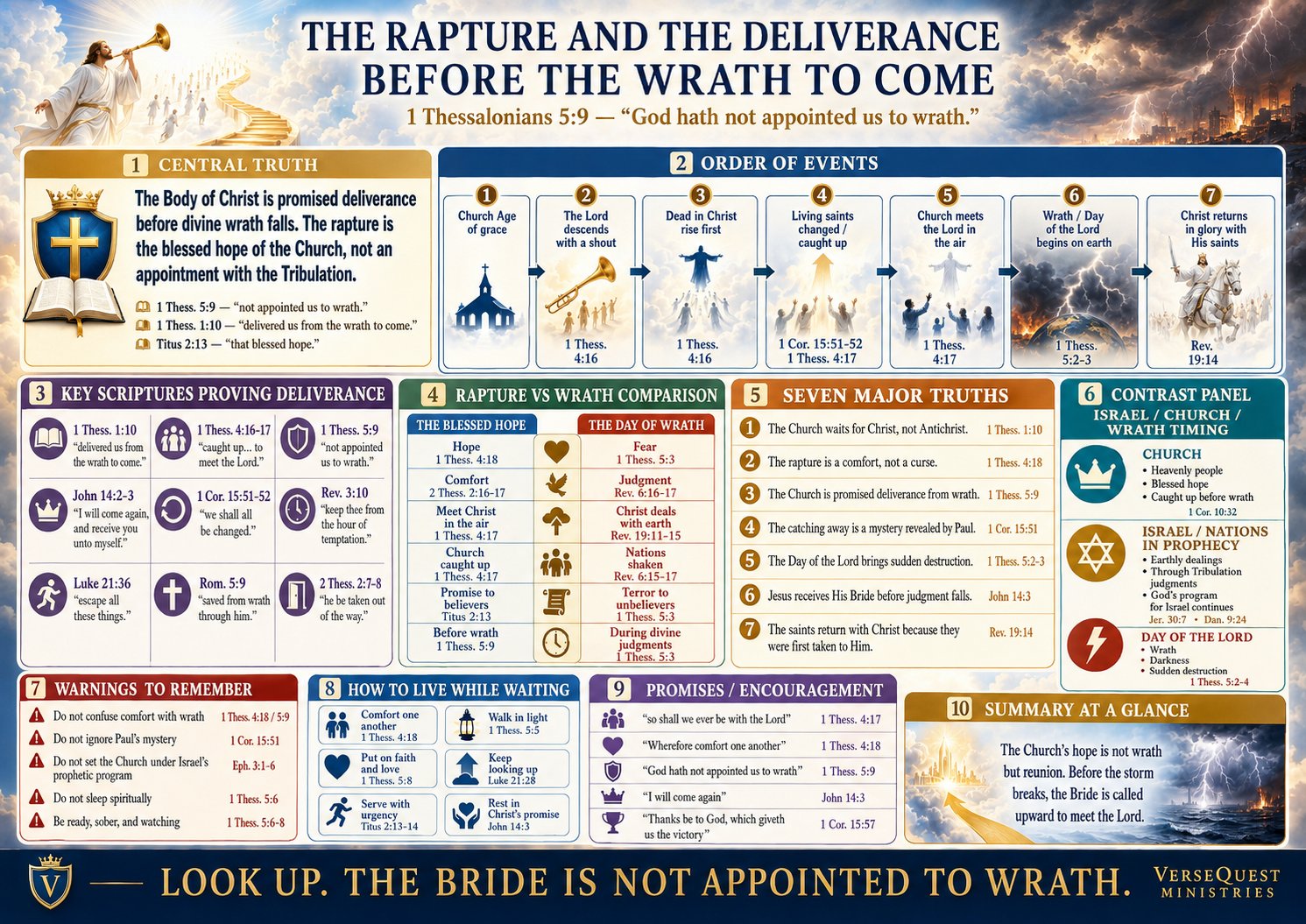
- The Rapture and the Deliverance Before the Wrath to Come – Printable Bible Study Chart
- Printable KJV Bible study chart on The Rapture and the Deliverance Before the Wrath to Come, showing from 1 Thessalonians 5:9 that the Church is not appointed to wrath. This…
- $4.99
- Add to cart
-
-
Doctrine Series
-
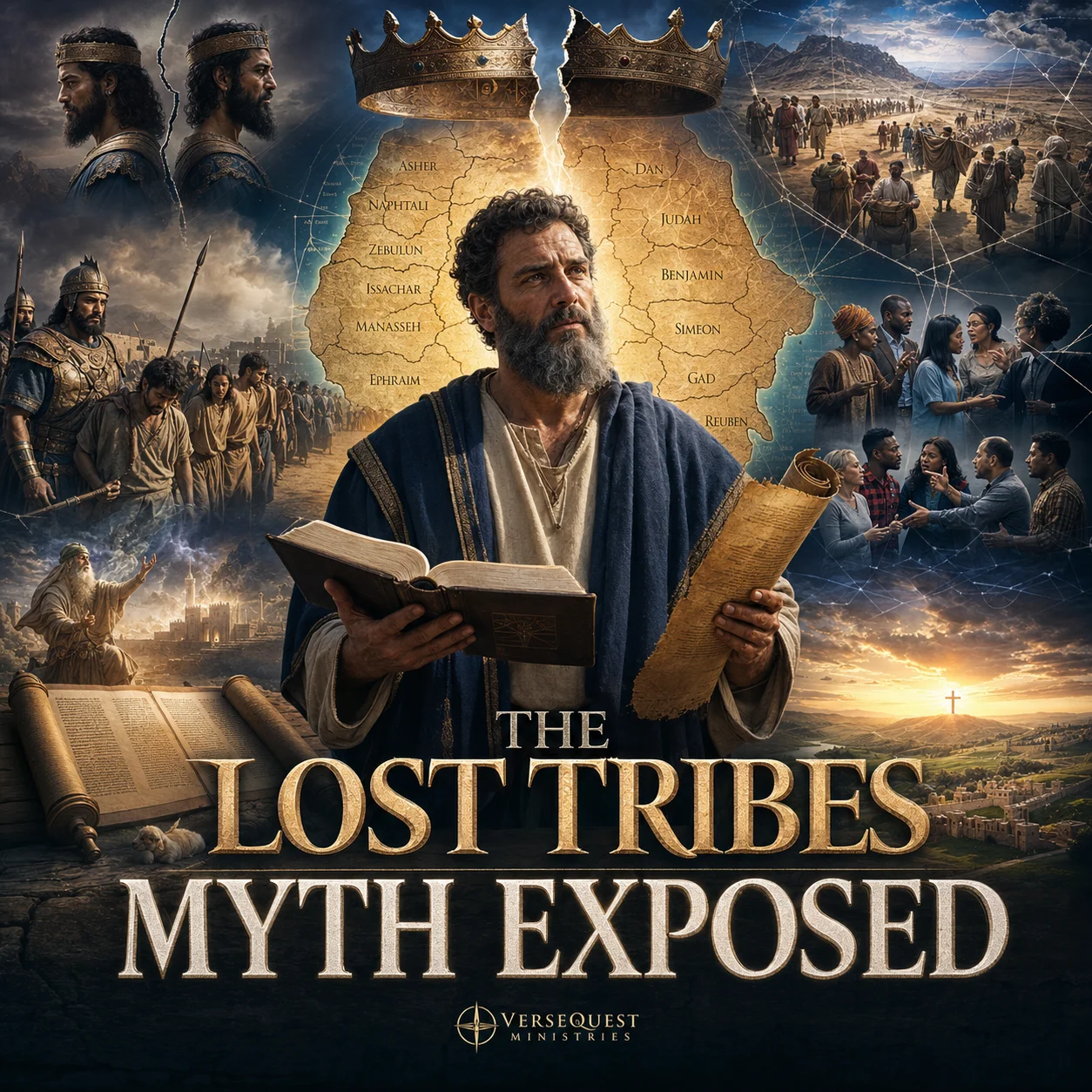
- The Lost Tribes Myth Exposed (213-Page Premium Study)
- A 213-page premium KJV study exposing the Lost Tribes myth, tribal identity errors, prophecy abuse, race theories, and false Israel claims through 35 detailed essays.
- $24.99
- Add to cart
-
-
Jesus Christ Studies
-
-67%
- Jesus Christ Prophet Priest and King – 441-Page PDF Study
- A 441-page premium KJV PDF study on Jesus Christ as Prophet, Priest, and King. This detailed VerseQuest book covers Christ’s prophetic ministry to Israel, His finished sacrifice and present intercession…
- Original price was: $29.99.$9.99Current price is: $9.99.
- Add to cart
-
-67%
-
Heaven
-
- The Doctrine of Heaven Made Plain — 599-Page KJV Bible Study PDF
- A massive 599-page KJV, rightly divided study on heaven, covering the present heaven, resurrection body, Rapture, Millennium, New Jerusalem, eternal state, hard questions, funeral lies, and cult errors.
- $34.99
- Add to cart
-