
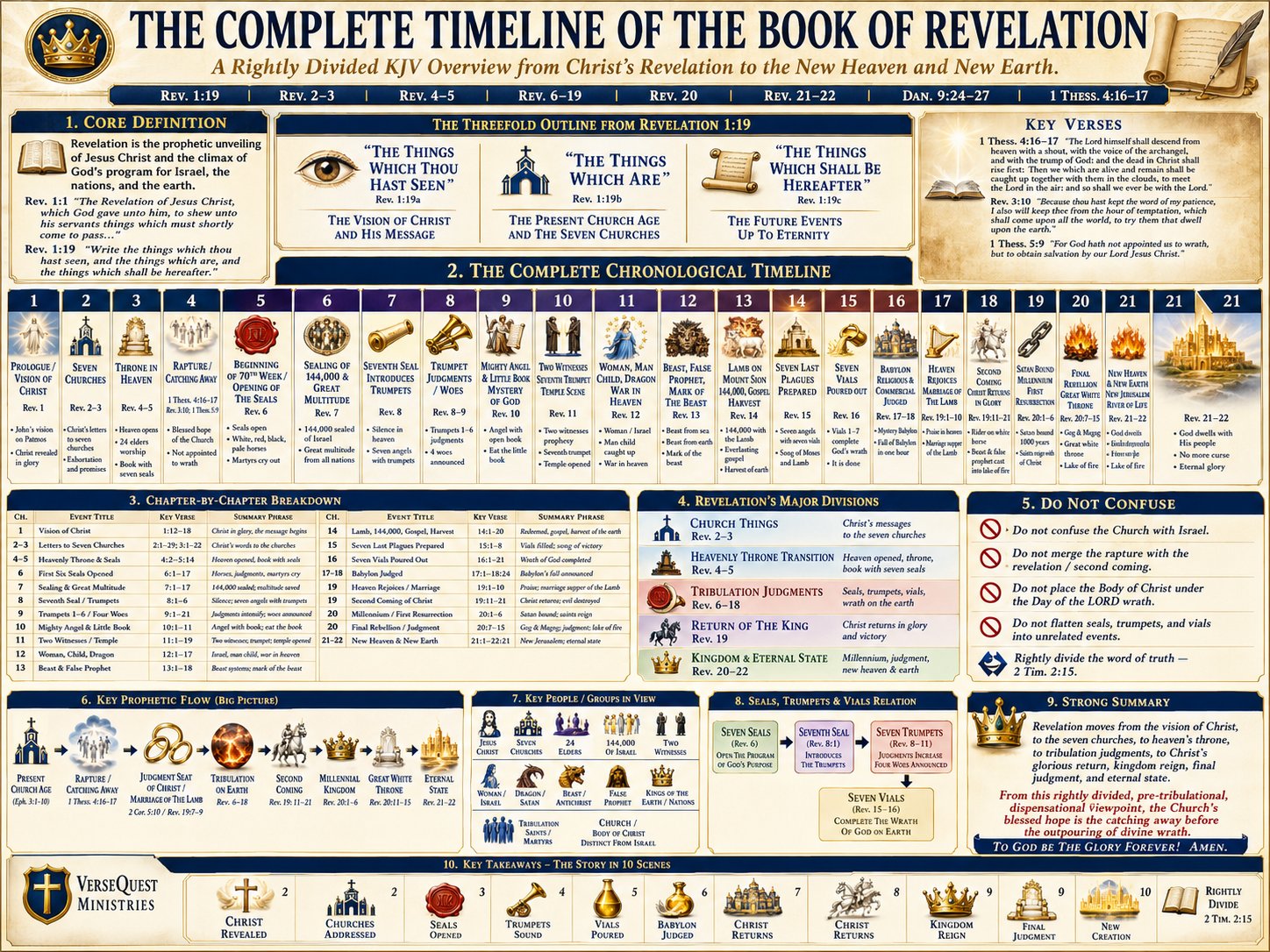
The Complete Timeline of the Book of Revelation – From Christ’s Revelation to the New Heaven and New Earth (KJV Bible Study Chart)
Follow the entire Book of Revelation with this detailed KJV timeline covering Christ’s vision, the seven churches, heavenly throne, Rapture, seals, trumpets, Antichrist, vials, Babylon, Second Coming, Millennium, Great White Throne, New Jerusalem, and the eternal state.
$3.99
Description
The Complete Timeline of the Book of Revelation is a comprehensive, rightly divided KJV Bible study chart tracing the prophetic movement of Revelation from the glorified appearance of Jesus Christ in chapter 1 to the new heaven, new earth, New Jerusalem, and eternal state in chapters 21–22.
Organized around the inspired threefold outline of Revelation 1:19, this chart presents the book in its natural scriptural divisions: “the things which thou hast seen,” “the things which are,” and “the things which shall be hereafter.” This God-given structure provides the key for understanding where the Church appears, where the heavenly transition occurs, where the Tribulation judgments begin, when Jesus Christ returns, and how the book concludes in eternity.
Revelation is not a chaotic collection of symbols, disconnected visions, or mysterious scenes that no believer can understand. It is “The Revelation of Jesus Christ,” given by God to show His servants things that must shortly come to pass. Its central Person is Jesus Christ, its central conflict is the contest over God’s authority and Kingdom, and its final outcome is the complete triumph of the Lamb.
The chart begins with Revelation 1, where the apostle John receives the vision while exiled upon Patmos. John does not see the humble Galilean appearance associated with Christ’s earthly ministry. He sees the risen and glorified Son of Man walking among the candlesticks, clothed with majesty, possessing eyes like fire, feet like fine brass, a voice like many waters, and a sharp two-edged sword proceeding from His mouth.
Jesus Christ identifies Himself as “the first and the last,” the One who was dead and is alive forevermore, and the One possessing the keys of hell and death. Revelation therefore begins with Christ’s absolute authority over the Church, history, death, judgment, prophecy, and eternity.
The first division of Revelation 1:19 is “the things which thou hast seen.” This refers primarily to John’s vision of the glorified Christ and the opening message of chapter 1. Before the seals are opened, the trumpets sounded, the beast revealed, or Babylon destroyed, the reader is shown the Lord who governs the entire prophetic program.
The second division is “the things which are.” This points to the seven churches addressed in Revelation 2–3. These were seven literal assemblies in Asia Minor, each receiving a direct message from Jesus Christ concerning doctrine, conduct, endurance, compromise, corruption, deadness, faithfulness, or lukewarmness.
The seven churches are Ephesus, Smyrna, Pergamos, Thyatira, Sardis, Philadelphia, and Laodicea. Each letter contains a description of Christ, an evaluation of the assembly, commendation where appropriate, correction where necessary, a warning, and a promise to the overcomer.
Ephesus possessed labour, patience, doctrinal discernment, and opposition to false apostles, yet had left its first love. Smyrna suffered persecution and poverty but was spiritually rich. Pergamos dwelt where Satan’s seat was and tolerated compromise. Thyatira permitted deep corruption connected with Jezebel. Sardis possessed a name that it lived while being spiritually dead. Philadelphia had little strength but kept Christ’s Word and did not deny His name. Laodicea was rich in its own estimation but poor, blind, naked, and lukewarm before Christ.
These letters apply directly to the historical churches addressed, provide practical warning and encouragement for assemblies throughout the age, and also form a prophetic outline of professing church history from apostolic decline to final Laodicean apostasy.
The third division is “the things which shall be hereafter.” This future section begins with the heavenly transition of Revelation 4 and proceeds through the throne scenes, Tribulation judgments, return of Jesus Christ, millennial Kingdom, final judgment, and eternal state.
Revelation 4 opens with a door in heaven and the call, “Come up hither.” From a pre-Tribulation, rightly divided perspective, this heavenly transition fits the removal of the Church before the judgments beginning in Revelation 6. The chart therefore places the catching away of the Body of Christ before Daniel’s seventieth week.
The Rapture doctrine is established clearly in 1 Thessalonians 4:13–18 and 1 Corinthians 15:51–52. The Lord Himself descends from heaven, the dead in Christ rise first, living believers are changed, and the entire Body of Christ is caught up to meet the Lord in the air.
The Rapture is not identical to the visible Second Coming of Revelation 19. At the Rapture, Christ comes for His Church, and believers rise to meet Him in the air. At the Second Coming, Christ returns with His saints to the earth in judgment and glory.
The chart also highlights 1 Thessalonians 5:9, which declares that God has not appointed the Church to wrath, and Revelation 3:10, which promises deliverance from the worldwide hour of temptation. The Church’s hope is Christ, not the seals, trumpets, vials, Antichrist, or mark of the beast.
Revelation 4–5 presents the throne of God in heaven. John sees divine majesty, the emerald-like rainbow, lightning, thunder, seven lamps of fire, the sea of glass, four living creatures, and twenty-four elders seated around the throne.
The twenty-four elders are crowned, clothed in white, and engaged in worship. They cast their crowns before God and proclaim Him worthy as Creator. Their presence in heaven before the seals open is consistent with the chart’s pre-Tribulation framework.
Revelation 5 introduces the seven-sealed book in the right hand of the One seated upon the throne. No man in heaven, earth, or beneath the earth is found worthy to open the book until the Lion of the tribe of Judah appears as the Lamb who had been slain.
Jesus Christ alone is worthy to take the book and open its seals because He was slain and redeemed by His blood. The cross did not remove His right to rule; it established His worthiness as Redeemer, Judge, Heir, and King.
The worship of heaven intensifies as the Lamb takes the book. Living creatures, elders, angels, and creation acknowledge His worthiness. Revelation’s judgments therefore begin not with Satan acting independently but with the Lamb exercising rightful authority.
The chronological timeline next moves into Revelation 6 and the opening of the seals. This marks the beginning of Daniel’s seventieth week and the Tribulation judgment program.
The first seal reveals a rider upon a white horse going forth conquering and to conquer. This is a counterfeit conqueror rather than Jesus Christ. The true Christ appears later in Revelation 19 with many crowns and the armies of heaven.
The second seal releases the red horse of warfare and bloodshed. Peace is taken from the earth, and the deceptive political order collapses into violence.
The third seal brings the black horse of famine, scarcity, rationing, and economic distress. Food is measured with balances, and ordinary necessities become painfully expensive.
The fourth seal releases the pale horse, whose rider is named Death, with Hell following. Sword, famine, pestilence, and beasts contribute to mass destruction.
The fifth seal reveals martyrs beneath the altar crying for God to avenge their blood. These saints were killed for the Word of God and the testimony they maintained during the judgment period.
The sixth seal produces a great earthquake, darkened sun, blood-like moon, falling stars, a departing heaven, and the movement of mountains and islands. Earth’s rulers attempt to hide from the face of God and the wrath of the Lamb.
The chapter concludes with the announcement that the great day of divine wrath has come. These events cannot be reduced to ordinary Christian persecution, political upheaval, or poetic descriptions of Church history.
Revelation 7 provides an important parenthetical and explanatory scene. Before further judgment proceeds, 144,000 servants are sealed from the tribes of Israel.
The 144,000 are not the Church, a denomination, or a symbolic number representing every believer. The text identifies twelve thousand from each listed tribe of Israel.
The chapter also reveals a great multitude from all nations, kindreds, peoples, and tongues standing before the throne. They are connected with the great Tribulation and have washed their robes in the blood of the Lamb.
Revelation 7 demonstrates that God continues saving people during the Tribulation. The presence of saved people after the Rapture does not prove the present Body of Christ remains upon earth. God possessed saints before the Church began and will possess saints after the Church has been caught away.
Revelation 8 opens the seventh seal and produces silence in heaven for approximately half an hour. The solemn silence prepares the way for seven angels to receive seven trumpets.
The seventh seal therefore introduces the trumpet sequence. This relationship helps reveal the order and structure of Revelation. The seals, trumpets, and vials are connected judgment series rather than three random collections of calamities.
The first trumpet brings hail and fire mingled with blood, striking the earth’s vegetation. The second trumpet brings something like a burning mountain into the sea, affecting marine life and ships.
The third trumpet introduces the star called Wormwood, which makes waters bitter and causes death. The fourth trumpet darkens a third part of the sun, moon, and stars.
After the first four trumpets, a heavenly warning announces three coming woes upon the earth-dwellers. The severity of the judgments increases as the prophetic program advances.
Revelation 9 presents the fifth and sixth trumpets. The fifth trumpet opens the bottomless pit and releases supernatural locust-like creatures that torment men for five months.
These beings are not ordinary insects. Their description, origin, king, and mission connect them with the demonic realm. Their king is identified as Abaddon and Apollyon.
The sixth trumpet releases four angels connected with the Euphrates and introduces a destructive mounted host. A third part of mankind is killed, yet the survivors still refuse to repent of idolatry, murder, sorcery, fornication, and theft.
The refusal to repent reveals the hardness of the human heart. Judgment may expose rebellion without converting those who remain committed to resisting God.
Revelation 10 pauses the forward judgment sequence to show a mighty angel descending with a little open book. The angel places one foot upon the sea and the other upon the earth, declaring that there should be delay no longer.
Seven thunders utter their voices, but John is commanded not to write what they said. The passage proves that God has revealed everything He intends believers to possess while retaining sovereign knowledge He has chosen not to disclose.
John receives and eats the little book. It is sweet in his mouth but bitter in his belly, illustrating the dual character of prophetic truth. God’s Word is sweet because it is true and reveals Christ’s victory, but bitter because it includes terrible judgment upon the rebellious world.
Revelation 11 turns attention to Jerusalem, the Temple setting, and the two witnesses. Their ministry confirms that Israel and the holy city stand at the centre of the prophetic program.
The two witnesses prophesy for 1,260 days, possess extraordinary authority, and strike the earth with plagues. Their enemies cannot destroy them until their testimony is completed.
The beast eventually kills them, and their bodies lie in the street of the great city where the Lord was crucified. The world celebrates their deaths, exchanges gifts, and rejoices because their preaching tormented the earth-dwellers.
After three and a half days, the Spirit of life from God enters them. They stand upon their feet and ascend to heaven in the sight of their enemies.
The chapter proceeds to the seventh trumpet, heavenly proclamation, worship, divine wrath, reward, and the opening of the heavenly Temple. The kingdoms of this world are announced as belonging to the Lord and His Christ.
The seventh trumpet should not automatically be identified with the last trump of 1 Corinthians 15. Paul’s passage concerns the mystery transformation of the Body of Christ. Revelation’s seventh trumpet belongs within the Tribulation judgment sequence.
Revelation 12 presents the woman, the man child, the dragon, and war in heaven. The woman is associated with Israel, the twelve-star imagery, the Messiah, and the prophetic conflict surrounding the nation.
The great red dragon is explicitly identified as the old serpent, the Devil, and Satan. He opposes the woman, seeks to destroy the man child, and persecutes the remnant.
The man child is caught up unto God and His throne. Michael and his angels fight against the dragon, and Satan is cast out of heaven.
The chapter reveals that the visible earthly persecution of Israel is connected with a greater spiritual war. Satan understands that God’s promises to Israel are tied to Christ’s Kingdom and therefore directs intense fury against the nation and faithful remnant.
Revelation 13 introduces the beast from the sea and the beast from the earth. The first beast is the final Antichrist ruler, receiving authority from the dragon and exercising global political, military, and religious power.
The beast possesses blasphemous names, speaks against God, persecutes saints, and receives worship from the earth-dwellers. His authority is extraordinary but limited to the period God permits.
The second beast is the false prophet. He promotes worship of the first beast, performs signs, deceives earth-dwellers, and directs the creation of the image of the beast.
The chapter culminates in the mark of the beast. Economic participation is restricted so that no man may buy or sell without the mark, name, or number of the beast.
The number associated with the beast is 666. The chart places the mark within its proper Tribulation setting rather than treating every modern technology, identification system, financial device, or temporary restriction as the completed fulfillment.
Revelation 14 presents the Lamb upon Mount Sion with 144,000. They possess the Father’s name and sing a new song connected with their unique company and testimony.
The chapter also announces the everlasting gospel, warns against worshipping the beast and receiving his mark, proclaims the fall of Babylon, and describes the harvest of the earth.
Those who worship the beast and receive his mark face the unmixed wrath of God. Those who die in the Lord are called blessed because their works follow them.
The harvest scenes present the approaching separation and judgment of the earth. Revelation moves steadily toward the completion of divine wrath and the appearing of the true King.
Revelation 15 introduces seven angels possessing the seven last plagues. In these plagues, the wrath of God is filled up or completed.
The chapter includes the song of Moses and the song of the Lamb, joining Israel’s history of divine deliverance with the final victory of Jesus Christ. God’s ways are declared just and true.
The Temple in heaven opens, and seven angels receive the vials of wrath. No man enters the Temple until the plagues are fulfilled, emphasizing the solemn and irreversible character of the coming judgments.
Revelation 16 records the pouring out of the seven vials. The first vial produces a noisome and grievous sore upon those possessing the mark of the beast and worshipping his image.
The second vial turns the sea into blood like the blood of a dead man, and every living soul in the sea dies. The third vial turns rivers and fountains into blood.
The fourth vial gives the sun power to scorch men with great heat. Instead of repenting, they blaspheme God.
The fifth vial is poured upon the seat of the beast, filling his kingdom with darkness and pain. Yet the inhabitants continue to blaspheme rather than repent.
The sixth vial dries the Euphrates and prepares the way for the kings of the east. Unclean spirits gather the kings of the earth toward the battle of Armageddon.
The seventh vial is poured into the air, and a great voice declares, “It is done.” An unparalleled earthquake follows, cities collapse, islands flee, mountains disappear, and enormous hail falls upon men.
The vial judgments represent the completed wrath of God. Revelation’s judgment program has moved from opening sorrows through escalating trumpet woes to the full-strength devastation of the final plagues.
Revelation 17–18 presents the judgment of Babylon in its religious, political, economic, and commercial expressions.
Revelation 17 depicts the great whore seated upon many waters and associated with kings, nations, wealth, idolatry, persecution, and spiritual fornication. This is the religious and political Babylonian system opposing God’s truth.
The woman is drunken with the blood of saints and martyrs. Her outward splendour hides spiritual corruption, murder, and alliance with the beastly world order.
The beast and ten kings eventually turn against the woman, exposing the temporary nature of satanic religious alliances. False religion is useful to political power until political power no longer needs it.
Revelation 18 emphasizes commercial Babylon. Merchants, rulers, shipmasters, and economic interests mourn when the system falls because their wealth and trade collapse.
Heaven does not mourn Babylon’s fall. Heaven rejoices because God has judged the system that corrupted nations, enriched rulers, trafficked in human souls, and shed righteous blood.
God’s people are commanded, “Come out of her, my people.” Separation from Babylon involves refusing its idolatry, corruption, false worship, worldly alliance, and rebellion against Scripture.
Revelation 19 opens with heaven rejoicing over Babylon’s destruction. Worship fills heaven as God’s judgments are declared true and righteous.
The marriage of the Lamb is announced, and the wife has made herself ready. The marriage supper of the Lamb forms part of the heavenly sequence preceding Christ’s visible return.
The chapter then reveals heaven opened and Jesus Christ riding upon a white horse. He is called Faithful and True, the Word of God, and King of kings and Lord of lords.
The armies of heaven follow Him. He comes to judge and make war in righteousness, strike the nations, tread the winepress of divine wrath, and claim His rightful rule.
This is the Second Coming or Revelation of Jesus Christ, not the Rapture. The Church has already been gathered to Him and now returns with Him in glory.
The beast and false prophet are captured and cast alive into the lake of fire. The gathered armies of the world are defeated by the sword proceeding from Christ’s mouth.
The first rider of Revelation 6 appeared to conquer. The true Rider of Revelation 19 ends every counterfeit claim to world dominion.
Revelation 20 introduces the millennial Kingdom. An angel descends from heaven, binds Satan, and casts him into the bottomless pit for one thousand years.
Christ reigns upon the earth, and those associated with the first resurrection live and reign with Him. The Kingdom is literal, earthly, righteous, and one thousand years in duration.
The Millennium fulfills promises concerning Messiah’s rule, Israel’s restoration, the judgment of the nations, and the visible government of Jesus Christ.
Satan’s binding proves that the present age is not the Millennium. Scripture describes Satan today as active, walking about as a roaring lion, blinding minds, deceiving nations, and working through spiritual wickedness.
At the end of the thousand years, Satan is released for a little season. He deceives the nations and gathers a final rebellion against the beloved city.
Fire comes down from God and devours the rebels. Satan is then cast into the lake of fire, where the beast and false prophet already are.
The devil’s entire career ends beneath the judgment of God. His first lie in Genesis and final deception in Revelation lead to the same destination: everlasting defeat beneath the authority of Jesus Christ.
Revelation 20 then presents the Great White Throne. The heaven and earth flee from the face of the One seated upon the throne, and the unsaved dead stand before God.
The books are opened, and another book—the book of life—is opened. The dead are judged according to their works.
Death and Hell deliver up the dead within them and are cast into the lake of fire. This is the second death.
Anyone not found written in the book of life is cast into the lake of fire. The Great White Throne is not the Judgment Seat of Christ and must not be confused with the believer’s examination for reward.
The Judgment Seat concerns saved members of the Body of Christ whose service is tested. The Great White Throne concerns the final judgment of the unsaved dead.
Revelation 21–22 moves beyond the Millennium and final judgment into the eternal state. John sees a new heaven and a new earth because the former creation has passed away.
The holy city, New Jerusalem, descends from God out of heaven, prepared as a bride adorned for her husband.
A great voice announces that the tabernacle of God is with men. God dwells with them, and they become His people.
God wipes away all tears. Death, sorrow, crying, and pain pass away because the former things are gone.
The One seated upon the throne declares, “Behold, I make all things new.” The prophetic program does not end with destruction but with perfect restoration beneath God’s presence.
New Jerusalem is described with walls, gates, foundations, precious stones, streets of gold, and the glory of God. The city has no need of the sun or moon because the Lamb is its light.
Nothing unclean enters the city. The curse is removed, the throne of God and the Lamb is present, His servants serve Him, and they see His face.
The river of the water of life proceeds from the throne, and the tree of life appears within the city. Genesis began with mankind barred from the tree of life after sin; Revelation ends with redeemed servants possessing unrestricted access beneath God’s eternal reign.
The final chapter repeatedly declares that Christ comes quickly. Revelation closes not with speculation but with warning, invitation, promise, and expectation.
The Spirit and the bride say, “Come.” The thirsty are invited to take the water of life freely. Salvation remains a gift received through Jesus Christ rather than human works.
A solemn warning forbids adding to or removing from the words of the prophecy. Revelation must be believed, preserved, studied, and rightly divided rather than corrected according to religious preference.
The final promise is, “Surely I come quickly.” John responds, “Amen. Even so, come, Lord Jesus.”
The chart also provides a chapter-by-chapter reference table to help students locate the major scenes quickly. Revelation 1 presents the vision of Christ. Chapters 2–3 contain the seven church letters. Chapters 4–5 reveal the heavenly throne and sealed book. Chapter 6 opens the first six seals. Chapter 7 presents the sealing of Israel’s servants and the great multitude.
Chapter 8 opens the seventh seal and begins the trumpets. Chapter 9 records the fifth and sixth trumpets. Chapter 10 presents the mighty angel and little book. Chapter 11 records the two witnesses, Temple setting, and seventh trumpet. Chapter 12 reveals the woman, man child, dragon, and war in heaven.
Chapter 13 presents the beast, false prophet, image, and mark. Chapter 14 presents the Lamb, 144,000, everlasting gospel, warnings, and harvest. Chapter 15 prepares the seven last plagues. Chapter 16 pours out the seven vials.
Chapters 17–18 judge Babylon. Chapter 19 presents heavenly rejoicing, the marriage supper, and the Second Coming. Chapter 20 contains the Millennium, Satan’s final rebellion, and Great White Throne. Chapters 21–22 reveal the new creation, New Jerusalem, and eternity.
The chart organizes these chapters into five major divisions. The first is the Church things of Revelation 2–3. The second is the heavenly throne transition of Revelation 4–5.
The third division is the Tribulation judgment section of Revelation 6–18. This includes the seals, trumpets, vials, beast, false prophet, witnesses, Israel, Babylon, martyrs, and wrath upon the earth-dwellers.
The fourth division is the return of the King in Revelation 19. The fifth division is the Kingdom and eternal state of Revelation 20–22.
A major strength of the chart is its visual prophetic flow. The present Church Age is followed by the catching away, Judgment Seat of Christ, marriage of the Lamb, Tribulation, Second Coming, Millennium, Great White Throne, and eternal state.
This flow prevents students from blending the Rapture with the Revelation, the Judgment Seat with the Great White Throne, or the Church with Israel’s future Tribulation program.
The chart identifies the major people and groups appearing throughout Revelation. Jesus Christ stands at the centre. The seven churches receive His messages. The twenty-four elders worship around the throne. The 144,000 are sealed from Israel.
The two witnesses testify in Jerusalem. The woman represents Israel within the prophetic drama. The dragon is Satan. The first beast is Antichrist. The second beast is the false prophet.
The kings of the earth align with Babylon and the beast. Tribulation saints and martyrs maintain testimony beneath persecution. The Church, the Body of Christ, possesses a distinct heavenly calling and should not be merged with Israel or every group of saints appearing later.
The chart also explains the relationship between the judgment series. The seven seals open God’s Tribulation program. The seventh seal introduces the seven trumpets.
The trumpet judgments increase the severity of divine wrath and include the three woes. The seventh trumpet leads toward the final stage in which the seven vials complete God’s wrath.
Careful students may debate the precise degree of chronological progression, overlap, recapitulation, and explanatory parenthesis in Revelation. The chart presents a broadly progressive sequence while recognizing that certain chapters pause to explain people, conflicts, institutions, and heavenly realities.
What must not be done is to flatten every seal, trumpet, vial, sign, and vision into one simultaneous event. Neither should the book be broken into unrelated fragments with no prophetic order.
The chart includes important doctrinal warnings. The Church must not be confused with Israel. God’s earthly covenant nation and the mystery Body of Christ remain distinct within His plan.
The Rapture must not be merged with the Second Coming. One gathers the Church to Christ in the air; the other brings Christ and His saints to the earth in judgment.
The Body of Christ must not be placed under the Day-of-the-Lord wrath. The Church is not appointed to wrath but awaits the blessed hope.
The seals, trumpets, and vials must not be flattened into random or unrelated events. Their progression reveals God’s ordered judgment program.
Revelation must be rightly divided. Second Timothy 2:15 remains essential for distinguishing audiences, programs, judgments, promises, resurrections, and prophetic settings.
The chart’s ten key takeaway scenes summarize the entire book. Christ is revealed. The churches are addressed. The seals are opened. The trumpets sound. The vials are poured.
Babylon is judged. Jesus Christ returns. Christ reigns. Final judgment occurs. God creates the new heaven, new earth, and eternal order.
The strong summary is clear: Revelation moves from the vision of the glorified Christ to the churches, from the churches to the throne in heaven, from the throne to Tribulation judgments, from judgment to Christ’s glorious return, from His return to the millennial Kingdom, and from the Kingdom to final judgment and eternity.
From a rightly divided, pre-Tribulation, dispensational perspective, the Church’s blessed hope is the catching away before the outpouring of divine wrath. God then completes His prophetic dealings with Israel and the nations, destroys Antichrist’s kingdom, and establishes the reign of Jesus Christ.
The book begins with Jesus Christ among the candlesticks and ends with Jesus Christ upon the throne. It begins with suffering churches and ends with a city where sorrow no longer exists.
It begins with warnings to overcome and ends with overcomers dwelling eternally with God. It begins with the kingdoms of men resisting Christ and ends with every enemy defeated beneath His authority.
Revelation is not ultimately the revelation of the beast, Babylon, the mark, Antichrist, Armageddon, or judgment. It is the Revelation of Jesus Christ.
The last word belongs to the Lamb. The final throne belongs to the King. The final city belongs to God. The final condition of the redeemed is eternal life, perfect fellowship, complete righteousness, and everlasting glory.
Complete Revelation timeline, Book of Revelation overview, Revelation 1:19 outline, seven churches, throne in heaven, Rapture of the Church, Daniel’s seventieth week, seven seals, 144,000 of Israel, seven trumpets, two witnesses, woman and dragon, Antichrist, false prophet, mark of the beast, seven vials, Babylon judged, marriage of the Lamb, Second Coming of Christ, millennial Kingdom, Great White Throne, New Jerusalem, new heaven and new earth, rightly divided prophecy
Revelation is the prophetic unveiling of Jesus Christ and the climax of God’s dealings with Israel, the nations, Satan, and the earth.
Revelation 1:19 supplies the book’s inspired threefold outline: the things John saw, the things which are, and the things which shall be hereafter.
Revelation 1 presents the glorified Jesus Christ as Judge, Lord, Priest, and King.
Revelation 2–3 addresses seven literal churches and also supplies practical and prophetic instruction concerning professing church history.
Revelation 4–5 moves the scene to heaven and presents God’s throne, twenty-four elders, the sealed book, and the Lamb’s worthiness.
The Body of Christ is caught away before the Tribulation in the pre-Tribulation framework presented by the chart.
The Rapture is revealed clearly in 1 Thessalonians 4 and 1 Corinthians 15.
The Rapture should not be confused with the visible Second Coming of Revelation 19.
Revelation 6 begins the seal judgments and the opening of Daniel’s seventieth week.
The first four seals reveal deceptive conquest, warfare, famine, and death.
The fifth seal reveals Tribulation martyrs, and the sixth brings cosmic disturbance and recognition of the Lamb’s wrath.
Revelation 7 seals 144,000 from Israel and reveals a great multitude connected with the Tribulation.
The 144,000 should not be interpreted as the Church or a modern religious organization.
The seventh seal introduces the trumpet judgments.
The trumpets strike vegetation, seas, fresh water, heavenly lights, human bodies, and rebellious nations.
Revelation 10 presents the mighty angel, little book, and sealed words of the seven thunders.
Revelation 11 presents the two witnesses, Temple setting, Jerusalem, and seventh trumpet.
Revelation 12 presents Israel, the Messiah, Satan, and war in heaven.
Revelation 13 presents Antichrist, the false prophet, beast worship, the image, and the mark.
Revelation 14 presents the Lamb, 144,000, everlasting gospel, Babylon’s fall, warning against the mark, and the harvest.
Revelation 15 prepares the seven last plagues.
Revelation 16 pours out the seven vials and brings God’s wrath to completion.
Revelation 17 presents religious and political Babylon.
Revelation 18 presents the commercial and economic fall of Babylon.
Revelation 19 presents heavenly rejoicing, the marriage supper, Christ’s visible return, and the destruction of the beast and false prophet.
Revelation 20 presents Satan’s binding, the thousand-year Kingdom, Satan’s final rebellion, and the Great White Throne.
Revelation 21–22 presents the new heaven, new earth, New Jerusalem, removal of the curse, and eternal fellowship with God.
The Judgment Seat of Christ concerns saved believers’ service and reward.
The Great White Throne concerns the final judgment of the unsaved dead.
The Millennium is a literal thousand-year reign of Jesus Christ upon the earth.
Satan is not presently bound in the manner described in Revelation 20.
The Church, Israel, Tribulation saints, earth-dwellers, and the nations must remain distinct.
Not every saint appearing in Revelation is automatically a member of the present Body of Christ.
The Church is not appointed to Tribulation wrath.
The prophetic order presented is the Church Age, Rapture, Judgment Seat and marriage, Tribulation, Second Coming, Millennium, Great White Throne, and eternal state.
The seals open the judgment program, the trumpets intensify it, and the vials complete the wrath.
Revelation contains chronological progression as well as explanatory and parenthetical visions.
Every vision should not be flattened into one moment, but the chapters should not be treated as unrelated fragments.
The central Person of Revelation is Jesus Christ.
The final victory belongs entirely to the Lamb and King.
Book of Revelation overview, Revelation chapter-by-chapter studies, prophecy timelines, teaching Revelation 1:19, seven-church lessons, pre-Tribulation Rapture instruction, Daniel’s seventieth-week studies, seals-trumpets-vials teaching, Antichrist and mark-of-the-beast studies, Babylon prophecy, Second Coming instruction, Millennium studies, Great White Throne lessons, New Jerusalem teaching, Church-versus-Israel distinctions, Sunday school lessons, homeschool Bible curriculum, Christian school teaching, Bible institute classes, prophecy conferences, sermon preparation
King James Bible, Strong’s Concordance, Thompson Chain-Reference Bible, Treasury of Scripture Knowledge, Nave’s Topical Bible, Daniel prophecy timelines, Revelation chapter outlines, seven-church comparison charts, seals-trumpets-vials studies, Church-versus-Israel resources, pre-Tribulation Rapture charts, Antichrist studies, Babylon prophecy resources, Second Coming timelines, millennial Kingdom studies, Great White Throne charts, New Jerusalem studies, Pauline mystery outlines, VerseQuest Revelation and right-division charts
Related products
-
Book of Revelation
-
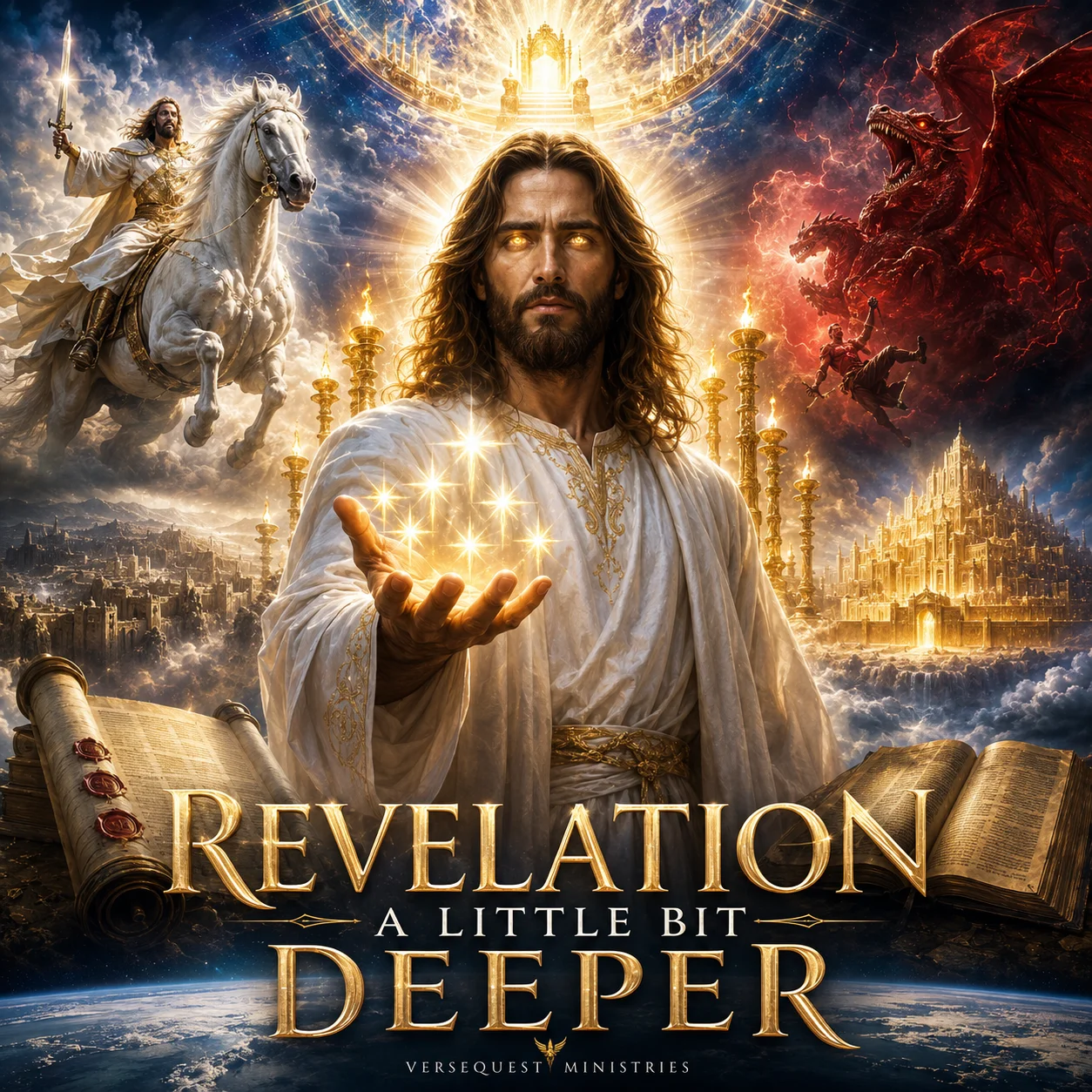
- Revelation a Little Bit Deeper – 100 KJV Studies
- Go beyond the familiar outlines of Revelation with 100 detailed KJV Bible studies examining passages, symbols, judgments, heavenly structures, prophetic distinctions, and doctrinal truths often overlooked or only briefly discussed.…
- $29.99
- Add to cart
-
-
Premium VerseQuest Books
-
-75%
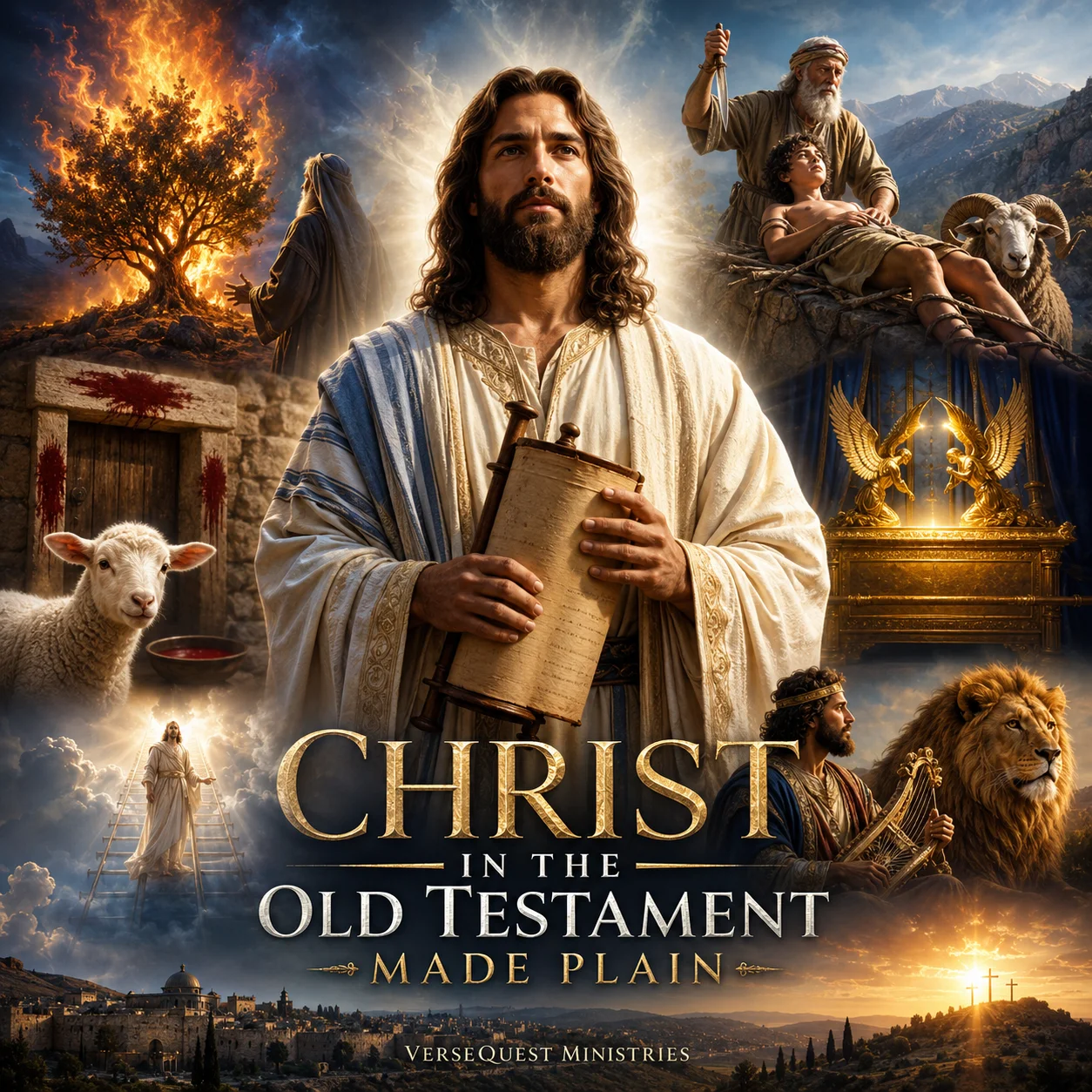
- Christ in the Old Testament Made Plain — 100-Essay KJV Study PDF
- A massive 670-page premium KJV Bible study PDF featuring 100 detailed essays showing Jesus Christ throughout the Old Testament in promise, type, sacrifice, Christophany, prophecy, suffering, resurrection, priesthood, and future…
- Original price was: $39.99.$9.99Current price is: $9.99.
- Add to cart
-
-75%
-
KJV Bible Study Resources
-
-60%
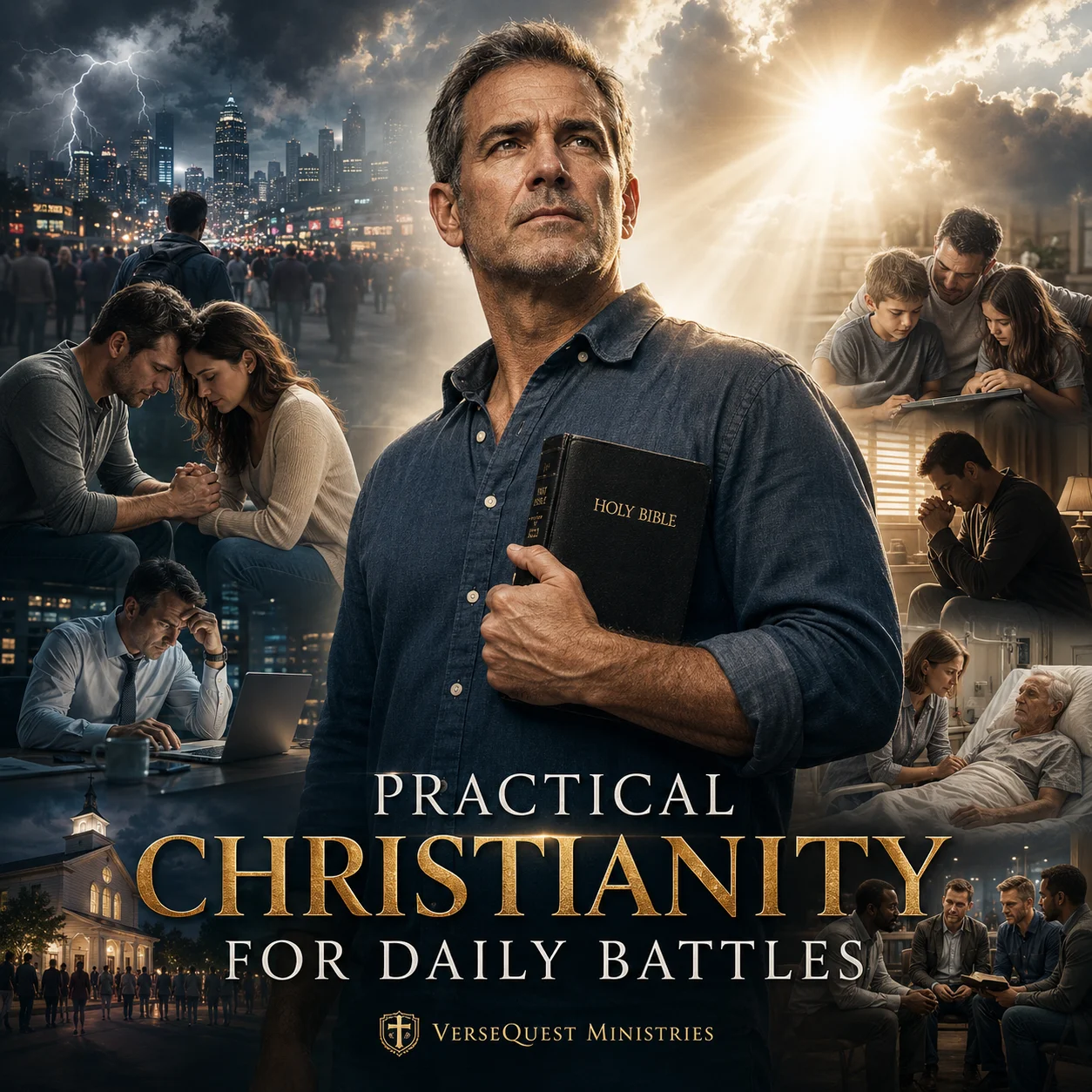
- Practical Christianity for Daily Battles – 329-Page KJV Study PDF
- A premium 329-page KJV study PDF with 40 full essays applying sound, rightly divided Bible doctrine to real daily Christian battles. Topics include temptation, anxiety, marriage, parenting, pornography, grief, church…
- Original price was: $24.99.$9.99Current price is: $9.99.
- Add to cart
-
-60%
-
Premium Studies
-
-25%
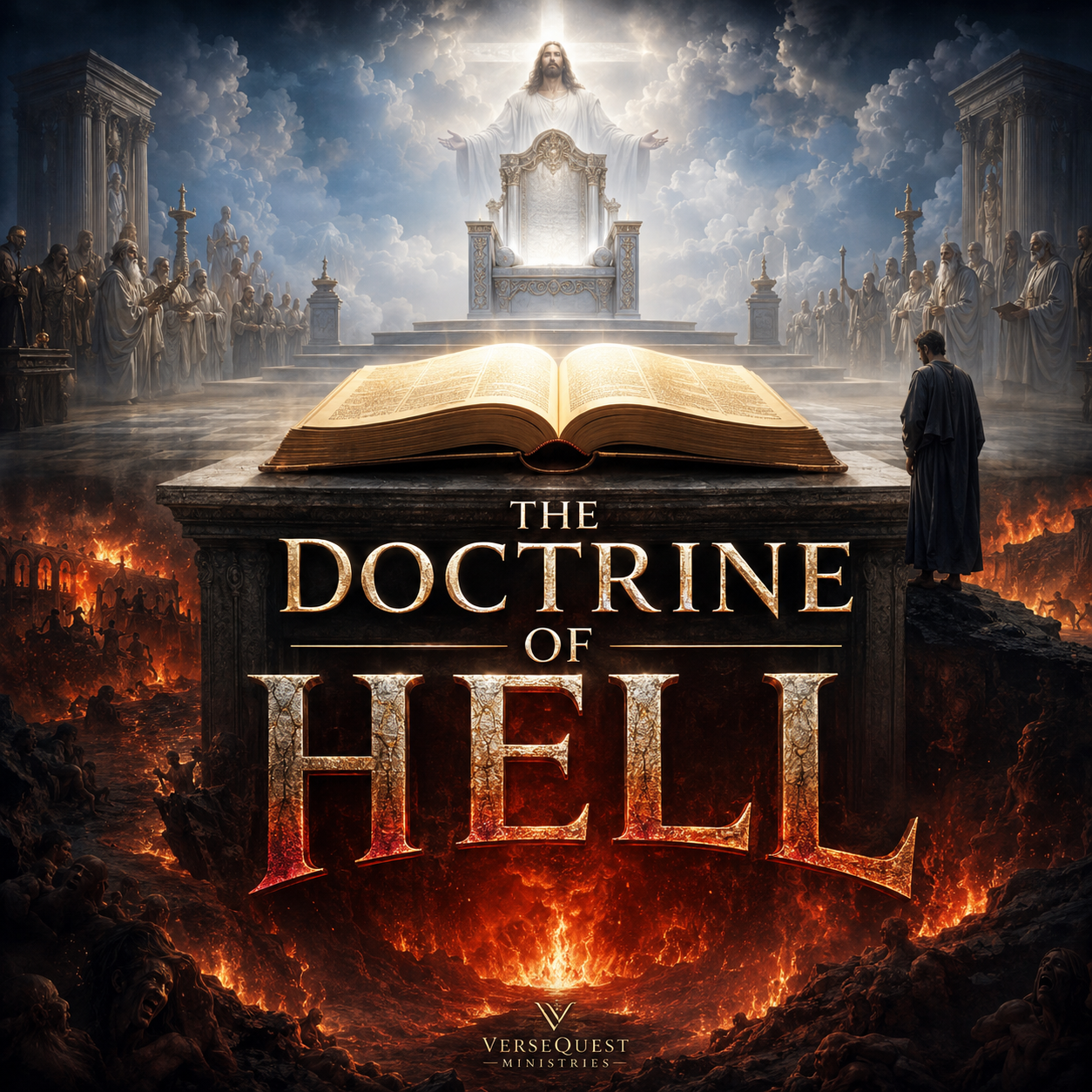
- The Doctrine of Hell — Premium Essay Series PDF
- A 383-page premium VerseQuest PDF study book containing 54 KJV essays on hell, fire, darkness, judgment, the lake of fire, the second death, and Jesus Christ as the only escape.
- Original price was: $39.99.$29.99Current price is: $29.99.
- Add to cart
-
-25%
-
Doctrine Series
-
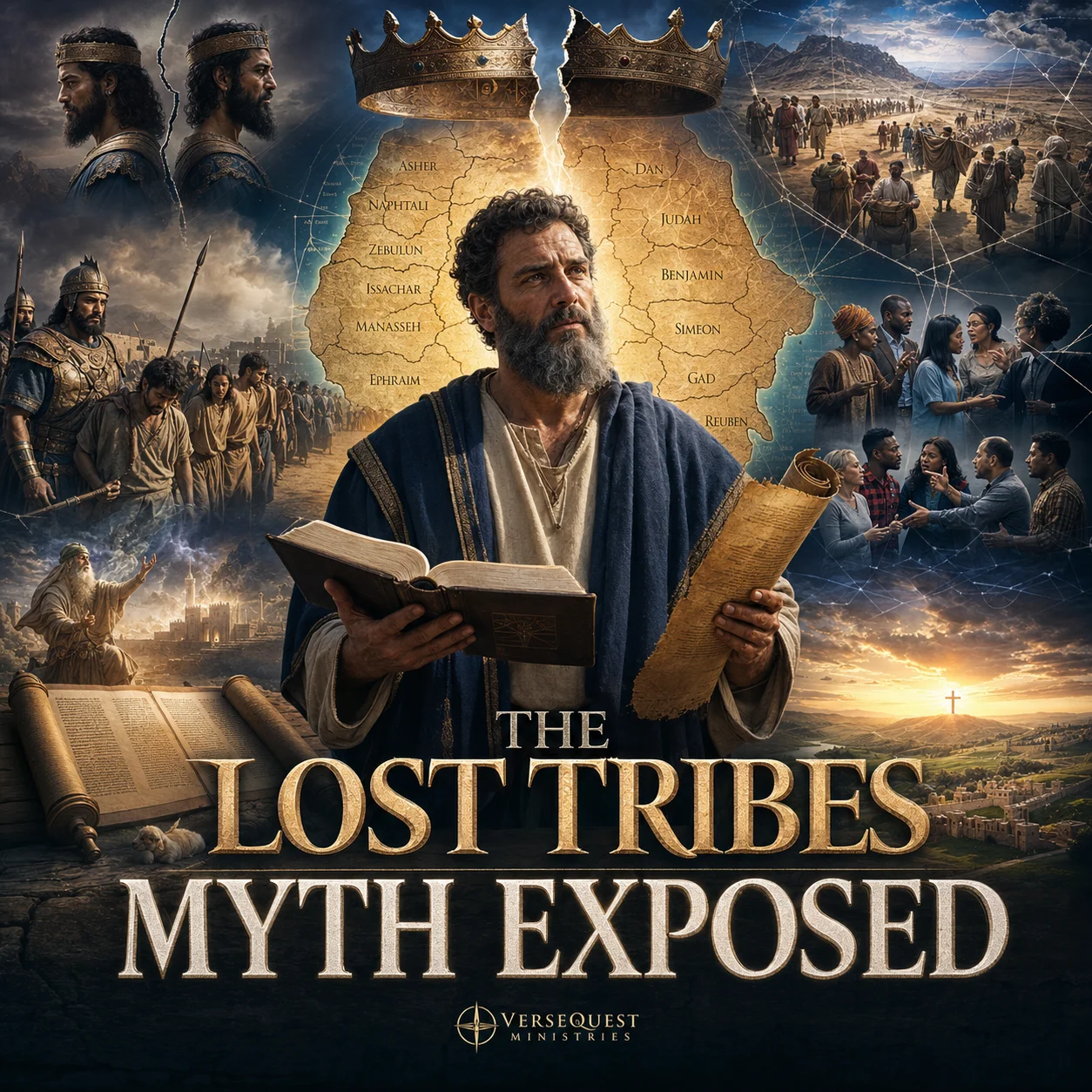
- The Lost Tribes Myth Exposed (213-Page Premium Study)
- A 213-page premium KJV study exposing the Lost Tribes myth, tribal identity errors, prophecy abuse, race theories, and false Israel claims through 35 detailed essays.
- $24.99
- Add to cart
-