
The Beast and the Ten Kings – The Final World Empire, Ten-King Confederacy, War Against the Lamb, and Christ’s Certain Victory (KJV Bible Study Chart)
Understand the beast and ten kings with this detailed KJV chart covering Revelation 17, Daniel’s ten-horn prophecy, the final world empire, the ten rulers’ temporary authority, their surrender of power to Antichrist, destruction of Babylon, war against the Lamb, and certain defeat at Christ’s glorious return.
$4.99
Description
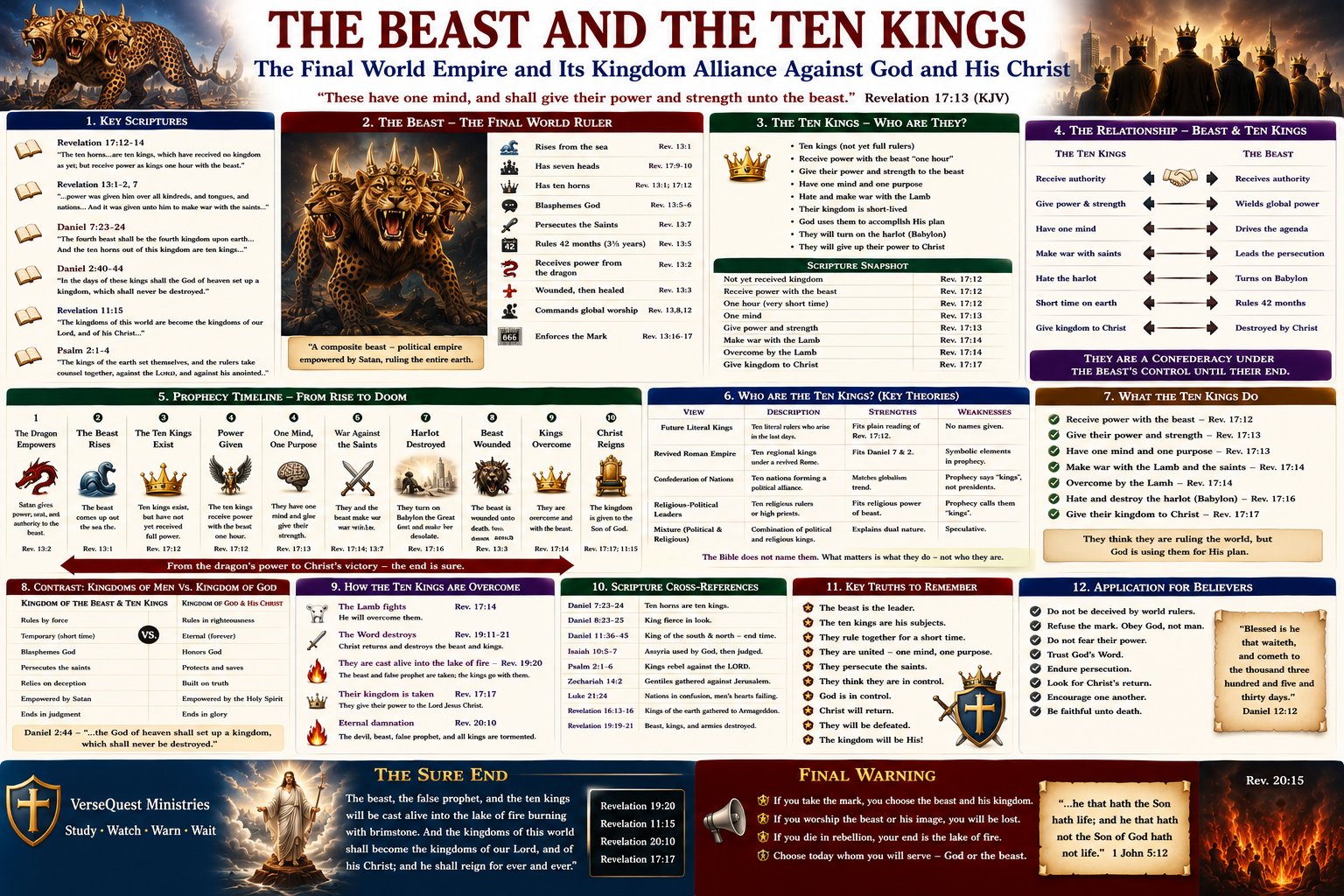
The Beast and the Ten Kings: The Final World Empire and Its Kingdom Alliance Against God and His Christ is a comprehensive, rightly divided KJV Bible study chart examining the final political confederacy revealed in Daniel and Revelation. It explains the identity and characteristics of the beast, the rise and temporary authority of the ten kings, their surrender of political power to the beast, their alliance against the saints and Jesus Christ, their destruction of Babylon, and their certain defeat when the Lamb returns as King of kings and Lord of lords.
Built around Revelation 17:12–17, Revelation 13:1–8, Daniel 7:7–27, Daniel 2:40–44, Revelation 11:15, Revelation 19:11–21, and Psalm 2:1–4, this chart brings together the prophetic passages describing the final Gentile world power immediately preceding the visible return of Jesus Christ. It presents the last world empire not as an accidental political development but as the final expression of mankind’s rebellion against God, empowered by Satan and brought together under the authority of the beast.
Revelation 17:12 identifies the ten horns seen by John as “ten kings, which have received no kingdom as yet; but receive power as kings one hour with the beast.” The text does not provide their personal names, modern national identities, or exact geographical boundaries. It does reveal what matters doctrinally: ten rulers emerge within the final prophetic system, receive authority for a brief period, act together with one mind, and surrender their power and strength to the beast.
The chart therefore resists the temptation to build prophecy upon speculative newspaper identification. Across generations, interpreters have attempted to name the ten kings through current European states, particular political alliances, revived imperial structures, regional blocs, or prominent world leaders. Some theories may recognize genuine prophetic patterns, but Scripture does not provide the names of the ten rulers in advance. The safer approach is to believe exactly what God revealed and refuse to manufacture details He did not give.
The ten kings are important because they form the political support structure beneath the final beast kingdom. They are not independent rivals who happen accidentally to cooperate. Revelation 17:13 says, “These have one mind, and shall give their power and strength unto the beast.” Their unity represents a coordinated surrender of sovereignty to the final ruler.
This is one of the defining political features of the last world empire. National rulers who normally protect their own authority become willing to transfer decisive power to a central ruler. The beast receives strength not only through personal ability and satanic empowerment but through the deliberate cooperation of subordinate kings.
The chart identifies the beast as the final world ruler and the political embodiment of the final satanic empire. Revelation 13 presents him rising from the sea with seven heads and ten horns. The imagery joins the ruler with the kingdom he represents, so the beast can be discussed both personally and corporately depending upon the passage.
He possesses seven heads and ten horns, speaks blasphemies against God, persecutes the saints, exercises authority for forty-two months, receives power from the Dragon, commands worldwide admiration and worship, and participates in the economic system connected with the mark.
The beast is therefore more than an unusually successful politician. He is the human ruler through whom Satan attempts to consolidate political, military, economic, and religious rebellion against the Lord.
Revelation 13:2 states that “the dragon gave him his power, and his seat, and great authority.” The final empire may possess recognizable governmental structures, armies, treaties, bureaucracies, financial mechanisms, and human institutions, but its deepest spiritual source is Satan.
This unseen source explains the character of the empire. It blasphemes God, persecutes the saints, demands worship, controls commerce, glorifies the beast, and finally makes war against Jesus Christ Himself.
Daniel 7 supplies an Old Testament foundation for understanding this final kingdom. Daniel sees a fourth beast described as dreadful, terrible, exceedingly strong, and different from the beasts before it. The beast possesses ten horns, and among them rises another little horn associated with the final blasphemous ruler.
The ten horns correspond with ten kings. Daniel 7:24 says, “And the ten horns out of this kingdom are ten kings that shall arise.” Revelation later expands the prophecy by showing those rulers functioning together under the beast immediately before Christ’s victory.
Daniel and Revelation therefore fit together rather than contradicting one another. Daniel provides the prophetic skeleton; Revelation adds detail to the final stage. Daniel sees the kingdoms and horns. John sees the beast, ten kings, Babylon, the saints, the false religious order, and the war against the Lamb.
Daniel 2 also contributes to the picture through Nebuchadnezzar’s image. The final stage of Gentile world power is represented by feet and toes composed of iron mixed with clay. The kingdom possesses strength but also internal instability and division.
From a dispensational prophetic perspective, the ten-toe stage of Daniel 2 and the ten-horn stage of Daniel 7 and Revelation 17 point toward the final divided kingdom structure existing when Jesus Christ returns to destroy human world rule and establish the Kingdom of God.
Daniel 2:44 declares, “And in the days of these kings shall the God of heaven set up a kingdom, which shall never be destroyed.” This verse is crucial because it places the final human kings and the divine Kingdom in direct contrast. The kingdoms of men do not gradually reform themselves into Christ’s Kingdom. God intervenes and replaces them.
The final world empire is therefore temporary by design. Political theorists may imagine a permanent global order, but Scripture has already written the obituary of every kingdom that rebels against Jesus Christ.
The chart examines several characteristics of the beast. He rises from the sea, connecting his appearance with the turbulent nations and Gentile world system. Revelation repeatedly uses waters and seas in contexts associated with peoples, multitudes, nations, and tongues.
He possesses seven heads, connecting the final ruler with the wider historical and prophetic beast system. He possesses ten horns, representing the ten kings who become especially prominent in the final stage.
He blasphemes God, showing that the coming world order is not religiously neutral. It eventually becomes openly hostile to biblical revelation and the authority of the true God.
He persecutes the saints, revealing that global unity beneath Antichrist does not create universal tolerance. The system demands allegiance and becomes violent toward those who refuse.
He rules for forty-two months in the particularly open phase of his beast authority. This corresponds with the three-and-a-half-year period repeatedly appearing in Daniel and Revelation.
He receives power from the Dragon. The true architect behind the beast empire is the same serpent who questioned God’s Word in Eden and has opposed God’s plan throughout Scripture.
He commands worldwide worship. Political authority eventually becomes religious idolatry. The world does not merely obey the beast as a head of government; it worships him.
He also enforces the mark, connecting political allegiance and religious worship with economic participation. Revelation 13 presents a system in which buying and selling becomes subject to submission to the beast.
The chart then asks, Who are the ten kings? Revelation gives several concrete answers without giving their personal identities. They are ten kings who have not yet received their kingdoms when John sees the vision. They receive authority “one hour with the beast,” signifying a comparatively short prophetic period.
They give their power and strength to the beast. They possess one mind and one purpose. They hate and destroy the harlot associated with Babylon. They join the final rebellion against the Lamb. Their authority exists only temporarily and only because God permits the prophetic programme to reach its appointed conclusion.
One interpretive possibility identifies them simply as ten literal future rulers whose precise identities remain unknown until the final prophetic setting develops. This has the advantage of taking Revelation 17:12 at its plain wording without requiring names Scripture does not supply.
Another long-standing interpretation connects the ten kings with a revived Roman imperial structure, emphasizing the relationship between Daniel’s fourth kingdom, the ten horns, the iron phase of Daniel 2, and the final Gentile political order. This view has significant historic support within dispensational prophecy teaching, though the exact modern configuration remains uncertain.
Other interpreters have proposed a confederation of nations in which ten political units or regions unite beneath one ruler. Such a view recognizes the international character of Revelation but must avoid replacing the Bible’s actual term “kings” with an entirely symbolic abstraction.
Some have suggested religious-political rulers or a hybrid governing structure in which spiritual and governmental power overlap. Revelation certainly reveals the close union of politics, economics, religion, and persecution, but again the text specifically calls these men kings.
Mystical or purely symbolic interpretations treat the number ten chiefly as a representation of completeness or political fullness. Symbolic significance may be present, but it should not erase the plain statement that the ten horns “are ten kings.”
The chart’s strongest approach is therefore appropriately cautious: the Bible does not tell us their names. The critical issue is not who modern speculation says they are, but what Scripture says they will do.
Revelation makes their actions unmistakable. They receive power with the beast, surrender their political strength to him, operate with one mind, make war with the Lamb, persecute the saints through the beast system, turn against the harlot Babylon, and remain beneath the beast’s authority until God’s words are fulfilled.
Revelation 17:17 explains the divine sovereignty operating even through their rebellion: “For God hath put in their hearts to fulfil his will, and to agree, and give their kingdom unto the beast, until the words of God shall be fulfilled.”
This does not mean God approves their sin or becomes the author of their rebellion. It means that rebellious rulers cannot escape divine sovereignty. They imagine themselves to be creating history according to their own ambitions while God uses even their choices to bring prophecy to its appointed end.
The ten kings think they are ruling the world, but God is using them for His plan. That is one of the great ironies of prophetic Scripture: kings may rage, councils may meet, armies may mobilize, treaties may be signed, and rulers may boast, yet none can move the prophetic clock one second beyond God’s appointment.
Psalm 2 anticipated the same spirit long before Revelation. “The kings of the earth set themselves, and the rulers take counsel together, against the LORD, and against his anointed.” Human rulers repeatedly attempt to break divine authority, but Heaven is never frightened by earthly coalitions.
The chart’s prophecy timeline begins with the Dragon empowering the beast. Satan gives the final ruler power, seat, and authority. The political structure visible on earth is rooted in a spiritual war against God.
The beast rises from the sea and gains international prominence. Political crisis, war, instability, deception, and prophetic conditions prepare the nations to accept concentrated authority.
The ten kings emerge as the rulers forming the final confederacy. They have not yet received full kingdom authority when first described, but they receive power with the beast for the appointed hour.
Their power is given to the beast. What had been distributed among separate rulers becomes concentrated beneath the final sovereign of the satanic system.
They develop one mind and one purpose. Their unity is striking because kings historically compete for influence. Revelation shows them overcoming those divisions long enough to strengthen the beast.
They then make war against the saints through the beast’s system and ultimately participate in the larger rebellion against Jesus Christ. Political unity becomes persecuting unity because agreement without truth eventually requires suppression of anyone who refuses the common lie.
The kings also destroy the harlot. Revelation 17 reveals a corrupt religious Babylon riding the beast and influencing kings, nations, commerce, and spiritual life. Yet the kings eventually hate the whore, make her desolate and naked, eat her flesh, and burn her with fire.
This demonstrates the temporary marriage between political tyranny and apostate religion. False religion helps political power consolidate authority, manipulate conscience, and gather the masses. Once the beast no longer needs the harlot, the political system destroys the religious partner that helped build it.
The beast himself experiences the famous wound and recovery imagery of Revelation 13, producing astonishment throughout the world and strengthening his counterfeit messianic identity. The earth marvels after the beast and asks who is able to make war with him.
The kings and beast then move toward their final rebellion against the Lamb. Revelation 17:14 declares, “These shall make war with the Lamb, and the Lamb shall overcome them.”
The language almost understates the absurdity of the confrontation. Ten kings and the beast assemble the political and military power of their world system and decide to fight the One by whom all things consist.
The reason for the outcome is given immediately: “for he is Lord of lords, and King of kings.” Jesus Christ does not win because He manages to assemble a slightly larger army. He wins because the throne belongs to Him by nature, right, prophecy, creation, redemption, and divine decree.
Revelation 19 describes the visible return of Jesus Christ. Heaven opens, and the Faithful and True Rider appears upon a white horse. His eyes are as a flame of fire, many crowns are upon His head, and the armies of heaven follow Him.
The beast, kings, and armies of the earth gather together to make war against Christ and His army. Their final coalition ends immediately beneath the authority of the returning Lord.
The beast and false prophet are taken and cast alive into the lake of fire burning with brimstone. The remaining hostile forces are destroyed by the sword proceeding from Christ’s mouth.
The ten kings therefore do not inherit the future. They are overcome by the Lamb along with the system whose authority they chose to strengthen. Human government reaches its final satanic form and is then shattered by the true King.
The Kingdom belongs to Jesus Christ. Revelation 11:15 announces, “The kingdoms of this world are become the kingdoms of our Lord, and of his Christ.” Daniel 2:44 likewise promises a Kingdom established by the God of heaven that will never be destroyed.
The chart’s contrast between the Kingdom of the Beast and Ten Kings and the Kingdom of God and His Christ exposes two completely different forms of rule. The beast rules by force, while Christ rules in righteousness.
The beast’s kingdom is temporary; Christ’s Kingdom leads into everlasting dominion. The beast blasphemes God; Christ honours and reveals the Father. The beast persecutes saints; Christ protects, raises, rewards, and reigns with His saints.
The beast relies upon deception; Christ is the Truth. The beast receives his power from Satan; Christ possesses all power inherently and by divine right.
The beast’s empire ends in judgment. Christ’s Kingdom ends in glory and ultimately gives way to the perfect eternal order under God.
The kingdoms of men have repeatedly promised utopia through centralized authority, military power, political revolution, economic control, or ideological unity. Revelation reveals where mankind’s final experiment without God ends: a blaspheming ruler, coerced worship, persecuted saints, controlled commerce, rebellious kings, and armies gathered against Christ.
Daniel’s prophecy supplies the divine answer. “In the days of these kings shall the God of heaven set up a kingdom, which shall never be destroyed.” The stone cut without hands destroys the image of Gentile world power. God does not repair Nebuchadnezzar’s statue; He replaces it.
The chart explains how the ten kings are overcome. First, the Lamb fights and overcomes them. Revelation 17:14 settles the result before the battle is described in detail.
Second, the Word destroys the beast’s military coalition. Revelation 19 pictures the sword from Christ’s mouth bringing the rebellion to its end. The same Christ whose Word created the world requires no human weapon to defeat its armies.
Third, the beast and false prophet are cast alive into the lake of fire. Their supernatural and political claims end beneath immediate divine judgment.
Fourth, the kings’ temporary authority disappears when Christ seizes the kingdoms of the world. They surrendered their power to the beast and therefore share the collapse of his system.
Fifth, Satan himself is ultimately judged. He is bound during Christ’s millennial Kingdom and, after his final rebellion, is cast into the lake of fire forever.
The final triumph does not belong to the Dragon, beast, false prophet, Babylon, or ten kings. It belongs to Jesus Christ.
The chart includes useful Scripture cross-references connecting the ten kings with the larger prophetic picture. Daniel 7:23–24 presents the ten horns and kings within the fourth beast kingdom. Daniel 8 adds characteristics of the fierce final ruler. Daniel 11 develops the arrogant end-time king.
Isaiah contains prophecies concerning the Assyrian adversary and God’s judgment of proud world rulers. Psalm 2 pictures rebellious kings gathering against the LORD and His Anointed.
Zechariah 14 places the nations around Jerusalem and then reveals the LORD going forth to fight against them. Luke 21 speaks of distress among the nations. Revelation 16 gathers the kings of the earth toward the final battle, while Revelation 19 reveals their defeat at Christ’s appearing.
The chart also presents important truths to remember. The beast is the leader; the ten kings are subordinate rulers. Their temporary authority is real, but they deliberately surrender decisive power and strength to him.
They rule together for only a short time. Their unity is genuine but temporary. They possess one mind concerning their support of the beast, but unity does not make their cause righteous.
They persecute the saints because the beast’s world order cannot tolerate loyalty to another King. Biblical faith becomes politically dangerous when government demands the worship that belongs to God.
They imagine themselves in control, but God remains sovereign. Revelation 17:17 is one of the strongest statements of providence in the passage: God uses their agreement and even their transfer of authority to bring His prophetic Word to fulfillment.
Jesus Christ will return. Their confederacy will not stop Him, their armies will not delay Him, their propaganda will not discredit Him, and their technology will not defend them.
They will be defeated, and the Kingdom will belong to Christ. Every crown temporarily worn in rebellion will bow before the One whose many crowns signify rightful universal authority.
The doctrine carries practical lessons for believers. Christians should not be deceived by world rulers. Political power is never the believer’s final hope, whether it appears conservative, progressive, nationalist, globalist, religious, secular, democratic, monarchical, or authoritarian.
Human government has a lawful role ordained by God, but no earthly state can become the Saviour. The believer’s ultimate allegiance belongs to Jesus Christ.
The chart also warns against the future mark of the beast. During the Tribulation, obedience to God will require rejection of the beast’s worship and economic system, regardless of the earthly cost.
Believers should not fear human power. Revelation was written while empires appeared overwhelming, yet the Bible shows every final human throne collapsing before Christ.
Christians must trust God’s Word. Prophecy should not be rewritten each time a political alliance changes. The identity of individual kings may remain hidden, but their actions and destination are already revealed.
The saints must endure persecution faithfully. Human rulers can imprison, exclude, impoverish, or kill God’s servants, but they cannot remove eternal life, reverse resurrection, or prevent Christ’s victory.
The Church should look for Christ’s return. From the pre-Tribulation viewpoint presented in the chart, the Body of Christ’s hope is the Rapture before the final beast confederacy reaches its Tribulation form.
The present Church should therefore not become consumed with trying to identify the ten kings prematurely. Prophecy was given to build faith in God’s Word, not to manufacture endless lists of political candidates.
The believer should encourage one another. The apparent rise of global rebellion does not change the ending. God has already revealed who wins.
The saints should remain faithful unto death when obedience becomes costly. Revelation repeatedly contrasts the short power of the beast with the eternal reward of those belonging to Jesus Christ.
The chart’s final warning concerns allegiance. Those living in the Tribulation will face a world system demanding worship, the mark, and submission. Choosing the beast means choosing his kingdom and its judgment.
Those who worship the beast and receive his mark receive the same divine wrath announced in Revelation 14. A temporary kingdom cannot provide eternal safety.
The believer’s answer is Jesus Christ. First John 5:12 states, “He that hath the Son hath life; and he that hath not the Son of God hath not life.” Eternal life is not found in political alliances, kings, empires, religious systems, or world government.
The sure end is already written. The ten kings will surrender their strength to the beast; the beast will lead the final rebellion; the political system will destroy the harlot it once used; the nations will gather against the Lamb; and Jesus Christ will overcome them.
The beast and false prophet will be cast alive into the lake of fire. Satan will ultimately join them there. The kingdoms of this world will become the kingdoms of the Lord and His Christ.
The final world empire lasts only for its appointed prophetic hour. Jesus Christ’s dominion has no expiration date.
This resource is ideal for personal Bible study, Revelation 17 teaching, ten-kings prophecy, Antichrist studies, Daniel 2 and Daniel 7 instruction, revived Roman Empire discussions, beast-system studies, Mystery Babylon lessons, Tribulation timelines, mark-of-the-beast teaching, Second Coming studies, Kingdom prophecy, Church-and-Israel distinctions, Sunday school, homeschool Bible curriculum, Christian schools, Bible institutes, prophecy conferences, pastoral training, and sermon preparation.
The beast and ten kings, Revelation 17 ten kings, ten horns ten kings, final world empire, Antichrist kingdom, beast from the sea, ten-king confederacy, Daniel fourth kingdom, Daniel ten horns, Daniel 2 ten toes, revived Roman Empire, final world government, kings give power to beast, one mind one purpose, Mystery Babylon, destruction of the harlot, war against the Lamb, Armageddon, Second Coming of Christ, Kingdom of God
The ten horns of Revelation 17 are explicitly identified as ten kings who have not yet received their final kingdoms when John sees the vision. They receive authority with the beast for a short prophetic period, possess one mind, and surrender their power and strength to the beast. Scripture reveals their actions clearly but does not give their personal names, so modern identification should remain cautious rather than dogmatic.
The beast is both the final ruler and the political system he embodies. Revelation 13 describes him rising from the sea with seven heads and ten horns, receiving authority from the Dragon, blaspheming God, persecuting saints, commanding worship, and participating in the mark system. His forty-two-month period of open authority corresponds with the intensified final portion of Daniel’s seventieth week.
Daniel 7 supplies the prophetic foundation for the ten kings by identifying the ten horns of the fourth kingdom as ten kings that shall arise. Daniel 2 presents the final divided form of Gentile world power through the feet and toes of iron mixed with clay. These passages are commonly connected within dispensational prophecy teaching with Revelation’s final ten-king confederacy.
The exact modern identity of the ten kings remains unrevealed. Interpretations include ten literal future rulers, a revived Roman imperial structure, ten political regions or nations, religious-political leaders, or symbolic political completeness. The text itself should control the doctrine: they are kings, they receive temporary authority, and they give their kingdom, power, and strength to the beast.
Revelation 17:17 states that God puts it into their hearts to fulfill His will, agree together, and give their kingdom unto the beast until the words of God are fulfilled. This demonstrates divine sovereignty over rebellious political rulers without making God the author of their sin. They imagine themselves sovereign while their decisions accomplish the prophetic result God already announced.
The kings eventually hate and destroy the harlot associated with Babylon. This demonstrates the unstable alliance between apostate religion and political tyranny. False religion may assist the beast’s rise, but the political system eventually destroys the religious institution it used.
The ten kings then make war with the Lamb, and the Lamb overcomes them because He is Lord of lords and King of kings. Their combined political, military, and economic power cannot withstand Jesus Christ when He returns visibly in Revelation 19.
The beast and false prophet are cast alive into the lake of fire at the Second Coming. The hostile armies gathered with the beast are destroyed. Scripture does not specifically state that the ten kings are cast alive into the lake of fire with the beast and false prophet, so that distinction should be preserved.
Jesus Christ’s Kingdom replaces the final Gentile world empire. Daniel 2:44 states that in the days of these kings the God of heaven establishes a Kingdom that will never be destroyed. Revelation 11:15 announces that the kingdoms of this world become the kingdoms of the Lord and His Christ.
The final empire therefore represents the culmination of human government united against God, while Christ’s Kingdom represents righteous divine government. The beast rules through force, deception, blasphemy, persecution, and satanic empowerment; Jesus Christ rules through righteousness, truth, holiness, and rightful authority.
The doctrine should cause believers to trust Scripture rather than political speculation, refuse fear of human rulers, distinguish temporary world power from Christ’s eternal Kingdom, remain faithful under pressure, and look for Jesus Christ. The Church’s hope is not the beast or the identification of the ten kings but the promised coming of the Lord.
Beast-and-ten-kings studies, Revelation 17 teaching, Daniel 2 prophecy, Daniel 7 prophecy, ten-horn studies, final-world-empire teaching, Antichrist kingdom studies, revived-Roman-Empire discussions, confederation-of-nations studies, Mystery Babylon teaching, beast-system instruction, Tribulation timelines, mark-of-the-beast studies, war-against-the-Lamb lessons, Second Coming teaching, millennial Kingdom studies, Church-and-Israel distinctions, prophecy conferences, Sunday school lessons, homeschool Bible curriculum, Christian school teaching, Bible institute classes, sermon preparation
King James Bible, Strong’s Concordance, Thompson Chain-Reference Bible, Treasury of Scripture Knowledge, Nave’s Topical Bible, Daniel 2 and 7 study notes, Daniel prophecy timelines, Revelation 13 and 17 commentary materials, Antichrist names and titles charts, ten-kings comparison worksheets, revived Roman Empire studies, Mystery Babylon resources, mark-of-the-beast studies, Tribulation timelines, Second Coming charts, Kingdom prophecy materials, Church-versus-Israel resources, Pauline mystery outlines, VerseQuest Revelation and prophecy charts
Related products
-
Premium VerseQuest Books
-
-75%
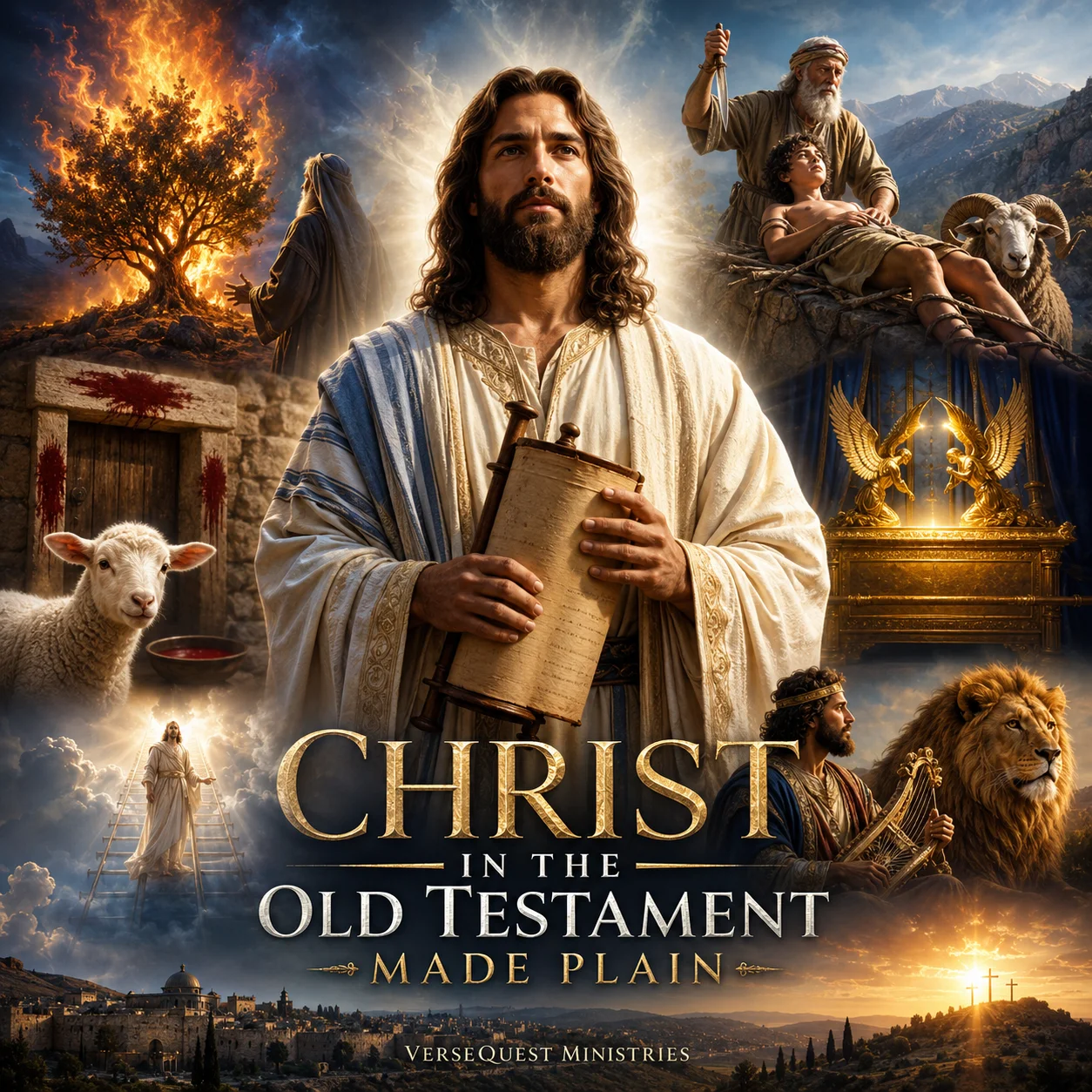
- Christ in the Old Testament Made Plain — 100-Essay KJV Study PDF
- A massive 670-page premium KJV Bible study PDF featuring 100 detailed essays showing Jesus Christ throughout the Old Testament in promise, type, sacrifice, Christophany, prophecy, suffering, resurrection, priesthood, and future…
- Original price was: $39.99.$9.99Current price is: $9.99.
- Add to cart
-
-75%
-
VerseQuest Premium Library
-
-67%
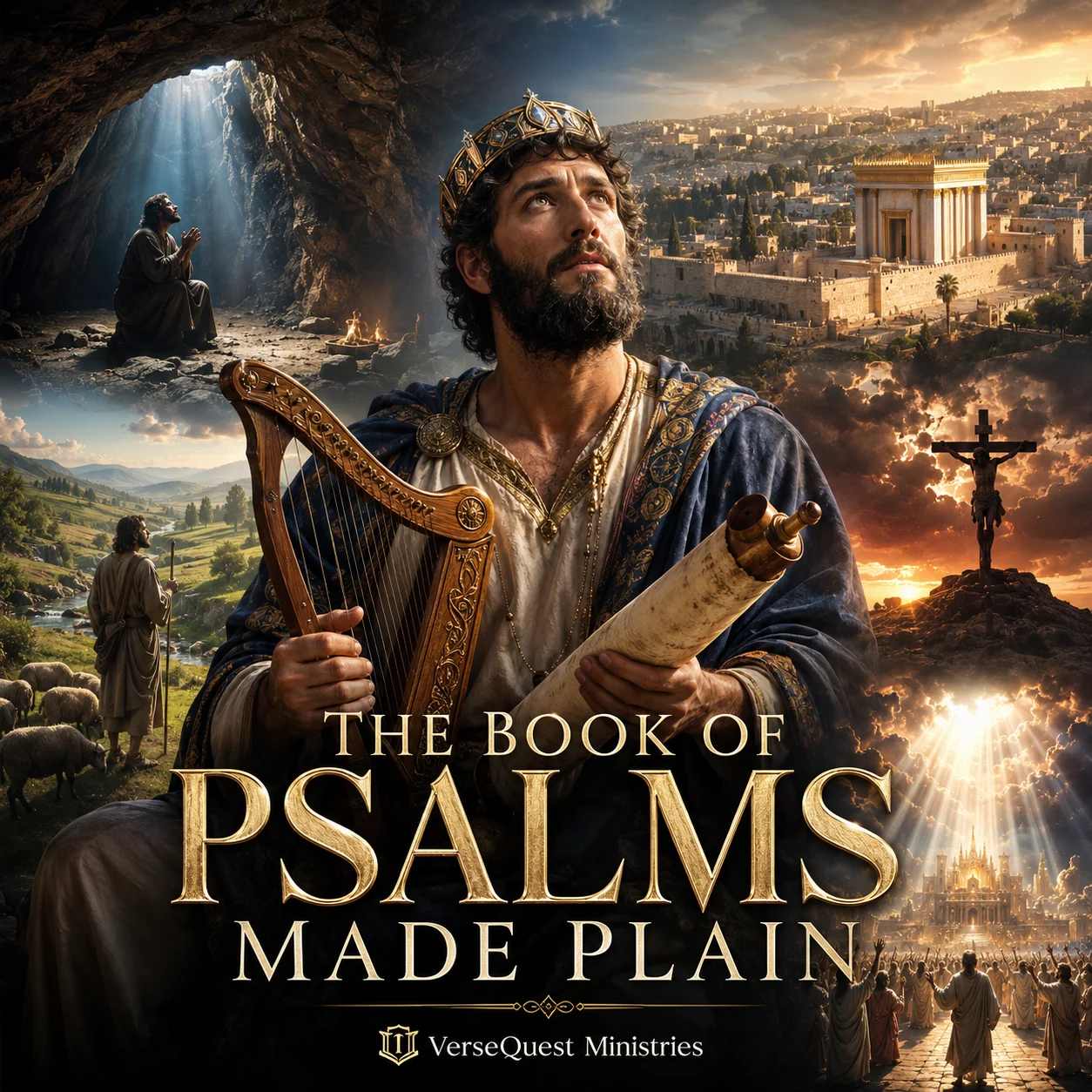
- The Book of Psalms Made Plain – 383-Page KJV Psalm Study
- The Book of Psalms Made Plain is a 383-page premium KJV Bible study featuring 54 detailed essays through the major themes, doctrines, prophecies, prayers, laments, and praises of the Psalms.…
- Original price was: $29.99.$9.99Current price is: $9.99.
- Add to cart
-
-67%
-
Jesus Christ
-
-67%
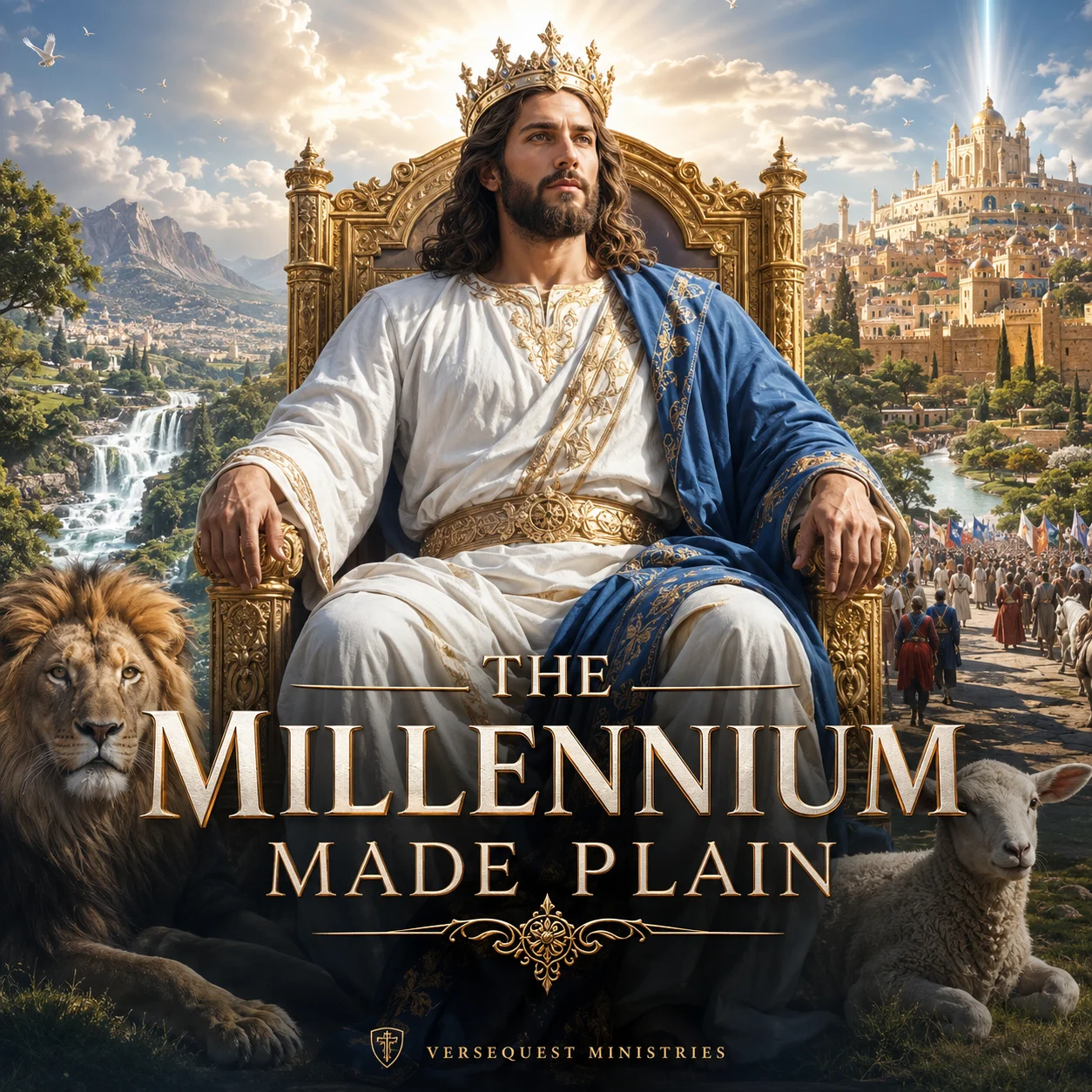
- The Millennium Made Plain – 416-Page KJV Study on Christ’s Future Reign
- A premium 416-page KJV, rightly divided Bible study on the literal future Millennial reign of Jesus Christ. The Millennium Made Plain explains Revelation 19–20, Israel’s restoration, Satan’s binding, the Kingdom…
- Original price was: $29.99.$9.99Current price is: $9.99.
- Add to cart
-
-67%
-
Jesus Christ Studies
-
-67%
- Jesus Christ Prophet Priest and King – 441-Page PDF Study
- A 441-page premium KJV PDF study on Jesus Christ as Prophet, Priest, and King. This detailed VerseQuest book covers Christ’s prophetic ministry to Israel, His finished sacrifice and present intercession…
- Original price was: $29.99.$9.99Current price is: $9.99.
- Add to cart
-
-67%
-
Jesus Christ / Christology
-
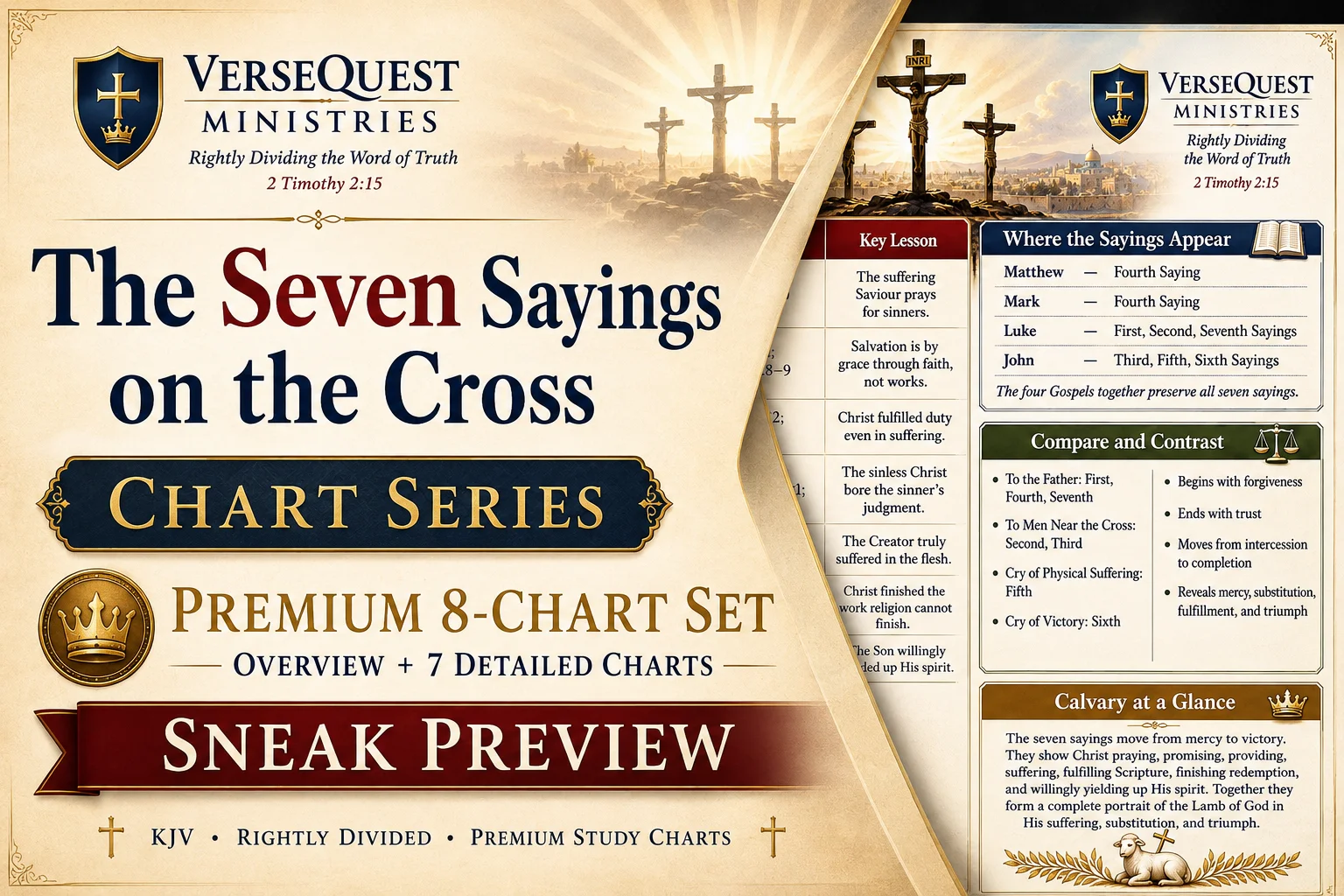
- The Seven Sayings on the Cross – Premium 8-Chart KJV Study Set
- A premium VerseQuest Ministries digital PDF study set on The Seven Sayings on the Cross, featuring an overview chart plus seven detailed KJV Bible study charts. This resource examines Calvary,…
- $12.99
- Add to cart
-