

Milk Stage Discipleship: An 80-Lesson KJV Foundation for New Believers
Milk Stage Discipleship is a 595-page downloadable KJV Bible-study book containing 80 thorough lessons designed to establish believers in the foundational doctrines of the Christian faith. The studies progress from the new birth and the authority of Scripture through the Godhead, sin, the gospel, salvation by grace, eternal security, Christian obedience, church life, spiritual warfare, daily conduct, death, resurrection, heaven, hell, and the coming of Jesus Christ.
The PDF includes the complete 80-lesson series, a substantial introduction, a concluding charge, and a detailed illustrated growth chart. It is suitable for personal study, new-believer discipleship, sermon preparation, Sunday school, family Bible study, homeschool instruction, small groups, and ministry training.
Format: Downloadable and printable PDF
Length: 595 pages
Price: $29.99
$29.99
Description
Milk Stage Discipleship is a comprehensive 595-page downloadable PDF book designed to establish new believers—and strengthen older believers—in the foundational doctrines of the Christian faith. Containing 80 substantial Bible studies, a thorough introduction, a concluding charge, and a detailed full-color study chart, this resource provides an orderly path from the new birth to the believer’s blessed hope in Jesus Christ.
The Christian life begins with birth, but birth is not maturity. A newborn believer possesses eternal life immediately, yet he still must learn what happened when he was saved, what God has said in his word, how to distinguish truth from religious tradition, and how to walk as a child of God. First Peter 2:2 commands, “As newborn babes, desire the sincere milk of the word, that ye may grow thereby.” Milk is not shallow truth. It is foundational truth—the nourishment that establishes the believer before he begins reaching for more advanced doctrine.
The opening lessons establish the authority and preservation of Scripture, the necessity of regular Bible reading, the difference between reading and studying, and the importance of recognizing biblical context. Readers are taught to approach the King James Bible as the preserved words of God rather than as an unreliable religious document waiting for modern scholars to correct it. The book explains why every word matters, why Scripture must interpret Scripture, and why all Scripture is profitable even though every command is not addressed doctrinally to the Body of Christ.
The studies then examine the God of the Bible, including his eternality, holiness, sovereignty, faithfulness, love, and creative authority. Separate lessons establish the biblical doctrine of the Godhead, the full deity and genuine humanity of Jesus Christ, his virgin birth and sinlessness, and the person and work of the Holy Ghost. These subjects are presented plainly without reducing the Godhead to three gods, turning the persons of God into three temporary masks, or replacing the Holy Ghost with emotional excitement and religious spectacle.
A major portion of the book explains man’s fall, universal sinfulness, the wages of sin, and the certainty of divine judgment. The gospel is defined directly from 1 Corinthians 15:1–4 as the death, burial, and resurrection of Jesus Christ. Separate studies examine the blood atonement, Christ’s substitutionary death, his bodily resurrection, his ascension, and his present ministry at the right hand of God. The gospel is carefully separated from morality, religious ceremony, water baptism, church membership, personal reformation, and every other human attempt to add another payment to Christ’s finished work.
The section on receiving salvation explains repentance toward God, saving faith, grace, the new birth, justification, imputed righteousness, and redemption. Readers are shown why salvation cannot be earned, purchased, preserved, or completed through human works. Repentance is not presented as a promise of sinless living, and faith is not reduced to repeating a religious formula. Salvation is the free gift of God received by trusting Jesus Christ and the blood he shed for sinners.
The book also provides an extensive examination of the believer’s new position in Christ. Reconciliation, forgiveness, adoption, the indwelling and sealing of the Holy Ghost, the believer’s new identity, eternal security, and assurance of salvation are carefully distinguished and explained. The reader learns the difference between standing and state, relationship and fellowship, justification and practical sanctification, and eternal life and daily Christian growth. These distinctions protect believers from both careless living and the fear that every failure removes them from God’s family.
The Christian’s relationship with God is developed through studies on Christ as the one Mediator, direct access to the throne of grace, prayer, confession, discipleship, obedience, holiness, and the fear of the Lord. Salvation is kept entirely free while discipleship is shown to involve sacrifice, service, self-denial, correction, and spiritual growth. Grace is neither turned into a religious payment plan nor twisted into an excuse for lawlessness.
The local church, water baptism, the Lord’s Supper, Christian fellowship, membership in the Body of Christ, personal witnessing, missions, and stewardship receive careful attention. Water baptism is presented as an important act of obedience following salvation, not as a means of regeneration. The Lord’s Supper is explained as a memorial rather than a repeated sacrifice. The local church is shown to be an assembly of believers gathered for preaching, teaching, prayer, fellowship, correction, service, and the spread of the gospel—not a religious entertainment venue staffed by professionals and attended by spectators.
Readers are also prepared for the internal and external conflicts of Christian life. The book examines the believer’s two natures, the operation of temptation, the world system, the reality and limitations of Satan, the whole armour of God, the fruit of the Spirit, love for God, and biblical charity. Spiritual warfare is presented through Scripture rather than sensational speculation. The Devil is treated as a genuine enemy without giving him the attributes or authority that belong to God alone.
The final portion brings doctrine into everyday life through lessons on forgiveness, humility, thanksgiving, contentment, marriage, parenting, honest labor, speech, sexual purity, suffering, and divine chastening. The concluding studies examine physical death, the believer’s presence with the Lord, the reality of heaven and hell, the future resurrection of the body, and the promised return of Jesus Christ for his Church. The series ends where Christian hope properly ends—not with human progress, political rescue, or world reform, but with the personal return of the Saviour.
This 595-page digital book is suitable for Bible students, pastors, preachers, Sunday school teachers, families, discipleship leaders, Christian schools, homeschool settings, and believers who want an organized foundation in essential Bible doctrine. Individual lessons may be read devotionally, studied as complete chapters, taught in sequence, or adapted into sermons and classroom lessons.
The downloadable PDF is priced at $29.99 and includes the complete 80-lesson series, introduction, conclusion, and the illustrated Milk Stage Discipleship 80-Lesson Growth Chart.
The new birth as the beginning of Christian life rather than the completion of Christian growth. The authority, inspiration, purity, preservation, and sufficiency of the King James Bible. The importance of orderly Bible reading, serious study, scriptural comparison, and biblical context. Rightly dividing the word of truth without denying that all Scripture is inspired and profitable. God’s eternality, sovereignty, holiness, love, faithfulness, providence, and creative authority. The biblical Godhead: the Father, the Word, and the Holy Ghost as one God and distinct persons. The full deity, genuine humanity, virgin birth, and absolute sinlessness of Jesus Christ. The Holy Ghost as a divine person rather than an emotional sensation or religious force. Adam’s fall, the entrance of sin, universal guilt, death, and the certainty of judgment. The gospel as Christ’s death for our sins, burial, and bodily resurrection. The necessity and sufficiency of the blood atonement. Christ’s substitutionary death, bodily resurrection, ascension, advocacy, and present intercession. Repentance toward God and personal faith in the Lord Jesus Christ. Salvation as the free gift of God apart from works, sacraments, baptism, or religious merit. Regeneration, justification, imputed righteousness, redemption, and reconciliation. The believer’s adoption, forgiveness, indwelling Spirit, sealing, identity, and acceptance in Christ. Eternal security and assurance based upon God’s promises rather than changing feelings. Jesus Christ as the sole Mediator between God and men. Direct access to God through Christ and the biblical purpose of prayer. The distinction between judicial forgiveness and restored daily fellowship. The difference between free salvation and costly discipleship. Obedience and holiness as the fruit of salvation rather than its purchase price. The fear of the Lord as the beginning of wisdom and practical spiritual stability. Water baptism as obedience and identification rather than regeneration. The Lord’s Supper as a memorial rather than a repeated sacrifice. The purpose and responsibility of the local church. The unity and diversity of believers within the Body of Christ. Fellowship governed by both charity and doctrinal truth. Personal evangelism, worldwide missions, and faithful stewardship. The continuing conflict between the flesh and the new man. The operation of temptation and the believer’s responsibility to resist it early. Separation from the world system without abandoning compassion for lost people. Satan as a genuine but created and limited spiritual enemy. The whole armour of God and the biblical nature of spiritual warfare. The fruit of the Spirit contrasted with religious excitement and outward performance. Biblical love, charity, humility, forgiveness, thanksgiving, and contentment. God’s design for marriage, parenthood, the home, and generational instruction. Honest labor, responsible conduct, and the Christian’s testimony in the workplace. Truthful, gracious, disciplined, and profitable speech. Sexual purity and the believer’s responsibility to glorify God in the body. Suffering in a fallen world and the danger of shallow prosperity teaching. Fatherly chastening distinguished from eternal condemnation. Physical death, the conscious presence of saved believers with Christ, and future bodily resurrection. The reality of heaven, hell, eternal judgment, and everlasting life. The pre-Tribulation coming of Jesus Christ for his Church as the believer’s blessed hope.
Central Argument
The Christian life begins with the supernatural new birth, but spiritual maturity requires continued nourishment from the word of God. A believer must become deeply rooted in foundational truth before attempting to understand advanced doctrinal and prophetic subjects. Milk-stage doctrine is therefore not insignificant doctrine; it is the groundwork upon which stable Christian growth is built.
Major Observations
- Spiritual life comes from God, while spiritual growth occurs through the sincere milk of the word.
- A believer cannot develop properly while doubting, correcting, or neglecting the Bible.
- The gospel concerns what Jesus Christ accomplished, not what the sinner promises to accomplish.
- Salvation is received entirely by grace through faith apart from works.
- Good works belong after salvation as its fruit, never before salvation as its price.
- The believer’s standing in Christ is complete even though his daily state requires continued growth.
- Sin in the believer’s life damages fellowship, testimony, joy, and usefulness but does not reverse the new birth.
- Eternal security rests upon God’s power, Christ’s finished work, and the sealing of the Holy Spirit.
- Discipleship is costly, but eternal life remains God’s free gift.
- The local church is an assembly of believers rather than a building, performance, or religious corporation.
- Biblical spiritual warfare centers upon truth, faith, righteousness, Scripture, prayer, and steadfastness.
- Christian maturity must appear in speech, relationships, work, marriage, family life, purity, and conduct.
- Suffering does not automatically indicate divine abandonment or a lack of faith.
- Death does not end the conscious existence of the redeemed person.
- The believer’s ultimate hope is the coming of Jesus Christ and the future resurrection of the body.
Important Distinctions
- Israel and the Church: Both appear in Scripture, but they are not interchangeable and do not possess identical doctrinal instructions or prophetic destinies.
- Law and Grace: The law reveals sin and condemns the transgressor; grace saves the guilty sinner through Christ’s completed payment.
- Salvation and Discipleship: Salvation is received freely by faith; discipleship involves obedience, sacrifice, service, and spiritual growth.
- Standing and State: The believer’s standing in Christ is complete and secure; his daily state may rise or fall according to fellowship and obedience.
- Justification and Sanctification: Justification is God’s completed declaration of righteousness; practical sanctification concerns the believer’s continuing growth in holiness.
- Relationship and Fellowship: The saved person remains God’s child, although disobedience can damage communion, joy, testimony, and usefulness.
- The Flesh and the New Man: Salvation imparts a new nature but does not improve or eliminate the old flesh.
- Symbol and Reality: Water baptism and the Lord’s Supper represent spiritual truths but do not create or complete salvation.
- Rapture and Second Advent: Christ’s coming for his Church must not be confused with his later visible return to judge and reign.
- Free Salvation and Earned Rewards: Eternal life is a gift; rewards concern faithful service performed after salvation.
Doctrinal Conclusions
Jesus Christ is the only Saviour, the only sufficient sacrifice, and the only Mediator between God and men. His blood paid the debt completely, his resurrection guarantees the believer’s justification and future resurrection, and his present intercession secures the believer’s access to God.
The saved person is justified, redeemed, reconciled, forgiven, adopted, indwelt, sealed, accepted, and complete in Christ. These blessings are not maintained by emotional certainty or flawless performance but by the faithfulness of God and the finished work of Jesus Christ.
Grace does not encourage careless living. The grace that saves also teaches the believer to deny ungodliness, obey Scripture, pursue holiness, serve faithfully, resist temptation, participate in the local church, witness to the lost, and await the return of Christ.
Memorable Teaching Points
- Milk is not shallow truth; it is foundational truth.
- A man will never learn much from a Book he believes needs his supervision.
- Reading walks across the field; study puts a shovel into it.
- The gospel is not advice about what man should attempt; it is good news about what Christ has finished.
- A weak hand can receive a strong Saviour.
- Salvation is free to the sinner because it was costly to the Saviour.
- A child may grieve his Father, but he does not return to the orphanage every time he falls.
- Feelings are real witnesses, but they are unreliable witnesses.
- One Mediator does not mean one primary Mediator surrounded by substitutes. It means one.
- Salvation is free; discipleship costs.
- The Church has one Head, and that Head is seated in heaven.
- Temptation knocks, but consent opens the door.
- The Devil is an enemy, not a second deity.
- Fireworks attract attention and disappear; fruit remains and nourishes others.
- The undertaker handles the body; he does not bury the person Christ redeemed.
- The grave may hold Christian bodies temporarily, but it possesses no eternal lease.
Subjects for Further Study
- How does rightly dividing Scripture protect believers from doctrinal confusion?
- Why must the preservation of Scripture accompany the doctrine of inspiration?
- How do repentance and faith operate together without becoming religious works?
- What is the difference between judicial forgiveness and daily cleansing?
- How does imputed righteousness provide assurance when Christian performance fails?
- Why does eternal security encourage holiness rather than carelessness?
- How should the believer distinguish divine chastening from ordinary suffering?
- What responsibilities belong to every member of the Body of Christ?
- How do the two natures explain the believer’s internal conflict?
- What does the whole armour of God reveal about the nature of spiritual warfare?
- How should the blessed hope affect daily conduct, ministry, and evangelism?
Personal Bible Study: The book can be read sequentially as an 80-lesson doctrinal foundation. Readers may study one lesson at a time, examine every cited passage in the King James Bible, record observations, and use the final chart to review the complete doctrinal progression.
New-Believer Discipleship: Churches and individual Christians may use the lessons to guide new believers from the new birth through Bible authority, salvation doctrine, eternal security, prayer, obedience, church life, spiritual warfare, Christian character, and future hope.
Sermon Preparation: Pastors and preachers can develop individual chapters into doctrinal sermons, topical messages, evangelistic preaching, discipleship series, or corrective teaching addressing common religious errors.
Sunday School: The 80 lessons can provide an extended Sunday school curriculum. Teachers may divide longer chapters into multiple class periods, assign Scripture readings, and use the included chart for review and discussion.
Small Groups: Bible-study groups can read assigned chapters before meeting and use the key doctrines, Scripture references, distinctions, and practical applications as the basis for guided discussion.
Family Bible Study: Parents can select age-appropriate lessons to teach children and teenagers the authority of Scripture, the gospel, salvation by grace, prayer, church participation, Christian conduct, spiritual warfare, and the return of Christ.
Homeschool and Christian Classroom Instruction: The organized progression makes the resource suitable for structured Bible courses, doctrinal surveys, reading assignments, written reviews, Scripture-memory exercises, and classroom discussion.
Ministry Training: Churches may use the book to prepare new teachers, youth workers, visitation workers, evangelists, and ministry volunteers who need a firm grasp of essential doctrine before assuming teaching responsibilities.
Evangelism Training: The salvation chapters help believers explain sin, judgment, the blood atonement, Christ’s substitution, the resurrection, repentance, faith, grace, and assurance without adding religious works to the gospel.
Topical Teaching: Individual chapters may be used independently when teaching subjects such as eternal security, prayer, water baptism, the Lord’s Supper, the local church, the two natures, temptation, marriage, suffering, death, heaven, hell, resurrection, or the Rapture.
The King James Bible should remain the primary study resource. Readers should look up each passage, read the surrounding chapter, compare related verses, and allow Scripture to define its own terminology.
An exhaustive concordance keyed to the King James Bible will help readers trace repeated words, locate related passages, and study doctrines across the entire canon.
The Treasury of Scripture Knowledge is useful for comparing Scripture with Scripture and locating cross-references connected to each lesson.
Webster’s 1828 American Dictionary of the English Language can assist readers in understanding older English terms without automatically replacing the Bible’s words with modern theological language.
A reliable Bible atlas and biblical timeline can help students understand geographical locations, historical settings, Israel’s history, the earthly ministry of Christ, Paul’s journeys, and the prophetic order of events.
A wide-margin or note-taking King James Bible will allow readers to record definitions, cross-references, doctrinal distinctions, and personal study observations.
Milk Stage Discipleship: The 80-Lesson Growth Chart, included at the conclusion of the PDF, provides a visual review of the book’s entire doctrinal progression.
Related VerseQuest studies for continued examination include Romans Without Confusion, Law vs Grace, Journey Through Genesis, Angels and Demons, Satan’s Devices, and What Happens After You Die?
Related products
-
Law vs Grace
-
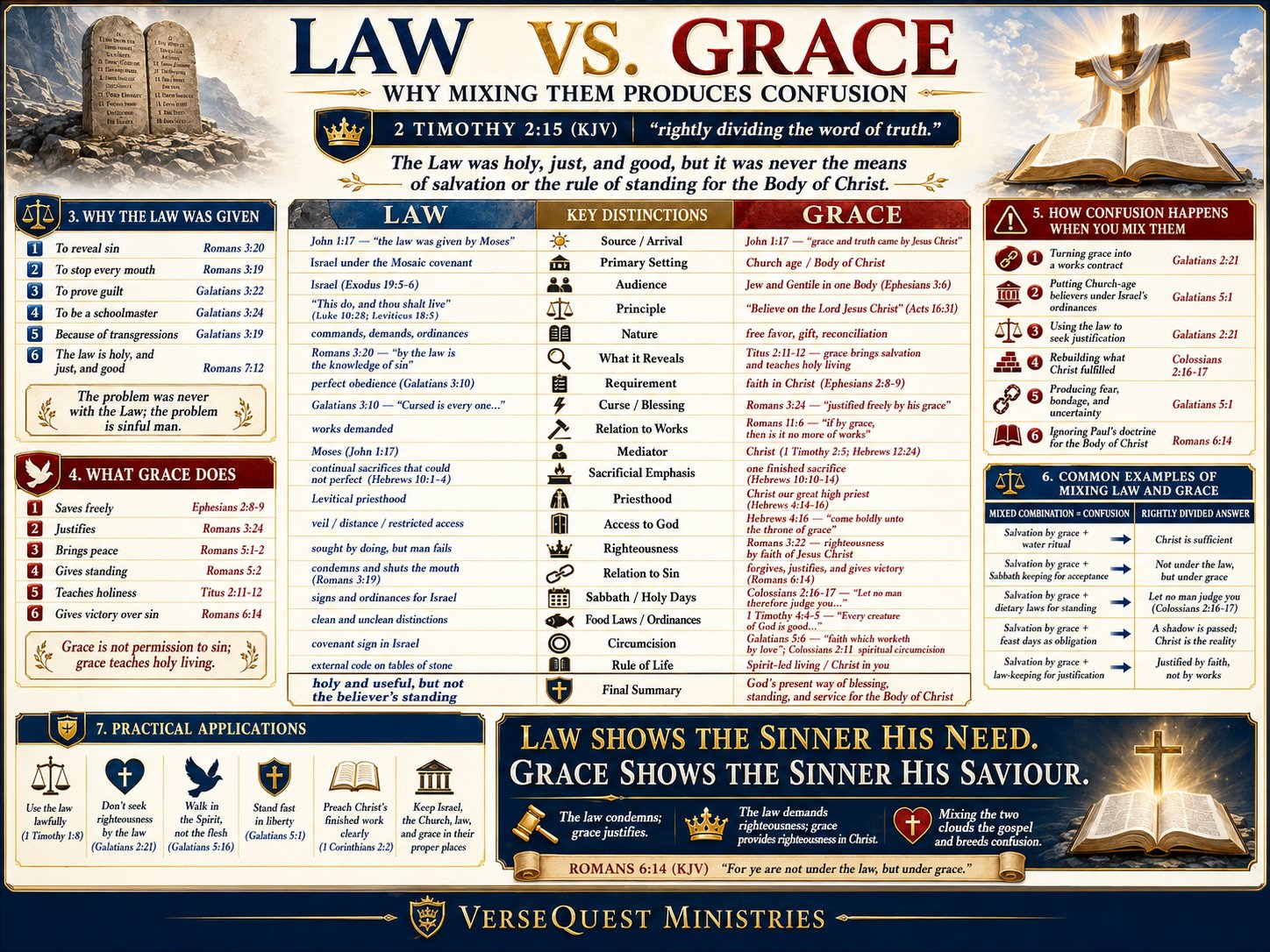
- Law vs. Grace Bible Study Chart – Why Mixing Them Produces Confusion (KJV)
- Compare law and grace with this detailed KJV Bible study chart explaining salvation, justification, holiness, Israel’s Mosaic covenant, Christian liberty, and the danger of mixing law with the gospel.
- $3.99
- Add to cart
-
-
Biblical Repentance
-
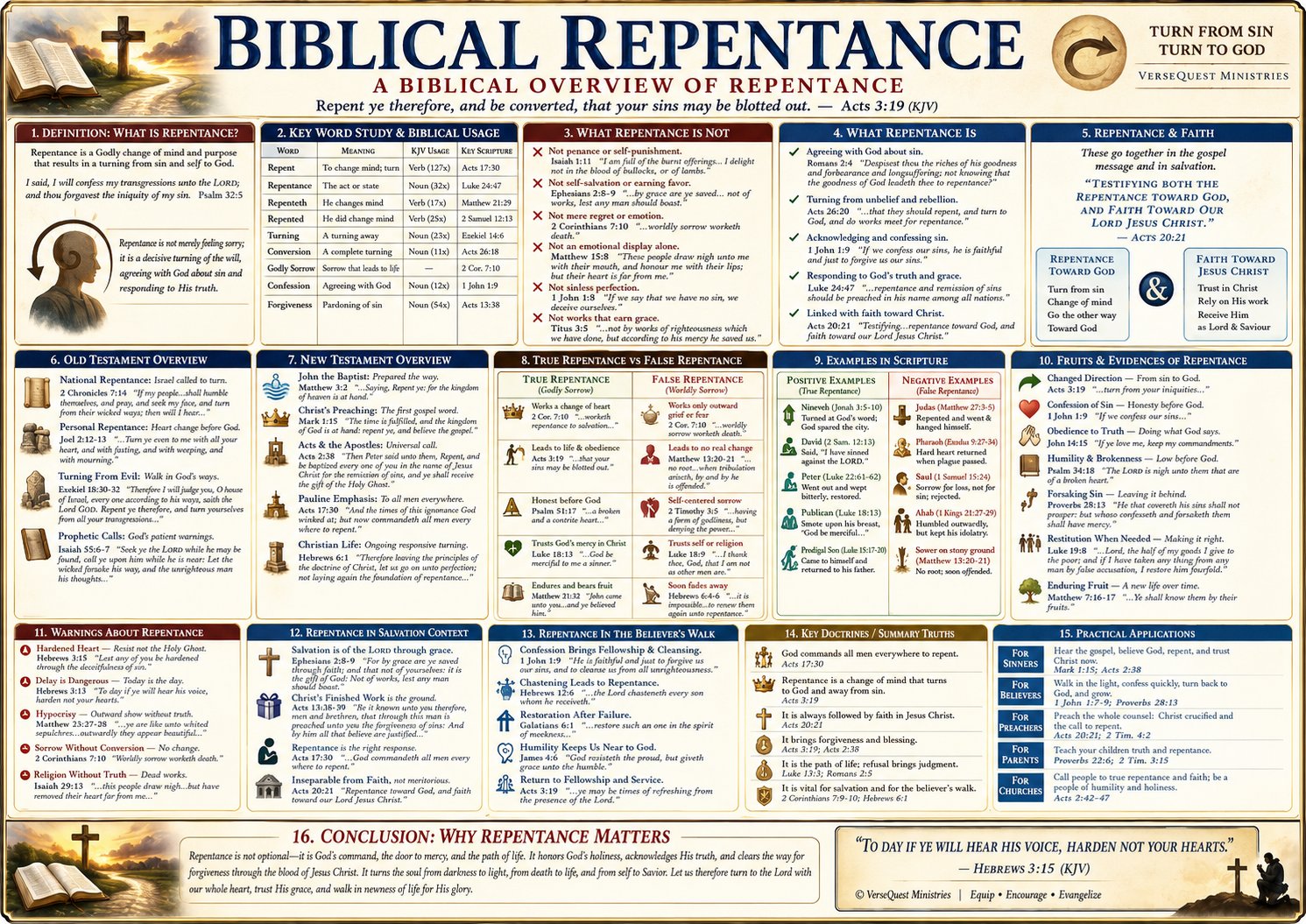
- Biblical Repentance Bible Study Chart – Turning from Sin to God with Faith Toward Jesus Christ (KJV)
- Understand biblical repentance with this detailed KJV chart covering godly sorrow, confession, turning from sin to God, faith in Jesus Christ, false repentance, spiritual restoration, and enduring fruit.
- $3.99
- Add to cart
-
-
Proper Role of Works
-
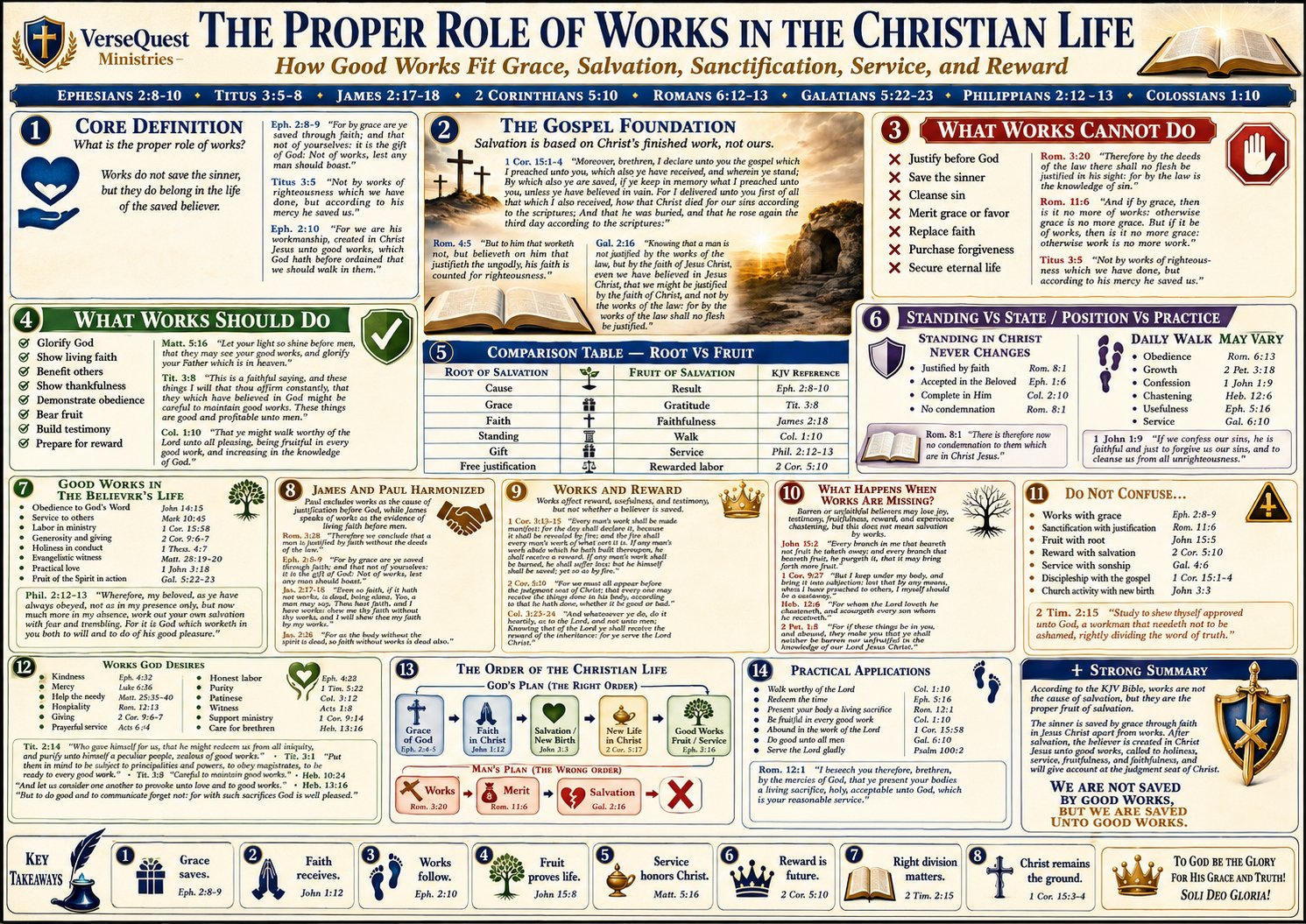
- The Proper Role of Works in the Christian Life – Grace, Salvation, Sanctification, Service, Fruit, and Reward (KJV Bible Study Chart)
- Understand the proper role of good works with this detailed KJV chart covering salvation by grace, sanctification, service, living faith, spiritual fruit, standing versus practice, the judgment seat of Christ,…
- $3.99
- Add to cart
-
-
Doctrine
-
-50%
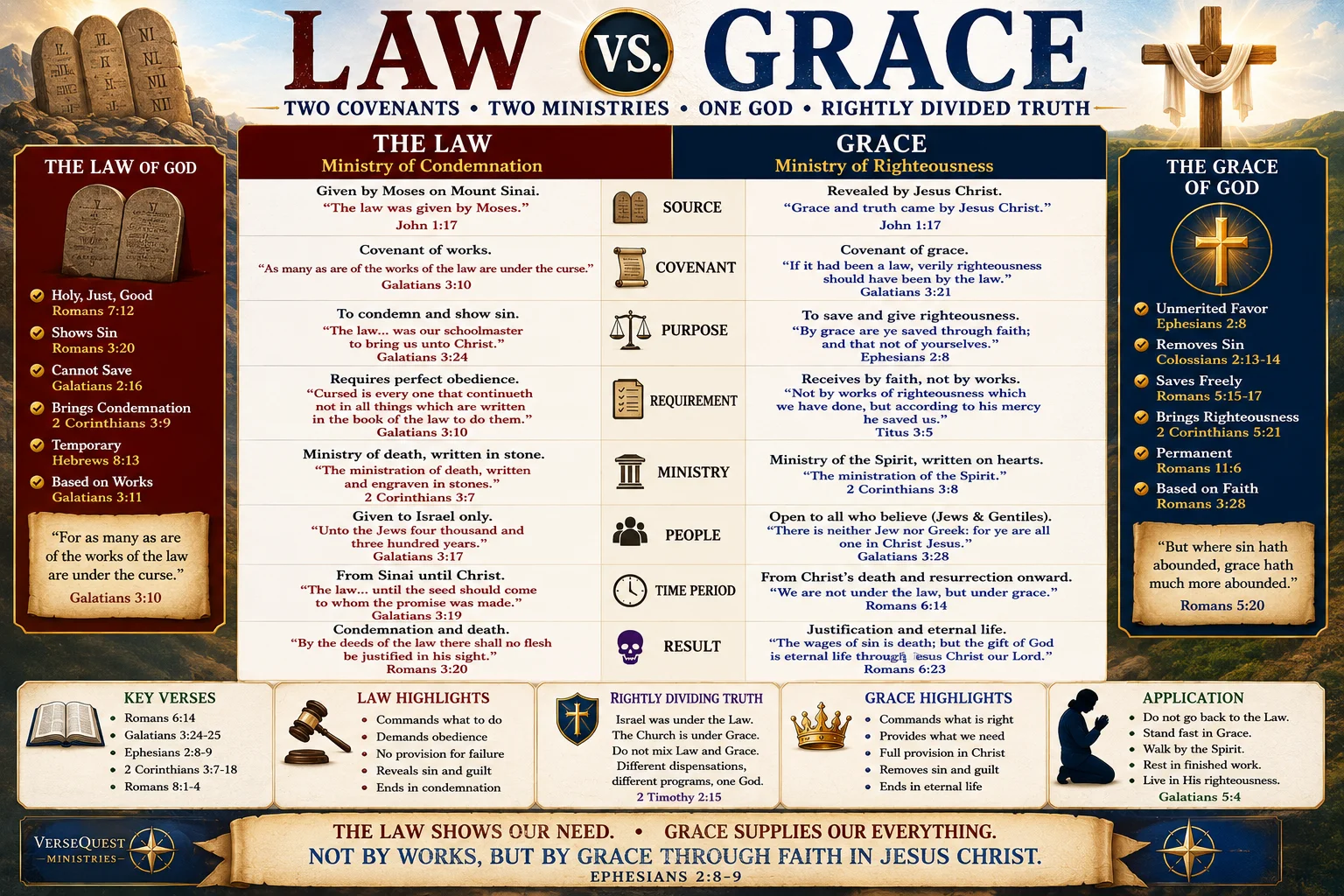
- Law vs. Grace Chart — KJV Rightly Divided
- Premium printable KJV Bible study chart comparing Law and Grace from a rightly divided perspective, showing works versus faith, condemnation versus righteousness, and Moses versus Christ.
- Original price was: $10.00.$4.99Current price is: $4.99.
- Add to cart
-
-50%
-
Righteousness of Christ
-
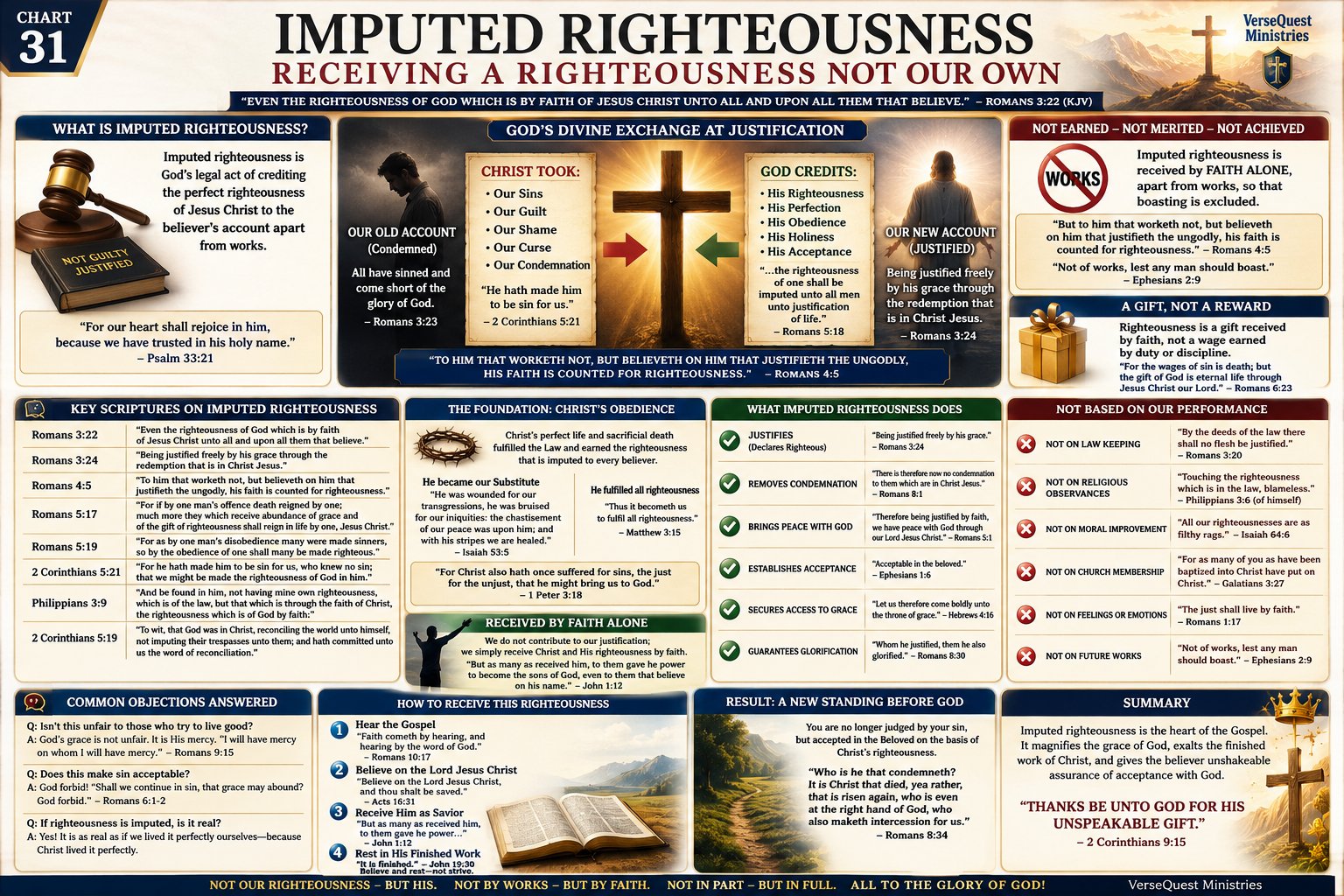
- Imputed Righteousness – The Righteousness of Jesus Christ Credited to the Believer by Faith Alone (KJV Bible Study Chart)
- Understand imputed righteousness with this detailed KJV chart explaining the divine exchange, justification by faith, Christ’s righteousness credited to the believer, peace with God, no condemnation, and acceptance apart from…
- $3.99
- Add to cart
-