
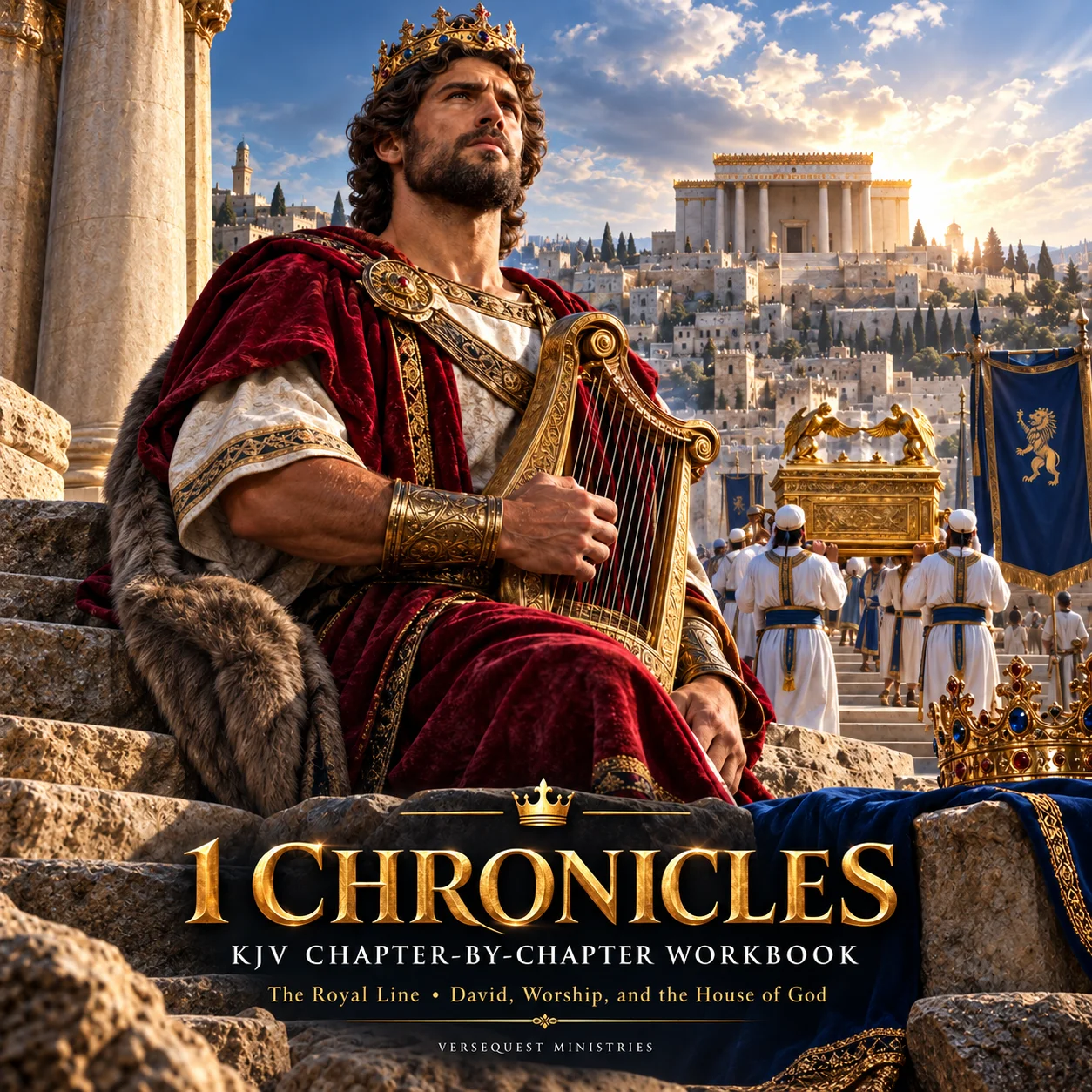
1 Chronicles KJV Chapter-by-Chapter Workbook
The 1 Chronicles KJV Chapter-by-Chapter Workbook is a complete 516-page downloadable Bible-study PDF covering all twenty-nine chapters of First Chronicles. Follow the inspired record from Adam through David as you study the genealogies, Judah, Levi, Saul’s fall, David’s kingdom, the ark, the Davidic covenant, the census, Ornan’s threshingfloor, ordered worship, temple preparation, and Solomon’s succession.
Every chapter contains a coordinated 12-page study unit with observation work, exposition, KJV vocabulary, doctrine and right division, cross-references, difficult passages, special studies, review questions, teaching preparation, and answers. The complete course also includes cumulative reviews, twenty-nine advanced studies and worksheets, master charts, final assessment, glossary, indexes, research tools, and a final teaching project.
Designed for serious personal study, homeschool, Sunday school, church classes, Bible institutes, ministry training, and advanced Bible instruction, this workbook gives students room to read, write, compare, analyze, review, and ultimately teach First Chronicles for themselves.
$24.99
Description
The 1 Chronicles KJV Chapter-by-Chapter Workbook is a complete, 516-page Bible curriculum designed to take the student through all twenty-nine chapters of First Chronicles with the King James Bible open. Rather than treating Chronicles as a collection of difficult names and historical lists to hurry past, this workbook shows how the genealogies, tribes, priesthood, kingship, worship, covenant promises, temple preparation, and succession of Solomon all contribute to the inspired argument of the book. The course follows the record from Adam through David and demonstrates how First Chronicles moves from names to throne, from ark to covenant, from judgment to the temple site, and from David to Solomon.
Each of the twenty-nine chapters receives a 12-page coordinated study unit. Students work through chapter focus, principal movements, close reading, exposition, people and motives, KJV vocabulary, doctrine and right division, cross-reference study, difficult passages, special studies, written review, teach-back preparation, teacher guidance, and model answers. The workbook does not merely tell the reader what First Chronicles says; it trains the student to observe the text, support conclusions with verses, distinguish explicit statements from inference and speculation, and compare Scripture with Scripture without confusing dispensational settings.
Beyond the chapter-by-chapter studies, this resource contains five cumulative reviews and answer guides, twenty-nine advanced studies and worksheets, ten master charts and analysis pages, a final assessment and answer guide, an eight-part KJV glossary, subject and Scripture indexes, supplemental study and research tools, and a final teaching project with rubric, challenge, and certificate of completion.
Major subjects include the genealogies from Adam forward, Judah and the royal line, Levi and the priesthood, Saul’s rejection, David’s mighty men, Jerusalem, the ark of the covenant, the importance of the “due order,” appointed worship and music, the Davidic covenant, Satan and David’s census, Ornan’s threshingfloor, the future temple site, David’s extensive preparations for the house of God, Levitical and priestly organization, stewardship, willing giving, Solomon’s succession, and the continuing significance of the Davidic throne.
The course maintains a deliberately Bible-believing and rightly divided approach. The King James Bible is treated as final authority. Historical meaning comes before typology or application. Israel remains Israel, Judah remains Judah, and the Davidic throne, Levites, priesthood, temple, land, and national covenants are not transferred to the Body of Christ. Secondary study helps are tested against the biblical text rather than treated as authorities over it.
Because the workbook is both detailed and interactive, it can serve many settings at different levels of depth: serious personal Bible study, homeschool curriculum, family instruction, Sunday school, church Bible classes, small groups, Bible institutes, ministry training, and seminary-level study. Students can write directly into the exercises, maintain chapter notes, build cross-reference chains, prepare teaching outlines, complete assessments, and progress toward a final teaching project.
This is a downloadable 516-page PDF workbook, priced at $24.99, providing a complete student-and-teacher curriculum in one resource. The goal is not simply to finish First Chronicles, but to understand its structure well enough to explain why the names matter, why David dominates the latter part of the book, why the ark must be handled according to God’s order, why the Davidic covenant matters, why Ornan’s threshingfloor matters, and why David’s final years are devoted so heavily to preparing another generation for the house of God.
Genealogy and Covenant Identity — The opening nine chapters establish that names, tribes, descent, inheritance, priesthood, and royal succession matter in God's record. The Royal Line of Judah — Chronicles deliberately traces the line toward David and preserves Judah's special place in Israel's history. Israel and the Body of Christ — The workbook maintains the literal historical identity of Israel, Judah, the Levites, the priesthood, the temple, and the Davidic throne. Saul's Rejection and David's Rise — Saul's death is interpreted morally and spiritually before the narrative turns decisively toward David. Davidic Kingship — David is presented not merely as a military leader but as the covenant king organizing the nation around God's revealed order. The Mighty Men — David's warriors demonstrate loyalty, courage, sacrifice, and the role of faithful servants surrounding the king. Jerusalem and Zion — The establishment of David's capital prepares the location that will become central to Israel's royal and temple history. The Ark of the Covenant — Chapters 13-16 emphasize reverence, holiness, obedience, proper handling, and worship surrounding the ark. The Due Order — Sincerity does not replace obedience. God's work must be approached according to God's revealed order. Biblical Worship — Singers, instruments, thanksgiving, appointed courses, priests, Levites, and sanctuary responsibilities reveal highly ordered worship. The Davidic Covenant — First Chronicles 17 anchors the book in God's promise concerning David's house, seed, throne, and kingdom. David's Census and Satan's Provocation — Chapter 21 joins spiritual conflict, human responsibility, judgment, repentance, mercy, and divine providence. Ornan's Threshingfloor — The place where judgment is stopped becomes the location associated with the future house of God. Temple Preparation — David's closing years emphasize planning, materials, organization, leadership, resources, patterns, and preparation for work another man will complete. Levites and Priests — The later chapters explain the distinct responsibilities of those appointed to Israel's sanctuary service. Stewardship and Administration — Gatekeepers, treasurers, officers, military courses, singers, craftsmen, and leaders demonstrate that practical responsibility matters in God's work. Willing Giving — First Chronicles 29 teaches that all resources ultimately come from God and that giving should proceed from a willing heart. Generational Succession — David prepares Solomon rather than attempting to make himself indispensable. Christ and the Son of David — Later Scripture shows that the Davidic line ultimately leads to Jesus Christ, while the workbook avoids forced allegory. Textual Certainty — Students are trained to distinguish what Scripture explicitly states from strong inference, possibility, typology, and speculation.
Central Argument: First Chronicles retells selected history from Adam through David to demonstrate that covenant identity, the royal line, ordered worship, and preparation for the house of God are purposeful parts of God’s revealed program. The movement runs from genealogy to throne, ark to covenant, judgment to temple site, and David to Solomon.
Major Observation: The genealogies are not filler. They establish tribal identity, inheritance, Judah’s royal position, Levi’s sanctuary role, Saul’s background, David’s ancestry, and the historical continuity of Israel.
Important Distinction: David is a real covenant king of Israel before he is used in any typological connection. The Davidic covenant must remain rooted in its literal promises concerning David’s house, seed, throne, and kingdom.
Important Distinction: The temple is Israel’s sanctuary. Christian applications concerning service, stewardship, worship, preparation, and order do not turn the Church into Israel or a church building into Solomon’s temple.
Important Distinction: Levitical and priestly offices belong to Israel. Principles of faithfulness and ordered service can be applied without transferring those offices to the Body of Christ.
Doctrinal Conclusion: God records names and service that human histories might overlook.
Doctrinal Conclusion: Sincerity cannot substitute for obedience. The ark incident demonstrates the importance of God’s revealed order.
Doctrinal Conclusion: God can deny one servant the privilege of completing a work while still allowing that servant to prepare faithfully for the next generation.
Doctrinal Conclusion: Organization is not inherently unspiritual. First Chronicles devotes extensive inspired space to courses, duties, resources, officers, musicians, gatekeepers, treasurers, and administration.
Doctrinal Conclusion: The census of chapter 21 shows that counting itself is not inherently sinful; the later lawful organization of Israel demonstrates that context, command, purpose, and motive matter.
Key Fact: First Chronicles begins with Adam and closes with Solomon securely established on David’s throne.
Key Fact: David’s final years are dominated not by self-promotion but by preparation for the temple and for the generation that will follow him.
Key Fact: Ornan’s threshingfloor becomes the crucial connection between judgment stopped by mercy and the future location of the house of God.
Memorable Teaching Point: Read the names. Follow the line. Honor the covenant. Learn the order. Watch the throne. Prepare the next generation.
Further Study Questions: Why does the Holy Ghost devote nine chapters to genealogical records? What exactly distinguishes Judah’s royal privilege from Joseph’s birthright? Why does Chronicles give only one chapter to Saul? What changed between the first and second attempts to move the ark? Which parts of the Davidic covenant are unconditional? Why is the census condemned? How does the temple site emerge from the place where judgment stops? Why does David devote so much energy to a building he will never construct? What does First Chronicles teach about worship that modern readers often overlook? How does the closing transition to Solomon prepare the Bible reader for the greater Son of David?
Personal Bible Study: Work through one chapter at a time with structured observation, vocabulary, cross-references, doctrinal questions, notes, and review.
Homeschool Curriculum: Use the complete workbook as a substantial Old Testament Bible course with written assignments, assessments, charts, vocabulary work, research, and a final project.
Sunday School and Church Classes: Teach one chapter or one major section at a time, using the teacher guides, difficult-passage studies, reviews, and chapter summaries for lesson preparation.
Bible Institute and Seminary Study: Assign advanced studies, doctrinal distinctions, cross-reference exercises, chronology, interpretive questions, and final teaching projects for deeper-level work.
Small Groups: Divide the observation, special study, and discussion questions among participants while keeping the KJV text central.
Sermon Preparation: Use chapter movements, theological conclusions, major themes, difficult passages, and cross-references as groundwork for expository messages.
Discipleship: Train students not merely to receive conclusions but to identify context, prove statements from Scripture, and explain biblical distinctions.
Family Study: Parents can select appropriate chapter portions, vocabulary, historical lessons, and practical applications according to the age and maturity of the family.
Teacher Training: The teach-back exercises and final project help students move from learning the book to explaining it clearly to others.
Ministry Leadership Training: Chapters 22-29 offer substantial material on preparation, stewardship, organization, succession, accountability, service, and generational transfer.
The King James Bible — The primary text and final authority for every lesson.
A Strong's or Young's Concordance — Useful for tracing repeated KJV words, names, places, and themes.
A Reliable KJV Bible Dictionary — Helpful for vocabulary including terms connected with genealogy, priesthood, temple service, military organization, musical instruments, offices, and worship.
Thompson Chain-Reference Bible — Valuable for following related biblical subjects and cross-reference chains.
Scofield Reference Bible — Helpful for historical structure, dispensational distinctions, covenants, Israel, and kingdom material.
Bullinger's Companion Bible — Useful for structural observations, cross-references, and detailed textual study.
Jamieson-Fausset-Brown Commentary — A useful historical and textual study aid when tested against the KJV.
Dake Annotated Reference Bible — Useful for extensive cross-references and study observations when carefully compared with Scripture.
Ruckman Reference Bible and Bible References — Particularly useful for KJV cross-references, doctrinal observations, difficult passages, and Bible-to-Bible connections.
Bible Maps of Ancient Israel — Helpful for Jerusalem, Hebron, tribal regions, Gibeon, Ornan's threshingfloor, and locations associated with David's reign.
Royal and Genealogical Timelines — Especially useful for tracing Adam, Judah, David, Solomon, and the historical relationship of Chronicles to Samuel and Kings.
VerseQuest 1 Kings KJV Chapter-by-Chapter Workbook — A useful companion for following Solomon, the temple, and the later development of Israel's monarchy.
VerseQuest 2 Kings KJV Chapter-by-Chapter Workbook — Extends the royal and prophetic history through the captivities of Israel and Judah.
Related products
-
Jesus Christ / Christology
-
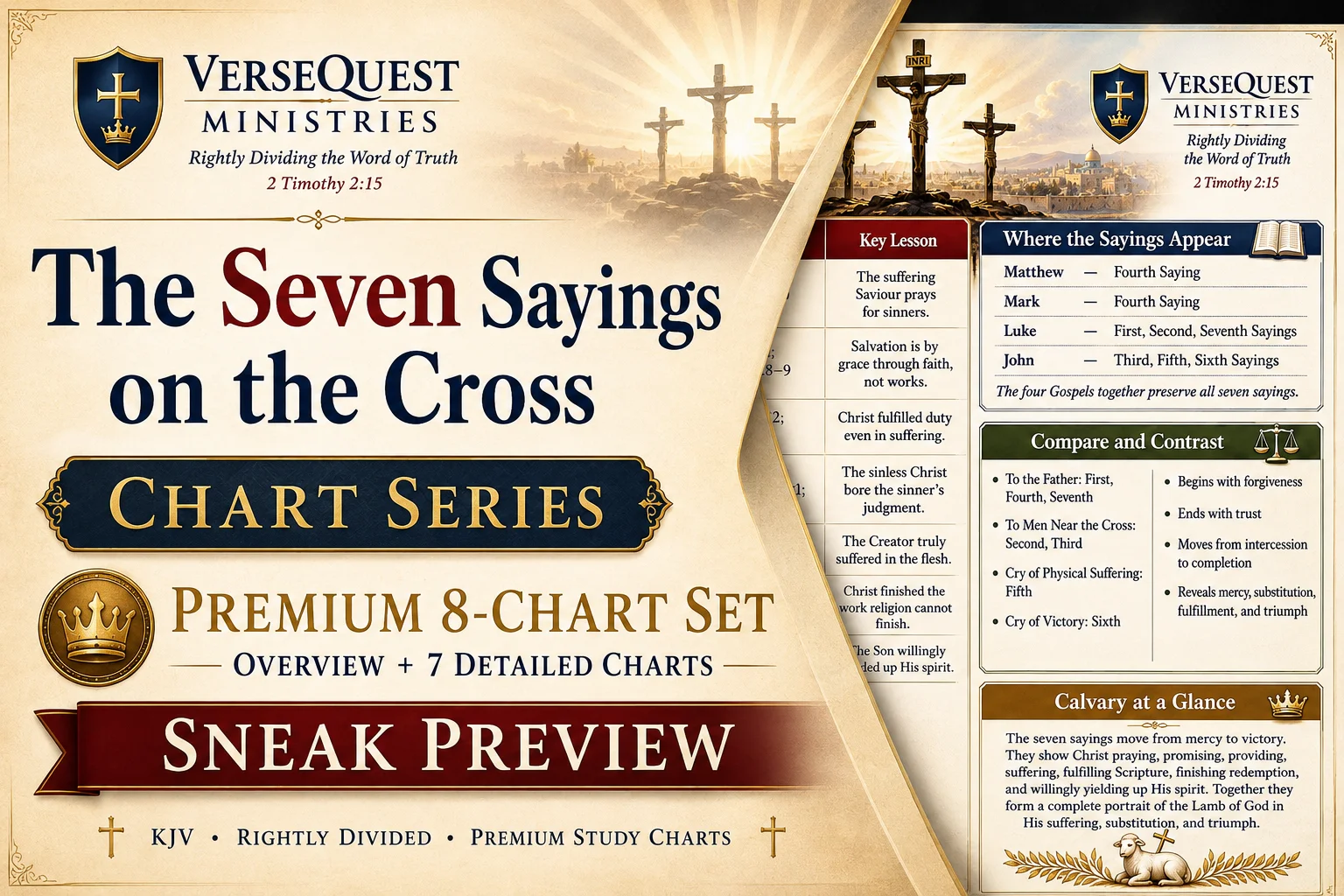
- The Seven Sayings on the Cross – Premium 8-Chart KJV Study Set
- A premium VerseQuest Ministries digital PDF study set on The Seven Sayings on the Cross, featuring an overview chart plus seven detailed KJV Bible study charts. This resource examines Calvary,…
- $12.99
- Add to cart
-
-
Names of Christ
-
- The Names and Titles of Jesus Christ Made Plain
- A complete 100-essay KJV Bible study on the names and titles of the Lord Jesus Christ, showing His deity, humanity, blood atonement, resurrection, priesthood, headship over the Church, shepherd care,…
- $29.99
- Add to cart
-
-
Chart Collections
-
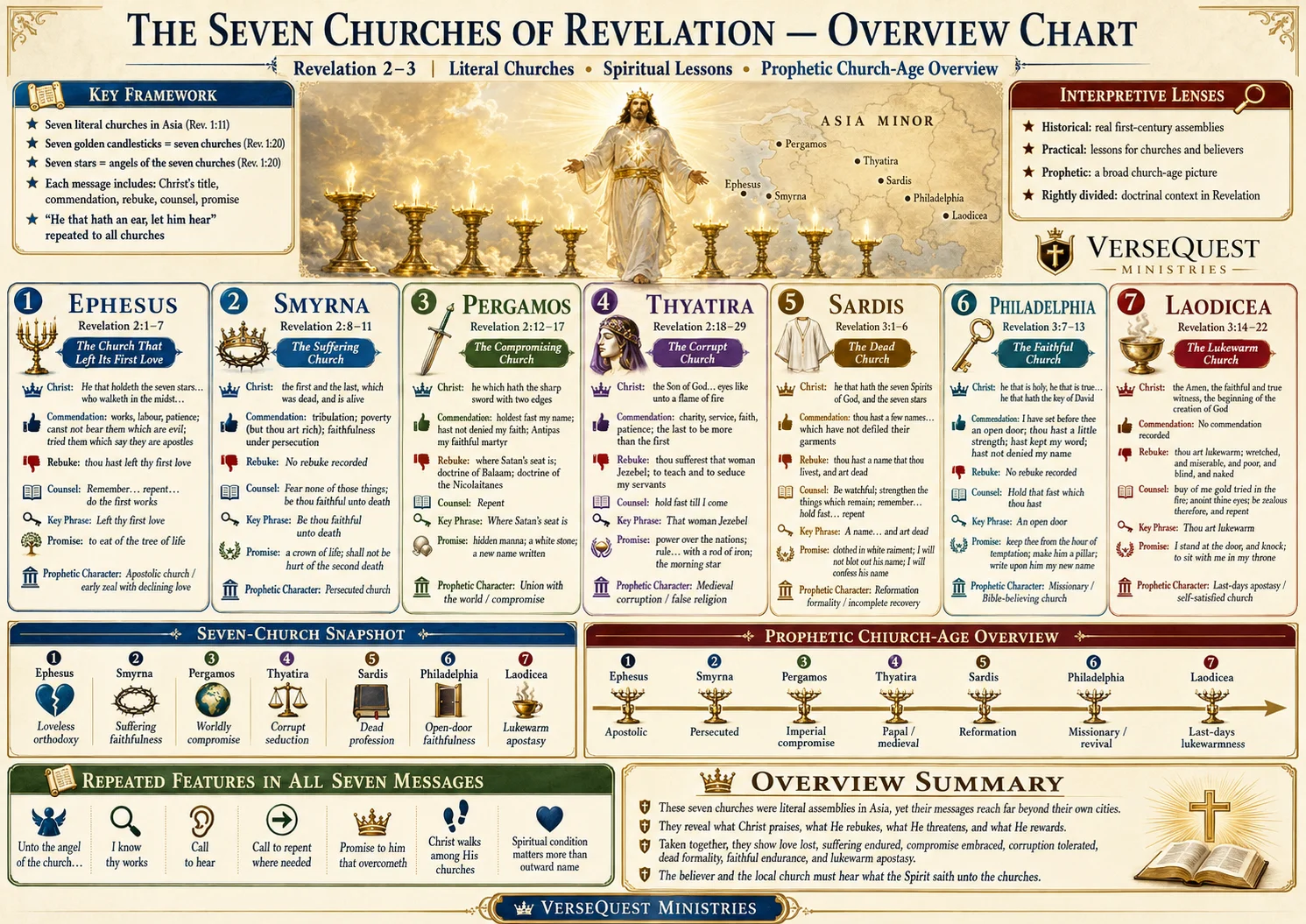
- The Seven Churches of Revelation Chart Collection – Christ Walking Among the Candlesticks
- A premium VerseQuest Ministries™ PDF chart collection covering the Seven Churches of Revelation in Revelation 2–3. Includes one overview chart plus individual KJV Bible study charts for Ephesus, Smyrna, Pergamos,…
- $12.99
- Add to cart
-
-
Jesus Christ
-
-10%
- The Lord Jesus Christ Made Plain – 637-Page KJV Bible Study
- A massive 637-page, 100-part KJV Bible study on the Person and work of the Lord Jesus Christ. This premium VerseQuest resource covers His deity, incarnation, blood, cross, resurrection, present ministry,…
- Original price was: $39.00.$34.99Current price is: $34.99.
- Add to cart
-
-10%
-
Premium Studies
-
-25%
- The Doctrine of Hell — Premium Essay Series PDF
- A 383-page premium VerseQuest PDF study book containing 54 KJV essays on hell, fire, darkness, judgment, the lake of fire, the second death, and Jesus Christ as the only escape.
- Original price was: $39.99.$29.99Current price is: $29.99.
- Add to cart
-
-25%