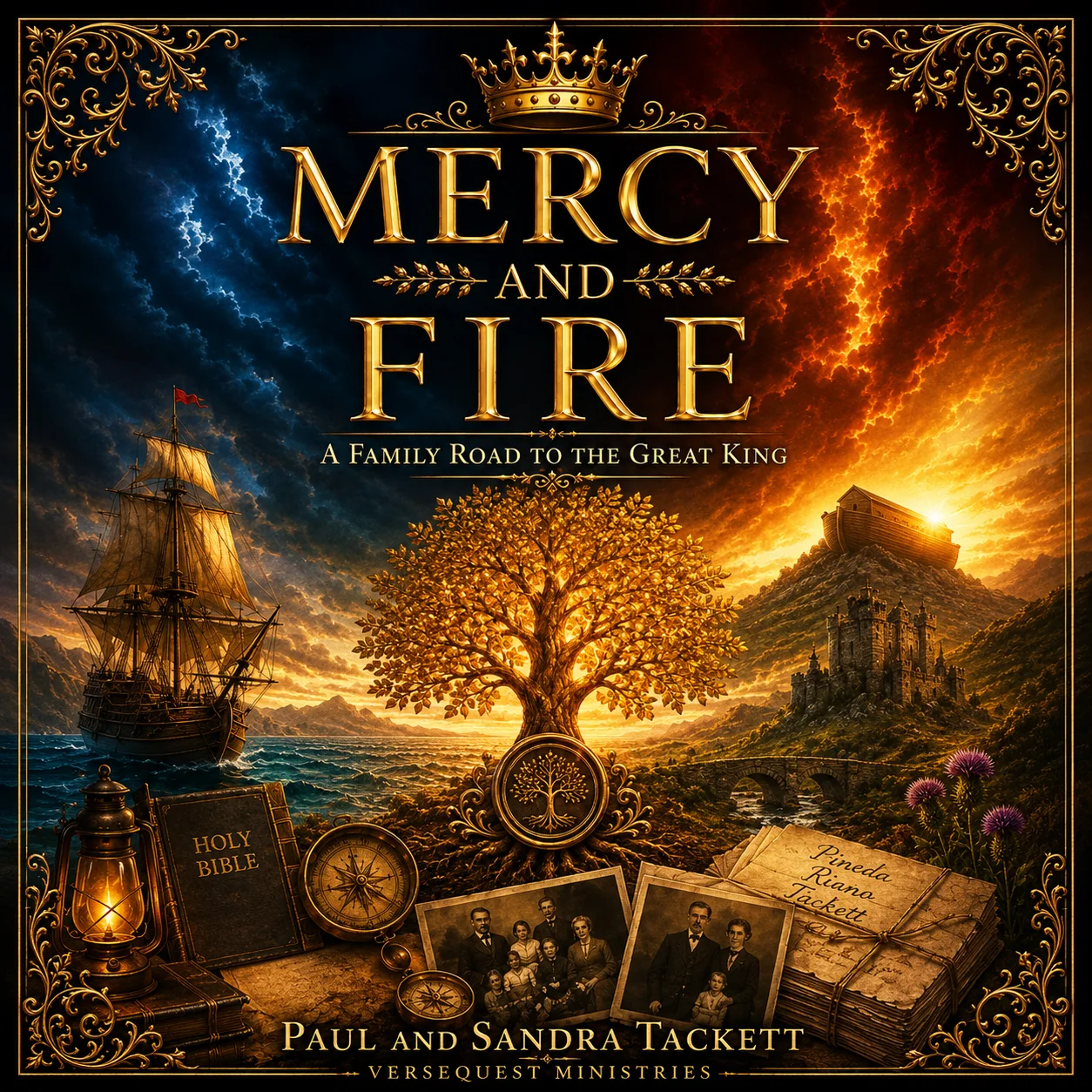
Mercy and Fire – Christian Family History & Genealogy PDF Book
Where did we come from—and what should knowing the answer do to us?
Mercy and Fire: A Family Road to the Great King is a 522-page Christ-centered true family saga tracing the ancestral roads of Paul and Sandra Tackett across Colombia, Spain, France, Germany, Scotland, England, Quebec, Maine, Virginia, Kentucky, Ohio, and beyond.
What began as a question from Hannah and Samuel opened centuries of migration, persecution, political violence, sacrifice, ordinary labor, family grief, noble houses, altered surnames, forgotten records, and enduring faith. Every chapter includes King James Bible Scripture, a spiritual reflection, and a lesson to carry forward. The journey ultimately leads beyond every earthly name and crown to Jesus Christ, the Great King.
$29.99
Description
Every Name Is a Door
A family tree may begin with names, dates, lines, and boxes—but behind every name is a human life.
Mercy and Fire: A Family Road to the Great King began when Hannah and Samuel asked a deceptively simple question: Where do we really come from?
That question opened doors reaching across continents and centuries.
Through extensive genealogical research, family testimony, photographs, documents, historical records, and carefully identified literary reconstruction, Paul and Sandra Tackett trace the family roads that eventually met in their children. The result is not a dry genealogy report or a collection of names arranged for family pride. It is an immersive, true multigenerational story about what people carried, what they survived, what they lost, and what they handed forward.
Sandra led the research, organization, and writing of the book, while Paul contributed memories, childhood accounts, and family information from his side. Together, their two family histories become one narrative road.
From Colombia to France, Scotland, and the Americas
The journey passes through the Colombian and Spanish worlds of the Riaño, Ricaurte, Cualla, Guzmán, Quiroga, Pineda, and related family lines. Readers encounter colonial New Granada, Bogotá, old political divisions, houses shaped by memory, and the sacrifice of Antonio Ricaurte at San Mateo.
The story then crosses into Paul’s ancestral roads: French Huguenot conscience, the Tacquett name becoming Tackett, English families crossing into colonial Virginia, French Canadian names moving through Quebec into Maine, the German Meÿ name becoming May, Kentucky families, Ohio workers, and one grandfather whose skilled hands became connected to America’s race toward the moon.
The later chapters enter the Bailey, Baillie, and Balliol family traditions, the roads of Scotland and Dál Riata, ancient national genealogies, Japheth, Magog, Noah, and the biblical beginning of mankind.
The book contains three major parts, 28 chapters, and a concluding section titled The Roads Behind the Names, where family charts, research notes, evidence qualifications, and records are preserved.
History Told Honestly
Mercy and Fire does not pretend that every ancestral connection carries the same degree of documentary certainty.
Recent civil, parish, census, marriage, probate, military, and family records are distinguished from research bridges, compiled family trees, medieval traditions, royal lines, and ancient genealogical traditions. Missing generations are not silently filled, and intriguing surnames are not connected merely because they match.
That honesty is one of the book’s greatest strengths.
The genealogy charts repeatedly identify what is documented, what remains under review, and what has been preserved as a received family tradition rather than presented as an unquestionable historical fact.
This is not a book claiming that one family is more valuable than another. It is a book about the responsibility of inheritance.
The famous are not treated as more human than the forgotten. Kings, officers, workers, mothers, refugees, craftsmen, widows, immigrants, and people represented by only one surviving document all stand within the same human story.
Every Chapter Leads Beyond the Family
This is not a conventional Bible commentary, but Scripture is woven throughout the entire journey.
Each chapter closes with:
Scripture — quoted from the King James Bible
Reflection — the spiritual meaning of the family story
What We Carry Forward — the responsibility placed upon the living
The book asks readers to consider whether family history makes them proud or merciful, whether persecution teaches compassion, whether privilege becomes service, whether political loyalty becomes hatred, and whether inherited wounds must be passed to another generation.
The final answer is not found in an earthly crown, an ancient surname, or the oldest ancestor on a chart.
A person may inherit royal names and still need salvation. A person may possess no known genealogy and still belong completely to Christ. Every family road—whether preserved in royal records or rescued from an old drawer—finds its meaning before Jesus Christ.
The book concludes with one overriding confession:
Jesus Christ is the Great King.
The ancestral road does not end with Paul and Sandra’s family. It leads beyond them to the One before whom every nation, kindred, people, tongue, family, and crown must finally stand.
A Book for Every Family
Readers do not need to share the Tackett, Pineda, Riaño, Gardner, May, Bailey, or Ricaurte names to recognize themselves in this story.
Every family has names that survived and names that disappeared.
Every family has stories that were told, stories that were silenced, and questions someone waited too long to ask.
Every family has known some mixture of mercy and fire.
This book will inspire readers to preserve the stories of the living, handle the past honestly, see the humanity behind every surname, and understand that earthly ancestry may explain the road—but only Jesus Christ can redeem the traveler.
Family history as responsibility rather than superiority, every name as a doorway into a human life, the dignity of documented and forgotten ancestors, immigration and belonging, religious persecution and freedom of conscience, political hatred and reconciliation, courage and sacrifice, women as carriers of memory, altered surnames and cultural identity, honest genealogy and responsible research, royal crowns and human mortality, the unity of mankind through Adam and Noah, mercy toward strangers, preserving stories for children, inherited wounds, Christian identity, and Jesus Christ as the only Great King.
Read Mercy and Fire one chapter at a time rather than attempting to absorb the entire genealogy at once. Begin by identifying the person, family line, country, migration, or historical event at the center of the chapter.
After reading the narrative, study the closing King James Bible passage in its full biblical context. Consider how the Scripture corrects pride, fear, bitterness, political hatred, misplaced identity, or the temptation to turn ancestry into superiority.
Use the Reflection section to identify the chapter’s spiritual meaning. Then use What We Carry Forward as a family discussion question or personal application. Ask what truth, warning, duty, mercy, or unfinished responsibility the living generation has received.
When reading the genealogy section, pay close attention to the evidence notes. Distinguish recent documented records from research leads, working genealogies, medieval traditions, royal lines, and ancient sacred genealogy. The book intentionally leaves some bridges unresolved rather than forcing an attractive but unproven connection.
Readers may also create a separate family notebook while reading. Record known names, interview living relatives, identify unexplained photographs, preserve important documents, and write down family stories before they disappear.
Above all, compare every earthly inheritance with the believer’s inheritance in Jesus Christ. A crown cannot redeem. A surname cannot save. A documented line cannot give eternal life. The family road becomes spiritually meaningful only when it brings the reader to the Great King.
Use the book to teach children and adults that ancestry should produce humility rather than pride; encourage families to interview elderly relatives before memories disappear; distinguish documented evidence from tradition and speculation; discuss how immigration, persecution, class, politics, and war shape families; examine how hatred moves from nations into homes; teach that famous and unknown ancestors possess equal human worth; compare earthly inheritance with spiritual inheritance in Christ; and challenge readers to carry forward truth, mercy, courage, hospitality, and faith rather than inherited resentment.
The King James Bible, family Bibles and personal records, blank genealogy charts, oral-history interview notebooks, birth and marriage records, parish and church registers, census and probate records, immigration and passenger records, cemetery and obituary records, historical maps, family photographs, VerseQuest studies on Adam, Noah, Genesis 10, the nations, immigration, mercy, Christian identity, and the person and work of Jesus Christ.
Related products
-
Messianic Prophecy Studies
-
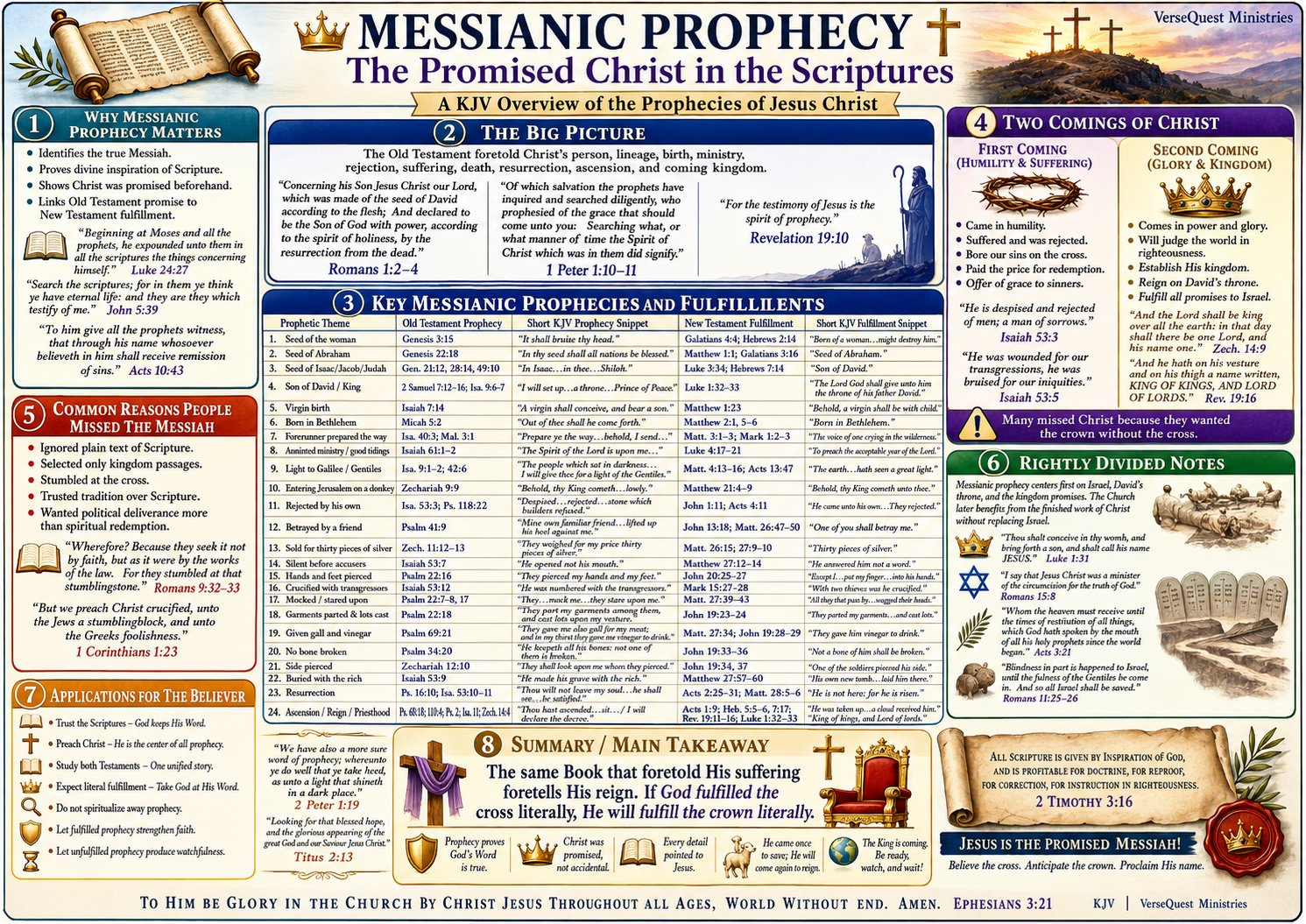
- Messianic Prophecy KJV Bible Study Chart – Printable Download
- This printable Messianic Prophecy KJV Bible Study Chart gives a clear overview of Old Testament prophecies fulfilled in Jesus Christ, including His lineage, birth, suffering, crucifixion, resurrection, and future reign.…
- $4.99
- Add to cart
-
-
Teachings of Christ
-
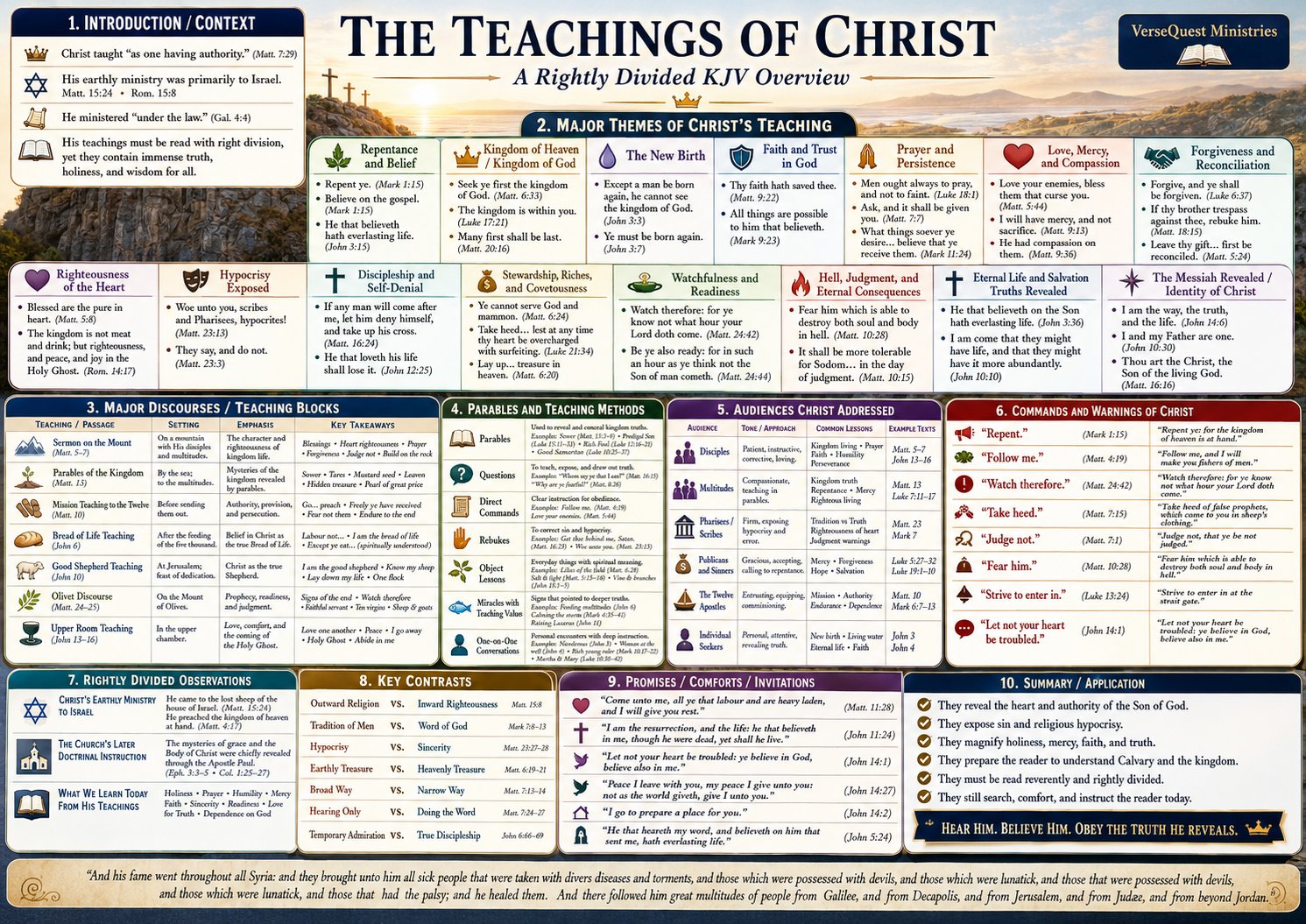
- The Teachings of Christ KJV Bible Study Chart – Printable Download
- This printable Teachings of Christ KJV Bible Study Chart gives a detailed overview of the Lord Jesus Christ’s teachings in the Gospels, including His sermons, parables, commands, warnings, promises, kingdom…
- $4.99
- Add to cart
-
-
Bible Overview Series
-
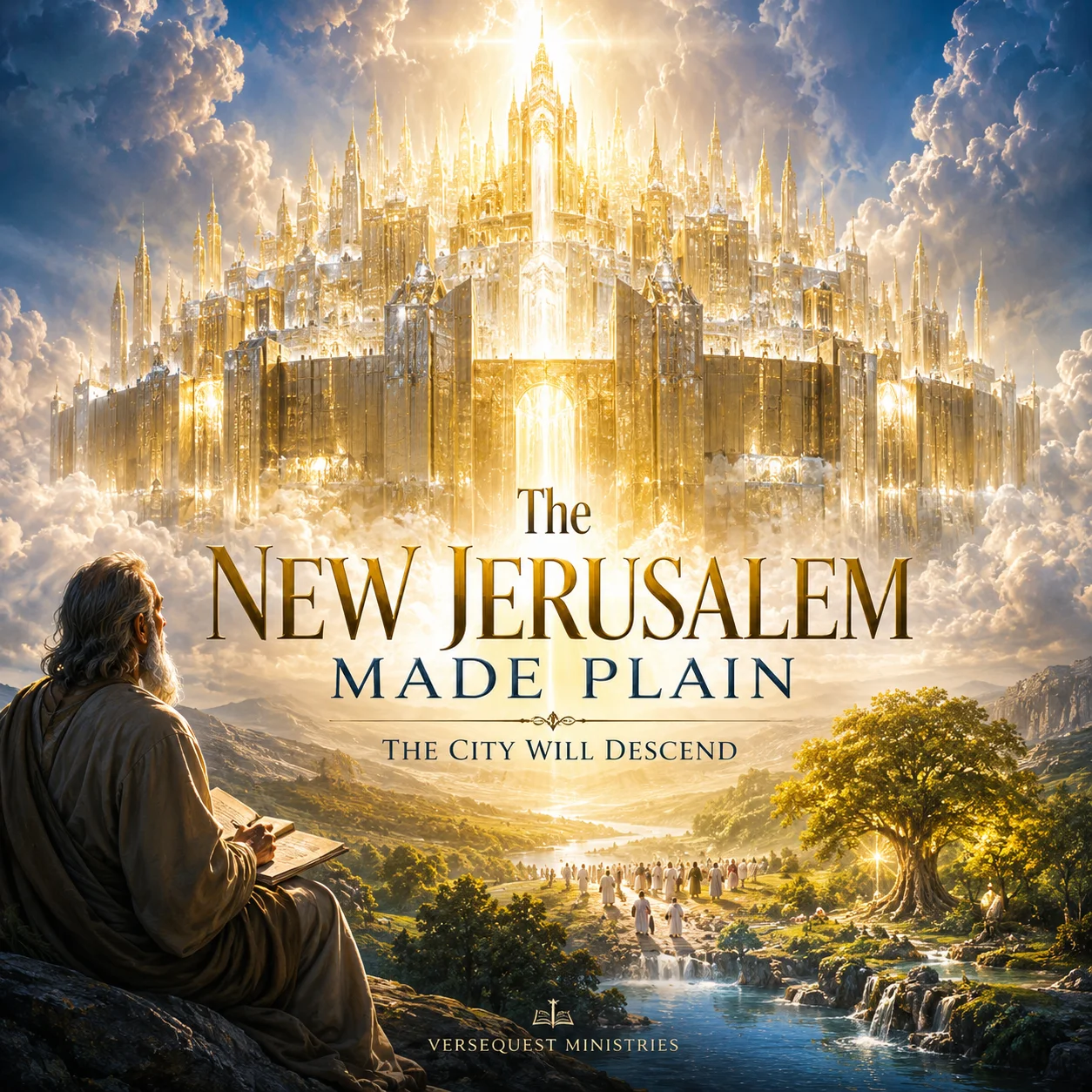
- The New Jerusalem Made Plain — 621-Page PDF Study
- The New Jerusalem Made Plain is a massive 621-page KJV/rightly divided PDF study on the literal holy city revealed in Revelation 21–22. This 100-essay book makes the New Jerusalem plain…
- $34.99
- Add to cart
-
-
Miracles of Christ
-
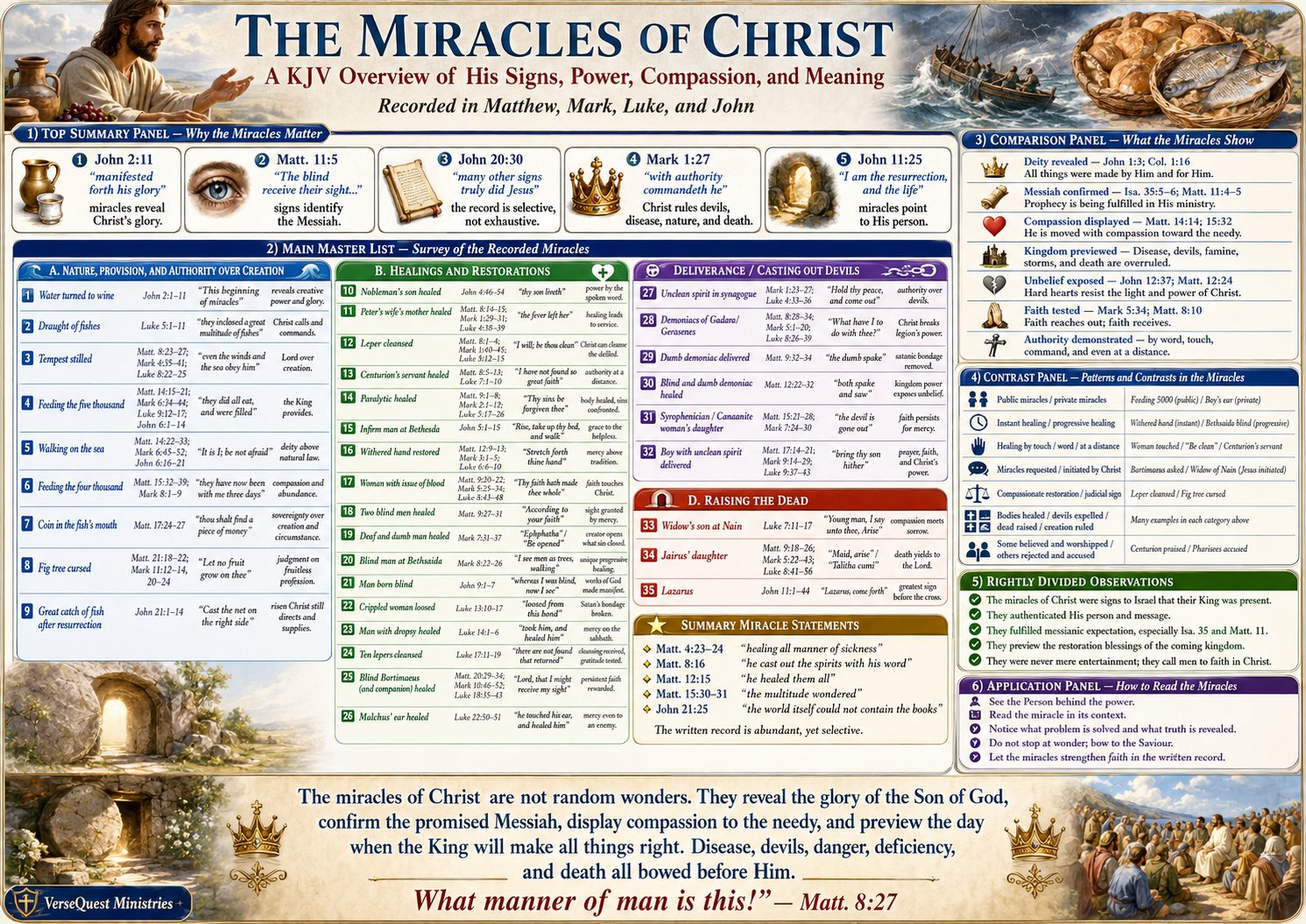
- The Miracles of Christ KJV Bible Study Chart – Printable Download
- This printable Miracles of Christ KJV Bible Study Chart gives a detailed overview of the recorded miracles of Jesus Christ in the Gospels. It covers His healings, deliverances, power over…
- $4.99
- Add to cart
-
-
Doctrine Series