
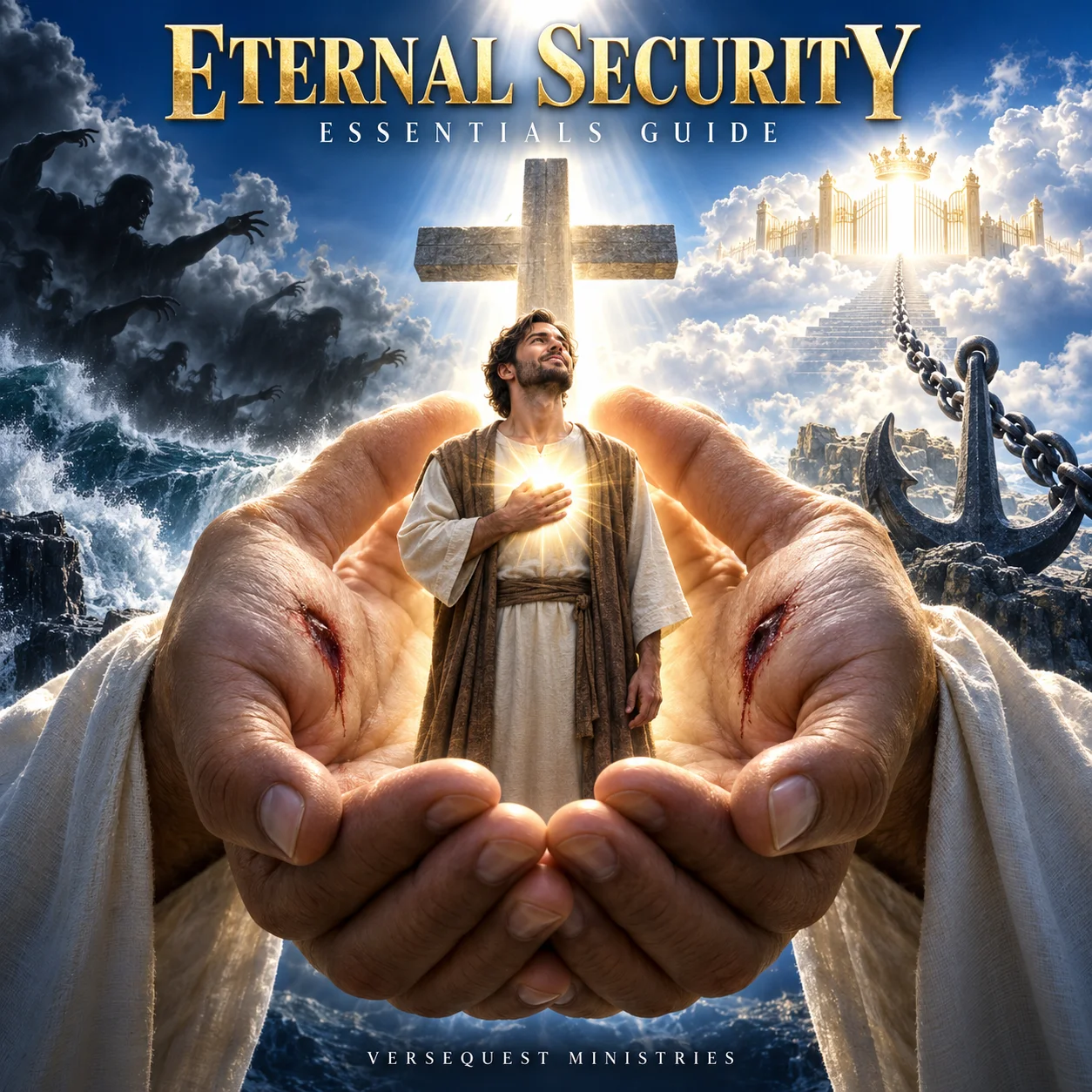
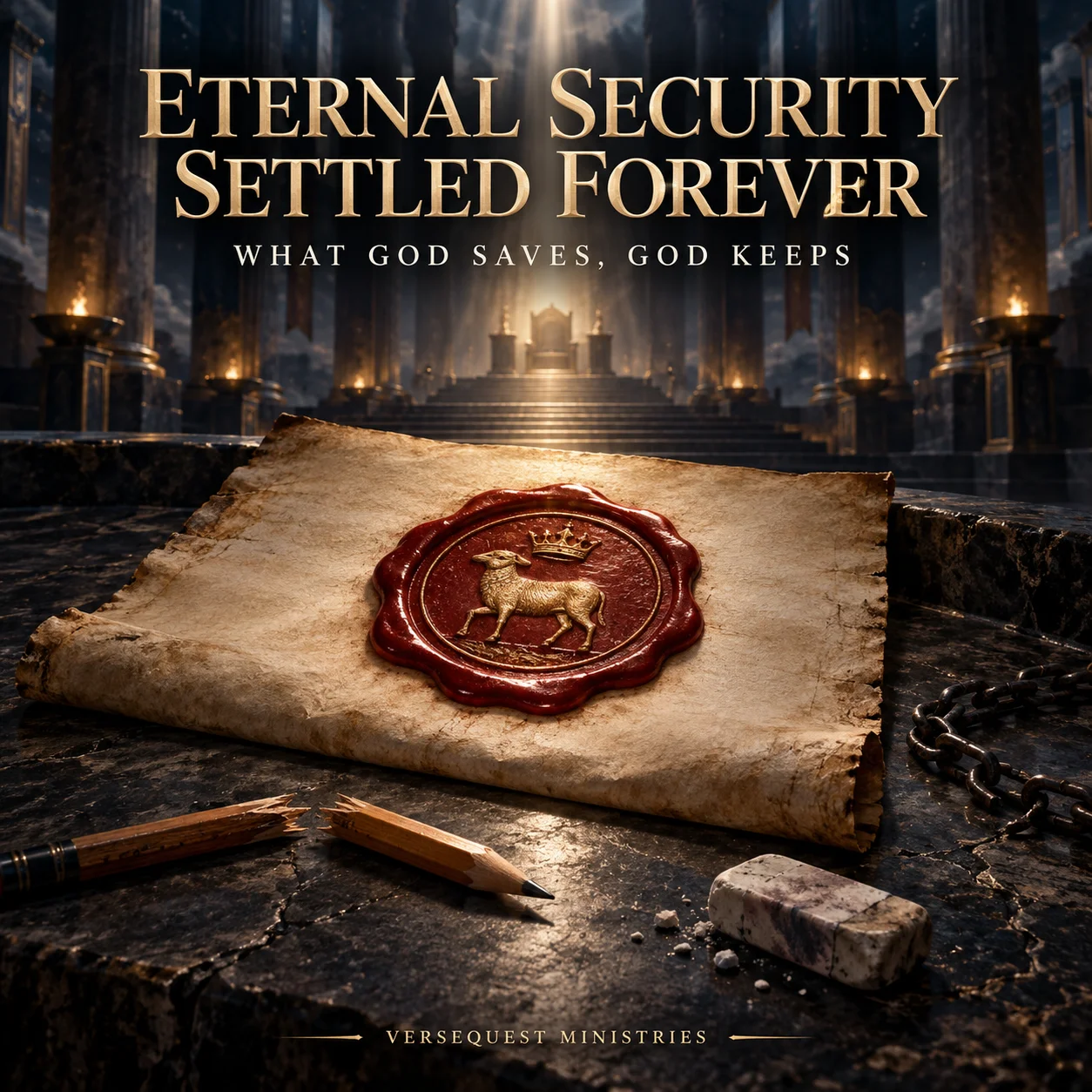
Eternal Security Settled Forever: What God Saves, God Keeps — 370-Page KJV Bible Study PDF
Eternal Security Settled Forever is a comprehensive 370-page downloadable KJV Bible study PDF containing fifty detailed studies on the believer’s security in Jesus Christ. It examines the new birth, justification, imputed righteousness, redemption through Christ’s blood, union with Christ, the Holy Spirit’s seal, God’s keeping power, Christian chastening, lost rewards, false profession, and warning passages commonly used against eternal security.
The book directly answers difficult questions about backsliding, apostasy, serious sin, unbelief, unconfessed sin, continual sin, and the consequences of rebellion in a Christian’s life. It carefully distinguishes salvation from discipleship, standing from state, sonship from fellowship, and eternal life from earned rewards.
The buyer receives the complete 370-page digital PDF book, including the introduction, all fifty studies, the conclusion, and a detailed full-color doctrinal chart. Price: $19.99.
$19.99
Description
Eternal Security Settled Forever is a comprehensive 370-page downloadable PDF book examining one of the most important and frequently contested doctrines in the Christian life: the eternal security of the believer in Jesus Christ. Through fifty detailed studies, this book builds the biblical case that salvation is not a temporary religious arrangement maintained by human performance. The believer is born of God, justified freely, clothed in Christ’s righteousness, redeemed through His blood, placed into His body, sealed by the Holy Spirit, and kept by the power of God.
This study begins with the finished work of Jesus Christ and follows the saving operations of God from beginning to end. It examines the new birth, justification, imputed righteousness, redemption, spiritual circumcision, Spirit baptism, the believer’s position in Christ, the Holy Spirit’s seal, the earnest of the inheritance, Christ’s intercession, and the keeping power of the Father and the Son. Each doctrine contributes to the same conclusion: what God accomplishes in salvation cannot be reversed by the changing condition of human performance.
The book explains why everlasting life is a present possession rather than a future reward for successful Christian endurance. Passages such as John 5:24, John 10:27–30, Romans 8:28–39, Ephesians 1:13–14, Ephesians 4:30, and 1 John 5:10–13 are examined in their plain King James Bible wording. The reader is shown that eternal life is located in God’s Son, justification is God’s settled verdict, and the Spirit’s seal continues “unto the day of redemption.”
Special attention is given to the distinctions that conditional-security teaching commonly erases. The book distinguishes salvation from discipleship, justification from practical sanctification, sonship from fellowship, standing from state, the free gift from earned reward, the Father’s chastening from the Judge’s condemnation, and physical death from the second death. These distinctions allow every passage to retain its proper force without turning Christian growth, obedience, or endurance into another plan of salvation.
The book does not minimize sin or use grace as an excuse for rebellion. It carefully explains what sin can cost a genuinely saved believer. A Christian may lose joy, fellowship, testimony, usefulness, ministry, liberty, health, reward, a crown, and even physical life beneath God’s chastening hand. First Corinthians 3:15, First Corinthians 5:5, First Corinthians 11:30, Hebrews 12:5–11, and First John 5:16 demonstrate that God may deal severely with His children without reversing their regeneration or casting them into eternal condemnation.
Several of the strongest objections to eternal security receive direct treatment. Can a saved man commit murder and still go to heaven? What happens if a Christian walks away from the faith? What if a believer says he no longer believes? What about continual sin? What if someone dies before confessing his final sin? Rather than answering these questions with slogans, the book carefully distinguishes eternal standing from temporal consequences and genuine regeneration from empty religious profession.
The studies also confront the salvation “fruit inspector” mentality that attempts to determine another person’s eternal standing through outward observation. Matthew 7, First John 2:19, Second Corinthians 13:5, and other frequently used passages are examined in context. The book distinguishes wolves from wounded sheep, false professors from fallen believers, visible works from imputed righteousness, and public ministry activity from genuine spiritual birth.
A major portion of the book is devoted to warning passages that are routinely removed from their setting and used to place Church-age believers under fear. Matthew 24, Matthew 25, John 15, Hebrews 6, Hebrews 10, Galatians 5, James 2, and warnings in Revelation are examined according to their audience, context, covenant, doctrinal purpose, and dispensational setting. The goal is not to weaken biblical warnings but to apply them where God placed them rather than mailing Israel’s prophetic warnings to the body of Christ.
The book contains a substantial introduction, fifty full doctrinal studies, a comprehensive conclusion, and a detailed full-color doctrinal chart summarizing the principal teachings of the entire series. The chart brings together the believer’s new birth, justification, position in Christ, sealing, preservation, accountability, possible losses, permanent possessions, and the unbreakable chain of God’s saving work.
This resource is written for serious Bible students, pastors, preachers, Sunday school teachers, ministry leaders, families, and Christians who want to understand and defend eternal security directly from the King James Bible. It may be used as a complete topical course, a sermon-preparation resource, a discipleship study, a classroom reference, or a detailed answer to conditional-security teaching.
The buyer receives a 370-page downloadable PDF book that can be read digitally or printed for personal study. The complete digital book is priced at $19.99.
Salvation as the completed work of God rather than a religious arrangement maintained by human performance. Eternal life as a present possession received through faith in Jesus Christ. The biblical meaning and permanence of the new birth. Sonship established by spiritual birth and confirmed through the Father’s chastening. Justification as God’s settled judicial verdict concerning the believer. Righteousness imputed through faith rather than earned through personal merit. Acceptance in the Beloved and completeness in Christ. Redemption and forgiveness secured through the blood of Jesus Christ. Spiritual circumcision made without hands. Spirit baptism into the one body of Christ. The believer’s union with Christ as a member of His body. The Holy Spirit’s seal unto the day of redemption. The earnest of the Spirit as God’s pledge of final redemption. The keeping power of God, the double grip of the Father and Son, and Christ’s continuing intercession. The difference between the believer’s settled standing and changing daily state. The difference between sonship and fellowship. The difference between justification and practical sanctification. The difference between free salvation and costly discipleship. The difference between eternal life as a gift and crowns or rewards earned through service. The serious temporal consequences of Christian rebellion. Chastening, sickness, loss, disapproved service, and physical death without reversed regeneration. The Judgment Seat of Christ and the burning of unprofitable works. The distinction between false profession and failed Christian living. The misuse of fruit inspection as a substitute for God’s written record. Assurance grounded in Scripture rather than emotions, reputation, or visible productivity. Conditional-security objections involving murder, apostasy, unbelief, continual sin, and unconfessed sin. Warning passages interpreted through context, audience, covenant, and right division. Israel and the Church as distinct subjects within biblical prophecy. Law and grace as opposing principles of justification. The faithfulness of God as the ultimate foundation of eternal security.
Central Argument
Salvation is secured by the irreversible operations of God rather than maintained by the fluctuating performance of the believer. The person who truly believes the gospel is born of God, justified, redeemed, forgiven, placed into Christ, sealed by the Holy Spirit, and given everlasting life.
Major Observations
- Eternal life is described as something the believer presently possesses, not merely something he may receive after a successful finish.
- The duration of eternal life is determined by Christ, in whom that life is located.
- The new birth creates a permanent relationship between the Father and His child.
- Chastening demonstrates sonship because God corrects those who belong to Him.
- Justification is a judicial verdict grounded in Christ’s blood and righteousness.
- God knew every future failure before He justified the believer.
- Christ’s righteousness, not improved human character, establishes the believer’s standing.
- Redemption means the believer has been purchased by the blood of Christ.
- The Holy Spirit places the believer into Christ’s spiritual body.
- Scripture never describes a regenerated member being spiritually amputated from Christ’s body.
- The Holy Spirit’s seal continues unto the day of redemption.
- The Spirit’s presence as the earnest guarantees the completion of the purchased possession.
- Christ continually intercedes for those He saves.
- The Father and Son both hold Christ’s sheep.
- God’s ability to preserve the believer is greater than the believer’s ability to fail.
Essential Distinctions
- Salvation and Discipleship: Salvation is received freely; discipleship requires sacrifice, obedience, and self-denial.
- Justification and Sanctification: Justification is settled; practical sanctification develops throughout the Christian life.
- Standing and State: Standing is the believer’s unchanging position in Christ; state is the changing condition of his daily walk.
- Sonship and Fellowship: Sin can break fellowship without reversing spiritual birth.
- Gift and Reward: Eternal life is God’s gift; crowns and rewards are connected with faithful service.
- Chastening and Condemnation: The Father chastens His children; the lost face eternal condemnation.
- Physical Death and the Second Death: God may end a rebellious Christian’s earthly life without casting him into the lake of fire.
- False Profession and Christian Failure: Some depart because they were never regenerated; others are genuine believers living in rebellion or defeat.
Doctrinal Conclusions
- A believer’s sin cannot make the blood of Christ insufficient.
- Human failure cannot reverse an operation performed without hands.
- Grieving the Holy Spirit does not break the Spirit’s seal.
- The loss of reward is not the loss of eternal life.
- Christian security does not eliminate accountability.
- Grace does not authorize sin or protect a believer from earthly consequences.
- False profession exists, but its existence does not make genuine assurance impossible.
- Assurance rests upon God’s written record rather than emotional stability or human inspection.
- Warning passages must be interpreted according to their audience, context, and doctrinal purpose.
- The security of salvation ultimately rests upon the character and faithfulness of God.
Memorable Teaching Points
- Salvation is a birth, not a religious lease.
- Everlasting life does not come with an expiration date.
- Christ finished salvation before the believer began Christian service.
- The believer is dressed in Christ’s righteousness, not patched with his own.
- What the blood purchased is not rented by good behavior.
- A broken fellowship is not a broken birth.
- The Father’s woodshed is not the lake of fire.
- The flesh may be destroyed while the spirit remains saved.
- A believer’s works may burn while the believer himself is saved.
- Religion throws the gift, prize, crown, inheritance, and eternal life into one bucket and then complains that the Bible contradicts itself.
- The sheep’s security rests upon the Shepherd’s hands, not the sheep’s grip.
- What God wrote in blood cannot be erased by the trembling pencil of human performance.
Subjects for Further Study
- How does Romans 8:28–39 connect justification with glorification?
- What does the Holy Spirit’s earnest guarantee in Ephesians 1:13–14?
- How does First Corinthians 3 distinguish the believer from his works?
- What is the relationship between confession and fellowship in First John 1?
- How does Hebrews 12 use chastening as evidence of sonship?
- What distinctions must be preserved when interpreting Matthew 24 and Matthew 25?
- How should Hebrews 6 and Hebrews 10 be interpreted consistently with their complete warnings?
- What does Galatians mean by falling from grace?
- How do Paul and James address different questions concerning faith and works?
- Which losses can occur at the Judgment Seat of Christ without the loss of eternal life?
Personal Bible Study: Read the fifty essays consecutively as a complete doctrinal course or study individual subjects such as justification, sealing, chastening, and rewards.
Sermon Preparation: Use the major divisions, supporting passages, objections, distinctions, and memorable teaching statements to prepare sermons on salvation, assurance, grace, holiness, Christian accountability, and the Judgment Seat of Christ.
Sunday School: Divide the book into weekly lessons covering the new birth, imputed righteousness, redemption, union with Christ, the Spirit’s seal, fellowship, chastening, reward, and warning passages.
Small Groups: Assign one essay per meeting and discuss the primary passage, central doctrine, practical consequences, and common objections answered in that study.
Discipleship: Use the studies to establish new believers in assurance, explain the difference between salvation and Christian growth, and prevent them from becoming trapped in fear-based religious systems.
Family Bible Study: Select shorter doctrinal sections and read the principal KJV passages together, emphasizing what God does when He saves and why grace never excuses rebellion.
Bible Institute or Classroom Instruction: Use the book as a topical doctrinal text covering soteriology, justification, sanctification, ecclesiology, Christian accountability, and dispensational interpretation.
Pastoral Counseling: Use the chapters on assurance, fellowship, chastening, backsliding, unbelief, unconfessed sin, and God’s faithfulness when helping Christians troubled by fear of losing salvation.
Apologetics and Doctrinal Defense: Consult the chapters addressing Matthew, Hebrews, James, Galatians, John 15, and Revelation when answering conditional-security arguments.
Chart-Based Review: Use the concluding doctrinal chart as a visual summary for review, teaching, classroom display, or sermon illustration.
9. RECOMMENDED RESOURCES
The King James Bible — The primary and final authority for every doctrine examined in the book.
A Complete King James Bible Concordance — Useful for tracing words such as eternal, everlasting, justified, imputed, redeemed, sealed, earnest, inheritance, chastening, reward, crown, and condemnation.
A King James Bible Cross-Reference System — Helpful for following doctrinal connections among John, Romans, Corinthians, Ephesians, Colossians, Hebrews, Peter, and First John.
A Reliable Bible Dictionary — Useful for studying biblical terms such as justification, redemption, reconciliation, imputation, sanctification, adoption, inheritance, intercession, and chastening.
A Dispensational Bible Timeline — Helps distinguish the Church Age from Israel’s prophetic program, the Tribulation, the Second Advent, and the coming kingdom.
Romans Without Confusion — A complementary VerseQuest study for examining justification, imputed righteousness, grace, law, the believer’s position, and the doctrinal foundation of salvation.
Law vs. Grace — A complementary VerseQuest series addressing the distinction between salvation by grace and attempts to complete or maintain justification through law.
What Happens After You Die? — A complementary VerseQuest study addressing eternal life, judgment, rewards, heaven, hell, the second death, and the believer’s future after physical death.
Eternal Security Made Plain — A related VerseQuest resource for readers seeking additional treatment of the biblical case for the believer’s security in Christ.
The concluding Eternal Security doctrinal chart — A compact visual reference summarizing the principal doctrines, distinctions, consequences, and promises developed throughout this book.
The King James Bible — The primary and final authority for every doctrine examined in the book.
A Complete King James Bible Concordance — Useful for tracing words such as eternal, everlasting, justified, imputed, redeemed, sealed, earnest, inheritance, chastening, reward, crown, and condemnation.
A King James Bible Cross-Reference System — Helpful for following doctrinal connections among John, Romans, Corinthians, Ephesians, Colossians, Hebrews, Peter, and First John.
A Reliable Bible Dictionary — Useful for studying biblical terms such as justification, redemption, reconciliation, imputation, sanctification, adoption, inheritance, intercession, and chastening.
A Dispensational Bible Timeline — Helps distinguish the Church Age from Israel’s prophetic program, the Tribulation, the Second Advent, and the coming kingdom.
Romans Without Confusion — A complementary VerseQuest study for examining justification, imputed righteousness, grace, law, the believer’s position, and the doctrinal foundation of salvation.
Law vs. Grace — A complementary VerseQuest series addressing the distinction between salvation by grace and attempts to complete or maintain justification through law.
What Happens After You Die? — A complementary VerseQuest study addressing eternal life, judgment, rewards, heaven, hell, the second death, and the believer’s future after physical death.
Eternal Security Made Plain — A related VerseQuest resource for readers seeking additional treatment of the biblical case for the believer’s security in Christ.
The concluding Eternal Security doctrinal chart — A compact visual reference summarizing the principal doctrines, distinctions, consequences, and promises developed throughout this book.
Related products
-
The Gospel of the Kingdom
-
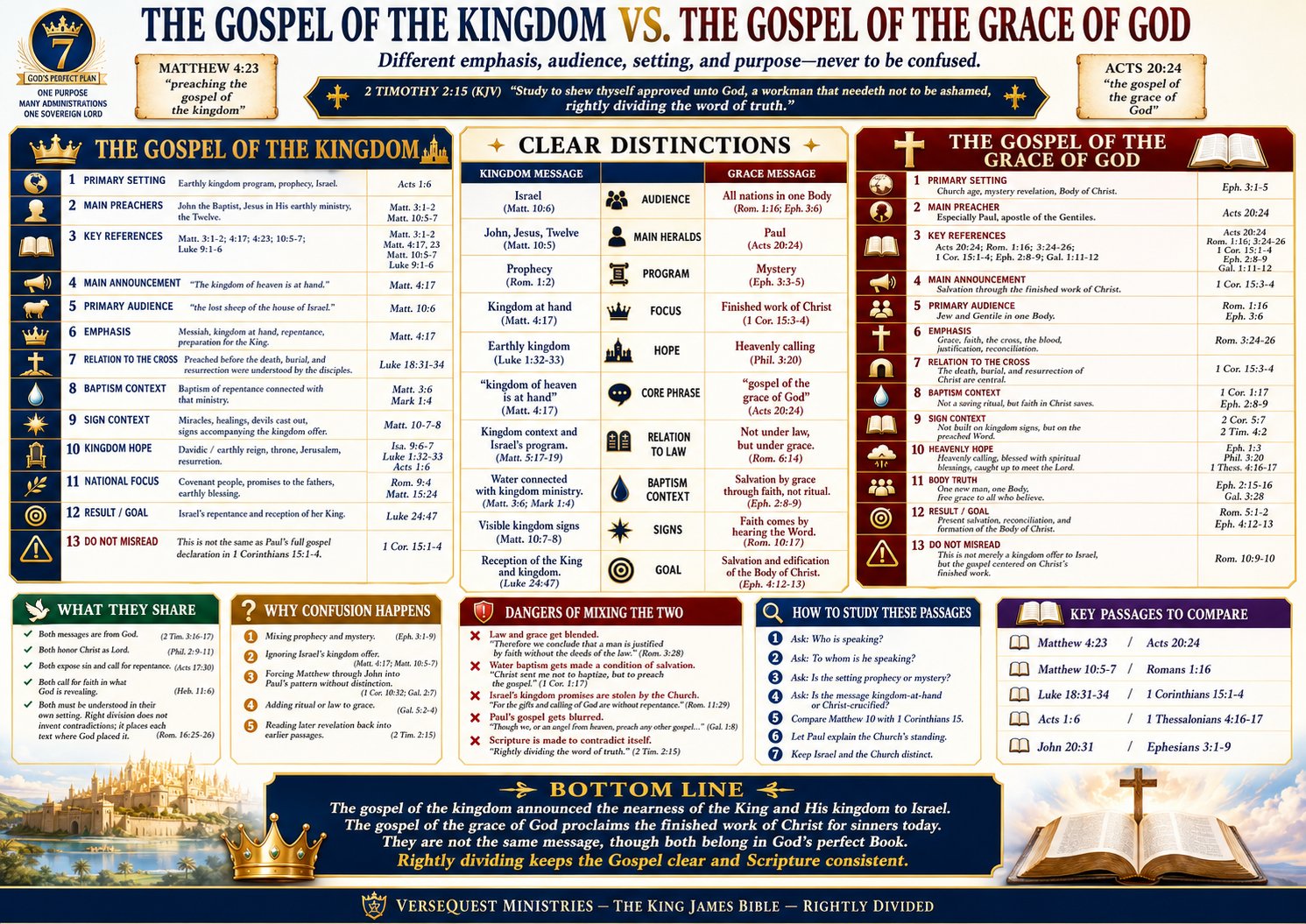
- The Gospel of the Kingdom vs. the Gospel of the Grace of God – KJV Right Division Bible Study Chart
- Compare the gospel of the kingdom and the gospel of the grace of God with this detailed KJV chart covering audience, message, prophecy, mystery, baptism, signs, salvation, and right division.
- $3.99
- Add to cart
-
-
Doctrine
-
-50%
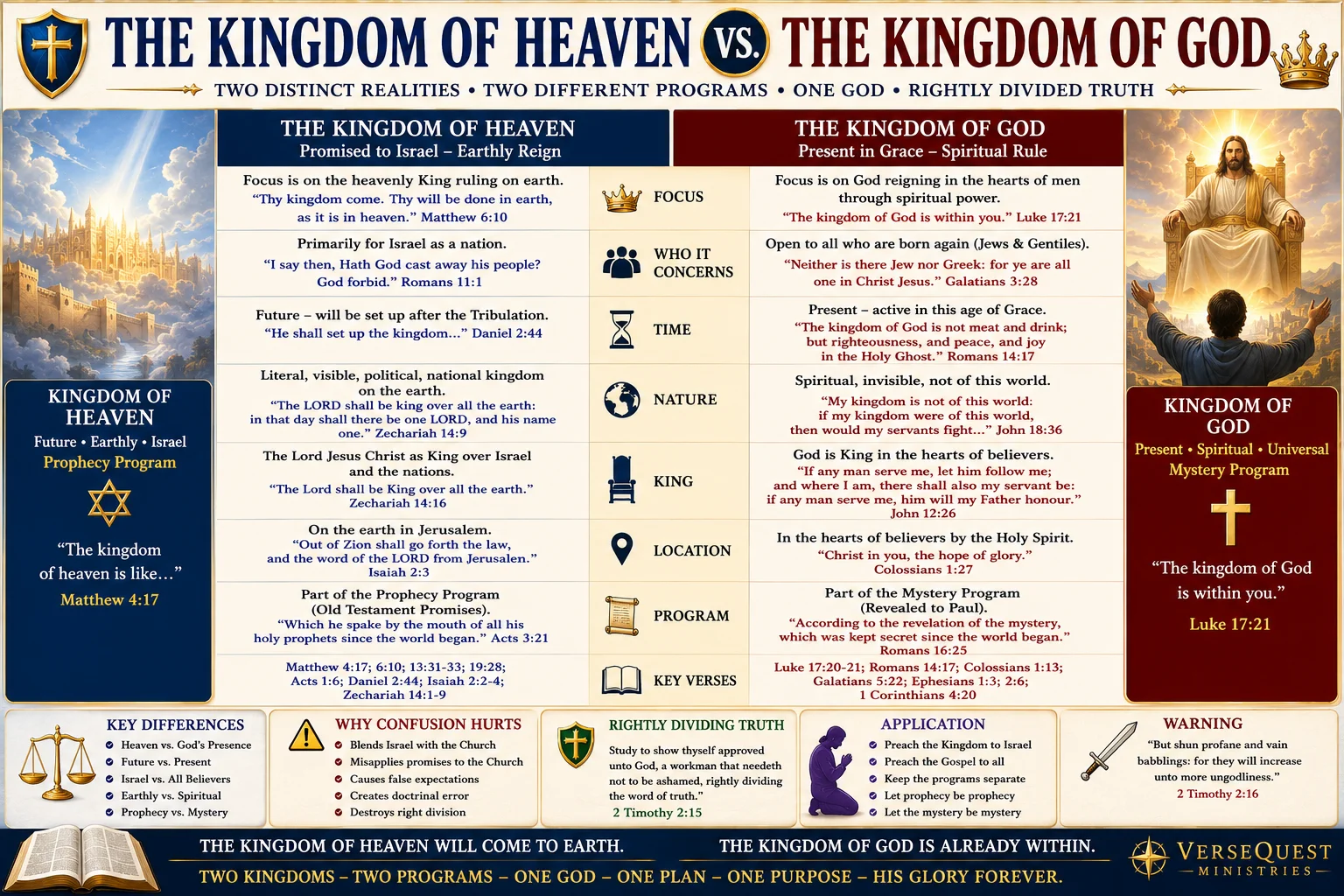
- The Kingdom of Heaven vs. The Kingdom of God Chart — KJV Rightly Divided
- Premium printable KJV Bible study chart comparing the Kingdom of Heaven and the Kingdom of God from a rightly divided perspective, showing their distinctions, purposes, promises, and biblical application.
- Original price was: $10.00.$4.99Current price is: $4.99.
- Add to cart
-
-50%
-
Bible Study Chart
-
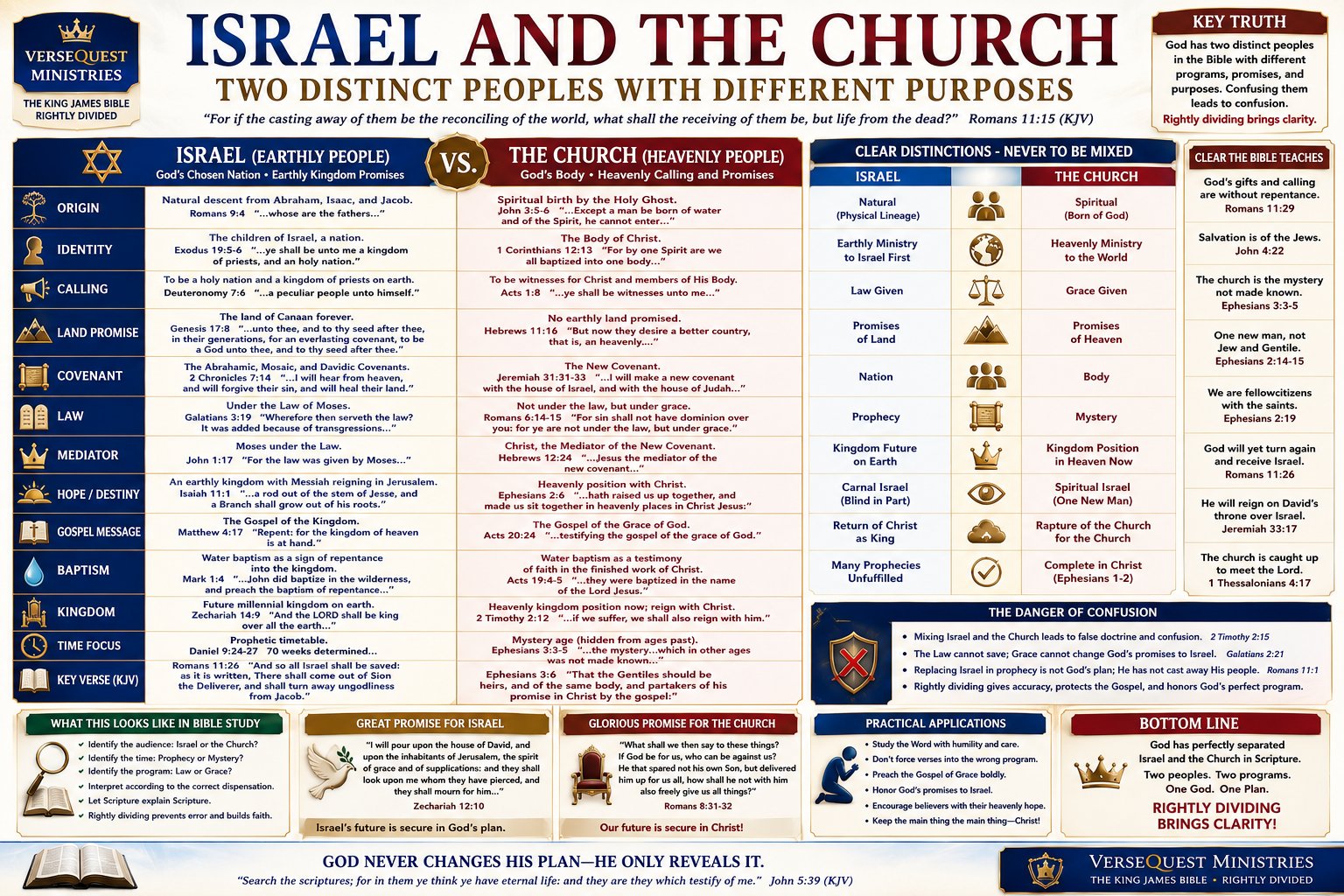
- Israel and the Church Bible Study Chart – Two Distinct Peoples with Different Purposes (KJV)
- Compare Israel and the Church with this detailed KJV Bible study chart covering their distinct origins, identities, covenants, callings, promises, gospel programs, and future destinies.
- $3.99
- Add to cart
-
-
Doctrine Series
-
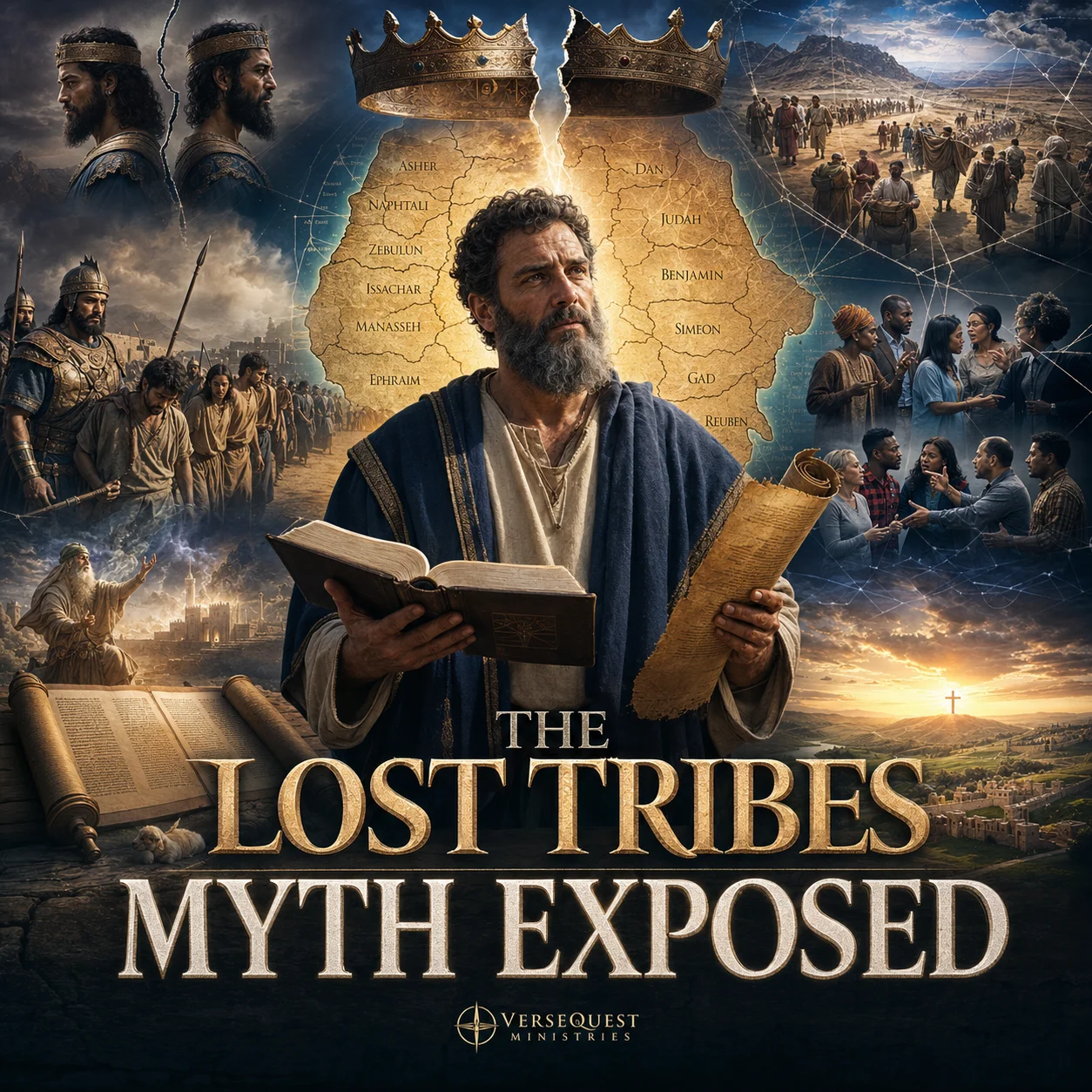
- The Lost Tribes Myth Exposed (213-Page Premium Study)
- A 213-page premium KJV study exposing the Lost Tribes myth, tribal identity errors, prophecy abuse, race theories, and false Israel claims through 35 detailed essays.
- $24.99
- Add to cart
-
-
Doctrine
-
-50%
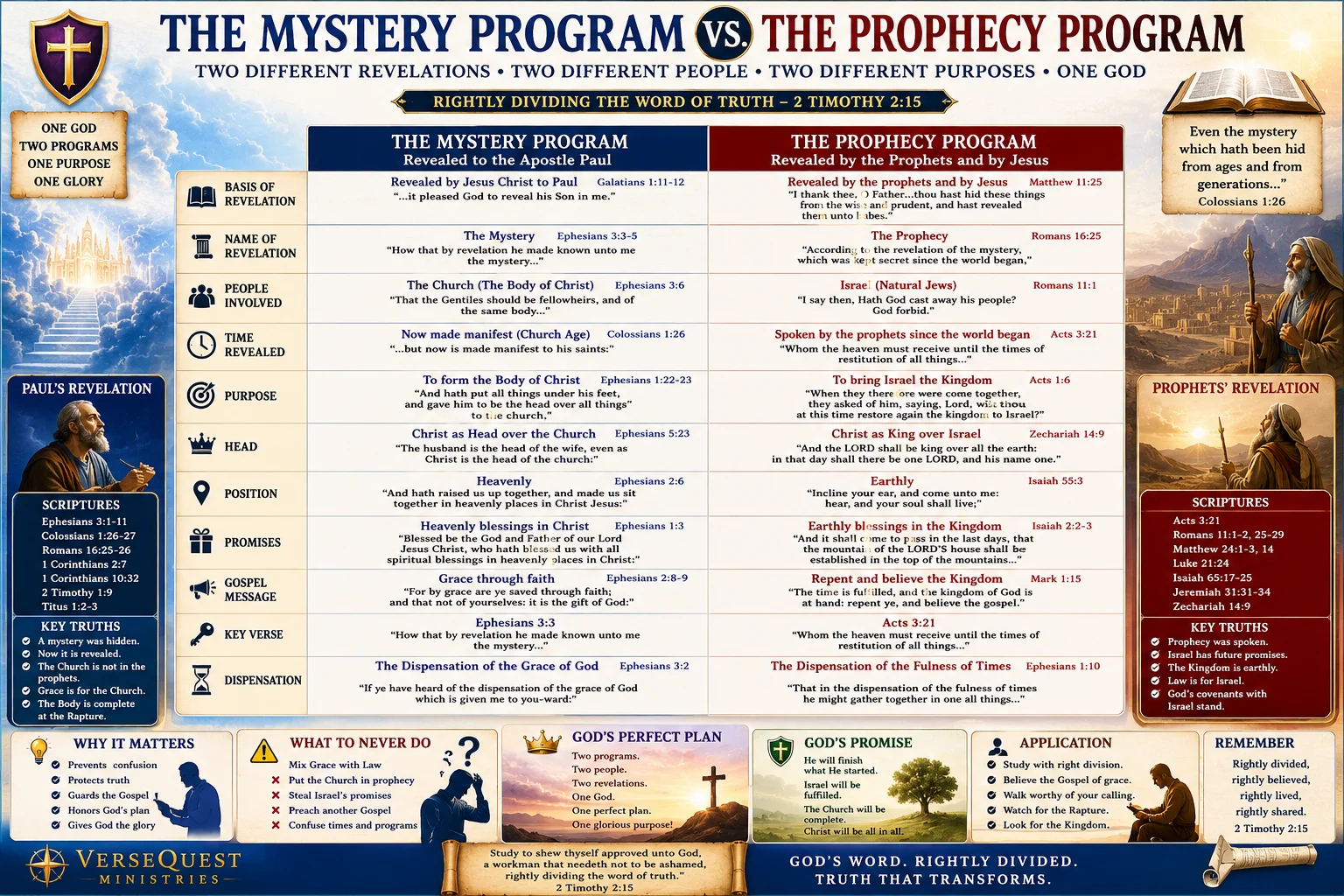
- The Mystery Program vs. Prophecy Program Chart — KJV Rightly Divided
- Premium printable KJV Bible study chart comparing the mystery program revealed through Paul with the prophecy program spoken by the prophets. Rightly divided and designed for teaching and personal study.
- Original price was: $10.00.$4.99Current price is: $4.99.
- Add to cart
-
-50%