
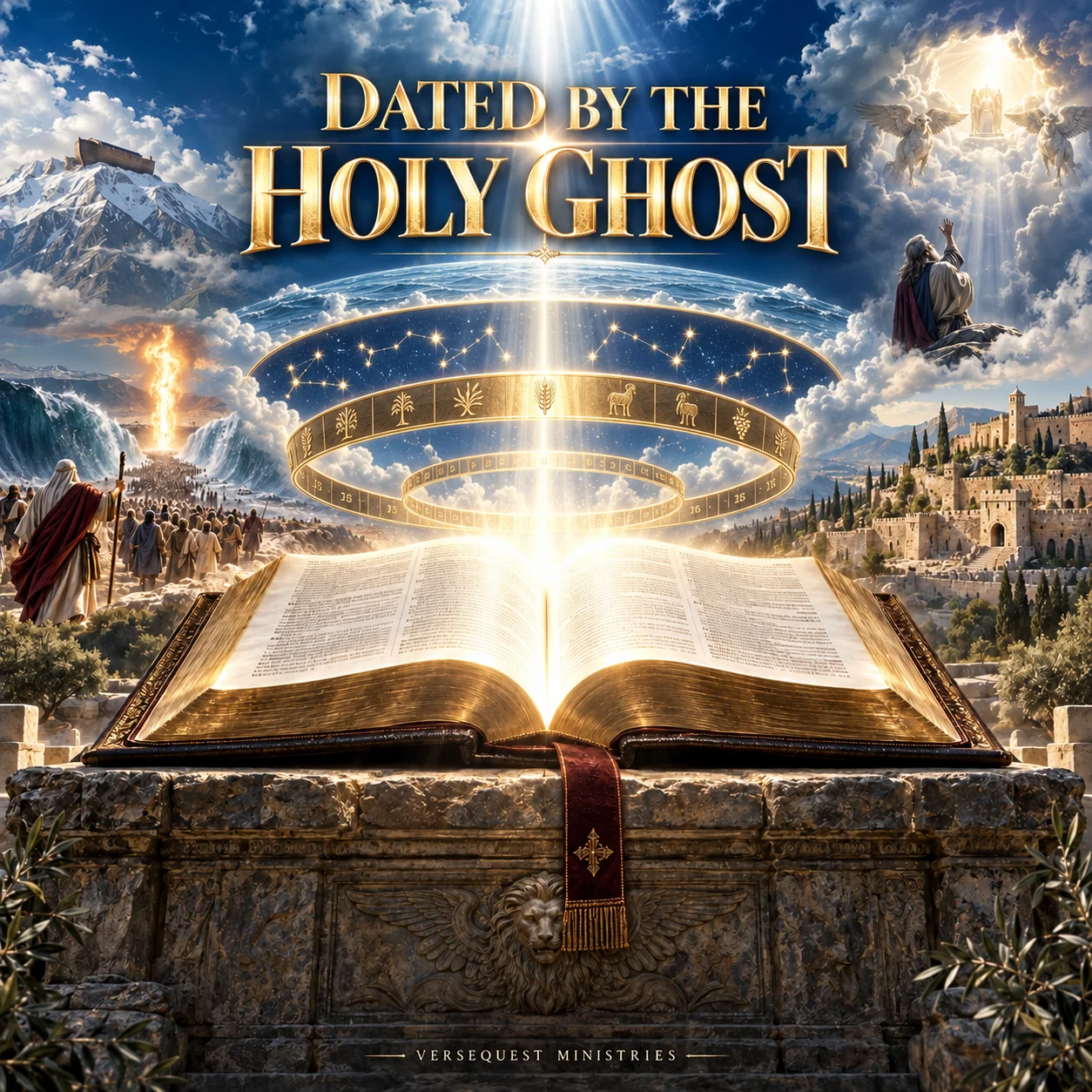
Dated by the Holy Ghost: Every Explicit Calendar Date in the King James Bible
Dated by the Holy Ghost is a 126-page downloadable PDF book examining every qualifying calendar date recorded in the King James Bible. Through 75 detailed studies and 417 printed KJV verse instances, it explores the Flood, Passover, Israel’s appointed feasts, temple history, Jerusalem’s judgment and restoration, Esther’s providential reversal, Ezekiel’s dated ministry, and the prophetic messages of Daniel, Haggai, and Zechariah.
Every study prints the primary passage in full, explains what happened, shows why the date matters, and mines five memorable biblical nuggets from the record. The book also includes a KJV month guide, detailed contents, canonical index, and special appendices addressing partial dates and parallel accounts with differing date markers. This digital reference is available for $19.99.
$19.99
Description
The Holy Ghost did not place dates in the Bible merely to fill space. When Scripture names a month and a day, God is driving a stake into real history. The Flood began on a recorded day. The ark rested upon Ararat on a recorded day. Israel departed from Egypt on the selfsame day God’s promise came due. The tabernacle was raised, the temple was begun, Jerusalem’s wall was finished, prophetic visions were received, and divine warnings were delivered on dates the Holy Ghost deliberately preserved.
Dated by the Holy Ghost is a 126-page downloadable PDF book examining the calendar dates recorded throughout the King James Bible. Its 75 comprehensive studies gather related passages into natural study units and print the primary KJV passages in full. Rather than reducing this subject to a dry list of references, the book explains what occurred, why the date matters, and what biblical nuggets emerge when Scripture is compared carefully with Scripture.
The studies move from the Flood calendar of Genesis through Israel’s appointed feasts, wilderness movements, national turning points, temple history, Jerusalem’s judgment, the restoration under Ezra and Nehemiah, the providential reversals in Esther, Ezekiel’s heavily dated ministry, Daniel’s vision, and the messages of Haggai and Zechariah. Historical events, recurring appointments, prophetic messages, future observances, context-dependent dates, partial formulas, and unusual calendar expressions are clearly distinguished.
Special care is taken with difficult passages. Esther’s provincial observance is kept distinct from what occurred in Shushan. The differing date markers in 2 Kings and Jeremiah are preserved rather than quietly harmonized. Ezekiel’s unidentified months and his unusual expression, “the beginning of the year,” are left exactly where the KJV leaves them. No Gregorian dates are imposed upon the text, no rabbinic traditions are promoted to the level of Scripture, and no numerological predictions are manufactured.
The book also contains an introduction explaining why biblical dates matter, a guide to the months named in the KJV, a detailed table of contents, a canonical study index, and appendices addressing partial dates and parallel accounts with differing date markers. Across the book, 417 KJV verse instances are printed so readers can examine the biblical record without being handed a pile of references and expected to reconstruct the study themselves.
This digital book is designed for serious Bible students, pastors, preachers, teachers, Sunday school classes, families, and anyone who wants to see the Bible as the inspired record of real events occurring on real days. Sometimes the deep thing is the detail everybody has been reading past. Dated by the Holy Ghost slows down at those details and asks why God considered them worth preserving.
Format: Downloadable PDF digital book
Length: 126 pages
Price: $19.99
The historical reality of events recorded in Scripture The verbal importance of inspired calendar details God’s sovereignty over days, months, years, nations, and events The Flood calendar and its stages of judgment and restoration Passover and Israel’s calendar of redemption The distinction between Passover and Unleavened Bread Israel’s recurring appointed feasts and holy convocations The difference between God-appointed worship and man-made religion Jeroboam’s counterfeit feast devised from his own heart Commands and fulfillments occurring on the same recorded date The movement of Israel through the wilderness according to God’s timing Temple construction, cleansing, dedication, and restoration The dated siege, breach, burning, and judgment of Jerusalem Mercy appearing after judgment in Jehoiachin’s release Restoration under Ezra and Nehemiah The completion of Jerusalem’s wall in fifty-two days Providence overturning Haman’s appointed day of destruction The distinction between events in Shushan and the provinces Ezekiel’s dated visions and prophetic messages Prophetic synchronization between Jerusalem and the captive prophet Future sanctuary and feast observances in Ezekiel Dated messages of warning, encouragement, and promised blessing Context-dependent dates and antecedent expressions Partial dates in which the month remains unidentified Unusual calendar formulas that must not be forced beyond the text Parallel accounts with differing date markers The importance of preserving the exact KJV wording Scripture interpreting Scripture The restraint required in responsible Bible interpretation The danger of speculative date-setting and manufactured numerology
- The biblical calendar is not decorative background; it is part of the inspired record.
- Exact dates anchor biblical events in history and remove them from the realm of religious fable.
- The five dated stages in Genesis 7–8 form a progression from judgment through preservation to restoration.
- Exodus 12 ties Israel’s calendar to redemption, the lamb, the blood, and departure from bondage.
- “The selfsame day” connects fulfilled events to dates already established in the immediate context.
- Israel’s appointed feasts were commanded by God; Jeroboam’s counterfeit feast was devised from his own heart.
- A repeated date does not always represent a duplicate event. One date may unite a command, fulfillment, parallel witness, or separate prophetic message.
- Esther 9 must preserve the distinction between the provinces and Shushan. Their fighting and rest days were not identical.
- Ezekiel 24:2 demonstrates the theological weight of the entire subject: “write thee the name of the day, even of this same day.”
- The parallel accounts of Jerusalem’s burning provide fifth-month markers on the seventh and tenth days. Both statements must remain visible.
- The parallel accounts of Jehoiachin’s release provide twelfth-month markers on the twenty-fifth and twenty-seventh days. The KJV does not authorize the interpreter to erase either one.
- Partial formulas in 1 Samuel 20, Ezekiel 26, and Ezekiel 32 provide a day without identifying the month.
- Ezekiel 40:1 says “the beginning of the year” but does not identify the month as the first or seventh.
- A traditional identification may be historically interesting without becoming inspired Scripture.
- No modern Gregorian anniversary should be presented as though the converted date were printed in the Bible.
- Biblical dates should never be twisted into predictions of the Rapture or other future events.
- Historical, recurring, prophetic, future, contextual, partial, and unusual dates require careful classification.
- The absence of qualifying New Testament month-and-day formulas under this narrow standard is itself an important boundary.
- God’s timing reveals judgment, mercy, fulfillment, delay, restoration, completion, and providential reversal.
- Sometimes the deep thing is the detail everybody has been reading past.
Subjects worthy of further study include the relationship between sacred and civil reckoning, the named months of the post-captivity books, Israel’s feast calendar, chronological connections among the restoration prophets, and the relationship between Ezekiel’s dated messages and events occurring at Jerusalem.
This resource can be used for personal Bible study by reading one dated passage at a time, examining the full KJV text, and reviewing the accompanying explanation and nuggets. The studies are substantial enough to reward careful reading but organized clearly enough to be used as individual lessons.
Pastors and preachers can use the book to develop sermons about the historical reliability of Scripture, the appointed feasts of Israel, the exactness of God’s providence, the timing of judgment, the restoration of Jerusalem, or the dated ministries of Ezekiel, Haggai, and Zechariah. Each study provides a defined passage, historical setting, principal lesson, and memorable teaching observations.
Sunday school teachers and small-group leaders can select studies according to a biblical book, historical period, feast, prophetic subject, or calendar date. The complete passages are printed in the resource, allowing a class to read the text together before discussing why the date was preserved.
Families can use individual chapters for family Bible study, especially the accounts of the Flood, Passover, Israel crossing Jordan, the rebuilding of Jerusalem, and the providential deliverance recorded in Esther. The studies demonstrate that the Bible records real people and real events rather than detached religious fables.
Bible institutes, Christian schools, and ministry-training classes can use the book as a supplemental reference for Old Testament history, biblical chronology, Israel’s appointed feasts, prophetic literature, and responsible interpretive method. Its classifications also provide examples of the difference between explicit statements, contextual conclusions, partial information, and speculation.
A King James Bible for examining each passage in its complete biblical context
A complete concordance for tracing expressions such as “selfsame day,” “day of the month,” “same month,” and “thereof”
A reliable Bible dictionary for studying named months such as Abib, Nisan, Sivan, Elul, Chisleu, Tebeth, Sebat, and Adar
A cross-reference Bible or Scripture cross-reference treasury for comparing parallel passages
Old Testament maps showing Ararat, Egypt, Sinai, Canaan, Jerusalem, Babylon, Persia, and the river Hiddekel
A Bible timeline covering the Flood, Exodus, monarchy, Babylonian captivity, return, and prophetic ministries
A chart of Israel’s appointed feasts based upon Leviticus 23 and Numbers 28–29
A study of the Passover and its relationship to Israel’s deliverance from Egypt
A study of the tabernacle, temple, and future sanctuary in Ezekiel
A harmony of Kings, Chronicles, and Jeremiah for comparing parallel historical accounts
A chronological study of Ezra, Nehemiah, Esther, Haggai, and Zechariah
A notebook for recording additional cross-references and observations without adding speculation to the text
Related products
-
Exodus Bible Study Workbook
-
- Exodus KJV Chapter-by-Chapter Workbook
- The Exodus KJV Chapter-by-Chapter Workbook is a complete 530-page downloadable Bible curriculum covering all 40 chapters of Exodus from a King James Bible-believing, rightly divided perspective. Every chapter includes ten…
- $49.99
- Add to cart
-
-
Study Guide For Esther
-
- Esther Essentials Guide: Providence, Courage, Reversal & Preservation
- The Esther Essentials Guide is a 108-page downloadable KJV Bible study PDF containing 60 core studies through all 167 verses of Esther. Follow the complete story from the Persian court…
- $14.99
- Add to cart
-
-
Bible Workbook
-
- Numbers KJV Chapter-by-Chapter Workbook
- The Numbers KJV Chapter-by-Chapter Workbook is a complete 500-page downloadable Bible curriculum covering all 36 chapters of Numbers from a King James Bible-believing, rightly divided perspective. Every chapter includes ten…
- $45.00
- Add to cart
-
-
Bible Study Guide For Joshua
-
- Joshua Essentials Guide: A Beginner’s KJV Guide to Courage, Conquest, Inheritance, and Covenant
- The Joshua Essentials Guide is a 120-page downloadable and printable KJV study designed for beginners, growing Christians, Bible teachers, and anyone seeking a clear overview of Joshua without beginning with…
- $14.99
- Add to cart
-
-
Body Art
-

- Tattoos Body Art and the Christian — A Seven-Part KJV Bible Study
- Tattoos Body Art and the Christian is a complete 71-page downloadable PDF book examining tattoos, Christian liberty, bodily ownership, religious symbols, historical marking practices, testimony, and grace through the King…
- $7.99
- Add to cart
-