The Spirit’s Seal Is Not a Temporary Sticker
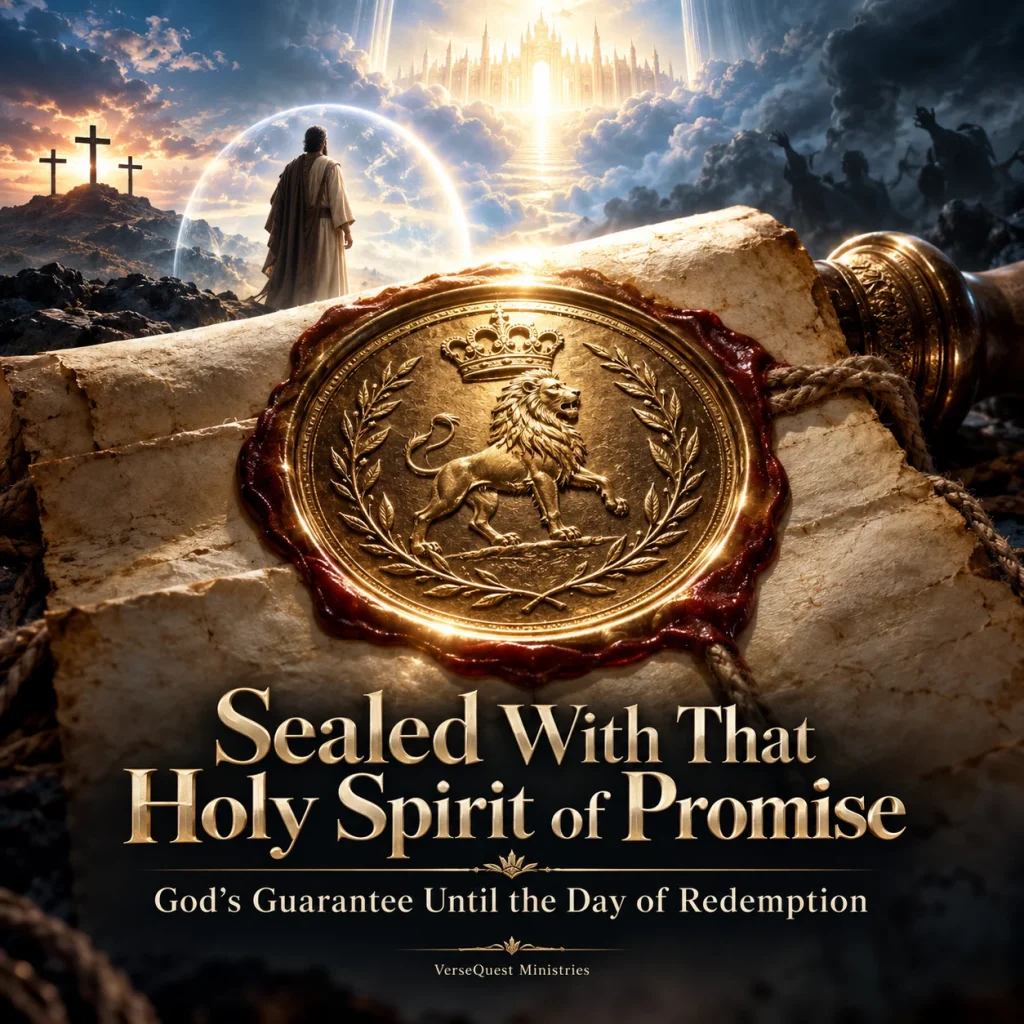
Sealed With That Holy Spirit of Promise
Sermon Title:
The Spirit’s Seal Is Not a Temporary Sticker: Sealed With That Holy Spirit of Promise
Key Passage:
Ephesians 1:13–14 — “In whom ye also trusted, after that ye heard the word of truth, the gospel of your salvation: in whom also after that ye believed, ye were sealed with that holy Spirit of promise, Which is the earnest of our inheritance until the redemption of the purchased possession, unto the praise of his glory.”
Series:
Foundations of the Gospel of Grace
Topic:
The Holy Spirit’s Seal, the Earnest of the Inheritance, and the Believer’s Security Until Redemption Day
Book:
Ephesians, Romans, 2 Corinthians, John, Colossians, 1 Peter, Titus, 1 Corinthians, 2 Timothy
Speaker:
Paul Tackett
Suggested Sermon Text:
Ephesians 1:12–14; Ephesians 4:30; Romans 8:9–23; 2 Corinthians 1:21–22; 2 Corinthians 5:5; John 10:27–29; John 5:24; Colossians 2:13–14; Titus 3:5–7; 1 Corinthians 6:19–20; 1 Corinthians 15:1–4; 2 Timothy 1:12; 1 Peter 1:3–5
Short Sermon Description:
This detailed VerseQuest Ministries sermon outline explains Ephesians 1:13–14 and the doctrine that believers, after hearing the word of truth and believing the gospel of salvation, are sealed with that holy Spirit of promise. The Spirit’s seal is not a temporary sticker, emotional feeling, sacramental stamp, denominational label, or probationary religious mark that falls off when the believer struggles. It is God’s own seal of ownership, security, promise, and future redemption. This outline explains the order of hearing, believing, trusting, and sealing; the meaning of the gospel of salvation; the Spirit as the earnest of the inheritance; the redemption of the purchased possession; and why the believer’s assurance rests on God’s promise, not the weakness of human flesh. It also distinguishes eternal security from careless living, grieving the Spirit from losing the Spirit, and the present seal from the future redemption of the body. Designed for pastors, preachers, teachers, Bible students, and believers, this outline magnifies the finished work of Christ, the sealing ministry of the Holy Spirit, and the glory of God’s grace.
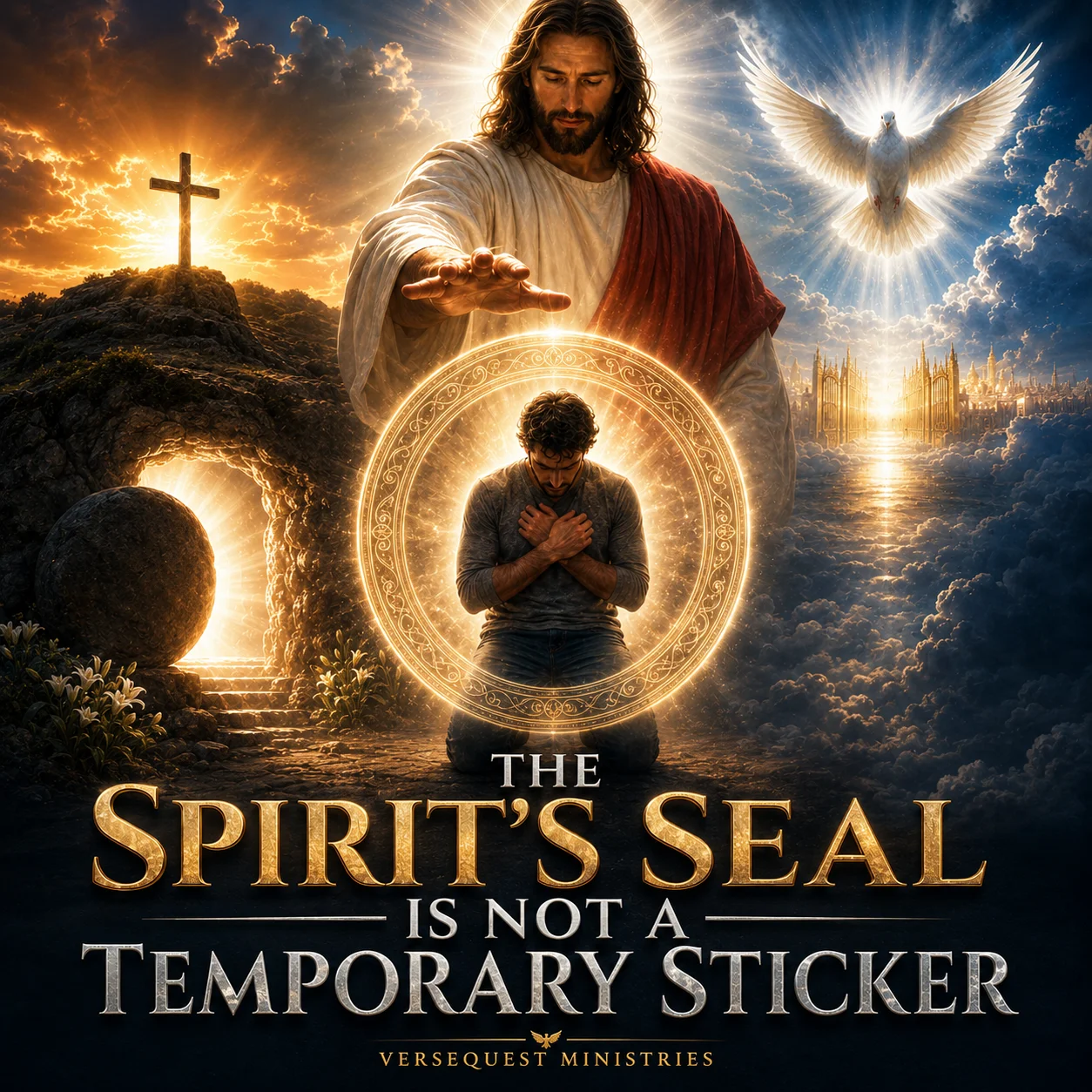
The Spirit’s Seal Is Not a Temporary Sticker
Sealed With That Holy Spirit of Promise
Introduction
Ephesians 1:13–14 gives one of the clearest statements in Paul’s epistles about the believer’s security in Jesus Christ: “after that ye believed, ye were sealed with that holy Spirit of promise.” That is not weak religious language. That is not a nervous maybe from heaven. That is not God placing a paper sticker on the believer’s forehead and hoping it survives the weather. It is the sealing of the Holy Spirit of God. Religion may hand men membership cards, sacramental tokens, denominational certificates, altar-call memories, and emotional experiences, but God seals the believer with the Holy Spirit Himself. There is a universe of difference between man’s label and God’s seal.
The order in Ephesians 1:13 matters. First, the sinner hears “the word of truth.” Paul then defines that word as “the gospel of your salvation.” Then the sinner trusts Christ. Then, “after that ye believed,” the believer is sealed with the Holy Spirit of promise. The passage does not say the Spirit seals a man because he was born into a religious family, because he received a ritual, because he joined a church, because he endured to the end by personal strength, because he performed enough works, or because he felt spiritual at a meeting. The seal comes after hearing and believing the gospel. That gospel is not vague religion; it is the good news of Jesus Christ’s death for our sins, His burial, and His resurrection according to the Scriptures.
This doctrine must be preached because legalism and careless living both abuse the truth. Legalism says the seal is uncertain, fragile, temporary, and dependent on the believer’s performance. Carelessness says the seal means sin no longer matters. Both are wrong. The believer is sealed unto the day of redemption, but he is also commanded not to grieve the Holy Spirit of God. The seal does not fall off every time the saint stumbles, and the seal does not excuse the saint to walk in sin. The Spirit’s seal is not a temporary sticker. It is God’s mark on a blood-bought possession, and the believer should live like one who belongs to the Lord.
I. The Seal Comes After Hearing the Word of Truth
Key Text: Ephesians 1:13
Supporting Texts: Romans 10:17; John 17:17; James 1:18; 1 Peter 1:23
Paul says, “after that ye heard the word of truth.” God begins with truth, not religious atmosphere. Faith does not come by incense, candles, stained glass, emotional pressure, entertainment, tradition, or sacramental machinery. Romans 10:17 says, “So then faith cometh by hearing, and hearing by the word of God.” The sinner must hear the word of truth because error cannot save him, tradition cannot regenerate him, and religious fog cannot give him life. God uses His word to bring sinners to Christ.
Jesus said in John 17:17, “Sanctify them through thy truth: thy word is truth.” James 1:18 says God begat us “with the word of truth.” First Peter 1:23 says believers are born again by the word of God. The Bible is not a religious accessory to be carried into ceremonies after the real power happens somewhere else. The word of God is living, authoritative, saving truth. If a ministry hides the word under noise, showmanship, philosophy, or ritual, it is hiding the very instrument God uses to bring men to faith.
The sealing of the Spirit is not disconnected from the word of truth. The sinner hears God’s truth concerning Christ. He hears that he is guilty, that Christ died for sins, that Christ was buried, that Christ rose again, and that salvation is by grace through faith. The Spirit does not seal a man into confusion. He seals the believer who has heard the word of truth and trusted Christ. The order is not accidental. It is doctrinal.
Main Truth:
The Spirit seals believers after they hear the word of truth, because salvation comes through God’s word, not religious fog.
II. The Word of Truth Is the Gospel of Salvation
Key Text: Ephesians 1:13
Supporting Texts: 1 Corinthians 15:1–4; Romans 1:16; Acts 16:31; Galatians 1:8–9
Paul calls the word of truth “the gospel of your salvation.” That phrase matters. The gospel is not a self-help plan, moral improvement program, church-growth slogan, political cause, sacramental system, kingdom-building project, or vague invitation to be religious. The gospel of salvation is the message by which sinners are saved. First Corinthians 15:1–4 defines Paul’s gospel clearly: Christ died for our sins according to the Scriptures, He was buried, and He rose again the third day according to the Scriptures.
Romans 1:16 says the gospel of Christ is “the power of God unto salvation to every one that believeth.” The power is not in the preacher’s personality, the building’s beauty, the music’s emotion, the denomination’s history, or the ritual’s mystery. The power is in the gospel of Christ. Acts 16:31 gives the direct answer to the sinner’s question: “Believe on the Lord Jesus Christ, and thou shalt be saved.” The sinner is not told to believe in his own faith, his own repentance as a work, his own morality, his own baptism, or his own religion. He is told to believe on Christ.
Galatians 1 warns against another gospel. Any message that adds works, law, sacraments, church membership, human merit, or religious endurance as the cause of salvation corrupts the gospel. The Spirit seals those who believe the gospel of salvation, not those who trust a counterfeit gospel. A false gospel can produce members, donors, activists, and religious talkers, but it cannot produce Bible salvation. God seals believers through the true gospel.
Main Truth:
The Spirit seals those who believe the gospel of salvation: Christ’s death for sins, burial, and resurrection.
III. The Believer Trusts in Christ, Not in Religion
Key Text: Ephesians 1:13
Supporting Texts: Ephesians 2:8–9; Romans 4:5; Titus 3:5; Philippians 3:9
Paul says, “In whom ye also trusted.” The “whom” is Christ. The believer’s trust is in a Person, not in a system. He does not trust a church to save him, a priest to mediate salvation, baptismal water to regenerate him, sacraments to maintain him, law-keeping to justify him, or morality to recommend him. He trusts Jesus Christ. Faith has the right object or it is useless. A man can sincerely trust a rotten bridge and still fall. The sinner must trust the Lord Jesus Christ.
Ephesians 2:8–9 says salvation is by grace through faith, “not of works, lest any man should boast.” Romans 4:5 says God justifies the one who “worketh not, but believeth on him that justifieth the ungodly.” Titus 3:5 says salvation is not by works of righteousness which we have done. Philippians 3:9 shows Paul rejecting his own righteousness and desiring to be found in Christ, having the righteousness which is of God by faith. These passages agree with Ephesians 1. Trust belongs in Christ, not in the flesh.
The Spirit’s seal is attached to Christ, not religious performance. A man trusting religion may feel secure for a while, but he has the wrong foundation. A man trusting Christ stands on the finished work of the Son of God. The question is not whether a sinner has joined something, felt something, done something, or promised something. The question is whether he has trusted Christ according to the gospel. After that ye believed, ye were sealed.
Main Truth:
The believer is sealed after trusting Jesus Christ, not after trusting religion, works, sacraments, or human merit.
IV. The Sealing Comes After Believing
Key Text: Ephesians 1:13
Supporting Texts: John 5:24; John 6:47; Acts 10:43–44; Romans 10:9–13
Paul’s order is plain: “after that ye believed, ye were sealed.” The sealing of the Spirit is not earned by long religious labour after salvation. It is not delayed until the believer proves himself worthy. It is not a second-class blessing for elite saints. It is not a temporary emotional high at a meeting. It is God’s act upon the believer after faith in Christ. The sinner hears, believes, trusts, and is sealed.
John 5:24 says the one who hears Christ’s word and believes hath everlasting life, shall not come into condemnation, and is passed from death unto life. John 6:47 says, “He that believeth on me hath everlasting life.” Acts 10 shows the Holy Ghost falling on those who heard and believed Peter’s message concerning Christ. Romans 10 says the sinner believes and calls upon the name of the Lord. The Bible order is not religious confusion. It is hearing, believing, and receiving what God gives.
This truth gives assurance. The believer does not need to wonder whether the Spirit’s seal arrived by church paperwork, ritual timing, emotional intensity, or later religious performance. God says “after that ye believed.” If a man has believed the gospel and trusted Christ, the Holy Spirit has sealed him. That seal is God’s work, not man’s achievement. The Spirit’s seal is not a temporary sticker, and it is not a prize for spiritual veterans. It is God’s mark on the believer.
Main Truth:
The believer is sealed with the Holy Spirit after believing the gospel, because sealing is God’s work upon those who trust Christ.
V. The Holy Spirit Himself Is the Seal
Key Text: Ephesians 1:13
Supporting Texts: 2 Corinthians 1:21–22; Ephesians 4:30; Romans 8:9; 1 Corinthians 6:19–20
Paul says believers “were sealed with that holy Spirit of promise.” The seal is not merely a doctrine, feeling, ritual, symbol, or church stamp. The Holy Spirit Himself is the seal. That makes the doctrine personal, divine, and secure. God does not seal His purchased possession with cheap glue from the religious craft aisle. He seals believers with the Holy Spirit. If that does not give a man assurance, nothing will.
Second Corinthians 1:22 says God “hath also sealed us, and given the earnest of the Spirit in our hearts.” Ephesians 4:30 says believers are sealed unto the day of redemption. Romans 8:9 says if any man have not the Spirit of Christ, he is none of His. First Corinthians 6 says the believer’s body is the temple of the Holy Ghost, and he is bought with a price. The Spirit’s indwelling and sealing mark ownership. The believer belongs to God.
That ownership carries responsibility. The sealed believer is not his own. He cannot drag the temple of the Holy Ghost into sin and pretend it is a small matter. The Holy Spirit is holy. The seal is holy. The believer’s body and spirit are God’s. Security is not independence from God. It is ownership by God. The Spirit’s seal means the believer is kept, claimed, indwelt, and accountable to the One who bought him.
Main Truth:
The Holy Spirit Himself is God’s seal on the believer, marking ownership, security, and divine possession.
VI. The Spirit’s Seal Is the Seal of Promise
Key Text: Ephesians 1:13
Supporting Texts: John 14:16–17; John 16:13; Acts 1:4–5; Galatians 3:14
Paul calls Him “that holy Spirit of promise.” God promised the Spirit, and God keeps His promise. The believer’s security is not based on the reliability of man’s promises to God, but on the reliability of God’s promise to man in Christ. Men promise God all kinds of things and break them before breakfast. God promises, and heaven backs every word. The Spirit’s seal is tied to divine promise.
Jesus promised in John 14 that the Father would give another Comforter, “that he may abide with you for ever.” That does not sound temporary. It does not sound fragile. It does not sound like a sticker that falls off the moment a believer struggles. John 16 speaks of the Spirit guiding into all truth. Galatians 3:14 speaks of receiving the promise of the Spirit through faith. The Spirit’s ministry is not a temporary religious decoration; He is the promised Comforter, indweller, and seal.
This means assurance is rooted in God’s faithfulness. If the Holy Spirit is the Spirit of promise, then the believer should not talk as though God’s promise is weaker than human failure. The flesh is weak, but God’s promise is not. The believer can grieve the Spirit, but he is sealed by the Spirit. He can stumble, but God’s promise does not stumble. The Spirit’s seal is not a sticker. It is the promise of God placed upon the believer.
Main Truth:
The Holy Spirit is the Spirit of promise, and His seal rests on God’s faithfulness, not the believer’s weakness.
VII. The Spirit Is the Earnest of Our Inheritance
Key Text: Ephesians 1:14
Supporting Texts: 2 Corinthians 5:5; Romans 8:16–17; 1 Peter 1:4; Colossians 1:12
Ephesians 1:14 says the Spirit “is the earnest of our inheritance.” An earnest is a pledge, guarantee, or down payment. It is not the full inheritance yet, but it guarantees the inheritance to come. God gives the Spirit now as the earnest of what He will complete later. The believer has the Spirit now, while waiting for the full redemption of the purchased possession. That is assurance with teeth in it.
Second Corinthians 5:5 says God “hath given unto us the earnest of the Spirit.” Romans 8 says the Spirit bears witness with our spirit that we are the children of God, and if children, then heirs. First Peter 1 speaks of an inheritance incorruptible, undefiled, and that fadeth not away, reserved in heaven. Colossians 1 says the Father has made believers meet to be partakers of the inheritance of the saints in light. God does not give an earnest for an inheritance He plans to cancel.
The earnest of the Spirit destroys the idea that salvation is a shaky religious rental agreement. God has invested His own Spirit as the pledge of what He will finish. A man may doubt his emotions, his strength, his understanding, and his usefulness, but he should not doubt God’s earnest. The Spirit is the present guarantee of future glory. The inheritance is not reserved because the believer is strong. It is reserved because God is faithful.
Main Truth:
The Holy Spirit is the earnest of the believer’s inheritance, guaranteeing the future glory God has promised.
VIII. The Seal Lasts Until the Redemption of the Purchased Possession
Key Text: Ephesians 1:14
Supporting Texts: Ephesians 4:30; Romans 8:23; Philippians 3:20–21; 1 Corinthians 15:51–53
Paul says the Spirit is the earnest “until the redemption of the purchased possession.” Ephesians 4:30 says believers are sealed “unto the day of redemption.” The seal has a destination. It lasts until redemption day. Not until the next failure. Not until the next doubt. Not until the next season of weakness. Not until a religious board reviews the case. Until the redemption of the purchased possession. God marks His property and keeps it until the final redemption is revealed.
Romans 8:23 explains that believers wait for “the adoption, to wit, the redemption of our body.” The believer’s soul is saved now, but the body still waits for redemption. Philippians 3 says the Saviour shall change our vile body, that it may be fashioned like unto His glorious body. First Corinthians 15 says the dead shall be raised incorruptible, and we shall be changed. The Spirit seals the believer until God completes redemption in the body.
This is why the seal cannot be a temporary sticker. A sticker may peel under heat, water, time, or pressure. God’s seal lasts until redemption day. The believer may go through trials, temptations, chastening, weakness, spiritual warfare, and seasons of struggle, but the seal remains because God’s purpose remains. The purchased possession will be redeemed. The same God who sealed the believer will finish the work.
Main Truth:
The Spirit’s seal lasts until the day God redeems the believer’s body and completes the purchased possession.
IX. The Seal Is Unto the Praise of God’s Glory
Key Text: Ephesians 1:14
Supporting Texts: Ephesians 1:6; Ephesians 1:12; Romans 11:36; Revelation 5:9–12
Paul says all of this is “unto the praise of his glory.” The sealing of the Spirit is not ultimately about making the believer feel important. It is about glorifying God. Ephesians 1 repeatedly points to God’s glory: “to the praise of the glory of his grace,” “that we should be to the praise of his glory,” and “unto the praise of his glory.” Salvation begins in God’s grace, is purchased by Christ’s blood, sealed by the Spirit, and ends in God’s glory.
This destroys boasting. The believer cannot brag that he sealed himself, kept himself, guaranteed himself, redeemed himself, or secured his own inheritance. God did it. The Father planned salvation. The Son purchased salvation. The Spirit sealed the believer. The glory belongs to God. Religion wants some of the credit. Flesh wants some of the credit. Grace gives all the credit to the Lord.
Revelation 5 shows heaven praising the Lamb who was slain and redeemed sinners to God by His blood. Heaven will not sing about denominational systems, sacramental maintenance, human merit, or religious effort. Heaven will praise the Lamb. The sealing of the Spirit is part of that glory. It testifies that God saves, God seals, God keeps, and God finishes what He began. The Spirit’s seal is not a temporary sticker; it is a glory-mark of God’s grace.
Main Truth:
The Spirit’s seal glorifies God because salvation, security, inheritance, and redemption are all the work of His grace.
Conclusion
Ephesians 1:13–14 gives the believer a clear order and a strong assurance. The sinner hears the word of truth, the gospel of salvation. He trusts Christ. After believing, he is sealed with that holy Spirit of promise. The Spirit is the earnest of the inheritance until the redemption of the purchased possession. That is not a religious maybe. That is not a temporary sticker. That is God’s seal on the believer.
The seal does not make sin harmless. Ephesians 4:30 warns believers not to grieve the Holy Spirit of God, whereby they are sealed unto the day of redemption. The same verse that teaches sealing also teaches seriousness. A sealed believer can grieve the Spirit, damage fellowship, lose joy, bring chastening, and harm his testimony. But he is not unsealed every time his flesh stumbles. The Spirit’s seal rests on God’s promise and Christ’s finished work, not on Adam’s reliability.
The Church must preach this doctrine with clarity. Legalism steals assurance by making the seal fragile. Lawlessness abuses assurance by making sin small. The Bible gives both security and responsibility. The believer is sealed by the Holy Spirit until redemption day, and therefore he should walk worthy of the God who sealed him. The Spirit’s seal is not man’s sticker. It is God’s mark on a blood-bought possession.
Final Call
Sinner, if you have not trusted Jesus Christ, you are not sealed with the Holy Spirit of promise. You may have religion, morality, baptism, sacraments, church membership, and good intentions, but none of those things can seal a dead sinner unto redemption day. You must hear and believe the gospel of salvation.
Jesus Christ died for your sins according to the Scriptures. He was buried. He rose again the third day according to the Scriptures. Believe on the Lord Jesus Christ, and thou shalt be saved. After believing the gospel, the believer is sealed with that holy Spirit of promise.
Believer, stop treating God’s seal like a cheap sticker and stop treating sin like a harmless toy. You are sealed unto the day of redemption. Walk in the Spirit. Do not grieve Him. Trust God’s promise. Rejoice in your inheritance. Live like a purchased possession marked for glory.
Closing Verse:
Ephesians 1:13 — “In whom also after that ye believed, ye were sealed with that holy Spirit of promise.”
Closing Statement:
The Spirit’s seal is not a temporary sticker on religious flesh, but God’s own mark on a blood-bought believer until the day of redemption.