Sermon Title:
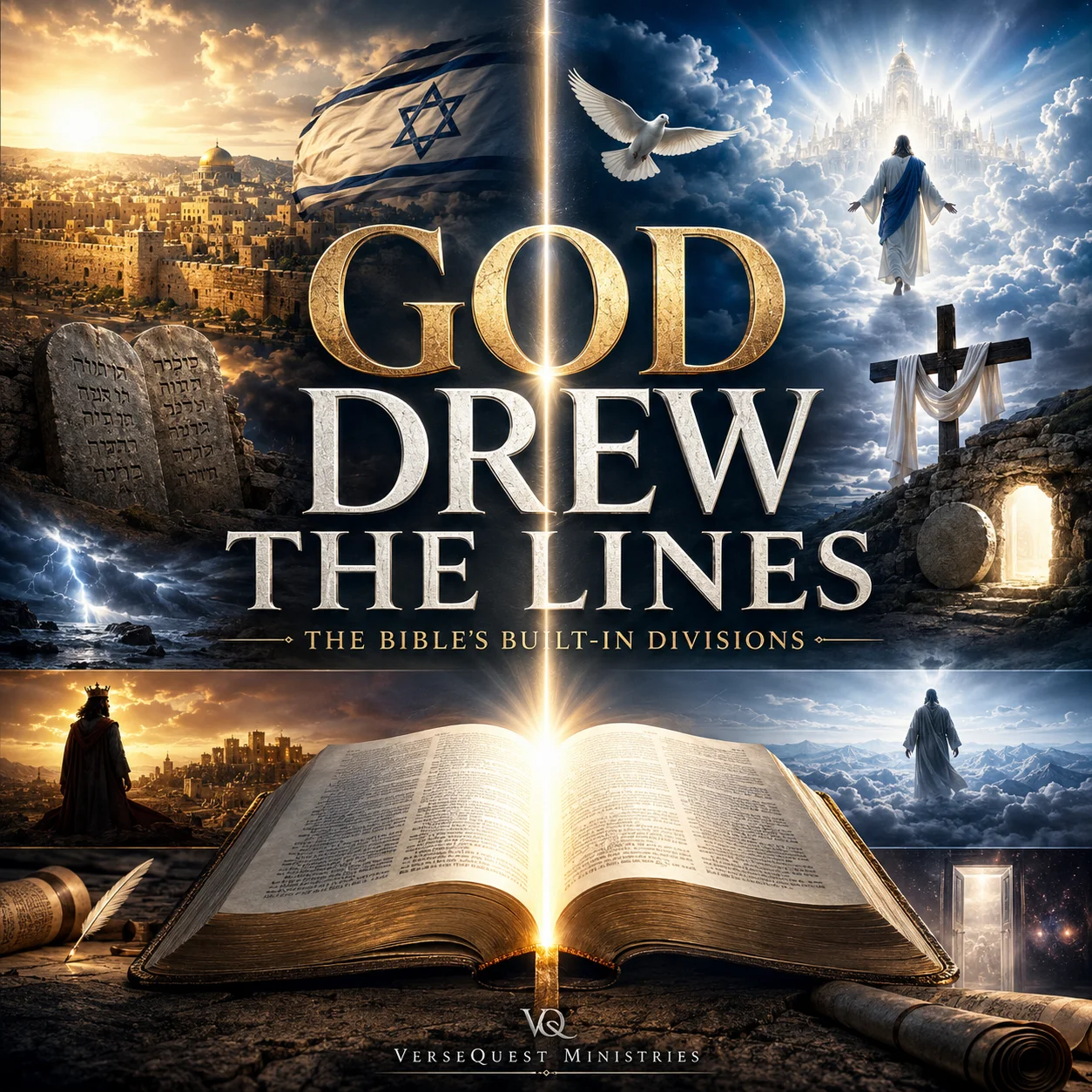
God Drew the Lines: Discovering the Bible’s Built-In Divisions
Key Passage:
Genesis 1:1 — “In the beginning God created the heaven and the earth.”
2 Timothy 2:15 — “Study to shew thyself approved unto God, a workman that needeth not to be ashamed, rightly dividing the word of truth.”
Series:
Foundations of Right Division
Topic:
The Divisions God Placed Within His Word, His Creation, and His Revealed Program
Book:
Genesis, 2 Timothy, 1 Corinthians, Romans, Ephesians, Galatians, Acts, Colossians, Revelation
Speaker:
Paul Tackett
Suggested Sermon Text:
Genesis 1:1–5; 2 Timothy 2:15; 1 Corinthians 10:32; John 1:17; Romans 6:14; Acts 3:21; Romans 16:25–26; Ephesians 2:11–18; Ephesians 3:1–9; Colossians 3:1–4; 1 Thessalonians 4:13–18; Revelation 19:11–16; Revelation 20:11–15
Short Sermon Description:
This sermon outline explains that right division is not a theological system imposed upon Scripture but a principle built into the Bible from its opening verse. Genesis 1:1 distinguishes God from creation and heaven from earth, while the remainder of Scripture distinguishes light from darkness, Israel from the nations, the Church from both, law from grace, prophecy from mystery, the earthly kingdom from the heavenly Body, the Rapture from the Second Advent, and the believer’s judgment from the judgment of the lost. Second Timothy 2:15 commands the workman to recognize and preserve those God-given lines. This study equips pastors, teachers, Bible students, and believers to understand why doctrinal confusion begins when men erase distinctions that God placed in His Word. The Bible’s divisions do not weaken its unity; they reveal the order, wisdom, faithfulness, and unfolding purpose of God in Jesus Christ.
God Drew the Lines
Discovering the Bible’s Built-In Divisions
Introduction
The first verse in the Bible begins with a division: “In the beginning God created the heaven and the earth.” Before a man reaches the second verse, God has already distinguished the Creator from the creation and the heaven from the earth. Genesis 1 continues the pattern. God divides the light from the darkness. He divides the waters above from the waters below. He divides the seas from the dry land. He gives the sun rule over the day and the moon rule over the night. The God of the Bible is not the author of confusion. He creates, names, separates, orders, and assigns. God draws lines because distinctions reveal purpose.
The modern religious world talks constantly about unity but rarely asks whether God Himself made a distinction. Men blend the Jew, the Gentile, and the Church of God. They mix law and grace, Moses and Paul, the kingdom of heaven and the Body of Christ, prophecy and mystery, the Rapture and the Second Advent, the judgment seat of Christ and the Great White Throne. Then they blame the Bible for the contradictions their theology created. The Book is not confused. The confusion begins when a preacher takes an eraser to the lines God drew and pours every passage into one denominational bucket.
Second Timothy 2:15 does not command the believer merely to read the Bible, admire the Bible, quote the Bible, or carry the Bible. It commands him to study and rightly divide the word of truth. The word is truth before it is divided, and it remains truth after it is divided. Right division does not separate truth from error within Scripture; there is no error in Scripture. It separates one biblical truth from another biblical truth so that neither is misapplied. God’s divisions do not tear the Bible apart. They show how the pieces fit together beneath the headship and glory of Jesus Christ.
I. The Bible Divides the Creator From the Creation
Key Text: Genesis 1:1
Supporting Texts: Isaiah 40:25–26; John 1:1–3; Colossians 1:16–17
The first division in Scripture is the infinite distinction between God and everything God made. “In the beginning God created.” God was not created. God did not emerge from matter, develop from energy, rise from the universe, or evolve from a primitive spiritual force. Before the beginning began, God was. He is eternal, self-existent, holy, sovereign, and independent of His creation. The universe depends upon Him; He does not depend upon the universe.
John 1:3 says of the Lord Jesus Christ, “All things were made by him; and without him was not any thing made that was made.” Colossians 1:16 says all things in heaven and earth, visible and invisible, were created by Him and for Him. That division destroys pantheism, evolution, idolatry, humanism, and every religion that makes the creation part of God or turns the creature into his own god. The Creator is not hidden inside a tree, contained within a star, or represented by a carved image. He is above His creation while actively sustaining it.
This first division establishes authority. If God created everything, God owns everything. If God owns everything, He has the right to define truth, righteousness, sin, judgment, salvation, marriage, worship, history, and eternity. Man does not sit in judgment upon his Maker. The clay does not correct the Potter. The sinner does not revise the words of the One who gave him breath. Right division begins by putting God above and man below.
Main Truth:
The Bible’s first division separates the eternal Creator from His creation and establishes God’s absolute authority over all things.
II. The Bible Divides the Heaven From the Earth
Key Text: Genesis 1:1
Supporting Texts: Ephesians 1:10; Colossians 1:16; Revelation 21:1
Genesis 1:1 distinguishes “the heaven” from “the earth.” That division becomes one of the great organizing truths of Scripture. God has purposes connected to the earth, and God has purposes connected to heavenly places. Those purposes ultimately meet in Jesus Christ, but they must not be confused before God gathers them together according to His appointed plan.
Israel’s great promises are largely earthly. Abraham was promised land. David was promised a throne. Israel was promised national restoration. Jerusalem was promised future glory. The Messiah will reign over the nations from the earth. The Lord Jesus will place His feet upon the mount of Olives. The law will go forth from Zion. These promises are not inferior because they are earthly. They are glorious promises from a faithful God.
The Body of Christ possesses a heavenly calling. Believers are blessed with spiritual blessings in heavenly places, seated together in heavenly places in Christ, and instructed to seek those things which are above. Our conversation is in heaven, from whence we look for the Saviour. Ephesians 1:10 says God will gather together in Christ “all things, both which are in heaven, and which are on earth.” Right division allows Israel to retain her earthly purpose and the Church to retain its heavenly calling, with Christ preeminent in both.
Main Truth:
The Bible distinguishes God’s earthly purpose from His heavenly purpose while gathering both beneath the supreme authority of Jesus Christ.
III. The Bible Divides Light From Darkness
Key Text: Genesis 1:4
Supporting Texts: John 3:19–21; Ephesians 5:8–11; 2 Corinthians 6:14
Genesis 1:4 says, “God divided the light from the darkness.” God did not blend them into spiritual twilight. He called the light Day and the darkness Night. This physical division becomes a moral and spiritual pattern throughout Scripture. God is light, and in Him is no darkness at all. Truth is light. Holiness is light. Jesus Christ is the Light of the world. Satan’s kingdom is connected with darkness, blindness, deception, and death.
The gospel divides men according to their response to Jesus Christ. John 3 says men loved darkness rather than light because their deeds were evil. The issue is not that the light failed to shine. The issue is that sinners hate what exposes them. Hebrews 4:12 shows the word of God piercing, dividing, and discerning the heart. The Bible does not simply offer comforting suggestions. It turns on the light and reveals man’s guilt.
Ephesians 5 tells believers, “For ye were sometimes darkness, but now are ye light in the Lord: walk as children of light.” Salvation changes a man’s spiritual realm. He has been delivered from the power of darkness and translated into the kingdom of God’s dear Son. The believer must not blur the distinction by fellowshipping with darkness, approving evil, or calling sin righteousness. Grace saves the sinner out of darkness and then teaches him to walk in light.
Main Truth:
God divides light from darkness because truth, holiness, and Christ can never be blended with sin, deception, and rebellion.
IV. The Bible Divides the Jew, the Gentile, and the Church of God
Key Text: 1 Corinthians 10:32
Supporting Texts: Romans 9:4–5; Ephesians 2:11–16; Romans 11:25–29
First Corinthians 10:32 names three groups: “the Jews,” “the Gentiles,” and “the church of God.” This is not a division invented by theologians. The Holy Ghost placed the groups in the verse. The Jew belongs to the covenant nation descending through Abraham, Isaac, and Jacob. The Gentiles are the nations outside Israel’s national covenant identity. The Church of God is the Body of Christ, made up of saved Jews and Gentiles united in one new man.
Romans 9 says the covenants, law, temple service, promises, and fathers pertain to Israel. Ephesians 2 says Gentiles were aliens from Israel’s commonwealth and strangers from the covenants of promise. But now, through the blood of Christ, saved Jews and Gentiles are reconciled in one Body. God did not turn the Gentiles into Israel or rename Israel as the Church. He made something new in Christ.
Romans 11 warns Gentiles not to boast against Israel. Israel’s blindness is partial and temporary, continuing until the fulness of the Gentiles comes in. Israel remains beloved for the fathers’ sakes, and the gifts and calling of God are without repentance. When these three groups are mixed, Israel’s promises are stolen, the Church’s identity is blurred, and prophecy is corrupted. When the groups are kept distinct, God’s faithfulness becomes clear.
Main Truth:
God distinguishes the Jew, the Gentile, and the Church of God, and doctrinal clarity depends upon preserving those identities.
V. The Bible Divides Law From Grace
Key Text: John 1:17
Supporting Texts: Romans 6:14; Galatians 3:23–25; Ephesians 2:8–9
John 1:17 says, “For the law was given by Moses, but grace and truth came by Jesus Christ.” The law was holy, just, and good, but it could not justify a guilty sinner. It revealed sin, stopped every mouth, pronounced the curse, and showed man his need of a Saviour. The law demanded righteousness from fallen man and exposed his inability to produce it.
Grace provides in Christ what the law demanded from man. Jesus Christ fulfilled righteousness, bore the curse, shed His blood, died for our sins, and rose again. Romans 6:14 says the believer is “not under the law, but under grace.” Ephesians 2:8–9 says salvation is by grace through faith, not of works. The believer does not stand accepted because he kept Moses. He stands accepted in the Beloved because Christ finished the work.
This division does not turn grace into lawlessness. Titus 2 says grace teaches believers to deny ungodliness and worldly lusts. Law commands from outside and condemns the transgressor. Grace saves the believer, places him in Christ, gives him the Spirit, and teaches him to live from a new position. Mixing law and grace destroys assurance, revives religious bondage, and turns the finished cross into an unfinished payment plan.
Main Truth:
The law exposes and condemns sin, while grace saves and transforms the believer through the finished work of Jesus Christ.
VI. The Bible Divides Prophecy From Mystery
Key Text: Acts 3:21; Romans 16:25
Supporting Texts: Ephesians 3:3–9; Colossians 1:25–27; Luke 1:70
Acts 3:21 speaks of things God “hath spoken by the mouth of all his holy prophets since the world began.” Romans 16:25 speaks of “the revelation of the mystery, which was kept secret since the world began.” Those descriptions cannot refer to the same body of revealed truth. One was spoken. The other was kept secret. One belongs to prophecy. The other belongs to mystery.
Prophecy concerns Israel’s covenants, kingdom, land, throne, tribulation, restoration, and Messiah’s earthly reign. The prophets declared Israel’s scattering and regathering. They spoke of the day of the Lord, the judgment of nations, the coming King, the throne of David, and the glory of Jerusalem. These truths were revealed through the prophetic Scriptures.
Mystery truth concerns the Body of Christ, the dispensation of grace, the one new man, Christ in the believer, and the Church’s heavenly calling. Ephesians 3 says this mystery had been hid in God and was revealed through Paul. Colossians 1 says it had been hid from ages and generations but was now made manifest. Confusing prophecy and mystery turns Israel into the Church and the Church into Israel. Right division preserves both revelations.
Main Truth:
Prophecy reveals what God spoke concerning Israel and the kingdom, while mystery reveals what God once hid concerning the Body of Christ.
VII. The Bible Divides the Kingdom From the Body of Christ
Key Text: Matthew 13:11; Ephesians 3:6
Supporting Texts: Luke 1:32–33; Ephesians 1:22–23; Colossians 1:18
Matthew 13 speaks of “the mysteries of the kingdom of heaven.” Ephesians 3 speaks of Gentiles being “of the same body.” The shared word “mystery” does not make the kingdom and the Body identical. A kingdom has a King, throne, realm, government, subjects, and earthly administration. A body has a Head, members, life, spiritual unity, and heavenly position.
The kingdom proclaimed in Matthew was connected to Israel and her promised King. Jesus Christ will sit upon David’s throne and reign over the house of Jacob. The kingdom will come to earth. The nations will be judged. Jerusalem will become the center of Messiah’s government. Matthew 13 reveals the kingdom’s mystery form during the King’s rejection, including mixture and separation at the end.
The Church is Christ’s Body. It is formed by the Holy Ghost placing believers into Christ. Saved Jews and Gentiles are made one new man. Christ is the Head, and believers are members. The Church is seated in heavenly places and awaits the Saviour from heaven. The kingdom reveals Christ as King; the Body reveals Christ as Head. Right division lets Him possess the glory of both.
Main Truth:
The kingdom concerns Christ’s rule as King, while the Body concerns the believer’s spiritual union with Christ as Head.
VIII. The Bible Divides the Rapture From the Second Advent
Key Text: 1 Thessalonians 4:16–17
Supporting Texts: Titus 2:13; Revelation 19:11–16; Zechariah 14:4
First Thessalonians 4 describes the Lord descending from heaven, the dead in Christ rising first, and living believers being caught up together with them to meet the Lord in the air. Paul concludes, “Wherefore comfort one another with these words.” This is the blessed hope of the Body of Christ. The saints are gathered to Christ in the air.
Revelation 19 describes a different scene. Heaven opens, and Jesus Christ comes riding upon a white horse in judgment. The armies of heaven follow Him. He smites the nations, treads the winepress of wrath, and is revealed as King of kings and Lord of lords. Zechariah 14 says His feet shall stand upon the mount of Olives. This is not the Church going up to meet Christ. It is Christ coming down to judge and establish His kingdom.
At the Rapture, Christ comes for His Body. At the Second Advent, Christ comes with His saints in judgment. The Rapture concerns the dead and living in Christ. The Second Advent concerns Israel, the nations, the Antichrist, and the earthly kingdom. One is comfort; the other includes wrath. Blending them robs the Church of its blessed hope and drags the Body into Israel’s prophetic trouble.
Main Truth:
The Rapture gathers the Body of Christ to the Lord in the air, while the Second Advent brings Christ to earth in judgment and kingdom glory.
IX. The Bible Divides the Judgment Seat of Christ From the Great White Throne
Key Text: 2 Corinthians 5:10
Supporting Texts: 1 Corinthians 3:11–15; Romans 8:1; Revelation 20:11–15
Second Corinthians 5:10 says believers must appear before the judgment seat of Christ. This judgment concerns the believer’s service, motives, faithfulness, and rewards. First Corinthians 3 describes the believer’s work being tested by fire. Gold, silver, and precious stones endure. Wood, hay, and stubble are burned. The believer may suffer loss, “but he himself shall be saved.”
The judgment seat of Christ is not a second trial to determine whether a saved believer remains saved. Romans 8:1 says there is no condemnation to those in Christ Jesus. Christ already bore the believer’s condemnation at Calvary. The judgment seat examines service, not sonship; rewards, not redemption; works after salvation, not the finished work that accomplished salvation.
Revelation 20 describes the Great White Throne. The heaven and earth flee away. The unsaved dead stand before God. The books are opened, and men are judged according to their works. Those not found written in the book of life are cast into the lake of fire. Confusing these judgments destroys assurance and hides the seriousness of eternal condemnation. God divides the judgment of saved servants from the final judgment of the lost.
Main Truth:
The judgment seat evaluates the saved believer’s service for reward, while the Great White Throne sentences the unsaved dead to final judgment.
Conclusion
The Bible’s divisions are built into the Book because they are built into God’s purpose. Genesis begins with God and creation, heaven and earth, light and darkness. The Scriptures later distinguish Jew, Gentile, and Church; law and grace; prophecy and mystery; kingdom and Body; Rapture and Second Advent; judgment seat and Great White Throne. These lines are not denominational inventions. They are revealed distinctions drawn by the Holy Ghost.
The man who erases these divisions creates a Bible full of apparent contradictions. He makes Israel the Church, puts the Church under law, turns prophecy into mystery, makes the kingdom the Body, places believers in the tribulation, and turns the judgment seat into a threat of hell. Then he accuses right division of complicating the Bible. Right division did not create the confusion. Right division exposes and removes it.
The approved workman does not invent divisions or force every distinction into a rigid human chart. He studies the lines God actually drew. He compares Scripture with Scripture. He respects audiences, covenants, dispensations, offices, hopes, and judgments. He believes every word while applying every word where God placed it. The Bible remains one Book, centered upon one Lord Jesus Christ, while revealing many distinct aspects of God’s unfolding purpose in heaven and earth.
Final Call
The most important division confronting every sinner is the division between those who are in Adam and those who are in Christ. In Adam all die. In Christ the believer receives life. The sinner cannot cross that line through religion, baptism, works, law-keeping, church membership, morality, or family heritage.
Jesus Christ died for our sins according to the Scriptures. He was buried. He rose again the third day according to the Scriptures. Believe on the Lord Jesus Christ, and thou shalt be saved. The moment you trust His finished work, God takes you out of condemnation and places you in Christ.
Believer, study the Book God gave you. Respect the lines He drew. Do not mix what God divided or divide what God joined. Let Israel be Israel. Let the Church be the Church. Let law expose sin and grace magnify Christ. Let prophecy stand and mystery shine. Let the blessed hope comfort you. Study to shew thyself approved unto God, rightly dividing the word of truth.
Closing Verse:
2 Timothy 2:15 — “Study to shew thyself approved unto God, a workman that needeth not to be ashamed, rightly dividing the word of truth.”
Closing Statement:
God’s divisions do not fracture His Word; they reveal the perfect order of the one Book, the one plan, and the one Lord Jesus Christ.