
VerseQuest Daily — March 2027: Holiness, Temptation, and Spiritual Warfare
VerseQuest Daily — March 2027 is a 67-page downloadable devotional PDF containing thirty-one KJV studies on holiness, temptation, the flesh, the whole armour of God, spiritual deception, and unseen conflict. Each day includes an assigned Scripture passage, a developed rightly divided devotional, Seven Things to Learn, and a memorable Thought for the Day.
The month progresses from foundational resistance to temptation through a detailed study of every piece of God’s armour and into deeper subjects such as indwelling sin, strongholds, satanic accusation, false apostles, doctrines of devils, fallen angels, principalities, and the mystery of iniquity. Use it throughout March or begin on any date as a complete thirty-one-day discipleship study.
$6.99
Description
VerseQuest Daily — March 2027 is a 67-page downloadable KJV devotional PDF containing thirty-one daily studies on holiness, temptation, the flesh, the whole armour of God, satanic deception, and spiritual warfare. This is Month Seven of VerseQuest Daily Discipleship Level One: Foundations and Growth. The first six months established salvation, the believer’s identity and walk, prayer and stewardship, the Person and work of Jesus Christ, confidence in Scripture, family responsibility, and local church life. March now prepares the believer to recognize spiritual conflict and stand faithfully within it.
The opening readings establish the reality of the devil while keeping the believer’s attention fixed upon the victory of Jesus Christ. They examine Christ’s help in temptation, the necessity of fleeing youthful lusts, the proper order of submitting to God before resisting the devil, the cleansing power of Scripture, and prayer during spiritual conflict. These studies reject both unbelief that denies the enemy and superstition that sees a demon behind every inconvenience.
The month then provides a detailed devotional study of the whole armour of God. Separate readings examine the girdle of truth, the breastplate of righteousness, preparation through the gospel of peace, the shield of faith, the helmet of salvation, the sword of the Spirit, and persevering prayer. The armour is presented as God’s complete provision for standing against the wiles of the devil, not as a religious formula, imaginary costume, or collection of mystical objects.
The Meat readings turn inward to the believer’s conflict with the flesh and the discipline of the mind. Readers study guarding the heart, overcoming evil with good, walking in the Spirit, the struggle described in Romans 7, carnal and spiritual mindedness, mortifying the members of the old life, pulling down strongholds, overcoming accusation, recovering people from the devil’s snare, detecting false apostles, and recognizing doctrines of devils. Spiritual warfare is shown to involve truth, obedience, discernment, holiness, disciplined thought, and dependence upon God.
The final Strong Meat readings examine testing the spirits, the Legion of devils in the tombs, angels that sinned, spiritual principalities, and the mystery of iniquity. These passages are handled carefully within their biblical and prophetic settings so readers may understand unseen conflict without fear, sensationalism, superstition, or unhealthy fascination with darkness. The goal is not to make believers impressed with the enemy but sober, vigilant, equipped, and confident in the sufficiency of Jesus Christ.
Each daily portion begins with an assigned passage from the King James Bible and a clearly identified topic. The devotional explains the text in its proper setting, establishes its doctrine, makes necessary dispensational distinctions, and applies its truth to Christian life. Every entry concludes with Seven Things to Learn and a memorable Thought for the Day. The month progresses through seven Milk readings, ten Bread readings, ten Meat readings, and four Strong Meat readings.
The PDF may be read on a computer, tablet, or mobile device or printed for regular use. It may be followed throughout March 2027 or begun on any date as a thirty-one-day discipleship study. It is suitable for personal devotions, family study, church groups, Sunday school classes, pastoral teaching, ministry training, one-to-one discipleship, and focused instruction on spiritual warfare and discernment.
The reality of the devil — Satan is a personal, active adversary rather than merely a symbol of human evil. The limitations of the enemy — The devil is a created rebel, not an equal opposite to Almighty God. Christ’s victory over Satan — The incarnation, cross, resurrection, and coming judgment demonstrate the triumph of Jesus Christ. Christ’s help in temptation — The tempted believer has a merciful and victorious Saviour who understands suffering without having committed sin. Fleeing temptation — Some spiritual battles are won by refusing proximity to lust rather than remaining to demonstrate imaginary strength. Submission before resistance — Effective resistance to the devil begins beneath the authority of God. Scripture and personal purity — The word of God exposes sin, renews the mind, and directs the believer’s path. Prayer in spiritual conflict — Prayer expresses dependence upon God rather than confidence in human strength or ritual. The whole armour of God — God supplies complete protection for believers who stand in His truth and strength. Truth as spiritual stability — Deception loses power when the mind remains fastened to revealed truth. The breastplate of righteousness — The believer’s standing in Christ and practical righteous conduct guard the heart against accusation and compromise. The gospel of peace — Gospel readiness establishes firm footing and directs the believer’s mission during conflict. The shield of faith — Confidence in what God has said extinguishes fiery darts of fear, accusation, doubt, and temptation. The helmet of salvation — Assurance and salvation truth protect the mind against despair and confusion. The sword of the Spirit — God’s word is the believer’s offensive weapon against lies and temptation. Watchful prayer — Spiritual warfare requires perseverance, alertness, and prayer for other believers. Guarding the inner life — Thoughts, desires, loyalties, and affections must remain beneath biblical examination. Overcoming evil with good — Christian resistance refuses to imitate the methods and spirit of evil. The flesh against the Spirit — Spiritual conflict includes an inward battle that cannot be blamed entirely upon outside forces. The struggle with indwelling sin — The believer must recognize the continuing presence of the flesh without surrendering to its rule. Carnal and spiritual mindedness — The direction of the mind affects the believer’s walk, choices, desires, and fellowship. Mortifying the old life — Sinful practices must be put to death rather than renamed, excused, or accommodated. Captive thoughts and strongholds — Arguments, imaginations, and proud ideas must be brought beneath the obedience of Christ. Satanic accusation — The enemy uses guilt and accusation to produce defeat, but Christ’s finished work provides the believer’s answer. The devil’s snare — Error, pride, strife, and resistance to truth may bring people into spiritual captivity. Religious deception — Satan often works through respectable appearances, false apostles, corrupt ministers, and counterfeit light. Doctrines of devils — False doctrine may possess a spiritual source deeper than human ignorance. Testing the spirits — Every spiritual claim must be judged by revealed biblical truth. Devils and unclean spirits — The Gospel record presents real spiritual beings beneath the absolute authority of Jesus Christ. Angelic rebellion — Scripture records angels who sinned and were reserved unto judgment. Principalities and powers — Spiritual wickedness possesses organization and authority while remaining subject to God’s final judgment. The mystery of iniquity — Satanic deception continues working toward its future prophetic manifestation. Sobriety without superstition — Biblical warfare requires vigilance and discernment without fear, fantasy, or obsession.
- Central argument: Spiritual warfare is a genuine biblical conflict involving the devil, the flesh, deception, temptation, false doctrine, and unseen powers, but the believer stands through the truth, provision, and victory of Jesus Christ.
- Daily structure: Every entry contains an assigned KJV passage, a defined topic, a developed devotional exposition, Seven Things to Learn, and a Thought for the Day.
- Progressive design: The month contains seven Milk readings, ten Bread readings, ten Meat readings, and four Strong Meat readings.
- The devil is personal but not sovereign: He seeks, tempts, accuses, deceives, and opposes, but he remains a creature beneath God’s authority.
- Satan should neither be denied nor admired: Unbelief ignores biblical warnings, while obsession grants the enemy attention belonging to Christ.
- Christ has secured victory: Satan remains active, but activity is not sovereignty. His final judgment is certain.
- Temptation itself is not sin: Jesus Christ was genuinely tempted yet remained completely sinless.
- Not every temptation should be confronted in place: Second Timothy 2:22 commands flight from youthful lusts.
- Submission comes before resistance: James 4 does not authorize proud confrontation with Satan while the believer remains disobedient to God.
- Scripture cleanses the path: Purity requires taking heed according to God’s word rather than trusting personal sincerity.
- The Lord’s Prayer has a kingdom setting: Its plea for deliverance from evil remains instructive, but its original audience and context should be respected.
- The armour is God’s provision: It is not manufactured through confidence, ceremony, visualization, or repeated formulas.
- The armour must be complete: Neglecting truth, righteousness, the gospel, faith, salvation, Scripture, or prayer creates dangerous weakness.
- Truth secures loose thinking: The girdle pictures stability produced by revealed truth rather than personal opinion.
- Righteousness protects the heart: The believer rests in Christ’s righteousness while refusing practical compromise.
- The gospel gives stable footing: Spiritual warfare never excuses neglect of the saving message entrusted to the Church.
- Faith answers fiery darts: The shield does not deny the attack; it places God’s word between the believer and the lie.
- The helmet guards the mind: Assurance of salvation protects against despair, accusation, and fear.
- The sword is defined by Scripture: Ephesians identifies the word of God, not emotional intensity, as the sword of the Spirit.
- Prayer accompanies every piece: Armour without dependence upon God becomes a religious costume.
- The heart must be guarded: External temptation finds cooperation when inward desires are left undisciplined.
- Evil is not overcome by imitation: Christians resist evil through righteous conduct rather than adopting the enemy’s methods.
- The flesh is an inward enemy: Not every sinful thought, habit, or desire should be blamed upon direct demonic activity.
- Romans 7 describes real conflict: The presence of struggle does not mean sin should be accepted as master.
- The flesh cannot be improved into spirituality: It must be reckoned with according to the believer’s position in Christ and denied in practice.
- Mortification is practical: Colossians 3 calls for the active removal of sinful conduct belonging to the old life.
- Strongholds involve thoughts and arguments: Second Corinthians 10 emphasizes imaginations, proud reasoning, and thoughts resistant to Christ.
- Accusation differs from conviction: The Holy Ghost uses truth to produce confession and restoration; satanic accusation seeks hopelessness and paralysis.
- Correction can recover the captive: Second Timothy 2 joins doctrinal correction with patience, gentleness, and meekness.
- False ministers may look respectable: Spiritual deception frequently arrives wearing religious language and an appearance of righteousness.
- Not every supernatural claim is divine: First John commands testing rather than automatic acceptance.
- Christ possesses complete authority over devils: Mark 5 never presents Jesus struggling for control over the Legion.
- Angels that sinned are judged creatures: Their rebellion did not remove them from God’s authority or final sentence.
- Principalities operate behind visible conflict: Ephesians 6 reveals unseen organization without teaching believers to become fascinated with it.
- The mystery of iniquity has a prophetic goal: Present deception moves toward the future revelation of the man of sin.
- Further study question: How should believers distinguish temptation arising from the flesh, pressure from the world, and satanic influence?
- Further study question: What does each piece of the armour reveal about the ordinary daily disciplines of Christian warfare?
- Further study question: How can Christians test spiritual claims without becoming either gullible or cynical?
- Further study question: Which spiritual-warfare teachings commonly heard today are not actually found in Scripture?
- Memorable teaching point: The believer defeats a lie by standing in truth, not by becoming louder than the liar.
- Memorable teaching point: Spiritual warfare is not staring into darkness; it is walking in the light while darkness opposes you.
- Memorable teaching point: The whole armour of God contains no protection for the back because the believer is commanded to stand.
Personal Bible study — Read each assigned KJV passage, complete the devotional, review the seven lessons, and apply the Thought for the Day to present areas of temptation or spiritual weakness.
Thirty-one-day discipleship — Use the volume to train believers in holiness, resistance to temptation, the armour of God, disciplined thinking, and doctrinal discernment.
Spiritual-warfare course — Study the nature of the enemy, the believer’s inward conflict, God’s armour, and the spiritual weapons identified in Scripture.
Family devotions — Use the foundational readings to teach sobriety, purity, prayer, Scripture, faith, and resistance to temptation without introducing unnecessary sensationalism.
Sunday school lessons — Develop individual entries into lessons on the armour of God, the flesh and Spirit, false teachers, or testing spiritual claims.
Small groups — Assign daily readings and discuss the Seven Things to Learn during weekly meetings.
Sermon preparation — Use the passages and doctrinal distinctions as foundations for preaching on holiness, temptation, spiritual warfare, false doctrine, and Christian victory.
One-to-one mentoring — Help believers identify patterns of temptation, guard the heart, renew the mind, and recover from the devil’s snares.
Church discernment training — Teach members how to recognize false apostles, counterfeit spirituality, manipulative claims, and doctrines that contradict Scripture.
Ministry preparation — Train pastors and teachers to address spiritual conflict biblically without reducing every problem to psychology or attributing every difficulty to demons.
Topical Bible study — Group related devotionals into studies of the armour of God, the flesh, satanic deception, devils, fallen angels, or prophetic iniquity.
Independent study outside March — Begin on any date and use the PDF as a self-contained thirty-one-day study of holiness and spiritual warfare.
A King James Bible for reading each assigned passage within its complete chapter and doctrinal setting.
A Strong’s Exhaustive Concordance for tracing devil, Satan, adversary, tempter, flesh, spirit, armour, principalities, powers, devils, and temptation.
A reliable King James Bible dictionary for studying biblical terms connected with armour, warfare, angels, devils, temptation, holiness, and spiritual authority.
The Treasury of Scripture Knowledge or another KJV-compatible cross-reference resource for comparing spiritual-warfare passages throughout Scripture.
A dispensational Bible timeline for locating Gospel events, Church doctrine, Tribulation passages, the Second Advent, and Satan’s final judgment.
A topical study of Satan’s devices using Genesis 3:1–6, Job 1–2, Matthew 4:1–11, John 8:44, 2 Corinthians 2:11, 2 Corinthians 11:3, and 1 Peter 5:8–9.
A study of Christ’s victory using Genesis 3:15, Colossians 2:13–15, Hebrews 2:14–18, 1 John 3:8, Revelation 19:11–21, and Revelation 20:1–10.
A study of the flesh and Spirit using Romans 6–8, Romans 13:11–14, Galatians 5:16–25, Ephesians 4:17–32, and Colossians 3:1–17.
A study of the armour of God using Isaiah 11:5, Isaiah 52:7, Isaiah 59:17, 1 Thessalonians 5:8, and Ephesians 6:10–18.
A study of spiritual deception using Matthew 24:4–5, 2 Corinthians 11:13–15, 2 Thessalonians 2:3–12, 1 Timothy 4:1–3, 2 Timothy 4:3–4, and 1 John 4:1–3.
VerseQuest Daily — September 2026 for foundational studies concerning salvation and the believer’s standing in Christ.
VerseQuest Daily — October 2026 for studies concerning identity in Christ and the daily Christian walk.
VerseQuest Daily — November 2026 for studies of prayer, worship, gratitude, and stewardship.
VerseQuest Daily — December 2026 for studies concerning the Person and work of Jesus Christ.
VerseQuest Daily — January 2027 for studies of biblical authority, interpretation, doctrine, and right division.
VerseQuest Daily — February 2027 for studies of love, family, fellowship, and the local church.
Related products
-
KJV Bible Study Resources
-
-60%
- Practical Christianity for Daily Battles – 329-Page KJV Study PDF
- A premium 329-page KJV study PDF with 40 full essays applying sound, rightly divided Bible doctrine to real daily Christian battles. Topics include temptation, anxiety, marriage, parenting, pornography, grief, church…
- Original price was: $24.99.$9.99Current price is: $9.99.
- Add to cart
-
-60%
-
Grace for the Wasted Years
-

- Grace for the Wasted Years — 237-Page KJV Bible Study PDF
- Grace for the Wasted Years is a 237-page downloadable KJV Bible study for believers burdened by lingering guilt, painful memories, damaged relationships, lost opportunities, and the fear that too much…
- $19.99
- Add to cart
-
-
2 Timothy Bible Commentary
-
- First and Second Timothy Without Confusion – 200-Essay KJV Bible Study
- First and Second Timothy Without Confusion is a massive 1,531-page downloadable PDF Bible-study book containing 200 detailed essays on Paul’s two inspired epistles to Timothy. Written from a firm King…
- $41.99
- Add to cart
-
-
Biblical Courage
-
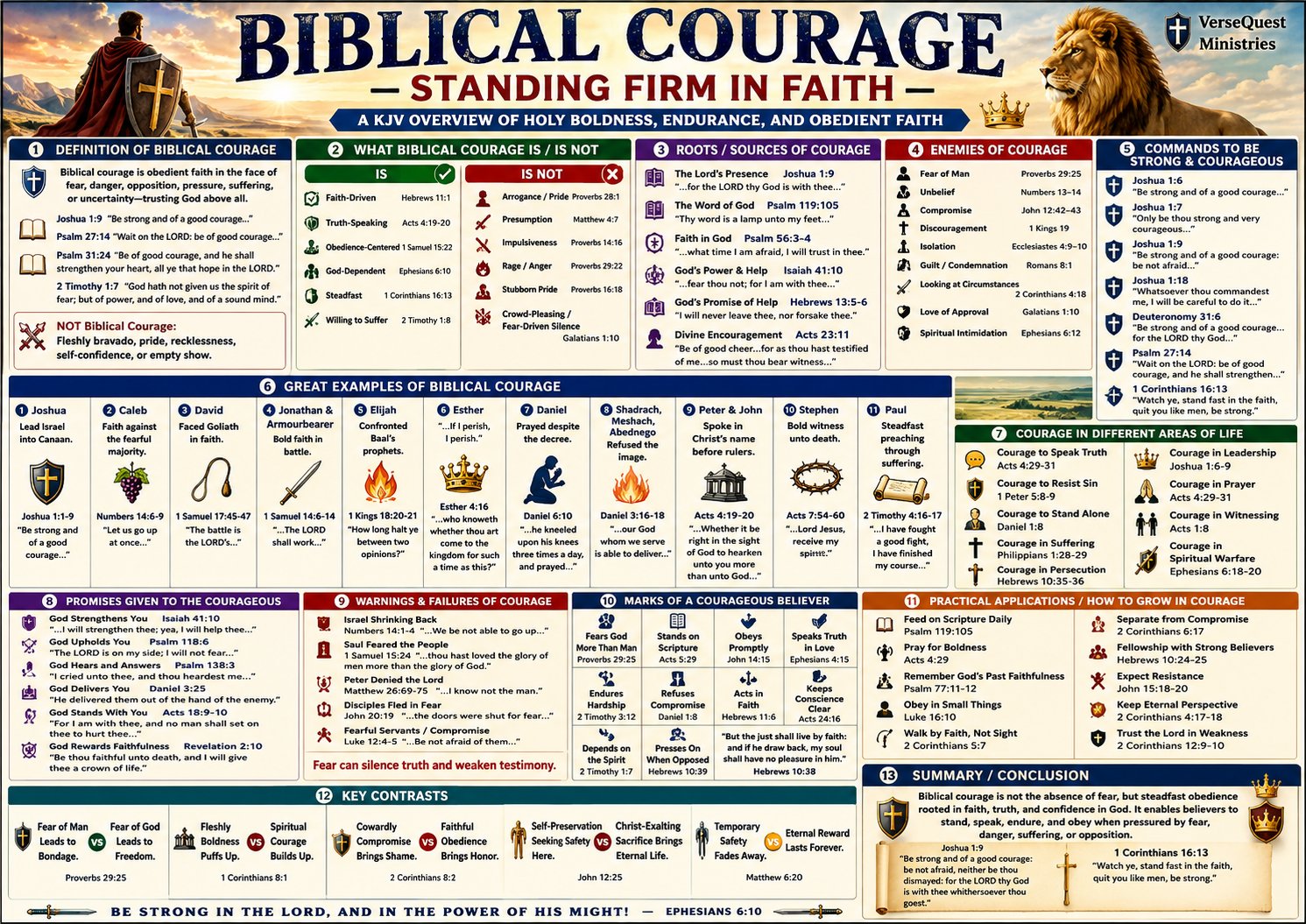
- Biblical Courage Bible Study Chart – Standing Firm in Faith, Holy Boldness, and Obedient Endurance (KJV)
- Stand firm in faith with this detailed KJV Bible study chart covering biblical courage, holy boldness, fear, endurance, obedient faith, spiritual warfare, persecution, and courageous Bible examples.
- $3.99
- Add to cart
-
-
Genesis Chapter 3
-
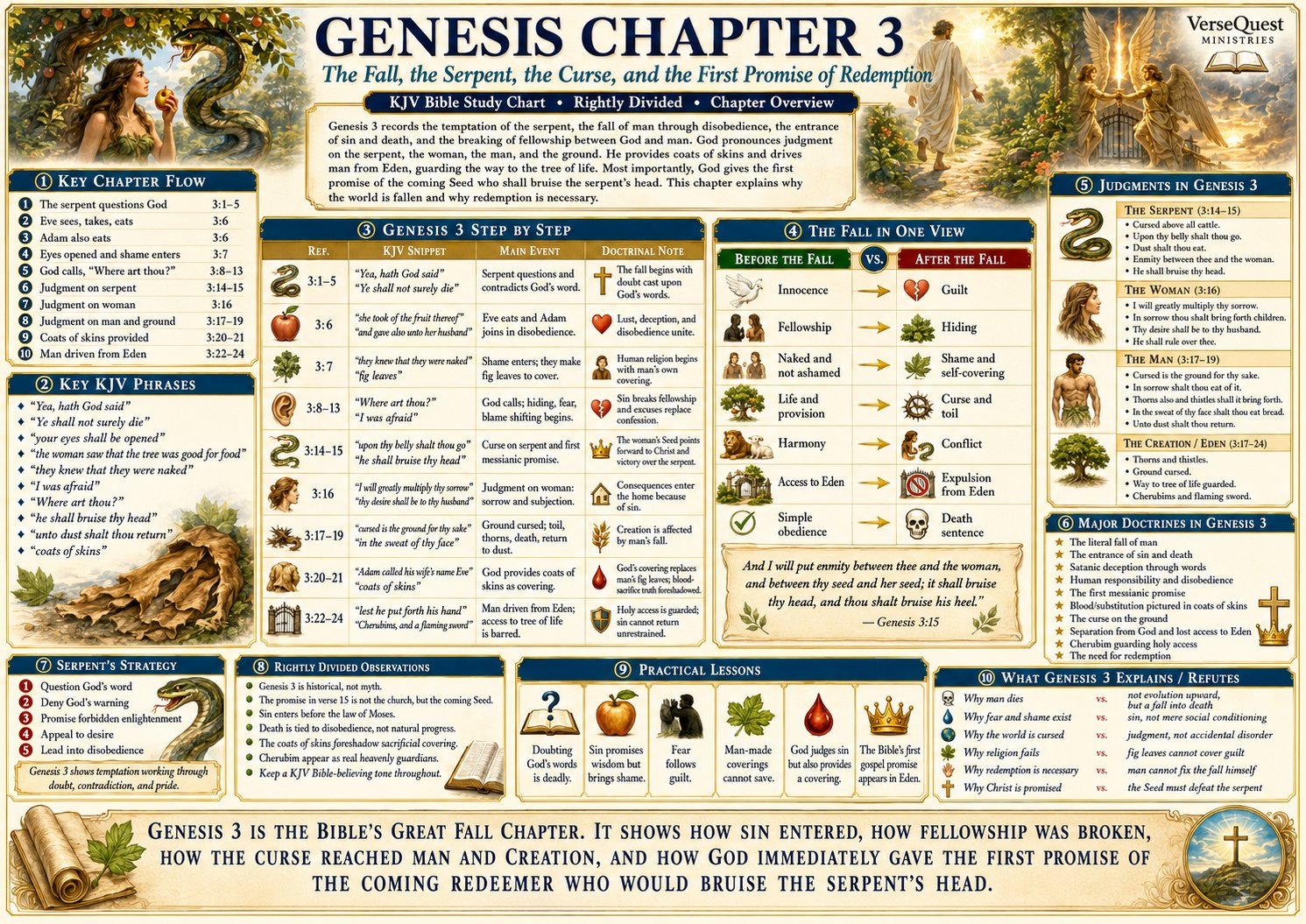
- Genesis Chapter 3 Bible Study Chart – The Fall, the Serpent, the Curse, and the First Promise of Redemption (KJV)
- Explore Genesis Chapter 3 with this detailed KJV Bible study chart covering the fall of man, the serpent’s strategy, the curse, coats of skins, and the first promise of the…
- $3.99
- Add to cart
-