
Genesis Chapter 3 Bible Study Chart – The Fall, the Serpent, the Curse, and the First Promise of Redemption (KJV)
Explore Genesis Chapter 3 with this detailed KJV Bible study chart covering the fall of man, the serpent’s strategy, the curse, coats of skins, and the first promise of the coming Redeemer.
$3.99
Description
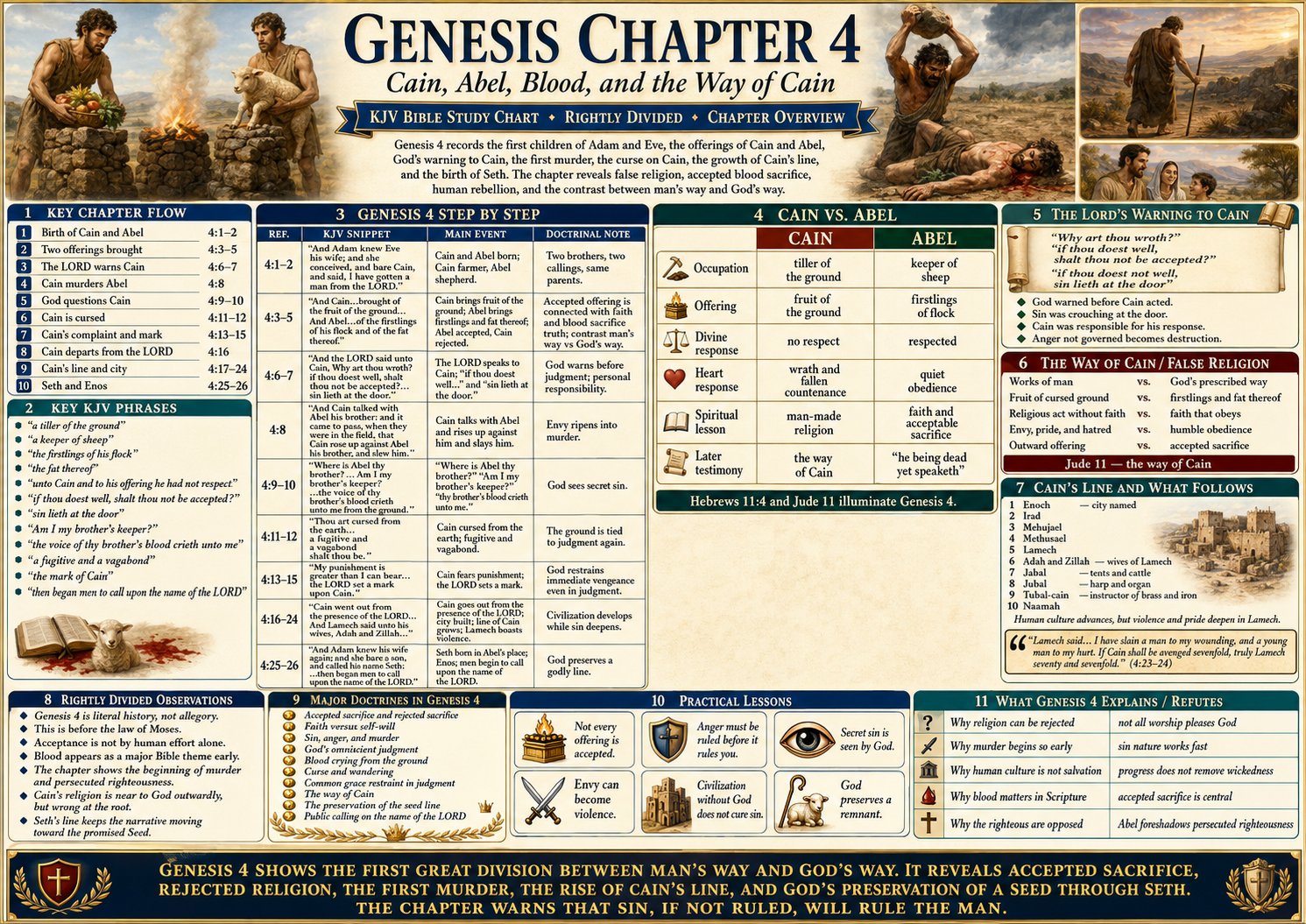
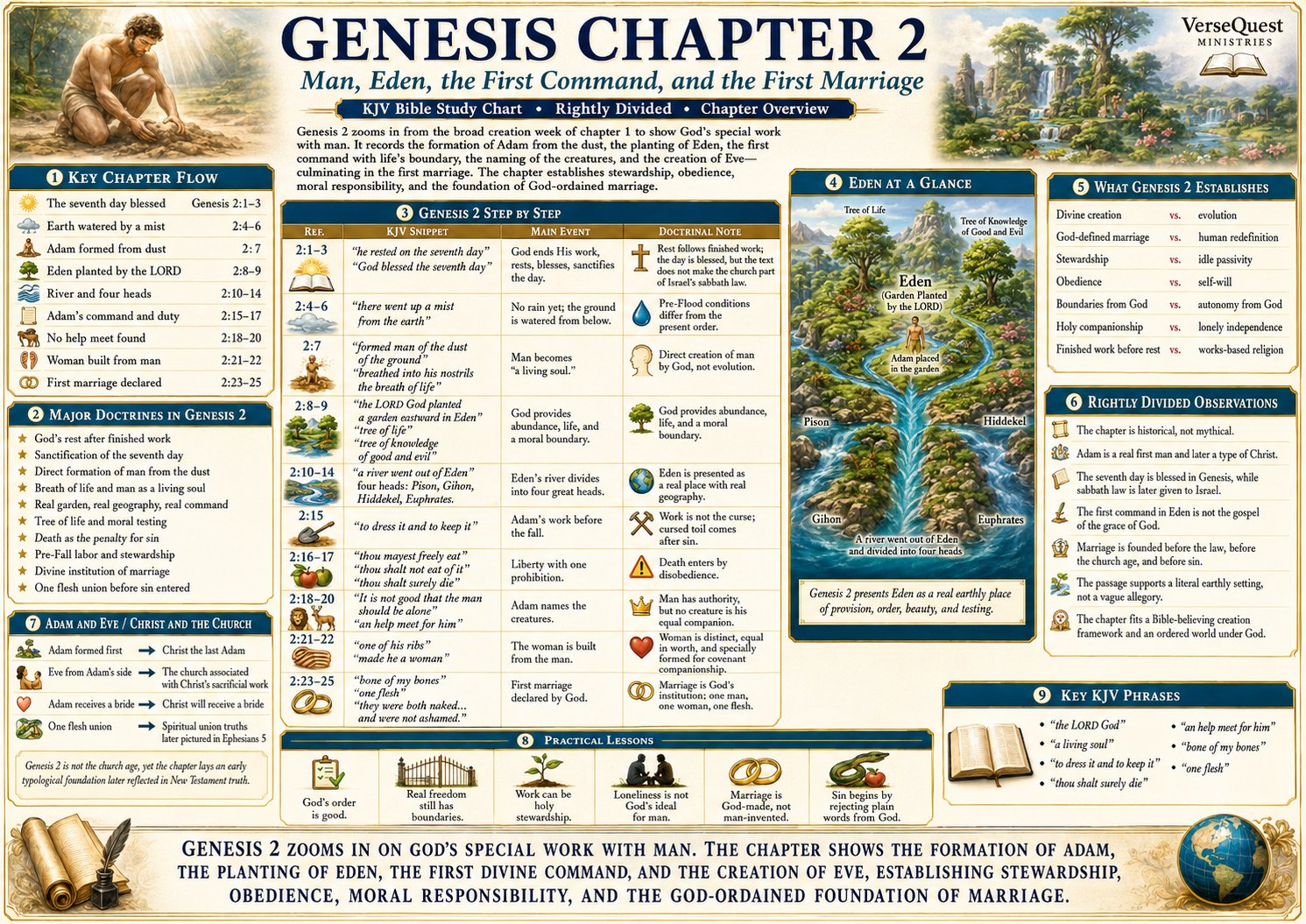
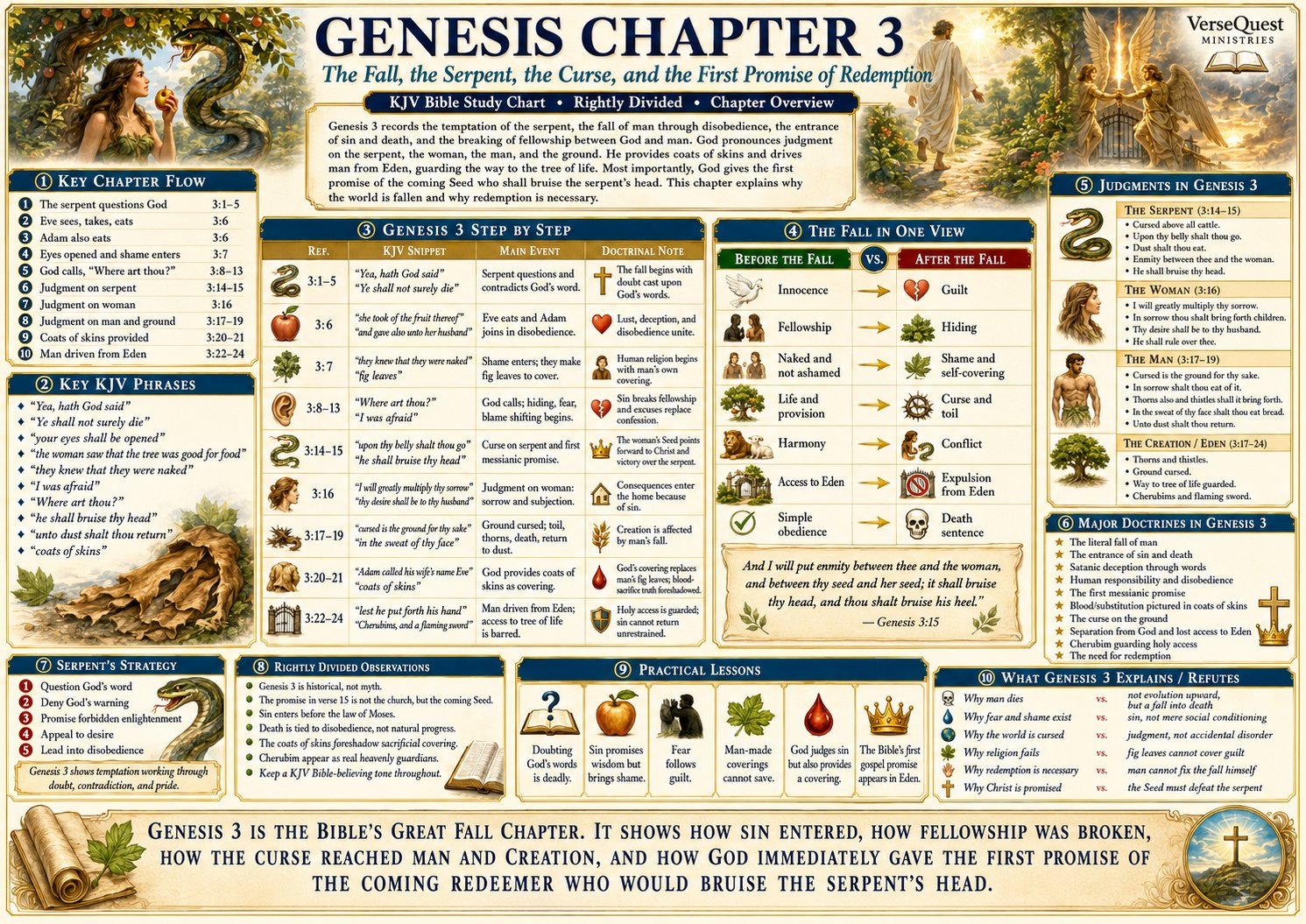
Genesis Chapter 3: The Fall, the Serpent, the Curse, and the First Promise of Redemption is a detailed KJV Bible study chart explaining one of the most important chapters in all of Scripture. Genesis 3 reveals how sin entered the human race, how fellowship with God was broken, why shame and fear became part of human experience, how the curse affected man and creation, and why redemption became necessary.
The chart follows the chapter step by step, beginning with the serpent’s attack upon the words of God. It shows how temptation progresses through doubt, contradiction, pride, distorted desire, and open disobedience. Eve listens to the serpent, takes the forbidden fruit, gives it to Adam, and both immediately become conscious of their nakedness. Their attempt to cover themselves with fig leaves introduces the first picture of man-made religion: human effort attempting to hide guilt without dealing with sin.
A detailed before-and-after comparison shows the devastating results of the fall. Innocence becomes guilt, fellowship becomes hiding, openness becomes shame, provision becomes toil, harmony becomes conflict, access to Eden becomes expulsion, and simple obedience gives way to the sentence of death. This section helps readers see that Genesis 3 explains the present condition of the world far more accurately than theories that treat mankind as naturally improving.
The chart also examines God’s judgments upon the serpent, the woman, the man, and the ground. The serpent is cursed, sorrow enters childbirth, the marriage relationship is affected by sin, the ground brings forth thorns and thistles, labor becomes painful, and man is sentenced to return to the dust. These judgments demonstrate that sin produces real consequences in the body, the home, human labor, creation, and fellowship with God.
At the center of the chapter stands the first promise of redemption in Genesis 3:15. God declares that the Seed of the woman will bruise the serpent’s head. This is the earliest direct promise of the coming Redeemer and points forward to the victory of Jesus Christ over Satan, sin, and death. The gospel promise does not first appear in Matthew; its earliest shadow is already present in Eden.
The coats of skins provided by God also carry profound doctrinal significance. Adam and Eve’s fig leaves could not remove guilt, but God provided a covering involving death and bloodshed. The chart carefully presents this as an early picture of substitutionary sacrifice and the truth that man cannot cover his own sin by religious effort.
Additional sections identify the major doctrines established in Genesis 3, explain the serpent’s strategy, highlight key KJV phrases, provide rightly divided observations, and draw practical lessons for Christian living. The chart shows why doubting God’s words is dangerous, why sin always promises more than it delivers, why fear follows guilt, why human coverings cannot save, and why redemption must come from God.
This chart is especially useful for personal Bible study, Genesis teaching, doctrinal instruction, Sunday school, homeschool curriculum, Bible institute classes, apologetics, sermon preparation, discipleship, and studies on sin, salvation, Satan, the fall of man, and the first promise of Christ.
The fall of man, the serpent, Satanic deception, questioning God’s words, temptation, disobedience, shame, fear, guilt, human responsibility, broken fellowship, the curse, death through sin, thorns and toil, judgment, coats of skins, substitutionary sacrifice, blood atonement, the Seed of the woman, the first promise of redemption, Christ’s victory over the serpent, man-made religion, biblical salvation
Genesis 3 reveals that Satan’s first recorded attack upon mankind was an attack upon the words of God. The serpent begins with a question, moves to direct contradiction, and then promises enlightenment through disobedience. The pattern remains unchanged: question God’s words, deny God’s warning, appeal to pride, and make sin appear desirable.
Eve sees that the tree is good for food, pleasant to the eyes, and desired to make one wise. Temptation works through appetite, appearance, and pride. Adam then joins her in direct disobedience. The fall is therefore not presented as ignorance or accident but as a real violation of a clearly stated command.
The immediate result is shame. Adam and Eve attempt to cover themselves with fig leaves, but human coverings cannot remove guilt. Their response illustrates man-made religion: the sinner becomes aware of his condition and tries to repair it without approaching God on God’s terms.
When God calls, “Where art thou?” He is not seeking information. The question exposes Adam’s spiritual condition and summons him to accountability. Adam hides, fears, blames Eve, and indirectly blames God. Eve blames the serpent. Sin damages fellowship and replaces confession with excuse.
The judgments of Genesis 3 explain much of the pain found in the present world. Sorrow, conflict, painful labor, thorns, physical death, and separation from Eden are not signs of upward moral progress. They are consequences of the fall and the curse.
Genesis 3:15 introduces hope in the middle of judgment. The promised Seed of the woman will bruise the serpent’s head. This prophecy points beyond Adam and Eve to the coming Redeemer, Jesus Christ, whose victory over Satan is accomplished through His death and resurrection and will be fully manifested in final judgment.
The coats of skins demonstrate that God’s covering is superior to man’s covering. Fig leaves represent human effort, while the skins imply death and substitution. The chapter therefore contains an early picture of the biblical truth that guilt requires a God-provided sacrifice.
The chapter ends with Adam and Eve expelled from Eden and the way to the tree of life guarded by cherubim and a flaming sword. Sin closes access to holy fellowship, and man cannot return by his own effort. Redemption must be provided by God.
Genesis chapter study, doctrine of sin, doctrine of Satan, salvation teaching, gospel presentation, apologetics, biblical anthropology, Sunday school lessons, homeschool Bible curriculum, Christian school instruction, Bible institute classes, discipleship training, sermon preparation, pastoral counseling, temptation studies, spiritual warfare teaching, marriage and family instruction, biblical worldview training
King James Bible, Strong’s Concordance, Thompson Chain-Reference Bible, Treasury of Scripture Knowledge, Nave’s Topical Bible, Genesis commentary notes, doctrinal study notebook, Scripture cross-reference guide, Bible dictionary, study materials on the fall of man, resources on blood atonement, VerseQuest Genesis chapter charts, VerseQuest salvation and doctrine charts
Related products
-
KJV Studies
-
-67%
- The Blood of Christ – 66-Study KJV Bible Doctrine PDF
- A 441-page premium VerseQuest PDF featuring 66 detailed KJV Bible studies on the blood of Jesus Christ. This powerful doctrinal resource covers redemption, justification, propitiation, cleansing, access to God, eternal…
- Original price was: $29.99.$9.99Current price is: $9.99.
- Add to cart
-
-67%
-
Names of Christ
-
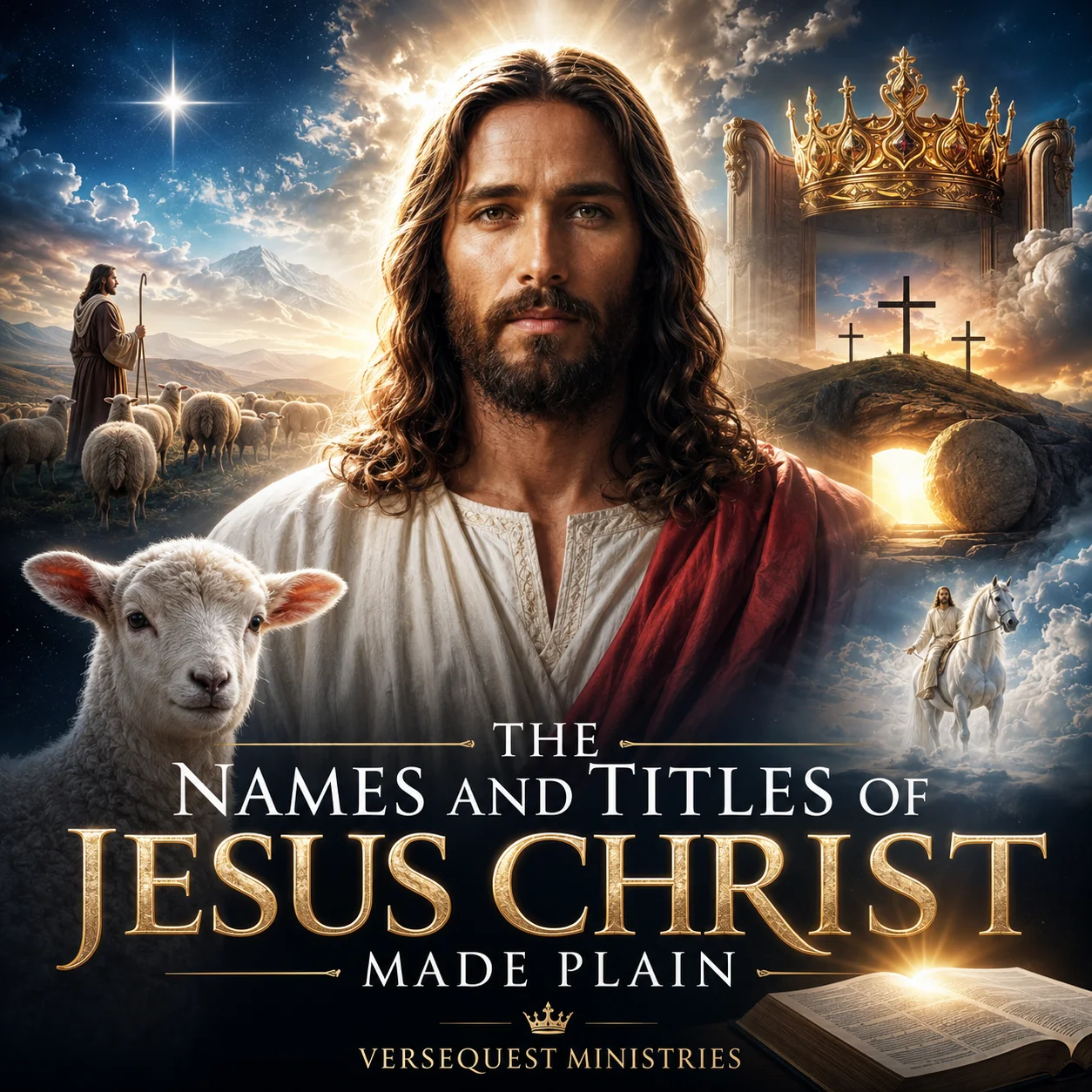
- The Names and Titles of Jesus Christ Made Plain
- A complete 100-essay KJV Bible study on the names and titles of the Lord Jesus Christ, showing His deity, humanity, blood atonement, resurrection, priesthood, headship over the Church, shepherd care,…
- $29.99
- Add to cart
-
-
Heaven
-
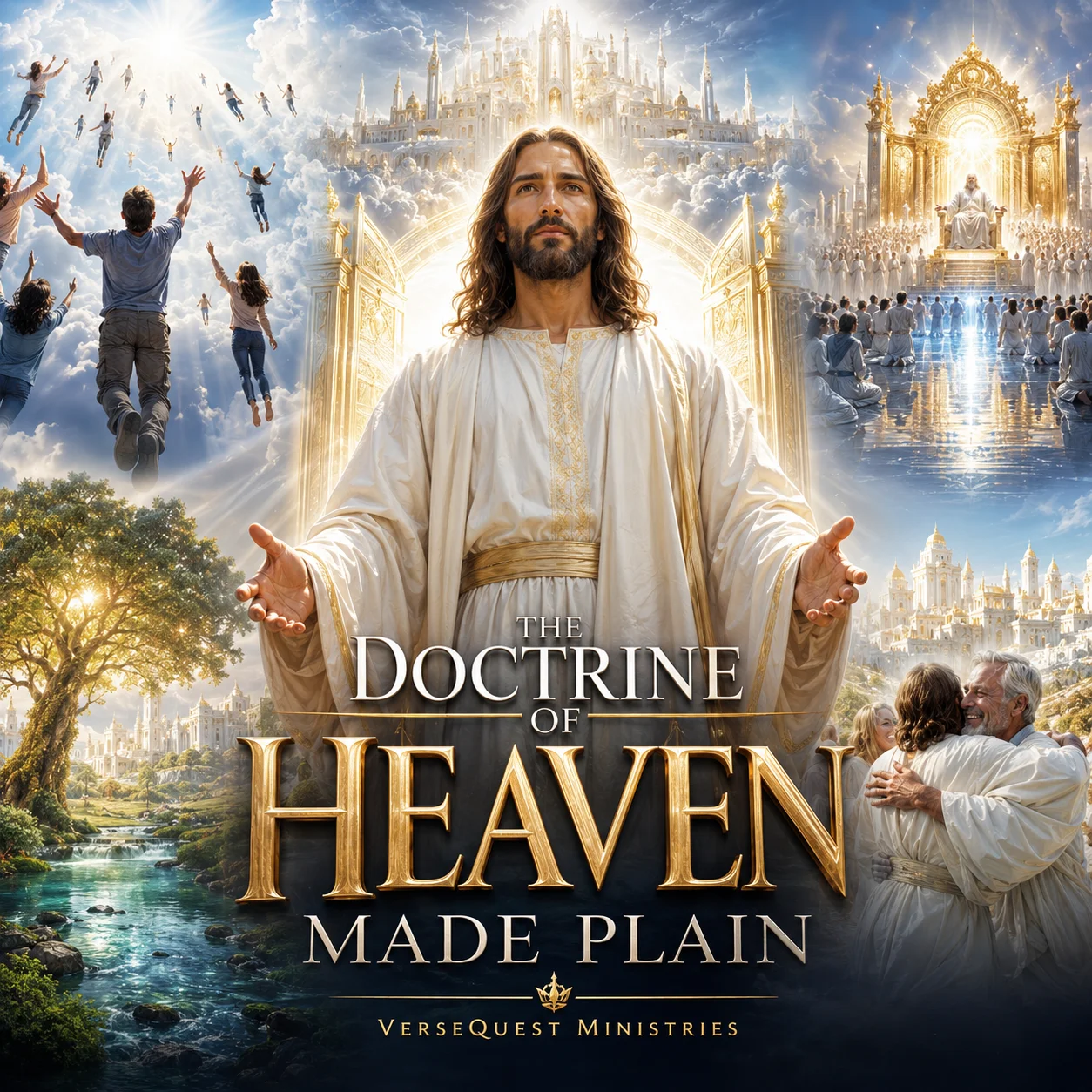
- The Doctrine of Heaven Made Plain — 599-Page KJV Bible Study PDF
- A massive 599-page KJV, rightly divided study on heaven, covering the present heaven, resurrection body, Rapture, Millennium, New Jerusalem, eternal state, hard questions, funeral lies, and cult errors.
- $34.99
- Add to cart
-
-
Premium Studies
-
-25%
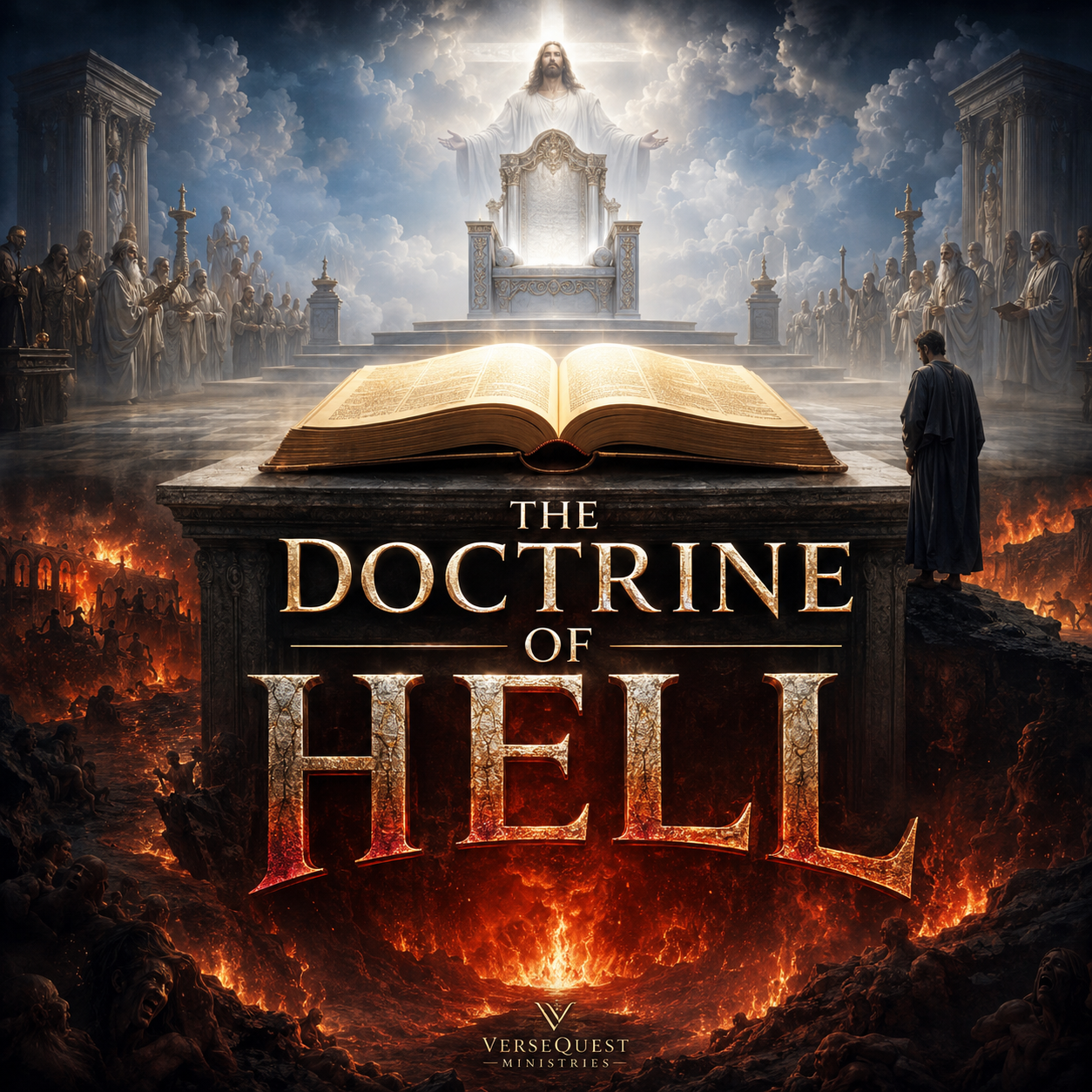
- The Doctrine of Hell — Premium Essay Series PDF
- A 383-page premium VerseQuest PDF study book containing 54 KJV essays on hell, fire, darkness, judgment, the lake of fire, the second death, and Jesus Christ as the only escape.
- Original price was: $39.99.$29.99Current price is: $29.99.
- Add to cart
-
-25%
-
Jesus Christ / Christology
-
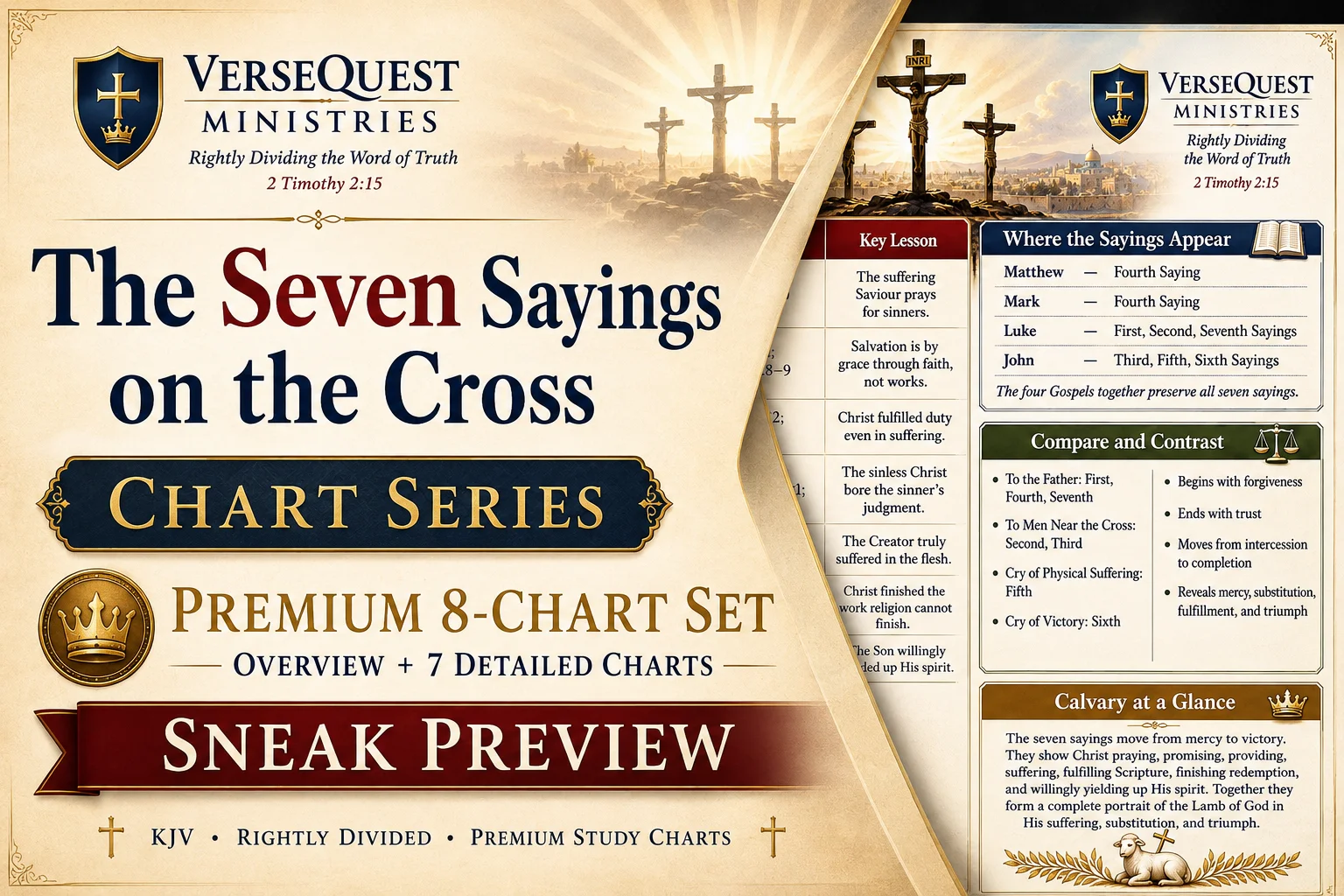
- The Seven Sayings on the Cross – Premium 8-Chart KJV Study Set
- A premium VerseQuest Ministries digital PDF study set on The Seven Sayings on the Cross, featuring an overview chart plus seven detailed KJV Bible study charts. This resource examines Calvary,…
- $12.99
- Add to cart
-