
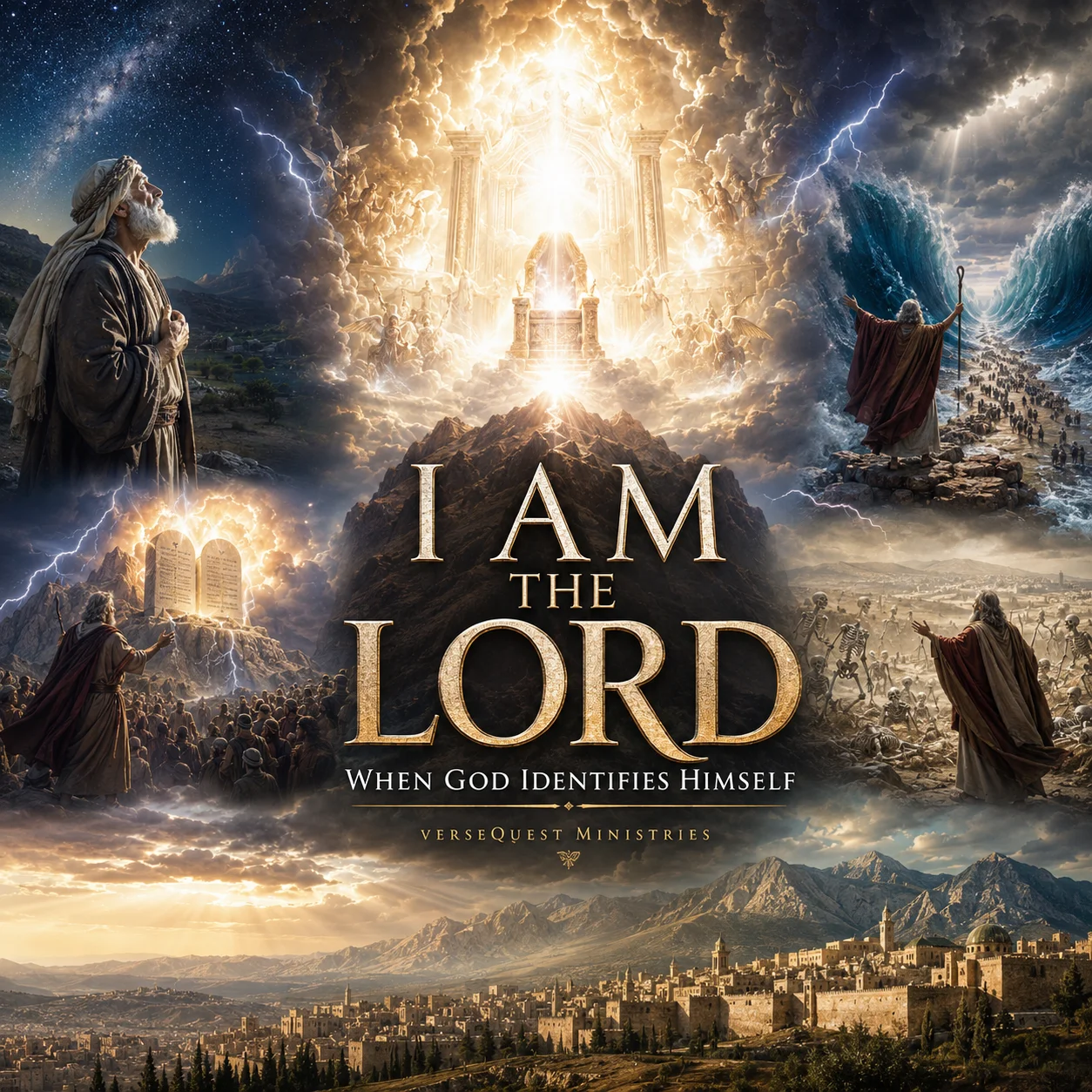
I Am the LORD — When God Identifies Himself: 60-Essay KJV Bible Study PDF
I Am the LORD — When God Identifies Himself is a 371-page downloadable KJV Bible-study PDF containing 60 detailed studies tracing the repeated declaration “I am the LORD” from Genesis through Malachi. The book examines covenant, redemption, holiness, divine ownership, idolatry, biblical liberty, Israel, prophecy, sovereignty, judgment, restoration, and the unchanging character of God.
The complete digital book includes the 60-essay series, a thorough introduction, a full conclusion, and a detailed landscape Bible-study chart summarizing the major doctrines and movements of the study. Written from a King James Bible-believing, rightly divided perspective, it is designed for serious Bible students, pastors, preachers, teachers, Sunday school classes, families, and ministry training.
371 pages. Downloadable PDF. $19.99.
$19.99
Description
I Am the LORD — When God Identifies Himself is a substantial 371-page downloadable PDF Bible-study book built around one of the most powerful recurring declarations in the King James Bible: “I am the LORD.” Across 60 detailed studies, the series follows the places where God identifies Himself and then connects His name to covenant, redemption, holiness, ownership, judgment, provision, kingship, sovereignty, restoration, prophecy, and His unchanging character.
The study begins with Genesis 15:7, where the LORD identifies Himself to Abram in connection with the covenant and promised land, and follows this declaration through Israel’s deliverance from Egypt, the Law, the wilderness, the holiness commands of Leviticus, Israel’s national history, the Psalms, Isaiah, Jeremiah, Ezekiel, and finally Malachi 3:6: “For I am the LORD, I change not; therefore ye sons of Jacob are not consumed.” The result is a sweeping biblical word study showing that when God says, “I am the LORD,” He is placing His own identity and character behind what He commands, promises, judges, preserves, and ultimately fulfills.
Major subjects include the Abrahamic covenant, Israel’s deliverance from Pharaoh, Passover, the Red Sea, divine ownership, biblical holiness, idolatry, occult practices, treatment of the poor and vulnerable, honest business dealings, biblical liberty, Israel’s covenant preservation, the firstborn, the unreliability of the human heart, God’s sovereignty over nations, His exclusive identity as Saviour, the deity and Lordship of Jesus Christ, divine guidance, judgment, captivity, repentance, restoration, Ezekiel’s dry bones, Gog and the nations, and the immutability of God. The studies consistently preserve the distinction between Israel and the Church, refusing to erase the literal national and prophetic promises God attached to Jacob.
This is not a shallow phrase study or a collection of short devotionals. Each essay develops the biblical setting, doctrinal implications, supporting Scriptures, practical applications, memorable teaching principles, and the larger place of the passage within the revelation of Scripture. The complete PDF also includes a thorough introduction to the series, a concluding study drawing the entire theme together, and a detailed landscape Bible-study chart summarizing the major movements and doctrines of the series.
Pastors and preachers can use this book as a reservoir of sermon material and cross-references. Sunday school teachers and Bible instructors can build individual lessons around the 60 studies. Serious Bible students can work through the series as a focused word study tracing divine identity from Genesis through the Prophets. Families, homeschool settings, ministry-training environments, and small Bible-study groups can use individual essays as stand-alone studies while still benefiting from the larger progression of the complete volume.
The book is written from a King James Bible-believing, rightly divided perspective, with particular attention given to covenant language, Israel’s national identity, doctrinal context, and the difference between legitimate spiritual application and replacing the people or promises named in the text. The central argument running through all 371 pages is simple but enormous: God’s words are trustworthy because the God speaking them does not change.
Format: Downloadable digital PDF book
Length: 371 pages
Series: 60 full Bible-study essays plus introduction, conclusion, and study chart
Price: $19.99
The Divine Declaration “I Am the LORD” — The recurring statement as God’s own signature beneath His commands, promises, judgments, and covenant dealings. The Character of God — Holiness, righteousness, truth, lovingkindness, justice, sovereignty, faithfulness, omnipotence, and immutability. The Abrahamic Covenant — The LORD’s promises concerning Abraham, Isaac, Jacob, Israel, and the land. Redemption From Egypt — God’s deliverance of Israel from Pharaoh as a foundational demonstration of His identity. Divine Ownership — Redemption establishes God’s rightful claim upon the people He delivers. Passover and Blood Redemption — The distinction between judgment and deliverance under God’s appointed blood. The LORD Versus the Gods of Egypt — The plagues and Exodus as theological warfare against Egyptian idolatry. Biblical Liberty — Freedom from wrongful bondage rather than independence from divine authority. Holiness and Separation — Israel’s separation from pagan practices because the LORD Himself is holy. The Authority of God Over Daily Life — Worship, family, sexuality, business, speech, treatment of others, and possessions all fall beneath Lordship. Idolatry and False Worship — The LORD’s refusal to share glory, worship, trust, or allegiance with created rivals. Human Heart Versus Divine Revelation — The danger of trusting one’s heart, eyes, emotions, or impressions above Scripture. The LORD as Provider — Wilderness provision contrasted with nostalgia for Egypt’s bondage. The LORD as King — Divine sovereignty above every human ruler and government. The Exclusivity of God — “There is none else” as the biblical answer to polytheism and religious pluralism. The LORD as Saviour — Isaiah’s exclusive Saviour language and its New Testament fulfillment in Jesus Christ. The Deity and Lordship of Christ — New Testament passages that apply divine titles and honors to Jesus Christ. Divine Sovereignty Over History — Kings, kingdoms, peace, calamity, judgment, and restoration remain beneath God’s rule. Purpose in Creation — The earth was deliberately formed and was not created in vain. Divine Guidance — God knows the profitable path because He sees the destination and every step leading to it. Fear and Theological Amnesia — Human oppressors become oversized when the Maker is forgotten. Judgment and Divine Self-Vindication — The LORD proves that His warnings were not spoken in vain. Israel’s National Preservation — Judgment and scattering do not cancel covenant identity. Israel and the Church — Maintaining the biblical distinction between national Israel and the body of Christ. The Dry Bones of Ezekiel 37 — National Israel’s restoration rather than the replacement of Israel by another people. Gog and the Nations — God’s future vindication of His holy name on the mountains of Israel. The Immutability of God — God’s unchanging character as the final foundation beneath every covenant promise.
The central argument of the book is that “I am the LORD” is not merely a repeated divine introduction but a statement of authority, identity, and covenant certainty. When the LORD places His name beside a promise, command, judgment, or act of redemption, the reliability of that statement rests upon His own character. This explains why the series begins with Abram and ends with Malachi’s declaration that the LORD does not change.
A major observation throughout the study is that redemption and ownership are consistently connected. God brought Israel out of Egypt, but He did not deliver them so that they could become independent of Him. The firstborn were His because He spared them. Israel was His because He redeemed them. Biblical liberty therefore differs radically from modern autonomy. Scripture presents freedom as release from wrongful bondage so that a person or nation may live beneath rightful divine authority.
Another important observation is that God repeatedly attaches His identity to practical commands. The LORD’s name appears beside commands concerning worship, idols, sexuality, speech, business practices, treatment of the poor, occult practices, respect for the aged, priestly conduct, and treatment of strangers. The practical lesson is that Lordship cannot be reduced to religious ceremony. If He is LORD, His authority reaches ordinary conduct.
The study also draws an important distinction between God’s moral character and His differing administrations throughout Scripture. God does not change in holiness, righteousness, truth, or faithfulness, but His dealings with Israel under the Mosaic covenant are not identical to His dealings with the Church under Grace. Right division protects the reader from transferring covenant commands or promises carelessly while still allowing legitimate spiritual and moral application.
Israel’s national identity is another major doctrinal issue. The series consistently maintains that judgment does not equal covenant cancellation. Leviticus 26 explicitly anticipates Israel’s rebellion and scattering while stating that the LORD will not break His covenant. Jeremiah, Ezekiel, and Romans continue that testimony. Israel’s failure demonstrates the need for judgment; God’s preservation of Israel demonstrates the faithfulness of the Promiser.
Ezekiel 37 supplies one of the clearest examples of the distinction between interpretation and application. The chapter itself identifies the dry bones as “the whole house of Israel.” Spiritual applications concerning renewal and divine power may legitimately be drawn, but those applications must not erase the national interpretation supplied by the passage itself.
Isaiah’s declarations concerning the LORD as the only Saviour become especially significant in the New Testament because Jesus Christ is repeatedly called Saviour and Lord. The study therefore follows a strong biblical line from Old Testament declarations of divine exclusivity to the New Testament revelation of Christ’s deity and Lordship.
A recurring practical warning throughout the book is that human substitutes consistently fail when asked to carry divine weight. Wisdom cannot replace revelation. Might cannot replace sovereignty. Riches cannot replace security in God. Government cannot become Saviour. The heart cannot become final authority. Idols cannot receive the Creator’s glory. Human circumstances cannot cancel promises.
One of the most useful teaching questions raised by the series is: What changes when God places the words “I am the LORD” beside a command or promise? Another is: Does the passage describe God’s relationship with Israel specifically, establish a universal truth about His character, provide a practical application for believers, or contain all three at different levels? Asking those questions helps preserve doctrinal precision.
The final conclusion is deliberately simple: God’s word remains dependable because God remains dependable. Abram dies, Pharaoh dies, kings die, prophets die, empires disappear, nations change, and generations reinterpret history. The LORD does not change. His immutability is therefore not an abstract theological concept; it is the foundation beneath covenant faithfulness, prophetic certainty, divine judgment, and the believer’s confidence in what God has spoken.
This resource can be used as a 60-session personal Bible-study course, allowing the reader to follow the phrase “I am the LORD” through Scripture while building a systematic understanding of God’s character and His dealings with Israel. Because each essay develops a specific passage or cluster of passages, readers can study one lesson at a time while still seeing how every study fits into the larger biblical theme.
Pastors and preachers can use the book for sermon preparation and topical preaching. Individual essays contain strong doctrinal subjects such as redemption, holiness, idolatry, providence, covenant faithfulness, biblical liberty, divine sovereignty, judgment, restoration, and the identity of Jesus Christ. The complete series also supplies a broad framework for developing a sermon series on the name and character of the LORD.
Sunday school teachers and Bible-class instructors can use individual studies as stand-alone lessons or organize the entire volume into a longer curriculum. The sequence naturally moves from Genesis through Israel’s history into the Prophets, making it particularly useful for students who need to see how doctrines develop progressively across Scripture.
The book also fits small-group and discipleship study, especially where readers want material more substantial than a short devotional. Discussions can center on the principal text, doctrinal observations, supporting passages, and practical implications of God’s Lordship.
Families and homeschool settings can use selected studies for advanced family Bible study or Bible curriculum, especially with older students capable of handling detailed doctrinal material. Subjects such as idolatry, honesty, treatment of others, biblical authority, the danger of following the heart, and the faithfulness of God provide strong foundations for discussion.
Ministry students and Bible teachers can use the PDF as a reference resource for rightly divided study, particularly when examining Israel’s covenant promises, prophetic restoration, Ezekiel 37, Gog and Magog, Law and Grace, and the distinction between interpretation and application.
The included detailed landscape Bible-study chart can serve as a visual review and teaching aid, helping readers see the major movements of the entire series at a glance after working through the complete volume.
The most important companion resource is a King James Bible, preferably one with generous margins or space for cross-reference notes. Because the entire study develops through repeated wording and interconnected passages, having the biblical text open while reading each essay will greatly strengthen the study.
A Strong’s Exhaustive Concordance or another complete King James Bible concordance is especially useful for tracing the occurrences of LORD, I am the LORD, know that I am the LORD, name of the LORD, Holy One, Saviour, Redeemer, and related expressions throughout Scripture.
The Treasury of Scripture Knowledge is useful for following cross-references connecting the Pentateuch, Psalms, Prophets, Gospels, Pauline Epistles, and Revelation without replacing the authority of the biblical text.
A reliable Bible atlas and Old Testament historical map set can help readers follow Abram’s journey, Israel in Egypt, the Exodus, wilderness movements, tribal territories, Assyrian and Babylonian invasions, captivity, return from exile, and the prophetic geography associated with Ezekiel.
A Bible timeline covering the Patriarchs, Exodus, Judges, United Kingdom, Divided Kingdom, Assyrian captivity, Babylonian captivity, Persian period, and New Testament era can help place the sixty studies in their historical sequence.
For doctrinal study, special attention should be given to Genesis 12–17, Exodus 3–20, Leviticus 18–26, Deuteronomy 28–30, Isaiah 40–55, Jeremiah 30–33, Ezekiel 36–39, Romans 9–11, and Revelation 19–22.
The detailed I Am the LORD — When God Identifies Himself Bible Study Chart included with this PDF should be used as a visual companion to the complete study, especially after finishing the essays or when teaching the series in a classroom setting.
Related products
-
Circumcision
-
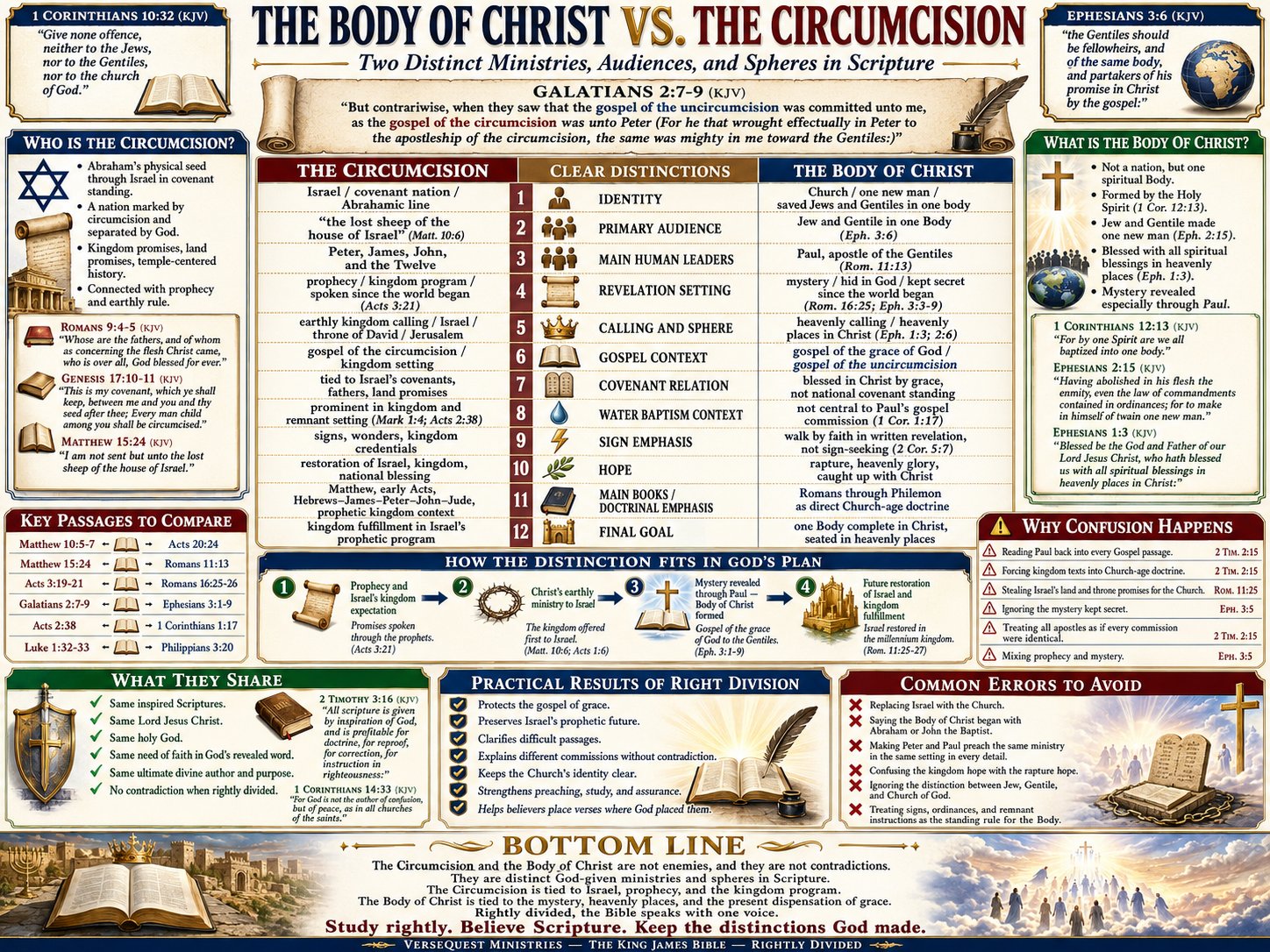
- The Body of Christ vs. the Circumcision – Two Distinct Ministries, Audiences, and Spheres in Scripture (KJV Bible Study Chart)
- Compare the Body of Christ and the circumcision with this detailed KJV chart covering Israel, Peter, Paul, prophecy, mystery, covenant promises, baptism, signs, and the Church’s heavenly hope.
- $3.99
- Add to cart
-
-
Bible Study Chart
-
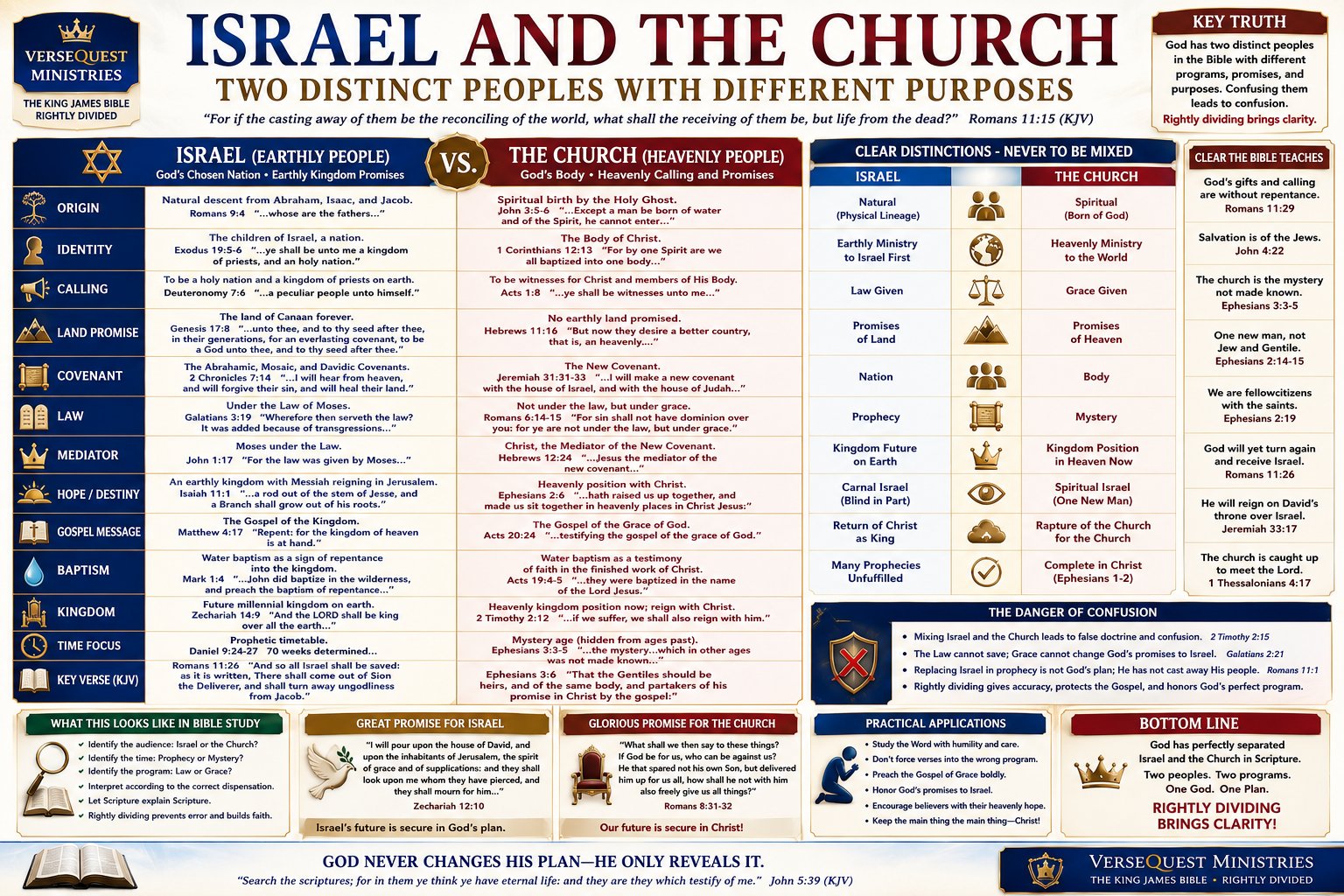
- Israel and the Church Bible Study Chart – Two Distinct Peoples with Different Purposes (KJV)
- Compare Israel and the Church with this detailed KJV Bible study chart covering their distinct origins, identities, covenants, callings, promises, gospel programs, and future destinies.
- $3.99
- Add to cart
-
-
Sabbath Bible Study
-
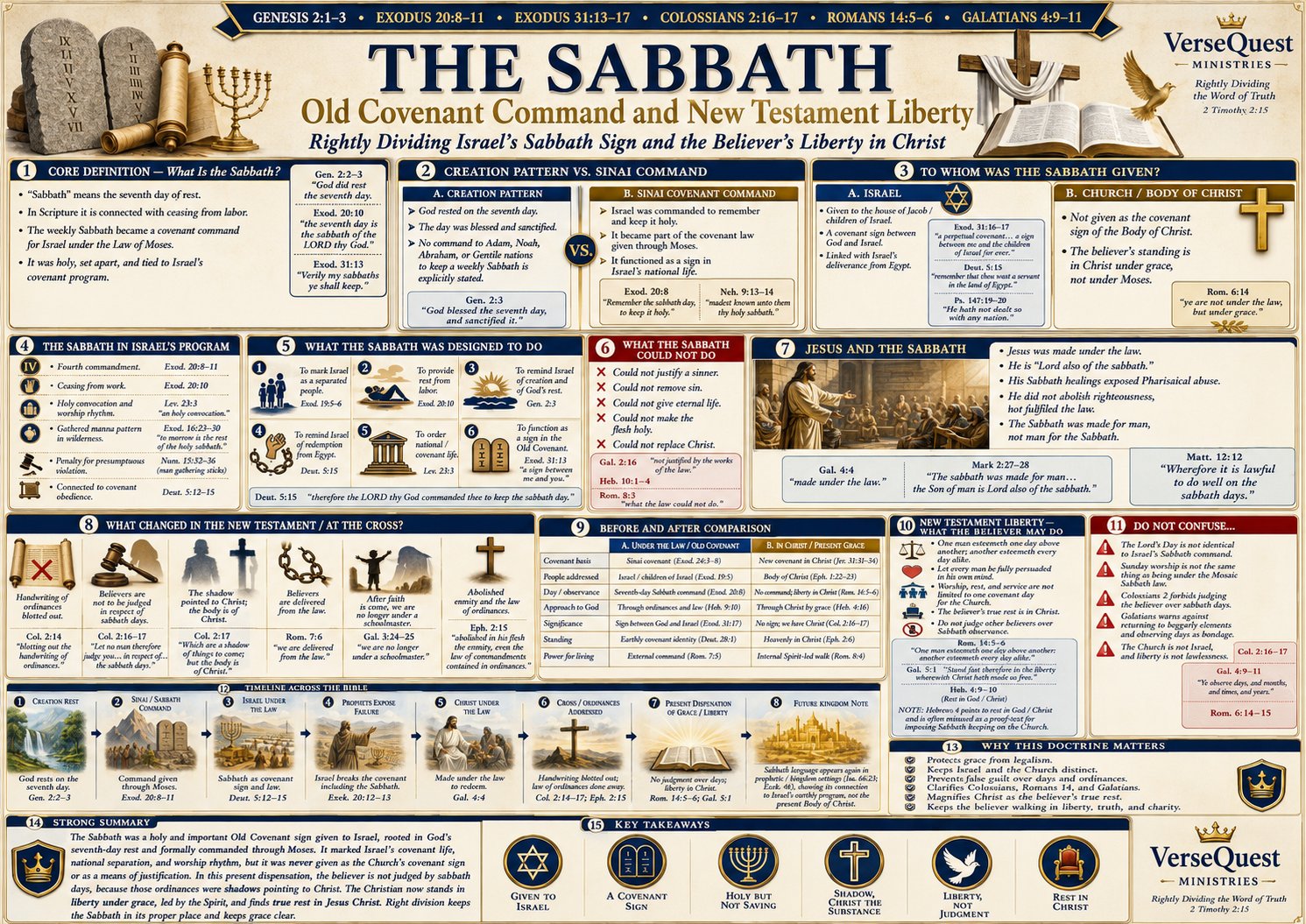
- The Sabbath – Israel’s Old Covenant Command and the Believer’s New Testament Liberty in Christ (KJV Bible Study Chart)
- Understand the Sabbath with this detailed KJV chart covering creation rest, Israel’s covenant sign, the fourth commandment, Christ’s fulfillment, Sabbath versus Sunday, and New Testament liberty.
- $3.99
- Add to cart
-
-
The Rapture
-
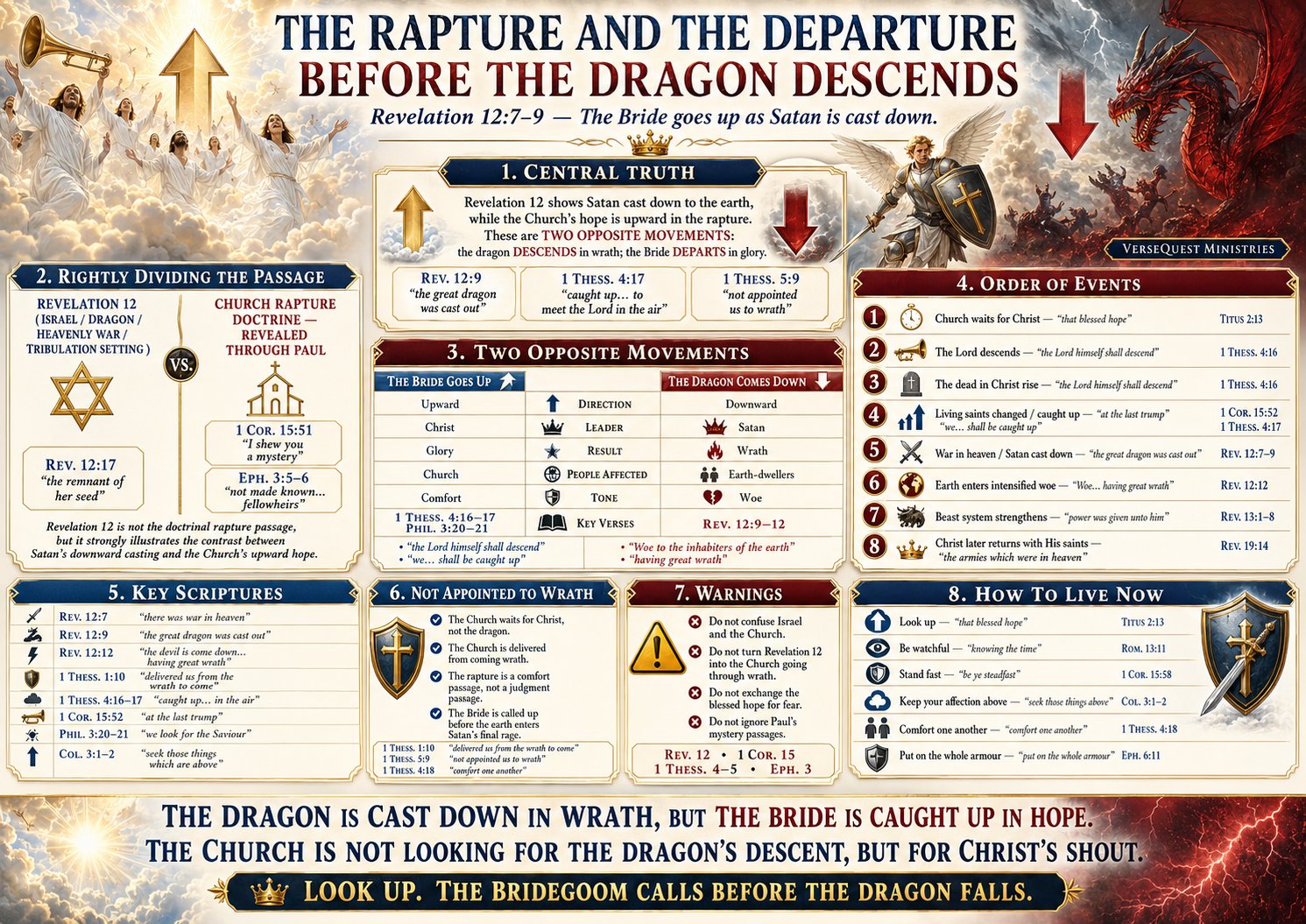
- The Rapture and the Departure Before the Dragon Descends – Printable Bible Study Chart
- Printable KJV Bible study chart on The Rapture and the Departure Before the Dragon Descends, showing the Bride caught up before Satan is cast down in wrath. This premium VerseQuest…
- $4.99
- Add to cart
-
-
Heavenly Program
-
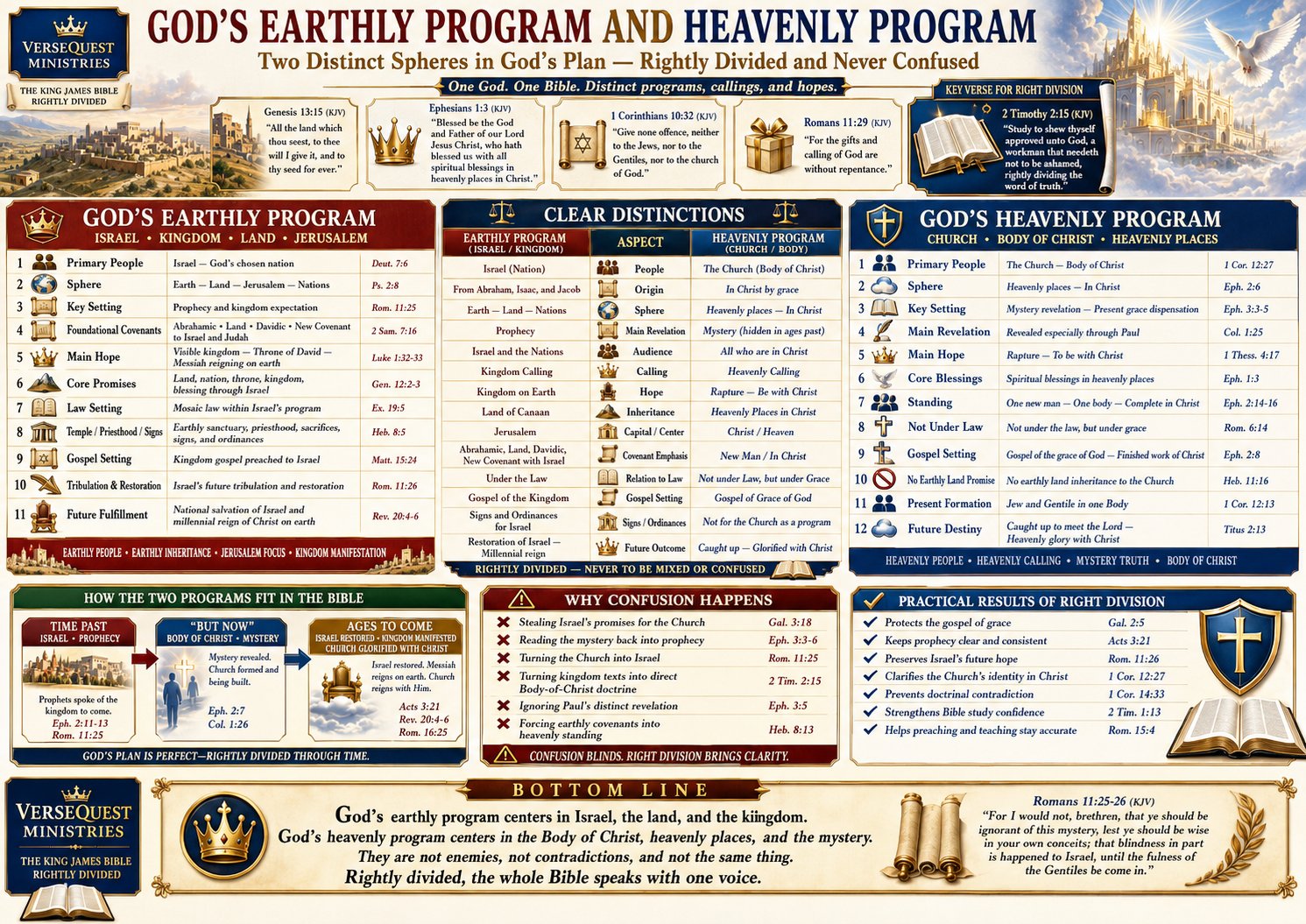
- Israel and the Church: Earthly and Heavenly Callings – KJV Bible Study Chart
- Printable digital KJV Bible study chart comparing Israel’s earthly promises and kingdom hope with the Church’s heavenly calling in Christ. Covers prophecy and mystery, biblical covenants, law and grace, the…
- $3.99
- Add to cart
-