
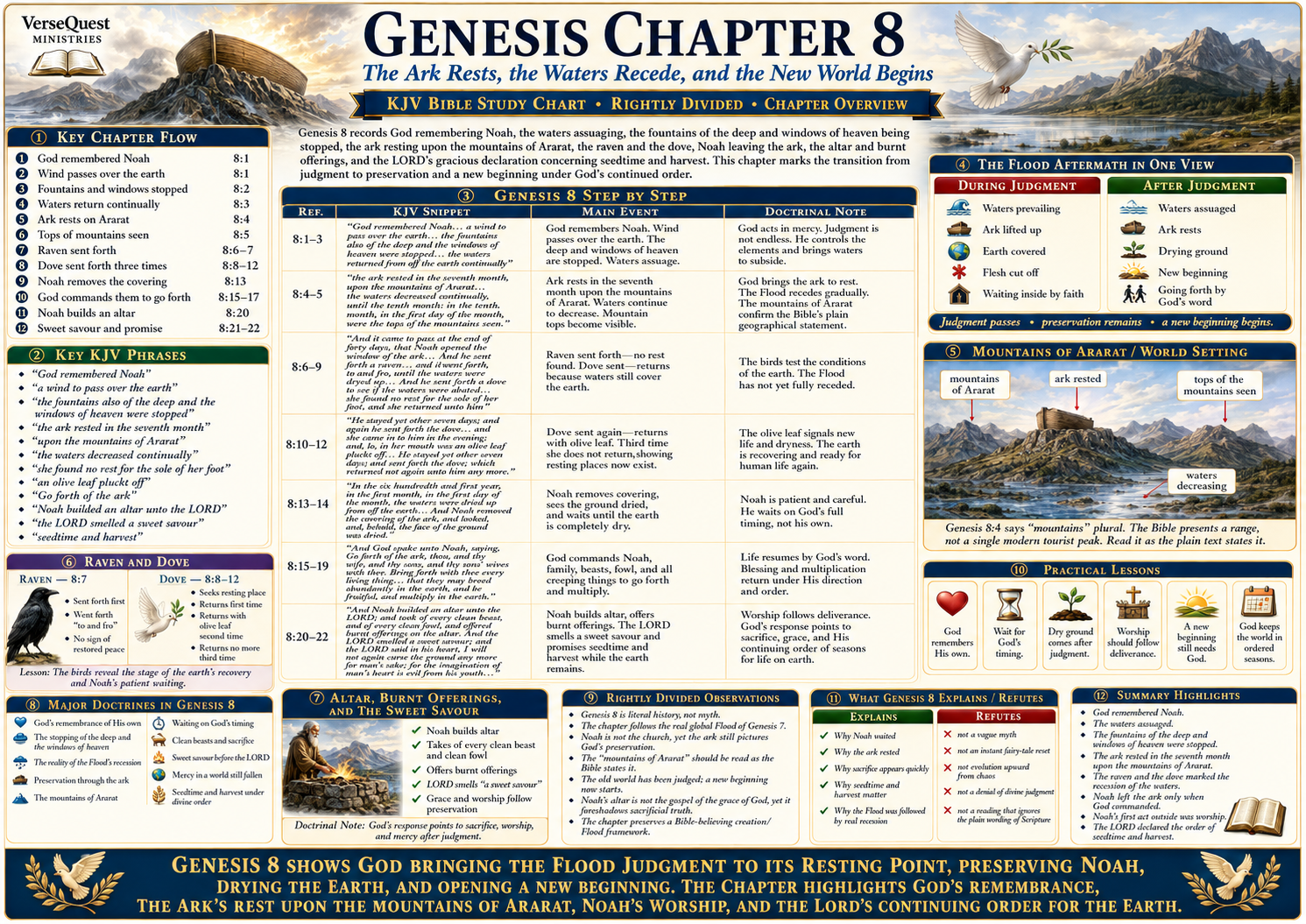
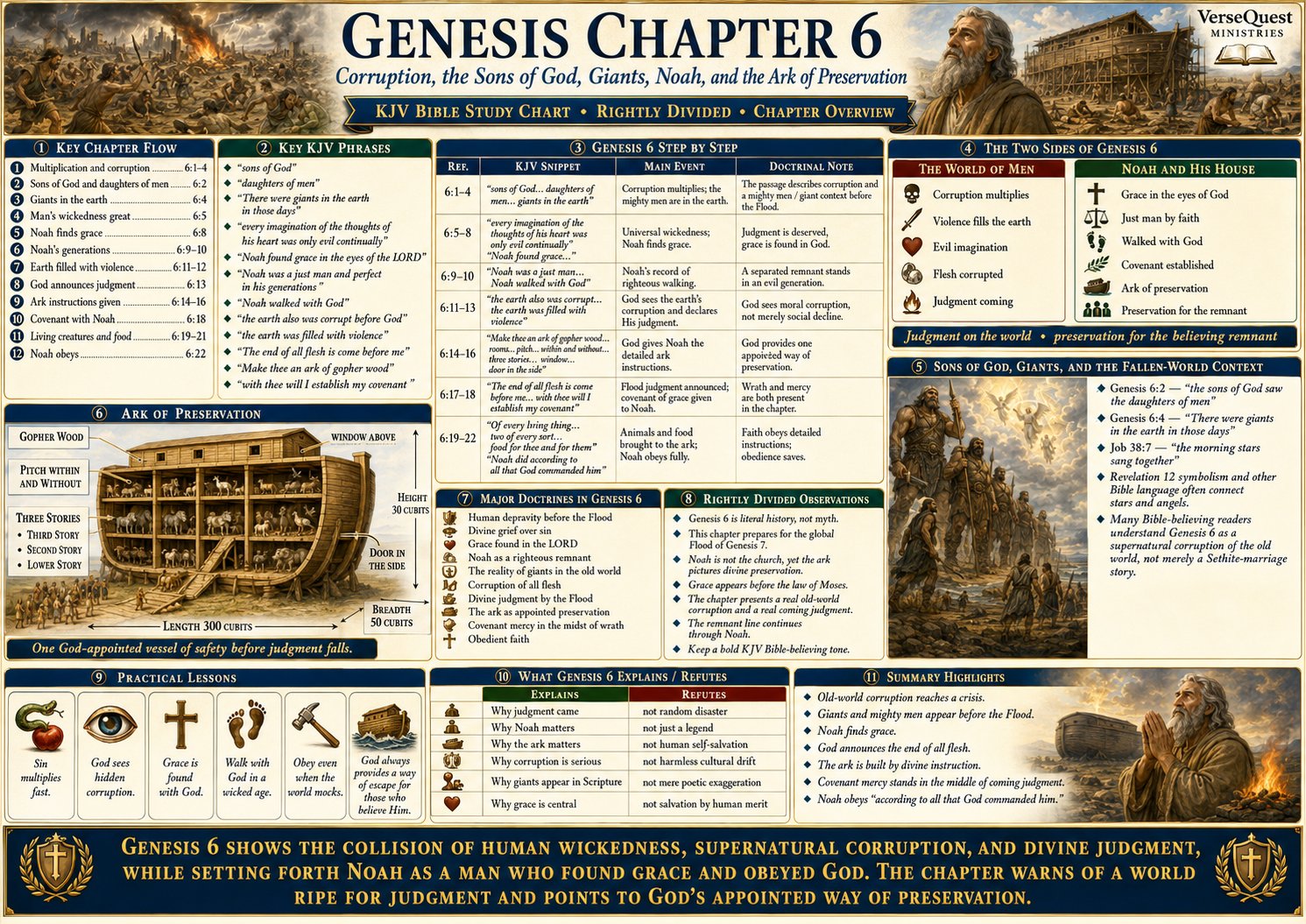
Genesis Chapter 7 Bible Study Chart – The Flood Begins, the Ark Filled, and the Waters Prevail (KJV)
Explore Genesis Chapter 7 with this detailed KJV Bible study chart covering the worldwide Flood, Noah’s obedience, the ark, divine judgment, and God’s preservation of the believing remnant.
$3.99
Description
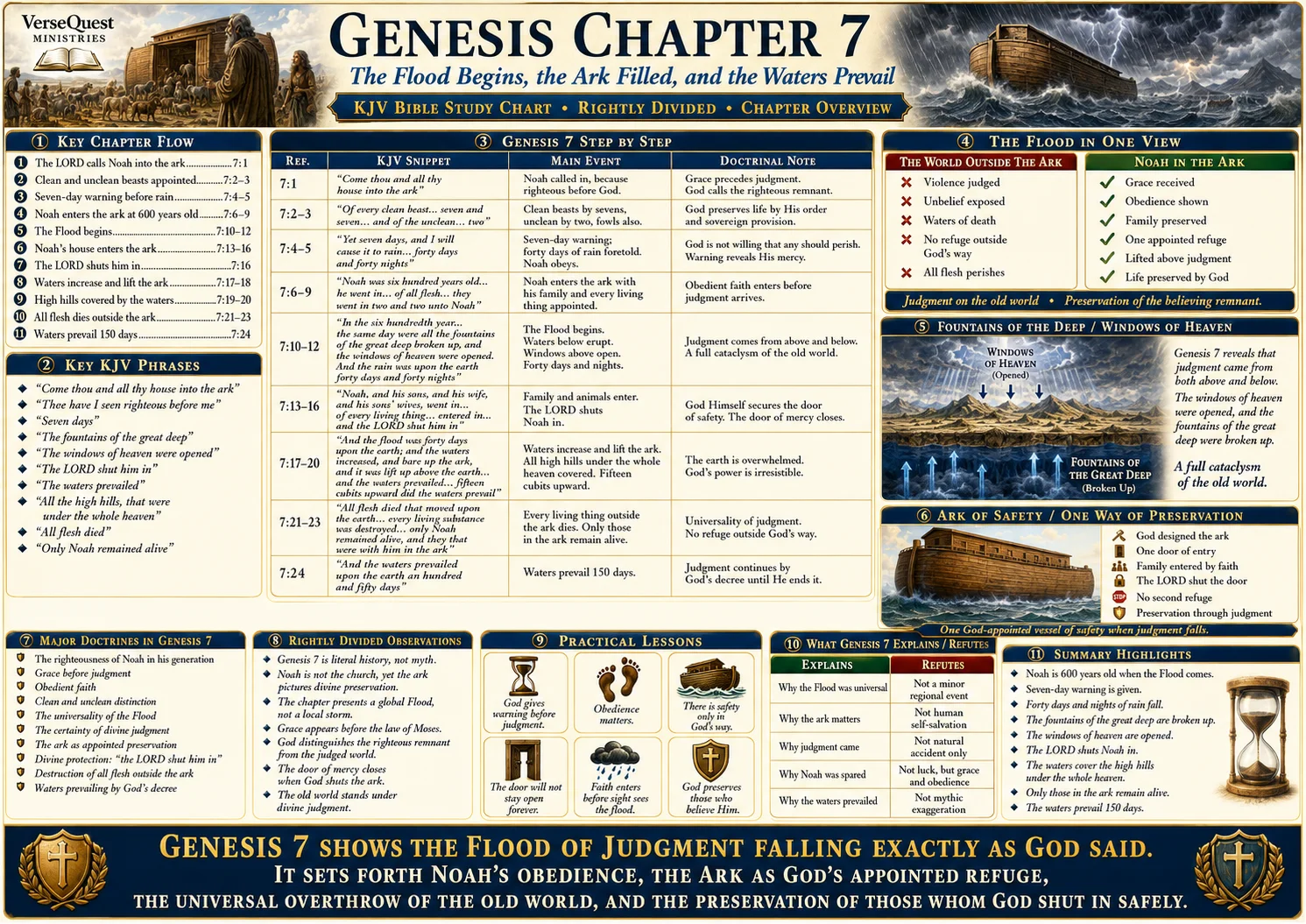
Genesis Chapter 7: The Flood Begins, the Ark Filled, and the Waters Prevail is a detailed KJV Bible study chart examining the beginning of the worldwide Flood, Noah’s obedience, the closing of the ark, and God’s judgment upon the old world. This chapter marks the transition from divine warning to divine action, demonstrating both the certainty of God’s judgment and the security of His appointed way of salvation.
The chart follows Genesis 7 verse by verse, beginning with God’s call for Noah and his household to enter the ark because Noah alone was found righteous in his generation. It explains the distinction between clean and unclean animals, the seven-day warning before judgment fell, and Noah’s complete obedience to every instruction God had given.
The central timeline traces the progression of events as Noah enters the ark with his family and every living creature according to God’s command. It highlights the opening of the fountains of the great deep, the windows of heaven, forty days and forty nights of rain, the rising waters, and the complete destruction of all life outside the ark.
A major comparison contrasts the world outside the ark with Noah inside the ark. Outside are unbelief, violence, death, and universal judgment. Inside are grace, obedience, preservation, family safety, and God’s appointed refuge. The chart illustrates that there was only one divinely provided means of escape from judgment.
Special attention is given to the fountains of the great deep and the windows of heaven. The chart explains that Genesis 7 describes judgment coming both from above and below, producing a global cataclysm unlike anything before or since. It emphasizes that the Flood is presented as literal history rather than local legend or myth.
The ark itself receives careful study as God’s appointed vessel of preservation. Built according to divine instruction, possessing one door, one window, three stories, and sealed by God’s own design, the ark beautifully illustrates salvation through God’s provision rather than man’s invention. Particularly significant is the statement, “The LORD shut him in,” demonstrating that ultimate security rested with God Himself.
Additional sections summarize the major doctrines of Genesis 7, provide rightly divided observations, practical Christian applications, and explain what the chapter teaches and refutes. The chart demonstrates why the Flood was universal, why Noah was spared, why obedience matters, and why God’s warnings should never be ignored.
Ideal for pastors, Bible teachers, homeschool families, Christian schools, Bible institutes, prophecy students, Genesis studies, apologetics, Sunday school classes, and serious students of the King James Bible, this chart presents one of Scripture’s most significant chapters in an organized, highly visual format.
Worldwide Flood, Noah's Ark, divine judgment, grace before judgment, obedience, preservation, righteous remnant, clean and unclean animals, fountains of the great deep, windows of heaven, universal Flood, God's appointed refuge, one door of salvation, faith, covenant preparation
Genesis 7 demonstrates that God’s warnings are always followed by God’s actions. Noah preached righteousness for years before the Flood arrived, but when God’s appointed day came, judgment fell exactly as He had declared. The chapter reminds believers that divine patience should never be mistaken for divine indifference.
The command for Noah to enter the ark emphasizes grace before judgment. Noah is not saved because he builds a better boat than anyone else but because he believes God, obeys His instructions, and enters the place of safety God Himself designed.
The statement, “The LORD shut him in,” is one of the most comforting expressions in the chapter. Noah’s security depended upon God, not Noah’s ability to keep the door closed. Salvation ultimately rests upon God’s work rather than man’s strength.
The Flood comes from both the fountains of the great deep and the windows of heaven, revealing a worldwide catastrophe that overwhelms the entire earth. Every living thing outside the ark perishes, while every person inside God’s appointed refuge is preserved.
The ark pictures God’s only appointed way of deliverance. There was one ark, one door, one invitation, and one means of escape. Likewise, salvation is found only through God’s provision rather than through human effort or religious alternatives.
Genesis 7 also teaches that faith always produces obedience. Noah does not merely believe God’s warning intellectually. He acts upon it. Genuine faith trusts God’s Word enough to obey even when the surrounding world mocks or ignores His warnings.
The chapter closes with the waters prevailing upon the earth for one hundred fifty days, demonstrating that judgment continues until God Himself determines its completion. Human effort cannot stop what God has decreed.
Genesis chapter study, Noah and Flood teaching, apologetics, biblical worldview instruction, Sunday school lessons, homeschool Bible curriculum, Christian school education, Bible institute classes, sermon preparation, discipleship, prophecy studies, salvation illustrations, studies on faith and obedience, biblical judgment lessons
King James Bible, Strong's Concordance, Thompson Chain-Reference Bible, Treasury of Scripture Knowledge, Nave's Topical Bible, Bible atlas, Noah and Flood study resources, biblical chronology charts, Genesis commentary notes, Scripture cross-reference guide, VerseQuest Genesis chapter charts, VerseQuest doctrine charts
Related products
-
Doctrine Series
-
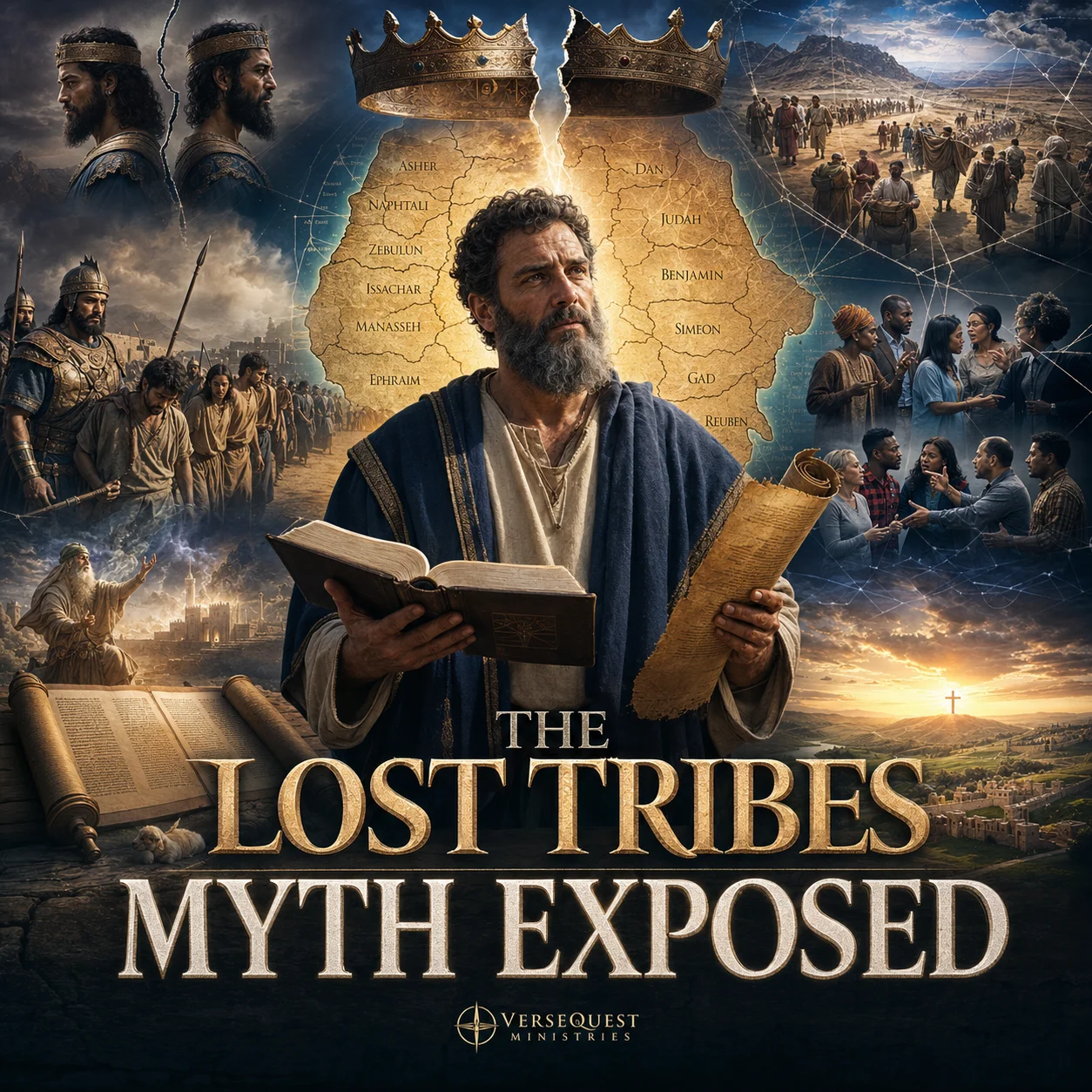
- The Lost Tribes Myth Exposed (213-Page Premium Study)
- A 213-page premium KJV study exposing the Lost Tribes myth, tribal identity errors, prophecy abuse, race theories, and false Israel claims through 35 detailed essays.
- $24.99
- Add to cart
-
-
Chart Collections
-
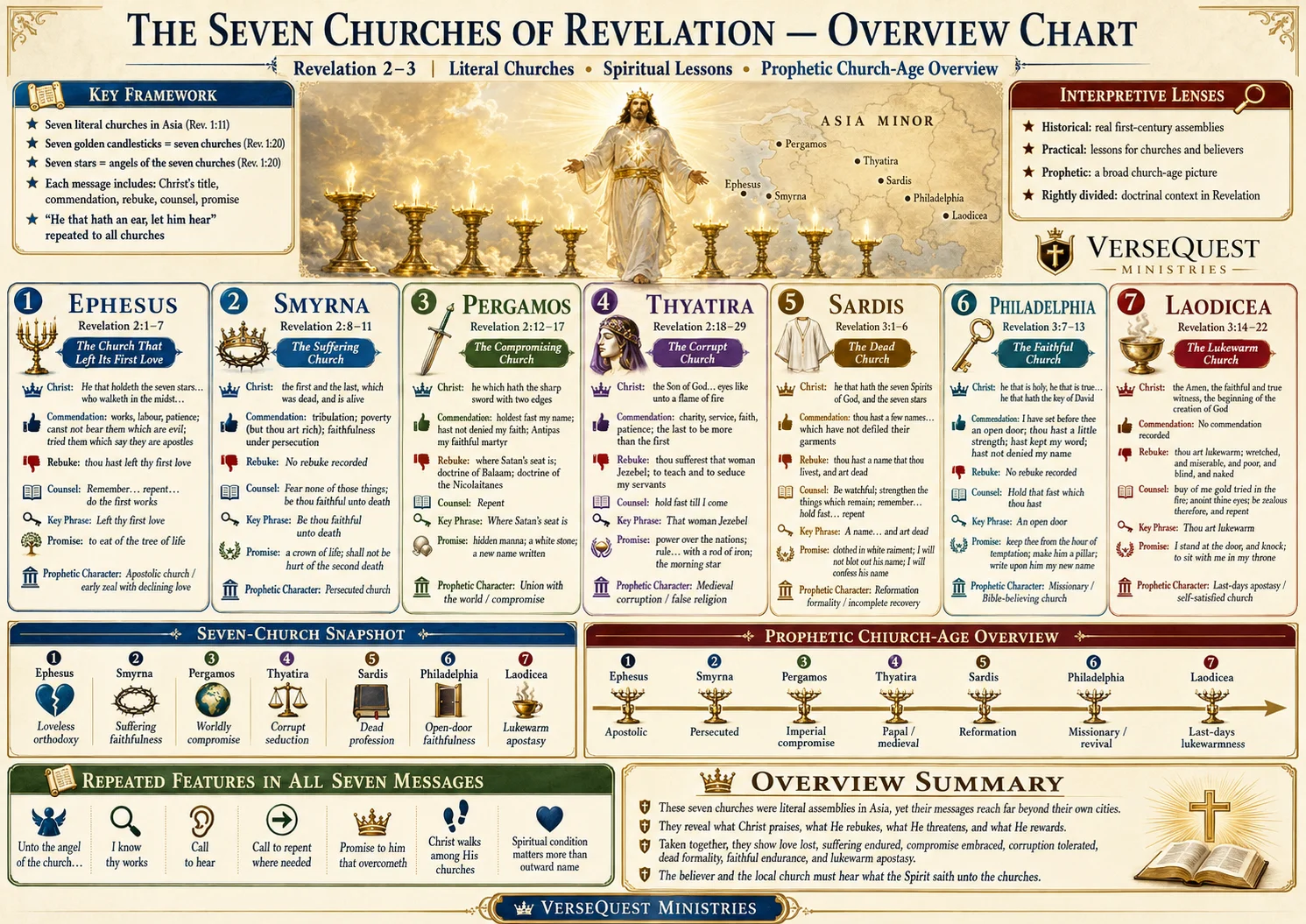
- The Seven Churches of Revelation Chart Collection – Christ Walking Among the Candlesticks
- A premium VerseQuest Ministries™ PDF chart collection covering the Seven Churches of Revelation in Revelation 2–3. Includes one overview chart plus individual KJV Bible study charts for Ephesus, Smyrna, Pergamos,…
- $12.99
- Add to cart
-
-
Revelation
-
-71%
- Moses and Elijah: The Two Witnesses Made Plain
- Moses and Elijah: The Two Witnesses Made Plain is a 636-page premium VerseQuest PDF study proving from Scripture that the Two Witnesses of Revelation 11 are Moses and Elijah. This…
- Original price was: $34.99.$9.99Current price is: $9.99.
- Add to cart
-
-71%
-
Study Books (PDF)
-
-25%
- The Mysteries of God Revealed for the Church Age – Premium Essay Series PDF
- A premium 404-page VerseQuest Ministries digital PDF study book featuring 54 detailed KJV-only essays on the mysteries of God revealed for the Church Age. This rightly divided study covers the…
- Original price was: $39.99.$29.99Current price is: $29.99.
- Add to cart
-
-25%
-
Bible Overview Series
-
- The New Jerusalem Made Plain — 621-Page PDF Study
- The New Jerusalem Made Plain is a massive 621-page KJV/rightly divided PDF study on the literal holy city revealed in Revelation 21–22. This 100-essay book makes the New Jerusalem plain…
- $34.99
- Add to cart
-